
Grundinformationen
- Standard-SMILES
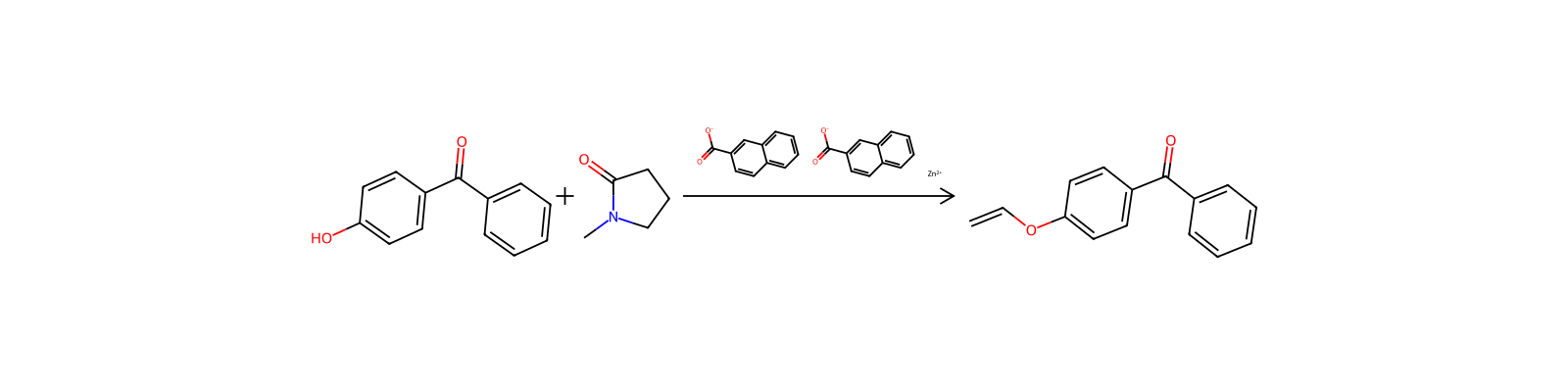
O=C([O-])c1ccc2ccccc2c1.O=C([O-])c1ccc2ccccc2c1.[Zn+2]- InChIKey
DPQXAUXLLDWUMQ-UHFFFAOYSA-L- Summenformel
- C22H14O4Zn
- Durchschnittliche Molmasse
- 407,7 g/mol
- Monoisotopische Masse
- 406,01835113
Namen und Bezeichner
- Bevorzugter Name
- Zinc naphthenate
- IUPAC
- zinc bis(naphthalene-2-carboxylate)
Namen und Synonyme
Zinc naphthenateZinc 2-naphthenateZinc di(2-naphthoate)Zinc naphthenate [WHO-DD]2-Naphthoic acid, zinc saltZinc naphthalene-2-carboxylateGB0R4LLN7Mbeta-Naphthoic acid zinc salt2-Naphthalenecarboxylic acid, zinc saltEINECS 234-409-214642-70-7Naphtenate de zinc [ISO-French]
Weitere Namen anzeigen
.BETA.-NAPHTHOIC ACID ZINC SALTNaphtenate de zinc (ISO-French)Zinc uversolNaphtenate de zincZinc Uversol FungicideCCRIS 1171HSDB 7855RefChem:904962
Datenbank-Bezeichner
- CAS
14642-70-7、12001-85-3- PubChem CID
- 13879901
- DTXSID
DTXSID501362349- UNII
- GB0R4LLN7M
Eigenschaften
Berechnete Struktureigenschaften
- Polarare Oberfläche (TPSA)
- 80,3 Ų
- H-Brücken-Donoren
- 0
- H-Brücken-Akzeptoren
- 4
- Frei drehbare Bindungen
- 0
- Schwere Atome
- 27
- Formalladung
- 0
- Komplexität
- 195
Experimentelle und physikochemische Eigenschaften
Chemical ClassesMetals -> Organic Acids, Metal Salts
LogPlog Kow = 1.0 to 1.2 at 20 °C
OdorHydrocarbon-like odor
Color/Form
Amber, viscous, basic liquid or basic solid
Light brown solid ... or viscous liquid ...
SolubilityVery soluble in acetone
DecompositionWhen heated to decomposition it emits toxic fumes of /zinc oxide/.
Food Contact SubstancesFCS -> FDA Inventory of Food Contact Substances Listed in 21 CFR
Physical DescriptionTechnical product is light brown solid; Manufacturing use product is viscous liquid with an odor of hydrocarbons; [Reference #1]
Other Experimental PropertiesThe liquid contains 8-10% zinc, the solid contains 16% zinc
Sicherheit und Regulatorisches
Gefahrenhinweise
Fire PotentialCombustible when exposed to heat or flame.
Hazards Summary
A moderate eye and mild skin irritant; Causes somnolence, hemorrhage, and other changes to lungs and kidneys in oral lethal-dose studies of rats; Causes changes in kidney and adrenal weight and decreased weight gain in 13-week intermittent dermal study of rabbits; [RTECS]
Special Reports
USEPA/Office of Pesticide Programs; Reregistration Eligibility Decision Document - Copper and Zinc naphthenate Salts, EPA 739-R-07-003 (September 2007). The RED summarizes the risk assessment conclusions and outlines any risk reduction measures necessary for the pesticide to continue to be registered in the U.S.[Available from, as of September 13, 2010: http://www.epa.gov/pesticides/reregistration/status.htm]
TSCA Requirements
Pursuant to section 8(d) of TSCA, EPA promulgated a model Health and Safety Data Reporting Rule. The section 8(d) model rule requires manufacturers, importers, and processors of listed chemical substances and mixtures to submit to EPA copies and lists of unpublished health and safety studies. Zinc naphthenate is included on this list. Effective date 6/1/87; Sunset date: 12/19/95.
FIFRA Requirements
The Agency has completed its assessment of the occupational, residential, and ecological risks associated with the use of pesticide products containing the active ingredients napthenate salts. Based on a review of these data and on public comments on the Agency's assessments for the active ingredients naphthenate salts, the Agency ha s sufficient information on the human health and ecological effects of naphthenate salts to make decisions as part of the tolerance reassessment process under FFDCA and reregistration process under FIFRA, as amended by FQPA. The Agency has determined that naphthenate salts-containing products are eligible for reregistration provided that: (i) current data gaps and confirmatory data needs are addressed; (ii) the risk mitigation measures outlined in this document are adopted; and (iii) label amendments are made to reflect these measures. ... Based on its evaluation of naphthenate salts, the Agency has determined that napthenate salts products, unless labeled and used as specified in this document, would present risks inconsistent with FIFRA. Accordingly, should a registrant fail to implement the risk mitigation measure identified in this document, the Agency may take regulatory action to address the risk concerns from the use of naphthenate salts. If all changes outlined in this document are incorporated into the product labels, then all current risks for napthenate salts will be substantially mitigated for the purposes of this determination.
As the federal pesticide law FIFRA directs, EPA is conducting a comprehensive review of older pesticides to consider their health and environmental effects and make decisions about their continued use. Under this pesticide reregistration program, EPA examines newer health and safety data for pesticide active ingredients initially registered before November 1, 1984, and determines whether the use of the pesticide does not pose unreasonable risk in accordance to newer saftey standards, such as those described in the Food Quality Protection Act of 1996. Pesticides for which EPA had not issued Registration Standards prior to the effective date of FIFRA '88 were divided into three lists based upon their potential for human exposure and other factors, with List B containing pesticides of greater concern than those on List C, and with List C containing pesticides of greater concern than those on List D. Zinc naphthaenate is found on List C. Case No: 3099; Pesticide type: insecticide, fungicide, herbicide; Case Status: OPP is reviewing data from the pesticide's producers regarding its human health and/or environmental effects, or OPP is determining the pesticide's eligibility for reregistration and developing the RED document.; Active ingredient (AI): zinc naphthenate; Data Call-in (DCI) Date(s): 11/9/93, 3/25/97; AI Status: The producers of the pesticide have made commitments to conduct the studies and pay the fees required for reregistration, and are meeting those commitments in a timely manner.
Sicherheit und Schutzausrüstung
Storage Conditions
Safe Storage of Pesticides. Always store pesticides in their original containers, complete with labels that list ingredients, directions for use, and first aid steps in case of accidental poisoning. Never store pesticides in cabinets with or near food, animal feed, or medical supplies. Do not store pesticides in places where flooding is possible or in places where they might spill or leak into wells, drains, ground water, or surface water. /Residential uses/
Cleanup Methods
If a spill occurs, clean it up promptly. Don't wash it away. Instead, sprinkle the spill with sawdust, vermiculite, or kitty litter. Sweep it into a plastic garbage bag, and dispose of it as directed on the pesticide product label./Residential uses/
After Applying a Pesticide, Indoors or Outdoors. To remove pesticide residues, use a bucket to rinse tools or equipment three times, including any containers or utensils that you used when mixing the pesticide. Then pour the rinsewater into the pesticide sprayer and reuse the solution by applying it according to the pesticide product label directions. After applying any pesticide wash your hands and any other parts of your body that may have come in contact with the pesticide..To prevent tracking pesticides inside, remove or rinse your boots or shoes before entering your home. Wash any clothes that have been exposed to a lot of pesticide separately from your regular wash. /Residential uses/
Disposal Methods
SRP: The most favorable course of action is to use an alternative chemical product with less inherent propensity for occupational harm/injury/toxicity or environmental contamination. Recycle any unused portion of the material for its approved use or return it to the manufacturer or supplier. Ultimate disposal of the chemical must consider: the material's impact on air quality; potential migration in soil or water; effects on animal and plant life; and conformance with environmental and public health regulations.
Safe Disposal of Pesticides. The best way to dispose of small amounts of excess pesticides is to use them - apply them - according to the directions on the label. If you cannot use them, ask your neighbors whether they have a similar pest control problem and can use them. If all of the remaining pesticide cannot be properly used, check with your local solid waste management authority, environmental agency, or health department to find out whether your community has a household hazardous waste collection program or a similar program for getting rid of unwanted, leftover pesticides. These authorities can also inform you of any local requirements for pesticide waste disposal. /Residential uses/
Safe Disposal of Pesticides. An empty pesticide container can be as hazardous as a full one because of residues left inside. Never reuse such a container. When empty, a pesticide container should be rinsed carefully three times and the rinsewater thoroughly drained back onto the sprayer or the container previously used to mix the pesticide. Use the rinsewater as a pesticide, following label directions. Replace the cap or closure securely. Dispose of the container according to label instructions. Do not puncture or burn a pressurized container like an aerosol - it could explode. Do cut or puncture other empty pesticide containers made of metal or plastic to prevent someone from reusing them. Wrap the empty container and put it in the trash after you have rinsed it. /Residential uses/
Preventive Measures
This pesticide is toxic to aquatic invertebrates, shrimp, and oysters/clams. Do not discharge effluent containing this product into lakes, streams, ponds, estuaries, oceans, or other waters unless in accordance with the requirements of a National Pollution Discharge Elimination System (NPDES) permit and the permitting authority has been notified in writing prior to discharge. Do not discharge effluent containing this product to sewer systems without previously notifying the local sewage treatment plant authority. For guidance contact your State Water Board or Regional Office of the EPA.
The application rate for zinc naphthenate applied to textiles or wood products using the low pressure sprayer or a brush/roller shall be limited to 16% /active ingredient by weight/.
Treated lumber must be stored under cover, indoors, or at least 100 feet from any pond, lake, stream, wetland, or river to prevent possible runoff of the product into the waterway. Treated lumber stored within 100 feet of a pond, lake, stream, or river must be either covered with plastic or surrounded by a berm to prevent surface water runoff into the nearby waterway. If a berm or curb is used around the site, it should consist of impermeable material (clay, asphalt, concrete) and be sufficient height to prevent runoff during heavy rainfall events.
Wood treated with copper or zinc naphthenate shall not be used in the construction of beehives.
For more Preventive Measures (Complete) data for Zinc naphthenate (12 total), please visit the HSDB record page.
Personal Protective Equipment (PPE)
Applicators must wear chemical resistant gloves while handling or applying naphthenate salts.
Applicators must wear organic vapor respirators while applying naphthenate salts with an airless sprayer.
Blender/spray operators must wear organic vapor respirators while applying naphthenate salts to non-pressure treated wood.
Toxikologische Informationen
Ecotoxicity Values
LD50; Species: Colinus virginianus (Bobwhite quail) oral 14 day >2250 mg/kg /14.33% purity zinc naphthenate/
LC50; Species: Colinus viriginianus (Bobwhite quail, 10 days old) diet >5620 mg/kg for 8 days /14.33% purity zinc naphthenate/
LC50; Species: Anas platyrhynchos (Mallard duck, 10 days old) diet >5620 mg/kg for 8 days /14.33% purity zinc naphthenate/
LC50; Species: Oncorhynchus mykiss (Rainbow trout); Conditions: static renewal test system; Concentration: 1.1 mg/kg for 96 hr /98.9% purity zinc naphthenate/
For more Ecotoxicity Values (Complete) data for Zinc naphthenate (6 total), please visit the HSDB record page.
Environmental Fate
TERRESTRIAL FATE: If released to soil, zinc naphthenate is highly to moderately immobile in soils with an estimated Koc of over 3000. Laboratory studies on southern yellow pine using zinc naphthenate treated wood stakes has shown that zinc naphthenate does leach from non-pressure and pressure treated wood. The rates of leaching from the non-pressure and pressure treated wood are highest in pH 5 and lowest at pH 9. Volatilization from moist soil surfaces is expected to be an important fate process for zinc naphthenate based upon an estimated Henry's Law constant of 9.8X10⁻⁶ atm-cu m/mole(1).
AQUATIC FATE: If released to water, zinc naphthenate is expected to adsorb to suspended solids and sediment based upon the estimated Koc. Naphthenate salts, such as zinc naphthenate, are very stable in water under aerobic and abiotic conditions, with an estimated half life of more than three months. They are not highly water soluble. Volatilization from water surfaces is expected to be an important fate process for the organic portion of zinc naphthenate based upon an estimated Henry's Law constant of 9.8X10⁻⁶ atm-cu m/mole and are likely to contaminate surface water by way of soil run-off. Zinc naphthenate is likely to persist in water and soils around the treated wood. The estimated log Kow for zinc naphthenate ranges from 1.o to 1.2 which indicates that the compound may be bioaccumulative in aquatic organisms such as fish(1).
ATMOSPHERIC FATE: If released to air, a vapor pressure of approximately 1X10⁻⁴ mm Hg indicates that naphthenate salts will exist in both the vapor and particulate phases in the atmosphere. Zinc naphthenate is not likely to be persistent in air based on analogous copper naphthenate's estimated half-life of 8.9 hours(1).
Effluent Concentrations
Leaching rates of zinc naphthenate from non-pressure treated wood (southern yellow pine) was reported as 0.0112 ppm/sq cm/day at pH5 and 0.0026 ppm/sq cm/day at pH 9. Rates from pressure treated wood were 0.019 ppm/sq cm/day at pH5 and 0.0012 ppm/sq cm/day at pH 9(1).
Soil Adsorption/Mobility
The available data for the naphthenate salts indicate that these compounds are highly to moderately immobile in soils with an estimated Koc of over 3000. ... For /this reason/, the naphthenate salts are likely to contaminate surface water by way of soil run-off. /Copper and Zinc Naphthenate/
Artificial Pollution Sources
Zinc naphthenate's production may result in its release to the environment through various waste streams; its use as a drier and wetting agent in paints varnishes, resins, and as an insecticide, fungicide, mildew preventive, wood preservative, in waterproofing textiles and in insulating materials(1) will result in its direct release to the environment(SRC).
Environmental Biodegradation
AEROBIC: The available data for the naphthenate salts indicate that these compounds are very stable in water under aerobic ... conditions, with an estimated half life of more than three months ... Copper ... naphthenate /is/ likely to persist in water and soils around the treated wood.
Environmental BioconcentrationThe estimated log Kow for zinc naphthenate ranges from 1.0 to 1.2 which indicates that the compound may be bioaccumulative in aquatic organisms such as fish(1).
Volatilization from Water/Soil
The naphthenate salts are not highly water soluble, have a low vapor pressure (approximately 1X10⁻⁴ mm Hg), and have an air/water partition coefficient (Henry Law constant) of approximately 9.804X 10⁻⁶. For these reasons, the organic portion of the naphthenate salts are likely to volatilize from water surfaces to a high degree .... /Copper and Zinc Naphthenate/
Non-Human Toxicity Excerpts
/LABORATORY ANIMALS: Developmental or Reproductive Toxicity/ Zinc naphthenate (14.5% zinc) was given by oral gavage to Sprague Dawley Crl:CD7BR rats, 25 per group, at 0 (corn oil), 50, 250, or 500 mg/kg nominal doses. The actual doses were somewhat less, being 82.1%, 89.1%, and 96.5% by analytical determination of zinc content by atomic absorption. Dams were treated days 6 through 15 of gestation. There was no effect on body weight, food consumption, or developmental parameters at any dose. The only finding of maternal toxicity were clinical signs appearing in the hour following dosing on multiple occasions with an increasing frequency at 250 and, especially, at 500 mg/kg/day. These signs consisted of dried yellow staining anogenital area, dried red material around the nose, wet yellow staining anogenital area and dried light red or clear staining around the mouth. On the basis of these effects, the maternal NOEL = 50 mg/kg/day. Since these signs were seen at only about an hour after dosing but not at 2 or 4 hr, the response appeared to be an acute one. NOEL for any other consideration would be >500 mg/kg/day. Developmental NOEL = 500 mg/kg/day. There were two unusual findings at 50 mg/kg/day in the external exam of fetuses, mandibular micrognathia and macroglossia, one fetus each in separate litters. These effects were not seen at the significantly higher doses and were probably spontaneous in origin.
/LABORATORY ANIMALS: Developmental or Reproductive Toxicity/ ... Zinc naphthenate was administered by gavage to groups (33/dose) of pregnant Sprague-Dawley rats at doses of 0, 94, 188, and 938 mg/kg/day from days 6 through 15 of gestation. Clinical signs of toxicity were observed in maternal rats at the 938 mg/kg/day dose and included brown staining in the urogenital area, red nasal and oral exudate, generalized alopecia, and lethargy. Body weight was significantly decreased on day 10 of dosing but was not otherwise affected in treated female rats a compared to vehicle control. Total resorptions were increased at the 938 mg/kg/day dose as well as resorptions/dam. Average fetal body weight was decreased at 938 mg/kg/day. There was no clear dose relationship observed for fetal variations. Consequently, the developmental LOAEL is 938 mg/kg/day based on reduced mean fetal body weight. The developmental NOAEL is 188 mg/kg/day.
/GENOTOXICITY/ Zinc naphthenate, ...14.5% zinc, was tested with mouse lymphoma L5178Y TK +/- cells without and with rat liver activation (male Sprague Dawley, Aroclor 1254 induced) in two trials with duplicate cultures per concentration, 4 hr exposure. The expression time was two days followed by plating for trifluorothymidine (TFT) resistance. The concentrations used were, without activation: Trial 1: 0 (ethanol), 3.2, 4.2, 5.6, 7.5, 10, 13, 18, 24, 32, 42, 56, and 75 ug/mL; trial 2: 0 (ethanol), 7.5, 11, 15, 19, 23, 27, 30, 33, 36, 40, 44, and 48 ug/mL. With activation, the concentrations were: Trial 1: 0 (ethanol), 4.2, 5.6, 7.5, 10, 13, 18, 24, 32, 42, 56, 75, and 100 ug/mL; trial 2: 0 (ethanol), 23, 27, 30, 33, 36, 40, 44, 48, 52, 56, 65, and 75 ug/mL. Several of the higher concentrations per trial were too toxic to process. EMS and DMBA were positive controls and functional. Following the expression period, three plates per concentration were made each for mutation frequency with TFT and for viable colonies. After 10 - 12 days incubation, plates were scored for total colonies and the colony size distribution between 0.2 and 1.1 mm determined with an automatic colony counter. Possible adverse effect: The mutation frequency was increased in a concentration-dependent response both without and with activation.
/GENOTOXICITY/ Zinc naphthenate, 14.5% zinc, was tested with CHO cells with and without Aroclor-induced rat liver S9. There were duplicate cultures per concentration and two trials. Concentrations were selected from a preliminary assay evaluating mitotic index as a measure of cell cycle delay with BrdU to determine sister chromatid exchanges for the first, second and third cell divisions. In the chromosomal assay, concentrations tested without activation were: First trial: 0, 5, 10, 20, 40, and 80 ug/mL and Second trial: 0, 80, 110, 140, 170, and 200 ug/mL. With activation: First trial: 0, 10, 20, 40, 80, and 160 ug/mL and Second trial: 0, 60, 80, 100, 120, and 140 ug/mL. Exposure without activation was 18 hr followed by an additional 2 hr with colcemid. With activation, exposure was 2 hr followed by 18 hr, both for a total of 20 hr. When possible, 50 metaphases per culture for a total of 100 per concentration were evaluated for mitotic index, aberrations per cell (excluding gaps) and percentage of cells with aberrations. In the first trial with activation up to 80 ug/mL, the results were negative. In the repeat trial with results reported at 80, 110, and 140 ug/mL, positive results were found at all three concentrations. With activation, in the first trial, positive results were found at 80 ug/mL. In the repeat +S9 trial, positive results were reported at 60, 80, and 100 ug/mL. In both repeat trials, there was a concentration dependent increase. Possible adverse effect: increase in chromosomal aberrations with increasing concentrations of zinc naphthenate.
For more Non-Human Toxicity Excerpts (Complete) data for Zinc naphthenate (7 total), please visit the HSDB record page.
Environmental Abiotic Degradation
The available data for the naphthenate salts indicate that these compounds are very stable in water under ... abiotic conditions, with an estimated half life of more than three months ... Copper and zinc naphthenate are likely to persist in water and soils around the treated wood. /Copper and Zinc Naphthenate/
Probable Routes of Human Exposure
NIOSH (NOES Survey 1981-1983) has statistically estimated that 96,185 workers (18,248 of these were female) were potentially exposed to zinc naphthenate in the US(1). Occupational exposure to zinc naphthenate may occur through inhalation and dermal contact with this compound at workplaces where zinc naphthenate is produced or used. Use data indicate that the general population may be exposed to zinc naphthenate via dermal contact with other consumer products containing this compound(SRC).
Environmental Fate/Exposure Summary
Zinc naphthenate's production may result in its release to the environment through various waste streams; its use as a drier and wetting agent in paints, varnishes, resins and as an insecticide, fungicide, mildew preventive, wood preservative, in waterproofing textiles and in insulating materials will result in its direct release to the environment. If released to air, a vapor pressure of approximately 1X10⁻⁴ mm Hg indicates that zinc naphthenate will exist in both the vapor and particulate phases in the atmosphere. Zinc naphthenate is not likely to be persistent in air based on analogous copper naphthenate's estimated half-life of 8.9 hours. If released to soil, zinc naphthenate is highly to moderately immobile in soils with an estimated Koc of over 3000. Laboratory studies on southern yellow pine using zinc naphthenate treated wood stakes has shown that zinc naphthenate does leach from non-pressure and pressure treated wood. The rates of leaching from the non-pressure and pressure treated wood are highest in pH 5 and lowest at pH 9. Volatilization from moist soil surfaces is expected to be an important fate process for the naphthenate salts based upon an estimated Henry's Law constant of 9.8X10⁻⁶ atm-cu m/mole. If released to water, zinc naphthenate is expected to adsorb to suspended solids and sediment based upon the estimated Koc. Naphthenate salts, such as zinc naphthenate, are very stable in water under aerobic and abiotic conditions, with an estimated half-life of more than three months. They are not highly water soluble. The organic portion of the naphthenate salts are likely to volatilize from water surfaces to a high degree and likely to contaminate surface water by way of soil run-off. Zinc naphthenate is likely to persist in water and soils around the treated wood. The estimated log Kow for zinc naphthenate ranges from 1.0 to 1.2 which indicates that the compound may be bioaccumulative in aquatic organisms such as fish. Occupational exposure to zinc naphthenate may occur through inhalation and dermal contact with this compound at workplaces where zinc naphthenate is produced or used. Use data indicate that the general population may be exposed to zinc naphthenate via dermal contact with other consumer products containing this compound. (SRC)
Regulatorische Informationen
TSCA Requirements
Pursuant to section 8(d) of TSCA, EPA promulgated a model Health and Safety Data Reporting Rule. The section 8(d) model rule requires manufacturers, importers, and processors of listed chemical substances and mixtures to submit to EPA copies and lists of unpublished health and safety studies. Zinc naphthenate is included on this list. Effective date 6/1/87; Sunset date: 12/19/95.
FIFRA Requirements
The Agency has completed its assessment of the occupational, residential, and ecological risks associated with the use of pesticide products containing the active ingredients napthenate salts. Based on a review of these data and on public comments on the Agency's assessments for the active ingredients naphthenate salts, the Agency ha s sufficient information on the human health and ecological effects of naphthenate salts to make decisions as part of the tolerance reassessment process under FFDCA and reregistration process under FIFRA, as amended by FQPA. The Agency has determined that naphthenate salts-containing products are eligible for reregistration provided that: (i) current data gaps and confirmatory data needs are addressed; (ii) the risk mitigation measures outlined in this document are adopted; and (iii) label amendments are made to reflect these measures. ... Based on its evaluation of naphthenate salts, the Agency has determined that napthenate salts products, unless labeled and used as specified in this document, would present risks inconsistent with FIFRA. Accordingly, should a registrant fail to implement the risk mitigation measure identified in this document, the Agency may take regulatory action to address the risk concerns from the use of naphthenate salts. If all changes outlined in this document are incorporated into the product labels, then all current risks for napthenate salts will be substantially mitigated for the purposes of this determination.
As the federal pesticide law FIFRA directs, EPA is conducting a comprehensive review of older pesticides to consider their health and environmental effects and make decisions about their continued use. Under this pesticide reregistration program, EPA examines newer health and safety data for pesticide active ingredients initially registered before November 1, 1984, and determines whether the use of the pesticide does not pose unreasonable risk in accordance to newer saftey standards, such as those described in the Food Quality Protection Act of 1996. Pesticides for which EPA had not issued Registration Standards prior to the effective date of FIFRA '88 were divided into three lists based upon their potential for human exposure and other factors, with List B containing pesticides of greater concern than those on List C, and with List C containing pesticides of greater concern than those on List D. Zinc naphthaenate is found on List C. Case No: 3099; Pesticide type: insecticide, fungicide, herbicide; Case Status: OPP is reviewing data from the pesticide's producers regarding its human health and/or environmental effects, or OPP is determining the pesticide's eligibility for reregistration and developing the RED document.; Active ingredient (AI): zinc naphthenate; Data Call-in (DCI) Date(s): 11/9/93, 3/25/97; AI Status: The producers of the pesticide have made commitments to conduct the studies and pay the fees required for reregistration, and are meeting those commitments in a timely manner.
Chemie und Industrie
Verwendung und Herstellung
Uses
Used for industrial, commercial, and residential preservation of wood and cellulose based textiles and cordage (textile use limited to industrial non-apparel materials except for government issued military materials); Also used to treat poles already in service; [Reference #1] Used in paints, biocides, wood preservatives, insulating materials, and textiles (waterproofing); [Hawley]
Textiles (Fiber & Fabric Manufacturing) [Category: Industry]
For zinc naphthenate (USEPA/OPP Pesticide Code: 088301) ACTIVE products with label matches. /SRP: Registered for use in the U.S. but approved pesticide uses may change periodically and so federal, state and local authorities must be consulted for currently approved uses./
Drier and wetting agent in paints, varnishes, resins; insecticide; fungicide; mildew preventive; wood preservative; waterproofing textiles; insulating materials
A fungicide and mildew preventive
Fungicide
U.S. Production
Naphthenic acids, zinc salts is listed as a High Production Volume (HPV) chemical (65FR81686). Chemicals listed as HPV were produced in or imported into the U.S. in >1 million pounds in 1990 and/or 1994. The HPV list is based on the 1990 Inventory Update Rule. (IUR) (40 CFR part 710 subpart B; 51FR21438).
Production volumes for non-confidential chemicals reported under the Inventory Update Rule. [Table#7592]
Production volume for non-confidential chemicals reported under the 2006 Inventory Update Rule. Chemical: Naphthenic acids, zinc salts. Aggregated National Production Volume: < 500,000 lbs. /Naphthenic acids, zinc salts/
Methods of ManufacturingFusion of zinc oxide or hydroxide and naphthenic acid or precipitation from mixture of soluble zinc salts and sodium naphthenate.
Formulations/Preparations
8% Zinc Naphthenate (OMG Belleville, Canada) Zinc naphthenate 69%
Clear Cuprinol Brand Wood Preservative No. 20 (Sherwin-Williams), Zinc Naphthenate 13.5%
Green's Clear Wood Preservative (Green Products) Zinc naphthenate 23.6%
Jasco Termin-8 H2O Clear Wood Preservative (Jasco Chemical) Zinc naphthenate 15.75%
For more Formulations/Preparations (Complete) data for Zinc naphthenate (8 total), please visit the HSDB record page.
General Manufacturing Information
... typically used in the log home industry because it provides a colorless coating on the wood
... are environmentally preferred replacements for creosote, pentachlorophenol, and chromated copper-arsenic /Naphthenates/
Zugehörige Reaktionen
1
Verknüpfte Notizen
Wird geladen…