
Cyclopropylacetylene
Daten werden ergänzt – lade die Seite später neu, um den aktuellen Stand zu sehen

Grundinformationen
- CAS
6746-94-7- Standard-SMILES
C#CC1CC1- InChIKey
NPTDXPDGUHAFKC-UHFFFAOYSA-N- Summenformel
- C5H6
- Durchschnittliche Molmasse
- 66,1 g/mol
- Monoisotopische Masse
- 66,04695019
Namen und Bezeichner
- Bevorzugter Name
- Cyclopropylacetylene
- IUPAC
- ethynylcyclopropane
- Englischer Name
- Cyclopropylacetylene
- Summenformel
- C5H6
- Molmasse
- 66.1
Namen und Synonyme
Cyclopropylacetylene6746-94-7ethynyl cyclopropaneDTXSID80217795EC 425-430-1RefChem:581231DTXCID30140286425-430-1614-067-4EthynylcyclopropaneCyclopropyl acetylenecyclopropane, ethynyl-
Weitere Namen anzeigen
CPACCylopropylethylnenCylopropyl acetyleneCyclopropyl acetylenCyclopropylacethyleneCYCLOPROPYL ACETHLENEethylnyl-cyclopropane
Cyclopropane,ethynyl-MFCD02181090C5H6cyclopropylethyne336800-75-0Cyclopropylethyne; Ethyne, cyclopropyl-; EthynylcyclopropaneEthynylcyclopropane; Cyclopropylethyne;cyclopropyl ethyne
Datenbank-Bezeichner
- CAS
6746-94-7- PubChem CID
- 138823
- DTXSID
DTXSID80217795- UNII
- CYA9F6WH2T
- EC Number
- 425-430-1、614-067-4
- Nikkaji
- J798.432D
Eigenschaften
Berechnete StruktureigenschaftenWird ergänzt
- XLogP
- 1,5
- Polarare Oberfläche (TPSA)
- 0 Ų
- H-Brücken-Donoren
- 0
- H-Brücken-Akzeptoren
- 0
- Frei drehbare Bindungen
- 0
- Schwere Atome
- 5
- Formalladung
- 0
- Komplexität
- 69,3
Experimentelle und physikochemische Eigenschaften
SpringerMaterials PropertiesCoriolis coupling
Physikochemische Eigenschaften
- Schmelzpunkt
- 294 °C · 294 °C (decomp)
- Siedepunkt
- 79 · 79-80 °C
- Dichte
- 0.7801 · 0.7801
- Brechungsindex
- 20 · n20/D 1.4480
- Flammpunkt
- -5 °F · -5 °F
- storage temp.
- 2 · 2-8°C
- Löslichkeit
- Chloroform, Ethyl Acetate
- Aggregatzustand
- Liquid
- Wichte
- 0.797 · 0.797
- Farbe
- Clear colorless to light yellow
- Wasserlöslichkeit
- Slightly soluble in water.
- InChI
- InChI=1S/C5H6/c1-2-5-3-4-5/h1,5H,3-4H2
- InChIKey
Sicherheit und Regulatorisches
Sicherheitsangaben dienen nur zur Orientierung und ersetzen weder das Sicherheitsdatenblatt (SDB) des Lieferanten noch geltende Vorschriften oder eine fachliche Bewertung.
GHS-Klassifizierung
GHS Classification
Danger
H225: Highly Flammable liquid and vapor [Danger Flammable liquids]
P210, P233, P240, P241, P242, P243, P264, P264+P265, P273, P280, P302+P352, P303+P361+P353, P305+P354+P338, P317, P321, P332+P317, P362+P364, P370+P378, P403+P235, and P501 (click each P-code to see the statement)
Danger
H225 (96.1%): Highly Flammable liquid and vapor [Danger Flammable liquids]
P210, P233, P240, P241, P242, P243, P264, P264+P265, P273, P280, P302+P352, P303+P361+P353, P305+P354+P338, P317, P321, P332+P317, P362+P364, P370+P378, P403+P235, and P501 (click each P-code to see the statement)
Gefahrenhinweise
Regulatory InformationStatus: Active Update: 05-09-2011 https://echa.europa.eu/registration-dossier/-/registered-dossier/1000
Hazard Classes and Categories
Flam. Liq. 2 (96.1%)
Flam. Liq. 2 (85.7%)
Flammable liquid - category 2
Flam. Liq. 2
Sicherheitsdaten
- wgk
- 2
- ridadr
- UN 1294 3/PG 2
- hs_code
- 29021990
- risk_code
- 11-36/37/38-48/20-63-65-67-52/53-41-38-4-37/38-22
- hazard_code
- F,Xn,Xi
- safety_code
- 26-36/37-62-37/39-16-61-33-9-36/37/39-39
- hazard_class
- 3
- packing_group
- II
- Speicherklasse
- 3 - Flammable liquids
Chemie und Industrie
Anwendungen
VerwendenCyclopropylacetylene is used as an organic chemical synthesis intermediate.
Darstellung
synthetischeCyclopropylacetylene was prepared in a two-step procedure by dichlorination of cyclopropyl methyl ketone with phosphorus pentachloride (PCl5) followed by double dehydrohalogenation with a strong base. This sequence presented significant scale-up problems with low overall yields (20-25%). Similarly, cyclopropylacetylene has been prepared by base-induced dehydrohalogenation of bromovinylcyclopropane . Cyclopropylacetylene has also been prepared from the 1-trimethylsilyl derivative of cyclopropylacetylene, which was prepared by treatment of 5-chloro-1-trimethylsilyl-1-pentyne with lithium diisopropylamide at 78°C followed by warming to room temperature.
Vor- und nachgelagerte Produkte
Vorgelagerte Rohstoffe
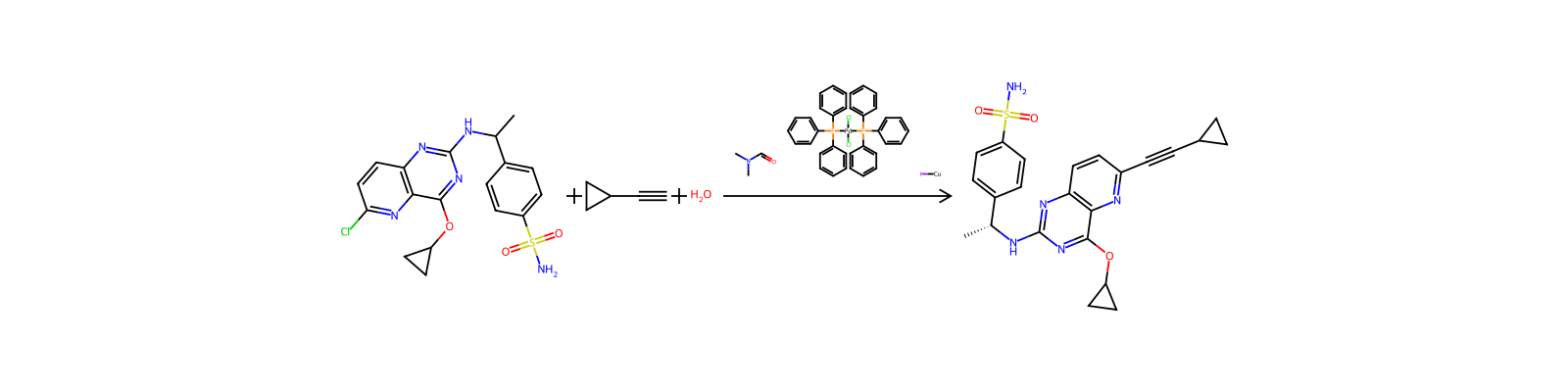
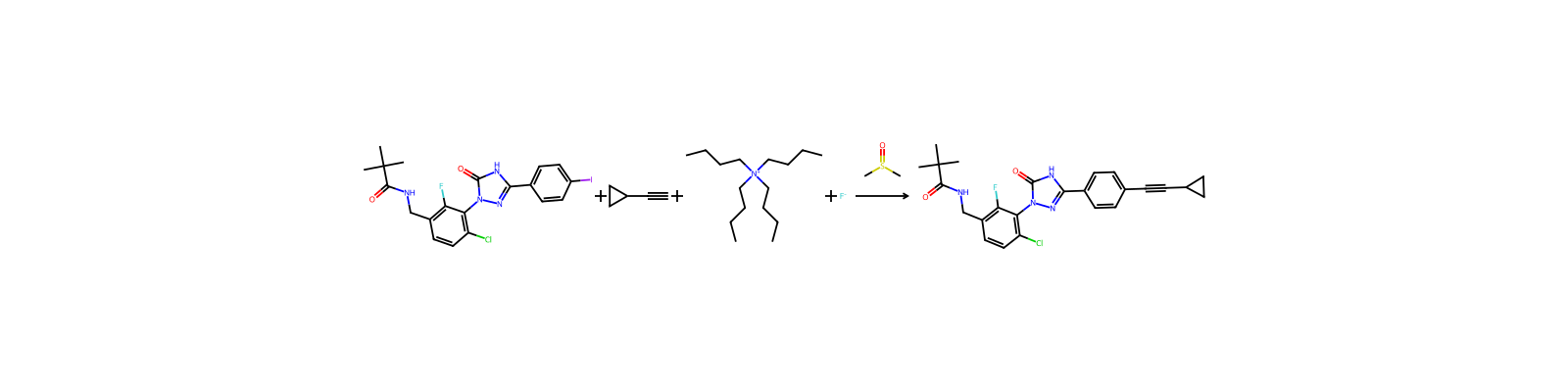
Zugehörige Reaktionen
225




Notizen zur Verbindung
Wird geladen…