

Grundinformationen
- Standard-SMILES
C=Cc1ccc(Cl)cc1- InChIKey
KTZVZZJJVJQZHV-UHFFFAOYSA-N- Summenformel
- C8H7Cl
- Durchschnittliche Molmasse
- 138,59 g/mol
- Monoisotopische Masse
- 138,0236279
Namen und Bezeichner
- Bevorzugter Name
- 4-Chlorostyrene
- IUPAC
- 1-chloro-4-ethenylbenzene
- Lokaler Name
- p-Chlorstyrol
- Englischer Name
- 4-Chlorostyrene
- Summenformel
- C8H7Cl
- Molmasse
- 138.59
Namen und Synonyme
4-Chlorostyrene1073-67-2P-CHLOROSTYRENEParachlorostyreneBenzene, 1-chloro-4-ethenyl-Styrene, p-chloro-Styrene, 4-chloro-T0J05U220FNSC-18603RefChem:98623214-028-81-Chloro-4-vinylbenzene
Weitere Namen anzeigen
4-Chlorostyrene, stabilized, 99%ARBA-020orostyrenep-ChlorstyrolCHLOROSTYRENE-4p-chloro-styren
1-chloro-4-ethenylbenzene24991-47-7poly(p-chlorostyrene)C8H7Clpara-chlorostyreneMFCD000006324-Chlorostyrene (stabilized with TBC)4-vinylphenyl chloride
Datenbank-Bezeichner
- CAS
1073-67-2- PubChem CID
- 14085
- DTXSID
DTXSID4061464- UNII
- T0J05U220F
- EC Number
- 214-028-8
- Nikkaji
- J2.125C
Eigenschaften
Berechnete Struktureigenschaften
- XLogP
- 3,7
- Polarare Oberfläche (TPSA)
- 0 Ų
- H-Brücken-Donoren
- 0
- H-Brücken-Akzeptoren
- 0
- Frei drehbare Bindungen
- 1
- Schwere Atome
- 9
- Formalladung
- 0
- Komplexität
- 90,7
Experimentelle und physikochemische Eigenschaften
PolymersPlastics & Rubber -> Styrenes
SpringerMaterials PropertiesBoiling point
Density1.0868 @ 20 °C/4 °C
Solubility
Insol in water
SOL IN BENZENE, PETROLEUM ETHER
Sol alcohol, ether, acetone
SOL IN CARBON TETRACHLORIDE
Endocrine DisruptorsPotential endocrine disrupting compound
Boiling Point192 °C
DecompositionWhen heated to decomposition, it emits /hydrogen chloride/. /Chlorostyrene/
Melting Point-15.90 °C
Vapor Pressure
0.81 [mmHg]
0.816 mm Hg @ 25 °C
Refractive IndexIndex of refraction: 1.5660 @ 20 °C/D
Physical DescriptionColorless liquid; [MSDSonline]
Physikochemische Eigenschaften
- Schmelzpunkt
- -16 °C · -16 °C
- Siedepunkt
- 192 °C · 192 °C(lit.)
- Dichte
- 1.155 g/mL · 1.155 g/mL at 25 °C(lit.)
- Dampfdruck
- 0.68 mm · 0.68 mm Hg ( 20 °C)
- Brechungsindex
- 20 · n20/D 1.565(lit.)
- Flammpunkt
- 140 °F · 140 °F
- storage temp.
- 2 · 2-8°C
- Aggregatzustand
- Liquid
- Wichte
- 1.155 · 1.155
- Farbe
- Clear colorless to slightly yellow
- Wasserlöslichkeit
- Immiscible with water.
- BRN
- 1098859 · 1098859
- Henry's Law Constant
- 4.7 · 4.7×10-3 mol/(m3Pa) at 25℃, HSDB (2015)
- InChI
- 1S/C8H7Cl/c1-2-7-3-5-8(9)6-4-7/h2-6H,1H2
- InChIKey
- KTZVZZJJVJQZHV-UHFFFAOYSA-N
- SMILES
- Clc1ccc(C=C)cc1
- CAS Datenbank
- 1073 · 1073-67-2(CAS DataBase Reference)
- NIST chemische Informationen
- 1 · Benzene, 1-chloro-4-ethenyl-(1073-67-2)
- EPA chemische Informationen
- 1 · Benzene, 1-chloro-4-ethenyl- (1073-67-2)
Sicherheit und Regulatorisches
GHS-Klassifizierung
GHS Classification
Warning
H226 (18.2%): Flammable liquid and vapor [Warning Flammable liquids]
P210, P233, P240, P241, P242, P243, P261, P264, P264+P265, P271, P273, P280, P302+P352, P303+P361+P353, P304+P340, P305+P351+P338, P319, P321, P332+P317, P337+P317, P362+P364, P370+P378, P391, P403+P233, P403+P235, P405, and P501 (click each P-code to see the statement)
Aggregated GHS information provided per 11 reports by companies from 8 notifications to the ECHA C&L Inventory. Each notification may be associated with multiple companies.
Gefahrenhinweise
Regulatory Information
Chemical: Benzene, 1-chloro-4-ethenyl-
Benzene, 1-chloro-4-ethenyl-: Does not have an individual approval but may be used under an appropriate group standard
Other Safety InformationIMAP assessments - Benzene, 1-chloro-4-ethenyl-: Environment tier I assessment
Hazards SummaryAn irritant; [MSDSonline] See o-Chlorostyrene. See Styrene.
Toxic Combustion ProductsWhen heated to decomposition, it emits toxic fumes of /hydrogen chloride/. /Chlorostyrene/
Hazard Classes and CategoriesFlam. Liq. 3 (18.2%)
Sicherheit und Schutzausrüstung
Disposal Methods
SRP: At the time of review, criteria for land treatment or burial (sanitary landfill) disposal practices are subject to significant revision. Prior to implementing land disposal of waste residue (including waste sludge), consult with environmental regulatory agencies for guidance on acceptable disposal practices.
Toxikologische Informationen
Environmental Fate
TERRESTRIAL FATE: Based on a classification scheme(1), an estimated Koc value of 840(SRC), determined from a structure estimation method(2), indicates that p-chlorostyrene is expected to have low mobility in soil(SRC). Volatilization of p-chlorostyrene from moist soil surfaces is expected to be an important fate process(SRC) given an estimated Henry's Law constant of 2.1X10⁻³ atm-cu m/mole(SRC), using a fragment constant estimation method(3). The potential for volatilization of p-chlorostyrene from dry soil surfaces may exist(SRC) based upon a vapor pressure of 0.82 mm Hg(4).
AQUATIC FATE: Based on a classification scheme(1), an estimated Koc value of 840(SRC), determined from a structure estimation method(2), indicates that p-chlorostyrene is expected to adsorb to suspended solids and sediment(SRC). Volatilization from water surfaces is expected(3) based upon a estimated Henry's Law constant of 2.1X10⁻³ atm-cu m/mole(SRC), developed using a fragment constant estimation method(4). Using this Henry's Law constant and an estimation method(3), volatilization half-lives for a model river and model lake are 2 hrs and 5 days, respectively(SRC). According to a classification scheme(5), an estimated BCF of 100(SRC), from an estimated log Kow of 3.54(6) and a regression-derived equation(7), suggests the potential for bioconcentration in aquatic organisms is moderate(SRC).
ATMOSPHERIC FATE: According to a model of gas/particle partitioning of semivolatile organic compounds in the atmosphere(1), p- chlorostyrene, which has a vapor pressure of 0.82 mm Hg at 25 °C(2), is expected to exist solely as a vapor in the ambient atmosphere(SRC). Vapor-phase p-chlorostyrene is degraded in the atmosphere by reaction with photochemically-produced hydroxyl radicals and ozone(SRC); the half-lives for these reactions in air are estimated to be 14 and 13 hrs, respectively(SRC), calculated from rate constants of 2.8X10⁻¹¹ and 2.1X10⁻¹⁷ cu cm/molecule-sec, respectively at 25 °C(SRC) derived using a structure estimation method(3).
Adverse EffectsNeurotoxin - Acute solvent syndrome
Soil Adsorption/Mobility
Using a structure estimation method based on molecular connectivity indices(1), the Koc for p-chlorostyrene can be estimated to be 840(SRC). According to a classification scheme(2), this estimated Koc value suggests that p-chlorostyrene is expected to have low mobility in soil(SRC).
Artificial Pollution Sourcesp-Chlorostyrene's production and use in the manufacture of polychlorostyrene and polyesters(1) may result in its release to the environment through various waste streams(SRC).
Environmental BiodegradationData regarding the biodegradation of p-chlorostyrene in either soil or aquatic systems were not available. (SRC)
Environmental Bioconcentration
An estimated BCF of 100 was calculated for p-chlorostyrene(SRC), using an estimated log Kow of 3.54(1) and a regression-derived equation(2). According to a classification scheme(3), this BCF suggests the potential for bioconcentration in aquatic organisms is moderate(SRC).
Volatilization from Water/Soil
The Henry's Law constant for p-chlorostyrene is estimated as 2.1X10⁻³ atm-cu m/mole(SRC) using a fragment constant estimation method(1). This Henry's Law constant indicates that p-chlorostyrene is expected to volatilize rapidly from water surfaces(2). Based on this Henry's Law constant, the volatilization half-life from a model river (1 m deep, flowing 1 m/sec, wind velocity of 3 m/sec)(2) is estimated as 2 hrs(SRC). The volatilization half-life from a model lake (1 m deep, flowing 0.05 m/sec, wind velocity of 0.5 m/sec)(2) is estimated as 5 days(SRC). p-Chlorostyrene's Henry's Law constant indicates that volatilization from moist soil surfaces may occur(SRC). The potential for volatilization of p-chlorostyrene from dry soil surfaces may exist(SRC) based upon a vapor pressure of 0.82 mm Hg(3).
Environmental Abiotic Degradation
The rate constant for the vapor-phase reaction of p-chlorostyrene with photochemically-produced hydroxyl radicals has been estimated as 2.8X10- 11 cu cm/molecule-sec at 25 °C(SRC) using a structure estimation method(1). This corresponds to an atmospheric half-life of about 14 hrs at an atmospheric concentration of 5X10+5 hydroxyl radicals per cu cm(1). The rate constant for the vapor-phase reaction of p-chlorostyrene with ozone has been estimated as 2.1X10⁻¹⁷ cu cm/molecule-sec at 25 °C(SRC) that was derived using a structure estimation method(1). This corresponds to an atmospheric half-life of about 13 hrs at an atmospheric concentration of 7X10+11 ozone molecules per cu cm(2). p-Chlorostyrene is not expected to undergo hydrolysis in the environment due to the lack of hydrolyzable functional groups(3).
Probable Routes of Human ExposureOccupational exposure to p-chlorostyrene may occur through inhalation and dermal contact with this compound at workplaces where p-chlorostyrene is produced or used. (SRC)
Environmental Fate/Exposure Summary
p-Chlorostyrene's production and use in the manufacture of polychlorostyrene and polyesters may result in its release to the environment through various waste streams. If released to air, a vapor pressure of 0.82 mm Hg at 25 °C indicates p-chlorostyrene will exist solely as a vapor in the ambient atmosphere. Vapor-phase p-chlorostyrene will be degraded in the atmosphere by reaction with photochemically-produced hydroxyl radicals and ozone; the half-lives for these reactions in air are estimated to be 14 and 13 hrs, respectively. If released to soil, p-chlorostyrene is expected to have low mobility based upon an estimated Koc of 840. Volatilization from moist soil surfaces is expected to be an important fate process based upon an estimated Henry's Law constant of 2.1X10⁻³ atm-cu m/mole. p-Chlorostyrene may volatilize from dry soil surfaces based upon its vapor pressure. If released into water, p-chlorostyrene is expected to adsorb to suspended solids and sediment based upon the estimated Koc. Volatilization from water surfaces is expected to be an important fate process based upon this compound's estimated Henry's Law constant. Estimated volatilization half-lives for a model river and model lake are 2 hrs and 5 days, respectively. An estimated BCF of 100 suggests the potential for bioconcentration in aquatic organisms is moderate. Hydrolysis is not expected to occur due to the lack of hydrolyzable functional groups. Occupational exposure to p-chlorostyrene may occur through inhalation and dermal contact with this compound at workplaces where p-chlorostyrene is produced or used. (SRC)
Antidote and Emergency Treatment
Basic treatment: Establish a patent airway. Suction if necessary. Watch for signs of respiratory insufficiency and assist ventilations if needed. Administer oxygen by nonrebreather mask at 10 to 15 L/min. Monitor for pulmonary edema and treat if necessary ... . Monitor for shock and treat if necessary ... . Anticipate seizures and treat if necessary ... . For eye contamination, flush eyes immediately with water. Irrigate each eye continuously with normal saline during transport ... . Do not use emetics. For ingestion, rinse mouth and administer 5 ml/kg up to 200 ml of water for dilution if the patient can swallow, has a strong gag reflex, and does not drool ... . Cover skin burns with dry sterile dressings after decontamination ... . /Poison A and B/
Advanced treatment: Consider orotracheal or nasotracheal intubation for airway control in the patient who is unconscious, has severe pulmonary edema, or is in respiratory arrest. Positive pressure ventilation techniques with a bag valve mask device may be beneficial. Monitor cardiac rhythm and treat arrhythmias as necessary ... . Start an IV with D5W /SRP: "To keep open", minimal flow rate/. Use lactated Ringer's if signs of hypovolemia are present. Watch for signs of fluid overload. Consider drug therapy for pulmonary edema ... . For hypotension with signs of hypovolemia, administer fluid cautiously. Watch for signs of fluid overload ... . Treat seizures with diazepam (Valium) ... . Use proparacaine hydrochloride to assist eye irrigation ... . /Poison A and B/
Basic treatment: Establish a patent airway. Suction if necessary. Watch for signs of respiratory insufficiency and assist ventilations if necessary. Administer oxygen by nonrebreather mask at 10 to 15 L/min. Monitor for pulmonary edema and treat if necessary ... . Monitor for shock and treat if necessary ... . For eye contamination, flush eyes immediately with water. Irrigate each eye continuously with normal saline during transport ... . Do not use emetics. For ingestion, rinse mouth and administer 5 ml/kg up to 200 ml of water for dilution if the patient can swallow, has a strong gag reflex, and does not drool. Administer activated charcoal ... . /Aromatic hydrocarbons and related compounds/
Advanced treatment: Consider orotracheal or nasotracheal intubation for airway control in the patient who is unconscious or in respiratory arrest. Positive pressure ventilation techniques with a bag valve mask device may be beneficial. Monitor cardiac rhythm and treat arrhythmias if necessary ... Start an IV with D5W /SRP: "To keep open", minimal flow rate/. Use lactated Ringer's if signs of hypovolemia are present. Watch for signs of fluid overload. Consider drug therapy for pulmonary edema ... . Treat seizures with diazepam (Valium) ... . Use proparacaine hydrochloride to assist eye irrigation ... . /Aromatic hydrocarbons and related compounds/
Non-Human Toxicity Values
Irritant dose rabbit dermal 10 mg/24 hr /Chlorostyrene/
Irritant dose rabbit ocular 500 mg /Chlorostyrene/
LD50 Rat oral 5200 mg/kg /Chlorostyrene/
LD50 Rabbit percutaneous 20 g/kg /Chlorostyrene/
For more Non-Human Toxicity Values (Complete) data for P-CHLOROSTYRENE (6 total), please visit the HSDB record page.
Sicherheitsdaten
- wgk
- 3
- tsca
- TSCA listed
- ridadr
- 1993
- hs_code
- 29036990
- RTECS-Nr.
- CZ0533000
- risk_code
- 36/37/38
- Toxizität
- LD50 orally in Rabbit: 5200 mg/kg
- hazard_code
- Xi,F
- safety_code
- 23-24/25-37/39-26-36
- hazard_class
- 3
- packing_group
- III
- Speicherklasse
- 10 - Combustible liquids
- Giftige Stoffe Daten
- 1073-67-2(Hazardous Substances Data)
- Hazard Classifications
- Aquatic Chronic 2Skin Irrit. 2
Chemie und Industrie
Verwendung und Herstellung
Uses
Used to make polychlorostyrene; [HSDB]
p-Chlorostyrene is used in the manufacture of polychlorostyrene which is a clear, colorless plastic with good foaming, heat distortion and flame-retardant properties.
Methods of Manufacturingp-Chlorostyrene is commercially produced as a monomer from p-chloroethylbenzene by an oxidation technique. p-Chlorostyrene is also produced as a mixture with o-chlorostyrene.
General Manufacturing InformationBenzene, 1-chloro-4-ethenyl-: ACTIVE
Anwendungen
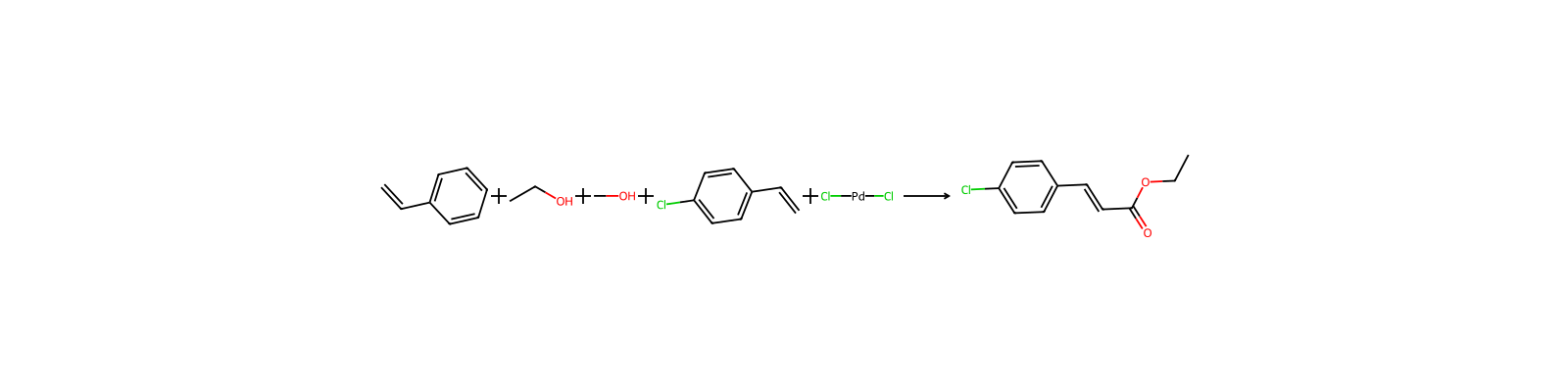
Verwenden4-Chlorostyrene is used in the preparation of new bis(pyrazolyl)borato olefin complexes of copper(I). It is also employed in the investigation of regioselectivity in the cationic Heck reaction of 4-substituted styrenes. Further, it plays an important role in the preparation of 4-[(4-chloro-phenyl)-thioacetyl]-morpholine.
Darstellung
synthetischeSynthesis of 4-chlorostyrene: carry out catalytic dehydration reaction by 4-chlorophenethylalcohol at 280°C, the used catalyst is a modified aluminum silicate catalyst, and the yield is 80%.
Vor- und nachgelagerte Produkte
Vorgelagerte Rohstoffe
Nachgelagerte Produkte
Anbieter50 Anbieter
梯希爱(上海)化成工业发展有限公司021-67121386 · [email protected]
上海阿拉丁生化科技股份有限公司400-6206333 13167063860 · [email protected]
INTATRADE GmbH+49 3493/605464 · [email protected]
爱斯特(成都)生物制药股份有限公司+86-28-85122536 85324413 · [email protected]
科瑞迪化学400-821-5857 021-64326257 · [email protected]
Syntechem Co.,Ltd[email protected]
上海迈瑞尔生化科技有限公司4006356688 18621169109 · [email protected]
北京华威锐科化工有限公司0757-86329057 18934348241 · [email protected]
武汉易泰科技有限公司上海分公司18930552037 · [email protected]
阿法埃莎(中国)化学有限公司400-6106006 · [email protected]
安耐吉化学&3A(安徽泽升科技股份有限公司)400-0056266 · [email protected]
石家庄斯迪亚诺精细化工有限公司0311-89250318 13582355795 · [email protected]
上海瀚鸿科技股份有限公司021-54306202 13764082696 · [email protected]
上海相辉医药科技有限公司13761987713 · [email protected]
上海景颜化工科技有限公司13817811078 · [email protected]
嘉兴市艾森化工有限公司0573-85285100 18627885956 · [email protected]
上海易盛汇生物医药科技有限公司021-61453981 0316-7696480 · [email protected]
武汉丰泰威远科技有限公司027-87465837 19945049750 · [email protected]
山东西亚化学有限公司13355009207 13355009207 · [email protected]
玛雅试剂+86 (573) 82222445 (0)18006601000 452520369 · [email protected]
四川库利南科技有限公司400-1166-196 18981987031 · [email protected]
上海耐士化工科技有限公司400-188-0725 +86 21 34310725 13611771617
天津希恩思生化科技有限公司400 638 7771 · [email protected]
河南多贝化工有限公司0370-2785118 17550508557 · [email protected]
苏州思变化学技术有限公司0512-65617459 18915409046 · [email protected]
赛默飞世尔科技(中国)有限公司800-810-5118 · [email protected]
南京精瑞久安生物技术有限公司025-58196018 800028039 · [email protected]
北京伊诺凯科技有限公司400-810-7969 010-59572699 · [email protected]
上海特伯化学科技有限公司+86-21-60341587 · [email protected]
TCI AMERICA800-4238616 · [email protected]
TOKYO CHEMICAL INDUSTRY CO., LTD.03-36680489 · [email protected]
TCI Europe320-37350700 · [email protected]
上海贤鼎生物科技有限公司4009209199 · [email protected]
深圳康特腾科技有限公司86-0755-86635001 · [email protected]
越林试剂021-62960152 · [email protected]
Clearsynth Labs Limited+91-22-26355700 · [email protected]
陕西帕尼尔生物科技有限公司13720616393;029-84385017-8003 13720616393 · [email protected]
上海湄水化工科技有限公司021-60549325 18616193163
上海将来实业股份有限公司021-61552785 · [email protected]
HBCChem, Inc.+1-510-219-6317 · [email protected]
晟斯化工科技(上海)有限公司+86 13590492756 · [email protected]
上海麦克林生化科技股份有限公司15221275939 15221275939 · [email protected]
上海嵩爰化工科技有限公司010-1234567 18521000990 · [email protected]
北京欣赛维化学科技有限公司010-56218822 13717722232 · [email protected]
江苏艾康生物医药研发有限公司025-66028182 17714375163 · [email protected]
上海凯赛化工有限公司021-33516722 13701817765 · [email protected]
上海孚一生物科技有限公司+86 (21) 61124340
北京华扬致成科技有限公司13716033033 · [email protected]
上海容立化学科技有限公司021-69992220 13701886816 · [email protected]
溧阳市瑞普新材料有限公司+86-0519-82038123,18951201333
Zugehörige Reaktionen
53




Verknüpfte Notizen
Wird geladen…