

Grundinformationen
- Standard-SMILES
CNOC- InChIKey
KRKPYFLIYNGWTE-UHFFFAOYSA-N- Summenformel
- C2H7NO
- Durchschnittliche Molmasse
- 61,08 g/mol
- Monoisotopische Masse
- 61,05276384
Überblick
structure in first source
Namen und Bezeichner
- Bevorzugter Name
- N,O-Dimethylhydroxylamine
- IUPAC
- N-methoxymethanamine
- Lokaler Name
- N-Methoxymethylamin
- Englischer Name
- N-methoxymethylamine
- Summenformel
- C2H7NO
- Molmasse
- 61.08
Namen und Synonyme
N,O-Dimethylhydroxylamine1117-97-1N-METHOXYMETHYLAMINEO,N-DimethylhydroxylamineMethoxymethylamineMethylmethoxyamineMethylamine, N-methoxy-N-Methoxy-N-methylamineHydroxylamine, N,O-dimethyl-Methoxyamine, N-methyl-783670HYEODTXSID5051577
Weitere Namen anzeigen
(Methoxyamino)methaneN-MethyoxyMethyl aMine
RefChem:830246DTXCID9030129214-255-2N-methoxymethanamineMethanamine, N-methoxy-methoxy(methyl)amineN-Methyl-O-methylhydroxylamineN-Methylmethoxyamine
Datenbank-Bezeichner
- CAS
1117-97-1- PubChem CID
- 14232
- DTXSID
DTXSID5051577- UNII
- 783670HYEO
- EC Number
- 214-255-2
- Nikkaji
- J25.778H
Eigenschaften
Berechnete Struktureigenschaften
- XLogP
- -0,2
- Polarare Oberfläche (TPSA)
- 21,3 Ų
- H-Brücken-Donoren
- 1
- H-Brücken-Akzeptoren
- 2
- Frei drehbare Bindungen
- 1
- Schwere Atome
- 4
- Formalladung
- 0
- Komplexität
- 10
Experimentelle und physikochemische Eigenschaften
Chemical ClassesNitrogen Compounds -> Hydroxylamines
SpringerMaterials PropertiesSchoenflies notation
Color/FormLiquid
Boiling Point42.4 °C
Vapor Density379 mm Hg at 25 °C
Vapor Pressure379.0 [mmHg]
Dissociation ConstantspKa = 4.75 (conjugate acid)
Physikochemische Eigenschaften
- Schmelzpunkt
- 97 ℃ · 97℃
- Siedepunkt
- 3 ℃ · 3℃
- Dichte
- 0.796 · 0.796
- Brechungsindex
- 1.4152 · 1.4152 (estimate)
- Flammpunkt
- -29 ℃ · -29℃
- storage temp.
- -20 °C · Keep in dark place,Inert atmosphere,Store in freezer, under -20°C
- pka
- 4.75 · 4.75±0.10(Predicted)
- EPA chemische Informationen
- Methanamine, N-methoxy- (1117-97-1)
Sicherheit und Regulatorisches
GHS-Klassifizierung
GHS Classification
Warning
H315 (100%): Causes skin irritation [Warning Skin corrosion/irritation]
P261, P264, P264+P265, P271, P280, P302+P352, P304+P340, P305+P351+P338, P319, P321, P332+P317, P337+P317, P362+P364, P403+P233, P405, and P501 (click each P-code to see the statement)
The GHS information provided by 1 company from 1 notification to the ECHA C&L Inventory.
Gefahrenhinweise
Regulatory InformationStatus: Active Update: 27-11-2019 https://echa.europa.eu/registration-dossier/-/registered-dossier/30233
Hazards SummaryEmergency treatment: Irritants; [HSDB]
Hazard Classes and CategoriesSkin Irrit. 2 (100%)
Sicherheit und Schutzausrüstung
Disposal Methods
SRP: Recycle any unused portion of the material for its approved use or return it to the manufacturer or supplier. Ultimate disposal of the chemical must consider: the material's impact on air quality; potential migration in air, soil or water; effects on animal, aquatic and plant life; and conformance with environmental and public health regulations. If it is possible or reasonable use an alternative chemical product with less inherent propensity for occupational harm/injury/toxicity or environmental contamination.
Toxikologische Informationen
Environmental Fate
TERRESTRIAL FATE: Based on a classification scheme(1), an estimated Koc value of 24(SRC), determined from a structure estimation method(2), indicates that N-methoxymethylamine is expected to have very high mobility in soil(SRC). Volatilization of N-methoxymethylamine from moist soil surfaces may occur(SRC) given an estimated Henry's Law constant of 4.9X10⁻⁶ atm-cu m/mole(SRC), developed using a fragment constant estimation method(2). N-Methoxymethylamine is expected to volatilize from dry soil surfaces(SRC) based upon a vapor pressure of 379 mm Hg at 25 °C(3). Biodegradation data in soil were not available(SRC, 2018).
AQUATIC FATE: Based on a classification scheme(1), an estimated Koc value of 24(SRC), determined from a structure estimation method(2), indicates that N-methoxymethylamine is not expected to adsorb to suspended solids and sediment(SRC). Volatilization from water surfaces is expected(3) based upon an estimated Henry's Law constant of 4.9X10⁻⁶ atm-cu m/mole(SRC), developed using a fragment constant estimation method(2). Using this Henry's Law constant and an estimation method(3), volatilization half-lives for a model river and model lake are 6 and 46 days, respectively(SRC). According to a classification scheme(4), an estimated BCF of 3(SRC), from an estimated log Kow of 0.06(2) and a regression-derived equation(2), suggests the potential for bioconcentration in aquatic organisms is low. Biodegradation data in water were not available(SRC, 2018).
ATMOSPHERIC FATE: According to a model of gas/particle partitioning of semivolatile organic compounds in the atmosphere(1), N-methoxymethylamine, which has a vapor pressure of 379 mm Hg at 25 °C(2), is expected to exist solely as a vapor in the ambient atmosphere. Vapor-phase N-methoxymethylamine is degraded in the atmosphere by reaction with photochemically-produced hydroxyl radicals(SRC); the half-life for this reaction in air is estimated to be 6 hours(SRC), calculated from its rate constant of 6.4X10⁻¹¹ cu cm/molecule-sec at 25 °C(SRC) that was derived using a structure estimation method(2). N-Methoxymethylamine does not contain chromophores that absorb at wavelengths >290 nm(3) and, therefore, is not expected to be susceptible to direct photolysis by sunlight(SRC).
Toxicity Summary
IDENTIFICATION AND USE: N-methoxymethylamine (NDMH) is a liquid. HUMAN STUDIES: NDMH caused inhibition of glucose 6-phosphate dehydrogenase but not of glutathione reductase, severe methemoglobin formation, only little lipid peroxidation and some impairment of NADPH methemoglobin reductase. ANIMAL STUDIES: There are no data available.
Soil Adsorption/Mobility
Using a structure estimation method based on molecular connectivity indices(1), the Koc of N-methoxymethylamine can be estimated to be 24(SRC). According to a classification scheme(2), this estimated Koc value suggests that N-methoxymethylamine is expected to have very high mobility in soil(SRC).
Human Toxicity Excerpts
/ALTERNATIVE and IN VITRO TESTS/ Hydroxylamine (HYAM, HONH2) and some of its derivatives are known to cause erythrotoxic effects both in vitro and in vivo. Previous studies have shown that the primary in vitro effect of HYAM and O-ethyl hydroxylamine (OEH) is methemoglobin formation, leading to liberation of free radicals which cause lipid peroxidation, enzyme inhibitions and glutathione depletion. By contrast, N-substituted N,O-dimethyl hydroxylamine (NODMH), primarily induces impairment of glucose 6-phosphate dehydrogenase (G6PDH) and glutathione reductase (GR). The oxidative potency of HYAM and the O-derivative was larger than the potency of the N,O-derivative. This seemed to indicate that attachment of an alkyl group to the nitrogen atom of hydroxylamine leads to decreased reactivity. To achieve a better understanding of the structure activity relationship for hydroxylamines three methylated derivatives were tested: N-methyl hydroxylamine (NMH). N-dimethyl hydroxylamine (NDMH) and O-methyl hydroxylamine (OMH). We were also interested in the erythrotoxic potency of OMH which recently entered industrial production. Methemoglobin formation, high release of lipid peroxidation products, inhibition of NADPH methemoglobin reductase and glutathione S-transferase (GST) and depletion of total glutathione (GT) were seen for OMH. The reducing enzymes G6PDH and GR were not impaired by OMH. These findings for OMH are consistent with the proposed mechanism for O-derivatives. Since both the effects caused by OMH and its potency are comparable to those of HYAM and OEH this indicates that possible occupational exposure to this compound may be approached similarly to HYAM and OEH. NMH only inhibited G6PDH and GR activity, which is fully in accord with the proposed mechanism for N-substituted derivatives of HYAM. However, NDMH a double N-substituted compound, caused a strikingly different scheme of reactivity inhibition of G6PDH but not of GR, severe methemoglobin formation, only little lipid peroxidation and some impairment of NADPH methemoglobin reductase. This study confirms that O-derivatives of HYAM are potent hemoglobin oxidators, leading to other oxidative effects. The main effect was confirmed for single N-derivatives as inhibition of the two protective enzymes G6PDH and GR. However, the results for NDMH indicate that this simple classification of O-derivatives and N-derivatives has to be extended for double N-substituted compounds which give a mixture of effects.
Artificial Pollution Sources
N-Methoxymethylamine is a degradation product of the herbicide linuron(1), therefore, it may be present in areas treated with this herbicide(SRC).
Year-long degradation of (14)CH3O-labeled monolinuron in sterile soil, resulted in 9% (14)C conversion into CO2 and of 28% into N,O-dimethylhydroxylamine, whereas in nonsterile soil 58% and 8% (14)C was converted into CO2 and N,O-dimethylhydroxylamine, respectively.
Monolinuron adsorbed to soil was more rapidly degraded than non-adsorbed, forming 4-chloroaniline, N,O-dimethylhydroxylamine and CO2.
Environmental Biodegradation
PURE CULTURE: Members of the genus Hyphomicrobium (Alphaproteobacteria) were the only bacteria found to biodegrade N-methoxymethylamine(1). Eleven other bacteria cultured from two linuron-treated agricultural soils did not biodegrade N-methoxymethylamine(1).
Environmental Bioconcentration
An estimated BCF of 3 was calculated in fish for N-methoxymethylamine(SRC), using an estimated log Kow of 0.06(1) and a regression-derived equation(1). According to a classification scheme(2), this BCF suggests the potential for bioconcentration in aquatic organisms is low.
Volatilization from Water/Soil
The Henry's Law constant for N-methoxymethylamine is estimated as 4.9X10⁻⁶ atm-cu m/mole(SRC) using a fragment constant estimation method(1). This Henry's Law constant indicates that N-methoxymethylamine is expected to volatilize from water surfaces(2). Based on this Henry's Law constant, the volatilization half-life from a model river (1 m deep, flowing 1 m/sec, wind velocity of 3 m/sec)(2) is estimated as 6 days(SRC). The volatilization half-life from a model lake (1 m deep, flowing 0.05 m/sec, wind velocity of 0.5 m/sec)(2) is estimated as 46 days(SRC). N-Methoxymethylamine's Henry's Law constant indicates that volatilization from moist soil surfaces may occur(SRC). N-Methoxymethylamine is expected to volatilize from dry soil surfaces(SRC) based upon a vapor pressure of 379 mm Hg(3).
Environmental Abiotic Degradation
The rate constant for the vapor-phase reaction of N-methoxymethylamine with photochemically-produced hydroxyl radicals has been estimated as 6.4X10⁻¹¹ cu cm/molecule-sec at 25 °C(SRC) using a structure estimation method(1). This corresponds to an atmospheric half-life of about 6 hours at an atmospheric concentration of 5X10+5 hydroxyl radicals per cu cm(1). N-Methoxymethylamine does not contain chromophores that absorb at wavelengths >290 nm(2) and, therefore, is not expected to be susceptible to direct photolysis by sunlight(SRC).
Probable Routes of Human Exposure
Occupational exposure to N-methoxymethylamine may occur through inhalation and dermal contact with this compound at workplaces where the herbicide linuron is produced or used. Exposure to N-methoxymethylamine of the general population is unlikely; however, exposure may occur via inhalation of ambient air and dermal contact in areas where the herbicide linuron has been applied. (SRC)
Environmental Fate/Exposure Summary
N-Methoxymethylamine is a degradation product of the herbicide linuron; therefore, it may be present in areas treated with this herbicide. If released to air, a vapor pressure of 379 mm Hg at 25 °C indicates N-methoxymethylamine will exist solely as a vapor in the atmosphere. Vapor-phase N-methoxymethylamine will be degraded in the atmosphere by reaction with photochemically-produced hydroxyl radicals; the half-life for this reaction in air is estimated to be 6 hours. N-Methoxymethylamine does not contain chromophores that absorb at wavelengths >290 nm and, therefore, is not expected to be susceptible to direct photolysis by sunlight. If released to soil, N-methoxymethylamine is expected to have very high mobility based upon an estimated Koc of 24. Volatilization from moist soil surfaces is expected based upon an estimated Henry's Law constant of 4.9X10⁻⁶ atm-cu m/mole. N-Methoxymethylamine may volatilize from dry soil surfaces based upon its vapor pressure. Biodegradation data in soil or water were not available. If released into water, N-methoxymethylamine is not expected to adsorb to suspended solids and sediment based upon the estimated Koc. Volatilization from water surfaces is expected to be an important fate process based upon this compound's estimated Henry's Law constant. Estimated volatilization half-lives for a model river and model lake are 6 and 46 days, respectively. An estimated BCF of 3 suggests the potential for bioconcentration in aquatic organisms is low. Occupational exposure to N-methoxymethylamine may occur through inhalation and dermal contact with this compound at workplaces where the herbicide linuron is produced or used. Exposure to N-methoxymethylamine of the general population is unlikely; however, exposure may occur via inhalation of ambient air and dermal contact in areas where the herbicide linuron has been applied. (SRC)
Antidote and Emergency Treatment
/SRP:/ Immediate first aid: Ensure that adequate decontamination has been carried out. If patient is not breathing, start artificial respiration, preferably with a demand-valve resuscitator, bag-valve-mask device, or pocket mask, as trained. Perform CPR as necessary. Immediately flush contaminated eyes with gently flowing water. Do not induce vomiting. If vomiting occurs, lean patient forward or place on the left side (head-down position, if possible) to maintain an open airway and prevent aspiration. Keep patient quiet and maintain normal body temperature. Obtain medical attention. /Organic bases/Amines and related compounds/
/SRP:/ Basic treatment: Establish a patent airway (oropharyngeal or nasopharyngeal airway, if needed). Suction if necessary. Watch for signs of respiratory insufficiency and assist ventilations if necessary. Administer oxygen by nonrebreather mask at 10 to 15 L/min. Monitor for pulmonary edema and treat if necessary ... . Monitor for shock and treat if necessary ... . Anticipate seizures and treat if necessary ... . For eye contamination, flush eyes immediately with water. Irrigate each eye continuously with 0.9% saline (NS) during transport ... . Do not use emetics. For ingestion, rinse mouth and administer 5 mL/kg up to 200 mL of water for dilution if the patent can swallow, has a strong gag reflex, and does not drool. Administer activated charcoal ... . Cover skin burns with dry sterile dressings after decontamination ... . /Organic bases/Amines and related compounds/
/SRP:/ Advanced treatment: Consider orotracheal or nasotracheal intubation for airway control in the patient who is unconscious, has severe pulmonary edema, or is in severe respiratory distress. Positive-pressure ventilation techniques with a bag-valve-mask device may be beneficial. Consider drug therapy for pulmonary edema ... . Monitor cardiac rhythm and treat arrhythmias as necessary ... . Start IV administration of D5W /SRP: "To keep open", minimal flow rate/. Use 0.9% saline (NS) or lactated Ringer's (LR) if signs of hypovolemia are present. For hypotension with signs of hypovolemia, administer fluid cautiously. If patient is unresponsive to these measures, vasopressors may be helpful. Watch for signs of fluid overload ... . Administer 1% solution methylene blue if patient is symptomatic with severe hypoxia, cyanosis, and cardiac compromise not responding to oxygen ... . Treat seizures with diazepam (Valuim) or lorazepam (Ativan) ... . Use proparacaine hydrochloride to assist eye irrigation ... . /Organic bases/Amines and related compounds/
Sicherheitsdaten
- tsca
- TSCA listed
- Giftige Stoffe Daten
- 1117-97-1(Hazardous Substances Data)
Chemie und Industrie
Pharmakologische Informationen
Metabolism/MetabolitesN, O-dimethylhydroxylamine was identified as a degradation product of linuron formed in the presence of extracts of Bacillus sphaericus ATCC 12123 by characterization of its dinitrophenyl derivative.
Verwendung und Herstellung
General Manufacturing InformationMethanamine, N-methoxy-: INACTIVE
Vor- und nachgelagerte Produkte
Nachgelagerte Produkte
Anbieter50 Anbieter
湖北永阔科技有限公司027-59223108 15972152991 · [email protected]
湖北万得化工有限公司15377098680 15377098680 · [email protected]
湖北云镁科技有限公司027-59206672 18995657604 · [email protected]
山东利腾生物科技有限公司+86-18663721413 +86-15552573001 · [email protected]
Syntechem Co.,Ltd[email protected]
兰州汇邦生物化工科技有限公司0931-5114965 15593135927 · [email protected]
梯希爱(上海)化工贸易有限公司021-61109150 · [email protected]
上海瀚鸿科技股份有限公司021-54306202 13764082696 · [email protected]
上海相辉医药科技有限公司13761987713 · [email protected]
嘉兴市艾森化工有限公司0573-85285100 18627885956 · [email protected]
湖北广奥生物科技有限公司027-02702759223056 18162699093 · [email protected]
烟台正信新材料科技有限公司13854547682 13854547682 · [email protected]
湖北成海化工有限公司027-59220433 18327245847 · [email protected]
上海健超生物科技有限公司15021035486 18081542813 · [email protected]
四川库利南科技有限公司400-1166-196 18981987031 · [email protected]
南京斯贝源医药科技有限公司+86-25-68710855, +86-25-68710897 · [email protected]
Shanghai Hanhong Scientific Co., Ltd.+undefined17612118332 · [email protected]
成都零六生物科技有限公司400-1166-196 13458535857 · [email protected]
雷丁试剂0510-85629785 18013409632 · [email protected]
上海马氏化学科技有限公司19916721580 · [email protected]
湖北巨胜科技有限公司027-59599241 18871490274 · [email protected]
碧语生物科技(上海)有限公司021-26018599
湖北军瑞生物科技有限公司13971166412 · [email protected]
淄博百极荣创医药科技有限公司0533-6092686 13371592196 · [email protected]
上海思言生物科技有限公司021-50908862,442785678,326799392 18721037013 · [email protected]
北京华威锐科化工科技有限公司89508211 18501085097 · [email protected]
武汉市承天精细化工有限公司18164098996 · [email protected]
Yurui (Shanghai) Chemical Co., Ltd.+86-021-50456736 +8613331628239;+8619121032725 · [email protected]
湖北齐飞医药化工有限公司027-59322506 18071128681 · [email protected]
安泰精细化工技术有限公司18503026267 · [email protected]
成都华纯科技有限公司400-1166-196 15982826727 · [email protected]
上海修时生物医药有限公司15002184385 15021598081 15002184385 · [email protected]
湖北鑫源顺医药化工有限公司027-50664929, 13971561712 · [email protected]
上海康曼生物科技有限公司18800375331 · [email protected]
上海特伯化学科技有限公司021-58170097 · [email protected]
Shaanxi Dideu New Materials Co. Ltd18192503167 · [email protected]
Shanghai Acmec Biochemical Technology Co., Ltd.+86-18621343501 · [email protected]
毕升化学(上海)有限公司19852830193 19852830193 · [email protected]
嘉兴市德亿化工有限公司86-0573-85866609 18367600069 · [email protected]
江苏艾康生物医药研发有限公司025-58851090 13913916777 · [email protected]
上海易恩化学技术有限公司400-400-1332688 18019345275 · [email protected]
郑州如科生物科技有限公司15981811963 · [email protected]
career henan chemical co+86-0371-86658258 · [email protected]
艾览(上海)化工科技有限公司400-668-9898 · [email protected]
郑州艾克姆化工有限公司037163312495 13303845143 · [email protected]
上海思阔化学科技有限公司021-33758897 · [email protected]
济南尚博生物科技有限公司+8615866703830 · [email protected]
湖北摆渡化学有限公司027-59106051 13627137652 · [email protected]
湖北达豪化工有限公司027-027-59106191 13986034860 · [email protected]
陕西缔都医药化工有限公司029-029-029-81148696 18161915376 · [email protected]
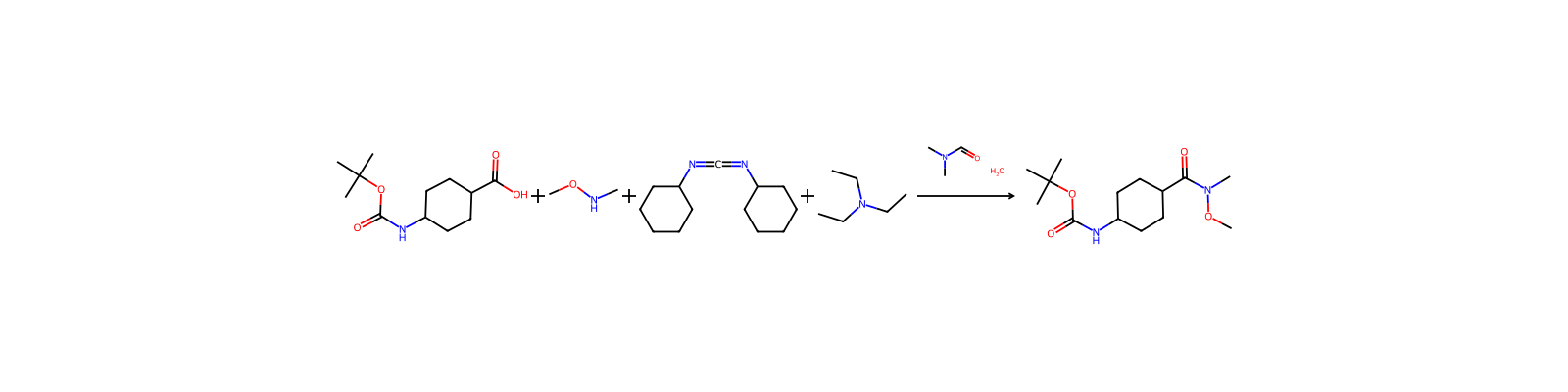
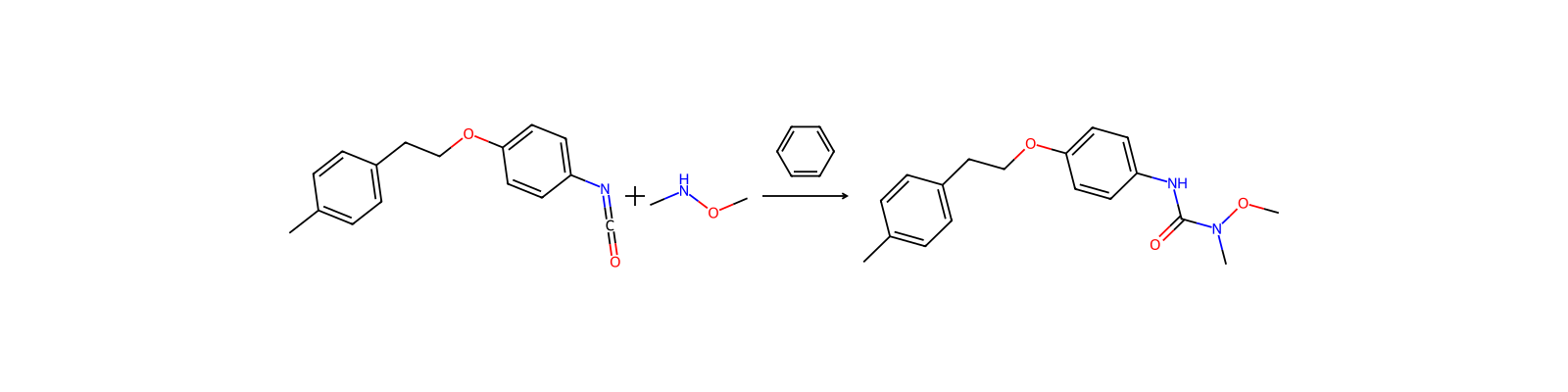
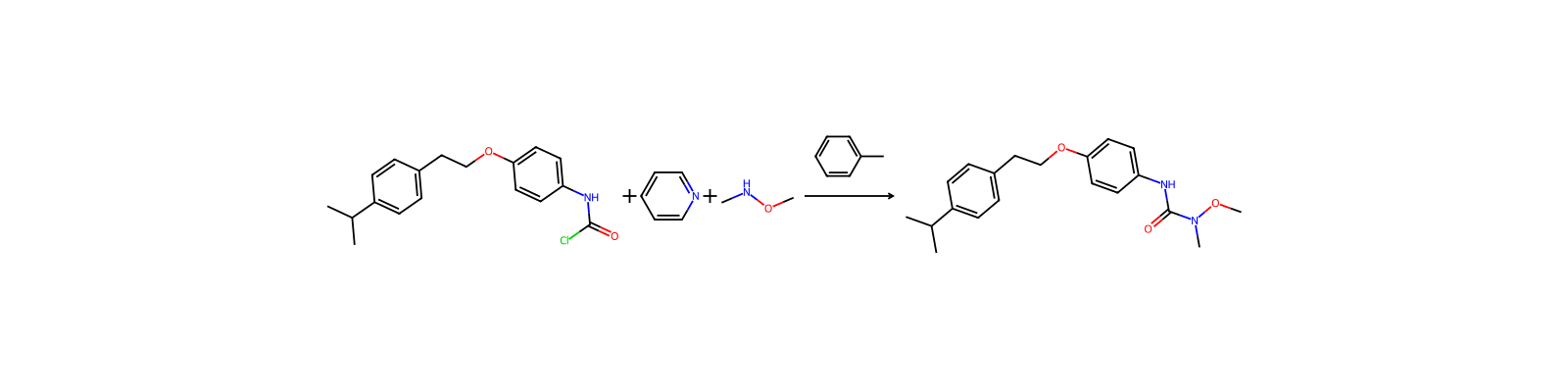
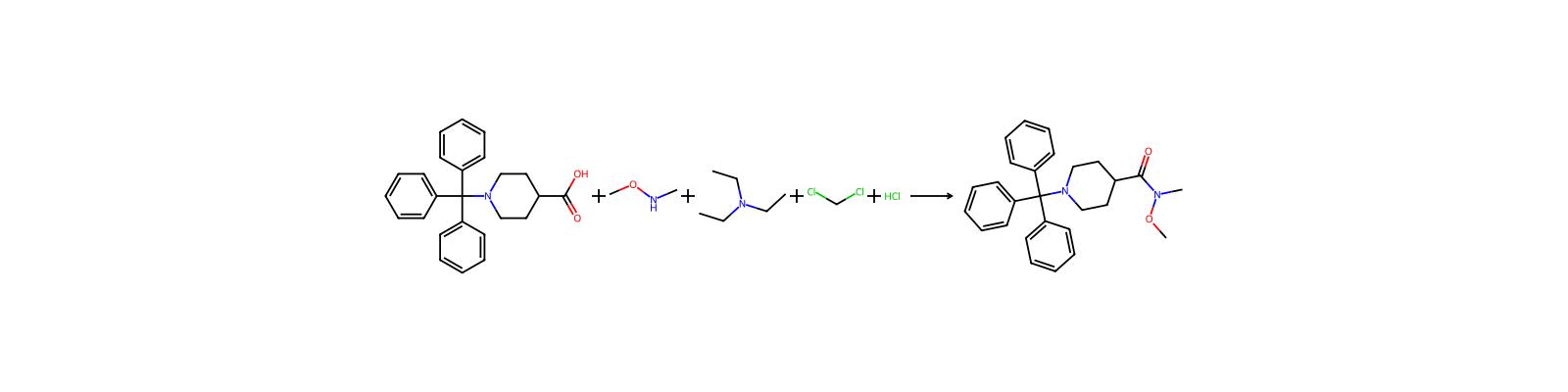
Zugehörige Reaktionen
3.720



Verknüpfte Notizen
Wird geladen…