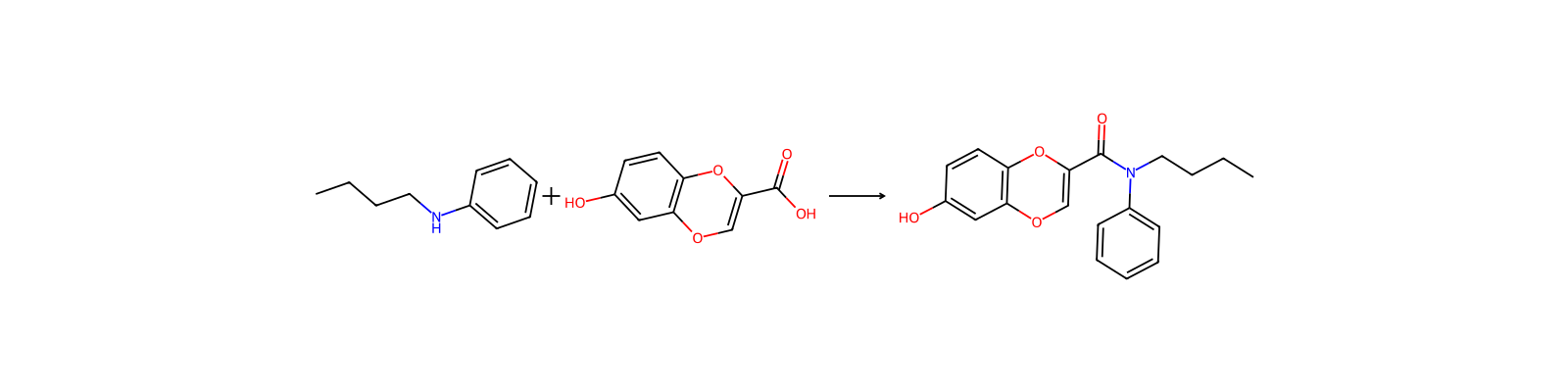
N-Butylanilin
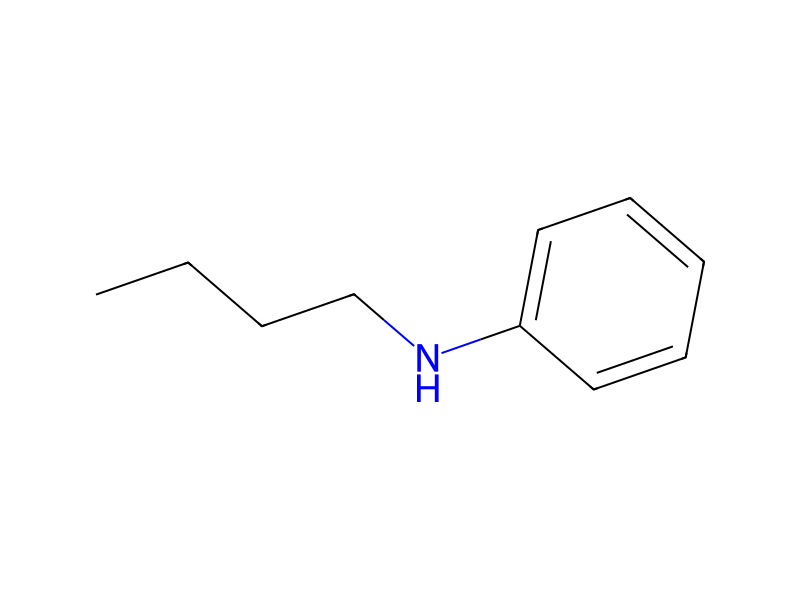
N-Butylaniline
Grundinformationen
- CAS
1126-78-9- Standard-SMILES
CCCCNc1ccccc1- InChIKey
VSHTWPWTCXQLQN-UHFFFAOYSA-N- Summenformel
- C10H15N
- Durchschnittliche Molmasse
- 149,23 g/mol
- Monoisotopische Masse
- 149,12044948
Überblick
N-butylaniline appears as an amber colored liquid. Slightly denser than water and insoluble in water. May be toxic by skin absorption and ingestion. Severely irritates skin and eyes. Used to make dyes.
Namen und Bezeichner
- Bevorzugter Name
- N-Butylaniline
- IUPAC
- N-butylaniline
- Lokaler Name
- N-Butylanilin
- Englischer Name
- N-Phenyl-n-butylamine
- Summenformel
- C10H15N
- Molmasse
- 149.23
Namen und Synonyme
N-Butylaniline1126-78-9Benzenamine, N-butyl-N-ButylbenzenamineAniline, N-butyl-4-(Phenylamino)butaneN-(N-BUTYL)ANILINEbutylphenylamineN-PhenylbutylamineNSC 7114Benzamine, N-butyl-UN2738
Weitere Namen anzeigen
N-Butylanlinen-butyl-anilinN-N-BUTYLANILINEn-butyl-benzenaminPhenyln-butylamine
DTXSID9044370UNII-R2ZNJ7L2UMR2ZNJ7L2UMNSC-7114EINECS 214-425-6BRN 2206226AI3-15307DTXCID7024370
Datenbank-Bezeichner
- CAS
1126-78-9- PubChem CID
- 14310
- DTXSID
DTXSID9044370- ChEMBL
CHEMBL3187651- UNII
- R2ZNJ7L2UM
- EC Number
- 214-425-6
- Nikkaji
- J1.760D
Eigenschaften
Berechnete Struktureigenschaften
- XLogP
- 2,8
- Polarare Oberfläche (TPSA)
- 12 Ų
- H-Brücken-Donoren
- 1
- H-Brücken-Akzeptoren
- 1
- Frei drehbare Bindungen
- 4
- Schwere Atome
- 11
- Formalladung
- 0
- Komplexität
- 84,9
Experimentelle und physikochemische Eigenschaften
SpringerMaterials PropertiesBoiling point
LogP3.58
Physical DescriptionN-butylaniline appears as an amber colored liquid. Slightly denser than water and insoluble in water. May be toxic by skin absorption and ingestion. Severely irritates skin and eyes. Used to make dyes.
Physikochemische Eigenschaften
- Schmelzpunkt
- -12 °C · -12 °C
- Siedepunkt
- 241 °C · 241 °C
- Dichte
- 0.93 · 0.93
- Brechungsindex
- 1.5325 · 1.5325-1.5345
- Flammpunkt
- 107 °C · 107 °C
- pka
- 5.05 · 5.05±0.20(Predicted)
- Aggregatzustand
- clear liquid
- Farbe
- Light yellow to Brown
- Wasserlöslichkeit
- insoluble
Sicherheit und Regulatorisches
Sicherheitsangaben dienen nur zur Orientierung und ersetzen weder das Sicherheitsdatenblatt (SDB) des Lieferanten noch geltende Vorschriften oder eine fachliche Bewertung.
GHS-Klassifizierung
GHS Classification
Danger
H302 (100%): Harmful if swallowed [Warning Acute toxicity, oral]
P260, P261, P264, P264+P265, P270, P271, P280, P301+P317, P302+P352, P304+P340, P305+P351+P338, P308+P316, P319, P321, P330, P332+P317, P337+P317, P362+P364, P403+P233, P405, and P501 (click each P-code to see the statement)
Aggregated GHS information provided per 99 reports by companies from 11 notifications to the ECHA C&L Inventory. Each notification may be associated with multiple companies.
Gefahrenhinweise
Regulatory Information
Chemical: Benzenamine, N-butyl-
The New Jersey Worker and Community Right to Know Act requires public and private employers to provide information about hazardous substances at their workplaces. (N.J.S.A. 34:5A-1 et. seq.)
DOT LabelPoison
Fire Hazards
Excerpt from ERG Guide 153 [Substances - Toxic and/or Corrosive (Combustible)]:
· Combustible material: may burn but does not ignite readily.
Health Hazards
Excerpt from ERG Guide 153 [Substances - Toxic and/or Corrosive (Combustible)]:
· TOXIC and/or CORROSIVE; inhalation, ingestion or skin contact with material may cause severe injury or death.
DOT ID and Guide2738 153
Reactive GroupAmines, Aromatic
Reactivity Profile
N-BUTYLANILINE neutralizes acids in exothermic reactions to form salts plus water. May be incompatible with isocyanates, halogenated organics, peroxides, phenols (acidic), epoxides, anhydrides, and acid halides. Flammable gaseous hydrogen may be generated in combination with strong reducing agents, such as hydrides.
Chemie und Industrie
Verwendung und Herstellung
General Manufacturing InformationBenzenamine, N-butyl-: ACTIVE
Anwendungen
VerwendenN-Butylaniline is used in preparation of Cyano Tertiary Amine.
Vor- und nachgelagerte Produkte
Vorgelagerte Rohstoffe
Nachgelagerte Produkte
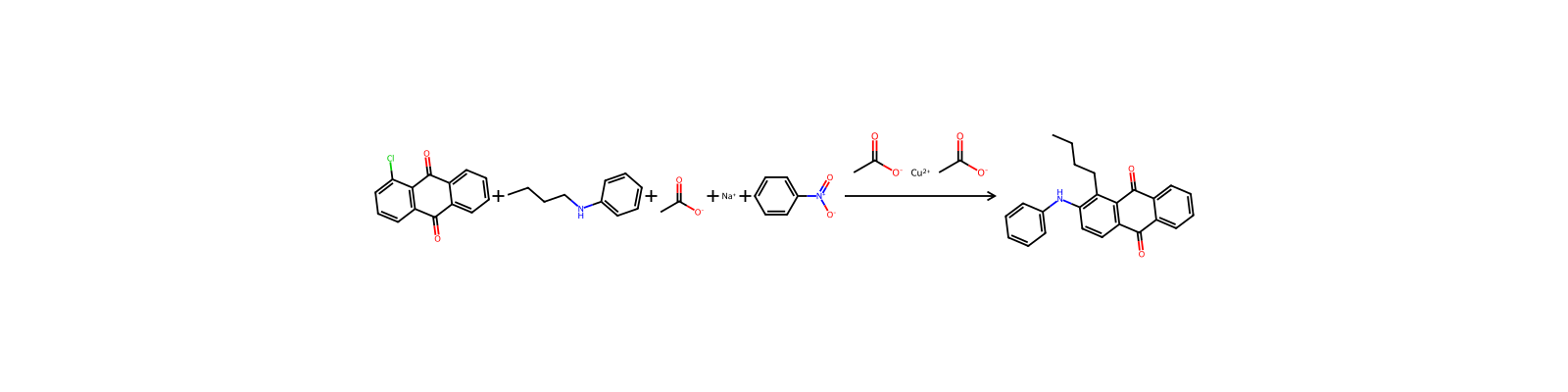
Zugehörige Reaktionen
17




Notizen zur Verbindung
Wird geladen…