StartseiteMCPWorkbenchSkills
StartseiteWorkbenchBenachrichtigungenMein Bereich
llms.txt · MCP-AnleitungDatenschutz · Nutzungsbedingungen · Supportv1.8.0
  1. Startseite
  2. /Verbindung

Dinatriumsulfid

Sodium Sulfide

HCID 14804
Neue NotizNeue ReaktionAnfrage stellen
Druckvorschau

Daten werden ergänzt – lade die Seite später neu, um den aktuellen Stand zu sehen

GrundinformationenÜberblickNamen und BezeichnerEigenschaftenSicherheit und RegulatorischesChemie und IndustrieZugehörige ReaktionenNotizen zur Verbindung
TeilstruktursucheÄhnliche Strukturen suchen

Grundinformationen

CAS
1313-82-2
Standard-SMILES
[Na+].[Na+].[S-2]
InChIKey
GRVFOGOEDUUMBP-UHFFFAOYSA-N
Summenformel
Na2S
Durchschnittliche Molmasse
78,05 g/mol
Monoisotopische Masse
77,95160974

Überblick

Sodium sulfide, anhydrous is a yellow to brick red crystalline mass or fused solid with an odor of rotten eggs. If exposed to moist air it is liable to spontaneous heating and may cause ignition of nearby combustible material. It absorbs moisture from the air.

Namen und Bezeichner

Bevorzugter Name
Sodium Sulfide
IUPAC
disodium;sulfide
Lokaler Name
Dinatriumsulfid
Englischer Name
Sodium sulfide
Summenformel
Na2S
Molmasse
78.04

Namen und Synonyme

Sodium sulfuretsodium sulfide anhydroussodium monosulphideanh. sodium sulfideNa2Ssodium sulfide (anh.)anhydrous sodium sulfidesodium sulphide anhydrousNSC-41874YGR27ZW0Y7CHEBI:76208Sodium Sufide
Weitere Namen anzeigen
SODIUM SULPHIDEDisodium sulfidedisodium sulphidesodiumsulfuretsodiumsulfide(na2s)Sodium sulfide solidsodiumsulphide,anhydroussodiumsulfide(anhydrous)sodiumsulfide(non-specificname)Na2-S
RefChem:56040Ingrown Toenail Pain Relief KitSODIUM SULPHIDE, ANHYDROUSSODIUM SULFIDE, (ANHYDROUS)Scholls Wellness Company LLCIngrown ToenailSODIUM SULFIDE, WITH LESS THAN 30% WATER OF CRYSTALLIZATIONSODIUM SULPHIDE, WITH LESS THAN 30% WATER OF CRYSTALLIZATION215-211-5

Datenbank-Bezeichner

CAS
1313-82-2

Eigenschaften

Berechnete StruktureigenschaftenWird ergänzt

Polarare Oberfläche (TPSA)
1 Ų
H-Brücken-Donoren
0
H-Brücken-Akzeptoren
1
Frei drehbare Bindungen
0
Schwere Atome
3
Formalladung
0
Komplexität
0

Experimentelle und physikochemische Eigenschaften

Chemical Classes · 2 Einträge

Other Classes -> Sulfur Compounds

Corrosives

pHAQ SOLN ARE STRONGLY ALKALINE
SpringerMaterials Propertiesenthalpy
LogP-3.5
OdorRotten eggs
Food AdditivesUse unspecified -> FDA Substance added to food
Density · 4 Einträge

1.856 at 68 °F (USCG, 1999) - Denser than water; will sink

1.856 @ 14 °C/4 °C

1.86 g/cm³

1.856 @25 °C

Color/Form · 5 Einträge

CLEAR CRYSTALS; YELLOW OR BRICK-RED LUMPS OR FLAKES

CUBIC CRYSTALS OR GRANULES

AMORPHOUS, YELLOW-PINK OR WHITE CRYSTALS

Yellow or brick-red lumps or flakes or deliquescent crystals.

White to pink, crystalline solid.

Solubility · 2 Einträge

Sicherheit und Regulatorisches

Sicherheitsangaben dienen nur zur Orientierung und ersetzen weder das Sicherheitsdatenblatt (SDB) des Lieferanten noch geltende Vorschriften oder eine fachliche Bewertung.

GHS-Klassifizierung

GHS Classification · 3 Einträge

Danger

H302: Harmful if swallowed [Warning Acute toxicity, oral]

P260, P262, P264, P270, P273, P280, P301+P317, P301+P330+P331, P302+P352, P302+P361+P354, P304+P340, P305+P354+P338, P316, P321, P330, P361+P364, P363, P391, P405, and P501 (click each P-code to see the statement)

Gefahrenhinweise

Regulatory InformationThe New Jersey Worker and Community Right to Know Act requires public and private employers to provide information about hazardous substances at their workplaces. (N.J.S.A. 34:5A-1 et. seq.)
DOT LabelSpontaneously Combustible
Fire Hazards · 4 Einträge

Special Hazards of Combustion Products: Irritating sulfur dioxide is produced in fire. (USCG, 1999)

· Combustible material: may burn but does not ignite readily.

· Flammable/combustible material.

Combustible. Gives off irritating or toxic fumes (or gases) in a fire.

Fire Potential · 2 Einträge

MOIST SODIUM SULFIDE IS SPONTANEOUSLY FLAMMABLE UPON DRYING IN AIR.

Combustible solid.

Health Hazards · 3 Einträge

Caustic action on skin and eyes. If ingested may liberate hydrogen sulfide in stomach. (USCG, 1999)

· TOXIC and/or CORROSIVE; inhalation, ingestion or skin contact with material may cause severe injury or death.

· Fire will produce irritating, corrosive and/or toxic gases.

Hazards Summary · 1 Eintrag

Hydrogen sulfide released slowly when exposed to moist air and rapidly when exposed to acids; Sulfur oxides and hydrogen sulfide may be generated during a fire; Corrosive to the eyes and skin; [CHEMINFO] Corrosive; Inhalation of high concentration can cause chemical pneumonitis; [MSDSonline] See Hydrogen sulfide.

Chemie und Industrie

Pharmakologische Informationen

Mechanism of Action · 1 Eintrag

The iv admin of Na2S at doses comparable to those absorbed during balneotherapy causes a significant reduction of bile flow in the anesthetized rat. The effect, different from that caused by acetylcholine, is completely inhibited and reverted by papaverine and not by atropine. Na2S possesses myotropic properties and the reduction of bile flow may be due to a spasmodic effect on the smooth muscle of biliary canaliculi.

Metabolism/Metabolites · 3 Einträge

NEITHER H2S2 NOR ANY VOLATILE SULFUR METABOLITES WERE FOUND IN EXPIRED BREATH OF MICE GIVEN SODIUM SULFIDE IP IN DOSES UP TO LD50. DETECTION SYSTEM WAS SENSITIVE TO LESS THAN 0.1% OF SULFUR IN GIVEN DOSES.

SODIUM...SOL SULFIDES ARE PROMPTLY & COMPLETELY HYDROLYZED IN BODY FLUIDS... /SULFIDE/

Heparinized rat blood containing sodium (35)S-sulfide was perfused through isolated rat lungs, kidney or liver. The rate and extent of sulfide oxidation varied from one organ to another. In the isolated perfused lung system, (35)S-sulfide was oxidized slowly to (35)S-thiosulfate; only small amounts of (35)S-sulfate were detectable, possibly due to the absence of sulfide oxidase. In the isolated perfused kidney system, (35)S-sulfide was oxidized to (35)S-sulfate with (35)S-thiosulfate as a possible intermediate. In liver perfusion expt, (35)S-sulfide was oxidized rapidly and almost exclusively to (35)S-sulfate. The addition of unlabeled thiosulfate inhibited the formation of (35)S-sulfate and caused the release of (35)S-thiosulfate from the isolated liver. Thiosulfate is an intermediate in sulfide oxidation to sulfate. A mechanism for the rapid oxidation of sulfide to thiosulfate was present in rat liver mitochondria and, in the presence of glutathione, the thiosulfate was oxiized to sulfate.

Absorption, Distribution and Excretion · 2 Einträge

ALKALI SULFIDES ARE RAPIDLY ABSORBED FROM INTESTINE. IT IS DOUBTFUL WHETHER SKIN ABSORBS ENOUGH TO CAUSE SYSTEMIC POISONING. /SULFIDES/

THE SULFIDE RADICAL IS IN PART EXCRETED BY LUNGS AND KIDNEYS AND AS METALLIC SULFIDES...BY THE BOWEL, AND IN PART OXIDIZED TO SULFATE AND THIOSULFATE AND EXCRETED BY THE KIDNEYS. /SULFIDES/

Verwendung und Herstellung

Zugehörige Reaktionen

260
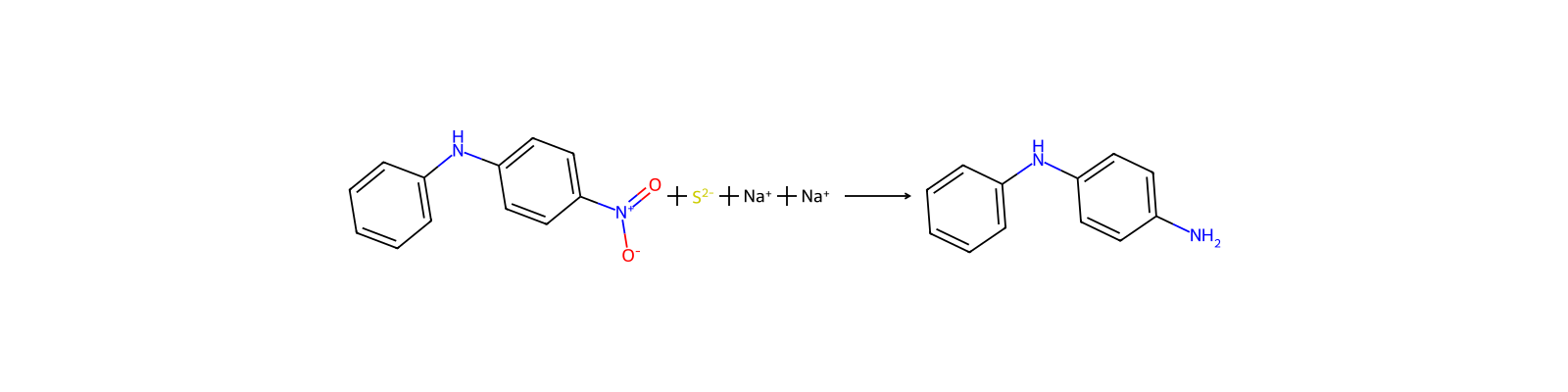
Reaktionsaufzeichnung erstellen
Reaktionsgleichung von HRID 6286
HRID 6286als Eduktuspto-grants-1993_09
Reaktionsgleichung von HRID 7262
HRID 7262als Eduktuspto-grants-2006_08
Reaktionsgleichung von HRID 7264
HRID 7264als Eduktuspto-grants-2006_08
Reaktionsgleichung von HRID 16133
HRID 16133als Eduktuspto-grants-2010_06
Reaktionsgleichung von HRID 25303
HRID 25303als Eduktuspto-grants-2005_02
Reaktionsgleichung von HRID 45774
HRID 45774als Eduktuspto-grants-2013_09
Reaktionsgleichung von HRID 47446
HRID 47446als Eduktuspto-grants-2004_03
Reaktionsgleichung von HRID 59582
HRID 59582als Eduktuspto-grants-2016_09
Seite 1 von 33

Notizen zur Verbindung

Wird geladen…

Auf dieser SeiteGrundinformationenÜberblickNamen und BezeichnerEigenschaftenSicherheit und RegulatorischesChemie und IndustrieZugehörige ReaktionenNotizen zur Verbindung
Weitere Aktionen
Neue NotizNeue ReaktionAnfrage stellen
PubChem CID
14804
DTXSID
DTXSID0029636
ChEMBL
CHEMBL2107611
ChEBI
CHEBI:76208
UNII
YGR27ZW0Y7

Slightly soluble in alcohol; insoluble in ether.

Solubility in water (g/100 g water): 8.1 (-9.0 °C); 12.4 (0 °C); 18.6 (20 °C); 29.0 (40 °C); 35.7 (48 °C); 39.0 (50 °C).

Boiling PointVery high (USCG, 1999)
Decomposition · 2 Einträge

When heated to decomp ... emits toxic fumes of /sulfur oxides and disodium oxide/.

920-950 °C

Melting Point · 2 Einträge

1180 °C (IN VACUO)

1172 °C

Physikochemische Eigenschaften

Schmelzpunkt
950 °C · 950 °C(lit.)
Dichte
1.86 g/mL · 1.86 g/mL at 25 °C(lit.)
storage temp.
Refrigerator (+4°C)
Löslichkeit
2 O: · H2O: 0.1 g/mL, clear, colorless
Aggregatzustand
flakes
Farbe
Yellow
Wichte
1.856 · 1.856
Geruch (Odor)
Rotten egg odor
Wasserlöslichkeit
186 g/L · 186 g/L (20 ºC)
Merck
14 · 14,8681
Dielectric constant
5 · 5.0(Ambient)
Stabilität
Spontaneously flammable. Incompatible with acids, metals, oxidizing agents. Contact with acid liberates toxic gas. Fine dust/air mixtures are explosive. Hygroscopic.
Kosmetik-Inhaltsstoffe Funktionen
DEPILATORY
InChI
1S/2Na.S
InChIKey
CXPWOVUZRAFMDA-UHFFFAOYSA-N
SMILES
[Na]S[Na]
CAS Datenbank
1313 · 1313-82-2(CAS DataBase Reference)
NIST chemische Informationen
Sodium sulfide(1313-82-2)
EPA chemische Informationen
Sodium sulfide (1313-82-2)
DOT ID and Guide · 2 Einträge

1849 153

1385 135

Reactive GroupSulfides, Inorganic
EC ClassificationSymbol: C, N; R: 31-34-50; S: (1/2)-26-45-61
UN ClassificationUN Hazard Class: 4.2; UN Pack Group: II
Reactivity AlertsStrong Reducing Agent
Reactivity Profile · 1 Eintrag

SODIUM SULFIDE is a white to yellow crystalline material, flammable. Can explode on rapid heating or when shocked. Violent reaction with carbon, charcoal, diazonium salts, N,N-dichloromethylamine, strong oxidizers, water. On contact with acids it liberates highly toxic and flammable hydrogen sulfide gas. When heated to decomposition it emits toxic fumes of sodium oxide, and oxides of sulfur [Bretherick, 5th ed., 1995, p. 1729].

Sicherheit und Schutzausrüstung

Fire Fighting · 2 Einträge

Excerpt from ERG Guide 135 [Substances - Spontaneously Combustible]:

Use water in large amounts, water spray, foam, dry powder.

First Aid Measures · 4 Einträge

Fresh air, rest. Refer for medical attention.

First rinse with plenty of water for at least 15 minutes, then remove contaminated clothes and rinse again. Refer for medical attention .

First rinse with plenty of water for several minutes (remove contact lenses if easily possible), then refer for medical attention.

Do NOT induce vomiting. Give one or two glasses of water to drink. Refer for medical attention .

Accidental Release Measures · 4 Einträge

· CALL 911. Then call emergency response telephone number on shipping paper. If shipping paper not available or no answer, refer to appropriate telephone number listed on the inside back cover.

· ELIMINATE all ignition sources (no smoking, flares, sparks or flames) from immediate area.

· CALL 911. Then call emergency response telephone number on shipping paper. If shipping paper not available or no answer, refer to appropriate telephone number listed on the inside back cover.

· ELIMINATE all ignition sources (no smoking, flares, sparks or flames) from immediate area.

First Aid · 3 Einträge

INGESTION: give water; induce vomiting; call a doctor.

General First Aid:

General First Aid:

Safe StorageSeparated from acids and oxidants. Keep in a well-ventilated room. Dry.
Exposure Control and Personal Protection · 2 Einträge

· Wear positive pressure self-contained breathing apparatus (SCBA).

· Wear positive pressure self-contained breathing apparatus (SCBA).

Fire Fighting Procedures · 3 Einträge

Approach fire from upwind to avoid hazardous vapors & toxic decomp products. Use flooding quantities of water. Do not use carbon dioxide.

Flood with water. /sodium sulfide, anhydrous or sodium sulfide; sodium sulfide, hydrated with not less than 30% water/

Extinguish fire using agent suitable for type of surrounding fire. Material itself does not burn or burns with difficulty. Use dry chemical, dry sand, or carbon dioxide. If large quantities of combustibles are involved, use water in flooding quantities as spray and fog. Use water spray to knock-down vapors. Keep run-off water out of sewers and water sources./sodium sulfide solutions containing sodium hydrosulfide; sodium sulfide solutions containing sodium hydroxide/

Storage ConditionsStore in a cool, dry, well-ventilated location. Separate from water, acids, & carbon dioxide. Outside or detached storage is preferred. Immediately remove & properly dispose of any spilled material.
Cleanup Methods · 2 Einträge

Approach release from upwind. Keep water away from release. Prompt cleanup & removal are necessary. Shovel dry material into suitable dry container. Control runoff & isolate discharged material for proper disposal.

The catalyst activities for Na2S oxidation in aqueous soln were examined for various materials such as activated C, C black, ferric salts, hydroquinone, 1,4-naphthoquinone-2-sulfonic acid sodium salt, 1,4-naphthoquinone and their mixed systems. These catalyst systems are all active and, applied to wastewater and sludge treatments, gave good results.

Nonfire Spill ResponseExcerpt from ERG Guide 135 [Substances - Spontaneously Combustible]:
Disposal Methods · 1 Eintrag

SRP: At the time of review, criteria for land treatment or burial (sanitary landfill) disposal practices are subject to significant revision. Prior to implementing land disposal of waste residue (including waste sludge), consult with environmental regulatory agencies for guidance on acceptable disposal practices.

Spillage Disposal · 1 Eintrag

Remove all ignition sources. Cover the spilled material with dry earth or sand. Sweep spilled substance into covered containers. Carefully collect remainder. Then store and dispose of according to local regulations. Do NOT let this chemical enter the environment. Personal protection: chemical protection suit including self-contained breathing apparatus.

Toxikologische Informationen

Adverse EffectsOther Poison - Chemical Asphyxiant
Exposure RoutesThe substance can be absorbed into the body by inhalation, through the skin and by ingestion.
Signs and Symptoms · 4 Einträge

Cough. Burning sensation. Laboured breathing. Shortness of breath. Sore throat.

Redness. Pain. Skin burns. Blisters.

Redness. Pain. Blurred vision. Severe deep burns.

Abdominal pain. Burning sensation. Shock or collapse.

ICSC Environmental DataThis substance may be hazardous to the environment. Special attention should be given to aquatic organisms.
Human Toxicity Excerpts · 5 Einträge

...SODIUM SULFIDE MAY PRODUCE CAUSTIC BURNS...

CONTACT OF SODIUM SULFIDE WITH WORKMEN'S EYES HAS BEEN NOTED TO CAUSE BURNS WHICH MAY BE SLOW HEALING, OWING PRESUMABLY TO STRONG ALKALINITY.

IF FREE GASTRIC ACIDITY IS HIGH, INGESTION...MAY RESULT IN...DECOMP TO HYDROGEN SULFIDE IN STOMACH, WITH SUBSEQUENT SYSTEMIC POISONING. IN ANY CASE ALKALINE SULFIDES ARE STRONG LOCAL IRRITANTS TO MUCOUS MEMBRANE (& SKIN). /SULFIDE SALTS/

SOME OF SYMPTOMS ASSOC WITH SODIUM SULFIDE INTOXICATION MAY BE ATTRIBUTABLE TO HYDROGEN SULFIDE RELEASED IN STOMACH.

For more Human Toxicity Excerpts (Complete) data for SODIUM SULFIDE (6 total), please visit the HSDB record page.

Artificial Pollution SourcesNa2S is a waste gas from black liquor pyrolysis.
Non-Human Toxicity Excerpts25-27% SODIUM SULFIDE CAUSED SKIN CORROSION IN RABBITS IN A 4-HR PATCH TEST.
Antidote and Emergency Treatment · 1 Eintrag

For advanced treatment: Consider orotracheal or nasotracheal intubation for airway control in the patient who is unconscious or in respiratory arrest. Positive-pressure ventilation techniques with a bag-valve-mask device may be beneficial. Monitor cardiac rhythm and treat arrhythmias if necessary ... . Start an IV with D5W TKO /SRP: To keep open, "minimal flow rate"/. Use lactated Ringer's if signs of hypovolemia are present. Watch for signs of fluid overload. Consider drug therapy for pulmonary edema ... . For hypotension with signs of hypovolemia, administer fluid cautiously. Watch for signs of pulmonary edema. Consider vasopressors to treat hypotension without signs of hypovolemia ... . Treat seizures with diazepam (Valium) ... . In severe cases use amyl nitrite and sodium nitrite ... as described for cyanide poisoning; omit the sodium thiosulfate injection. Early administration will be the most effective. DIRECT PHYSICIAN ORDER ONLY ... . Use proparacaine hydrochloride to assist eye irrigation ... . For basic treatment: Establish a patent airway. Suction if necessary. Watch for signs of respiratory insufficiency and assist ventilations if necessary. Administer oxygen by nonrebreather mask at 10 to 15 L/min. Monitor for pulmonary edema and treat if necessary ... . Monitor for shock and treat if necessary ... . Anticipate seizures and treat if necessary ... . For eye contamination, flush eyes immediately with water. Irrigate each eye continuously with normal saline during transport ... . Treat with rapid rewarming techniques ... if frostbite occurs. /Hydrogen sulfide and related compounds/

Non-Human Toxicity Values · 3 Einträge

LD50 Rat oral 208 mg/kg

LD50 Rat ipr 147 mg/kg

LD50 Mouse oral 205 mg/kg

Sicherheitsdaten

F
3-8-9-23
wgk
2
tsca
TSCA listed
ridadr
UN 1849 8/PG II (SODIUM SULPHIDE, HYDRATED with not less than 30 % water)
hs_code
28301010
RTECS-Nr.
WE1905000
risk_code
31-34-50-22
hazard_code
C,N,Xn
safety_code
26-45-61-36/37/39
hazard_class
4.2
packing_group
II
Speicherklasse
4.2 - Pyrophoric and self-heating hazardous materials
Giftige Stoffe Daten
1313-82-2(Hazardous Substances Data)
Hazard Classifications
Acute Tox. 3 DermalAcute Tox. 3 OralAquatic Acute 1Eye Dam. 1Met. Corr. 1Self-heat. 1Skin Corr. 1B
Uses · 6 Einträge

Used to make pulp and paper, to dehair hides, to treat ores (flotation agent), to precipitate metals from wastewater and sludge, to remove nitrogen oxides from gas streams, to polymerize styrene-butadiene, and to manufacture other chemical products; Used in engraving, lithography, cotton printing, and photography; [CHEMINFO]

Pulp and Paper Processing [Category: Industry]

Lithography printing [Category: Hobbies]

In prodn of heavy water for nuclear reactors

MEDICATION (VET)

In dehairing hides and wool pulling; desulfurizing viscose rayon; in the manufacture of rubber, sulfur dyes; in ore flotation, metal refining, engraving, cotton printing, as chemical intermediate, as laboratory reagent; in paper-pulping process.

U.S. Imports · 2 Einträge

(1972) NEGLIGIBLE

(1975) NEGLIGIBLE

U.S. Production(1991) 25X10+3 tons; (1974) 64X10+3 tons; (1972) 80X10+3 tons; (1970) 68X10+3 tons; (1965) 39X10+3 tons.
Consumption Patterns · 2 Einträge

23% IS USED AS A DEPILATORY AGENT IN THE LEATHER INDUST; 21% AS AN INT FOR COLORS AND DYES; 16% AS AN INT FOR MISC CHEMS; 16% FOR THE PREPN OF RAYON AND CELLOPHANE FILM; 15% AS A FLOTATION AGENT IN ORE TREATMENT; AND 8% IN THE PREPN OF PULP AND PAPER (1968)

About 65% of 1990 U.S. sodium sulfide usage was in the leather industry for dehairing hides before tanning; 25% of 1990 U.S. sodium sulfide usage was in the production of miscellaneous chemicals.

Methods of Manufacturing · 3 Einträge

BY HEATING SODIUM ACID SULFATE WITH SALT & COAL TO ABOVE 950 °C, EXTRACTION WITH WATER, & CRYSTALLIZATION.

Sodium carbonate + barium sulfide (reaction); sodium sulfate + coal (reduction); sodium amalgam + sulfur (reaction); gasoline, catalytic-cracker (alkali extraction/acidification; coproduced with cresylic acid).

Best prepared from the elements in liquid ammonia, also obtained by dehydration of the nonahydrate: Courtois, Compt Rend 207, 1220 (1938); Klemm et al, Z Anorg Allgem Chem 241, 281 (1939); Feher in Handbook of Preparative Inorganic Chemistry, vol 1, G. Brauer, Ed. (Academic Press, New York, 2nd ed , 1963) pp 358-60.

Formulations/Preparations · 2 Einträge

GRADES: FLAKE; FUSED; CHIP SULFIDE (60% NA2S), 60% FUSED & BROKEN; 30% CRYSTALS; LIQUID.

Available commercially as fused, hydrated crystals containing 30-34% sodium sulfide or as flakes containing 60-62% sodium sulfide.

Anwendungen · 1 Eintrag

VerwendenThese yellow flakes were made by fusing sodium carbonate with sulfur. Soluble in water but less so in alcohol, sodium sulfide was lovingly called “stink” by those who used it for toning prints or intensifying negatives because of its sulfurous smell.

Darstellung · 1 Eintrag

synthetischeSodium sulfide is prepared by heating sodium bisulfate with sodium chloride and coal above 950°C. The product mixture is extracted with water and the hydrated sulfide is obtained from the solution by crystallization: NaHSO4 + NaCl + 2C → Na2S + 2CO2↑ + HCl↑Sodium sulfide also is produced from its elements in liquid ammonia: Na + 2S → Na2S.

Vor- und nachgelagerte Produkte

Vorgelagerte Rohstoffe

SchwefelwasserstoffSODIUM SULFATE DECAHYDRATEKohlenmonoxidCoal gasNatriumsulfatWasserMETALLURGICAL COKEWasserstoffMethanolNatriumhydroxidBariumsulfidBariumsulfat

Nachgelagerte Produkte

Vat Brown 3GRSimetryn (ISO)Dibutylsulfid5-Chlor-o-toluidiniumchloridThianPrometrynDinatrium-4-amino-3-[(4-aminophenyl)azo]-5-hydroxy-6-(phenylazo)naphthalin-2,7-disulfonatREACTIVE GREEN 19Phosphorous acid chloride and phosphorus dichloride4-AminobenzaldehydAmetryn (ISO)5-Amino-2-(3-hydroxy-6-oxoxanthen-9-yl)benzoesure2-Amino-p-kresolTellurDicyclohexyldisulfid4'-FormylacetanilidSelendisulfidDinatrium-4-amino-3,6-bis[[4-[(2,4-diaminophenyl)azo]phenyl]azo]-5-hydroxynaphthalin-2,7-disulfonatSulfur Red Brown B3R4-Anilinobenzoldiazoniumhydrogensulfat5-Chlor-2-methoxybenzoldiazonium-chloridBis[N-(p-methoxyphenyl)-p-phenylendiamin]sulfatBis(2-nitrophenyl)disulfid5-BROMO-3-CHLORO-2-PYRIDINONE4'-Amino-2',5'-diethoxybenzanilid3-Chlor-p-toluidin4-ButoxyanilinCalcium chlorate dihydrateO,O-dialkyl thiophosphoryl chloride2-(4-METHYLPHENYL)-BENZOTHIAZOLEBrotianidcadmium redMETHYL(5-MERCAPTO-1H-BENZIMIDAZOL-2-YL)CARBAMATEDiallylsulfid5-BROMO-3-FLUORO-2-PYRIDINONE2-MercaptobenzimidazolIsobutenyl sulfideThiophen-2,5-dicarbonsure1,5-DiaminoanthrachinonDibenzo[def,mno]chrysen-6,12-dion

Ergänzende Hinweise

DefinitionChEBI: A sulfide salt with formula Na2S. The pentahydrate and (particularly) the nonahydrate are also known. In gel form, sodium sulfide is used to soften toenails to assist in trimming (and so relive pain) of ingrowing toenails.