

Grundinformationen
- Standard-SMILES
Cc1ccc(O)cc1Cl- InChIKey
VQZRLBWPEHFGCD-UHFFFAOYSA-N- Summenformel
- C7H7ClO
- Durchschnittliche Molmasse
- 142,58 g/mol
- Monoisotopische Masse
- 142,0185425
Namen und Bezeichner
- Bevorzugter Name
- 3-Chloro-4-methylphenol
- IUPAC
- 3-chloro-4-methylphenol
- Lokaler Name
- 3-Chlor-p-kresol
- Englischer Name
- 3-Chloro-4-methylphenol
- Summenformel
- C7H7ClO
- Molmasse
- 142.58
Namen und Synonyme
3-Chloro-4-methylphenol615-62-3Phenol, 3-chloro-4-methyl-EINECS 210-439-1NSC 157351DTXSID9060655RefChem:93443DTXCID4043064VQZRLBWPEHFGCD-UHFFFAOYSA-N3-Chloro-p-cresolp-Cresol, 3-chloro-3-chloro-4-methyl-phenol
Weitere Namen anzeigen
2-Chloro-4-hydroxytoluene3-Chloro-4-methylphenol 98%3-Chloro-4-methylphenol, CAS 615-62-32-Chloro-4-hydroxytoluene, 3-Chloro-p-cresol
MFCD0006031947HY68GZ7QNSC-157351NSC157351UNII-47HY68GZ7QSCHEMBL305945SCHEMBL1379775SCHEMBL2841487
Datenbank-Bezeichner
- CAS
615-62-3- PubChem CID
- 14853
- DTXSID
DTXSID9060655- UNII
- 47HY68GZ7Q
- EC Number
- 210-439-1
- Nikkaji
- J95.369E
Eigenschaften
Berechnete Struktureigenschaften
- XLogP
- 3,3
- Polarare Oberfläche (TPSA)
- 20,2 Ų
- H-Brücken-Donoren
- 1
- H-Brücken-Akzeptoren
- 1
- Frei drehbare Bindungen
- 0
- Schwere Atome
- 9
- Formalladung
- 0
- Komplexität
- 94
Physikochemische Eigenschaften
- Schmelzpunkt
- 48 · 48-53 °C
- Siedepunkt
- 228 °C · 228 °C
- Dichte
- 0 · 0,963g/cm
- Brechungsindex
- 1 · 1,403
- Flammpunkt
- 228 °C · 228°C
- storage temp.
- Inert atmosphere,Room Temperature
- Löslichkeit
- soluble in Methanol
- Aggregatzustand
- powder to lump
- pka
- 9.3 · 9.30±0.18(Predicted)
- Farbe
- Light yellow to Amber to Dark green
- InChI
- InChI=1S/C7H7ClO/c1-5-2-3-6(9)4-7(5)8/h2-4,9H,1H3
- InChIKey
- VQZRLBWPEHFGCD-UHFFFAOYSA-N
- SMILES
- C1(O)=CC=C(C)C(Cl)=C1
- CAS Datenbank
- 615 · 615-62-3(CAS DataBase Reference)
- EPA chemische Informationen
- 3 · Phenol, 3-chloro-4-methyl- (615-62-3)
Sicherheit und Regulatorisches
GHS-Klassifizierung
GHS Classification
Danger
H302 (98%): Harmful if swallowed [Warning Acute toxicity, oral];H312 (98%): Harmful in contact with skin [Warning Acute toxicity, dermal];H315 (100%): Causes skin irritation [Warning Skin corrosion/irritation];H318 (98%): Causes serious eye damage [Danger Serious eye damage/eye irritation];H332 (98%): Harmful if inhaled [Warning Acute toxicity, inhalation];H335 (98%): May cause respiratory irritation [Warning Specific target organ toxicity, single exposure; Respiratory tract irritation]
P261, P264, P264+P265, P270, P271, P280, P301+P317, P302+P352, P304+P340, P305+P354+P338, P317, P319, P321, P330, P332+P317, P362+P364, P403+P233, P405, and P501 (click each P-code to see the statement)
Aggregated GHS information provided per 49 reports by companies from 7 notifications to the ECHA C&L Inventory. Each notification may be associated with multiple companies.;Information may vary between notifications depending on impurities, additives, and other factors. The percentage value in parenthesis indicates the notified classification ratio from companies that provide hazard codes. Only hazard codes with percentage values above 10% are shown. For more detailed information, please visit ECHA C&L website.
Gefahrenhinweise
Hazard Classes and CategoriesAcute Tox. 4 (98%);Acute Tox. 4 (98%);Skin Irrit. 2 (100%);Eye Dam. 1 (98%);Acute Tox. 4 (98%);STOT SE 3 (98%)
Sicherheitsdaten
- wgk
- 3
- tsca
- TSCA listed
- ridadr
- 3437
- hs_code
- 29089990
- risk_code
- 20/21/22-36/37/38-38-21/22-41-37/38
- hazard_code
- C,T,Xi,Xn
- hazard_note
- Toxic/Corrosive
- safety_code
- 23-36/37/39-28-26-39
- hazard_class
- 6.1
- packing_group
- II
- Speicherklasse
- 13 - Non Combustible Solids
- Hazard Classifications
- Acute Tox. 4 OralEye Dam. 1Skin Irrit. 2STOT SE 3
Chemie und Industrie
Verwendung und Herstellung
General Manufacturing InformationPhenol, 3-chloro-4-methyl-: ACTIVE
Anwendungen
Verwenden3-Chloro-4-methylphenol is used in preparation of (Carbonyl)benzylthiadiazoles as herbicides.
Anbieter50 Anbieter
常州帝通化工有限公司+86-0519-88298848 · [email protected]
阿诺西(上海)生物技术有限公司400-1107768 15058188853 · [email protected]
上海阿拉丁生化科技股份有限公司400-6206333 13167063860 · [email protected]
上海凌富药物研究有限公司+86(21)5895 0110 19945755304 · [email protected]
宁波振岳医药科技有限公司19817745290 · [email protected]
Career Henan Chemica Co+86-0371-86658258 +86-13203830695 · [email protected]
上海衡新化工科技有限公司13917104483; 13917104483 · [email protected]
毕佳索(上海毕得医药科技股份有限公司)400-6005915 · [email protected]
武汉欣扬瑞和化学科技有限公司13720274133 · [email protected]
温州共赢化学有限公司+86-0086-577-64498589 +86-15355981851 · [email protected]
上海赫文斯化工有限公司15721252604 17321035817 · [email protected]
Dayang Chem (Hangzhou) Co.,Ltd.+86-0571-88938639 17705817739 · [email protected]
郑州鸿晟医药科技有限公司0371-55695890 15637198702 · [email protected]
韶远科技(上海)有限公司021-50795510 4000665055 · [email protected]
北京索莱宝科技有限公司010-50973130 17801761073 · [email protected]
上海辅欣医药科技有限公司+86-021-021-50872116 · [email protected]
阿法埃莎(中国)化学有限公司400-6106006 · [email protected]
安耐吉化学&3A(安徽泽升科技股份有限公司)400-0056266 · [email protected]
武汉凯威斯科技有限公司86-027-67849912 · [email protected]
嘉兴市艾森化工有限公司0573-85285100 18627885956 · [email protected]
上海泰坦科技股份有限公司400-6009262 15618770481 · [email protected]
湖北广奥生物科技有限公司027-02702759223056 18162699093 · [email protected]
上海攀鸿化工科技有限公司021-56491756 13512199871 · [email protected]
湖北成海化工有限公司027-59220433 18327245847 · [email protected]
湖北微斯汀科技有限公司027-61182895 13367240285 · [email protected]
上海毕楷科技有限公司18516304666
山东西亚化学有限公司13355009207 13355009207 · [email protected]
南京维奥化工有限公司Please Send Email 18652950785 · [email protected]
天津津御达化工科技有限公司022-58013646 13011382049 · [email protected]
TCI AMERICA800-4238616 · [email protected]
TOKYO CHEMICAL INDUSTRY CO., LTD.03-36680489 · [email protected]
TCI Europe320-37350700 · [email protected]
越林试剂021-62960152 · [email protected]
上海睿升化工科技有限公司+86-021-50935922
Clearsynth Labs Limited+91-22-26355700 · [email protected]
金瓯生物医药(南京)有限公司13000000000 · [email protected]
天成化工(江苏)有限公司0512-66387919 18662433356 · [email protected]
重庆卡兰医药有限公司023-62879767 · [email protected]
上海毕得医药科技股份有限公司400-164-7117 18317119277 · [email protected]
上海石洋化工有限公司021-56795766 · [email protected]
上海卓因生物科技有限公司021-61317773 · [email protected]
杭州杰恒化工有限公司0571-87396432 · [email protected]
上海永叶生物科技有限公司86-021-61559134 15921386130 · [email protected]
南京多隆生物科技有限公司18905173768 · [email protected]
上海嵩爰化工科技有限公司010-1234567 18521000990 · [email protected]
Sigma-Aldrich西格玛奥德里奇(上海)贸易有限公司021-61415566 800-8193336 · [email protected]
常州言己生物科技有限公司0519-83556355 18015005120 · [email protected]
阜新清稷升科技有限公司15940530539 15396717197 · [email protected]
北京禾兴源科技有限公司18511709189 · [email protected]
陕西缔都医药化工有限公司029-029-81120477 17792793610 · [email protected]
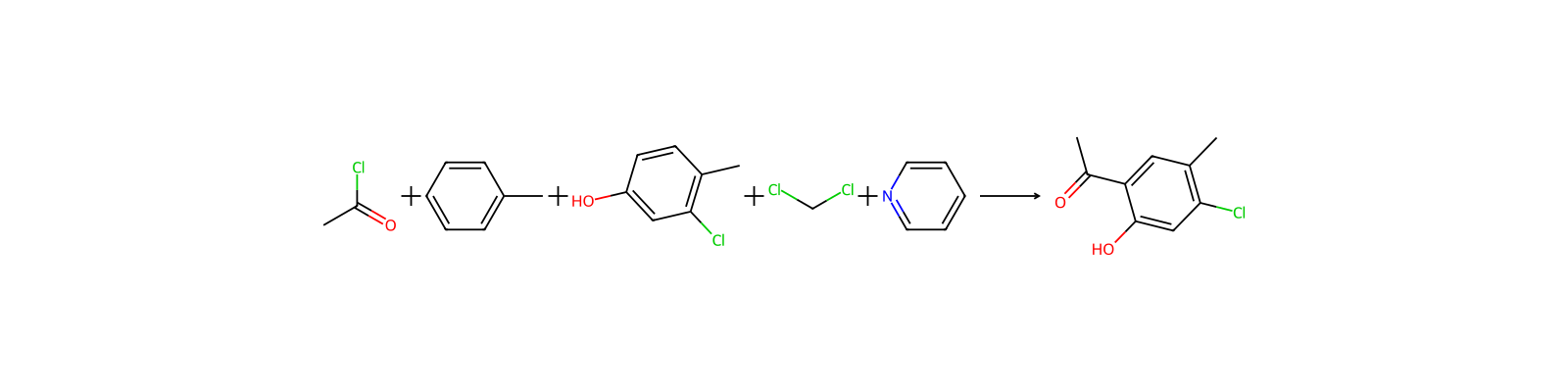
Zugehörige Reaktionen
34




Verknüpfte Notizen
Wird geladen…