
Grundinformationen
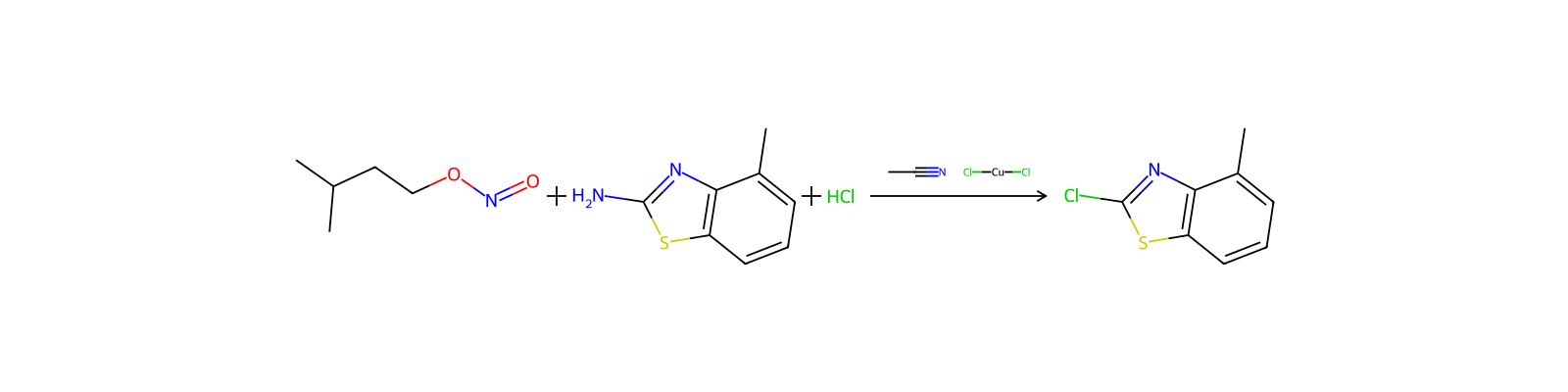
- Standard-SMILES
Cc1cccc2sc(N)nc12- InChIKey
GRIATXVEXOFBGO-UHFFFAOYSA-N- Summenformel
- C8H8N2S
- Durchschnittliche Molmasse
- 164,23 g/mol
- Monoisotopische Masse
- 164,04081926
Überblick
2-amino-4-methylbenzothiazole is a white powder. (NTP, 1992)
Namen und Bezeichner
- Bevorzugter Name
- 2-Amino-4-methylbenzothiazole
- IUPAC
- 4-methyl-1,3-benzothiazol-2-amine
- Lokaler Name
- 4-Methylbenzothiazol-2-ylamin
- Englischer Name
- 2-Amino-4-methylbenzothiazole
- Summenformel
- C8H8N2S
- Molmasse
- 164.23
Namen und Synonyme
2-AMINO-4-METHYLBENZOTHIAZOLE1477-42-52-Benzothiazolamine, 4-methyl-4-Methyl-2-benzothiazolamine4-Methyl-2-aminobenzothiazoleBenzothiazole, 2-amino-4-methyl-4-Methylbenzothiazol-2-ylamineDTXSID9024487DTXCID40448745V5F1B9Z8NSC-28732RefChem:464333
Weitere Namen anzeigen
AURORA 187422-Amino-4-methylbenzLABOTEST-BB LT000807894-methyl-2-benzothiazolamin4-methyl-2-amimobenzothiazol4-methyl-2-amimobenzothiagol4-Methylbenzothiazol-2-amine
216-028-34-methylbenzo[d]thiazol-2-amine4-Methyl-1,3-benzothiazol-2-amine4-Methyl-2-aminobenzothiozoleMFCD000057932-Amino-4-methyl benzothiazoleSCHEMBL949374-Methylbenzothiazole-2-ylamine
Datenbank-Bezeichner
- CAS
1477-42-5- PubChem CID
- 15132
- DTXSID
DTXSID9024487- ChEMBL
CHEMBL1343355- UNII
- 45V5F1B9Z8
- EC Number
- 216-028-3
- Nikkaji
- J24.676J
Eigenschaften
Berechnete Struktureigenschaften
- XLogP
- 2,4
- Polarare Oberfläche (TPSA)
- 67,2 Ų
- H-Brücken-Donoren
- 1
- H-Brücken-Akzeptoren
- 3
- Frei drehbare Bindungen
- 0
- Schwere Atome
- 11
- Formalladung
- 0
- Komplexität
- 151
Experimentelle und physikochemische Eigenschaften
Solubilityless than 1 mg/mL at 75 °F (NTP, 1992)
Melting Point279 to 282 °F (NTP, 1992)
Physical Description
2-amino-4-methylbenzothiazole is a white powder. (NTP, 1992)
Dry Powder
Physikochemische Eigenschaften
- Schmelzpunkt
- 137 · 137-139 °C (lit.)
- Siedepunkt
- 322 · 322.0±35.0 °C(Predicted)
- Dichte
- 1.1724 · 1.1724 (rough estimate)
- Dampfdruck
- 0.053 Pa · 0.053Pa at 25℃
- Brechungsindex
- 1.57 · 1.5700 (estimate)
- storage temp.
- Keep in dark place,Sealed in dry,Room Temperature
- Aggregatzustand
- Solid:particulate/powder
- pka
- 1 · pK1: 4.7(+1) (25°C)
- Farbe
- White to Light yellow
- Wasserlöslichkeit
- 0.1 g/100 · <0.1 g/100 mL at 24 ºC
- BRN
- 129346 · 129346
- InChI
- 1S/C8H8N2S/c1-5-3-2-4-6-7(5)10-8(9)11-6/h2-4H,1H3,(H2,9,10)
- InChIKey
- GRIATXVEXOFBGO-UHFFFAOYSA-N
- SMILES
- Cc1cccc2sc(N)nc12
- LogP
- 0.981 · 0.981-1.65 at 25℃ and pH7.2
- CAS Datenbank
- 1477 · 1477-42-5(CAS DataBase Reference)
- NIST chemische Informationen
- 2 · 2-Benzothiazolamine, 4-methyl-(1477-42-5)
- EPA chemische Informationen
- 2 · 2-Amino-4-methylbenzothiazole (1477-42-5)
Sicherheit und Regulatorisches
GHS-Klassifizierung
GHS Classification
Warning
H302 (97.3%): Harmful if swallowed [Warning Acute toxicity, oral]
P264, P270, P301+P317, P330, and P501 (click each P-code to see the statement)
Aggregated GHS information provided per 75 reports by companies from 3 notifications to the ECHA C&L Inventory.
Gefahrenhinweise
Regulatory Information
2-Benzothiazolamine, 4-methyl- is listed on the EPA's Chemical Data Reporting (CDR) system. Manufacturers and importers of 2-Benzothiazolamine, 4-methyl- are required to report information about their production and use of this chemical to the EPA under the Toxic Substances Control Act (TSCA). (40 eCFR Part 711)
Status: Active Update: 06-05-2018 https://echa.europa.eu/registration-dossier/-/registered-dossier/24545
Fire HazardsFlash point data for this chemical are not available. It is probably combustible. (NTP, 1992)
Health HazardsACUTE/CHRONIC HAZARDS: When heated to decomposition this compound emits very toxic fumes of SOx and NOx. (NTP, 1992)
Reactive GroupAmines, Phosphines, and Pyridines
Reactivity Profile
An amine, organosulfide. Organosulfides are incompatible with acids, diazo and azo compounds, halocarbons, isocyanates, aldehydes, alkali metals, nitrides, hydrides, and other strong reducing agents. Reactions with these materials generate heat and in many cases hydrogen gas. Many of these compounds may liberate hydrogen sulfide upon decomposition or reaction with an acid. Amines are chemical bases. They neutralize acids to form salts plus water. These acid-base reactions are exothermic. The amount of heat that is evolved per mole of amine in a neutralization is largely independent of the strength of the amine as a base. Amines may be incompatible with isocyanates, halogenated organics, peroxides, phenols (acidic), epoxides, anhydrides, and acid halides. Flammable gaseous hydrogen is generated by amines in combination with strong reducing agents, such as hydrides.
Air and Water ReactionsThis compound is sensitive to moisture. Insoluble in water.
Hazard Classes and CategoriesAcute Tox. 4 (97.3%)
Sicherheit und Schutzausrüstung
Fire FightingFires involving this material can be controlled with a dry chemical, carbon dioxide or Halon extinguisher. (NTP, 1992)
First Aid
EYES: First check the victim for contact lenses and remove if present. Flush victim's eyes with water or normal saline solution for 20 to 30 minutes while simultaneously calling a hospital or poison control center. Do not put any ointments, oils, or medication in the victim's eyes without specific instructions from a physician. IMMEDIATELY transport the victim after flushing eyes to a hospital even if no symptoms (such as redness or irritation) develop.
Nonfire Spill Response
SMALL SPILLS AND LEAKAGE: Should a spill occur while you are handling this chemical, FIRST REMOVE ALL SOURCES OF IGNITION, then you should dampen the solid spill material with 60-70% ethanol and transfer the dampened material to a suitable container. Use absorbent paper dampened with 60-70% ethanol to pick up any remaining material. Seal the absorbent paper, and any of your clothes, which may be contaminated, in a vapor-tight plastic bag for eventual disposal. Solvent wash all contaminated surfaces with 60-70% ethanol followed by washing with a soap and water solution. Do not reenter the contaminated area until the Safety Officer (or other responsible person) has verified that the area has been properly cleaned.
Personal Protective Equipment (PPE)
RECOMMENDED RESPIRATOR: Where the neat test chemical is weighed and diluted, wear a NIOSH-approved half face respirator equipped with an organic vapor/acid gas cartridge (specific for organic vapors, HCl, acid gas and SO2) with a dust/mist filter. (NTP, 1992)
Sicherheitsdaten
- wgk
- 3
- tsca
- TSCA listed
- hs_code
- 29342000
- RTECS-Nr.
- DL2275000
- risk_code
- 22
- hazard_code
- Xn
- safety_code
- 26-28-36/37/39-24/25
- Speicherklasse
- 11 - Combustible Solids
- Hazard Classifications
- Acute Tox. 4 Oral
Chemie und Industrie
Verwendung und Herstellung
U.S. Production2022: 70,547 lb
Industry UsesIntermediate
General Manufacturing Information
Synthetic Dye and Pigment Manufacturing
2-Benzothiazolamine, 4-methyl-: ACTIVE
Anwendungen
Verwenden2-Amino-4-methylbenzothiazole was used in the synthesis of N-(4-methyl-1,3-benzothiazol-yl)-N-[(1,4,5,8-tetramethoxy-2-napthyl)methylidene]amine and Schiff′s base via condensation with 2-acetonaphthone.
Vor- und nachgelagerte Produkte
Vorgelagerte Rohstoffe
Nachgelagerte Produkte
Anbieter50 Anbieter
国药集团化学试剂有限公司86-21-63210123 · [email protected]
梯希爱(上海)化成工业发展有限公司021-67121386 · [email protected]
郑州阿尔法化工有限公司+86-18530059196 · [email protected]
上海阿拉丁生化科技股份有限公司400-6206333 13167063860 · [email protected]
上海策嵘生物科技有限公司[email protected]
成都彼样生物科技有限公司18108052721 · [email protected]
爱斯特(成都)生物制药股份有限公司+86-28-85122536 85324413 · [email protected]
Baoji Guokang Healthchem co.,ltd+8615604608665 15604608665 · [email protected]
Dayang Chem (Hangzhou) Co.,Ltd.+86-0571-88938639 17705817739 · [email protected]
科瑞迪化学400-821-5857 021-64326257 · [email protected]
Syntechem Co.,Ltd[email protected]
上海迈瑞尔生化科技有限公司4006356688 18621169109 · [email protected]
阿法埃莎(中国)化学有限公司400-6106006 · [email protected]
太原市瑞和丰科贸有限公司+86 351 7031519 · [email protected]
安耐吉化学&3A(安徽泽升科技股份有限公司)400-0056266 · [email protected]
上海瀚鸿科技股份有限公司021-54306202 13764082696 · [email protected]
上海钰康生物科技有限公司+86-18930848214 +86-021-56762820 · [email protected]
上海景颜化工科技有限公司13817811078 · [email protected]
Pure Chemistry Scientific Inc.001-857-928-2050 or 1-888-588-9418 · [email protected]
上海泰坦科技股份有限公司400-6009262 15618770481 · [email protected]
上海隆盛化工有限公司58099637 13585536065 · [email protected]
杭州东帆化学有限公司86-0571-85151182
济南精合医药科技有限公司0531-88811783 · [email protected]
云南西力生物技术股份有限公司0871-65217109 · [email protected]
苏州施亚生物科技有限公司86(512)5235 8471 17715136450 · [email protected]
玛雅试剂+86 (573) 82222445 (0)18006601000 452520369 · [email protected]
天津希恩思生化科技有限公司400 638 7771 · [email protected]
常州市辰悦化工科技有限公司+86-0519-85500896 · [email protected]
北京泰亚杰科技有限公司021-33690831-8001 13552411790;18616022633 · [email protected]
赛默飞世尔科技(中国)有限公司800-810-5118 · [email protected]
TCI AMERICA800-4238616 · [email protected]
TOKYO CHEMICAL INDUSTRY CO., LTD.03-36680489 · [email protected]
TCI Europe320-37350700 · [email protected]
上海贤鼎生物科技有限公司4009209199 · [email protected]
越林试剂021-62960152 · [email protected]
上海将来实业股份有限公司400-0066400 13621662912 · [email protected]
上海将来实业股份有限公司021-61552785 · [email protected]
上海毕得医药科技股份有限公司400-164-7117 18317119277 · [email protected]
Labnetwork lnc.+86-27-50766799 +86-18062016861 · [email protected]
上海爱蝶实业有限公司021-58957966 18930537195 · [email protected]
雷丁试剂0510-85629785 18013409632 · [email protected]
北京福源坊科技有限公司010-57903446 15869909019 · [email protected]
上海御略医药科技有限公司021-60345187 13671753212 · [email protected]
上海澄拓化工科技有限公司021-59904146 18001826933 · [email protected]
上海寰川实业有限公司021-61478794 · [email protected]
上海嵩爰化工科技有限公司010-1234567 18521000990 · [email protected]
江苏艾康生物医药研发有限公司025-66028182 17714375163 · [email protected]
上海孚一生物科技有限公司+86 (21) 61124340
湖北巨胜科技有限公司027-59599241 18871490274 · [email protected]
常州百涛实业有限公司0519-82309982
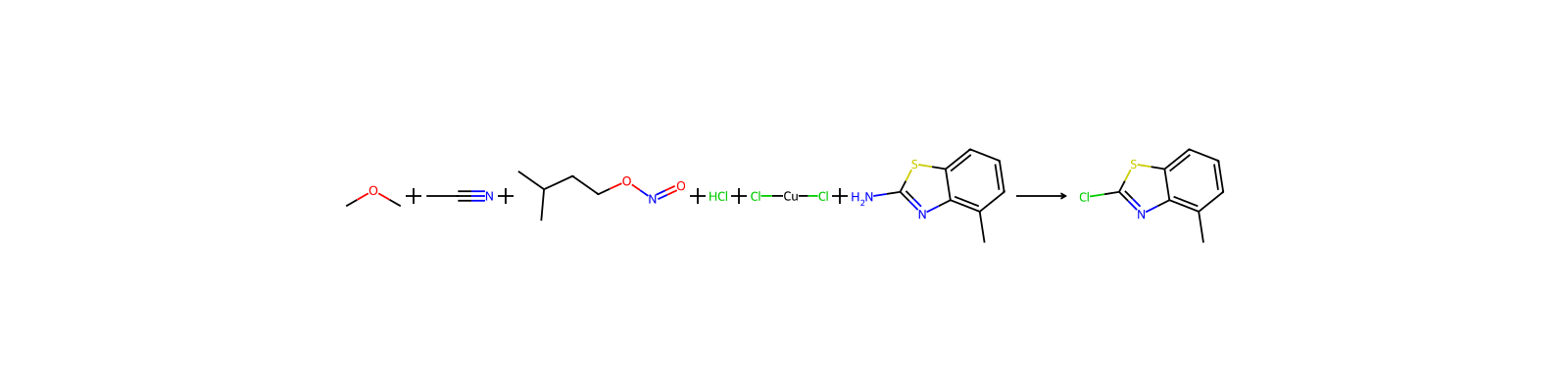
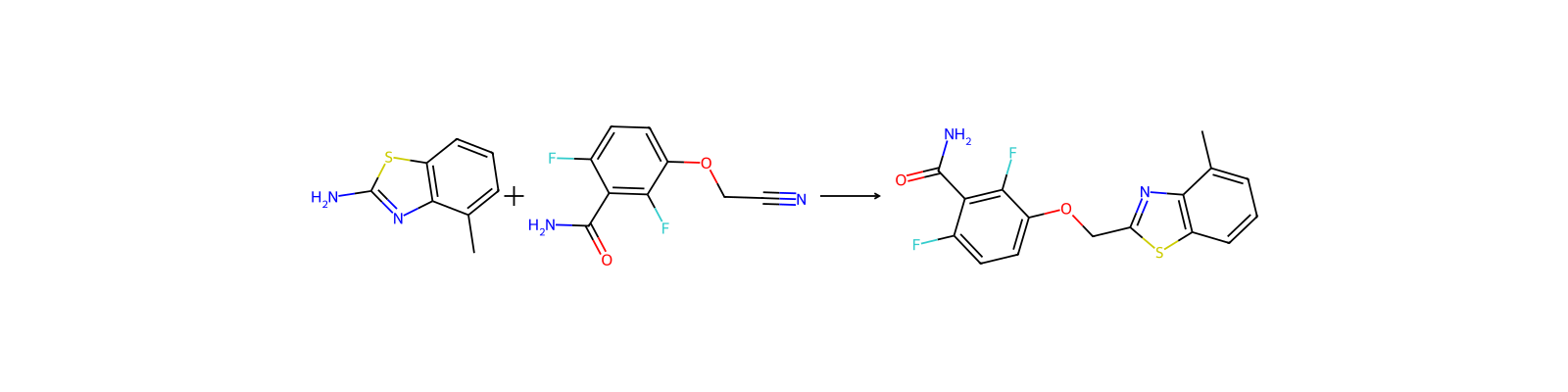
Zugehörige Reaktionen
30




Verknüpfte Notizen
Wird geladen…