StartseiteMCPWorkbenchSkills
StartseiteWorkbenchBenachrichtigungenMein Bereich
llms.txt · MCP-AnleitungDatenschutz · Nutzungsbedingungen · Supportv1.8.0
  1. Startseite
  2. /Verbindung

Methyl-4-formylbenzoat

Methyl 4-Formylbenzoate

HCID 15294
Neue NotizNeue ReaktionAnfrage stellen
Druckvorschau

Daten werden ergänzt – lade die Seite später neu, um den aktuellen Stand zu sehen

GrundinformationenÜberblickNamen und BezeichnerEigenschaftenSicherheit und RegulatorischesChemie und IndustrieZugehörige ReaktionenNotizen zur Verbindung
TeilstruktursucheÄhnliche Strukturen suchen

Grundinformationen

CAS
1571-08-0
Standard-SMILES
COC(=O)c1ccc(C=O)cc1
InChIKey
FEIOASZZURHTHB-UHFFFAOYSA-N
Summenformel
C9H8O3
Durchschnittliche Molmasse
164,16 g/mol
Monoisotopische Masse
164,04734412

Überblick

Methyl-p-formylbenzoate appears as needles (in water) or white powder. (NTP, 1992)

Namen und Bezeichner

Bevorzugter Name
Methyl 4-Formylbenzoate
IUPAC
methyl 4-formylbenzoate
Lokaler Name
Methyl-4-formylbenzoat
Englischer Name
Methyl 4-formylbenzoate
Summenformel
C9H8O3
Molmasse
164.16

Namen und Synonyme

METHYL 4-FORMYLBENZOATE1571-08-04-CarbomethoxybenzaldehydeMethyl p-formylbenzoateBenzoic acid, 4-formyl-, methyl esterMethyl terephthalaldehydate4-(Methoxycarbonyl)benzaldehydep-Carbomethoxybenzaldehyde4-Formylbenzoic Acid Methyl EsterMethyl-p-formyl benzoateMethyl terephthaldehydateMethyl benzaldehyde-4-carboxylate
Weitere Namen anzeigen
AKOS BBS-00003165TIMTEC-BB SBB008362Methyl 4-formylbenzoOTAVA-BB BB7018801965Mehyl4-FormylbenzoateMethyl-4-formylbenzoat
p-Formylbenzoic acid methyl esterTerephthalaldehydic acid, methyl ester4-Carboxybenzaldehyde methyl ester2-MethoxycarbonylbenzaldehydeHSDB 5842NSC 28459CCRIS 6063DTXSID4025610

Datenbank-Bezeichner

CAS
1571-08-0
PubChem CID
15294

Eigenschaften

Berechnete StruktureigenschaftenWird ergänzt

XLogP
1,7
Polarare Oberfläche (TPSA)
43,4 Ų
H-Brücken-Donoren
0
H-Brücken-Akzeptoren
3
Frei drehbare Bindungen
3
Schwere Atome
12
Formalladung
0
Komplexität
169

Experimentelle und physikochemische Eigenschaften

Chemical ClassesOther Classes -> Benzaldehydes
Solubilityless than 1 mg/mL at 72 °F (NTP, 1992)
Boiling Point509 °F at 760 mmHg (NTP, 1992)
Melting Point140 to 144 °F (NTP, 1992)
Vapor Pressure0.0099 [mmHg]
Physical Description · 3 Einträge

Methyl-p-formylbenzoate appears as needles (in water) or white powder. (NTP, 1992)

Other Solid

White solid; [CAMEO] Powder; [MSDSonline]

Physikochemische Eigenschaften

Schmelzpunkt
59 · 59-63 °C (lit.)
Siedepunkt
265 °C · 265 °C (lit.)
Dichte
1 · 1,2 g/cm3
Brechungsindex
1.526 · 1.5260 (estimate)

Sicherheit und Regulatorisches

Sicherheitsangaben dienen nur zur Orientierung und ersetzen weder das Sicherheitsdatenblatt (SDB) des Lieferanten noch geltende Vorschriften oder eine fachliche Bewertung.

GHS-Klassifizierung

GHS Classification · 5 Einträge

This chemical does not meet GHS hazard criteria for 53.3% (8 of 15) of all reports.

Warning

H302 (13.3%): Harmful if swallowed [Warning Acute toxicity, oral]

P261, P264, P264+P265, P270, P271, P280, P301+P317, P302+P352, P304+P340, P305+P351+P338, P319, P321, P330, P332+P317, P337+P317, P362+P364, P403+P233, P405, and P501 (click each P-code to see the statement)

Aggregated GHS information provided per 15 reports by companies from 8 notifications to the ECHA C&L Inventory. Each notification may be associated with multiple companies.

Gefahrenhinweise

Regulatory Information · 3 Einträge

Benzoic acid, 4-formyl-, methyl ester is listed on the EPA's Chemical Data Reporting (CDR) system. Manufacturers and importers of Benzoic acid, 4-formyl-, methyl ester are required to report information about their production and use of this chemical to the EPA under the Toxic Substances Control Act (TSCA). (40 eCFR Part 711)

Status: Active Update: 29-04-2018 https://echa.europa.eu/registration-dossier/-/registered-dossier/24821

Benzoic acid, 4-formyl-, methyl ester: Does not have an individual approval but may be used as a component in a product covered by a group standard. It is not approved for use as a chemical in its own right.

Fire HazardsFlash point data for this compound are not available. It is probably combustible. (NTP, 1992)
Hazards SummaryMay form peroxides; [CAMEO] An irritant; [MSDSonline]
Reactive GroupAldehydes
Reactivity AlertsPeroxidizable Compound
Reactivity Profile

Chemie und Industrie

Verwendung und Herstellung

Uses · 2 Einträge

Used to make dimethyl terephthalate; [HSDB]

CHEM INT (UNISOLATED) FOR DIMETHYL TEREPHTHALATE

U.S. Exports · 2 Einträge

(1979) No Data

(1981) No Data

U.S. Imports · 2 Einträge

(1979) No Data

(1981) No Data

U.S. Production · 3 Einträge

2023: 500,000 - <1,000,000 lb

(1977) AT LEAST 4.54X10+8 GRAMS (UNISOLATED)

(1981) No Data

Industry UsesNot Known or Reasonably Ascertainable
Methods of ManufacturingPRODUCED AS AN UNISOLATED INTERMEDIATE IN PROCESS FOR MAKING DIMETHYL TEREPHTHALATE FROM P-XYLENE BY SUCCESSIVE OXIDATIONS & ESTERIFICATIONS
General Manufacturing Information · 2 Einträge

All Other Basic Organic Chemical Manufacturing

Benzoic acid, 4-formyl-, methyl ester: ACTIVE

Anwendungen

VerwendenMethyl 4-formylbenzoate is used in the preparation of dimethyl terephthalate. It is also used as an active pharmaceutical ingredient intermediate and fluorescent brightener intermediate.

Vor- und nachgelagerte Produkte

Vorgelagerte Rohstoffe

Natrium2-NitropropanMethyl-p-toluat

Zugehörige Reaktionen

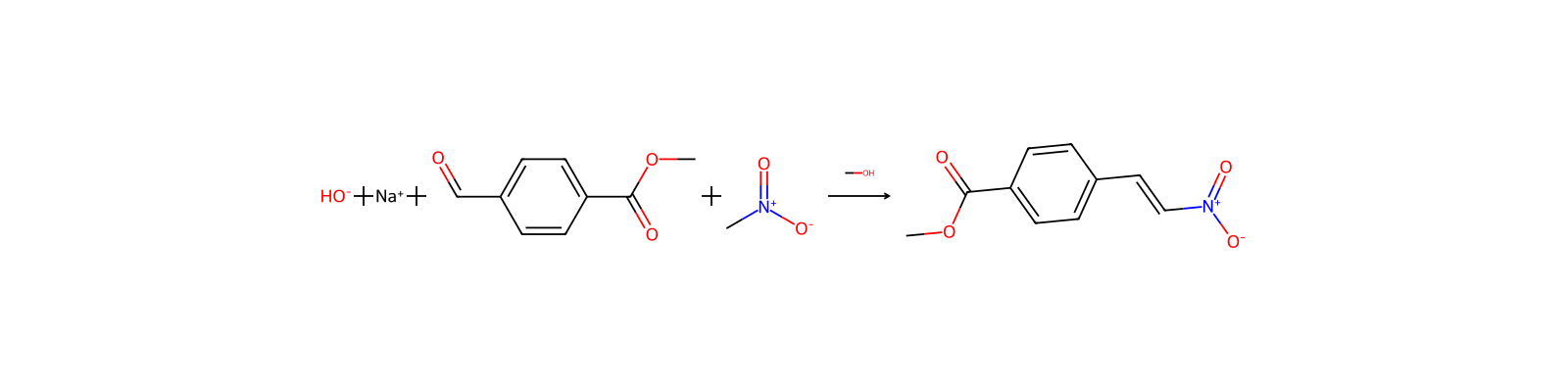
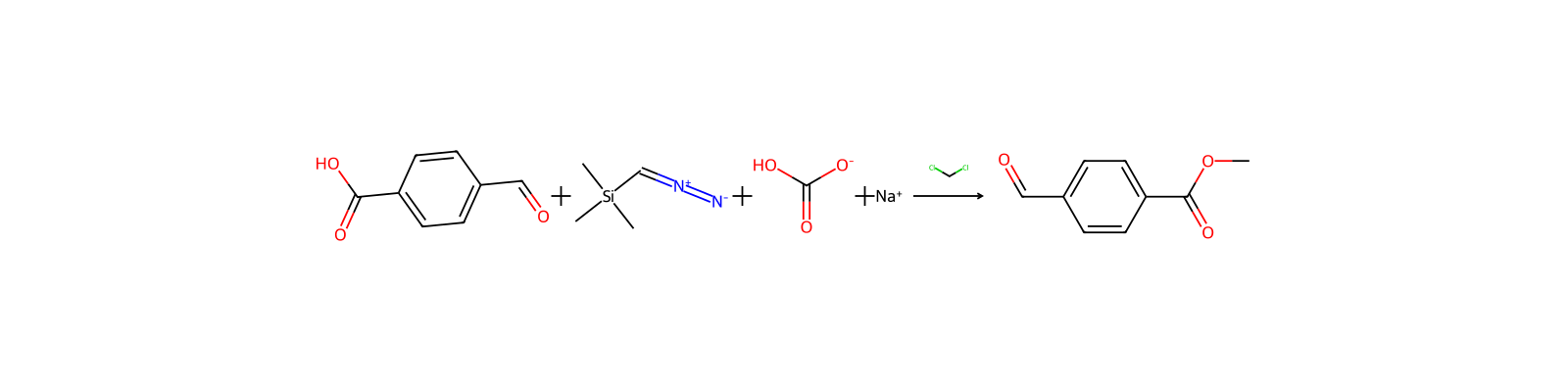
508
Reaktionsaufzeichnung erstellen
Reaktionsgleichung von HRID 887
HRID 887als Produktuspto-grants-1998_03
Reaktionsgleichung von HRID 888
HRID 888als Eduktuspto-grants-1998_03
Reaktionsgleichung von HRID 2734
HRID 2734als Eduktuspto-grants-1998_03
Reaktionsgleichung von HRID 5053
HRID 5053als Eduktuspto-grants-1993_09
Reaktionsgleichung von HRID 6731
HRID 6731als Eduktuspto-grants-2006_08
Reaktionsgleichung von HRID 7356
HRID 7356als Eduktuspto-grants-2006_08
Reaktionsgleichung von HRID 7372
HRID 7372als Eduktuspto-grants-2006_08
Reaktionsgleichung von HRID 8311
HRID 8311als Eduktuspto-grants-2006_08
Seite 1 von 64

Notizen zur Verbindung

Wird geladen…

Auf dieser SeiteGrundinformationenÜberblickNamen und BezeichnerEigenschaftenSicherheit und RegulatorischesChemie und IndustrieZugehörige ReaktionenNotizen zur Verbindung
Weitere Aktionen
Neue NotizNeue ReaktionAnfrage stellen
DTXSID
DTXSID4025610
ChEMBL
CHEMBL1607943
UNII
NH766742VV
EC Number
216-385-5
Nikkaji
J47.044I
Flammpunkt
144 °C · 144 °C
storage temp.
30 °C · Store below +30°C.
Löslichkeit
0.1 g/mL, · methanol: 0.1 g/mL, clear
Aggregatzustand
Crystalline Powder or Chunks
Farbe
White to cream or slightly green
Wasserlöslichkeit
insoluble
BRN
775895 · 775895
Stabilität
Stable, though possibly air-sensitive. Combustible. Incompatible with strong oxidizing agents.
InChI
1S/C9H8O3/c1-12-9(11)8-4-2-7(6-10)3-5-8/h2-6H,1H3
InChIKey
FEIOASZZURHTHB-UHFFFAOYSA-N
SMILES
[H]C(=O)c1ccc(cc1)C(=O)OC
LogP
2.05 · 2.050 (est)
CAS Datenbank
1571 · 1571-08-0(CAS DataBase Reference)
NIST chemische Informationen
4 · 4-HC(O)-C6H4-COOCH3(1571-08-0)
EPA chemische Informationen
4 · Benzoic acid, 4-formyl-, methyl ester (1571-08-0)
· 1 Eintrag

METHYL-P-FORMYLBENZOATE is an aldehyde/ester. Aldehydes are frequently involved in self-condensation or polymerization reactions. These reactions are exothermic; they are often catalyzed by acid. Aldehydes are readily oxidized to give carboxylic acids. Flammable and/or toxic gases are generated by the combination of aldehydes with azo, diazo compounds, dithiocarbamates, nitrides, and strong reducing agents. Aldehydes can react with air to give first peroxo acids, and ultimately carboxylic acids. These autoxidation reactions are activated by light, catalyzed by salts of transition metals, and are autocatalytic (catalyzed by the products of the reaction). The addition of stabilizers (antioxidants) to shipments of aldehydes retards autoxidation. Esters react with acids to liberate heat along with alcohols and acids. Strong oxidizing acids may cause a vigorous reaction that is sufficiently exothermic to ignite the reaction products. Heat is also generated by the interaction of esters with caustic solutions. Flammable hydrogen is generated by mixing esters with alkali metals and hydrides.

Air and Water ReactionsThis chemical may be sensitive to prolonged exposure to air. (NTP, 1992). Insoluble in water.
Hazard Classes and CategoriesAcute Tox. 4 (13.3%)

Sicherheit und Schutzausrüstung

Fire FightingFires involving this material can be controlled with a dry chemical, carbon dioxide or Halon extinguisher. (NTP, 1992)
First Aid · 1 Eintrag

EYES: First check the victim for contact lenses and remove if present. Flush victim's eyes with water or normal saline solution for 20 to 30 minutes while simultaneously calling a hospital or poison control center. Do not put any ointments, oils, or medication in the victim's eyes without specific instructions from a physician. IMMEDIATELY transport the victim after flushing eyes to a hospital even if no symptoms (such as redness or irritation) develop.

Nonfire Spill Response · 1 Eintrag

SMALL SPILLS AND LEAKAGE: Should a spill occur while you are handling this chemical, FIRST REMOVE ALL SOURCES OF IGNITION, then you should dampen the solid spill material with 60-70% ethanol and transfer the dampened material to a suitable container. Use absorbent paper dampened with 60-70% ethanol to pick up any remaining material. Seal the absorbent paper, and any of your clothes, which may be contaminated, in a vapor-tight plastic bag for eventual disposal. Solvent wash all contaminated surfaces with 60-70% ethanol followed by washing with a soap and water solution. Do not reenter the contaminated area until the Safety Officer (or other responsible person) has verified that the area has been properly cleaned.

Personal Protective Equipment (PPE) · 1 Eintrag

RECOMMENDED RESPIRATOR: Where the neat test chemical is weighed and diluted, wear a NIOSH-approved half face respirator equipped with an organic vapor/acid gas cartridge (specific for organic vapors, HCl, acid gas and SO2) with a dust/mist filter. (NTP, 1992)

Sicherheitsdaten

wgk
2
tsca
TSCA listed
hs_code
2918300090
risk_code
36/37/38-20/21/22
hazard_code
Xn,Xi
hazard_note
Irritant
safety_code
22-24/25
Speicherklasse
11 - Combustible Solids
Giftige Stoffe Daten
1571-08-0(Hazardous Substances Data)
Selbstentzündungstemperatur
240°C
Brom
Natriumcarbonat
4-Dibromomethyl-benzoic acid methyl ester
4-(Hydroxyimino-methyl)-benzoic acid methyl ester
Methyl 4-(diMethylcarbaMoyl)benzoate
Methyl 4-(isopropylcarbaMoyl)benzoate
Methylhydrogenterephthalat
Methyl-4-brombenzoat
4-Formylbenzoesure

Nachgelagerte Produkte

Micafungin Side Chain Methyl Ester3-[4-(Methoxycarbonyl)phenyl]propanoic acidMethyl 4-formyl-3-hydroxybenzoate2-Hydroxyethylmethylterephthalat(1r,4r)-methyl 4-formylcyclohexanecarboxylate1,1,3,3-Tetramethyl-1,3-diphenyldisiloxan