HRID 7230als Edukt
Fmoc-leucine

35661-60-0CC(C)C[C@H](NC(=O)OCC1c2ccccc2-c2ccccc21)C(=O)OCBPJQFCAFFNICX-IBGZPJMESA-Na leumedin; RN given for (L)-isomer
35661-60-0DTXSID0040751CHEMBL149394263.8 Ų [M-H]- [CCS Type: DT; Buffer gas: N2; Ionization: ESI-; Dataset: TOXCAST; Source Identifier: DTXSID0040751]
172.96 Ų [M+H]+ [CCS Type: TW; Method: calibrated with polyalanine and drug standards]
Sicherheitsangaben dienen nur zur Orientierung und ersetzen weder das Sicherheitsdatenblatt (SDB) des Lieferanten noch geltende Vorschriften oder eine fachliche Bewertung.
This chemical does not meet GHS hazard criteria for 40% (4 of 10) of reports.
Warning
H302 (20%): Harmful if swallowed [Warning Acute toxicity, oral]
P261, P264, P264+P265, P270, P271, P280, P301+P317, P302+P352, P304+P340, P305+P351+P338, P317, P319, P321, P330, P332+P317, P337+P317, P362+P364, P403+P233, P405, and P501 (click each P-code to see the statement)
Aggregated GHS information provided per 10 reports by companies from 5 notifications to the ECHA C&L Inventory. Each notification may be associated with multiple companies.
BeschreibungFmoc-Leu-OH is isomeric with Fmoc-Ile-OH. Like isoleucine, leucine has branching in the sidechain. The branching is at the gamma carbon instead of the beta carbon as in isoleucine. It is used in chemical and peptide syntheses.
VerwendenFmoc-L-Leu-OH, is an amino acid derivative, used in peptide chemistry. It is also one of the novel PPARγ ligands that can activate PPARγ in different ways, that reduces osteoclasts differentiation, and thus are better therapeutic targets in diabetes than traditional antidiabetic drugs.
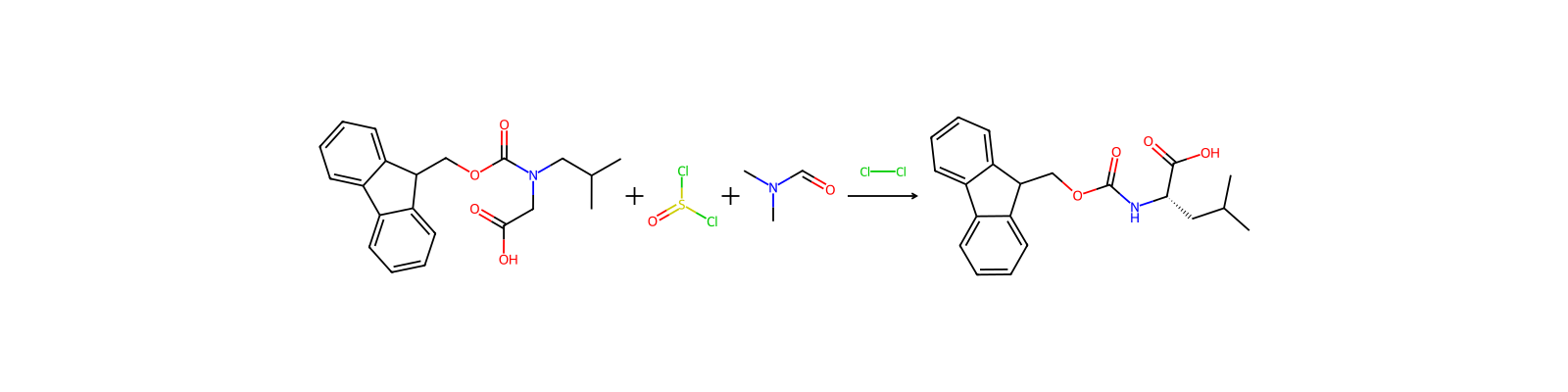
synthetischeFmoc-L-leucine is prepared by reacting L-leucine with 9-fluorenylmethoxycarbonyl chloride.