Grundinformationen
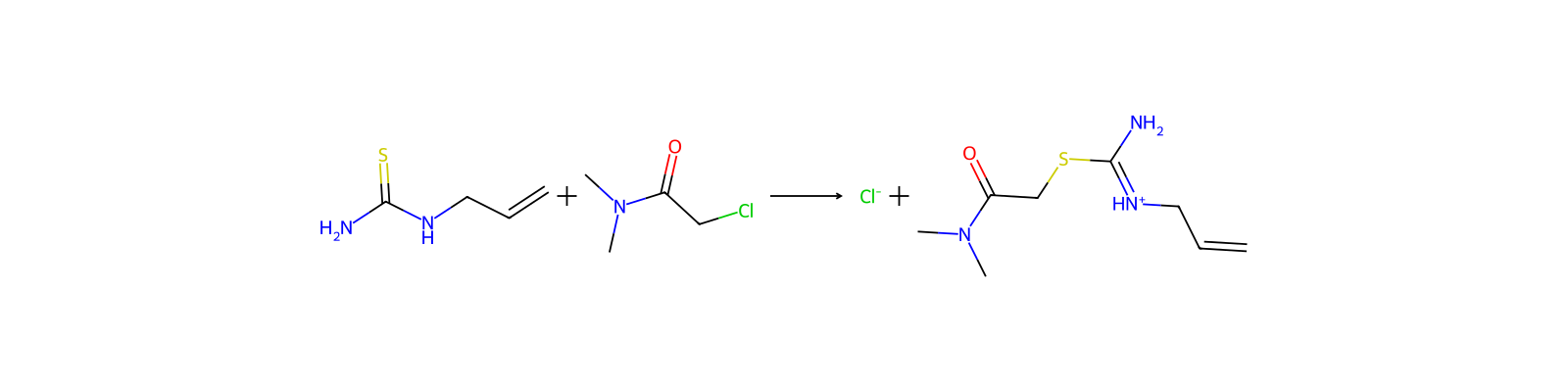
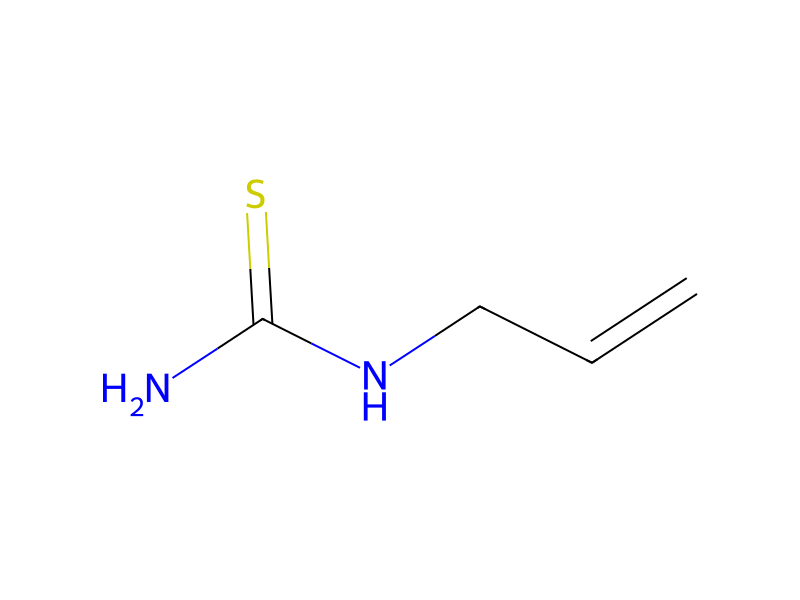
- Standard-SMILES
C=CCNC(N)=S- InChIKey
HTKFORQRBXIQHD-UHFFFAOYSA-N- Summenformel
- C4H8N2S
- Durchschnittliche Molmasse
- 116,19 g/mol
- Monoisotopische Masse
- 116,04081926
Überblick
Allylthiourea is a white crystalline solid with a slight garlic odor. (NTP, 1992)
Namen und Bezeichner
- Bevorzugter Name
- Allylthiourea
- IUPAC
- prop-2-enylthiourea
- Lokaler Name
- N-Allylthioharnstoff
- Englischer Name
- N-Allylthiourea
- Summenformel
- C4H8N2S
- Molmasse
- 116.18
Namen und Synonyme
ALLYLTHIOUREAN-Allylthiourea109-57-9Thiosinamine1-Allyl-2-thiourea1-AllylthioureaRhodallineThiosinaminAminosinRhodallinAllylthiocarbamideThiosinaminum
Weitere Namen anzeigen
u19571Rhodalin
ThiocynamineTiosinamine(2-Propenyl)thioureaAllylthioureeAliltioureaUrea, 1-allyl-2-thio-DTXSID3024449U 19571
Datenbank-Bezeichner
- CAS
109-57-9- PubChem CID
- 1549517
- DTXSID
DTXSID3024449- ChEMBL
CHEMBL1451910- ChEBI
CHEBI:74079- UNII
- 706IDJ14B7
- EC Number
- 203-683-5
- Nikkaji
- J2.432E
Eigenschaften
Berechnete Struktureigenschaften
- XLogP
- 0,2
- Polarare Oberfläche (TPSA)
- 70,1 Ų
- H-Brücken-Donoren
- 2
- H-Brücken-Akzeptoren
- 1
- Frei drehbare Bindungen
- 2
- Schwere Atome
- 7
- Formalladung
- 0
- Komplexität
- 79,8
Experimentelle und physikochemische Eigenschaften
SpringerMaterials PropertiesCrystal structure
Density1.11 to 1.22 (NTP, 1992)
Solubility
10 to 50 mg/mL at 67.1 °F (NTP, 1992)
>17.4 [ug/mL] (The mean of the results at pH 7.4)
Melting Point158 to 172 °F (NTP, 1992)
Physical DescriptionAllylthiourea is a white crystalline solid with a slight garlic odor. (NTP, 1992)
Physikochemische Eigenschaften
- Schmelzpunkt
- 70 · 70-72 °C(lit.)
- Siedepunkt
- 191.3 · 191.3±33.0 °C(Predicted)
- Dichte
- 1.11 g/mL · 1.11 g/mL at 25 °C(lit.)
- Brechungsindex
- 1.5936 · 1.5936 (estimate)
- storage temp.
- 30 °C · Store below +30°C.
- Löslichkeit
- 2 O: · H2O: soluble30 parts
- Aggregatzustand
- Powder, Crystals, Granules or Chunks
- pka
- 14.57 · 14.57±0.70(Predicted)
- Wichte
- 1.111 · 1.111.219 (20/20℃)
- Farbe
- White to light beige
- Wasserlöslichkeit
- 67 g/L · 67 g/L (20 ºC)
- Merck
- 14 · 14,9362
- BRN
- 1071470 · 1071470
- Stabilität
- Stable. Incompatible with strong oxidizing agents.
- InChI
- 1S/C4H8N2S/c1-2-3-6-4(5)7/h2H,1,3H2,(H3,5,6,7)
- InChIKey
- HTKFORQRBXIQHD-UHFFFAOYSA-N
- SMILES
- NC(=S)NCC=C
- CAS Datenbank
- 109 · 109-57-9(CAS DataBase Reference)
- NIST chemische Informationen
- Allylthiourea(109-57-9)
- EPA chemische Informationen
- Allylthiourea (109-57-9)
Sicherheit und Regulatorisches
GHS-Klassifizierung
GHS Classification
Danger
H301 (99.5%): Toxic if swallowed [Danger Acute toxicity, oral]
P264, P270, P301+P316, P321, P330, P405, and P501 (click each P-code to see the statement)
Aggregated GHS information provided per 197 reports by companies from 6 notifications to the ECHA C&L Inventory.
Gefahrenhinweise
Regulatory Information
Chemical: Thiourea, 2-propenyl-
Allylthiourea: Does not have an individual approval but may be used under an appropriate group standard
DOT LabelPoison
Fire HazardsFlash point data are not available for this chemical, but it is probably combustible. (NTP, 1992)
Health HazardsSYMPTOMS: Contact eczema due to sensitization in humans has been reported. (NTP, 1992)
Reactive GroupAmides and Imides
Reactivity Profile
ALLYLTHIOUREA may react vigorously with strong oxidizing agents. Can react exothermically with reducing agents (such as alkali metals and hydrides) to release gaseous hydrogen. May react exothermically with both acids and bases. May generate flammable gases in combination with aldehydes, nitrides, and hydrides. Incompatible with peroxides and acid halides.
Air and Water ReactionsSoluble in water.
Hazard Classes and CategoriesAcute Tox. 3 (99.5%)
Sicherheit und Schutzausrüstung
Fire FightingFires involving this compound should be controlled using a dry chemical, carbon dioxide or Halon extinguisher. (NTP, 1992)
First Aid
EYES: First check the victim for contact lenses and remove if present. Flush victim's eyes with water or normal saline solution for 20 to 30 minutes while simultaneously calling a hospital or poison control center. Do not put any ointments, oils, or medication in the victim's eyes without specific instructions from a physician. IMMEDIATELY transport the victim after flushing eyes to a hospital even if no symptoms (such as redness or irritation) develop.
Nonfire Spill Response
SMALL SPILLS AND LEAKAGE: If you spill this chemical, you should dampen the solid spill material with water, then transfer the dampened material to a suitable container. Use absorbent paper dampened with water to pick up any remaining material. Seal your contaminated clothing and the absorbent paper in a vapor-tight plastic bag for eventual disposal. Wash all contaminated surfaces with a soap and water solution. Do not reenter the contaminated area until the Safety Officer (or other responsible person) has verified that the area has been properly cleaned.
Isolation and EvacuationExcerpt from ERG Guide 154 [Substances - Toxic and/or Corrosive (Non-Combustible)]:
Personal Protective Equipment (PPE)
RECOMMENDED RESPIRATOR: Where the neat test chemical is weighed and diluted, wear a NIOSH-approved half face respirator equipped with an organic vapor/acid gas cartridge (specific for organic vapors, HCl, acid gas and SO2) with a dust/mist filter. (NTP, 1992)
Sicherheitsdaten
- wgk
- 2
- tsca
- TSCA listed
- ridadr
- UN 2811 6.1/PG 3
- hs_code
- 29309070
- RTECS-Nr.
- YR8050000
- risk_code
- 25
- Toxizität
- LD50 orally in rats: 200 mg/kg (Dieke)
- hazard_code
- T
- safety_code
- 45-24/25
- hazard_class
- 6.1
- packing_group
- III
- Speicherklasse
- 6.1C - Combustible acute toxic Cat.3toxic compounds or compounds which causing chronic effects
- Hazard Classifications
- Acute Tox. 3 Oral
Chemie und Industrie
Verwendung und Herstellung
General Manufacturing InformationThiourea, N-2-propen-1-yl-: ACTIVE
Anwendungen
VerwendenN-Allylthiourea is a nitrification inhibitor used in the study on the transformation of diclofenac, naproxen and bisoprolol under aerobic and anaerobic conditions. It is also used in medicine to minimize scar tissue in order to fight against a type of dermatitis. Further, it inhibits the growth of transplanted tumors in mice. It acts as a chelating agent. In addition, it is used in cosmetics, preservative and in organic synthesis.
Darstellung
synthetischeIn the presence of potassium iodide, in ethanol solution, chloropropene is reacted with sodium thiocyanide to form allyl isothiocyanate, which is then ammoniated in ammonium hydroxide solution, concentrated, cooled and crystallized, filtered, washed, and recrystallized in ethanol or water to produce Allylthiourea.
Vor- und nachgelagerte Produkte
Vorgelagerte Rohstoffe
Nachgelagerte Produkte
Anbieter50 Anbieter
梯希爱(上海)化成工业发展有限公司021-67121386 · [email protected]
上海阿拉丁生化科技股份有限公司400-6206333 13167063860 · [email protected]
上海麦克林生化科技股份有限公司021-50706066 15221275939 · [email protected]
河北创海生物科技有限公司+86-86-13131129325 · [email protected]
爱斯特(成都)生物制药股份有限公司+86-28-85122536 85324413 · [email protected]
上海如吉生物科技发展有限公司+86-21-65211385-8001 36031160 · [email protected]
Syntechem Co.,Ltd[email protected]
河北松辰医药科技有限公司0319-5801333-8008 15630992918 · [email protected]
天津中信凯泰化工有限公司022-66880623 · [email protected]
阿法埃莎(中国)化学有限公司400-6106006 · [email protected]
安耐吉化学&3A(安徽泽升科技股份有限公司)400-0056266 · [email protected]
上海瀚鸿科技股份有限公司021-54306202 13764082696 · [email protected]
上海尚饮思生化医药有限公司021-021-57872719 13761402923 · [email protected]
MedChemexpress LLC021-58955995 · [email protected]
武汉丰泰威远科技有限公司+86-27-8746-5837 +86-18627785180 · [email protected]
武汉丰泰威远科技有限公司027-87465837 19945049750 · [email protected]
武汉诺必果生物科技有限公司15972140806 15972140806 · [email protected]
云南西力生物技术股份有限公司0871-65217109 · [email protected]
山东西亚化学有限公司13355009207 13355009207 · [email protected]
玛雅试剂+86 (573) 82222445 (0)18006601000 452520369 · [email protected]
四川库利南科技有限公司400-1166-196 18981987031 · [email protected]
天津希恩思生化科技有限公司400 638 7771 · [email protected]
河南萬象化工有限公司(优势生产供应!)0371-56669001 13949088811 · [email protected]
斯百全化学(上海)有限公司021-021-021-67601398-809-809-809 15221380277 · [email protected]
上海源叶生物科技有限公司13636370518 · [email protected]
艾科试剂4008-755-333 18080918076 · [email protected]
上海思域化工科技有限公司86-21-34053660 · [email protected]
赛默飞世尔科技(中国)有限公司800-810-5118 · [email protected]
上海遐瑞医药科技有限公司+86 21 61551611
江苏艾康生物医药研发有限公司025-66113011 13913916777 · [email protected]
上海健超生物科技有限公司150-2103-5486 18017383231 · [email protected]
TCI AMERICA800-4238616 · [email protected]
TOKYO CHEMICAL INDUSTRY CO., LTD.03-36680489 · [email protected]
TCI Europe320-37350700 · [email protected]
南京杜莱生物技术有限公司025-84699383-8003;025-846993838003-8003 18013301590 · [email protected]
上海将来实业股份有限公司400-0066400 13621662912 · [email protected]
上海将来实业股份有限公司021-61552785 · [email protected]
安徽科迪达化工有限公司0554-2106669 · [email protected]
成都零六生物科技有限公司400-1166-196 13458535857 · [email protected]
雷丁试剂0510-85629785 18013409632 · [email protected]
上海创赛科技有限公司400-6087598 15021221957 · [email protected]
上海御略医药科技有限公司021-60345187 13671753212 · [email protected]
杭州杰恒化工有限公司0571-87396432 · [email protected]
上海拓目化工有限公司13391076197 · [email protected]
成都润泽本土化工有限公司13096311329 028-88469284 616445927 · [email protected]
湖北巨胜科技有限公司027-59599241 18871490274 · [email protected]
Sigma-Aldrich西格玛奥德里奇(上海)贸易有限公司021-61415566 800-8193336 · [email protected]
TargetMol中国(陶术生物)021-021-33632979 15002134094 · [email protected]
Alfa Chemistry1-516-6625404 · [email protected]
上海陶术生物科技股份有限公司+1-781-999-5354; +1-00000000000 · [email protected]
Ergänzende Hinweise
DefinitionChEBI: Allylthiourea is a thiourea with a prop-2-enyl group attached to one of the amines. It has a role as a metabolite. It is functionally related to a thiourea.
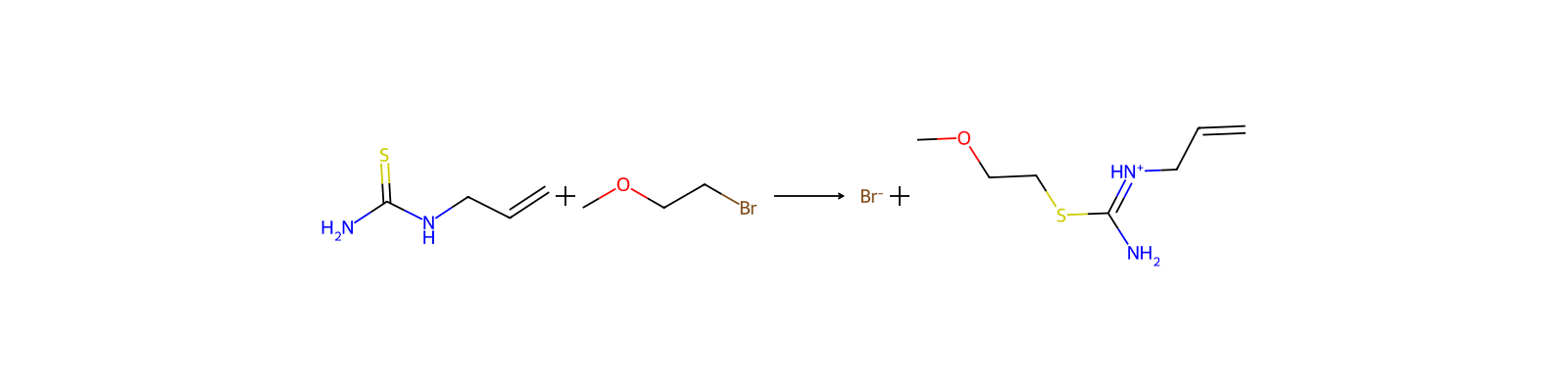
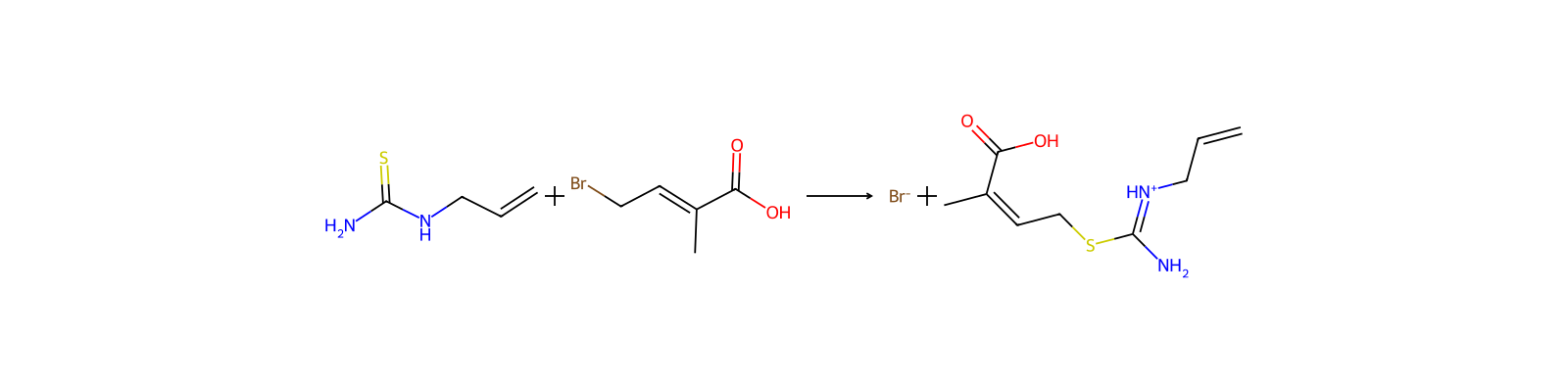
Zugehörige Reaktionen
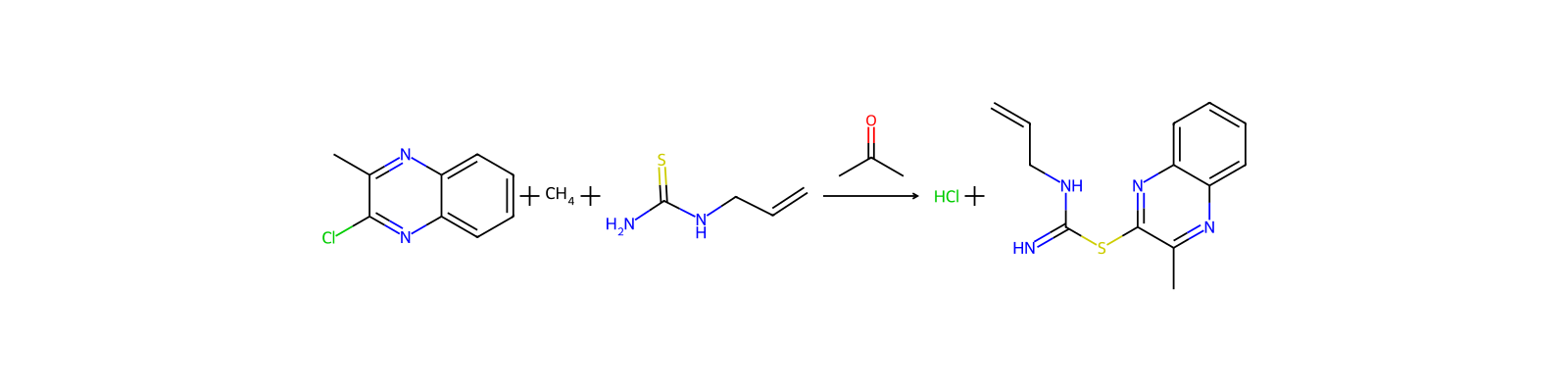
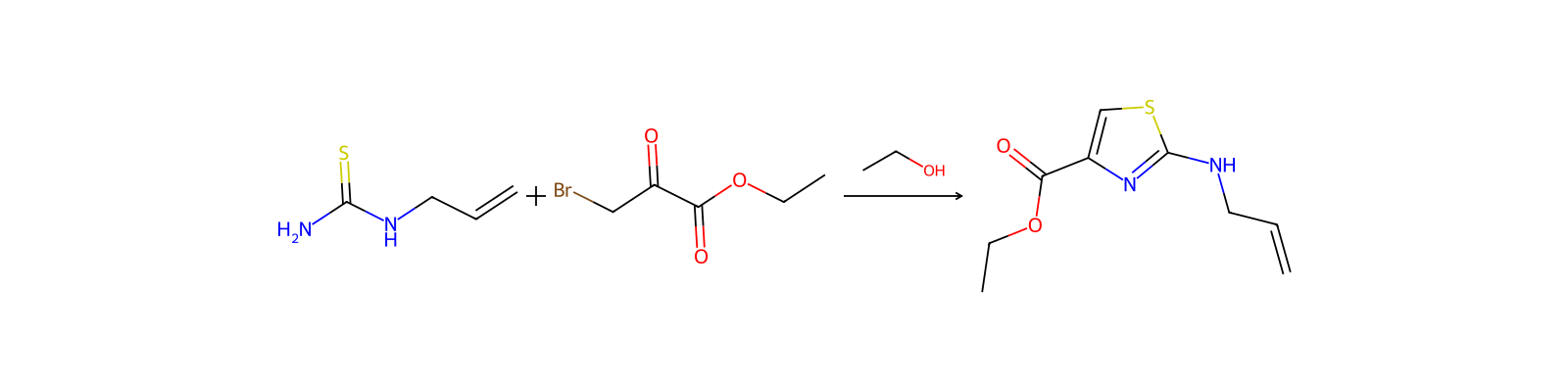
5
Verknüpfte Notizen
Wird geladen…