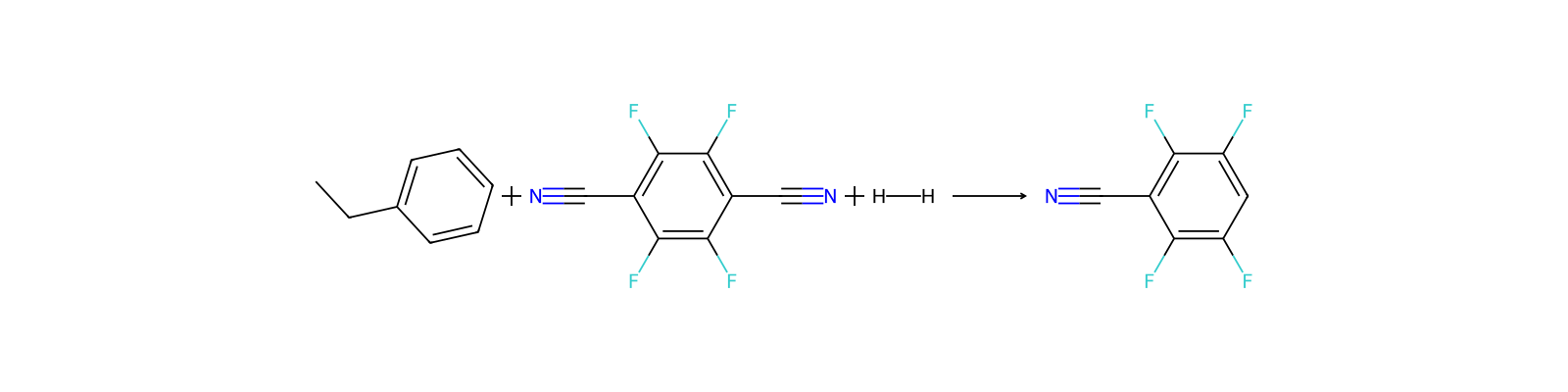

Grundinformationen
- Standard-SMILES
N#Cc1c(F)c(F)c(C#N)c(F)c1F- InChIKey
PCRSJGWFEMHHEW-UHFFFAOYSA-N- Summenformel
- C8F4N2
- Durchschnittliche Molmasse
- 200,09 g/mol
- Monoisotopische Masse
- 199,99976066
Namen und Bezeichner
- Bevorzugter Name
- Tetrafluoroterephthalonitrile
- IUPAC
- 2,3,5,6-tetrafluorobenzene-1,4-dicarbonitrile
- Lokaler Name
- Tetrafluorterephthalonitril
- Englischer Name
- Tetrafluoroterephthalonitrile
- Summenformel
- C8F4N2
- Molmasse
- 200.09
Namen und Synonyme
Tetrafluoroterephthalonitrile1835-49-01,4-BENZENEDICARBONITRILE, 2,3,5,6-TETRAFLUORO-2,3,5,6-Tetrafluoro-1,4-benzenedicarbonitrileTerephthalonitrile, tetrafluoro-K9NAY7JK97NSC-97007DTXSID1075141TFTPNRefChem:188591DTXCID4035839217-397-3
Weitere Namen anzeigen
etrafluoroterephthalonitrileJJFCdiamond2031JACS-1835-49-0uoroterephthaLTetrafluorobenzonitrilePTFEtwo of benzenenitrile
2,3,5,6-TetrafluoroterephthalonitrileDiamond 20312,3,5,6-tetrafluorobenzene-1,4-dicarbonitrilePerfluoroterephthalonitrile1,4-DicyanotetrafluorobenzeneMFCD00001776TetrafluoroterephthalodinitrileEINECS 217-397-3
Datenbank-Bezeichner
- CAS
1835-49-0- PubChem CID
- 15783
- DTXSID
DTXSID1075141- ChEMBL
CHEMBL3248223- UNII
- K9NAY7JK97
- EC Number
- 217-397-3
- Nikkaji
- J1.782E
Eigenschaften
Berechnete Struktureigenschaften
- XLogP
- 1,8
- Polarare Oberfläche (TPSA)
- 47,6 Ų
- H-Brücken-Donoren
- 0
- H-Brücken-Akzeptoren
- 6
- Frei drehbare Bindungen
- 0
- Schwere Atome
- 14
- Formalladung
- 0
- Komplexität
- 266
Physikochemische Eigenschaften
- Schmelzpunkt
- 197 · 197-199 °C (lit.)
- Siedepunkt
- 243.3 · 243.3±40.0 °C(Predicted)
- Dichte
- 1.6184 · 1.6184 (estimate)
- storage temp.
- 2 · 2-8°C
- Löslichkeit
- Soluble in hot methanol.
- Aggregatzustand
- Solid
- Farbe
- White to Light yellow
- InChI
- InChI=1S/C8F4N2/c9-5-3(1-13)6(10)8(12)4(2-14)7(5)11
- InChIKey
- PCRSJGWFEMHHEW-UHFFFAOYSA-N
- SMILES
- C1(C#N)=C(F)C(F)=C(C#N)C(F)=C1F
- CAS Datenbank
- 1835 · 1835-49-0(CAS DataBase Reference)
- NIST chemische Informationen
- 1 · 1,4-Benzenedicarbonitrile, 2,3,5,6-tetrafluoro-(1835-49-0)
- EPA chemische Informationen
- Tetrafluoroterephthalonitrile (1835-49-0)
Sicherheit und Regulatorisches
GHS-Klassifizierung
GHS Classification
Danger
H301 (97.8%): Toxic if swallowed [Danger Acute toxicity, oral];H315 (100%): Causes skin irritation [Warning Skin corrosion/irritation];H319 (100%): Causes serious eye irritation [Warning Serious eye damage/eye irritation];H335 (95.6%): May cause respiratory irritation [Warning Specific target organ toxicity, single exposure; Respiratory tract irritation]
P261, P264, P264+P265, P270, P271, P280, P301+P316, P302+P352, P304+P340, P305+P351+P338, P319, P321, P330, P332+P317, P337+P317, P362+P364, P403+P233, P405, and P501 (click each P-code to see the statement)
Aggregated GHS information provided per 45 reports by companies from 7 notifications to the ECHA C&L Inventory. Each notification may be associated with multiple companies.;Information may vary between notifications depending on impurities, additives, and other factors. The percentage value in parenthesis indicates the notified classification ratio from companies that provide hazard codes. Only hazard codes with percentage values above 10% are shown. For more detailed information, please visit ECHA C&L website.
Gefahrenhinweise
Hazard Classes and CategoriesAcute Tox. 3 (97.8%);Skin Irrit. 2 (100%);Eye Irrit. 2 (100%);STOT SE 3 (95.6%)
Sicherheitsdaten
- wgk
- 3
- ridadr
- UN 3439 6.1/PG 3
- hs_code
- 29269090
- RTECS-Nr.
- CZ1955000
- risk_code
- 25-36/37/38-20/21-23/24/25-36/37/39-20/21/22
- Toxizität
- mouse,LD50,oral,56mg/kg (56mg/kg),Journal of Medicinal Chemistry. Vol. 21, Pg. 906, 1978.
- hazard_code
- T,Xi
- hazard_note
- Toxic
- safety_code
- 26-45-37/39-22-36/37/39-27
- hazard_class
- 6.1(b)
- packing_group
- III
- Speicherklasse
- 6.1C - Combustible acute toxic Cat.3toxic compounds or compounds which causing chronic effects
- Hazard Classifications
- Acute Tox. 3 OralEye Irrit. 2Skin Irrit. 2STOT SE 3
Chemie und Industrie
Anwendungen
VerwendenTetrafluoroterephthalonitrile can be used as a synthessi reagent primarily used to create polymers of intinsic microporosity.
Vor- und nachgelagerte Produkte
Vorgelagerte Rohstoffe
Anbieter50 Anbieter
国药集团化学试剂有限公司86-21-63210123 · [email protected]
梯希爱(上海)化成工业发展有限公司021-67121386 · [email protected]
郑州阿尔法化工有限公司+86-18530059196 · [email protected]
衢州润东化工有限公司0570-8789886 18892685668 · [email protected]
上海恩氟佳科技有限公司15800445152 · [email protected]
上海阿拉丁生化科技股份有限公司400-6206333 13167063860 · [email protected]
爱斯特(成都)生物制药股份有限公司+86-28-85122536 85324413 · [email protected]
上海赫文斯化工有限公司15721252604 17321035817 · [email protected]
韶远科技(上海)有限公司021-50795510 4000665055 · [email protected]
上海将来实业股份有限公司400-0066400 13621662912 · [email protected]
武汉易泰科技有限公司上海分公司18930552037 · [email protected]
阿法埃莎(中国)化学有限公司400-6106006 · [email protected]
安耐吉化学&3A(安徽泽升科技股份有限公司)400-0056266 · [email protected]
石家庄斯迪亚诺精细化工有限公司0311-89250318 13582355795 · [email protected]
上海瀚鸿科技股份有限公司021-54306202 13764082696 · [email protected]
上海柯维化学技术有限公司021-64609169 18901607656 · [email protected]
上海景颜化工科技有限公司13817811078 · [email protected]
嘉兴市艾森化工有限公司0573-85285100 18627885956 · [email protected]
上海攀鸿化工科技有限公司021-56491756 13512199871 · [email protected]
武汉丰泰威远科技有限公司027-87465837 19945049750 · [email protected]
山东西亚化学有限公司13355009207 13355009207 · [email protected]
四川库利南科技有限公司400-1166-196 18981987031 · [email protected]
天津希恩思生化科技有限公司400 638 7771 · [email protected]
南京维奥化工有限公司Please Send Email 18652950785 · [email protected]
武汉海正工贸发展有限公司027-8866 0053/88660577/88660578
上海思域化工科技有限公司86-21-34053660 · [email protected]
TOKYO CHEMICAL INDUSTRY CO., LTD.03-36680489 · [email protected]
越林试剂021-62960152 · [email protected]
Clearsynth Labs Limited+91-22-26355700 · [email protected]
深圳睿迅光电材料科技有限公司0755-26718755 13266723223 · [email protected]
上海将来实业股份有限公司400-0066400 13621662912 · [email protected]
上海将来实业股份有限公司021-61552785 · [email protected]
安徽科迪达化工有限公司0554-2106669 · [email protected]
HBCChem, Inc.+1-510-219-6317 · [email protected]
上海笛柏生物科技有限公司400-008-9730,021-54359730 400-008-9730 · [email protected]
郑州阿尔法化工有限公司0371-53732842 15981811963 · [email protected]
郑州鸿晟医药科技有限公司0371-0371-13526885213 15637198702 · [email protected]
成都零六生物科技有限公司400-1166-196 13458535857 · [email protected]
上海鑫圭生物科技有限公司15121041756 · [email protected]
上海麦克林生化科技股份有限公司15221275939 15221275939 · [email protected]
杭州杰恒化工有限公司0571-87396432 · [email protected]
上海纳谦化学科技有限公司13598610367 13598610367 · [email protected]
南京恰风和医药科技有限公司025-57018978 18251899859 · [email protected]
上海有朋化工有限公司021-69005955 13701776567 · [email protected]
江苏艾康生物医药研发有限公司025-66028182 17714375163 · [email protected]
上海凯赛化工有限公司021-33516722 13701817765 · [email protected]
上海彤源化工有限公司021-021-69182866 13701855675 · [email protected]
上海容立化学科技有限公司021-69992220 13701886816 · [email protected]
上海康拓化工有限公司021-69185552 13701777608 · [email protected]
湖北巨胜科技有限公司027-59599241 18871490274 · [email protected]
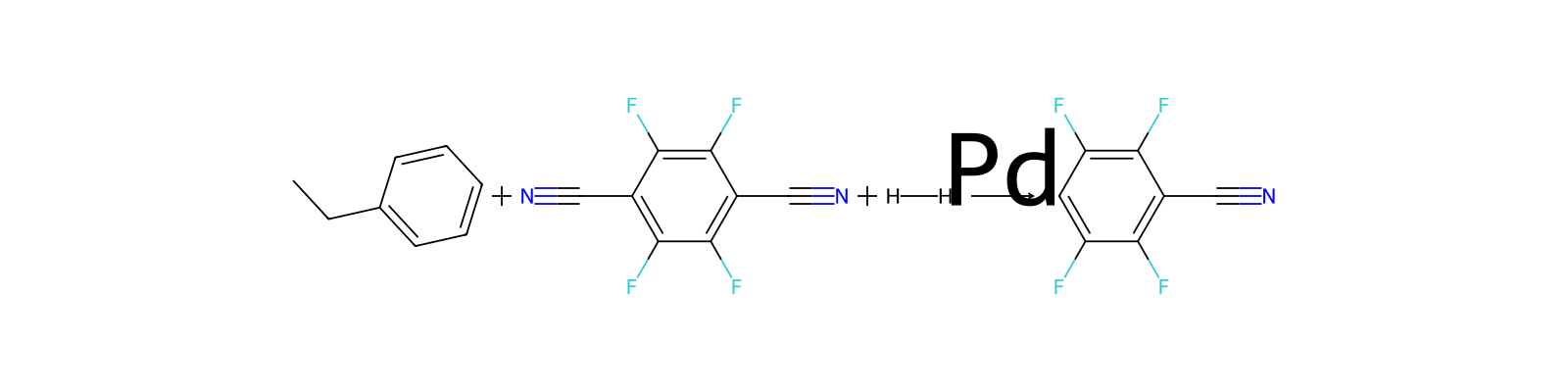
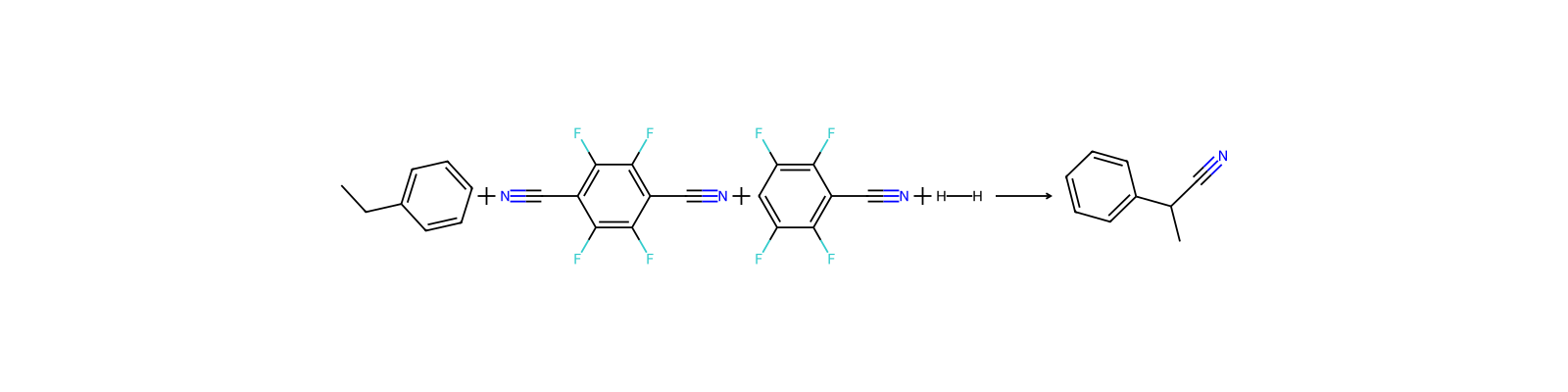
Zugehörige Reaktionen
21




Verknüpfte Notizen
Wird geladen…