StartseiteMCPWorkbenchSkills
StartseiteWorkbenchBenachrichtigungenMein Bereich
llms.txt · MCP-AnleitungDatenschutz · Nutzungsbedingungen · Supportv1.8.0
  1. Startseite
  2. /Verbindung

Paraquat-dichlorid

Paraquat dichloride
HCID 15938
Neue NotizNeue ReaktionAnfrage stellen
Druckvorschau
GrundinformationenÜberblickNamen und BezeichnerEigenschaftenSicherheit und RegulatorischesChemie und IndustrieZugehörige ReaktionenNotizen zur Verbindung
TeilstruktursucheÄhnliche Strukturen suchen

Grundinformationen

CAS
1910-42-5
Standard-SMILES
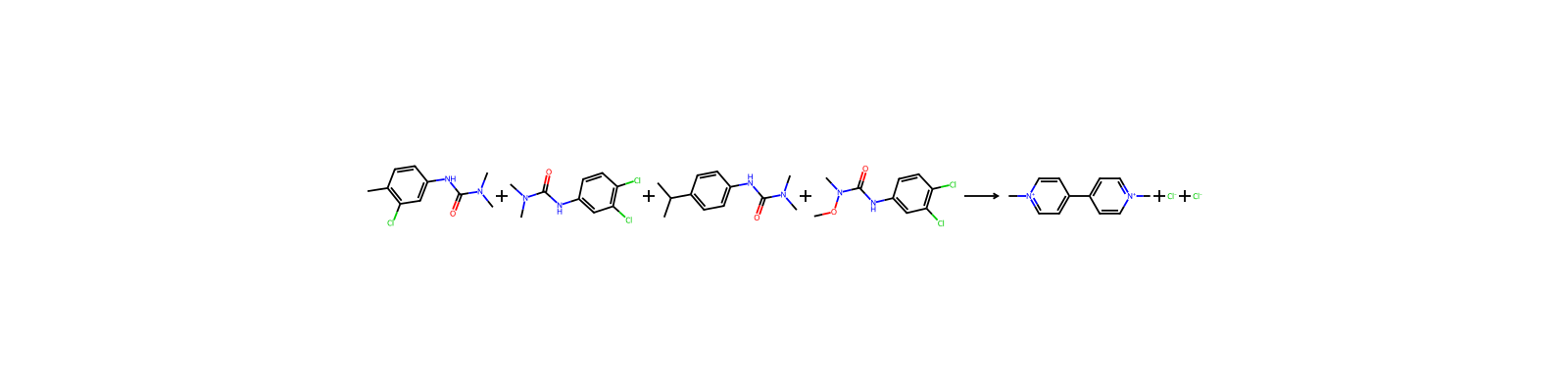
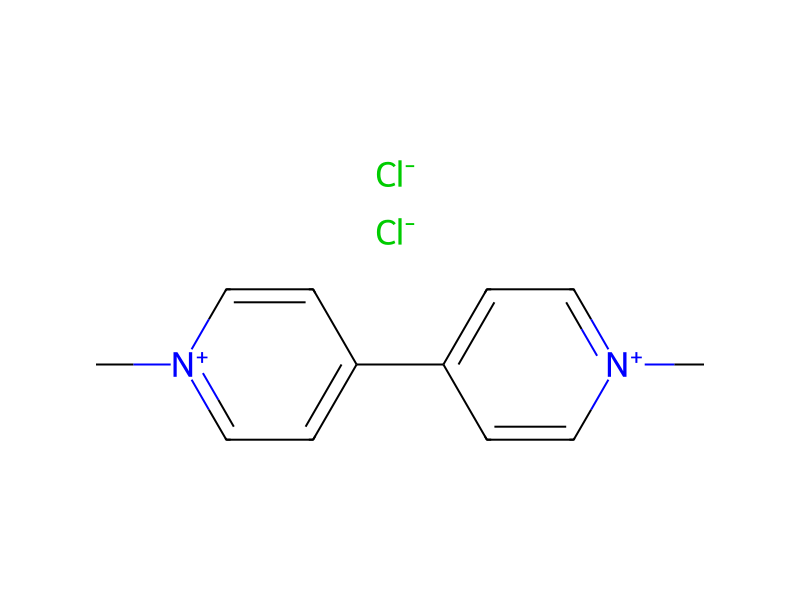
C[n+]1ccc(-c2cc[n+](C)cc2)cc1.[Cl-].[Cl-]
InChIKey
FIKAKWIAUPDISJ-UHFFFAOYSA-L
Summenformel
C12H14N2.2Cl
Durchschnittliche Molmasse
257,16 g/mol
Monoisotopische Masse
256,0534038

Überblick

Paraquat dichloride is a colorless to yellow crystalline solid. Used as a contact herbicide and desiccant. (EPA, 1998)

Namen und Bezeichner

Bevorzugter Name
Paraquat dichloride
IUPAC
1-methyl-4-(1-methylpyridin-1-ium-4-yl)pyridin-1-ium dichloride
Lokaler Name
Paraquat-dichlorid
Englischer Name
Paraquat dichloride
Summenformel
C12H14Cl2N2
Molmasse
257.16

Namen und Synonyme

Paraquat dichloride1910-42-5Methyl viologenMethyl viologen dichloridePathclearPillarxoneCrisquatDexuronGramixelGramuronEsgramToxer total
Weitere Namen anzeigen
TOTALPARAQUAParaquat dichloridPARAQUAT DICHLORIDE TETRAHYDRATE
Ortho paraquat clParaquat-dichloride1,1'-Dimethyl-4,4'-bipyridinium dichlorideCekuquatGaloksonGramoxoneHerbaxonHerboxone

Datenbank-Bezeichner

CAS
1910-42-5、4685-14-7
PubChem CID
15938
DTXSID
DTXSID7024243
ChEMBL
CHEMBL458019
ChEBI
CHEBI:28786
UNII
2KZ83GSS73
EC Number
217-615-7

Eigenschaften

Berechnete Struktureigenschaften

Polarare Oberfläche (TPSA)
7,8 Ų
H-Brücken-Donoren
0
H-Brücken-Akzeptoren
2
Frei drehbare Bindungen
1
Schwere Atome
16
Formalladung
0
Komplexität
145

Experimentelle und physikochemische Eigenschaften

Pesticides · 2 Einträge

Pesticide -> EPA IRIS

Pesticides -> Herbicides, Bipyridyl

LogP-4.5
Density · 4 Einträge

1.24 to 1.26 at 68 °F (NTP, 1992)

1.24 g/cm³

1.24

1.24

Solubility · 3 Einträge

greater than or equal to 100 mg/mL at 66 °F (NTP, 1992)

Solubility in water, g/100ml at 20 °C: 62

Miscible

Endocrine DisruptorsPotential endocrine disrupting compound
Boiling Point · 3 Einträge

Decomposes (NIOSH, 2024)

decomposes

Decomposes

Decomposition300 °C
Melting Point · 3 Einträge

Decomposes 572 °F (EPA, 1998)

572 °F (decomposes)

572 °F (Decomposes)

Vapor Pressure · 5 Einträge

Approximately 0 (EPA, 1998)

Sicherheit und Regulatorisches

Sicherheitsangaben dienen nur zur Orientierung und ersetzen weder das Sicherheitsdatenblatt (SDB) des Lieferanten noch geltende Vorschriften oder eine fachliche Bewertung.

GHS-Klassifizierung

GHS Classification · 6 Einträge

Danger

H301: Toxic if swallowed [Danger Acute toxicity, oral]

P260, P261, P262, P264, P264+P265, P270, P271, P273, P280, P284, P301+P316, P302+P352, P304+P340, P305+P351+P338, P316, P319, P320, P321, P330, P332+P317, P337+P317, P361+P364, P362+P364, P391, P403+P233, P405, and P501 (click each P-code to see the statement)

Danger

H290 (13.6%): May be corrosive to metals [Warning Corrosive to Metals]

P234, P260, P261, P262, P264, P264+P265, P270, P271, P273, P280, P284, P301+P316, P302+P352, P304+P340, P305+P351+P338, P316, P319, P320, P321, P330, P332+P317, P337+P317, P361+P364, P362+P364, P390, P391, P403+P233, P405, P406, and P501 (click each P-code to see the statement)

Gefahrenhinweise

Regulatory Information · 5 Einträge

Hazard Traits - Hazard Trait Undefined

Paraquat dichloride is listed in the dataset of EPA Human Health Benchmarks for Pesticides under the Safe Drinking Water Act (40 eCFR 141)

REACH registered substance: Paraquat-dichloride (EC: 217-615-7)

Paraquat dichloride: Does not have an individual approval but may be used as a component in a product covered by a group standard. It is not approved for use as a chemical in its own right.

The New Jersey Worker and Community Right to Know Act requires public and private employers to provide information about hazardous substances at their workplaces. (N.J.S.A. 34:5A-1 et. seq.)

Other Safety InformationIMAP assessments - 4,4'-Bipyridinium, 1,1'-dimethyl-, dichloride: Human health tier I assessment
DOT LabelPoison
Fire Hazards · 2 Einträge

Avoid strong oxidizers. (EPA, 1998)

Not combustible. Gives off irritating or toxic fumes (or gases) in a fire.

Chemie und Industrie

Pharmakologische Informationen

Biological Half-LifeAnimal studies: less than 6 hours; other animal studies have found measurable paraquat 26 days after ingestion; [TDR, p. 991]
Metabolism/Metabolites · 1 Eintrag

Paraquat is poorly absorbed after oral exposure. It is not metabolized but is reduced to an unstable free radical which is then re-oxidized to reform the cation and produce a superoxide anion. It is excreted moslty in the urine,and in small fraction also in the feces (A606, L1008).

MeSH Pharmacological ClassificationPesticides used to destroy unwanted vegetation, especially various types of weeds, grasses (POACEAE), and woody plants. Some plants develop HERBICIDE RESISTANCE.

Verwendung und Herstellung

Uses · 3 Einträge

Used as a contact herbicide on weeds; [EXTOXNET] Used in animal experiments as a model of Parkinson's syndrome at doses several orders of magnitude greater than occupational exposure levels; [PMID 16217247]

Farming (Pesticides) [Category: Industry]

Paraquat is used as a quaternary ammonium herbicide; one of the most widely used herbicides in the world. It is also often used in science to catalyze the formation of reactive oxygen species (ROS). (L421).

Use ClassificationHERBICIDES
Anwendungen · 1 Eintrag

BeschreibungParaquat dichloride is a dark blue liquid, non-combustible, stable herbicide chemical. It is incompatible with strong oxidising agents. On contact with fire paraquat decomposes gives off irritating or toxic fumes (or gases), nitrogen oxides, and hydrogen chloride. Paraquat dichloride contact and storage destroys metal. Paraquat dichloride hydrolyses in alkaline media and reacts with aluminium to produce hydrogen gas. Paraquat (N,N′-dimethyl-4,4′-bipyridinium dichloride) is one of the most widely used herbicides in the world. Paraquat dichloride is a herbicide currently registered to control weeds and grasses in many agricultural and non-agricultural areas. It is used preplant or preemergence on vegetables, grains, cotton, grasses, sugar cane, peanuts, potatoes, and tree plantation areas; post-emergence around fruit crops, vegetables, trees, vines, grains, soybeans, and sugar cane. It is also used on non-crop areas such as public airports, electric transformer stations, and around commercial buildings to control weeds. It has been reported that about seven pesticide products are registered which contain the active ingredient paraquat dichloride and classified as restricted use pesticides (RUPs). Paraquat dichloride and the products are primarily intended for ‘Occupational Use’. In the United States, Paraquat is classified as ‘restricted commercial use’, and people must obtain a license to use the product.

Zugehörige Reaktionen

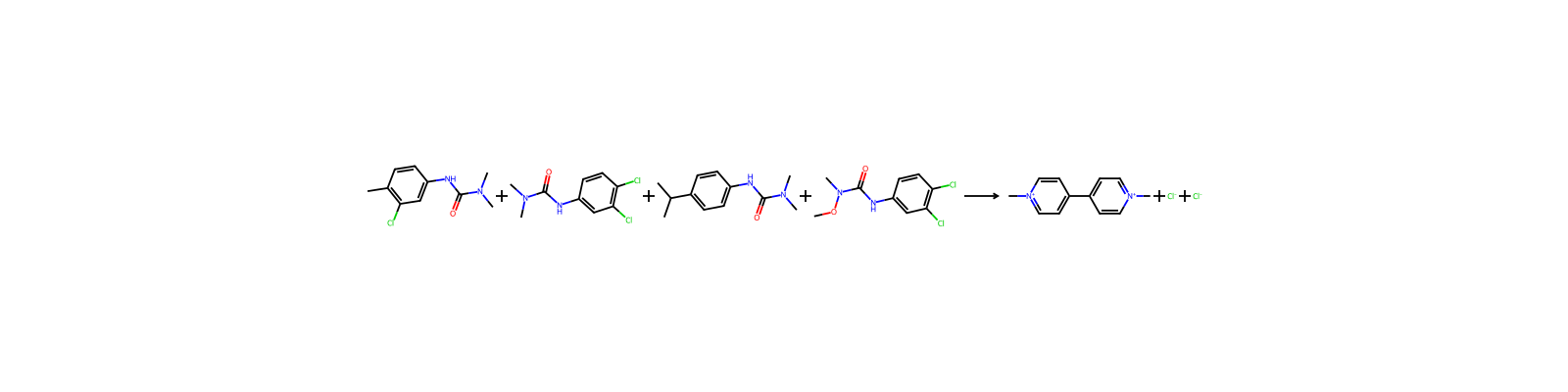
3
Reaktionsaufzeichnung erstellen
Reaktionsgleichung von HRID 1674471
HRID 1674471als Produktuspto-grants-2011_08
Reaktionsgleichung von HRID 1674472
HRID 1674472als Produktuspto-grants-2011_08
Reaktionsgleichung von HRID 1762394
HRID 1762394als Produktuspto-grants-1989_05

Notizen zur Verbindung

Wird geladen…

Auf dieser SeiteGrundinformationenÜberblickNamen und BezeichnerEigenschaftenSicherheit und RegulatorischesChemie und IndustrieZugehörige ReaktionenNotizen zur Verbindung
Weitere Aktionen
Neue NotizNeue ReaktionAnfrage stellen

0.0000001 [mmHg]

Vapor pressure, Pa at 25 °C:

<0.0000001 mmHg

<0.0000001 mmHg

Physical Description · 5 Einträge

Paraquat dichloride is a colorless to yellow crystalline solid. Used as a contact herbicide and desiccant. (EPA, 1998)

Yellow solid with a faint, ammonia-like odor. [herbicide] [Note: Paraquat may also be found commercially as a methyl sulfate salt C12H14N2+2CH3SO4.]; [NIOSH]

COLOURLESS HYGROSCOPIC CRYSTALS.

[herbicide] [Note: Paraquat may also be found commercially as a methyl sulfate

Yellow solid with a faint, ammonia-like odor. [herbicide] [Note: Paraquat may also be found commercially as a methyl sulfate salt C12H14N2 • 2CH3SO4.]

Physikochemische Eigenschaften

Schmelzpunkt
300 °C · >300 °C(lit.)
Siedepunkt
403.89 °C · 403.89°C (rough estimate)
Dichte
1.25 · 1.25
Dampfdruck
0 Pa · 0Pa at 25℃
Brechungsindex
1.64 · 1.6400 (estimate)
storage temp.
Inert atmosphere,Room Temperature
Löslichkeit
Methanol (Sligthly)
Aggregatzustand
Crystals or Crystalline Powder
Farbe
Beige or pink to brown
Wasserlöslichkeit
soluble
Merck
7031 · 7031
Stabilität
Stable. Incompatible with strong oxidizing agents.
LogP
-4.5 at · -4.5 at 20℃
CAS Datenbank
1910 · 1910-42-5(CAS DataBase Reference)
EPA chemische Informationen
Paraquat dichloride (1910-42-5)
Health HazardsCan cause death due to severe injury to the lungs. The lowest lethal oral dose reported in humans is 43 mg/kg. (EPA, 1998)
Hazards Summary · 1 Eintrag

Contact injuries in workers include skin rashes, burns, eye damage from splashes, nail damage, and nasal bleeding. Parquat absorption through the skin can contribute to systemic toxicity, especially when contacting damaged skin or sensitive areas like the buttocks and genitalia. Toxic ingestion: low doses (<20 mg/kg) cause local irritation to oral and GI mucosa; moderate doses (20-40 mg/kg) cause renal, liver and lung damage with respiratory failure within 2-3 weeks; high doses (>40 mg/kg) cause pulmonary fibroplasia, respiratory failure, and death within 1-7 days. [ACGIH] Classified as highly toxic, paraquat may be used only by certified applicators. [EXTOXNET] Prolonged contact will cause blistering of skin. Poisoning usually occurs after toxic ingestion, e.g., attempted suicide. [EPA Pesticides] Phototoxic contact dermatitis reported in farmworkers; [Kanerva, p. 1823] A multigenerational study in rats given 100 ppm or 300 ppm dietary paraquat showed no effects on fertility or neonatal morbidity and mortality. In mice, maternal feeding with 125 ppm paraquat caused increased mortality in pups that was related to lung injury. [ACGIH] Among the many herbicides in use, only the bipyridyl compounds have appeared to produce hepatic injury in humans. Even these agents have produced hepatic injury only as the result of ingestion of large amounts, not because of environmental contamination and questionably as the result of occupational exposures. [Zimmerman, p. 415] Paraquat has a chemical structure similar to MPTP, but animal studies have failed to show that paraquat causes parkinsonism. [Rosenstock, p. 1111] See Paraquat.

Reactive GroupQuaternary Ammonium and Phosphonium Salts
EC ClassificationSymbol: T+, N; R: 24/25-26-36/37/38-48/25-50/53; S: (1/2)-22-28-36/37/39-45-60-61
UN ClassificationUN Hazard Class: 6.1; UN Pack Group: I
Reactivity Profile · 1 Eintrag

PARAQUAT DICHLORIDE is stable in acidic media, but unstable in alkaline media. It is photochemically decomposed by UV irradiation in aqueous solutions and is rapidly inactivated by soil. The neat chemical may be sensitive to light. This compound is corrosive to metal and it can react with strong acids, bases, and oxidizing agents. It is hydrolyzed by alkali compounds and it is inactivated by inert clays and anionic surfactants. (NTP, 1992)

Chemical DangersDecomposes above 300 °C . This produces toxic fumes including nitrogen oxides and hydrogen chloride. Attacks metals.
Flammable LimitsNoncombustible Solid

Sicherheit und Schutzausrüstung

Fire Fighting · 2 Einträge

This material is a bipyridilium compound. Procedures for bipyridilium pesticides are as follows. Small fires: dry chemical, carbon dioxide, water spray, or foam. Large fires: water spray, fog, or foam. Move container from fire area if you can do so without risk. Fight fire from maximum distance. Dike fire control water for later disposal; do not scatter the material. (EPA, 1998)

In case of fire in the surroundings, use appropriate extinguishing media.

First Aid Measures · 4 Einträge

Fresh air, rest. Refer immediately for medical attention.

Remove contaminated clothes. Rinse and then wash skin with water and soap.

Rinse with plenty of water for several minutes (remove contact lenses if easily possible). Refer immediately for medical attention.

Rinse mouth. Give one or two glasses of water to drink. Give a slurry of activated charcoal in water to drink. Refer immediately for medical attention.

First Aid · 2 Einträge

Warning: Effects occur in two stages, immediate and delayed. Caution is advised. Exposure to paraquat may be fatal; there is no effective antidote.

(General first aid procedures)

Safe StorageKeep in a well-ventilated room. Well closed. Separated from food and feedstuffs. Provision to contain effluent from fire extinguishing. Store in an area without drain or sewer access.
Exposure Control and Personal Protection0.1 [mg/m3], inhalable fraction[German Research Foundation (DFG)]
Nonfire Spill Response · 1 Eintrag

(Non-Specific -- Bipyridilium Pesticide) Keep unnecessary people away; isolate hazard area and deny entry. Stay upwind; keep out of low areas. Ventilate closed spaces before entering them. Remove and isolate contaminated clothing at the site. If water pollution occurs, notify appropriate authorities. Do not touch spilled material; stop leak if you can do so without risk. Use water spray to reduce vapors.

Spillage Disposal · 1 Eintrag

Consult an expert! Personal protection: chemical protection suit including self-contained breathing apparatus. Do NOT let this chemical enter the environment. Collect leaking and spilled liquid in sealable containers as far as possible. Absorb remaining liquid in sand or inert absorbent. Then store and dispose of according to local regulations. Sweep spilled substance into covered sealable containers. If appropriate, moisten first to prevent dusting. Carefully collect remainder. Then store and dispose of according to local regulations.

Isolation and EvacuationExcerpt from ERG Guide 151 [Substances - Toxic (Non-Combustible)]:
Eye PreventionWear face shield or eye protection in combination with breathing protection if powder.
Inhalation RiskEvaporation at 20 °C is negligible; a harmful concentration of airborne particles can, however, be reached quickly on spraying or when dispersed, especially if powdered.
Skin PreventionProtective gloves. Protective clothing.
Exposure PreventionPREVENT DISPERSION OF DUST! STRICT HYGIENE!

Toxikologische Informationen

Treatment · 1 Eintrag

In case of oral exposure, administer charcoal as a slurry. Consider after ingestion of a potentially life-threatening amount of poison if it can be performed soon after ingestion. The treatment is symptomatic and supportive. In case of eye exposure, irrigate exposed eyes with copious amounts of room temperature water for at least 15 minutes. In case of dermal exposure, remove contaminated clothing and jewellery. Wash the skin, including hair and nails, vigorously; do repeated soap washings. Discard contaminated clothing. (T36)

Target Organs · 2 Einträge

Respiratory

Eyes, skin, respiratory system, heart, liver, kidneys, gastrointestinal tract

Health Effects · 1 Eintrag

It can cause temporary damage to nails and if swalloed, may cause nose bleeding. Long term exposures to paraquat would most likely cause lung and eye damage. Some suspect a possible link to a greater incidence of Parkinson's disease. Pancreatitis may develop in some cases of acute. Paraquat is caustic to the oral, esophageal, and gastric mucosa (T36, A545, L421).

Adverse EffectsOccupational hepatotoxin - Secondary hepatotoxins: the potential for toxic effect in the occupational setting is based on cases of poisoning by human ingestion or animal experimentation.
Exposure Routes · 3 Einträge

The substance can be absorbed into the body by inhalation of its aerosol, through the skin and by ingestion.

inhalation, skin absorption, ingestion, skin and/or eye contact

Inhalation (T44) ; oral (T44) ; eye contat (T44) ; dermal (T44)

Toxicity Summary · 1 Eintrag

The mechanisms of the toxic effects of paraquat are largely the result of a metabolically catalyzed single electron oxidation reduction reaction, resulting in depletion of cellular NADPH and the generation of potentially toxic forms of oxygen such as the superoxide radical (A607). Recent studies have demonstrated paraquat cytotoxicity occurs in the mitochondria and particularly in mitochondrial-rich tissues. The mitochondrial NADH-dependent PQ reductase containing a voltage-dependent anion channel 1 (VDAC1) appears to be largely responsible for paraquat cytotoxicity. When mitochondria are incubated with NADH and paraquat, the superoxide anion is produced, and the mitochondria rupture. Ruptured mitochondria lead to rapid cell death (A3102).

Signs and Symptoms · 6 Einträge

Cough. Sore throat. Headache. Nosebleeds.

Redness.

Redness. Burning sensation. Pain.

Sore throat. Abdominal pain. Nausea. Vomiting. Diarrhoea.

irritation eyes, skin, nose, throat, respiratory system; epistaxis (nosebleed); dermatitis; fingernail damage; irritation gastrointestinal tract; heart, liver, kidney damage

Eye or skin irritation; hypotension may develop after large ingestion; epistaxis and sore throat may develop after inhalation. Nausea, vomiting, diarrhea, and abdominal pain are common (T36).

Acute Toxicity LinkChemical: PARAQUAT
ICSC Environmental Data · 1 Eintrag

The substance is very toxic to aquatic organisms. The substance may cause long-term effects in the aquatic environment. This substance does enter the environment under normal use. Great care, however, should be taken to avoid any additional release, for example through inappropriate disposal.

EPA IRIS Information · 3 Einträge

Paraquat

Respiratory

4.5 x 10 ^-3 mg/kg-day

Carcinogen ClassificationNo indication of carcinogenicity to humans (not listed by IARC).
Toxicity Data · 2 Einträge

LCLo (rat) = 1 mg/m3/6H for respirable dust;

LD50: 150 mg/kg (Oral, Rat) (L1008) LD50: >480 mg/kg (Dermal, Rabbit) (L1008)

Sicherheitsdaten

OEB
D
OEL
TWA: 0.1 mg/m3 (resp) [skin]
wgk
3
IDLA
1 mg/m3
ridadr
UN 2811 6.1/PG 1
hs_code
29333990
RTECS-Nr.
DW2275000
risk_code
24/25-26-36/37/38-48/25-50/53
Toxizität
LD50 orally in rats: 125 mg/kg (Conning)
hazard_code
T+,N
safety_code
22-28-36/37/39-45-60-61-28A
hazard_class
6.1(a)
packing_group
II

Vor- und nachgelagerte Produkte

Vorgelagerte Rohstoffe

Pyridin4-Iodopyridine4,4'-BipyridylPyridine-4-boronic acid1,1'-Dimethyl-4,4'-bipyridyl diiodideDimethylsulfatCUCURBIT(7)URILChloressigsäureMethyljodid4-BrompyridinChlormethan