
Grundinformationen
- Standard-SMILES
Clc1cccc(-c2ccccc2)c1- InChIKey
NMWSKOLWZZWHPL-UHFFFAOYSA-N- Summenformel
- C12H9Cl
- Durchschnittliche Molmasse
- 188,65 g/mol
- Monoisotopische Masse
- 188,03927797
Überblick
Pcb-1221 is a viscous oily liquid. (NTP, 1992)
Namen und Bezeichner
- Bevorzugter Name
- 3-Chlorobiphenyl
- IUPAC
- 1-chloro-3-phenylbenzene
- Englischer Name
- AROCHLOR 1221
- Summenformel
- N/A
- Molmasse
- 0
Namen und Synonyme
3-CHLOROBIPHENYL2051-61-83-Chloro-1,1'-biphenylm-Chlorobiphenyl3-Chlorodiphenyl1,1'-Biphenyl, 3-chloro-3-MonochlorobiphenylBiphenyl, 3-chloro-WLQ4633SJY3-monochloro-1,1'-biphenylDTXSID1040299CHEBI:36716
Weitere Namen anzeigen
PCB-1221AROCLOR 1221AROCHLOR 1221PCB Aroclor 1221chlorodiphenyl(21%cl)Aroclor 1221 (PCB 1221)AROCLOR 1221, 50MG, NEAT[40cfr136(1986)]pcb-1221Arochlor 1221 in isooctane
RefChem:53605DTXCID9020299218-126-11-chloro-3-phenylbenzene11104-28-2PCB No 2Aroclor 1221 solution3-Chlorbiphenyl
Datenbank-Bezeichner
- CAS
11104-28-2、2051-61-8- PubChem CID
- 16322
- DTXSID
DTXSID1040299- ChEBI
CHEBI:36716- UNII
- WLQ4633SJY
- EC Number
- 218-126-1、623-280-1
- Nikkaji
- J95.418G
Eigenschaften
Berechnete Struktureigenschaften
- XLogP
- 4,6
- Polarare Oberfläche (TPSA)
- 0 Ų
- H-Brücken-Donoren
- 0
- H-Brücken-Akzeptoren
- 0
- Frei drehbare Bindungen
- 1
- Schwere Atome
- 13
- Formalladung
- 0
- Komplexität
- 149
Experimentelle und physikochemische Eigenschaften
Chemical ClassesPCB
SpringerMaterials Properties13C nuclear magnetic resonance spectrum
LogPlog Kow = 4.09 (for lowest chlorinated PCB present in significant quantity)
OdorPRACTICALLY ODORLESS
Density
1.4 (NTP, 1992) - Denser than water; will sink
1.182-1.192 at 15.5 °C
1.187 @ 15.5°C
Viscosity38-41 Saybolt sec at 37.8 °C; 30-31 Saybolt sec at 54.4 °C; 30-32 Saybolt sec at 98.9 °C
Color/Form
... Colorless mobile oil
Lower chlorinated Aroclors (1221, 1232, 1016, 1242, and 1248) are colorless mobile oils. Increasing chlorine content results in mixtures taking on the consistency of viscous liquids (Aroclor 1254) or sticky resins (Aroclors 1260 and 1262). Arclors 1268 and 1270 are white powders.
Solubility
Miscible in non-polar organic solvents.
Solubility in water varies because Aroclors are variable mixtures.
In water, 3516 ppb
In water, 200 ug/L at 25 °C
Average water solubility 0.59 ppm
Flash Point
286 °F (NTP, 1992)
141-150 °C (Cleveland open cup)
Endocrine DisruptorsPotential endocrine disrupting compound
Boiling Point527 to 608 °F at 760 mmHg (NTP, 1992)
DecompositionWhen heated to decomposition they emit highly toxic fumes of chlorine. /Polychlorinated biphenyls/
Physikochemische Eigenschaften
- Schmelzpunkt
- 42.93 °C · 42.93°C (estimate)
- Siedepunkt
- 245.17 °C · 245.17°C (rough estimate)
- Dichte
- 1.15 · 1.1500 (estimate)
- Dampfdruck
- 7 x · 7 x 10-3 mmHg at 25 °C (Pal et al., 1980)
- Brechungsindex
- 1.583 · 1.5830 (estimate)
- Flammpunkt
- 146 °C · 146 °C
- storage temp.
- room temp
- Löslichkeit
- Soluble in most solvents (U.S. EPA, 1985) particular chlorinated hydrocarbons, e.g., chloroform, carbon tetrachloride, etc.
- Wasserlöslichkeit
- 434.4 mg/L · 434.4mg/L(25 ºC)
- Henry's Law Constant
- 0.286 · 0.286, 0.452, 0.697, 1.06, 1.57, 2.28, 3.26, 4.83, and 6.68 at 0.0, 5.0, 10.0, 15.0, 20.0, 25.0, 30.0, 35.5, and 40.0 °C, respectively (predicted, Burkhard et al., 1985)
- EPA chemische Informationen
- 1221 · Aroclor 1221 (11104-28-2)
Sicherheit und Regulatorisches
GHS-Klassifizierung
GHS Classification
Warning
H373 (100%): May causes damage to organs through prolonged or repeated exposure [Warning Specific target organ toxicity, repeated exposure]
P260, P273, P319, P391, and P501 (click each P-code to see the statement)
Aggregated GHS information provided per 42 reports by companies from 3 notifications to the ECHA C&L Inventory. Each notification may be associated with multiple companies.
This chemical does not meet GHS hazard criteria for 2.4% (1 of 42) of reports.
Warning
Gefahrenhinweise
Regulatory Information
Hazard Traits - Environmental tox
Substance: 3-chlorobiphenyl
DOT LabelClass 9
Fire HazardsExcerpt from ERG Guide 171 [Substances (Low to Moderate Hazard)]:
Fire PotentialPCBs may burn but do not easily ignite. /Polychlorinated biphenyls/
Health HazardsACUTE/CHRONIC HAZARDS: Toxic irritant. Hazardous decomposition products. (NTP, 1992)
Reactive GroupAryl Halides
Special Reports
U.S. Dept Health & Human Services/Agency for Toxic Substances & Disease Registry; Toxicological Profile for Polychlorinated biphenyls (PCBs) (November 2000). The ATSDR toxicological profile succinctly characterizes the toxicologic and adverse health effects information for a hazardous substance.[Available from, as of June 16, 2010: http://www.atsdr.cdc.gov/toxprofiles/index.asp]
WHO; Environ Health Criteria 140: Polychlorinated biphenyls and terphenyls (1993). EHC are designed for scientists and administrators responsible for the establishment of safety standards and regulations and provide basic scientific risk evaluations of a wide range of chemicals and groups of chemicals.[Available from, as of June 25, 2010: http://www.inchem.org/pages/ehc.html]
Safe S; Crit Rev Toxicol 13 (4): 319-95 (1984). Polychlorinated biphenyls and polybrominated biphenyls biochemistry toxicology and mechanism of action.
Reactivity ProfileSimple aromatic halogenated organic compounds are very unreactive. Halogenated organics generally become less reactive as more of their hydrogen atoms are replaced with halogen atoms.
DOT Emergency Guidelines
/GUIDE 171: SUBSTANCES (LOW TO MODERATE HAZARD)/ Fire or Explosion: Some may burn but none ignite readily. Containers may explode when heated. Some may be transported hot. /Polychlorinated biphenyls; Polychlorinated biphenyls, liquid; Polychlorinated biphenyls, solid/
/GUIDE 171: SUBSTANCES (LOW TO MODERATE HAZARD)/ Health: Inhalation of material may be harmful. Contact may cause burns to skin and eyes. ... Fire may produce irritating, corrosive and/or toxic gases. some liquids produce vapors that may cause dizziness or suffocation. Runoff from fire control may cause pollution. /Polychlorinated biphenyls; Polychlorinated biphenyls, liquid; Polychlorinated biphenyls, solid/
/GUIDE 171: SUBSTANCES (LOW TO MODERATE HAZARD)/ Public Safety: CALL Emergency Response Telephone Number ... . As an immediate precautionary measure, isolate spill or leak area in all directions for at least 50 meters (150 feet) for liquids and at least 25 meters (75 feet) for solids. Keep unauthorized personnel away. Stay upwind. /Polychlorinated biphenyls; Polychlorinated biphenyls, liquid; Polychlorinated biphenyls, solid/
/GUIDE 171: SUBSTANCES (LOW TO MODERATE HAZARD)/ Protective Clothing: Wear positive pressure self-contained breathing apparatus (SCBA). Structural firefighters' protective clothing will only provide limited protection. /Polychlorinated biphenyls; Polychlorinated biphenyls, liquid; Polychlorinated biphenyls, solid/
For more DOT Emergency Guidelines (Complete) data for Aroclor 1221 (8 total), please visit the HSDB record page.
Air and Water ReactionsInsoluble in water.
NFPA Hazard Classification
2 - Materials that, under emergency conditions, can cause temporary incapacitation or residual injury.
1 - Materials that must be preheated before ignition can occur. Materials require considerable preheating, under all ambient temperature conditions, before ignition and combustion can occur.
0 - Materials that in themselves are normally stable, even under fire conditions.
Toxic Combustion Products
Products of combustion may be more hazardous than the material itself. By-products include hydrogen chloride, ... and other irritants and toxic gases ... In the range of 1112 to 1202 °F (600-650 °C) highly toxic derivatives, polychlorinated dibenzo-para-dioxins (PCDDs) and polychlorinated dibenzofurans (PCDFs) can be formed, which may be a greater health risk than PCBs. /Polychlorinated biphenyls/
Sicherheit und Schutzausrüstung
Fire Fighting
This compound is not very flammable but any fire involving this compound may produce dangerous vapors. You should evacuate the area. All firefighters should wear full-body protective clothing and use self-contained breathing apparatuses. You should extinguish any fires involving this chemical with a dry chemical, carbon dioxide, foam, or halon extinguisher. (NTP, 1992)
First Aid
EYES: First check the victim for contact lenses and remove if present. Flush victim's eyes with water or normal saline solution for 20 to 30 minutes while simultaneously calling a hospital or poison control center. Do not put any ointments, oils, or medication in the victim's eyes without specific instructions from a physician. IMMEDIATELY transport the victim after flushing eyes to a hospital even if no symptoms (such as redness or irritation) develop.
Firefighting HazardsIrritating gases are generated in fires. /Polychlorinated biphenyls/
Fire Fighting Procedures
Use dry chemical, carbon dioxide, or alcohol foam extinguishers. Vapors are heavier than air and will collect in low areas. Vapors in confined areas may explode when exposed to fire. Containers may explode in fire. Storage containers and parts of containers may rocket great distances, in many directions. If material or contaminated runoff enters waterways, notify downstream users of potentially contaminated waters. Notify local health and fire officials and pollution control agencies. From a secure, explosion-proof location, use water spray to cool exposed containers. If cooling streams are ineffective (venting sound increases in volume and pitch, tank discolors, or shows any signs of deforming), withdraw immediately to a secure position ... The only respirators recommended for fire fighting are self-contained breathing apparatuses that have full facepieces and are operated in a pressure-demand or other positive pressure mode. /Polychlorinated biphenyls/
If material on fire or involved in fire: Extinguish fire using agent suitable for type of surrounding fire. (Material itself does not burn or burns with difficulty.) Keep run-off water out of sewers and water sources. /Polychlorinated biphenyls/
Storage Conditions
Store in tightly closed containers in a cool, well-ventilated area away from strong oxidizers (such as chlorine, bromine, and fluorine). A regulated marked area should be established where this chemical is handled, used, or stored ... /Polychlorinated biphenyls/
Drums, transformers, and other containers should be frequently inspected for leakage. Store in a cool, dry, well-ventilated location. Detached storage must be used. /Polychlorinated biphenyls/
PCB material should be stored in closed containers, in ventilated areas ... PCB's should be handled in isolated areas of the plant, where efficient ventilation systems remove airborne PCB's. ... /Polychlorinated bipenyls/
Cleanup Methods
Evacuate and restrict persons not wearing protective equipment from area of spill or leak until cleanup is complete. Remove all ignition sources. Ventilate area of spill or leak. Absorb liquids in vermiculite, dry sand, earth, peat, carbon, or a similar material and deposit in sealed containers. Keep this chemical out of a confined space, such as a sewer, because of the possibility of an explosion, unless the sewer is designed to prevent the build-up of explosive concentrations. It may be necessary to contain and dispose of this chemical as a hazardous waste. If material or contaminated runoff enters waterways, notify downstream users of potentially contaminated waters. Contact your Department of Environmental Protection or your regional office of the federal EPA for specific recommendations ... Spills of one pound or more must be reported to the EPA. /Polychlorinated biphenyls/
Stop or control the leak, if this can be done without undue risk. Absorb in noncombustible material for proper disposal. /Polychlorinated biphenyls/
Environmental considerations: Land spill: Dig a pit, pond, lagoon, or holding area to contain liquid or solid material. /SRP: If time permits, pits, ponds, lagoons, soak holes, or holding areas should be sealed with an impermeable flexible membrane liner./ Dike surface flow using soil, sand bags, foamed polyurethane, or foamed concrete. Absorb bulk liquid with fly ash or cement powder, or commercial sorbents. /Polychlorinated biphenyls/
Environmental considerations: Water spill: Use natural barriers or oil spill control booms to limit spill travel. Remove trapped material with suction hoses. /Polychlorinated biphenyls/
Environmental considerations: air spill: Apply water spray or mist to knock down vapors. /Polychlorinated biphenyls/
Nonfire Spill Response
SMALL SPILLS AND LEAKAGE: If you should spill this chemical, use absorbent paper to pick up all liquid spill material. Your contaminated clothing and absorbent paper should be sealed in a vapor-tight plastic bag for eventual disposal. Solvent wash all contaminated surfaces with acetone followed by washing with a strong soap and water solution. Do not reenter the contaminated area until the Safety Officer (or other responsible person) has verified that the area has been properly cleaned.
Disposal Methods
SRP: The most favorable course of action is to use an alternative chemical product with less inherent propensity for occupational harm/injury/toxicity or environmental contamination. Recycle any unused portion of the material for its approved use or return it to the manufacturer or supplier. Ultimate disposal of the chemical must consider: the material's impact on air quality; potential migration in soil or water; effects on animal and plant life; and conformance with environmental and public health regulations.
Incineration (3000 °F) with scrubbing to remove any chlorine-containing products. In addition, some chemical waste landfills have been approved for PCB disposal. More recently, treatment with metallic sodium has been advocated which yields a low molecular weight polyphenylene and sodium chloride.
Experiments on the combustion of polychlorinated biphenyls (PCB) in 1 m-long tube furnace indicated that PCB containing approx 40% Cl is destroyed within 3-4 min at 900-1000 °C using 100% excess air. Temperatures greater than 1000 °C are required to destroy PCB containing approx 60% Cl & distillation residues arising from PCB manufacturing. Domestic waste incinerators operating at 800-900 °C are unlikely to prove suitable for incinerating waste containing trace amt of PCB. Pyrolysis experiments at 900 °C with nominal residence time of 3.5 sec gave 40-60% recovery of Cl as HCl from PCB. /Polychlorinated biphenyls/
Polychlorinated biphenyls (375 g) mixed in 1242 l of #2 fuel oil was disposed of in a cement kiln incinerator with a temperature range of 1400-1450 °C. The destruction efficiency was >99.9998%. /Polychlorinated biphenyls, from table/
For more Disposal Methods (Complete) data for Aroclor 1221 (6 total), please visit the HSDB record page.
Preventive Measures
SRP: The scientific literature for the use of contact lenses in industry is conflicting. The benefit or detrimental effects of wearing contact lenses depend not only upon the substance, but also on factors including the form of the substance, characteristics and duration of the exposure, the uses of other eye protection equipment, and the hygiene of the lenses. However, there may be individual substances whose irritating or corrosive properties are such that the wearing of contact lenses would be harmful to the eye. In those specific cases, contact lenses should not be worn. In any event, the usual eye protection equipment should be worn even when contact lenses are in place.
If material not on fire and not involved in fire: Keep material out of water sources and sewers. Build dikes to contain flow as necessary. Attempt to stop leak if without undue personnel hazard. /Polychlorinated biphenyls/
Personnel protection: Keep upwind. Avoid breathing vapors ... Do not handle broken packages unless wearing appropriate personal protective equipment. /Polychlorinated biphenyls/
/The worker in confined spaces/ should wear appropriate protective equipment and be connected by a lifeline harness to an outside worker. /Polychlorinated biphenyls/
For more Preventive Measures (Complete) data for Aroclor 1221 (7 total), please visit the HSDB record page.
Isolation and EvacuationExcerpt from ERG Guide 171 [Substances (Low to Moderate Hazard)]:
Minimum Risk Level
Intermediate Oral: 0.03 ug/kg/day (L134)
Intermediate Oral: 0.03 ug/kg/day (L134)
Protective Action Criteria (PAC)
3.0 [mg/m3]
130 [mg/m3]
790 [mg/m3]
Toxikologische Informationen
Body Burden
The 2,3,4,5-PCBs are preferentially enriched in human milk with at least 2 rings substituted (>Cl4). Thus the PCB congeners from Aroclor 1221 would not be major contributors(1).
EPA human monitoring program found PCB body pattern to be similar irrespective of source for non-occupationally exposed humans; PCB pattern resembled Aroclor 1260(1). The 2,3,4,5-PCBs are preferentially enriched in human milk with at least 2 rings substituted (>Cl4). Thus the PCB congeners from Aroclor 1016 would not be major contributors (only for Aroclor 1016, 1221)(1). /PCBs/
Treatment
There are no specific treatments for PCB poisoning, since it is not usually recognized until after substantial chronic exposure. Only preventing further exposure and treating the observed symptoms can be done. Acute inhalation can be treated by administering oxygen. (L4)
There are no specific treatments for PCB poisoning, since it is not usually recognized until after substantial chronic exposure. Only preventing further exposure and treating the observed symptoms can be done. Acute inhalation can be treated by administering oxygen. (L4)
Interactions
Pretreatment of male rats with Aroclor 1254 at a dose of 25 mg/kg i.p. for 6 days resulted in potentiation of the hepatotoxicity of inhaled carbon tetrachloride (CCl4) as evidenced by a decrease in liver glucose-6-phosphatase and elevations of serum glutamic oxalacetic transaminase (SGOT), serum glutamic pyruvic transaminase (SGPT), isocitrate dehydrogenase, and sorbitol dehydrogenase. Aroclor 1254 alone did not demonstrate hepatotoxicity. Aroclor 1254 administration resulted in large increases in cytochrome c reductase, cytochrome P-450 (448) and P-Nitroanisole demethylation. Subsequent exposure to CCl4 vapor resulted in over 70% decreases in the latter two parameters. The potentiation was dose-dependent with a dose of 5 mg/kg or higher being effective. Aroclor 1260 administration gave results similar to those of Aroclor 1254, but Aroclor 1221 enhanced CCl4 toxicity to a lesser extent.
Health Effects
The most common health effects of PCBs are skin conditions such as chloracne and rashes. Chronic PCB exposure has also been shown to cause liver, stomach and kidney, damage, jaundice, edema, anemia, changes in the immune system, behavioral alterations, and impaired reproduction. (L4)
The most common health effects of PCBs are skin conditions such as chloracne and rashes. Chronic PCB exposure has also been shown to cause liver, stomach and kidney, damage, jaundice, edema, anemia, changes in the immune system, behavioral alterations, and impaired reproduction. (L4)
Ecotoxicity Values
LD50 Mustela vison (mink) oral 0.75-1.0 g/kg bw
LD50 Mustela vison (mink) ip 0.5-0.75 g/kg bw
LD50; Species: Colinus virginianus (Northern bobwhite quail, age 10 days); Concentration: >6000 ppm (no mortality to 4800 PPM, 30% at 6000 PPM) /Conditions of bioassay not specified/
LD50; Species: Coturnix coturnix japonica (Japanese quail, age 14 days); Concentration: >12000 ppm (no mortality to 12000 ppm) /Conditions of bioassay not specified/
For more Ecotoxicity Values (Complete) data for Aroclor 1221 (15 total), please visit the HSDB record page.
Environmental Fate
TERRESTRIAL FATE: Aroclor 1221 is a mixture of chlorinated biphenyls with the approximate distribution as follows: 12.7% biphenyl, 28.4% 2-chlorobiphenyl, 18.7% 4-chlorobiphenyl, 9.2% 2,2'-dichlorobiphenyl, 3.5% 2,4-dichlorobiphenyl, 13.6% 2,4'-dichlorobiphenyl, and 6.2% 4,4'-dichlorobiphenyl(1). Based on a classification scheme(2), an estimated Koc value of 8,400(SRC), determined from a structure estimation method(3), indicates that Aroclor 1221 is expected to be immobile in soil(SRC). Volatilization of Aroclor 1221 from moist soil surfaces is expected to be an important fate process(SRC) given a Henry's Law constant of 2.28X10⁻⁴ atm-cu m/mole(4). However, adsorption to soil is expected to attenuate volatilization(SRC). Aroclor 1221 is not expected to volatilize from dry soil surfaces(SRC) based upon a vapor pressure of 6.7X10⁻³ mm Hg at 25 °C(5). Saglek and Resolution Island, Canada soil incubated for 8 weeks with psychrotolerant microorganisms at 7 °C resulted in 40 and 14% of Aroclor 1221 biodegradation(6). At 30 °C and 8 weeks of incubation, the degradation of Aroclor 1221 increased to 71 and 76%, respectively(6).
AQUATIC FATE: Aroclor 1221 is a mixture of chlorinated biphenyls with the approximate distribution as follows: 12.7% biphenyl, 28.4% 2-chlorobiphenyl, 18.7% 4-chlorobiphenyl, 9.2% 2,2'-dichlorobiphenyl, 3.5% 2,4-dichlorobiphenyl, 13.6% 2,4'-dichlorobiphenyl, and 6.2% 4,4'-dichlorobiphenyl(1). Based on a classification scheme(2), an estimated Koc value of 8,400(SRC), determined from a structure estimation method(3), indicates that Aroclor 1221 is expected to adsorb to suspended solids and sediment(SRC). Volatilization from water surfaces is expected(4) based upon a Henry's Law constant of 2.28X10⁻⁴ atm-cu m/mole(5). Using this Henry's Law constant and an estimation method(4), volatilization half-lives for a model river and model lake are 9 hours and 7 days, respectively(SRC). However, volatilization from water surfaces is expected to be attenuated by adsorption to suspended solids and sediment in the water column. The estimated volatilization half-life from a model pond is 8.9 months if adsorption is considered(6). According to a classification scheme(7), log BCFs of 2.98-4.14(8), suggest the potential for bioconcentration in aquatic organisms is high to very high(SRC). Results of a biodegradation screening procedure utilizing BOD dilution water, settled domestic wastewater inoculum, 5 and 10 ppm Aroclor 1221 with 28 days of incubation found 100% biodegradation at both the 5 and 10 ppm concentrations, suggesting biodegradation may be important(9). Aroclor 1221 is not expected to undergo hydrolysis in the environment due to the lack of functional groups that hydrolyze under environmental conditions(4).
ATMOSPHERIC FATE: Aroclor 1221 is a mixture of chlorinated biphenyls with the approximate distribution as follows: 12.7% biphenyl, 28.4% 2-chlorobiphenyl, 18.7% 4-chlorobiphenyl, 9.2% 2,2'-dichlorobiphenyl, 3.5% 2,4-dichlorobiphenyl, 13.6% 2,4'-dichlorobiphenyl, and 6.2% 4,4'-dichlorobiphenyl(1). According to a model of gas/particle partitioning of semivolatile organic compounds in the atmosphere(2), Aroclor 1221, which has a vapor pressure of 6.7X10⁻³ mm Hg at 25 °C(3), is expected to exist solely as a vapor in the ambient atmosphere. Vapor-phase Aroclor 1221 is degraded in the atmosphere by reaction with photochemically-produced hydroxyl radicals(SRC); the half-life for this reaction in air of a representative component is estimated to be 4.6 days(SRC), calculated from its rate constant of 3.5X10⁻¹² cu cm/molecule-sec at 25 °C(SRC) that was derived using a structure estimation method(4). Although PCBs may be susceptible to photolysis, sufficient experimental data are not available to predict the relative importance of photolysis on an environmental basis(5).
Food Survey ValuesIn 1989-1994, the Food and Drug Administration found PCBs, including Aroclor 1221, 1248,and 1254, in 6 samples with trace amounts of 0.050 ppm in one of the 6 samples(1).
Exposure Routes
Oral (L4) ; inhalation (L4) ; dermal (L4)
Oral (L4) ; inhalation (L4) ; dermal (L4)
Milk ConcentrationsThe 2,3,4,5-PCBs are preferentially enriched in human milk with at least two rings substituted (>Cl4); thus the PCB congeners from Aroclor 1221 would not be major contributors(1).
Toxicity Summary
The mechanism of action varies with the specific PCB. Dioxin-like PCBs bind to the aryl hydrocarbon receptor, which disrupts cell function by altering the transcription of genes, mainly be inducing the expression of hepatic Phase I and Phase II enzymes, especially of the cytochrome P450 family. Most of the toxic effects of PCBs are believed to be results of Ah receptor binding. Other PBCs are believed to interfere with calcium channels and/or change brain dopamine levels. PCBs can also cause endocrine disurption by altering the production of thyroid hormones and binding to estrogen receptors, which can stimulate the growth of certain cancer cells and produce other estrogenic effects, such as reproductive dysfunction. They will bioaccumulate by binding to receptor proteins such as uteroglobin. (A3, A4, A30, A66)
The mechanism of action varies with the specific PCB. Dioxin-like PCBs bind to the aryl hydrocarbon receptor, which disrupts cell function by altering the transcription of genes, mainly be inducing the expression of hepatic Phase I and Phase II enzymes, especially of the cytochrome P450 family. Most of the toxic effects of PCBs are believed to be results of Ah receptor binding. Other PBCs are believed to interfere with calcium channels and/or change brain dopamine levels. PCBs can also cause endocrine disurption by altering the production of thyroid hormones and binding to estrogen receptors, which can stimulate the growth of certain cancer cells and produce other estrogenic effects, such as reproductive dysfunction. They will bioaccumulate by binding to receptor proteins such as uteroglobin. (A3, A4, A30, A66)
Ecotoxicity Excerpts
/BIRDS and MAMMALS/ ...In a long-term, low-level feeding study, 4 different Aroclors (1016, 1221, 1242, and 1254) were included in the diet of mink at a rate of 2 mg/kg. Groups of 8 female and 2 male animals were given this, or a control, diet for 11 months, from August to June ... Body weight, hemoglobin levels, and hematocrit were monitored at monthly intervals during the study, and no significant effects of PCBs were noted. Only one of the test diets (containing Aroclor 1254) adversely affected reproduction, with only 1 live birth in the study period. This single kit was considerably lighter at birth than the controls and failed to survive 4 weeks after birth. The reproductive effects of either Lake Michigan coho salmon or Aroclor 1254 were reversible when animals were transferred to a control diet. Eleven females fed salmon as 30% of the diet for a year and then given control food for a further year produced young with an average litter size of 3.5 kits per mated female, in the second year of the study. No young had been produced in the first year of the study, during dosing. Similarly, 3 females given a year of control food following a year on a diet containing 5 mg Aroclor 1254/kg, produced an average of 4.3 young per mated female in the second year of observation. In a later study, ... 2 different Aroclors /were fed/ at various dose levels to mink and ferrets. Aroclor 1242 was fed to mink at doses ranging from 5 to 40 mg/kg diet; Aroclor 1016 was given at only 20 mg/kg diet ... There was a clear reproductive effect of Aroclor 1242 at a dose of 5 mg/kg diet, but no significant mortality. Aroclor 1242 caused 66% mortality at 10 mg/kg diet and 100% mortality at 20 mg/kg diet. Aroclor 1016, at 20 mg/kg diet, caused some deaths of adults and reduced birth weight and survival of kits, but the reproductive effects were considerably less severe than those caused by Aroclor 1242 at 5 mg/kg diet ... It is clear that reproductive effects are less marked at lower levels of chlorination of Aroclors.
/AQUATIC SPECIES/ The effects of various Aroclors on the respiration and photosynthesis of the green alga Chlorella vulgaris were examined ... Aroclor 1221, at a final concentration in the medium at 10-4 M (= 192 mg/L based on an average relative molecular mass for the Aroclor at 192), produced a rate of oxygen production in the light of 43% of control levels and a rate of oxygen uptake in the dark of 59% of control levels. The Aroclors were dissolved using dimethylformamide (DMF) as a solubilizing agent; while this had some effects on the parameters measured, they were very little compared with the effects of the Aroclors (94% of control levels). A dose-response curve of the effect of Aroclor 1221 on the respiratory uptake of oxygen in the dark, in the presence of glucose, showed that there was already a marked effect at a concentration of 10-7 M and that a maximum (at 50% inhibition) was reached at a concentration of 10-6 M (= 1.92 mg/L). A further series of studies was performed to investigate the individual processes of oxygen exchange in the alga. Respiration in the dark was investigated in the absence of added glucose, to monitor "endogenous" respiration, which was found to be stimulated by Aroclor 1221 at concentrations of 10-4 M or more. Net oxygen production in the light (photosynthetic oxygen production minus respiratory oxygen usage) was reduced at a concentration of 10-4 M. At this concentration of Aroclor 1221, there was approximately 50% stimulation of endogenous respiration and approximately 50% inhibition of net oxygen production. Calculated photosynthetic rate was unaffected by the Aroclor. Increasing light intensity reduced the effect of Aroclor 1221 on net oxygen production; intensities of 8.2 x 10+4 ergs/sq cm virtually eliminated the effect. Other measures directly or indirectly associated with photosynthesis (fluorescence, oxygen evolution in flashing light, the Emerson enhancement phenomenon) were not affected by the Aroclor. /It was/ suggested that the photosynthetic apparatus of Chlorella was unaffected by Aroclor 1221, the major, and probably the only, effect of the PCBs being a stimulation of endogenous respiration rate.
/AQUATIC SPECIES/ The 48-hr EC50 on the growth of Euglena gracilis /was determined/ to be 4.4 mg/L for Aroclor 1221 and 55 mg/L for Aroclor 1232. Aroclor 1242 showed no inhibition at 100 mg/L. Aroclor 1221, at the EC50 concentration of 4.4 mg/L, significantly depressed carbon fixation and chlorophyll levels, but did not affect oxygen consumption. Uptake of L-leucine was increased 2-fold, but incorporation was not affected. Uridine uptake was significantly decreased, but thymidine uptake and incorporation were not affected.
/AQUATIC SPECIES/ Killifish (Fundulus heteroclitus) /were exposed/ to concentrations of Aroclor 1221 of 7.5, 25, or 75 mg/L. No fish died, at the lowest concentration, over a period of 4 days; 50% died at 25 mg/L within 24 hr and 88% at 75 mg/L within the same period. Serum osmolality, and serum ion levels (Na and K) were then measured. Within 6 hr at 75 mg/L, blood osmolality significantly increased, but sodium and potassium ions in the blood were not affected. After 24 hr at 75 mg/L, there was also a significant increase in sodium ions, but no effects on potassium ions. None of these parameters were affected by exposure at 25 mg/L for 24 hr.
For more Ecotoxicity Excerpts (Complete) data for Aroclor 1221 (6 total), please visit the HSDB record page.
Signs and Symptoms
Chronic PCB exposure results in symptoms such as abdominal pain, nausea, vomiting, diarrhea, headache, dizziness, depression, nervousness, dermal and ocular lesions, fatigue, irregular menstrual cycles and a lowered immune response. (A3)
Chronic PCB exposure results in symptoms such as abdominal pain, nausea, vomiting, diarrhea, headache, dizziness, depression, nervousness, dermal and ocular lesions, fatigue, irregular menstrual cycles and a lowered immune response. (A3)
Regulatorische Informationen
CERCLA Reportable Quantities
Persons in charge of vessels or facilities are required to notify the National Response Center (NRC) immediately, when there is a release of this designated hazardous substance, in an amount equal to or greater than its reportable quantity of 1 lb or 0.454 kg. The toll free number of the NRC is (800) 424-8802. The rule for determining when notification is required is stated in 40 CFR 302.4 (section IV.D.3.b).
Sicherheitsdaten
- wgk
- 3
- ridadr
- 2315
- RTECS-Nr.
- TQ1352000
- risk_code
- 11-33-38-48/20-51/53-62-65-67-50/53-39/23/24/25-23/24/25-36/37/38-45-52/53
- Toxizität
- Drinking water standard (final): For all PCBs, the MCLG and MCL are zero and 0.5 μg/L, respectively (U.S. EPA, 2000).
- hazard_code
- F,Xn,N,T,Xi
- safety_code
- 36/37-61-62-60-35-45-36-26-16-7-53
- hazard_class
- 9
- packing_group
- II
- Giftige Stoffe Daten
- 11104-28-2(Hazardous Substances Data)
Chemie und Industrie
Pharmakologische Informationen
Mechanism of Action
One proposed molecular target for PCB disruption of calcium homeostasis that may be involved in neurological and neurodevelopmental effects is ryanodine-sensitive Ca+2 channels. Commercial PCB mixtures with intermediate to high degrees of chlorination (Aroclors 1248, 1254, and 1260) enhanced ryanodine binding to calcium release channels in sarcoplasmic reticulum membranes from skeletal or cardiac rabbit muscles, and mixtures with lower (Aroclors 1221, 1232) or higher (Aroclor 1268) chlorination showed little enhancement.
Studies with inbred mice strains differing in Ah-receptor responsiveness indicate that immunosuppression from PCB mixtures involves Ah-receptor mediation, but there is evidence that other mechanisms also may contribute to PCB-induced immunological effects. Illustrating the importance of Ah-receptor mediation for some PCB congeners, Ah-responsive C57BL/6 mice given single intraperitoneal doses of 100 mg/kg 3,3',4,4'-tetraCB showed marked decreases in the number of splenic PFCs formed in response to immunization with SRBCs (which are T-cell dependent antigens) compared with similarly treated Ah-nonresponsive DBA/2 mice. In addition, ED50 values for 2,3,7,8-TCDD, three CDFs, and two PCBs without ortho substitution (3,3',4,4',5-pentaCB and 3,3',4,4',5,5'-hexaCB) in this immunotoxicity assay were lower in C57BL/6 mice than in DBA/2 mice, and the order of immunotoxic potency of these six compounds was the same as that for potency in inducing CYP1A1. In another study, a series of four hexachlorinated biphenyls with differing chlorine substitution patterns displayed varying ED50 values in the same immunotoxicity assay as follows: 2, > 1,000, 120, and > 1,000 umol/kg for a mono-ortho- (2,3,3',4,4',5'-), di-ortho- (2,2',4,4',5,5'-), tri-ortho- (2,2',4,4',5',6-), and tetra-ortho (2,2',4,4',6,6'-)-isomer, respectively. /It was/ concluded that immunotoxic potency decreases (i.e., ED50s increase) with increasing ortho-chlorine substitution of PCBs, but, as shown above, the decrease was not monotonic with increasing degree of ortho chlorination. Furthermore, this relationship did not apply to more highly chlorinated PCBs with three or four ortho chlorines that are inactive as Ah-receptor agonists and only minimally induce CYP1A1. Three nonachlorobiphenyls (2,2',3,3',4,4',5,5',6-, 2,2',3,3',4,4',5,6,6'-, and 2,2',3,3',4,5,5',6,6'-nonaCB) and decachlorobiphenyl displayed ED50s for inhibition of the splenic PFC response to SRBC in C57BL/6 mice that were less than those for hexachlorobiphenyl isomers with multiple ortho chlorines reported above: 15, 7, 17, and 35 umol/kg, respectively. These results are consistent with the hypothesis that some PCBs induce immunotoxicity via Ah-receptor independent mechanisms. In an in vitro assay of cell proliferation in response to lipopolysaccharide (a T-cell independent antigen), Aroclors 1221, 1242, 1254, or 1260 inhibited the proliferative response similarly in splenocytes from either C57BL/6 or DBA/2 mice. Two non-ortho and two mono-ortho PCBs that have been demonstrated to be effective Ah-receptor agonists and CYP1A1 inducers did not inhibit the in vitro proliferative response to lipopolysaccharide, but two di-ortho congeners (2,2',3,4,4',5- and 2,2',4,4',5,5'-hexaCB) significantly inhibited the response. These in vitro results provide supporting evidence for the existence of mechanisms of PCB immunotoxic actions that are independent of the Ah receptor.
... This article reviews the current literature on endocrine-disrupting chemical (EDC) effects on the neuroendocrine system, particularly at the level of hypothalamic gonadotropin-releasing hormone (GnRH) neurons, the key cells involved in the regulation of reproductive function. The focus of this article is on two polychlorinated biphenyl mixtures (Aroclor 1221, Aroclor 1254) and two organochlorine pesticides (methoxychlor and chlorpyrifos). Some experimental data are presented for each of the four urban environmental toxicants on GnRH cells in vitro and in vivo. The results of in vitro experiments indicate that all four of the toxicants profoundly affect hypothalamic GnRH gene expression, cell survival, and neurite outgrowth, demonstrating direct effects of EDCs on a GnRH cell line. In in vivo experiments, three of the toxicants (Aroclor 1221, methoxychlor, and chlorpyrifos) caused significant alterations in GnRH mRNA levels in female rats. Both the in vitro and in vivo findings support the novel concept of chlorpyrifos as an EDC. The results, taken together with the literature, support the hypothesis that the neuroendocrine axis, and specifically GnRH neurons, are sensitive to urban environmental toxicants, and that reproductive and neurologic effects of EDCs may be mediated at this level of the hypothalamic-pituitary-gonadal axis.
Metabolism/Metabolites
PCBs are absorbed via inhalation, oral, and dermal routes of exposure. They are trasported in the blood, often bound to albumin. Due to their lipophilic nature they tend to accumulate in lipid-rich tissues, such as the liver, adipose, and skin. Metabolism of PCBs is very slow and varies based on the degree and position of chlorination. PCBs are metabolized by the microsomal monooxygenase system catalyzed by cytochrome P-450 enzymes to polar metabolites that can undergo conjugation with glutathione and glucuronic acid. The major metabolites are hydroxylated products which are excreted in the bile and faeces. The slow metabolism of PCBs means they tend to accumulate in body tissues. (L4, T6)
PCBs are absorbed via inhalation, oral, and dermal routes of exposure. They are trasported in the blood, often bound to albumin. Due to their lipophilic nature they tend to accumulate in lipid-rich tissues, such as the liver, adipose, and skin. Metabolism of PCBs is very slow and varies based on the degree and position of chlorination. PCBs are metabolized by the microsomal monooxygenase system catalyzed by cytochrome P-450 enzymes to polar metabolites that can undergo conjugation with glutathione and glucuronic acid. The major metabolites are hydroxylated products which are excreted in the bile and faeces. The slow metabolism of PCBs means they tend to accumulate in body tissues. (L4, T6)
Absorption, Distribution and ExcretionAroclors 1221 and 1254 were found to cross the placenta of rabbits when administered orally to does during gestation.
Verwendung und Herstellung
Uses
Formerly used in gas-transmission turbine hydraulics, rubber plasticizers, adhesives, and electrical capacitors.
Used in heat transfer, hydraulic fluids, lubricants, and insecticides.
Although the production and sale was discontinued in late 1977, it is still present in many of the ... capacitors now in use.
Summary of former end uses for various Aroclors:
PCBs were used as coolants and lubricants in transformers, capacitors, and other electrical devices (such as fluorescent lights and refrigerators) produced before 1977. PCBs may contaminate the air and water near hazardouc waste sites. In addition, PCBs bioaccumulate in the environment and may be found in fish, meat, and dairy products. (L4)
PCBs were used as coolants and lubricants in transformers, capacitors, and other electrical devices (such as fluorescent lights and refridgerators) produced before 1977. PCBs may contaminate the air and water near hazardous waste sites. In addition, PCBs bioaccumulate in the environment and may be found in fish, meat, and dairy products. (L4)
ImpuritiesAroclor 1221 has few toxic polychlorinated dibenzofurans (PCDFs).
U.S. Exports(1987) No data
U.S. Imports(1987) No data
U.S. Production/Production/ discontinued in late 1977
Methods of Manufacturing
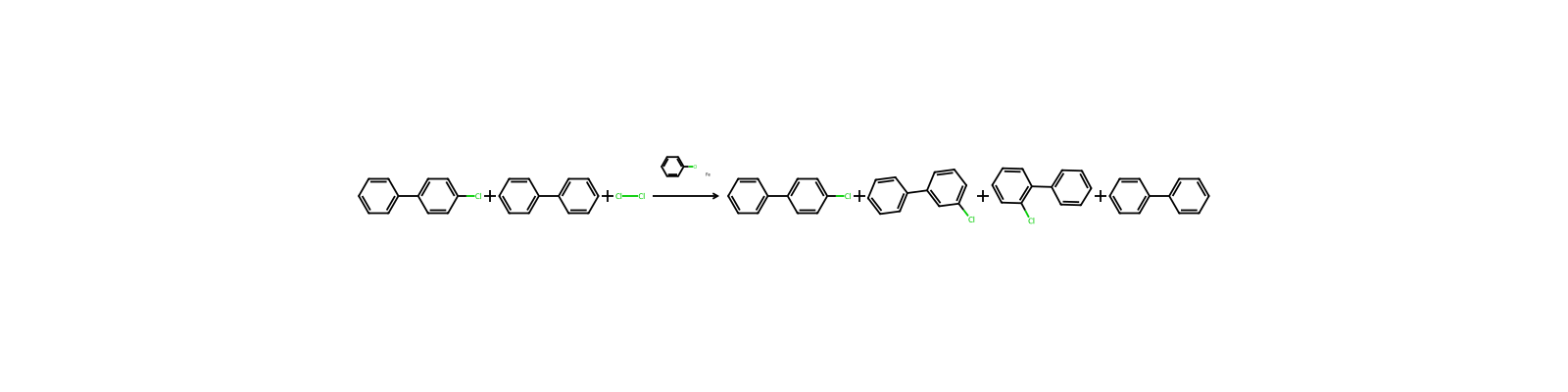
PCBs /were/ ... prepared industrially by the chlorination of biphenyl with anhydrous chlorine in the presence of a catalyst such as iron filings or ferric chloride. The products are complex mixtures of chlorobiphenyls, whose degree of chlorination depends principally on the time of contact (12-36 hr) of the biphenyl with anhydrous chlorine. The crude product is blown with air, and a small amount of lime is added to remove hydrogen chloride and ferric chloride. The resulting chlorinated mixtures are batch-distilled to remove color and traces of hydrogen chloride and ferric chloride. /Polychlorinated biphenyls/
Formulations/PreparationsMajor components of Aroclor 1221 /are as follows/: biphenyl, 12.7%; 2-chlorobiphenyl, 28.4%; 4-chlorobiphenyl, 18.7%; 2,2'-dichlorobiphenyl, 9.2%; 2,4-dichlorobiphenyl, 3.5%; 2,4'-dichlorobiphenyl, 13.6%; 4,4'-dichlorobiphenyl, 6.2%
General Manufacturing Information
Total USA sales of PCBs in 1970 amounted to ... 670 thousand kg Aroclor 1221. ...
The Aroclors are characterized by four digit numbers. The first two digits indicate that the mixture contains biphenyls (12), triphenyls (54) or both (25, 44); the last two digits give the weight percent of chlorine in the mixture (e.g., Aroclor 1242 contains biphenyls with approximately 42% chlorine). /Polychlorinated biphenyls/
Aroclor 1221 is a mixture of chlorinated biphenyls with the approximate distribution as follows: <1.0% mono-, 21.2% di-, 51.5% tri-, 27.3% tetra-, <0.6% pentachlorobiphenyl
Anwendungen
VerwendenIn polyvinyl acetate to improve fiber-tear properties; plasticizer for polystyrene; in epoxy resins and polyvinyl acetate to improve adhesion and resistance to chemical attack; as an insulator fluid for electric condensers and as an additive in very high pressure lubricants. In fluorescent and high-intensity discharge ballasts manufactured prior to 1979 (U.S. EPA, 1998). At a concentration of 5 to 25 wt %, increased the effective kill-life of the lindane spray up to 10 times. May have been used in chlordane and BHC insecticide formulations (Monsanto, 1960).
Anbieter50 Anbieter
阿诺西(上海)生物技术有限公司400-1107768 15058188853 · [email protected]
上海阿拉丁生化科技股份有限公司400-6206333 13167063860 · [email protected]
Hebei Maison Chemical Co.,Ltd.+86-008615511852758 · [email protected]
Hebei Chuanghai Biotechnology Co., Ltd+86-17732866630 · [email protected]
江苏艾康生物医药研发有限公司025-58851090 19370895928 · [email protected]
河南赢创生物科技有限公司16650615803 · [email protected]
山东德信精细化工有限公司18553366272
Dayang Chem (Hangzhou) Co.,Ltd.+86-0571-88938639 17705817739 · [email protected]
衢州明锋化工有限公司0570-3062502 13819002126;13819008176 · [email protected]
安耐吉化学&3A(安徽泽升科技股份有限公司)400-0056266 · [email protected]
石家庄斯迪亚诺精细化工有限公司0311-89250318 13582355795 · [email protected]
梯希爱(上海)化工贸易有限公司021-61109150 · [email protected]
常州科化生物科技有限公司0519-68985668 13685222090 · [email protected]
Zhejiang J&C Biological Technology Co.,Limited+1-2135480471 · [email protected]
上海稳同科技有限公司02151600108 13062666369 · [email protected]
上海毕楷科技有限公司18516304666
上海耐士化工科技有限公司400-188-0725 +86 21 34310725 13611771617
QINGDAO KAIENSI INTERNATIONAL TRADE CO.,LTD.+86-0532-8699-9256 +86-18518128472 · [email protected]
上海贤鼎生物科技有限公司4009209199 · [email protected]
上海倍卓生物科技有限公司021-61119791,13386096464 · [email protected]
PT CHEM GROUP LIMITED+86-85511178; +86-85511178 · [email protected]
上海贺康生物技术有限公司17721021104 18939837085 · [email protected]
上海将来实业股份有限公司400-0066400 13621662912 · [email protected]
安徽科迪达化工有限公司0554-2106669 · [email protected]
天津阿尔塔科技有限公司022-65378550-8551 · [email protected]
成都零六生物科技有限公司400-1166-196 13458535857 · [email protected]
湖州清硫硅生物科技有限公司13626726938 · [email protected]
海南瀚海致远生物科技有限公司18171012772 · [email protected]
郑州海阔光电材料有限公司0371-67759225 13526468238 · [email protected]
成都瑞欧克科技有限公司028-64353063 · [email protected]
艾吉析科技(上海)有限公司17721401538;17717235263 17721401538 · [email protected]
陕西缔都医药化工有限公司029-029-81120477 17792793610 · [email protected]
启源(广东)医药化工有限公司18026564465 · [email protected]
上海岚克医药科技发展有限公司0086-21-58956006
青岛海力诺化工有限公司[email protected]
石家庄斯迪亚诺精细化工有限公司0311-89250318 031166536426 · [email protected]
Anhuyan (Hainan) Biotechnology Co., LTD+86-18163349544 · [email protected]
上海源叶生物科技有限公司13636370518 · [email protected]
山东西亚化学有限公司4009903999 13395398332 · [email protected]
广东翁江化学试剂有限公司0751-2886750 13927877953 · [email protected]
石家庄晔晟化工科技有限公司18031147013 18031147013 · [email protected]
广州卡芬生物科技有限公司18029243487 2355327168 · [email protected]
西安凯翔光电科技有限公司18592059708 · [email protected]
河南安基化工科技有限公司17836913271
山东小野化学股份有限公司0539-6362799 20)
河北美星化工有限公司155-11852758; 18408670720 · [email protected]
Shanghai Acmec Biochemical Technology Co., Ltd.+86-18621343501 · [email protected]
湖州澄博生物科技有限公司13626726938
Shaanxi Didu New Materials Co. Ltd+86-86-17392712779 +86-13289823923 · [email protected]
上海泰坦科技股份有限公司18616708014 · [email protected]
Zugehörige Reaktionen
8


Verknüpfte Notizen
Wird geladen…