StartseiteMCPWorkbenchSkills
StartseiteWorkbenchBenachrichtigungenMein Bereich
llms.txt · MCP-AnleitungDatenschutz · Nutzungsbedingungen · Supportv1.8.0
  1. Startseite
  2. /Verbindung

Triethylaluminium

Triethylaluminum
HCID 16682930
Neue NotizNeue ReaktionAnfrage stellen
Druckvorschau
GrundinformationenÜberblickNamen und BezeichnerEigenschaftenSicherheit und RegulatorischesChemie und IndustrieZugehörige ReaktionenNotizen zur Verbindung
TeilstruktursucheÄhnliche Strukturen suchen

Grundinformationen

CAS
97-93-8
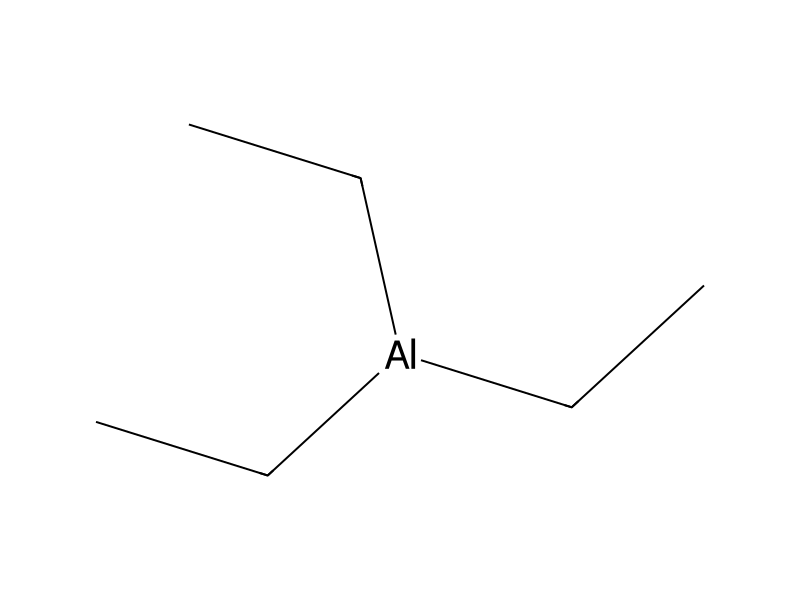
Standard-SMILES
C[CH2][Al]([CH2]C)[CH2]C
InChIKey
VOITXYVAKOUIBA-UHFFFAOYSA-N
Summenformel
C6H15Al
Durchschnittliche Molmasse
114,16 g/mol
Monoisotopische Masse
114,0989139

Überblick

Aluminum triethyl appears as a colorless liquid. Flammable gas is produced on contact with water. (USCG, 1999)

Namen und Bezeichner

Bevorzugter Name
Triethylaluminum
IUPAC
triethylalumane
Lokaler Name
Triethylaluminium
Englischer Name
Triethylaluminum
Summenformel
C6H15Al
Molmasse
114.16

Namen und Synonyme

TRIETHYLALUMINUM97-93-8TriethylaluminiumtriethylalumaneAluminum, triethyl-Triethylalanetriethyl aluminumH426E9H3TTDTXSID6026616RefChem:191518DTXCID506616202-619-3
Weitere Namen anzeigen
Triethylaluminum,95%,LIQUIDuminumtriethyl-alaneTriethylaluminetriethyl-aluminualuminiumtriethyl
triethyl-aluminumtriethyl aluminiumAluminumtriethanideMFCD00009015UNII-H426E9H3TTHSDB 4016EINECS 202-619-3BRN 3587229

Datenbank-Bezeichner

CAS
97-93-8
PubChem CID
16682930
DTXSID
DTXSID6026616
UNII
H426E9H3TT
EC Number
202-619-3
Nikkaji
J9.911B

Eigenschaften

Berechnete Struktureigenschaften

Polarare Oberfläche (TPSA)
0 Ų
H-Brücken-Donoren
0
H-Brücken-Akzeptoren
0
Frei drehbare Bindungen
3
Schwere Atome
7
Formalladung
0
Komplexität
25,7

Experimentelle und physikochemische Eigenschaften

Chemical Classes · 2 Einträge

Metals -> Metals, Organic Compounds

Flammable agents - 4th degree

Density · 3 Einträge

0.836 at 68 °F (USCG, 1999) - Less dense than water; will float

0.832 @ 25 °C

0.837 @ 20°C

Viscosity2.6 mPa.s (millipascal second) at 25 °C
Color/FormColorless liquid
SolubilityMiscible with saturated hydrocarbons
Flash Point · 2 Einträge

-63 °F (NFPA, 2010)

-63 °F (-53 °C)

Boiling Point · 3 Einträge

367.9 °F at 760 mmHg (USCG, 1999)

194 °C

194 °C @760 [mm Hg]

Decomposition · 2 Einträge

DECOMP TO AL(OH)3 + C2H6

When heated to decomposition, it emits acrid smoke and irritating fumes.

Melting Point · 3 Einträge

Sicherheit und Regulatorisches

Sicherheitsangaben dienen nur zur Orientierung und ersetzen weder das Sicherheitsdatenblatt (SDB) des Lieferanten noch geltende Vorschriften oder eine fachliche Bewertung.

GHS-Klassifizierung

GHS Classification · 6 Einträge

Danger

H250 (100%): Catches fire spontaneously if exposed to air [Danger Pyrophoric liquids]

P210, P222, P223, P231, P231+P232, P233, P260, P264, P264+P265, P280, P301+P330+P331, P302+P335+P334, P302+P361+P354, P304+P340, P305+P354+P338, P316, P317, P321, P363, P370+P378, P402+P404, P405, and P501 (click each P-code to see the statement)

Aggregated GHS information provided per 351 reports by companies from 12 notifications to the ECHA C&L Inventory. Each notification may be associated with multiple companies.

Danger

H225: Highly Flammable liquid and vapor [Danger Flammable liquids]

Gefahrenhinweise

Regulatory Information · 5 Einträge

Chemical: Aluminium, triethyl-

Aluminum, triethyl- is listed on the EPA's Chemical Data Reporting (CDR) system. Manufacturers and importers of Aluminum, triethyl- are required to report information about their production and use of this chemical to the EPA under the Toxic Substances Control Act (TSCA). (40 eCFR Part 711)

REACH registered substance: Triethylaluminium (EC: 202-619-3)

Triethylaluminum: HSNO Approval: HSR006341 Approved with controls

The New Jersey Worker and Community Right to Know Act requires public and private employers to provide information about hazardous substances at their workplaces. (N.J.S.A. 34:5A-1 et. seq.)

Other Safety InformationIMAP assessments - Aluminium, triethyl-: Human health tier I assessment
DOT LabelSpontaneously Combustible Dangerous When Wet
Fire HazardsSpecial Hazards of Combustion Products: Intense smoke may cause metal-fume fever.
Fire Potential · 4 Einträge

Chemie und Industrie

Pharmakologische Informationen

Metabolism/Metabolites · 1 Eintrag

Aluminum is poorly absorbed following either oral or inhalation exposure and is essentially not absorbed dermally. The bioavailability of aluminum is strongly influenced by the aluminum compound and the presence of dietary constituents which can complex with aluminum and enhance or inhibit its absorption. Aluminum binds to various ligands in the blood and distributes to every organ, with highest concentrations found in bone and lung tissues. In living organisms, aluminum is believed to exist in four different forms: as free ions, as low-molecular-weight complexes, as physically bound macromolecular complexes, and as covalently bound macromolecular complexes. Absorbed aluminum is excreted principally in the urine and, to a lesser extent, in the bile, while unabsorbed aluminum is excreted in the faeces. (L739)

Verwendung und Herstellung

Uses · 6 Einträge

Used as a catalyst (thermoplastic polymers) and pyrophoric fuel; Used for gas plating of aluminum; [Hawley] Used in incendiary munitions; [Sullivan, p. 979] Organic aluminum compounds are some of the most important, highest volume, highest value organometallic compounds in production. [Ullmann]

Aluminum Producing [Category: Industry]

Catalyst intermediate for polymerization of olefins, expecially ethylene; pyrophoric fuels; production of alpha-olefins and long chain alcohols; gas plating of aluminum.

The addition of triethylaluminum to liquid rocket propellants and to flame-thrower fuels /makes/ them hypergolic, ie, ignite spontaneously.

Catalyst; with compounds of early transition metals as Ziegler-Natta polymerization catalysts; intermediates in organic syntheses. /Aluminum alkyls/

Intermediates in organic phosphate insecticides, silicones, special saturated hydrocarbons, terpene alcohols, and organic acids. /Aluminum alkyls/

U.S. Production · 3 Einträge

2023: 25,000,000 - <40,000,000 lb

(1975) PROBABLY GREATER THAN 9.08X10+5 GRAMS

(1977) PROBABLY GREATER THAN 4.54X10+6 GRAMS

Industry Uses

Zugehörige Reaktionen

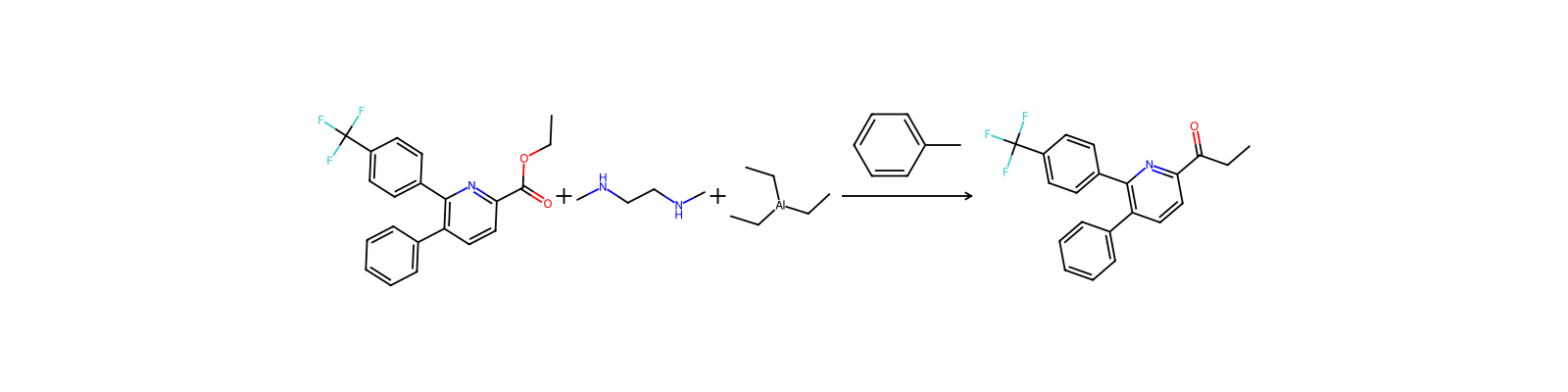
127
Reaktionsaufzeichnung erstellen
Reaktionsgleichung von HRID 12554
HRID 12554als Eduktuspto-grants-2010_06
Reaktionsgleichung von HRID 12556
HRID 12556als Eduktuspto-grants-2010_06
Reaktionsgleichung von HRID 12557
HRID 12557als Eduktuspto-grants-2010_06
Reaktionsgleichung von HRID 12568
HRID 12568als Eduktuspto-grants-2010_06
Reaktionsgleichung von HRID 36466
HRID 36466als Produktals Eduktuspto-grants-1995_05
Reaktionsgleichung von HRID 52366
HRID 52366als Eduktuspto-grants-1997_04
Reaktionsgleichung von HRID 91577
HRID 91577als EduktTraining data from https://doi.org/10.1039/C8SC04228D (2/10)
Reaktionsgleichung von HRID 94173
HRID 94173als EduktTraining data from https://doi.org/10.1039/C8SC04228D (2/10)
Seite 1 von 16

Notizen zur Verbindung

Wird geladen…

Auf dieser SeiteGrundinformationenÜberblickNamen und BezeichnerEigenschaftenSicherheit und RegulatorischesChemie und IndustrieZugehörige ReaktionenNotizen zur Verbindung
Weitere Aktionen
Neue NotizNeue ReaktionAnfrage stellen

-51 °F (USCG, 1999)

-52.5 °C (freezing point)

-52.5 °C

Vapor Pressure · 3 Einträge

0.02 [mmHg]

2.6X10⁻² mm Hg @ 25 °C /Extrapolated/

4 [mm Hg] @83 °C

Refractive IndexINDEX OF REFRACTION: 1.480 @ 6.5 °C/D
Heat of Combustion-18364 BTU/lb= -10202 cal/g = -426.85 E5 J/kg.

Physikochemische Eigenschaften

Schmelzpunkt
-50 °C · -50°C
Siedepunkt
128 · 128-130°C (50 mmHg)
Dichte
0.85 g/mL · 0.85 g/mL at 20 °C
Dampfdruck
1 mmHg · 1 mmHg ( 62.2 °C)
Flammpunkt
1 °F · −1 °F
storage temp.
0 · 0-6°C
Aggregatzustand
liquid
Farbe
colorless
Wasserlöslichkeit
reacts
BRN
3587229 · 3587229
Dielectric constant
6.4 · 6.4(20℃)
InChI
1S/3C2H5.Al/c3*1-2;/h3*1H2,2H3;
InChIKey
VOITXYVAKOUIBA-UHFFFAOYSA-N
SMILES
CC[Al](CC)CC
CAS Datenbank
97 · 97-93-8(CAS DataBase Reference)
NIST chemische Informationen
Triethylaluminum(97-93-8)
EPA chemische Informationen
Triethylaluminum (97-93-8)

Flammable, dangerous fire risk; ignites spontaneously in air ...

Certain polymerization catalysts, such as aluminum alkyls, react & burn violently on contact with water. /Aluminum alkyls/

Aluminum alkyls are organic aluminum compounds that are highly reactive and dangerous because of spontaneous burning in air. /Aluminum alkyls/

Prophoric material in flammable solvent. Vapors are heavier than air & may travel to a source of ignition & flash back. /Aluminum alkyls/

Health HazardsExposure to smoke from fire causes metal-fume fever (flu-like symptoms). Since liquid ignites spontaneously, contact with eyes or skin causes severe burns. (USCG, 1999)
Hazards Summary · 1 Eintrag

Liquid may cause second or third degree burns after brief skin contact. [CHRIS] Inhalation may induce acute pulmonary edema; [CHEMINFO MSDS] Pulmonary irritant and corrosive to the skin; [Sullivan, p. 981] Organoaluminum compounds are corrosive; Harmful if absorbed through the skin or inhaled; The butyl alkyls and below are pyrophoric; Aluminum alkyls are eye irritants; [HSDB] Organic aluminum compounds can cause irritation or burns, depending upon concentration; [Ullmann] TLV withdrawn for aluminum alkyls because of inadequate toxicological data; [ACGIH] See Aluminum. See ORGANOMETALS.

Reactive GroupMetal Hydrides, Metal Alkyls, Metal Aryls, and Silanes
Special Reports · 1 Eintrag

Anon; Information profiles on Potential Occupaional Hazards: Aluminum & Compounds, 2nd Draft (Revised); GRA & I Issue 21 NTIS/PB89-216238 (1989)> TD3: Information profiles are working papers used by the National Institute for Occupational Safety and Health to assist the Institute in establishing priorities. The proile summarizes data on organic and inorganic substances containing aluminum as the only metal. Each summary presents data on known and suspected health effects, the extent of worker exposure, physical and chemical properties and the industrial importance of the following aluminum compounds: aluminum metal, aluminum ammonium sulfate, aluminum chlorhydrate, aluminum chloride anhydrous, aluminum chloride hydrous, aluminum distearate, aluminum ethoxide, aluminum fluoride, aluminum hydride, aluminum hydroxide, aluminum nitrate, aluminum oxide, aluminum ortho-phosphate, aluminum potassium sulfate, aluminum silicate, aluminum sodium sulfate, aluminum sulfate, calcium aluminum silicate, diethylaluminum chloride, sodium aluminate, tri-n-butylaluminum, triethylaluminum, tri-n-hexylaluminum, triisobutylaluminum, tri-n-octylaluminum. Detailed literature searches are conducted to identify information to be used in the profile sumaries. Sponsored by National Inst. for Occupational Safety and Health, Rockville, MD.

RCRA RequirementsD003; A solid waste containing Triethylaluminum may become characterized as a hazardous waste when subjected to testing for reactivity as stipulated in 40 CFR 261.23, and if so characterized, must be managed as a hazardous waste.
Reactivity AlertsStrong Reducing Agent
OSHA StandardsVacated 1989 OSHA PEL TWA 2 mg/cu m is still enforced in some states. /Aluminum, soluble salts and alkyls, as Al/

Sicherheit und Schutzausrüstung

Fire FightingFire Extinguishing Agents Not to Be Used: Water, foam, halogenated extinguishing agents.
First AidINHALATION: only fumes from fire need be considered; metal-fume fever is not critical, lasting less than 36 hrs.
Fire Fighting Procedures · 3 Einträge

Stop flow of liquid before extinguishing fire. Fight fire from protected location or maximum possible distance. DO NOT use water as straight stream directly on spilled material. Violent reaction may result. Water fog can be used to control fires. Use graphite powder, soda ash, or powdered sodium chloride to extinguish fire. On solvent-based materials use dry chemical or carbon dioxide. Use water spray cautiously to keep fire-exposed containers cool.

CO2, dry sand, dry chemical. ... Do not use water, foam or halogenated fire-fighting agents.

Stop flow of liquid before extinguishing fire. Use dry chemical or carbon dioxide. DO NOT use water as straight stream directly on spilled material. Water fog can be used to control fire. DO NOT use halogenated extinguishing agents on spilled material. Violent reaction may result. Use water spray to keep fire-exposed containers cool. Fight fire from protected location or maximum possible distance. /Aluminum Alkyls/

Storage Conditions · 5 Einträge

Separate from oxidizing materials, acids, alcohols, air, and water. Store in a cool, dry, well-ventilated location. Must be stored in a dry location. Outside or detached storage is preferred. Inside storage should be in a standard flammable liquids storage warehouse, room or cabinet.

Extremely reactive with air, moisture and compounds containing active hydrogen and therefore must be kept under a blanket of inert gas. /Aluminum alkyls/

In general, materials ... toxic as stored or which can decompose into toxic components ... Should be stored in cool ... ventilated place, out of ... sun, away from ... fire hazard ... be periodically inspected and monitored. Incompatible materials should be isolated ...

All possibility of contact with water must be avoided. Solution containing not more than 20% of these compounds in non-reactive solvents, however, can be handled without risk of spontaneous ignition. /Aluminum alkyls/

For more Storage Conditions (Complete) data for TRIETHYLALUMINUM (6 total), please visit the HSDB record page.

Cleanup Methods · 1 Eintrag

Approach release from upwind. Keep water away from release. Do not use foam to blanket release and suppress vapors. Stop or control the leak, if this can be done without undue risk. Spills may ignite spontaneously if solvent evaporates. Control runoff and isolate discharged material for proper disposal.

Nonfire Spill ResponseExcerpt from ERG Guide 135 [Substances - Spontaneously Combustible]:
Disposal Methods · 2 Einträge

Aluminum compounds are treated under anhydrous conditions to prevent violent reactions, recover solvent, and form Al compounds suitable for landfill by reaction with anhydrous hydrolysis agent, eg calcium hydroxide. /Aluminum compounds/

SRP: The most favorable course of action is to use an alternative chemical product with less inherent propensity for occupational exposure or environmental contamination. Recycle any unused portion of the material for its approved use or return it to the manufacturer or supplier. Ultimate disposal of the chemical must consider: the material's impact on air quality; potential migration in soil or water; effects on animal, aquatic, and plant life; and conformance with environmental and public health regulations.

Preventive Measures · 5 Einträge

Irrigate eyes with water. Wash contaminated areas of body with soap and water.

SRP: The scientific literature for the use of contact lenses in industry is conflicting. The benefit or detrimental effects of wearing contact lenses depend not only upon the substance, but also on factors including the form of the substance, characteristics and duration of the exposure, the uses of other eye protection equipment, and the hygiene of the lenses. However, there may be individual substances whose irritating or corrosive properties are such that the wearing of contact lenses would be harmful to the eye. In those specific cases, contact lenses should not be worn. In any event, the usual eye protection equipment should be worn even when contact lenses are in place.

Work clothing that becomes wet or significantly contaminated should be removed and replaced. /Aluminum (soluble salts and alkyls, as Al)/

Workers whose clothing may have become contaminated should change into uncontaminated clothing before leaving the work premises. /Aluminum (soluble salts and alkyls, as Al)/

For more Preventive Measures (Complete) data for TRIETHYLALUMINUM (6 total), please visit the HSDB record page.

Isolation and EvacuationExcerpt from ERG Guide 135 [Substances - Spontaneously Combustible]:
Minimum Risk LevelIntermediate Oral: 1.0 mg/kg/day (L134) Chronic Oral: 1.0 mg/kg/day (L134)
Threshold Limit Values (TLV) · 3 Einträge

8 hr Time Weighted Avg (TWA): 1 mg/cu m (respirable fraction). /Aluminum metal and insoluble compounds/

Excursion Limit Recommendation: Excursions in worker exposure levels may exceed 3 times the TLV-TWA for no more than a total of 30 minutes during a work day, and under no circumstances should they exceed 5 times the TLV-TWA, provided that the TLV-TWA is not exceeded. /Aluminum metal and insoluble compounds/

A4: Not classifiable as a human carcinogen. /Aluminum metal and insoluble compounds/

Protective Action Criteria (PAC) · 3 Einträge

1.1 [mg/m3]

12 [mg/m3]

69 [mg/m3]

Toxikologische Informationen

Health Effects · 1 Eintrag

Aluminum targets the nervous system and causes decreased nervous system performance and is associated with altered function of the blood-brain barrier. The accumulation of aluminum in the body may cause bone or brain diseases. High levels of aluminum have been linked to Alzheimer's disease. A small percentage of people are allergic to aluminium and experience contact dermatitis, digestive disorders, vomiting or other symptoms upon contact or ingestion of products containing aluminium. (L739, L740)

Adverse EffectsDermatotoxin - Skin burns.
Exposure RoutesOral (L739) ; inhalation (L739)
Toxicity Summary · 1 Eintrag

The main target organs of aluminum are the central nervous system and bone. Aluminum binds with dietary phosphorus and impairs gastrointestinal absorption of phosphorus. The decreased phosphate body burden results in osteomalacia (softening of the bones due to defective bone mineralization) and rickets. Aluminum's neurotoxicity is believed to involve several mechanisms. Changes in cytoskeletal protein functions as a results of altered phosphorylation, proteolysis, transport, and synthesis are believed to be one cause. Aluminum may induce neurobehavioral effects by affecting permeability of the blood-brain barrier, cholinergic activity, signal transduction pathways, lipid peroxidation, and impair neuronal glutamate nitric oxide-cyclic GMP pathway, as well as interfere with metabolism of essential trace elements because of similar coordination chemistries and consequent competitive interactions. It has been suggested that aluminum's interaction with estrogen receptors increases the expression of estrogen-related genes and thereby contributes to the progression of breast cancer (A235), but studies have not been able to establish a clear link between aluminum and increased risk of breast cancer (A15468). Certain aluminum salts induce immune responses by activating inflammasomes. (L739, A235, A236)

Signs and Symptoms · 1 Eintrag

Inhalating aluminum dust causes coughing and abnormal chest X-rays. A small percentage of people are allergic to aluminium and experience contact dermatitis, digestive disorders, vomiting or other symptoms upon contact or ingestion of products containing aluminium. (L739, L740)

Human Toxicity Excerpts · 2 Einträge

/SIGNS AND SYMPTOMS/ Irritating to skin, eyes, and respiratory system.

/OTHER TOXICITY INFORMATION/ Vapors of the pyrophoric alkyls (butyls and below) are nontoxic because they are completely consumed, but inhalation of the metallic oxide smoke (Al2O3) at 15 mg/cu m or greater can result in symptoms such as "metal fume fever." /Aluminum alkyls/

Carcinogen Classification · 1 Eintrag

Not listed by IARC. IARC classified aluminum production as carcinogenic to humans (Group 1), but did not implicate aluminum itself as a human carcinogen. (L135) A link between use of aluminum-containing antiperspirants and increased risk of breast cancer has been proposed (A235), but studies have not been able to establish a clear link (A15468).

Evidence for CarcinogenicityA4: Not classifiable as a human carcinogen. /Aluminum metal and insoluble compounds/
Toxicity Data · 2 Einträge

LC50 (rat) = 10,000 mg/m3/15 min

LC50: 10 g/m3 over 15 minutes (Inhalation, Rat) (T14)

Non-Human Toxicity ValuesLC50 Rat inhalation 10 g/cu m 15 min exposure

Regulatorische Informationen

RCRA RequirementsD003; A solid waste containing Triethylaluminum may become characterized as a hazardous waste when subjected to testing for reactivity as stipulated in 40 CFR 261.23, and if so characterized, must be managed as a hazardous waste.
State Drinking Water Standards(CA) CALIFORNIA 1000 ug/l /Aluminum/
State Drinking Water Guidelines · 3 Einträge

(AZ) ARIZONA 73 ug/l /Aluminum/

(CA) CALIFORNIA 200 ug/l /Aluminum/

(ME) MAINE 1430 ug/l /Aluminum/

Federal Drinking Water GuidelinesEPA 50-200 ug/l /Aluminum/

Sicherheitsdaten

F
10-21
wgk
2
tsca
TSCA listed
ridadr
UN 3394 4.2/PG 1
hs_code
29319090
RTECS-Nr.
BD2050000
risk_code
14-17-20/21/22-34-67-65-51/53-11-63-48/20-62-14/15-23/24/25-50/53-10
Toxizität
LC50 ihl-rat: 10 g/m3/15M 85JCAE -,1216,86
hazard_code
F,C,N
safety_code
26-45-62-6A-43A-36/37/39-24/25-16-43-61-33-46
hazard_class
4.3
packing_group
I
Giftige Stoffe Daten
97-93-8(Hazardous Substances Data)
Not Known or Reasonably Ascertainable
Methods of Manufacturing · 3 Einträge

Aluminum powder is added to recycled triethylaluminum and the slurry reacts first with hydrogen ... to produce diethylaluminum hydride, which ... reacts with ethylene ... to produce triethylaluminum.

By introduction of ethylene and hydrogen into an autoclave containing aluminum. The reaction proceeds at moderate temperature and varying pressures.

The trialkylaluminums are prepared from aluminum, hydrogen and olefins; this improved "direct synthesis" was developed by Ziegler and co-workers. /Trialkylaluminums/

Formulations/PreparationsGRADES: 88-94%
General Manufacturing Information · 3 Einträge

Not Known or Reasonably Ascertainable

Aluminum, triethyl-: ACTIVE

... Aluminum triethyl ... used to initiate at normal temp and pressures certain polymerization reactions which had previously to be conducted at very high pressures. ... induce regular arrangement of atomic groups such as is found in natural polymers. By their use, synthetic rubber identical to natural rubber has been produced.

Anwendungen

VerwendenTriethylaluminum, in combination withmany transition metal complexes, is used as Ziegler-Natta polymerization and hydrogenationcatalyst. Also, it is used as intermediatein organic syntheses.

Vor- und nachgelagerte Produkte

Vorgelagerte Rohstoffe

AluminiumWasserstoffEthyltributyltinTributylzinnacetatKalium

Nachgelagerte Produkte

synthesis of polyacetylene by using thorium high complex2,6-DiethylanilinDiethylzinkcis,trans-Hexa-1,4-dienDiethylaluminiumchlorid2-Ethyl-1-decanolMagnesium chloride2-Ethylhexan-1-ol1-Undecanol, 3-methyl-5-Methyl-1-hepteneEthylquecksilberchloridDecane,3,8-dimethyl-Triethylgallium(±)-2-Hydroxydecanoic acid(S)-(+)-5-Methyl-1-heptanol