StartseiteMCPWorkbenchSkills
StartseiteWorkbenchBenachrichtigungenMein Bereich
llms.txt · MCP-AnleitungDatenschutz · Nutzungsbedingungen · Supportv1.8.0
  1. Startseite
  2. /Verbindung

2,2'-(Oxybis(methylen))bis-oxiran

Diglycidyl ether

HCID 16704
Neue NotizNeue ReaktionAnfrage stellen
Druckvorschau
GrundinformationenÜberblickNamen und BezeichnerEigenschaftenSicherheit und RegulatorischesChemie und IndustrieZugehörige ReaktionenNotizen zur Verbindung
TeilstruktursucheÄhnliche Strukturen suchen

Grundinformationen

CAS
2238-07-5
Standard-SMILES
C(OCC1CO1)C1CO1
InChIKey
GYZLOYUZLJXAJU-UHFFFAOYSA-N
Summenformel
C6H10O3
Durchschnittliche Molmasse
130,14 g/mol
Monoisotopische Masse
130,06299418

Überblick

Diglycidyl ether is a colorless liquid with a pronounced irritating odor. Used as a reactive dilutent for epoxy resin , as a chemical intermediate, as a stabilizer of chlorinated organic compounds, and as a textile-treating agent. (EPA, 1998)

Namen und Bezeichner

Bevorzugter Name
Diglycidyl ether
IUPAC
2-(oxiran-2-ylmethoxymethyl)oxirane
Lokaler Name
2,2'-(Oxybis(methylen))bis-oxiran
Englischer Name
DIGLYCIDYL ETHER
Summenformel
C6H10O3
Molmasse
130.14

Namen und Synonyme

DIGLYCIDYL ETHER2238-07-5Glycidyl etherDiepoxy propyl etherBis(2,3-epoxypropyl) etherDiallyl Ether DioxideEther, diglycidyl2-(oxiran-2-ylmethoxymethyl)oxiraneEther, bis(2,3-epoxypropyl)1,2,6,7-Diepoxy-4-oxaheptaneBis(2,3-epoxy-1 propyl) ether2,2'-(Oxybis(methylene))bisoxirane
Weitere Namen anzeigen
dgeglycidylethernsc54739ether,diglycidyloxydedediglycidyle2-epoxypropyletherdiallyletherdioxideDiglycidyl ether,95%Di(2-epoxypropyl)ether
NSC 54739Di(2,3-epoxy)propyl etherDi(2,3-epoxypropyl) ether2,2'-(oxybis(methylene))bis(oxirane)HSDB 342Oxirane, 2,2'-(oxybis(methylene))bis-Oxirane, 2,2'-[oxybis(methylene)]bis-EINECS 218-802-6

Datenbank-Bezeichner

Eigenschaften

Berechnete Struktureigenschaften

XLogP
-0,5
Polarare Oberfläche (TPSA)
34,3 Ų
H-Brücken-Donoren
0
H-Brücken-Akzeptoren
3
Frei drehbare Bindungen
4
Schwere Atome
9
Formalladung
0
Komplexität
92,5

Experimentelle und physikochemische Eigenschaften

Chemical ClassesFlammable agents - 2nd degree
PolymersPlastics & Rubber -> Glycidyl Ethers
OdorStrong, irritating odor
Density · 6 Einträge

1.262 at 77 °F (EPA, 1998) - Denser than water; will sink

1.262 at 50 °C

SP GR: 1.12 at 20 °C/4 °C

Relative density (water = 1): 1.26

1.12

1.262 @ 50°C

Color/FormColorless liquid
Flash Point · 5 Einträge

147.2 °F (EPA, 1998)

[ACGIH] 64 °C

64 °C

147 °F

147 °F

Boiling Point · 6 Einträge

500 °F at 760 mmHg (EPA, 1998)

260 °C

at 100kPa: 260 °C

500 °F

260 °C @760 [mm Hg]

500 °F

DecompositionWhen heated to decomposition it emits acrid smoke and irritating fumes.

Sicherheit und Regulatorisches

Sicherheitsangaben dienen nur zur Orientierung und ersetzen weder das Sicherheitsdatenblatt (SDB) des Lieferanten noch geltende Vorschriften oder eine fachliche Bewertung.

GHS-Klassifizierung

GHS Classification · 6 Einträge

This chemical does not meet GHS hazard criteria for 10.6% (5 of 47) of reports.

Danger

H302 (89.4%): Harmful if swallowed [Warning Acute toxicity, oral]

P260, P262, P264, P270, P271, P280, P284, P301+P317, P301+P330+P331, P302+P352, P302+P361+P354, P304+P340, P305+P354+P338, P316, P320, P321, P330, P361+P364, P363, P403+P233, P405, and P501 (click each P-code to see the statement)

Aggregated GHS information provided per 47 reports by companies from 5 notifications to the ECHA C&L Inventory. Each notification may be associated with multiple companies.

Danger

Gefahrenhinweise

Regulatory Information · 4 Einträge

Chemical: Oxirane, 2,2'-[oxybis(methylene)]bis-

TP - indicates a substance that is the subject of a proposed TSCA section 4 test rule.

Diglycidyl ether: Does not have an individual approval but may be used under an appropriate group standard

The New Jersey Worker and Community Right to Know Act requires public and private employers to provide information about hazardous substances at their workplaces. (N.J.S.A. 34:5A-1 et. seq.)

DOT LabelCorrosive Poison
Fire Hazards · 2 Einträge

Excerpt from ERG Guide 154 [Substances - Toxic and/or Corrosive (Non-Combustible)]:

Combustible. Above 64 °C explosive vapour/air mixtures may be formed.

Health Hazards · 1 Eintrag

This compound can cause death or permanent injury via oral and inhalation routes during exposure that comes from normal use. It is incapacitating and poisonous and requires special handling. It can cause considerable discomfort by the dermal route. (EPA, 1998)

Chemie und Industrie

Verwendung und Herstellung

Uses · 6 Einträge

DGE is used in epoxy resins; it is also used to treat textiles and to stabilize chlorinated organic compounds. [ACGIH]

Plastic Composites Manufacturing [Category: Industry]

Sculpturing plastics [Category: Hobbies]

DGE is used as a diluent for epoxy resins, as a textile treating agent, and as a stabilizer for chlorinated organic compounds.

Intermediate.

An ingredient in epoxy resins

U.S. Production(1986) 10 thousand-500 thousand pounds[US EPA; Non-confidential Production Volume Information Submitted by Companies for Chemicals Under the 1986-2002 Inventory Update Rule (IUR). Oxirane, 2,2'-
General Manufacturing Information · 2 Einträge

Oxirane, 2,2'-[oxybis(methylene)]bis-: ACTIVE

By-product in the manufacture of epichlorohydrin.

Anwendungen

VerwendenDiglycidyl ether is significant only because it is a possible trace component of epoxy compounds derived from epichlorohydrin.

Vor- und nachgelagerte Produkte

Vorgelagerte Rohstoffe

2-Propanol, 1,1'-oxybis[3-chloro-(R)-(-)-Epichlorohydrin(S)-(+)-EpichlorohydrinSieber Linker1-Allyloxy-2,3-epoxy-propanIsophoron-diamin1-Chlor-2,3-epoxypropan

Zugehörige Reaktionen

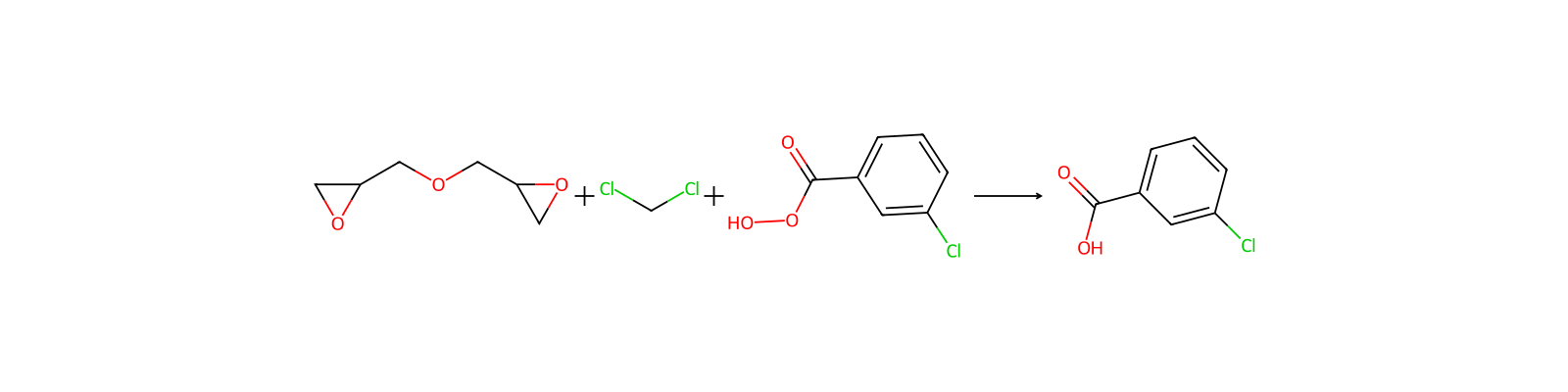
138
Reaktionsaufzeichnung erstellen
Reaktionsgleichung von HRID 22001
HRID 22001als Eduktuspto-grants-1995_06
Reaktionsgleichung von HRID 26691
HRID 26691als Eduktuspto-grants-1979_04
Reaktionsgleichung von HRID 89751
HRID 89751als EduktTraining data from https://doi.org/10.1039/C8SC04228D (2/10)
Reaktionsgleichung von HRID 128148
HRID 128148als Produktuspto-grants-1981_03
Reaktionsgleichung von HRID 190973
HRID 190973als EduktTraining data from https://doi.org/10.1039/C8SC04228D (6/10)
Reaktionsgleichung von HRID 225206
HRID 225206als Eduktuspto-grants-1980_11
Reaktionsgleichung von HRID 258372
HRID 258372als Eduktuspto-grants-1993_11
Reaktionsgleichung von HRID 267896
HRID 267896als Produktuspto-grants-1976_03
Seite 1 von 18

Notizen zur Verbindung

Wird geladen…

Auf dieser SeiteGrundinformationenÜberblickNamen und BezeichnerEigenschaftenSicherheit und RegulatorischesChemie und IndustrieZugehörige ReaktionenNotizen zur Verbindung
Weitere Aktionen
Neue NotizNeue ReaktionAnfrage stellen
CAS
2238-07-5
PubChem CID
16704
DTXSID
DTXSID4051871
UNII
8M5933D775
EC Number
218-802-6
Nikkaji
J53.970H
Vapor Density · 4 Einträge

4.5 (ICSC, 2024) - Heavier than air; will sink (Relative to Air)

3.78 at 25 °C (Air = 1)

Relative vapor density (air = 1): 4.5

3.78

Odor Threshold · 2 Einträge

Odor Threshold Low: 5.0 [ppm]

25 mg/cu m odor low; 25 mg/cu m odor high.

Vapor Pressure · 6 Einträge

0.09 mmHg at 77 °F (EPA, 1998)

2.9 [mmHg]

Vapor pressure, Pa at 25 °C: 12

0.09 mmHg at 77 °F

0.09 [mm Hg] @25 °C

(77 °F): 0.09 mmHg

Physical Description · 5 Einträge

Diglycidyl ether is a colorless liquid with a pronounced irritating odor. Used as a reactive dilutent for epoxy resin , as a chemical intermediate, as a stabilizer of chlorinated organic compounds, and as a textile-treating agent. (EPA, 1998)

Colorless liquid with a strong, irritating odor; [NIOSH]

COLOURLESS LIQUID WITH PUNGENT ODOUR.

Colorless liquid with a strong, irritating odor.

Colorless liquid with a strong, irritating odor.

Physikochemische Eigenschaften

Siedepunkt
260 °C · 260 °C
Dichte
1.12 · 1.12
Brechungsindex
1.446 · 1.446-1.448
Flammpunkt
64 °C · 64 °C
Löslichkeit
Chloroform (Sparingly), Ethyl Acetate (Slightly), Methanol (Sparingly)
Aggregatzustand
Liquid
Farbe
Clear colorless to slightly brown
Henry's Law Constant
7.6 · 7.6×102 mol/(m3Pa) at 25℃, HSDB (2015)
EPA chemische Informationen
Diglycidyl ether (2238-07-5)
Hazards Summary · 1 Eintrag

The TLV is based on male reproductive effects and irritation to the skin and eyes. Male rats develop reproductive toxicity after 60 4-hour exposures to 0.3 ppm. High concentrations induce CNS depression in experimental animals. In the past, some workers developed slow healing burns. [ACGIH] Severely irritating to the respiratory tract and may cause pulmonary edema; May cause skin sensitization; [ICSC]

Reactive GroupEthers
TSCA Requirements · 1 Eintrag

Pursuant to section 8(d) of TSCA, EPA promulgated a model Health and Safety Data Reporting Rule. The section 8(d) model rule requires manufacturers, importers, and processors of listed chemical substances and mixtures to submit to EPA copies and lists of unpublished health and safety studies. Oxirane, 2,2'-(oxybis(methylene))bis- is included on this list.

Reactivity AlertsPolymerizable
OSHA Standards · 2 Einträge

Permissible Exposure Limit: Table Z-1 Ceiling value: 0.5 ppm (2.8 mg/cu m).

Vacated 1989 OSHA PEL TWA 0.1 ppm (0.5 mg/cu m) is still enforced in some states.

Reactivity Profile · 1 Eintrag

Epoxides, such as DIGLYCIDYL ETHER, are highly reactive. They polymerize in the presence of catalysts or when heated. These polymerization reactions can be violent. Compounds in this group react with acids, bases, and oxidizing and reducing agents. They react, possibly violently with water in the presence of acid and other catalysts.

Chemical DangersThe substance can presumably form explosive peroxides. May explode on heating. Reacts with strong oxidants.
Flammable Limits · 2 Einträge

Combustible

Class IIIA Combustible Liquid: Fl.P. at or above 140 °F and below 200 °F.

Sicherheit und Schutzausrüstung

Fire Fighting · 2 Einträge

Excerpt from ERG Guide 154 [Substances - Toxic and/or Corrosive (Non-Combustible)]:

Use water spray, powder, foam, carbon dioxide.

First Aid Measures · 4 Einträge

Fresh air, rest. Half-upright position. Refer for medical attention.

Remove contaminated clothes. Rinse skin with plenty of water or shower. Refer for medical attention .

First rinse with plenty of water for several minutes (remove contact lenses if easily possible), then refer for medical attention.

Rinse mouth. Give one or two glasses of water to drink. Refer for medical attention .

First Aid · 2 Einträge

Caution: Diglycidyl ether can cause permanent injury via oral and inhalation exposure.

(General first aid procedures)

Safe StorageSeparated from strong oxidants. Ventilation along the floor.
Fire Fighting ProceduresDry chemical, carbon dioxide, alcohol foam.
Storage ConditionsSeperated from strong oxidants. Ventilation along the floor.
Cleanup MethodsCollect leaking and spilled liquid in sealable containers as far as possible. Wash away remainder with plenty of water.
Nonfire Spill ResponseExcerpt from ERG Guide 154 [Substances - Toxic and/or Corrosive (Non-Combustible)]:
Disposal Methods · 1 Eintrag

SRP: The most favorable course of action is to use an alternative chemical product with less inherent propensity for occupational exposure or environmental contamination. Recycle any unused portion of the material for its approved use or return it to the manufacturer or supplier. Ultimate disposal of the chemical must consider: the material's impact on air quality; potential migration in soil or water; effects on animal, aquatic, and plant life; and conformance with environmental and public health regulations.

Spillage DisposalCollect leaking and spilled liquid in sealable containers as far as possible. Wash away remainder with plenty of water.
Preventive Measures · 5 Einträge

Diglycidyl ether is to be regarded as hazardous cmpd, and personnel should be protected from all contact with liquid or its vapor.

SRP: The scientific literature for the use of contact lenses in industry is conflicting. The benefit or detrimental effects of wearing contact lenses depend not only upon the substance, but also on factors including the form of the substance, characteristics and duration of the exposure, the uses of other eye protection equipment, and the hygiene of the lenses. However, there may be individual substances whose irritating or corrosive properties are such that the wearing of contact lenses would be harmful to the eye. In those specific cases, contact lenses should not be worn. In any event, the usual eye protection equipment should be worn even when contact lenses are in place.

Where there is any possibility of a worker's body being exposed to DGE, facilities for quick drenching of the body should be provided within the immediate work area for emergency use. ...

Where there is any possibility of a worker's eyes being exposed to DGE, an eye-wash fountain should be provided within the immediate work area for emergency use. ...

For more Preventive Measures (Complete) data for DIGLYCIDYL ETHER (9 total), please visit the HSDB record page.

Isolation and EvacuationExcerpt from ERG Guide 154 [Substances - Toxic and/or Corrosive (Non-Combustible)]:

Toxikologische Informationen

Cancer Sites[in animals: skin tumors]
Target OrgansEyes, skin, respiratory system, reproductive system
Environmental Fate · 3 Einträge

TERRESTRIAL FATE: Based on a classification scheme(1), an estimated Koc value of 1(SRC), determined from a structure estimation method(2), indicates that diglycidyl ether is expected to have very high mobility in soil(SRC). Volatilization of diglycidyl ether from moist soil surfaces is not expected to be an important fate process(SRC) given an estimated Henry's Law constant of 1.3X10⁻⁸ atm-cu m/mole(SRC), using a fragment constant estimation method(3). Epoxides in general hydrolyze rapidly at 25 °C and pH 7(4) through neutral, acid, or base-mediated reactions(5). Diglycidyl ether may volatilize from dry soil surfaces(SRC) based upon an estimated vapor pressure of 2.9 mm Hg(SRC), determined from a fragment constant method(6). Biodegradation data were not available(SRC, 2006).

AQUATIC FATE: Based on a classification scheme(1), an estimated Koc value of 1(SRC), determined from a structure estimation method(2), indicates that diglycidyl ether is not expected to adsorb to suspended solids and sediment(SRC). Volatilization from water surfaces is not expected(3) based upon an estimated Henry's Law constant of 1.3X10⁻⁸ atm-cu m/mole(SRC), developed using a fragment constant estimation method(4). According to a classification scheme(5), an estimated BCF of 3(SRC) from an estimated log Kow of 8.5X10⁻¹(6), suggests the potential for bioconcentration in aquatic organisms is low(SRC). Epoxides in general hydrolyze rapidly at 25 °C and pH 7(7) through neutral, acid, or base-mediated reactions(8). Hydrolysis products are usually the corresponding diol and sometimes re-arranged products(8). While data specific to diglycidyl ether were not located(SRC, 2006), the hydrolysis half-life for an analogous compound glycidyl alcohol is 28 days at pH 7(7). Biodegradation data were not available(SRC, 2006).

ATMOSPHERIC FATE: According to a model of gas/particle partitioning of semivolatile organic compounds in the atmosphere(1), diglycidyl ether, which has an estimated vapor pressure of 2.9 mm Hg at 25 °C(SRC), determined from a fragment constant method(2), is expected to exist solely as a vapor in the ambient atmosphere. Vapor-phase diglycidyl ether is degraded in the atmosphere by reaction with photochemically-produced hydroxyl radicals(SRC); the half-life for this reaction in air is estimated to be 1.1 days(SRC), calculated from its rate constant of 1.5X10⁻¹¹ cu cm/molecule-sec at 25 °C(SRC), that was derived using a structure estimation method(3).

Adverse Effects · 1 Eintrag

Reproductive Toxin - A chemical that is toxic to the reproductive system, including defects in the progeny and injury to male or female reproductive function. Reproductive toxicity includes developmental effects. See Guidelines for Reproductive Toxicity Risk Assessment.

Exposure Routes · 2 Einträge

The substance can be absorbed into the body by inhalation, through the skin and by ingestion.

inhalation, skin absorption, ingestion, skin and/or eye contact

Signs and Symptoms · 5 Einträge

Dizziness. Shortness of breath. Sore throat. Unconsciousness. Weakness.

MAY BE ABSORBED! Dry skin. Redness. Roughness. Skin burns. Pain. Blisters.

Redness. Pain. Blurred vision.

Nausea. Vomiting.

irritation eyes, skin, respiratory system; skin burns; In Animals: hematopoietic system, lung, liver, kidney damage; reproductive effects; [potential occupational carcinogen]

Soil Adsorption/Mobility · 1 Eintrag

Using a structure estimation method based on molecular connectivity indices(1), the Koc of diglycidyl ether can be estimated to be 1(SRC). According to a classification scheme(2), this estimated Koc value suggests that diglycidyl ether is expected to have very high mobility in soil.

Human Toxicity Excerpts · 5 Einträge

/SIGNS AND SYMPTOMS/ Short-term (acute): Exposure to DGE can cause skin burns and severe irritation of the skin, eyes, and respiratory tract. Long-term (chronic): Exposure to DGE can cause dermatitis and skin sensitization.

/SIGNS AND SYMPTOMS/ Inhalation: Dizziness. Shortness of breath. Sore throat. Unconsciousness. Weakness. Skin: ... Dry skin. Redness. Roughness. Skin burns. Pain. Blisters. Eyes: Redness. Pain. Blurred vision. Ingestion: Nausea. Vomiting.

/SIGNS AND SYMPTOMS/ Effects observed in man. Skin burns, slow in healing. Acute irritation of eyes and respiratory tract.

/OTHER TOXICITY INFORMATION/ Dermal contact is the usual mode of exposure, but droplets in mist can also attack the eyes and respiratory tract. Glycidyl and diglycidyl ethers tend to be irritants and sensitizing agents. /Glycidyl and diglycidyl ethers/

/OTHER TOXICITY INFORMATION/ /Diglycidyl ether/ exhibits radiomimetic effects following acute and chronic exposure as evidenced by depression of bone marrow and other rapidly growing cells.

Artificial Pollution SourcesDiglycidyl ether's production and use as an ingredient in epoxy resins(1), textile treating agent(2), and chemical intermediate(3) may result in its release to the environment through various waste streams(SRC).
Environmental Bioconcentration · 1 Eintrag

An estimated BCF of 3 was calculated for diglycidyl ether(SRC), using an estimated log Kow of -0.85(1) and a regression-derived equation(2). According to a classification scheme(3), this BCF suggests the potential for bioconcentration in aquatic organisms is low.

Volatilization from Water/Soil · 1 Eintrag

The Henry's Law constant for diglycidyl ether is estimated as 1.3X10⁻⁸ atm-cu m/mole(SRC) using a fragment constant estimation method(1). This Henry's Law constant indicates that diglycidyl ether is expected to be essentially nonvolatile from water surfaces(2). Diglycidyl ether's Henry's Law constant indicates that volatilization from moist soil surfaces may not occur(SRC). Diglycidyl ether is expected to volatilize from dry soil surfaces(SRC) based upon an estimated vapor pressure of 2.9 mm Hg(SRC), determined from a fragment constant method(3).

Non-Human Toxicity Excerpts · 5 Einträge

/LABORATORY ANIMALS: Acute Exposure/ ... Liquid ... causes severe but reversible corneal injury in rabbits ... applied as drop. It is also very irritating to skin. ... Rabbits exposed to 20 to 27 ppm ... in air for 4 hr showed complete loosening of corneal epithelium from stroma. But epithelium subsequently regenerated normally ... .

/LABORATORY ANIMALS: Acute Exposure/ After a single application of 1.13 g/kg DGE to the shaved dorsal skin of male New Zealand rabbits (weight 1.9-4.2 kg), a significant reduction (p<0.001) was found in the number of leukocytes and in the hemoglobin level on the sixth day of the investigation. All rabbits showed weight loss. A few hours after the application, skin edema with subsequent induration and staining of the skin occurred.

/LABORATORY ANIMALS: Acute Exposure/ Autopsy /of rabbit after iv injection/ showed severe congestion of the lungs, congestion of patchy ischemia of the liver, slight ischemia of the kidneys, and ascites. Single injections of 50, 100, and 200 mg/kg had an effect on the peripheral blood cell counts and cell morphology. These consisted of leukopenia due to a decrease of polynuclear cells, the duration of which increased with the dose. In animals given 100 mg/kg, an increase was observed in nucleated red blood cells which appeared 7 days after injection. In surviving animals there was eventually a full recovery.

/LABORATORY ANIMALS: Acute Exposure/ The immediate effects of vapor were few and due to irritation of the mucosal membranes; however, after removal from the chamber within 24 hr the rabbits showed cloudy corneas as well as irritation of the mucous membranes and the skin. High vapor exposure (113 ppm) in rats also caused dyspnea. Necropsy showed lung congestion, granular, discolored livers, enlarged kidneys, and prominent adrenals. At single 24-hr vapor exposures of rabbits (to 3, 6, 12, and 24 ppm) the morphology of the blood cells was not affected at the 3 and 6 ppm level; at 12 ppm a possible thrombocytosis was noted; and at 24 ppm there was a marked leukocytosis preterminally. At 3 ppm there was still clear evidence of mucous membrane irritation, which became very severe at the highest level.

For more Non-Human Toxicity Excerpts (Complete) data for DIGLYCIDYL ETHER (18 total), please visit the HSDB record page.

Regulatorische Informationen

TSCA Requirements · 1 Eintrag

Pursuant to section 8(d) of TSCA, EPA promulgated a model Health and Safety Data Reporting Rule. The section 8(d) model rule requires manufacturers, importers, and processors of listed chemical substances and mixtures to submit to EPA copies and lists of unpublished health and safety studies. Oxirane, 2,2'-(oxybis(methylene))bis- is included on this list.

CERCLA Reportable Quantities · 1 Eintrag

Releases of CERCLA hazardous substances are subject to the release reporting requirement of CERCLA section 103, codified at 40 CFR part 302, in addition to the requirements of 40 CFR part 355. Diglycidyl ether is an extremely hazardous substance (EHS) subject to reporting requirements when stored in amounts in excess of its threshold planning quantity (TPQ) of 1,000 lbs.

Sicherheitsdaten

OEB
C
OEL
TWA: 0.1 ppm (0.5 mg/m3)
wgk
3
IDLA
10 ppm
tsca
TSCA listed
ridadr
2922
hs_code
29109000
RTECS-Nr.
KN2350000
risk_code
34-23-21/22-19-24-22
Toxizität
LD50 oral in rat: 450mg/kg
hazard_code
T,C
safety_code
45-36/37/39-26-36/37-28
hazard_class
6.1(b)
packing_group
III
Giftige Stoffe Daten
2238-07-5(Hazardous Substances Data)
p-Methoxyphenethylalkohol

Nachgelagerte Produkte

4-Hydroxymethyl-1,3-dioxolan-2-on