
HRID 1837189als Produkt
Boric acid (HBO2), zinc salt (2:1)
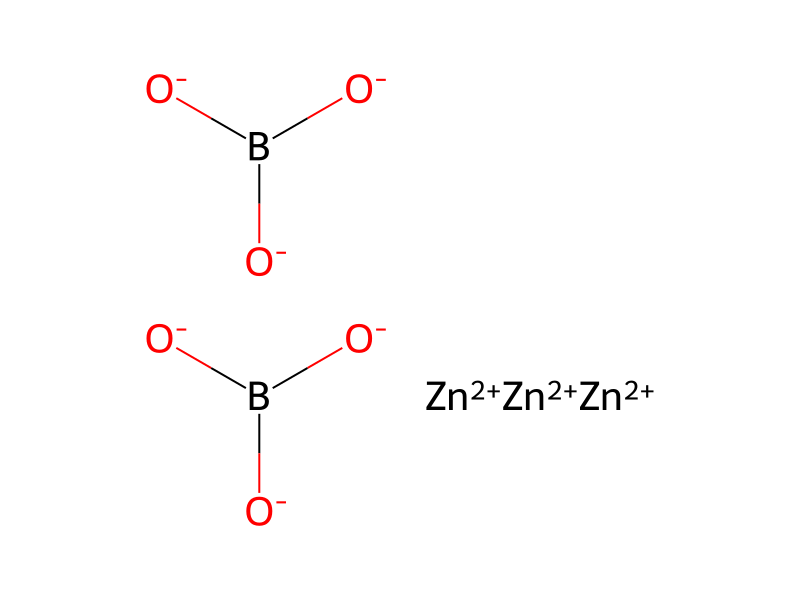
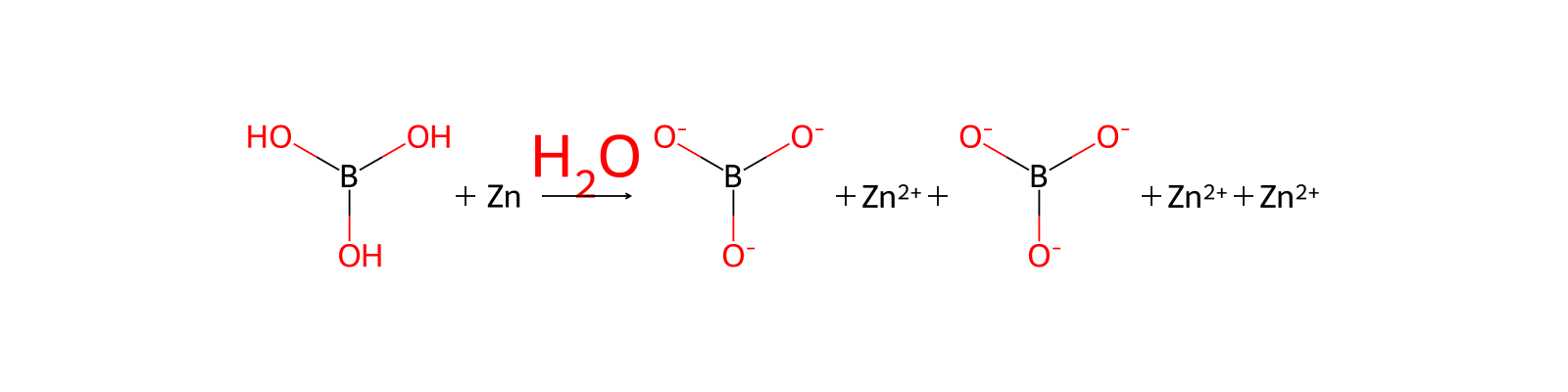
1332-07-6[O-]B([O-])[O-].[O-]B([O-])[O-].[Zn+2].[Zn+2].[Zn+2]BIKXLKXABVUSMH-UHFFFAOYSA-NZinc borate appears as a white powder of variable composition. (typically 45% ZnO, 34% B2O3 and 20% H2O). Slightly soluble in water. The primary hazard is the threat to the environment. Immediate steps should be taken to limit its spread to the environment. It is used as a fungus and mildew inhibitor, to fire proof textiles, and for other uses.
1332-07-6、14720-55-9DTXSID60915542.7 at 68 °F (USCG, 1999) - Denser than water; will sink
3.64 g/cu cm
Density: 40 to 40 lbs/cu ft (bulk)
White, amorphous powder
White granular
Soluble in dilute acids; slightly soluble in water
0.3% in water at 20 °C
Zinc borate appears as a white powder of variable composition. (typically 45% ZnO, 34% B2O3 and 20% H2O). Slightly soluble in water. The primary hazard is the threat to the environment. Immediate steps should be taken to limit its spread to the environment. It is used as a fungus and mildew inhibitor, to fire proof textiles, and for other uses.
Sicherheitsangaben dienen nur zur Orientierung und ersetzen weder das Sicherheitsdatenblatt (SDB) des Lieferanten noch geltende Vorschriften oder eine fachliche Bewertung.
Warning
H319: Causes serious eye irritation [Warning Serious eye damage/eye irritation]
P264+P265, P280, P305+P351+P338, and P337+P317 (click each P-code to see the statement)
PMN - indicates a commenced PMN (Pre-Manufacture Notices) substance.
The New Jersey Worker and Community Right to Know Act requires public and private employers to provide information about hazardous substances at their workplaces. (N.J.S.A. 34:5A-1 et. seq.)
Toxic by ingestion; A skin and eye irritant; [HSDB]; Zinc salts are irritating to the GI tract; No cumulative effects except digestive disorders; [EPA OHM/TADS] Has not been tested for reproductive or other chronic effects; [NJ-HSFS] An irritant; [MSDSonline] See Boric acid.
Zinc and Health. Current Bibliographies in Medicine 98-3. Public Services Division/National Library of Medicine. 3619 citations January, 1990-June, 1998.[Available from, as of November 2, 1998: http://www.nlm.nih.gov/archive/20040831/pubs/cbm/zinc.html]
Zinc can enter the body through the lungs, skin, and gastrointestinal tract. Intestinal absorption of zinc is controlled by zinc carrier protein CRIP. Zinc also binds to metallothioneins, which help prevent absorption of excess zinc. Zinc is widely distributed and found in all tissues and tissues fluids, concentrating in the liver, gastrointestinal tract, kidney, skin, lung, brain, heart, and pancreas. In the bloodstream zinc is found bound to carbonic anhydrase in erythrocytes, as well as bound to albumin, _2-macroglobulin, and amino acids in the the plasma. Albumin and amino acid bound zinc can diffuse across tissue membranes. Zinc is excreted in the urine and faeces. (L49)
Used as flame retardant (PVC, cellulosics, unsaturated halogenated polyesters, polymers, elastomers, paper, paperboard, textiles, and textile coatings), fungicide, and ceramics flux; [HSDB]
Pulp and Paper Processing [Category: Industry]
For zinc borate (USEPA/OPP Pesticide Code: 128859) ACTIVE products with label matches. /SRP: Registered for use in the U.S. but approved pesticide uses may change periodically and so federal, state and local authorities must be consulted for currently approved uses./
Medicine, fireproofing textiles, fungistat and mildew inhibitor, flux in ceramics
Fungicide
Effective in enhancing the flame-inhibiting powers of chlorine
Typical composition: zinc oxide 45%, borate 34%. May have 20% water of hydration.
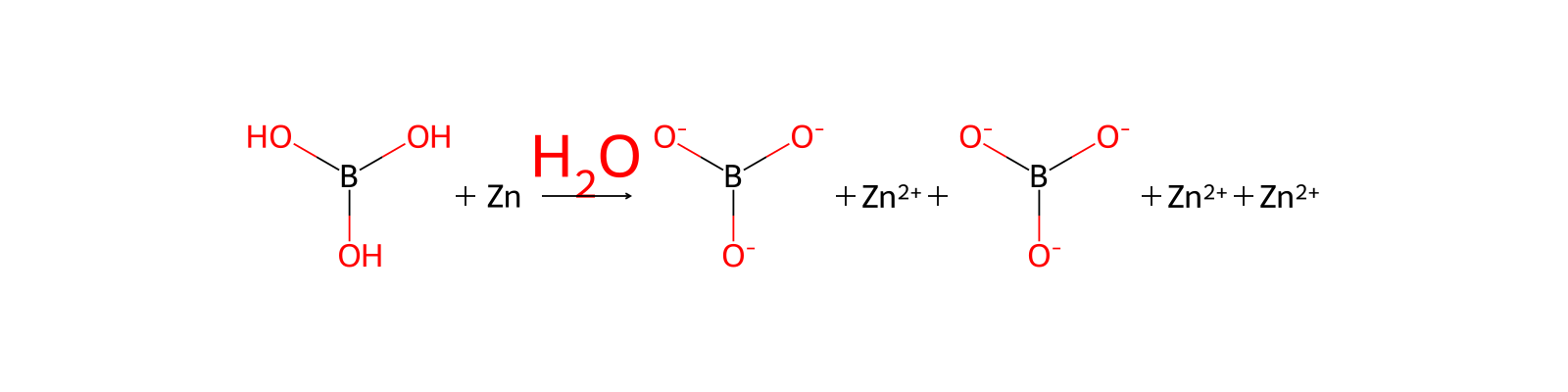


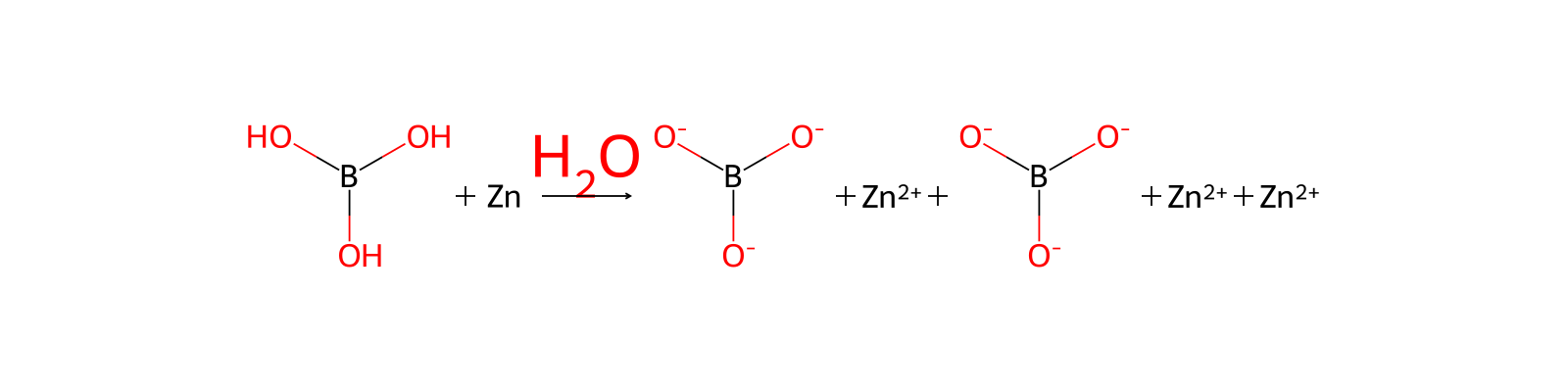
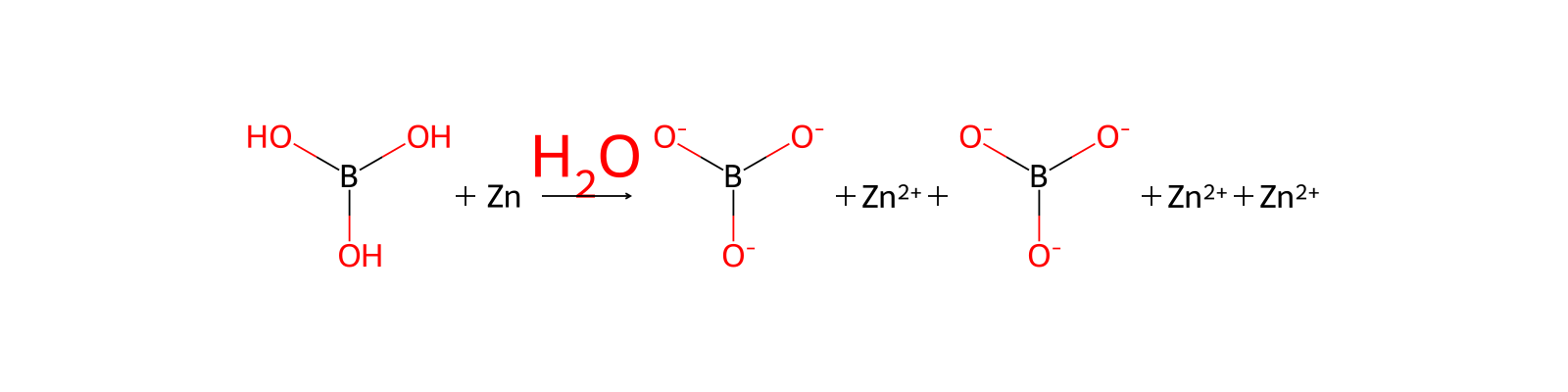

White odorless solid; Powder (ceramic grade) = 99.95% pure; Commercial grade = about 50% zinc oxide and 30% boric anhydride; [HSDB] White powder; [MSDSonline]
White amorphous powder; MF: 3ZnO.2B2O3; MW: 383.466; Density/Specific gravity: 3.64 g/cu cm; Slightly sol in cold water; Soluble in dilute acid. 27043-84-1 /Zinc borate; 27043-84-1/
White crystals; MF: 2ZnO.3B2O3.3.5H20; MW: 434.69; MP: 980 °C; density = 4.22 g/cu cm; insoluble in water. 12513-27-8 /Zinc borate hemiheptahydrate/
White powder; MF: 2ZnO.3B2O3.5H20; MW: 461.753; Density: 3.64 g/cu cm; solubility in water = 0.007 g/100 g water at 25 °C; slightly soluble in hydrochloric acid. 12536-65-2 /Zinc pentahydrate/
White hygroscopic solid; MF: ZnO(B2O3)2.6H2O; MW: 429.305; MP: 100 °C; Density: 2.57 g/cu cm; very soluble in water. 13517-27-6 /Zinc hexahydrate/
USEPA; Ambient Water Quality Criteria Doc: Zinc (1980) EPA 400/5-80-079
USEPA; Ambient Water Quality Criteria Doc: Zinc (1987) EPA 400/5-87-003
Arvidson, B. A Review of Axonal Transport of Metals. Toxicology 88: 1-14 (19994) Recent findings regarding axonal transport of metals, including zinc.
For more Special Reports (Complete) data for ZINC BORATE (6 total), please visit the HSDB record page.
Persons in charge of vessels or facilities are required to notify the National Response Center (NRC) immediately, when there is a release of this designated hazardous substance, in an amount equal to or greater than its reportable quantity of 1000 lb or 454 kg. The toll free number of the NRC is (800) 424-8802. The rule for determining when notification is required is stated in 40 CFR 302.4 (section IV. D.3.b).
Zinc borate is designated as a hazardous substance under section 311(b)(2)(A) of the Federal Water Pollution Control Act and further regulated by the Clean Water Act Amendments of 1977 and 1978. These regulations apply to discharges of this substance. This designation includes any isomers and hydrates, as well as any solutions and mixtures containing this substance.
Toxic pollutant designated pursuant to section 307(a)(1) of the Federal Water Pollution Control Act and is subject to effluent limitations. /Zinc and compounds/
For total recoverable zinc the criterion to protect freshwater aquatic life ... is 47 ng/L as a 24 hr average ... at hardnesses of 50, 100, and 200 mg/L as CaCO3 the concentration of total recoverable zinc should not exceed 180, 320, 570 ug/L at any time. /Soluble zinc salts/
For total recoverable zinc the criterion to protect saltwater aquatic life ... is 58 ug/L as a 24 hr average and the concentration should not exceed 170 ug/L at any time. /Soluble zinc salts/
Environmental considerations: Land spill: Dig a pit, pond, lagoon, or holding area to contain liquid or solid material. /SRP: If time permits, pits, ponds, lagoons, soak holes, or holding areas should be contained with a flexible impermeable membrane liner./ Cover solids with a plastic sheet to prevent dissolving in rain or fire fighting water.
Environmental considerations: Water spill: Neutralize with agricultural lime (CaO), crushed limestone (CaCO3), or sodium bicarbonate (NaHCO3). Add soda ash (Na2CO3). Adjust pH to neutral (pH 7). Use mechanical dredges or lifts to remove immobilized masses of pollutants and precipitates.
SRP: The most favorable course of action is to use an alternative chemical product with less inherent propensity for occupational harm/injury/toxicity or environmental contamination. Recycle any unused portion of the material for its approved use or return it to the manufacturer or supplier. Ultimate disposal of the chemical must consider: the material's impact on air quality; potential migration in soil or water; effects on animal and plant life; and conformance with environmental and public health regulations.
If material not involved in fire: Keep material out of water sources and sewers. Build dikes to contain flow as necessary. Keep upwind. Wear appropriate chemical protective gloves, boots and goggles. Avoid breathing vapors or dust. Wash away any material which may have contacted the body with copious amounts of water or soap and water.
SRP: The scientific literature for the use of contact lenses in industry is conflicting. The benefit or detrimental effects of wearing contact lenses depend not only upon the substance, but also on factors including the form of the substance, characteristics and duration of the exposure, the uses of other eye protection equipment, and the hygiene of the lenses. However, there may be individual substances whose irritating or corrosive properties are such that the wearing of contact lenses would be harmful to the eye. In those specific cases, contact lenses should not be worn. In any event, the usual eye protection equipment should be worn even when contact lenses are in place.
Dust mask; goggles or face shield; protective gloves (USCG, 1999)
/NIOSH certified respirator/; goggles or face shield; protective gloves
LC50; Species: Anas platyrhynchos (Mallard duck) age 10 days; diet >5620 ppm for 8 days
LD50; Species: Colinus virginianus (Northern Bobwhite Quail) age 5 months; oral via capsule >2250 mg/kg
EC50; Species: Daphnia magna (Water Flea) age <24 hr; Conditions: freshwater, static; Concentration: 75000 ug/L for 48 hr (95% confidence interval: 50000-120000 ug/L); Effect: intoxication, immobilization /100% purity formulation/
LC50; Species: Lepomis macrochirus (Bluegill); Conditions: freshwater, static; Concentration: >335000 ug/L for 96 hr /100% purity formulation/
LC50; Species: Oncorhynchus mykiss (Rainbow Trout); Conditions: freshwater, static; Concentration: 2700 ug/L for 96 hr (95% confidence interval: 1800-3400 ug/L) /100% purity formulation/
Anaemia results from the excessive absorption of zinc suppressing copper and iron absorption, most likely through competitive binding of intestinal mucosal cells. Unbalanced levels of copper and zinc binding to Cu,Zn-superoxide dismutase has been linked to amyotrophic lateral sclerosis (ALS). Stomach acid dissolves metallic zinc to give corrosive zinc chloride, which can cause damage to the stomach lining. Metal fume fever is thought to be an immune response to inhaled zinc. (L48, L49, A49)
/BIRDS and MAMMALS/ Avian acute oral study indicated that the bobwhite quail (Colinus virginianus), based on signs of toxicity, mortality, reduction of body weight gain and feed consumption was characterized as practically non-toxic to bobwhite quail. The LD50 was determined to be >2250 mg/kg, the highest dosage tested.
/BIRDS and MAMMALS/ In avian dietary studies, the LC50 value of zinc borate in the mallard ducklings (Anas platyrhynchos) is estimated to be greater than 5,620 ppm. No mortality occurred in either the control or treated groups. A slight reduction in body weight was observed at the 6,520 ppm concentration during the exposure period. There was no effect on feed consumption at any concentration tested.
/AQUATIC SPECIES/ The acute toxicity of zinc borate to bluegill sunfish (Lepomis macrochirus) was tested under static conditions at mean concentrations of 94, 137, 182, 248, and 335 ppm. The 96 hr LC50 for bluegill sunfish was shown to be greater than 335 ppm. These results indicate that zinc borate is practically nontoxic to the fish species tested.
Ingestion of large doses of zinc causes stomach cramps, nausea, and vomiting. Acute inhalation of large amounts of zinc causes metal fume fever, which is characterized by chills, fever, headache, weakness, dryness of the nose and throat, chest pain, and coughing. Dermal contact with zinc results in skin irritation. (L49)
/GENOTOXICITY/ In the Salmonella/microsomal Assay (Ames Bioassay) for bacterial mutagenic activity, zinc borate did not elicit any mutagenic response in Salmonella tester strains when tested either with or without a metabolic activation system.
/OTHER TOXICITY INFORMATION/ In a dermal sensitization study involving guinea pigs, zinc borate showed no evidence of /sensitization/.
/OTHER TOXICITY INFORMATION/ Primary Dermal Irritation/Corrosivity in Albino Rabbits - The Primary Irritation Index of zinc borate in rabbits was found to be 0. Therefore, it is not considered to be an irritant or corrosive.
/OTHER TOXICITY INFORMATION/ Zinc borate was shown to be an eye irritant producing mild conjunctivitis in albino rabbits.
According to the 2006 TSCA Inventory Update Reporting data, the number of persons reasonably likely to be exposed in the industrial manufacturing, processing, and use of zinc borate is 100 to 999; the data may be greatly underestimated(1).
NIOSH (NOES Survey 1981-1983) has statistically estimated that 20,343 workers (4,266 of these were female) were potentially exposed to zinc borate in the US(1). Occupational exposure to zinc borate may occur through inhalation and dermal contact with this compound at workplaces where zinc borate is produced or used(SRC).
Immediate first aid: Remove patient from contact with the material. Ensure that adequate decontamination has been carried out. If patient is not breathing, start artificial respiration, preferably with a demand-valve resuscitator, bag-valve-mask device, or pocket mask, as trained. Perform CPR as necessary. Immediately flush contaminated eyes with gently flowing water. Do not induce vomiting. If vomiting occurs, lean patient forward or place on left side (head-down position, if possible) to maintain an open airway and prevent aspiration. Keep patient quiet and maintain normal body temperature. Obtain medical attention. /Zinc and related compounds/
Basic treatment: Establish a patent airway (oropharyngeal or nasopharyngeal airway, if needed). Suction if necessary. Watch for signs of respiratory insufficiency and assist ventilations if necessary. Administer oxygen by nonrebreather mask at 10 to 15 L/min. Monitor for pulmonary edema and treat if necessary ... . Anticipate seizures and treat if necessary ... . Monitor for shock and treat if necessary ... . For eye contamination, flush eyes immediately with water. Irrigate each eye continuously with 0.9% saline (NS) during transport ... . Do not use emetics. For ingestion, rinse mouth and administer 5 mL/kg up to 200 mL of water for dilution if the patient can swallow, has a strong gag reflex, and does not drool. Administer activated charcoal ... . /Zinc and related compounds/
Advanced treatment: Consider orotracheal or nasotracheal intubation for airway control in the patient who is unconscious, has severe pulmonary edema, or is in severe respiratory distress. Positive-pressure ventilation techniques with a bag valve mask device may be beneficial. Consider drug therapy for pulmonary edema ... . Consider administering a beta agonist such as albuterol for severe bronchospasm ... . Monitor cardiac rhythm and treat arrhythmias if necessary ... . Start IV administration of D5W /SRP: "To keep open", minimal flow rate/. Use 0.9% saline (NS) or lactated Ringer's (LR) if signs of hypovolemia are present. For hypotension with signs of hypovolemia, administer fluid cautiously. Consider vasopressors if patient is hypotensive with a normal fluid volume. Watch for signs of fluid overload ... . Treat seizures with diazepam or lorazepam ... . Use proparacaine, hydrochloride to assist eye irrigation ... . /Zinc and related compounds/
Immediate first aid: Ensure that adequate decontamination has been carried out. If patient is not breathing, start artificial respiration, preferably with a demand-valve resuscitator, bag-valve-mask device, or pocket mask, as trained. Perform CPR as necessary. Immediately flush contaminated eyes with gently flowing water. Do not induce vomiting. If vomiting occurs, lean patient forward or place on left side (head-down position, if possible) to maintain an open airway and prevent aspiration. Keep patient quiet and maintain normal body temperature. Obtain medical attention. /Boron and Related Compounds/
LD50 Rabbits (male and female albino rabbits) dermal greater than 10 g/kg
LD50 Rat(male) oral greater than 10 g/kg
Persons in charge of vessels or facilities are required to notify the National Response Center (NRC) immediately, when there is a release of this designated hazardous substance, in an amount equal to or greater than its reportable quantity of 1000 lb or 454 kg. The toll free number of the NRC is (800) 424-8802. The rule for determining when notification is required is stated in 40 CFR 302.4 (section IV. D.3.b).
Zinc borate is designated as a hazardous substance under section 311(b)(2)(A) of the Federal Water Pollution Control Act and further regulated by the Clean Water Act Amendments of 1977 and 1978. These regulations apply to discharges of this substance. This designation includes any isomers and hydrates, as well as any solutions and mixtures containing this substance.
Toxic pollutant designated pursuant to section 307(a)(1) of the Federal Water Pollution Control Act and is subject to effluent limitations. /Zinc and compounds/
For total recoverable zinc the criterion to protect freshwater aquatic life ... is 47 ng/L as a 24 hr average ... at hardnesses of 50, 100, and 200 mg/L as CaCO3 the concentration of total recoverable zinc should not exceed 180, 320, 570 ug/L at any time. /Soluble zinc salts/
For total recoverable zinc the criterion to protect saltwater aquatic life ... is 58 ug/L as a 24 hr average and the concentration should not exceed 170 ug/L at any time. /Soluble zinc salts/
(AZ) ARIZONA 5000 ug/L /Zinc/
(MN) MINNESOTA 2000 ug/L /Zinc/
EPA 5000 ug/L /Zinc/
EPA 2000 ug/L /Zinc, Lifetime health advisory/
Commercial grades contain 45-52% zinc oxide, 29-35% boric anhydride.
Powder, 99.95+% grade, ceramic grade
Borogard ZB (U.S. Borax, Inc), Zinc borate 100%.
For more Formulations/Preparations (Complete) data for ZINC BORATE (7 total), please visit the HSDB record page.
Boric acid (HBO2), zinc salt (2:1): INACTIVE
Zinc borates can be used alone, although it is not as effective in increasing flame resistance as when used in combination with other halogen synergists such as antimony oxide ... also used with alumina trihydrate to form a glass-like substance that inhibits polymer degradation /Zinc borates/
VerwendenZinc borate is prepared as an insoluble double salt from water-soluble zinc and boron compounds. Compounds having varying amounts of zinc, boron, and water of hydration are available. The ratio of these components affects the temperature at which the flame-inhibiting powers are activated, as well as the temperature at which they can be processed. Zinc borates can either be used alone or in combination with other halogen synergists, such as antimony oxide. In some instances zinc borate is also used with alumina trihydrate to form a glass-like substance that inhibits polymer degradation.
For more Antidote and Emergency Treatment (Complete) data for ZINC BORATE (6 total), please visit the HSDB record page.