Copper(II) nitrate hemipentahydrate
Grundinformationen
- CAS
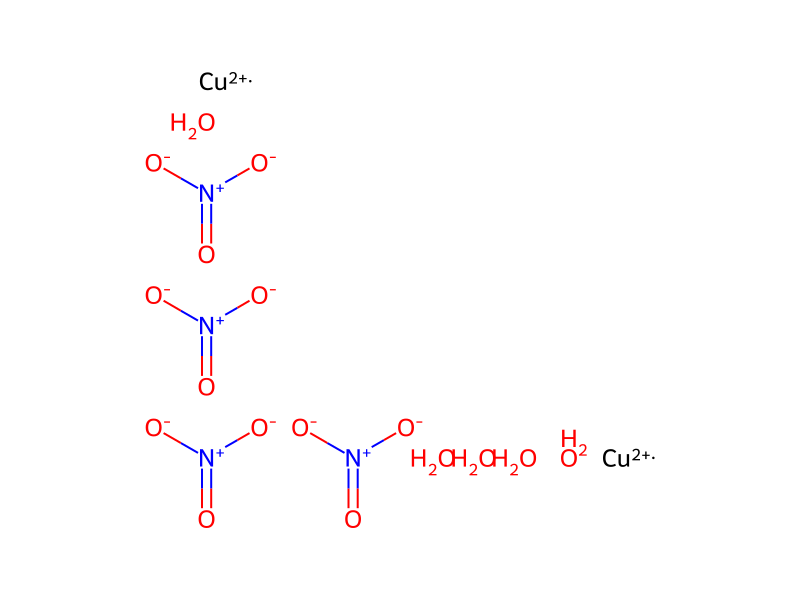
19004-19-4- Standard-SMILES
O.O.O.O.O.O=[N+]([O-])[O-].O=[N+]([O-])[O-].O=[N+]([O-])[O-].O=[N+]([O-])[O-].[Cu+2].[Cu+2]- InChIKey
IZDJJEMZQZQQQQ-UHFFFAOYSA-N- Summenformel
- Cu2H10N4O17
- Durchschnittliche Molmasse
- 465,19 g/mol
- Monoisotopische Masse
- 463,86328986
Namen und Bezeichner
- Bevorzugter Name
- Copper(II) nitrate hemipentahydrate
- IUPAC
- dicopper;tetranitrate;pentahydrate
- Englischer Name
- CUPRIC NITRATE, HYDRATE
- Summenformel
- CuH3NO4
- Molmasse
- 144.57
Namen und Synonyme
19004-19-4Copper II nitrate hemipentahydrateCopper(II) nitrate hemi(pentahydrate)copper(II) nitrate hemipentahydrateCopper nitrate pentahydrateCopper nitrate hemipentahydrateDTXSID90172467Cupric nitrate hemipentahydrateRefChem:578903DTXCID4094958dicopper;tetranitrate;pentahydrateSCHEMBL67093
Weitere Namen anzeigen
COPPER (II) NITRATECupric Nitrate, ReagentCUPRIC NITRATE, HYDRATECOPPER NITRATE, HYDRATEPROTEINASE K 20MG/ML SOL.Copper (II) Nitrate, flakeCopper Nitrate 2.5-hydrateCUPRIC NITRATE, 2.5-HYDRATECOPPER (II) NITRATE, HYDRATECOPPER(II) NITRATE-2,5-HYDRATE
copper (II) nitrate hemipentahydrateCopper(II)nitrate hemi(pentahydrate)AKOS015915858dicopper(2+) pentahydrate tetranitrateNitric acid copper salt hydrate (2:5)Copper(2+) nitrate--water (2/4/5)FN145361NS00129558
Eigenschaften
Berechnete Struktureigenschaften
- Polarare Oberfläche (TPSA)
- 257 Ų
- H-Brücken-Donoren
- 5
- H-Brücken-Akzeptoren
- 17
- Frei drehbare Bindungen
- 0
- Schwere Atome
- 23
- Formalladung
- 0
- Komplexität
- 18,8
Experimentelle und physikochemische Eigenschaften
Chemical ClassesMetals -> Metals, Inorganic Compounds
Melting Point115 °C
Physical DescriptionBlue odorless crystals; Hygroscopic; [Alfa Aesar MSDS]
Physikochemische Eigenschaften
- Schmelzpunkt
- 114.5 °C · 114.5 °C (dec.)(lit.)
- Siedepunkt
- 170 °C · 170°C
- Dichte
- 2.32 · 2.32
- Flammpunkt
- 170 °C · 170°C
- Aggregatzustand
- Powder/Solid
- Wichte
- 2.05 · 2.05
- Farbe
- Blue
- Wasserlöslichkeit
- Soluble in water, ammonia and ethanol
- Merck
- 14 · 14,2643
- Major Application
- electroplatingmaterial synthesis precursor
- InChI
- 1S/2Cu.4NO3.5H2O/c;;4*2-1(3)4;;;;;/h;;;;;;5*1H2/q2*+2;4*-1;;;;;
Sicherheit und Regulatorisches
Sicherheitsangaben dienen nur zur Orientierung und ersetzen weder das Sicherheitsdatenblatt (SDB) des Lieferanten noch geltende Vorschriften oder eine fachliche Bewertung.
GHS-Klassifizierung
GHS Classification
This chemical does not meet GHS hazard criteria for 5.7% (5 of 87) of reports.
Danger
H272 (93.1%): May intensify fire; oxidizer [Danger Oxidizing liquids; Oxidizing solids]
P210, P220, P264, P264+P265, P270, P273, P280, P301+P317, P302+P352, P305+P351+P338, P305+P354+P338, P317, P321, P330, P332+P317, P337+P317, P362+P364, P370+P378, P391, and P501 (click each P-code to see the statement)
Aggregated GHS information provided per 87 reports by companies from 7 notifications to the ECHA C&L Inventory. Each notification may be associated with multiple companies.
Gefahrenhinweise
Regulatory Information
Chemical: Nitric acid, copper(2+) salt, hydrate (2:5)
Nitric acid, copper(2+) salt, hydrate (2:5): Does not have an individual approval but may be used under an appropriate group standard
Hazards Summary
Acute copper poisoning after ingestion can cause liver injury, methemoglobinemia, and hemolytic anemia. Acute renal failure may result, secondary to massive hemoglobinuria. [Goldfrank, p. 1259] oxidizer that may cause fire on contact with combustible materials; Causes burns; Harmful by ingestion; [Alfa Aesar MSDS] See Copper. See NITRATES and NITRITES.
Hazard Classes and CategoriesOx. Sol. 2 (93.1%)
Sicherheit und Schutzausrüstung
Exposure Control and Personal Protection0.01 [mg/m3], respirable fraction (Cu, inorganic cmpnds)[German Research Foundation (DFG)]
Chemie und Industrie
Verwendung und Herstellung
Household ProductsInformation on 1 consumer products that contain Copper II nitrate hemipentahydrate in the following categories is provided:
Anwendungen
VerwendenCUPRIC NITRATE HYDRATE is used in preparation of copper standard solutions.
Zugehörige Reaktionen
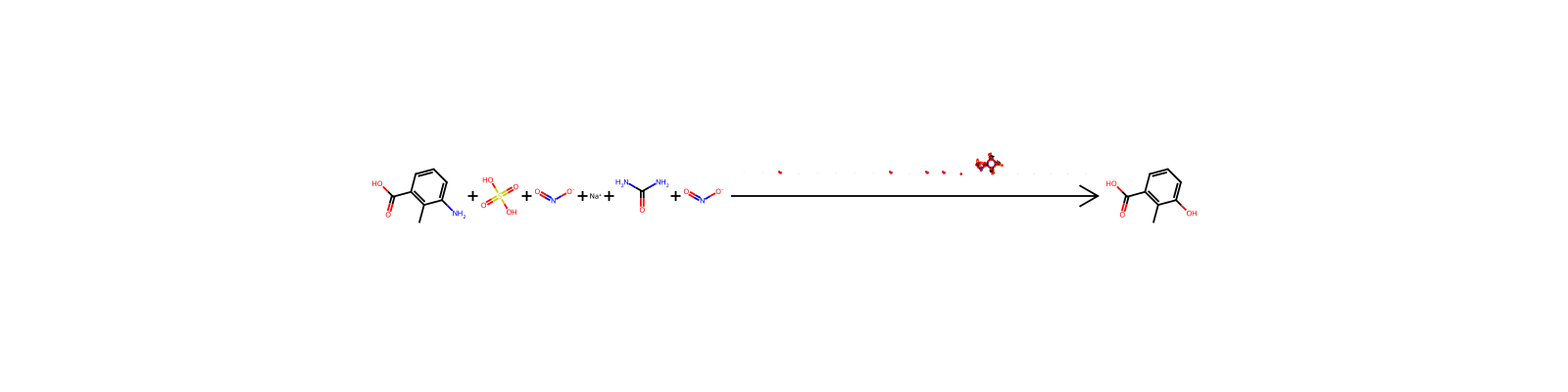
17





Notizen zur Verbindung
Wird geladen…