StartseiteMCPWorkbenchSkills
StartseiteWorkbenchBenachrichtigungenMein Bereich
llms.txt · MCP-AnleitungDatenschutz · Nutzungsbedingungen · Supportv1.8.0
  1. Startseite
  2. /Verbindung

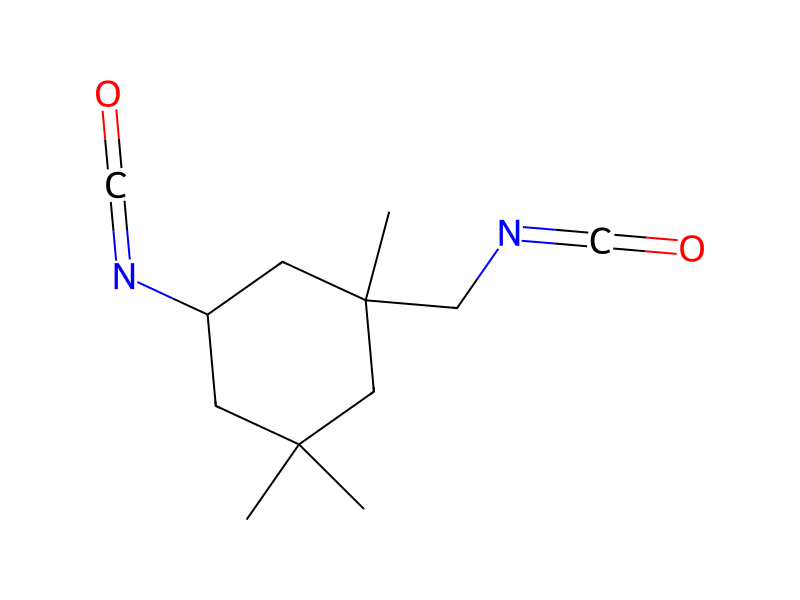
3-Isocyanatmethyl-3,5,5-trimethylcyclohexylisocyanat

Isophorone diisocyanate

HCID 169132
Neue NotizNeue ReaktionAnfrage stellen
Druckvorschau

Daten werden ergänzt – lade die Seite später neu, um den aktuellen Stand zu sehen
GrundinformationenÜberblickNamen und BezeichnerEigenschaftenSicherheit und RegulatorischesChemie und IndustrieZugehörige ReaktionenNotizen zur Verbindung
TeilstruktursucheÄhnliche Strukturen suchen

Grundinformationen

CAS
4098-71-9
Standard-SMILES
CC1(C)CC(N=C=O)CC(C)(CN=C=O)C1
InChIKey
NIMLQBUJDJZYEJ-UHFFFAOYSA-N
Summenformel
C12H18N2O2
Durchschnittliche Molmasse
222,28 g/mol
Monoisotopische Masse
222,13682782

Überblick

Isophorone diisocyanate appears as a clear to light-yellow liquid. Slightly denser than water and insoluble in water. Toxic by inhalation and skin absorption. Very irritating to skin. Used to make polyurethane coatings.

Namen und Bezeichner

Bevorzugter Name
Isophorone diisocyanate
IUPAC
5-isocyanato-1-(isocyanatomethyl)-1,3,3-trimethylcyclohexane
Lokaler Name
3-Isocyanatmethyl-3,5,5-trimethylcyclohexylisocyanat
Englischer Name
Isophorone diisocyanate
Summenformel
C12H18N2O2
Molmasse
222.28

Namen und Synonyme

ISOPHORONE DIISOCYANATE4098-71-9IPDI5-Isocyanato-1-(isocyanatomethyl)-1,3,3-trimethylcyclohexaneIsophorone diamine diisocyanateCyclohexane, 5-isocyanato-1-(isocyanatomethyl)-1,3,3-trimethyl-3-Isocyanatomethyl-3,5,5-trimethylcyclohexyl isocyanateDTXSID00238263-Isocyanatomethyl-3,5,5-trimethylcyclohexylisocyanateIsocyanic acid, methylene(3,5,5-trimethyl-3,1-cyclohexylene) esterCHEBI:532143,3,5-Trimethyl-5-(isocyanatomethyl)cyclohexyl isocyanate
Weitere Namen anzeigen
1,1,5,5-Tetramethylcyclohexane-a-1,3-diisocyanate5-Isocyanato-1-isocyanatomethyl-1,3,3-trimethylcoclohexaneJACS-4098-71-9Ncgc00091745-01UNII:43B0856528Isophorondiisocyanat
DTXCID9038261,3,3-Trimethyl-1-(isocyanatomethyl)-5-isocyanatocyclohexane1-(Isocyanatomethyl)-5-isocyanato-1,3,3-trimethylcyclohexane1-Isocyanato-3,3,5-trimethyl-5-(isocyanatomethyl)cyclohexane43B08565281-Isocyanato-3-(isocyanatomethyl)-3,5,5-trimethylcyclohexaneRefChem:76413-isocyanatomethyl-3,5,5-trimethylcyclohexyl-isocyanate

Eigenschaften

Berechnete StruktureigenschaftenWird ergänzt

XLogP
4,5
Polarare Oberfläche (TPSA)
58,9 Ų
H-Brücken-Donoren
0
H-Brücken-Akzeptoren
4
Frei drehbare Bindungen
3
Schwere Atome
16
Formalladung
0
Komplexität
352

Experimentelle und physikochemische Eigenschaften

Chemical Classes · 2 Einträge

Reactive agents - 1st degree

Industrial compound

PolymersPlastics & Rubber -> Diisocyanates
LogP4.75 (calculated)
OdorPungent
Density · 6 Einträge

1.056 to 1.062 at 68 °F (USCG, 1999)

1.056

Relative density (water = 1): 1.06

1.06

1.062 @ 20°C

1.06

Color/FormColorless to slightly yellow liquid
Solubility · 4 Einträge

less than 1 mg/mL at 77 °F (NTP, 1992)

Completely miscible with esters, ketones, ethers, and aromatic and aliphatic hydrocarbons.

Solubility in water, g/100ml: 15 (reaction)

Decomposes

Flash Point · 5 Einträge

greater than 200 °F (NTP, 1992)

155 °C, Closed cup

155 °C c.c.

Sicherheit und Regulatorisches

Sicherheitsangaben dienen nur zur Orientierung und ersetzen weder das Sicherheitsdatenblatt (SDB) des Lieferanten noch geltende Vorschriften oder eine fachliche Bewertung.

GHS-Klassifizierung

GHS Classification · 6 Einträge

Danger

H315: Causes skin irritation [Warning Skin corrosion/irritation]

P233, P260, P261, P264, P264+P265, P271, P272, P273, P280, P284, P302+P352, P304+P340, P305+P351+P338, P316, P319, P321, P332+P317, P333+P317, P337+P317, P342+P316, P362+P364, P391, P403, P403+P233, P405, and P501 (click each P-code to see the statement)

This chemical does not meet GHS hazard criteria for < 0.1% (1 of 1039) of reports.

Danger

H315 (96.1%): Causes skin irritation [Warning Skin corrosion/irritation]

Gefahrenhinweise

Regulatory Information · 6 Einträge

Chemical: Cyclohexane, 5-isocyanato-1-(isocyanatomethyl)-1,3,3-trimethyl-

Hazard Traits - Respiratory Toxicity

Cyclohexane, 5-isocyanato-1-(isocyanatomethyl)-1,3,3-trimethyl- is listed on the EPA's Chemical Data Reporting (CDR) system. Manufacturers and importers of Cyclohexane, 5-isocyanato-1-(isocyanatomethyl)-1,3,3-trimethyl- are required to report information about their production and use of this chemical to the EPA under the Toxic Substances Control Act (TSCA). (40 eCFR Part 711)

REACH registered substance: 3-isocyanatomethyl-3,5,5-trimethylcyclohexyl isocyanate (EC: 223-861-6)

Restricted substance: 3-isocyanatomethyl-3,5,5-trimethylcyclohexyl isocyanate

Isophorone diisocyanate: Does not have an individual approval but may be used under an appropriate group standard

DOT LabelPoison
Fire Hazards · 3 Einträge

When heated to decomposition, it emits toxic fumes of nitrogen oxides. (EPA, 1998)

· Combustible material: may burn but does not ignite readily.

Combustible. Gives off irritating or toxic fumes (or gases) in a fire. Heating will cause rise in pressure with risk of bursting.

Chemie und Industrie

Pharmakologische Informationen

Biological Half-Life · 1 Eintrag

Three volunteers were each exposed to ... three concentrations of isophorone diisocyanate (IPDI) (12.1, 17.7, and 50.7 ug/cu m), in an exposure chamber. The duration of the exposure was 2 hr. ... The average urinary elimination half-time ... for IPDA, 2.8 hr.

Metabolism/Metabolites · 1 Eintrag

Cyanide is rapidly alsorbed through oral, inhalation, and dermal routes and distributed throughout the body. Cyanide is mainly metabolized into thiocyanate by either rhodanese or 3-mercaptopyruvate sulfur transferase. Cyanide metabolites are excreted in the urine. (L96)

Absorption, Distribution and Excretion · 1 Eintrag

An isocyanate generation apparatus was developed and stable isocyanate atmospheres were obtained. At a concentration of 5 ug 1,6-hexamethylene diisocyanate (HDI) per cu m the precision was found to be 7% (n = 5). Three volunteers were each exposed to three different concentrations of HDI (11.9, 20.5, and 22.1 ug/cu m) and three concentrations of isophorone diisocyanate (IPDI) (12.1, 17.7, and 50.7 ug/cu m), in an exposure chamber. The duration of the exposure was 2 hr. Urine and blood samples were collected, and hydrolysed under alkaline conditions to the HDI and IPDI corresponding amines, 1,6-hexamethylene diamine (HDA) and isophorone diamine (IPDA), determined as their pentafluoropropionic anhydride amides (HDA-PFPA and IPDA-PFPA). The HDA- and IPDA-PFPA derivatives were analysed using liquid chromatography mass spectrometry with thermospray monitoring negative ions. When working up samples from the exposed persons without hydrolysis, no HDA or IPDA was seen. The average urinary excretion of the corresponding amine was 39% for HDI and 27% for IPDI. An association between the estimated inhaled dose and the total excreted amount was seen. The average urinary elimination half-time for HDA was 2.5 hr and for IPDA, 2.8 hr. The hydrolysis condition giving the highest yield of HDA and IPDA in urine was found to be hydrolysis with 3 M sodium hydroxide during 4 hr. No HDA or IPDA could be found in hydrolysed plasma (< ca 0.1 ug/L).

Verwendung und Herstellung

Zugehörige Reaktionen

111
Reaktionsaufzeichnung erstellen
Reaktionsgleichung von HRID 23304
HRID 23304als Eduktuspto-grants-2005_02
Reaktionsgleichung von HRID 23969
HRID 23969als Eduktuspto-grants-2005_02
Reaktionsgleichung von HRID 43991
HRID 43991als Eduktuspto-grants-2013_09
Reaktionsgleichung von HRID 68182
HRID 68182als Eduktuspto-grants-2014_09
Reaktionsgleichung von HRID 237182
HRID 237182als Eduktuspto-grants-2014_02
Reaktionsgleichung von HRID 327381
HRID 327381als Eduktuspto-grants-1993_12
Reaktionsgleichung von HRID 341721
HRID 341721als Eduktuspto-grants-1999_01
Reaktionsgleichung von HRID 345622
HRID 345622als Eduktuspto-grants-1991_10
Seite 1 von 14

Notizen zur Verbindung

Wird geladen…

Auf dieser SeiteGrundinformationenÜberblickNamen und BezeichnerEigenschaftenSicherheit und RegulatorischesChemie und IndustrieZugehörige ReaktionenNotizen zur Verbindung
Weitere Aktionen
Neue NotizNeue ReaktionAnfrage stellen

Datenbank-Bezeichner

CAS
4098-71-9
PubChem CID
169132
DTXSID
DTXSID0023826
ChEMBL
CHEMBL1509442
ChEBI
CHEBI:53214
UNII
43B0856528
EC Number
223-861-6
Nikkaji
J53.651B

311 °F

311 °F

Boiling Point · 4 Einträge

316 °F at 10 mmHg (NTP, 1992)

BP: 158 °C at 10 torr

at 1.33kPa: 158 °C

360 °C @760 [mm Hg]

Decomposition · 2 Einträge

When heated to decomposition it emits toxic fumes of /nitrogen oxides and hydrogen cyanide/.

310 °C

Melting Point · 6 Einträge

-76 °F (NTP, 1992)

Approximately -60 °C

-60 °C

-76 °F

-60 °C

-76 °F

Vapor Pressure · 6 Einträge

0.0003 mmHg at 68 °F ; 0.0007 mmHg at 122 °F (NTP, 1992)

0.0003 [mmHg]

0.0003 torr at 20 °C

Vapor pressure, Pa at 20 °C: 0.04

0.0003 mmHg

0.00001 [mm Hg] @25 °C

Physikochemische Eigenschaften

Schmelzpunkt
-60 °C · -60°C
Siedepunkt
158 · 158-159 °C15 mm Hg(lit.)
Dichte
1.049 g/mL · 1.049 g/mL at 25 °C(lit.)
Dampfdruck
0.0004 hPa · 0.0004 hPa (20 °C)
Brechungsindex
20 · n20/D 1.484(lit.)
Flammpunkt
230 °F · >230 °F
storage temp.
30 °C · Store below +30°C.
Löslichkeit
Miscible with esters, ketones, ethers, and aromatic and aliphatic hydrocarbons.
Aggregatzustand
Liquid
Farbe
Clear colorless to slightly yellow
Explosionsgrenze
0.7 · 0.7-4.5%(V)
Wasserlöslichkeit
0.1 g/100 · <0.1 g/100 mL at 25 ºC
BRN
2726467 · 2726467
Stabilität
Reacts with all substances containing active hydrogen, such as acids, amines, water, phenols, mercaptans, amides, urea. Probably moisture sensitive.
Kosmetik-Inhaltsstoffe Funktionen
FILM FORMING
InChI
1S/C12H18N2O2/c1-11(2)4-10(14-9-16)5-12(3,6-11)7-13-8-15/h10H,4-7H2,1-3H3
InChIKey
NIMLQBUJDJZYEJ-UHFFFAOYSA-N
SMILES
N(=C=O)C1CC(CC(C1)(C)C)(CN=C=O)C
LogP
4.75 at · 4.75 at 25℃
CAS Datenbank
4098 · 4098-71-9(CAS DataBase Reference)
EPA chemische Informationen
Isophorone diisocyanate (4098-71-9)
Fire Potential
A flammable liquid.
Health Hazards · 2 Einträge

This material is highly toxic by inhalation and moderately toxic through the skin. (Non-Specific -- Isocyanates) People with skin or respiratory problems should avoid exposure. (EPA, 1998)

· TOXIC and/or CORROSIVE; inhalation, ingestion or contact (skin, eyes) with vapors, dusts or substance may cause severe injury, burns or death.

Hazards SummaryMay cause skin sensitization; [ICSC] Danger of sensitization of the airways and skin; [MAK] See DIISOCYANATES.
DOT ID and Guide · 2 Einträge

2290 156

2290 156

Reactive GroupIsocyanates and Isothiocyanates
EC ClassificationSymbol: T, N; R: 23-36/37/38-42/43-51/53; S: (1/2)-26-28-38-45-61; Note: 2
UN ClassificationUN Hazard Class: 6.1; UN Pack Group: III
TSCA Requirements · 2 Einträge

Section 8(a) of TSCA requires manufacturers of this chemical substance to report preliminary assessment information concerned with production, exposure, and use to EPA as cited in the preamble in 51 FR 41329. Effective date: 10/29/90; Reporting date: 12/27-90.

Pursuant to section 8(d) of TSCA, EPA promulgated a model Health and Safety Data Reporting Rule. The section 8(d) model rule requires manufacturers, importers, and processors of listed chemical substances and mixtures to submit to EPA copies and lists of unpublished health and safety studies. Cyclohexane, 5-isocyanato-1-(isocyanatomethyl)-1,3,3-trimethyl- is included on this list. Effective date: 6/1/87; Sunset date: 6/1/97.

Reactivity AlertsWater-Reactive

Sicherheit und Schutzausrüstung

Fire Fighting · 2 Einträge

Keep unnecessary people away; isolate hazard area and deny entry. Stay upwind; keep out of low areas. Ventilate closed spaces before entering them. Wear positive pressure breathing apparatus and special protective clothing. Remove and isolate contaminated clothing at the site.

Use water spray, foam, powder, carbon dioxide.

First Aid Measures · 4 Einträge

Fresh air, rest. Half-upright position. Refer immediately for medical attention.

Remove contaminated clothes. Rinse and then wash skin with water and soap. Refer for medical attention .

Rinse with plenty of water (remove contact lenses if easily possible). Refer immediately for medical attention.

Rinse mouth. Do NOT induce vomiting. Give one or two glasses of water to drink. Refer for medical attention .

Accidental Release Measures · 2 Einträge

· CALL 911. Then call emergency response telephone number on shipping paper. If shipping paper not available or no answer, refer to appropriate telephone number listed on the inside back cover.

· ELIMINATE all ignition sources (no smoking, flares, sparks or flames) from immediate area.

First Aid · 3 Einträge

Signs and Symptoms of Isophorone Diisocyanate Exposure: Signs and symptoms of isophorone diisocyanate exposure include the following: itching skin, skin rashes, tearing of the eyes, inflammation of nasal mucous membrane, and respiratory irritation. Gastrointestinal irritation may also occur. Difficulty in breathing and skin rash may be observed upon re-exposure.

General First Aid:

(General first aid procedures)

Safe StorageSeparated from bases, acids, alcohols, amines, amides, phenols, mercaptans and food and feedstuffs. Keep in a well-ventilated room. Well closed. Cool. Dry. Store in an area without drain or sewer access.
Exposure Control and Personal Protection · 2 Einträge

· Wear positive pressure self-contained breathing apparatus (SCBA).

0.005 [ppm], Ceiling = 0.01 ppm[German Research Foundation (DFG)]

Fire Fighting Procedures · 2 Einträge

If material on fire or involved in fire: Do not extinguish fire unless flow can be stopped. Extinguish fire using agent suitable for type of surrounding fire. (Material itself does not burn or burns with difficulty.) Use water in flooding quantities as fog. Cool all affected containers with flooding quantities of water. Apply water from as far a distance as possible. Use foam, dry chemical, or carbon dioxide. Keep run-off water out of sewers and water sources.

Where there is a fire involving isocyanates, carbon dioxide or powder extinguishers must be employed. Firemen must be equipped with self-contained breathing apparatus. /Isocyanates/

Storage Conditions · 1 Eintrag

Isocyanates are transported in railroad tank cars, tank trucks, tanks in ships, containers, and drums. They are stored in steel tanks and processed in steel equipment. For long-term storage stainless steel is recommended. To avoid contamination by atmospheric moisture, a dry air or inert gas blanket is essential. /Isocyanates/

Cleanup Methods · 1 Eintrag

Decontamination of spilled isocyanates and disposal of isocyanate waste are best conducted by using aqueous ammonia (3-8% concentrated ammonia solution in 90-95% water with 0.2-5% liquid detergent) or aqueous sodium carbonate (5-10% sodium carbonate in 90-95% water and 0.2-5% liquid detergent). An alcoholic solution (50% ethanol, isopropyl alcohol, or butanol; 45% water; and 5% concentrated ammonia) may be preferred because of the low miscibility of isocyanates with water. /Isocyanates/

Nonfire Spill ResponseExcerpt from ERG Guide 156 [Substances - Toxic and/or Corrosive (Combustible / Water-Sensitive)]:
Disposal Methods · 2 Einträge

SRP: The most favorable course of action is to use an alternative chemical product with less inherent propensity for occupational harm/injury/toxicity or environmental contamination. Recycle any unused portion of the material for its approved use or return it to the manufacturer or supplier. Ultimate disposal of the chemical must consider: the material's impact on air quality; potential migration in soil or water; effects on animal and plant life; and conformance with environmental and public health regulations.

SRP: Wastewater from contaminant suppression, cleaning of protective clothing/equipment, or contaminated sites should be contained and evaluated for subject chemical or decomposition product concentrations. Concentrations shall be lower than applicable environmental discharge or disposal criteria. Alternatively, pretreatment and/or discharge to a permitted wastewater treatment facility is acceptable only after review by the governing authority and assurance that "pass through" violations will not occur. Due consideration shall be given to remediation worker exposure (inhalation, dermal and ingestion) as well as fate during treatment, transfer and disposal. If it is not practicable to manage the chemical in this fashion, it must be evaluated in accordance with EPA 40 CFR Part 261, specifically Subpart B, in order to determine the appropriate local, state and federal requirements for disposal.

Spillage Disposal · 1 Eintrag

Personal protection: chemical protection suit including self-contained breathing apparatus. Collect leaking liquid in covered containers. Absorb remaining liquid in sand or inert absorbent. Then store and dispose of according to local regulations. Treat remaining liquid with a mixture of ammonia (4-8%), detergent (2%), and water. Do NOT let this chemical enter the environment.

Toxikologische Informationen

Treatment · 1 Eintrag

Antidotes to cyanide poisoning include hydroxocobalamin and sodium nitrite, which release the cyanide from the cytochrome system, and rhodanase, which is an enzyme occurring naturally in mammals that combines serum cyanide with thiosulfate, producing comparatively harmless thiocyanate. Oxygen therapy can also be administered. (L97)

Target OrgansEyes, skin, respiratory system
Health Effects · 1 Eintrag

Exposure to high levels of cyanide for a short time harms the brain and heart and can even cause coma, seizures, apnea, cardiac arrest and death. Chronic inhalation of cyanide causes breathing difficulties, chest pain, vomiting, blood changes, headaches, and enlargement of the thyroid gland. Skin contact with cyanide salts can irritate and produce sores. (L96, L97)

Environmental Fate · 3 Einträge

TERRESTRIAL FATE: Isocyanates hydrolyze rapidly in water(1); therefore, soil mobility, biodegradation, and volatilization of isophorone diisocyanate in moist soil are not expected to be important environmental fate processes(SRC). Volatilization of isophorone diisocyanate from dry soils is not expected based on a vapor pressure of 3.0X10⁻⁴ mm Hg at 20 °C(2).

AQUATIC FATE: Since isocyanates hydrolyze rapidly in water(1) biodegradation, aquatic bioconcentration, volatilization, and adsorption to sediment of isophorone diisocyanate are not expected to be important fate processes(SRC).

ATMOSPHERIC FATE: According to a model of gas/particle partitioning of semivolatile organic compounds in the atmosphere(1), isophorone diisocyanate, which has a vapor pressure of 3.0X10⁻⁴ mm Hg at 20 °C(2), is expected to exist solely as a vapor in the ambient atmosphere. Vapor-phase isophorone diisocyanate is degraded in the atmosphere by reaction with photochemically-produced hydroxyl radicals(SRC); the half-life for this reaction in air is estimated to be 15 hrs(SRC), calculated from its rate constant of 8.8X10⁻¹² cu cm/molecule-sec at 25 °C(SRC) that was derived using a structure estimation method(3). Since isocyanates such as isophorone diisocyanate hydrolyze readily with water(4), atmospheric degradation may occur through contact with clouds, fog or rain(SRC). Isophorone diisocyanate does not contain chromophores that absorb at wavelengths >290 nm(5), and therefore is not expected to be susceptible to direct photolysis by sunlight(SRC).

Adverse EffectsSkin Sensitizer - An agent that can induce an allergic reaction in the skin.
Exposure Routes · 3 Einträge

The substance can be absorbed into the body by inhalation of its aerosol and through the skin.

inhalation, skin absorption, ingestion, skin and/or eye contact

Oral (L96) ; inhalation (L96) ; dermal (L96)

Toxicity Summary · 2 Einträge

IDENTIFICATION AND USE: Isophorone diisocyanate is a colorless to slightly yellow liquid with a pungent odor. It is completely miscible with esters, ketones, ethers, and aromatic and aliphatic hydrocarbons. This chemical is used in the production of polyurethanes with high stability; raw material for polyurethane paints, varnishes, and elastomers, industrial coating applications, electrostatic powder coatings, and one pack polyurethane enamels. HUMAN EXPOSURE AND TOXICITY: Human volunteers exposed to aerosol of isophorone diisocyanate exhibited irritation of the mucous membranes of the eyes and nose; as concentrations increased strong irritation of the mucous membranes of the eyes and breathing passages was observed. Strong mucous membrane irritation causes eye, pulmonary and gastrointestinal tract symptoms. Contact dermatitis, both irritant and allergic forms, have been observed in individuals exposed to isocyanates. Isocyanate induced asthma and sensitization will exhibit traditional symptoms of acute airway obstruction, coughing, wheezing, shortness of breath, tightness of the chest and nocturnal awakening. Asthma reactions may result. Isocyanate induced hypersensitivity pneumonitis symptoms are flu like including shortness of breath, nonproductive cough, fevers, chills, sweats, malaise and nausea. Irreversible decrease in pulmonary function and the development of interstitial fibrosis may result. Exposure to high doses of isocyanates may produce fatal pulmonary edema or catarrh. Occupational asthma has been associated with isophorone diisocyanate exposure in the workplace and may occur through inhalation and dermal contact with this compound at workplaces where isophorone diisocyanate is produced or used. Cross sensitivity can occur between isophorone diamine and isophorone diisocyanate which are chemically related in workers. ANIMAL STUDIES: Isophorone diisocyanate applied epicutaneously (non-occluded) to intact skin of guinea pigs showed contact skin sensitization evident at the initial challenge and negligible upon rechallenge. Rats exposed to isophorone diisocyanate by inhalation had nonspecific irritation, gasping vasodilation; brown staining of the fur of the snout and head, noisy respiration; loss of body weight and depression of food and water consumption on day of exposure; mild subpleural congestion. Isophorone diisocyanate induced significant contact dermatitis in female mice.

Cyanide is an inhibitor of cytochrome c oxidase in the fourth complex of the electron transport chain (found in the membrane of the mitochondria of eukaryotic cells). It complexes with the ferric iron atom in this enzyme. The binding of cyanide to this cytochrome prevents transport of electrons from cytochrome c oxidase to oxygen. As a result, the electron transport chain is disrupted and the cell can no longer aerobically produce ATP for energy. Tissues that mainly depend on aerobic respiration, such as the central nervous system and the heart, are particularly affected. Cyanide is also known produce some of its toxic effects by binding to catalase, glutathione peroxidase, methemoglobin, hydroxocobalamin, phosphatase, tyrosinase, ascorbic acid oxidase, xanthine oxidase, succinic dehydrogenase, and Cu/Zn superoxide dismutase. Cyanide binds to the ferric ion of methemoglobin to form inactive cyanmethemoglobin. (L97)

Signs and Symptoms · 6 Einträge

Cough. Sore throat. Burning sensation.

Redness. Pain. Serious skin burns.

Redness. Pain.

Sore throat. Burning sensation. Abdominal pain.

irritation eyes, skin, respiratory system; chest tightness, dyspnea (breathing difficulty), cough, sore throat; bronchitis, wheezing, pulmonary edema; possible resp sensitization, asthma

Cyanide poisoning is identified by rapid, deep breathing and shortness of breath, general weakness, giddiness, headaches, vertigo, confusion, convulsions/seizures and eventually loss of consciousness. (L96, L97)

Ongoing Test Status · 1 Eintrag

The following link will take the user to the National Toxicology Program (NTP) Test Agent Search Results page, which tabulates all of the "Standard Toxicology & Carcinogenesis Studies", "Developmental Studies", and "Genetic Toxicity Studies" performed with this chemical. Clicking on the "Testing Status" link will take the user to the status (i.e., in review, in progress, in preparation, on test, completed, etc.) and results of all the studies that the NTP has done on this chemical.[Available from: http://ntp-apps.niehs.nih.gov/ntp_tox/index.cfm?fuseaction=ntpsearch.searchresults&searchterm=4098-71-9]

ICSC Environmental DataThis substance may be hazardous to the environment. Special attention should be given to aquatic organisms.
Soil Adsorption/MobilityIsocyanates, such as isophorone diisocyanate, are hydrolyzed rapidly by water(1), indicating that adsorption is not an important environmental fate process(SRC).
Human Toxicity Excerpts · 5 Einträge

/HUMAN EXPOSURE STUDIES/ /Human volunteers were exposed/ to aerosol isophorone diisocyanate for 1 to 5 minutes. Symptoms: 0.00025 mg/L just perceptible; 0.00064 mg/L slight irritation of the mucous membranes of the eyes and nose; 0.00137 mg/L strong irritation of the mucous membranes of the eyes and the breathing passages, intolerable.

/HUMAN EXPOSURE STUDIES/ ... Two workers who were allergic to isophorone diamine and two volunteers who had been sensitized to isophorone diamine were patch tested 1 month later with isophorone diisocyanate (1% in ethanol); the ... /patches/ were removed at 48 hours and read at 48 and 96 hours. They were strongly positive in the 4 patients. Five adult volunteers were patch tested with isophorone diisocyanate; none of the control subjects was positive. Cross-sensitivity can occur between isophorone diamine and isophorone diisocyanate which are chemically related but used in entirely different industrial processes.

/HUMAN EXPOSURE STUDIES/ An isocyanate generation apparatus was developed and stable isocyanate atmospheres were obtained. At a concentration of 5 ug 1,6-hexamethylene diisocyanate (HDI) per cu m the precision was found to be 7% (n = 5). Three volunteers were each exposed to three different concentrations of HDI (11.9, 20.5, and 22.1 ug/cu m) and three concentrations of isophorone diisocyanate (IPDI) (12.1, 17.7, and 50.7 ug/cu m), in an exposure chamber. The duration of the exposure was 2 hr. Urine and blood samples were collected, and hydrolysed under alkaline conditions to the HDI and IPDI corresponding amines, 1,6-hexamethylene diamine (HDA) and isophorone diamine (IPDA), determined as their pentafluoropropionic anhydride amides (HDA-PFPA and IPDA-PFPA). The HDA- and IPDA-PFPA derivatives were analysed using liquid chromatography mass spectrometry with thermospray monitoring negative ions. When working up samples from the exposed persons without hydrolysis, no HDA or IPDA was seen. The average urinary excretion of the corresponding amine was 39% for HDI and 27% for IPDI. An association between the estimated inhaled dose and the total excreted amount was seen. The average urinary elimination half-time for HDA was 2.5 hr and for IPDA, 2.8 hr. The hydrolysis condition giving the highest yield of HDA and IPDA in urine was found to be hydrolysis with 3 M sodium hydroxide during 4 hr. No HDA or IPDA could be found in hydrolysed plasma (< ca 0.1 ug/L).

/HUMAN EXPOSURE STUDIES/ Sera of six workers with conclusive evidence for IgE-mediated sensitization to isocyanates were used for evaluation of immunologic cross-reactivities among eight different isocyanate-protein conjugates. In all cases RAST and/or skin-test investigations revealed the presence of IgE antibodies reacting specifically with HSA conjugated with those isocyanates to which workers were exposed as well as with other isocyanates with which they had not been in contact. By the RAST inhibition technique, moderate to strong mutual cross-reactivities between all tested isocyanate-HSA conjugates--even between aromatic and aliphatic ones--could be demonstrated in tests with five sera. The magnitudes of cross-reactivities differed, however, from one patient to another. One serum contained IgE antibodies that were almost completely specific to TDI-HSA; with this serum only weak cross-reactivities with other isocyanate conjugates could be demonstrated. These results indicate the predominance of closely related antigenic determinants in HSA conjugated with different isocyanates. The common antibody-binding regions are obviously recognized to different extents by antibodies of clinically sensitized workers, indicating individual differences in specificities and avidities of antibody populations. Nearly complete lack of IgE binding of ovalbumin-bound TDI in RAST and RAST inhibition indicates carrier-specific antigenicity of isocyanate-protein conjugates. In addition, since unmodified HSA did not bind IgE, antigenic determinants of the conjugates studied should be predominantly formed by the isocyanate-protein bond regions and concurrently by neighboring amino acid residues of the HSA molecule. /Isocyanates/

Regulatorische Informationen

TSCA Requirements · 2 Einträge

Section 8(a) of TSCA requires manufacturers of this chemical substance to report preliminary assessment information concerned with production, exposure, and use to EPA as cited in the preamble in 51 FR 41329. Effective date: 10/29/90; Reporting date: 12/27-90.

Pursuant to section 8(d) of TSCA, EPA promulgated a model Health and Safety Data Reporting Rule. The section 8(d) model rule requires manufacturers, importers, and processors of listed chemical substances and mixtures to submit to EPA copies and lists of unpublished health and safety studies. Cyclohexane, 5-isocyanato-1-(isocyanatomethyl)-1,3,3-trimethyl- is included on this list. Effective date: 6/1/87; Sunset date: 6/1/97.

CERCLA Reportable Quantities · 1 Eintrag

Releases of CERCLA hazardous substances are subject to the release reporting requirement of CERCLA section 103, codified at 40 CFR part 302, in addition to the requirements of 40 CFR part 355. Isophorone diisocyanate is an extremely hazardous substance (EHS) subject to reporting requirements when stored in amounts in excess of its threshold planning quantity (TPQ) of 500 lbs.

Sicherheitsdaten

OEB
D
OEL
TWA: 0.005 ppm (0.045 mg/m3), STEL: 0.02 ppm (0.180 mg/m3) [skin]
wgk
2
tsca
TSCA listed
ridadr
UN 2290
hs_code
29291090
RTECS-Nr.
NQ9370000
risk_code
23-36/37/38-42/43-51/53-22
Toxizität
LD50 orally in Rabbit: 4825 mg/kg LD50 dermal Rat > 7000 mg/kg
hazard_code
T,N
safety_code
26-28-38-45-61
hazard_class
6.1
packing_group
III
Speicherklasse
6.1A - Combustible, acute toxic Cat. 1 and 2very toxic hazardous materials
Giftige Stoffe Daten
4098-71-9(Hazardous Substances Data)
Hazard Classifications
Acute Tox. 1 InhalationAquatic Chronic 2Eye Irrit. 2Resp. Sens. 1Skin Irrit. 2Skin Sens. 1STOT SE 3
Selbstentzündungstemperatur
430 °C
Uses · 6 Einträge

Used in polyurethane paints, varnishes, and elastomers; [HSDB] Occupational asthma reported in spray painter; [Malo]

Painting (Pigments, Binders, and Biocides) [Category: Paint]

Yields polyurethanes with high stability, resistance to light discoloration, and chemical resistance.

Raw material for polyurethane paints, varnishes and elastomers.

Industrial coating applications

Electrostatic powder coatings; 1-pack polyurethane enamels; isocyanate component (polyurethane elastomers)

U.S. Production · 4 Einträge

2023: 25,000,000 - <40,000,000 lb

Cyclohexane, 5-isocyanato-1-(isocyanatomethyl)-1,3,3-trimethyl- is listed as a High Production Volume (HPV) chemical (65FR81686). Chemicals listed as HPV were produced in or imported into the U.S. in >1 million pounds in 1990 and/or 1994. The HPV list is based on the 1990 Inventory Update Rule. (IUR) (40 CFR part 710 subpart B; 51FR21438).

Production volumes for non-confidential chemicals reported under the Inventory Update Rule. [Table#5884]

Production volume for non-confidential chemicals reported under the 2006 Inventory Update Rule. Chemical: Cyclohexane, 5-isocyanato-1-(isocyanatomethyl)-1,3,3-trimethyl-. Aggregated National Production Volume: 10 to < 50 million pounds.

Consumer UsesMonomers
Industry UsesMonomers
Methods of Manufacturing · 2 Einträge

... Industrially made from the corresponding amine (isophorone diamine) ... by reaction with phosgene or by the carbamate route (reaction of the amine with urea and alcohol).

Isophoronediamine + phosgene (phogenation)

Household ProductsInformation on 1 consumer products that contain Isophorone diisocyanate in the following categories is provided:
General Manufacturing Information · 3 Einträge

All Other Basic Organic Chemical Manufacturing

Cyclohexane, 5-isocyanato-1-(isocyanatomethyl)-1,3,3-trimethyl-: ACTIVE

The product is often used with the isocyanate groups blocked.

Anwendungen

BeschreibungIsophorone diisocyanate (IPDI) (CAS No. 4098-71-9) is a clear to pale-yellow liquid with a camphorlike odor which is insoluble in water and miscible with most common organic solvents. IPDI exists in two conformers, cis and trans.

Darstellung

synthetischeIsophorone diisocyanate (IPDI) is prepared by the phosgenation of isophorone diamine (l-amino-3-aminomethyl-3,5,5-trimethylcydohexane):

Vor- und nachgelagerte Produkte

Vorgelagerte Rohstoffe

NickelDecahydronaphthalinNatriumcyanidBenzolCarbonylchlorid3,5,5-Trimethyl-2-cyclohex-2-enonEssigsureMethanolAmmoniak, wasserfrei

Ergänzende Hinweise

DefinitionChEBI: A diisocyanate in which the two isocyanate groups are linked by an isophorone substituent.

For more Human Toxicity Excerpts (Complete) data for ISOPHORONE DIISOCYANATE (22 total), please visit the HSDB record page.