
4-Chlorresorcin
4-Chlororesorcinol
Daten werden ergänzt – lade die Seite später neu, um den aktuellen Stand zu sehen
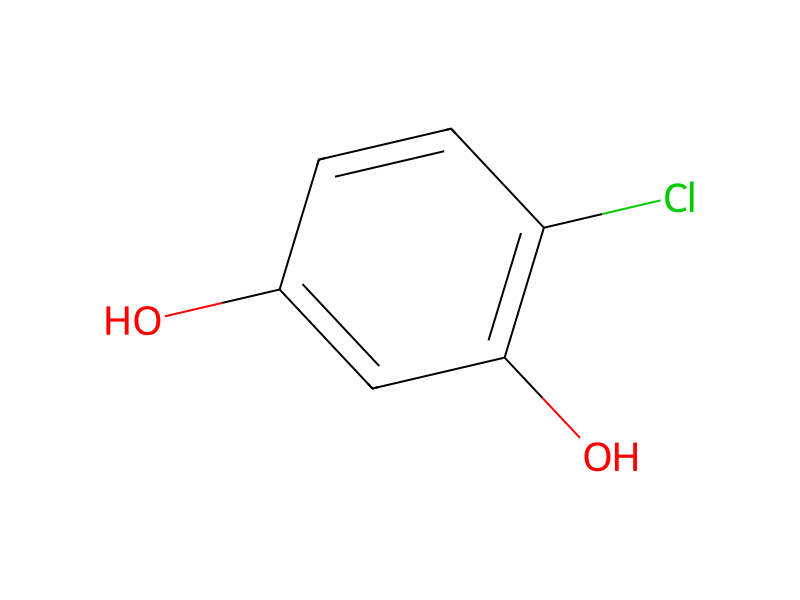
Grundinformationen
- CAS
95-88-5- Standard-SMILES
Oc1ccc(Cl)c(O)c1- InChIKey
JQVAPEJNIZULEK-UHFFFAOYSA-N- Summenformel
- C6H5ClO2
- Durchschnittliche Molmasse
- 144,55 g/mol
- Monoisotopische Masse
- 143,99780708
Namen und Bezeichner
- Bevorzugter Name
- 4-Chlororesorcinol
- IUPAC
- 4-chlorobenzene-1,3-diol
- Lokaler Name
- 4-Chlorresorcin
- Englischer Name
- 4-Chlororesorcinol
- Summenformel
- C6H5ClO2
- Molmasse
- 144.56
Namen und Synonyme
4-Chlororesorcinol95-88-54-chlorobenzene-1,3-diol4-Chlororesorcinp-Chlororesorcinol1,3-Benzenediol, 4-chloro-2,4-Dihydroxychlorobenzene4-Chloro-1,3-dihydroxybenzene4-Chloro-1,3-benzenediol6-ChlororesorcinolResorcinol, 4-chloro-1,3-Dihydroxy-4-chlorobenzene
Weitere Namen anzeigen
Chlororesorcinol4-CHLORO RESRCINOLMonochlororesorcinol4- chlorineResorcinolc.i.76510ororesorcinoL4-CHLOROESORCINOL
C.I. 76510MFCD000022734-chlororesorcineBRN 20428641-Chloro-2,4-dihydroxybenzeneCI 76510AI3-03873WLN: QR CQ DG
Datenbank-Bezeichner
- CAS
95-88-5- PubChem CID
- 1731
- DTXSID
DTXSID8052643- UNII
- 87045U29QJ
- EC Number
- 202-462-0
- Nikkaji
- J54.290C
Eigenschaften
Berechnete StruktureigenschaftenWird ergänzt
- XLogP
- 2,1
- Polarare Oberfläche (TPSA)
- 40,5 Ų
- H-Brücken-Donoren
- 2
- H-Brücken-Akzeptoren
- 2
- Frei drehbare Bindungen
- 0
- Schwere Atome
- 9
- Formalladung
- 0
- Komplexität
- 97,1
Experimentelle und physikochemische Eigenschaften
Chemical ClassesOther Classes -> Phenols
Cosmetics
Cosmetic ingredients (4-Chlororesorcinol) -> CIR (Cosmetic Ingredient Review)
Hair dyeing
LogP1.8
Vapor Pressure0.0012 [mmHg]
Physical DescriptionBeige-brown solid; [EC: SCCS - Opinion] Light beige granular powder with a mild phenolic odor; [Jos. H. Lowenstein and Sons MSDS]
Collision Cross Section122.5 Ų [M-H]- [CCS Type: DT; Buffer gas: N2; Ionization: ESI-; Dataset: TOXCAST; Source Identifier: DTXSID8052643]
Physikochemische Eigenschaften
- Schmelzpunkt
- 106 · 106-108 °C (lit.)
- Siedepunkt
- 147 °C/18 · 147 °C/18 mmHg (lit.)
- Dichte
- 1.2558 · 1.2558 (rough estimate)
Sicherheit und Regulatorisches
Sicherheitsangaben dienen nur zur Orientierung und ersetzen weder das Sicherheitsdatenblatt (SDB) des Lieferanten noch geltende Vorschriften oder eine fachliche Bewertung.
GHS-Klassifizierung
GHS Classification
This chemical does not meet GHS hazard criteria for 1% (1 of 103) of reports.
Danger
H302 (91.3%): Harmful if swallowed [Warning Acute toxicity, oral]
P261, P264, P264+P265, P270, P271, P272, P273, P280, P301+P317, P302+P352, P304+P340, P305+P351+P338, P305+P354+P338, P317, P319, P321, P330, P332+P317, P333+P317, P337+P317, P362+P364, P391, P403+P233, P405, and P501 (click each P-code to see the statement)
Aggregated GHS information provided per 103 reports by companies from 18 notifications to the ECHA C&L Inventory. Each notification may be associated with multiple companies.
Danger
Gefahrenhinweise
Regulatory Information
Chemical: 1,3-Benzenediol, 4-chloro-
TP - indicates a substance that is the subject of a proposed TSCA section 4 test rule.
Status: Active Update: 09-02-2022 https://echa.europa.eu/registration-dossier/-/registered-dossier/21391
4-Chlororesorcinol: Does not have an individual approval but may be used under an appropriate group standard
Other Safety InformationIMAP assessments - 1,3-Benzenediol, 4-chloro-: Human health tier II assessment
Hazards Summary
A skin irritant in rabbits; Corrosive to rabbit eye; Considered a moderate skin sensitizer, based on local lymph node assay (LLNA) of mice; Hematotoxicity observed in 90-day oral study of rats; No evidence of developmental toxicity or teratogenicity in rats at doses up to 200 mg/kg/day; [EC: SCCS - Opinion] A severe skin irritant that may cause burns on prolonged contact; Corrosive to eyes; May cause skin sensitization; Harmful by ingestion; [Jos. H. Lowenstein and Sons MSDS] See Resorcinol.
Hazard Classes and Categories
Chemie und Industrie
Verwendung und Herstellung
Uses
CIR ingredient: 4-Chlororesorcinol
Used as a coupler in oxidative hair dyes; [EC: SCCS - Opinion]
Dressing Hair [Category: Other]
Household ProductsInformation on 9 consumer products that contain 4-Chlororesorcinol in the following categories is provided:
Use ClassificationCosmetics -> Hair dyeing
General Manufacturing Information1,3-Benzenediol, 4-chloro-: ACTIVE
Anwendungen
Beschreibung4-Chlororesorcinol is a relatively safe hair dye agent, exhibiting no embryotoxicity, reproductive toxicity, teratogenic effects, or carcinogenic effects. This ingredient is typically used at concentrations below 1% and is present in over 30 hair dye products. Furthermore, the CIR Expert Panel has concluded that the use of 4-Chlororesorcinol in current hair dye formulations is safe. Furthermore, it may serve as an analytical reagent, functioning as a coupling agent in oxidation coupling reactions to determine the p-aminophenol (p-Amp) content in paracetamol, as well as the concentration of benzocaine (BENZ) and its preparations (ear drops).
Verwenden4-Chlororesorcinol is a halogenated phenol that can be used as hair dye formulation. It can also be used in the synthesis of series of six coumarin compounds carrying halogen and trifluoromethyl, having antifungal activities.
Darstellung
synthetische4-Chlororesorcinol is synthesized by reacting resorcinol with dichlorosulfuryl. Resorcinol and diethyl ether were mixed, heated to reflux with stirring, and dichlorosulfuryl was slowly added dropwise. The temperature was then raised to 60°C for 1 h. After recovery of ether, atmospheric distillation is carried out, the distillate is subjected to vacuum distillation again, and the 131°C (0.8-0.93kPa) or 160-164°C (4.0kPa) fractions are collected to obtain the finished 4-chlororesorcinol.
Zugehörige Reaktionen
106


Notizen zur Verbindung
Wird geladen…