
Heptanoylchlorid
Heptanoyl chloride

Grundinformationen
- CAS
2528-61-2- Standard-SMILES
CCCCCCC(=O)Cl- InChIKey
UCVODTZQZHMTPN-UHFFFAOYSA-N- Summenformel
- C7H13ClO
- Durchschnittliche Molmasse
- 148,63 g/mol
- Monoisotopische Masse
- 148,0654927
Namen und Bezeichner
- Bevorzugter Name
- Heptanoyl chloride
- IUPAC
- heptanoyl chloride
- Lokaler Name
- Heptanoylchlorid
- Englischer Name
- Heptanoyl chloride
- Summenformel
- C7H13ClO
- Molmasse
- 148.63
Namen und Synonyme
HEPTANOYL CHLORIDE2528-61-2Enanthyl chlorideheptanoylchloriden-Heptanoyl chlorideEnanthic chlorideEnanthoyl chlorideOenanthic chlorideheptanoic acid chlorideMFCD00000763C6H13COClZ2P33BJ4B5
Weitere Namen anzeigen
HeptanoyLheptanoylchloridn-hetanoyl chlorideHEPTANOYL-2-CHLORIDE
enanthylchlorideEnanthoyl Chloride; Enanthyl Chloride; Heptanoic Acid Chloride; n-Heptanoyl ChlorideEINECS 219-775-3Heptanoyl chloride, 99%EC 219-775-3UNII-Z2P33BJ4B5SCHEMBL825395DTXSID8062496
Datenbank-Bezeichner
- CAS
2528-61-2- PubChem CID
- 17313
- DTXSID
DTXSID8062496- UNII
- Z2P33BJ4B5
- EC Number
- 219-775-3
- Nikkaji
- J95.639B
Eigenschaften
Berechnete Struktureigenschaften
- XLogP
- 3,5
- Polarare Oberfläche (TPSA)
- 17,1 Ų
- H-Brücken-Donoren
- 0
- H-Brücken-Akzeptoren
- 1
- Frei drehbare Bindungen
- 5
- Schwere Atome
- 9
- Formalladung
- 0
- Komplexität
- 81
Experimentelle und physikochemische Eigenschaften
Chemical ClassesToxic Gases & Vapors -> Acid Halides
SpringerMaterials PropertiesBoiling point
Physical DescriptionColorless to light yellow liquid with a pungent odor; [Acros Organics MSDS]
Physikochemische Eigenschaften
- Schmelzpunkt
- -84 °C · -84 °C
- Siedepunkt
- 173 °C · 173 °C (lit.)
- Dichte
- 0.96 g/mL · 0.96 g/mL at 25 °C (lit.)
- Dampfdruck
- 1.18 hPa · 1.18hPa at 20℃
- Brechungsindex
- 20 · n20/D 1.43(lit.)
- Flammpunkt
- 137 °F · 137 °F
- storage temp.
- Inert atmosphere,Room Temperature
- Löslichkeit
- soluble in Chloroform
- Aggregatzustand
- Liquid
Sicherheit und Regulatorisches
Sicherheitsangaben dienen nur zur Orientierung und ersetzen weder das Sicherheitsdatenblatt (SDB) des Lieferanten noch geltende Vorschriften oder eine fachliche Bewertung.
GHS-Klassifizierung
GHS Classification
Danger
H290 (68.4%): May be corrosive to metals [Warning Corrosive to Metals]
P234, P260, P264, P264+P265, P271, P280, P284, P301+P330+P331, P302+P361+P354, P304+P340, P305+P354+P338, P316, P317, P320, P321, P363, P390, P403+P233, P405, P406, and P501 (click each P-code to see the statement)
Aggregated GHS information provided per 158 reports by companies from 11 notifications to the ECHA C&L Inventory. Each notification may be associated with multiple companies.
Gefahrenhinweise
Regulatory InformationREACH registered substance: Heptanoyl chloride (EC: 219-775-3)
Hazards SummaryReacts with water evolving toxic gas; Causes burns; Inhalation may cause corrosive injuries to upper respiratory tract and lungs; A lachrymator; Harmful by ingestion, inhalation, and skin absorption; [Acros Organics MSDS]
Hazard Classes and CategoriesMet. Corr. 1 (68.4%)
Toxikologische Informationen
Adverse EffectsDermatotoxin - Skin burns.
Sicherheitsdaten
- F
- 9-21
- wgk
- 1
- tsca
- TSCA listed
- ridadr
- UN 2920 8/PG 2
- hs_code
- 29159000
- risk_code
- 26-34-37
Chemie und Industrie
Verwendung und Herstellung
General Manufacturing InformationHeptanoyl chloride: ACTIVE
Anwendungen
VerwendenHeptanoyl Chloride is used in the synthesis of novel class of 2-Aminopyrimidines as CDK1 and CDK2 inhibitors.
Vor- und nachgelagerte Produkte
Vorgelagerte Rohstoffe
Nachgelagerte Produkte
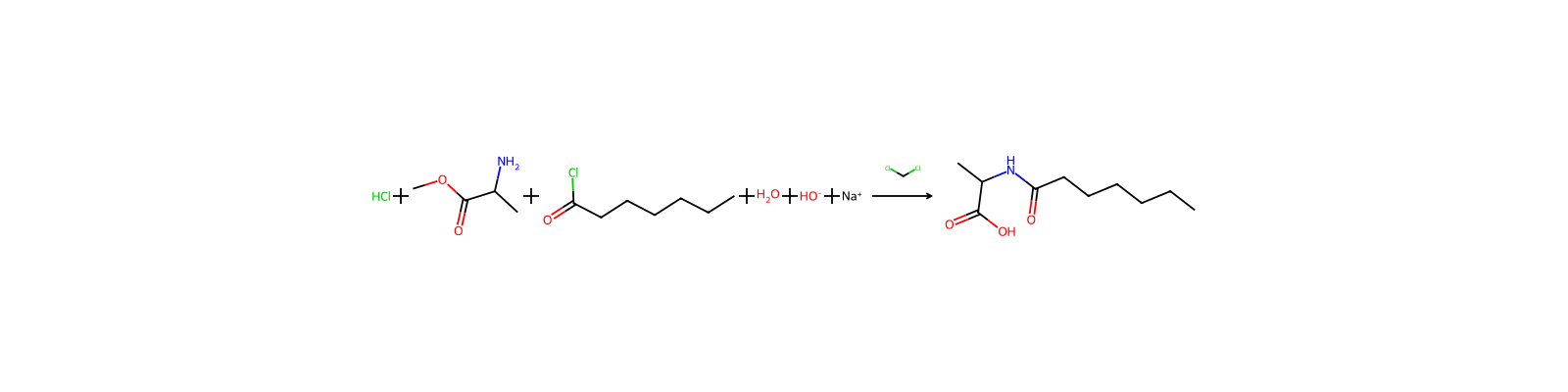
Zugehörige Reaktionen
150



Notizen zur Verbindung
Wird geladen…