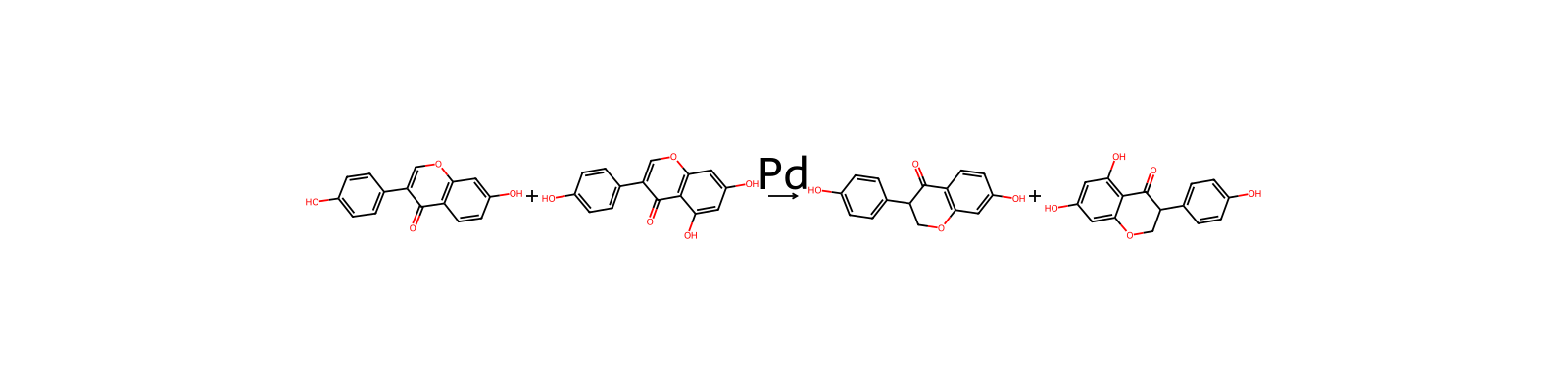
(+-)-Dihydrodaidzein
Daten werden ergänzt – lade die Seite später neu, um den aktuellen Stand zu sehen
Grundinformationen
- CAS
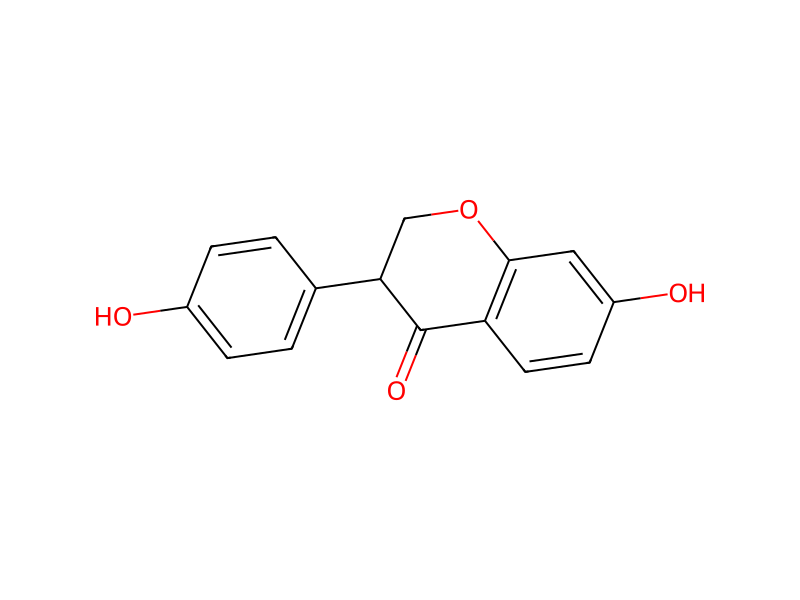
17238-05-0- Standard-SMILES
O=C1c2ccc(O)cc2OCC1c1ccc(O)cc1- InChIKey
JHYXBPPMXZIHKG-UHFFFAOYSA-N- Summenformel
- C15H12O4
- Durchschnittliche Molmasse
- 256,25 g/mol
- Monoisotopische Masse
- 256,07355886
Überblick
Dihydrodaidzein is a hydroxyisoflavanone that is isoflavanone carrying two hydroxy substituents located at positions 4' and 7. It has a role as a metabolite.
Namen und Bezeichner
- Bevorzugter Name
- (+-)-Dihydrodaidzein
- IUPAC
- 7-hydroxy-3-(4-hydroxyphenyl)-2,3-dihydrochromen-4-one
- Englischer Name
- Dihydrodaidzein
- Summenformel
- C15H12O4
- Molmasse
- 256.25
Namen und Synonyme
dihydrodaidzein17238-05-07,4'-Dihydroxyisoflavanone(+-)-DihydrodaidzeinDTXSID70912308CHEBI:75842RefChem:546552DTXCID601341330Dihydro Daidzein7-hydroxy-3-(4-hydroxyphenyl)chroman-4-one(+/-)-DihydrodaidzeinDihydrodaidzein (keto)
Weitere Namen anzeigen
Dihydrodaidzein>(±)-DihydrodaidzeinDIHYDRODAIDZEIN hplcDihydrodaidzein standardDihydrodaidzein, 10 mM in DMSO7-Hydroxy-3-(4-hydroxyphenyl)-4-chromanoneinhibit,Endogenous Metabolite,Dihydrodaidzein,Inhibitor
MFCD002104947-hydroxy-3-(4-hydroxyphenyl)-2,3-dihydrochromen-4-oneIsoflavanone, 4',7-dihydroxy-2,3-dihydro-7-hydroxy-3-(4-hydroxyphenyl)-4H-1-Benzopyran-4-oneFT-06669484',7-dihydroxy-IsoflavanoneSCHEMBL131543orb1218639
Datenbank-Bezeichner
- CAS
17238-05-0- PubChem CID
- 176907
Eigenschaften
Berechnete StruktureigenschaftenWird ergänzt
- XLogP
- 2,4
- Polarare Oberfläche (TPSA)
- 66,8 Ų
- H-Brücken-Donoren
- 2
- H-Brücken-Akzeptoren
- 4
- Frei drehbare Bindungen
- 1
- Schwere Atome
- 19
- Formalladung
- 0
- Komplexität
- 335
Experimentelle und physikochemische Eigenschaften
LipidsPolyketides [PK] -> Flavonoids [PK12] -> Isoflavonoids [PK1205]
Endocrine DisruptorsPotential endocrine disrupting compound
Melting Point250 °C
Physical DescriptionSolid
Physikochemische Eigenschaften
- Schmelzpunkt
- 250 · 250-251°C
- Siedepunkt
- 529.5 · 529.5±50.0 °C(Predicted)
- Dichte
- 1.386 · 1.386±0.06 g/cm3(Predicted)
- storage temp.
- -20 °C · -20°C Freezer, Under Inert Atmosphere
- Löslichkeit
- 0.1 mg/ml · ≤0.1mg/ml in ethanol;30mg/ml in DMSO;10mg/ml in dimethyl formamide
- pka
- 7.71 · 7.71±0.40(Predicted)
- Aggregatzustand
- powder to crystal
- Farbe
Sicherheit und Regulatorisches
Sicherheitsangaben dienen nur zur Orientierung und ersetzen weder das Sicherheitsdatenblatt (SDB) des Lieferanten noch geltende Vorschriften oder eine fachliche Bewertung.
GHS-Klassifizierung
GHS Classification
Warning
H315 (100%): Causes skin irritation [Warning Skin corrosion/irritation]
P264, P264+P265, P280, P302+P352, P305+P351+P338, P321, P332+P317, P337+P317, and P362+P364 (click each P-code to see the statement)
The GHS information provided by 1 company from 1 notification to the ECHA C&L Inventory.
Gefahrenhinweise
Hazard Classes and CategoriesSkin Irrit. 2 (100%)
Sicherheitsdaten
- wgk
- WGK 3
- hs_code
- 2932990090
- Speicherklasse
- 11 - Combustible Solids
- Hazard Classifications
- Eye Irrit. 2Skin Irrit. 2
Chemie und Industrie
Pharmakologische Informationen
Metabolism/MetabolitesDihydrodazein has known human metabolites that include Tetrahydrodaidzein and (2S,3S,4S,5R)-3,4,5-Trihydroxy-6-[[3-(4-hydroxyphenyl)-4-oxo-2,3-dihydrochromen-7-yl]oxy]oxane-2-carboxylic acid.
Cellular LocationsMembrane
Anwendungen
VerwendenDaidzein is an isoflavonoid phytoestrogenic compound found in soybeans, pea pods, clover, kudzu, and other legumes. Dihydrodaidzein is an active, estrogenic metabolite of daidzein. It has vasodilatory action on rat isolated aortic rings at 1 μg/ml. It stimulates the estrogen receptor-dependent growth of breast cancer MCF-7 cells at micromolar concentrations. Dihydrodaidzein is produced by the metabolism of daidzein in colonic bacteria and may be further metabolized to various bioactive compounds, including equol .
Ergänzende Hinweise
DefinitionChEBI: A hydroxyisoflavanone that is isoflavanone carrying two hydroxy substituents located at positions 4' and 7.
Zugehörige Reaktionen
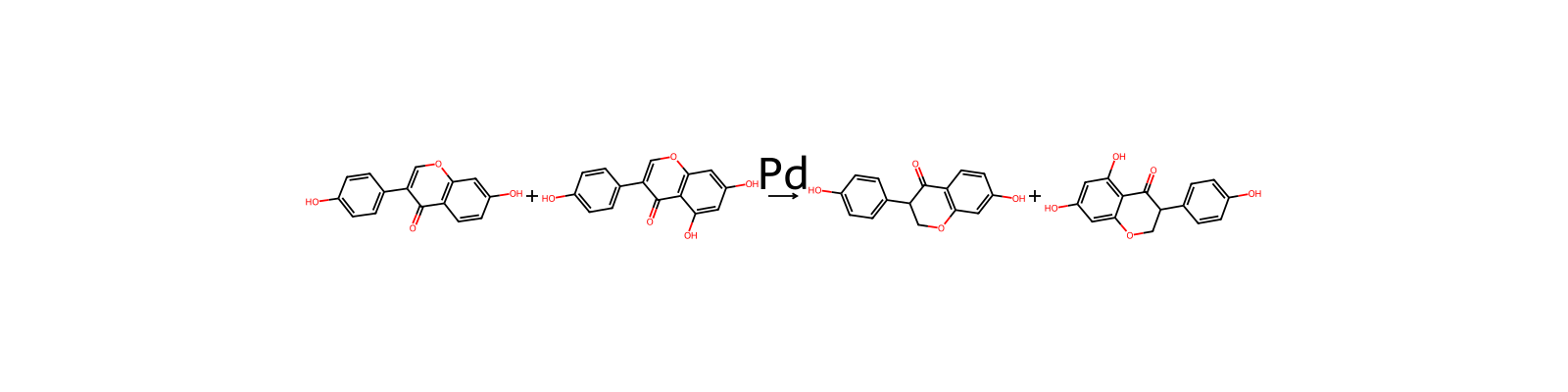
8






Notizen zur Verbindung
Wird geladen…