
StartseiteMCPWorkbenchSkills
StartseiteWorkbenchBenachrichtigungenMein Bereich
llms.txt · MCP-AnleitungDatenschutz · Nutzungsbedingungen · Supportv1.8.3
  1. Startseite
  2. /Verbindung

Butyllithium

HCID 178418339
Neue Reaktion
Drucken
GrundinformationenNamen und BezeichnerEigenschaftenSicherheit und RegulatorischesChemie und IndustrieZugehörige ReaktionenNotizen zur Verbindung
TeilstruktursucheÄhnliche Strukturen suchen

Grundinformationen

CAS
109-72-8
Standard-SMILES
[Li]CCCC
InChIKey
MZRVEZGGRBJDDB-UHFFFAOYSA-N
Summenformel
C4H9Li
Durchschnittliche Molmasse
64,1 g/mol
Monoisotopische Masse
64,08642872

Namen und Bezeichner

Bevorzugter Name
Butyllithium
Lokaler Name
Butyllithium
Englischer Name
n-Butyllithium
Summenformel
C4H9Li
Molmasse
64.06

Namen und Synonyme

bu-LiRefChem:571855DTXCID206821203-698-709W9A6B8ZC109-72-8butyl lithiumButyllithiumCHEBI:51469DTXSID1026821Lithium, butyl-n-BuLi
Weitere Namen anzeigen
BuLiLithiumn-butylButyllithium solutionn-ButyllithiuM(BULI)ButyllithiuminhexaneMn-BuLi, Lithium-1-butaniden-Butyllithium, 1.6M solution in hexanesbutyl-lithiu
N-Butyllithiumn-Butyllithium solution 1.4M in Toluenen-Butyllithium in Toluene (20%/2.7M solution)

Datenbank-Bezeichner

CAS
109-72-8
PubChem CID
53627823
EC Number
203-698-7

Eigenschaften

Berechnete Struktureigenschaften

Polarare Oberfläche (TPSA)
0 Ų
H-Brücken-Donoren
0
H-Brücken-Akzeptoren
0
Frei drehbare Bindungen
1
Schwere Atome
5
Formalladung
0
Komplexität
4

Experimentelle und physikochemische Eigenschaften

Chemical Classes · 2 Einträge

Metals -> Metals, Organic Compounds

Flammable agents - 4th degree

Density0.765 @25 °C
Melting Point-76 °C
Food Contact SubstancesFCS -> FDA Inventory of Food Contact Substances Listed in 21 CFR
Physical Description · 2 Einträge

Wet Solid; Liquid

Available in solution of C5 to C7 hydrocarbons; [Hawley] In cyclohexane solution: Water-white to pale yellow liquid with a petroleum-like odor; [CAMEO] In n-hexane solution: Yellow liquid; [MSDSonline]

Physikochemische Eigenschaften

Schmelzpunkt
76 °C · −76 °C (−105 °F; 197 K) (<273 K)
Siedepunkt
80 C · 80 C
Dichte
0.68 g/cm3, · 0.68 g/cm3, solvent defined
Dampfdruck
163 hPa · 163 hPa ( 20 °C)
Flammpunkt
-12 °C · -12 °C

Sicherheit und Regulatorisches

Sicherheitsangaben dienen nur zur Orientierung und ersetzen weder das Sicherheitsdatenblatt (SDB) des Lieferanten noch geltende Vorschriften oder eine fachliche Bewertung.

GHS-Klassifizierung

GHS Classification · 6 Einträge

This chemical does not meet GHS hazard criteria for 16.1% (55 of 341) of reports.

Danger

H250 (83.9%): Catches fire spontaneously if exposed to air [Danger Pyrophoric liquids]

P210, P222, P223, P231, P231+P232, P233, P260, P261, P264, P264+P265, P270, P272, P280, P301+P317, P301+P330+P331, P302+P335+P334, P302+P352, P302+P361+P354, P304+P340, P305+P354+P338, P316, P317, P321, P330, P333+P317, P362+P364, P363, P370+P378, P402+P404, P405, and P501 (click each P-code to see the statement)

Aggregated GHS information provided per 341 reports by companies from 14 notifications to the ECHA C&L Inventory. Each notification may be associated with multiple companies.

Danger

Gefahrenhinweise

Regulatory Information · 5 Einträge

Chemical: Lithium, butyl-

Lithium, butyl- is listed on the EPA's Chemical Data Reporting (CDR) system. Manufacturers and importers of Lithium, butyl- are required to report information about their production and use of this chemical to the EPA under the Toxic Substances Control Act (TSCA). (40 eCFR Part 711)

REACH registered substance: Butyllithium (EC: 203-698-7)

Lithium, butyl-, 15% in hexane: HSNO Approval: HSR001268 Approved with controls

The New Jersey Worker and Community Right to Know Act requires public and private employers to provide information about hazardous substances at their workplaces. (N.J.S.A. 34:5A-1 et. seq.)

Other Safety InformationIMAP assessments - Lithium, butyl-: Environment tier I assessment
Hazards Summary · 1 Eintrag

An irritant; Solid and solution highly flammable; Ignites in moist air; [Hawley] May cause burns; May ignite upon exposure to air; Reacts with water evolving heat and flammable gases; [CAMEO] Pyrophoric; Gives off flammable gas in contact with water; Corrosive to skin and eyes; [eChemPortal: ERMA] Liberates extremely flammable gases on contact with water; A corrosive substance that can cause injury to the skin, eyes, and respiratory tract; Inhalation may cause chemical pneumonitis; [MSDSonline] See Lithium.

Chemie und Industrie

Verwendung und Herstellung

UsesUsed to make isoprene and butadiene polymers and lithium hydride; Also used as a rocket fuel component and metalating agent; [Hawley]
U.S. Production2023: 1,000,000 - <2,500,000 lb
Industry UsesDiluent
General Manufacturing Information · 2 Einträge

All Other Chemical Product and Preparation Manufacturing

Lithium, butyl-: ACTIVE

Anwendungen · 1 Eintrag

Verwendenn-Butyllithium is used as a polymerization initiator in the production of elastomers like polybutadiene and styrene- butadiene- styrene. As a strong base, it is utilized in the synthesis of organic compounds. It undergoes thermal decomposition to prepare 1-butene.

Darstellung · 1 Eintrag

synthetischeIndustrially, n-butyllithium is produced by the reaction of n-butyl chloride with lithium metal dispersion in various hydrocarbon solvents. Hexane is the most commonly used solvent. Up to one-half of the lithium is replaced with sodium in order to lower the cost of the butyllithium and increase the reactivity of the dispersion. The reaction is carried out below the boiling point of the solvent.The laboratory procedure is essentially the same except that pentane and diethyl ether are two of the more popular solvents. The preparation runs smoothly in ether at lower temperatures but the product must either be used immediately or kept refrigerated due to the rapid cleavage of ether by n-butyllithium.

Vor- und nachgelagerte Produkte

Vorgelagerte Rohstoffe

Zugehörige Reaktionen

34.074
Reaktionsaufzeichnung erstellen
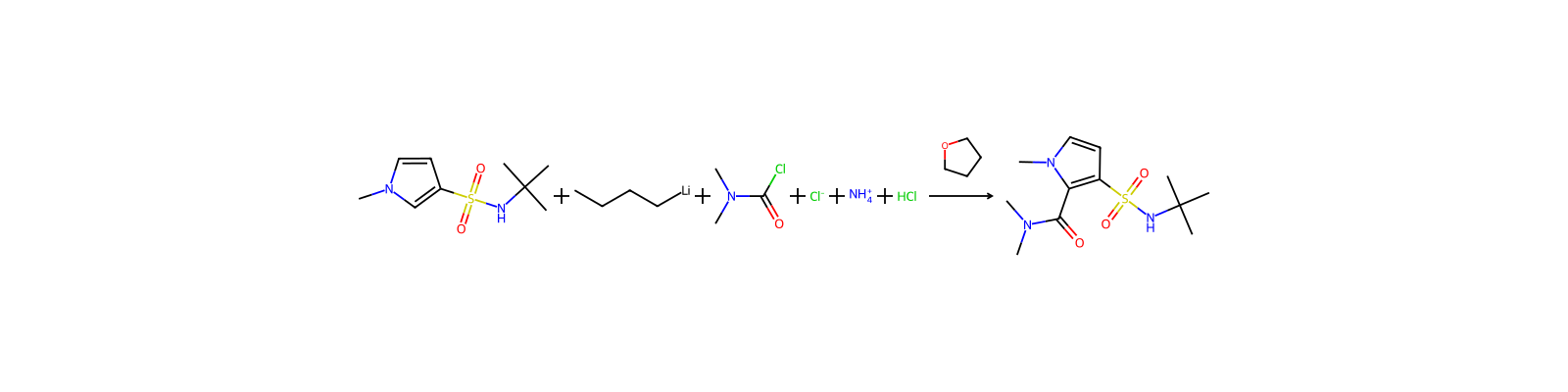
Reaktionsgleichung von HRID 798
HRID 798als Edukt
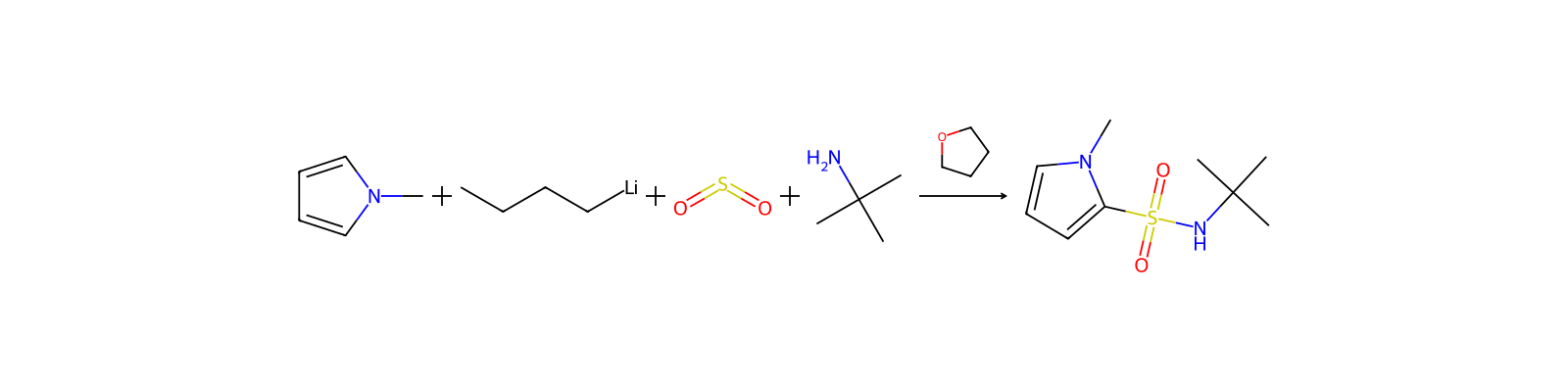
Reaktionsgleichung von HRID 813
HRID 813als Edukt
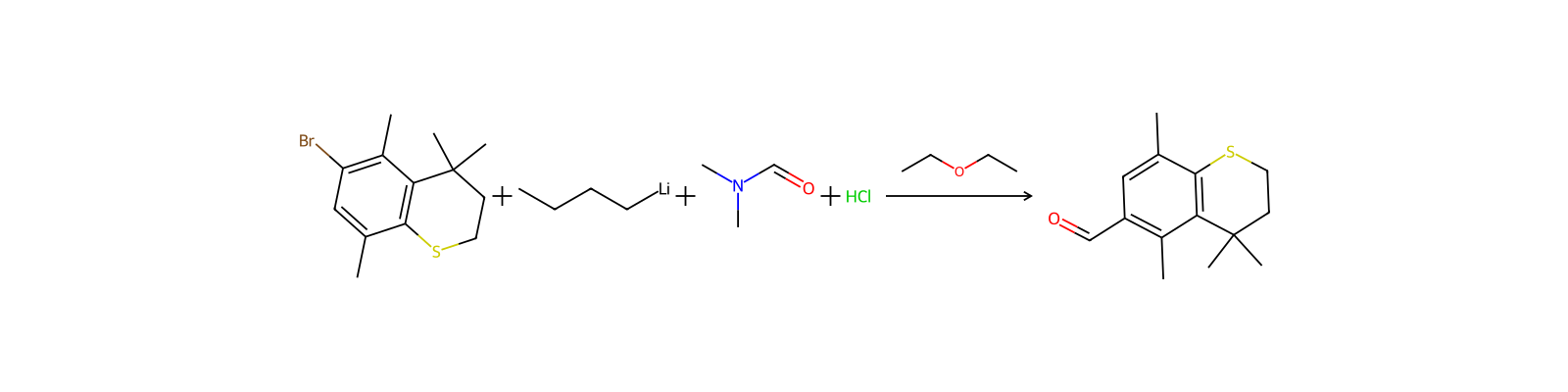
Reaktionsgleichung von HRID 814
HRID 814als Edukt
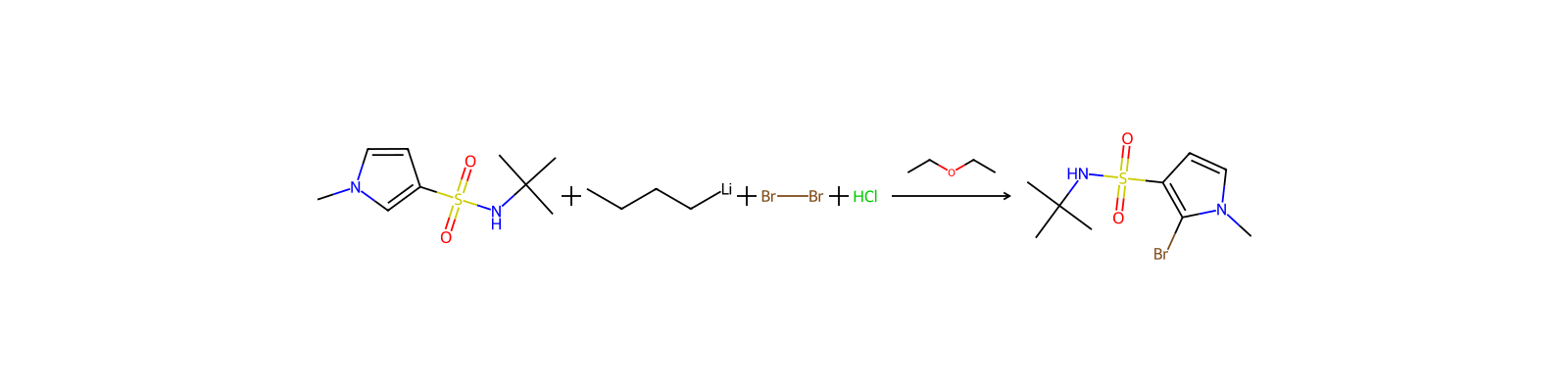
Reaktionsgleichung von HRID 816
HRID 816als Edukt
Reaktionsgleichung von HRID 818
HRID 818als Edukt
Reaktionsgleichung von HRID 823
HRID 823als Edukt
Reaktionsgleichung von HRID 825
HRID 825als Edukt
Reaktionsgleichung von HRID 827
HRID 827als Edukt
ZurückSeite 1 von 4260

Notizen zur Verbindung

Auf dieser SeiteGrundinformationenNamen und BezeichnerEigenschaftenSicherheit und RegulatorischesChemie und IndustrieZugehörige ReaktionenNotizen zur Verbindung
storage temp.
2 · 2-8°C
Löslichkeit
Miscible with diethyl ether and cyclohexane.
Aggregatzustand
liquid; solution
Wichte
0.695 · 0.695
Farbe
colorless
Geruch (Odor)
Odor of the solvent
Explosionsgrenze
1.2 · 1.2-7.8% (v/v)
Wasserlöslichkeit
vigorous reaction
BRN
1209227 · 1209227
InChI
1S/C4H9.Li/c1-3-4-2;/h1,3-4H2,2H3;
InChIKey
MZRVEZGGRBJDDB-UHFFFAOYSA-N
SMILES
[Li]CCCC
LogP
1.25 · 1.25-2.31
CAS Datenbank
109 · 109-72-8(CAS DataBase Reference)
NIST chemische Informationen
Butyl lithium(109-72-8)
EPA chemische Informationen
Lithium, butyl- (109-72-8)
Hazard Classes and Categories · 4 Einträge

Pyr. Liq. 1 (83.9%)

Flammable liquids - Category 2

Flammable liquids - Category 2

Flammable agents - 4th degree, Reactive agents - 2nd degree

CSL Reaction Information · 6 Einträge

CSL00127

Perfluorethyllithium + Phosphorus Trichloride,Phosphorus + N-BUTYLLITHIUM + CHLOROPENTAFLUOROETHANE

Avoid temperatures below -90 C

Substitution

Several times in our laboratory, we have experienced a violent decomposition of the ethereal C2F5Cl/n-BuLi solution after the addition of just a few drops of (R)nPCl3=n. In each of these cases, the metal-halogen exchange temperature was maintained below -90 C. We believe that this problem is due to a buildup of starting reagents at low temperatures.

C&EN

Sicherheit und Schutzausrüstung

Protective Action Criteria (PAC) · 3 Einträge

0.18 [mg/m3]

4.5 [mg/m3]

27 [mg/m3]
Toxikologische Informationen

Adverse EffectsNeurotoxin - Other CNS neurotoxin

Sicherheitsdaten

F
3-10
wgk
3
tsca
TSCA listed
ridadr
UN 3399 4.3/PG 1
hs_code
29319090
risk_code
14/15-17-34-48/20-51/53-62-65-67-63-35-11-15-50/53-66
Toxizität
There is little toxicity data available for the butyllithiums; for data on ether and hydrocarbon solvents, see the appropriate LCSSs.
hazard_code
F,C,N
safety_code
6-9-16-26-36/37/39-45-61-62-6A-46-43B-43-60-33-29-5
hazard_class
4.3
packing_group
I
Speicherklasse
4.2 - Pyrophoric and self-heating hazardous materials
Hazard Classifications
Aquatic Chronic 2Asp. Tox. 1Eye Dam. 1Flam. Liq. 2Pyr. Liq. 1Skin Corr. 1BSTOT SE 3Water-react 1
Selbstentzündungstemperatur
240°C
n-Hexan
1-Brombutan
1-Chlorbutan
Lithium

Nachgelagerte Produkte

4-Chloro-2-methylphenylboronic acidBenzofuran-2-boronic acid2-Bromo-5-iodopyridineTris(pentafluorophenyl)boraneEthyl 5-chlorothiophene-2-carboxylate2-Chloropyridine-5-boronic acid3-Isopropylphenylboronic acid4-Carboxylphenylboronic acid pinacol ester2,5-Dichlorophenylboronic acid5-Bromopyridine-2-carbonyl chloride5-Chloropyridine-2-boronic acidIsoquinoline-4-carbaldehyde3,4,5-Trichlorothiophene-2-carbonyl chloride2,3,6-Trifluorobenzoic acid2-Bromopyridine-5-boronic acid2,4,6-Trifluorobenzoic acid1,3-Thiazole-2-carbaldehyde2-Cyanophenylboronic acid4-MethyldibenzothiopheneDimethyl(3-phenoxy-2-oxopropyl)phosphonate(4-Methoxyphenyl)-borane4,5-Dibromothiophene-2-carboxaldehydeEthyl 1-methyl-1H-pyrazole-5-carboxylate1-Benzothiophene-2-sulfonyl chloride4-Hydroxyphenylboronic acidMethyl 3-bromothiophene-2-carboxylateGRANISETRON-D32,4,6-Trichlorobenzoic acid2-Bromopyridin-3-ylboronic acid5-Bromopyridine-3-boronic acid3-Bromo-1-benzofuran2,4-Dibromothiophene2,3,4-Tribromthiophen5-Methoxypyridine-3-boronic acid2,3-Difluorophenylboronic acid1-Methyl-1H-pyrazole-5-carboxylic acid1-Naphthylboronic acid2,4'-Dichlor-α(pyrimidin-5-yl)benzhydrylalkohol5-Methyl-2-pyridineboronic acid4-n-Butyltoluene