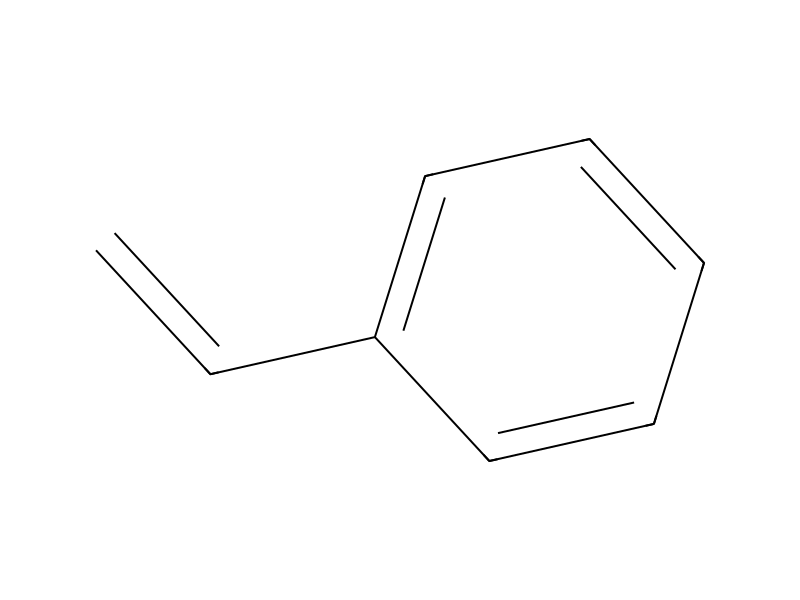
91261-65-3C=Cc1ccccc1PPBRXRYQALVLMV-UHFFFAOYSA-NStyrene is primarily a synthetic chemical. It is also known as vinylbenzene, ethenylbenzene, cinnamene, or phenylethylene. It's a colorless liquid that evaporates easily and has a sweet smell. It often contains other chemicals that give it a sharp, unpleasant smell. It dissolves in some liquids but doesn't dissolve easily in water. Billions of pounds are produced each year to make products such as rubber, plastic, insulation, fiberglass, pipes, automobile parts, food containers, and carpet backing. Most of these products contain styrene linked together in a long chain (polystyrene) as well as unlinked styrene. Low levels of styrene also occur naturally in a variety of foods such as fruits, vegetables, nuts, beverages, and meats.
91261-65-3CHEMBL285235CHEBI:27452Hazardous Air Pollutants (HAPs)
Carcinogens
Volatile Organic Compound (VOC)
log Kow = 2.95
2.95
3.0
2.9
Characteristic, sweet, balsamic, almost floral odor that is extremely penetrating
Aromatic odor
Sweet, floral odor
If pure, sweet and pleasant, but usually contains aldehydes that have a typical penetrating smell, sharp, sweet, and unpleasant.
Danger
H226: Flammable liquid and vapor [Warning Flammable liquids]
P203, P210, P233, P240, P241, P242, P243, P260, P261, P264, P264+P265, P270, P271, P280, P302+P352, P303+P361+P353, P304+P340, P305+P351+P338, P317, P318, P319, P321, P332+P317, P337+P317, P362+P364, P370+P378, P403+P235, P405, and P501 (click each P-code to see the statement)
This chemical does not meet GHS hazard criteria for < 0.1% (3 of 6114) of reports.
Danger
H226 (> 99.9%): Flammable liquid and vapor [Warning Flammable liquids]
Chemical: Benzene, ethenyl-
Hazard Traits - Carcinogenicity; Developmental Toxicity; Hepatotoxicity and Digestive System Toxicity; Neurotoxicity; Ocular Toxicity; Reproductive Toxicity; Respiratory Toxicity
Benzene, ethenyl- is listed on the EPA's Chemical Data Reporting (CDR) system. Manufacturers and importers of Benzene, ethenyl- are required to report information about their production and use of this chemical to the EPA under the Toxic Substances Control Act (TSCA). (40 eCFR Part 711)
Status: Active Update: 19-05-2023 https://echa.europa.eu/registration-dossier/-/registered-dossier/15565
Benzene, ethenyl-: HSNO Approval: HSR001221 Approved with controls
The New Jersey Worker and Community Right to Know Act requires public and private employers to provide information about hazardous substances at their workplaces. (N.J.S.A. 34:5A-1 et. seq.)
Behavior in Fire: Vapor is heavier than air and may travel considerable distance to a source of ignition and flash back. At elevated temperatures such as in fire conditions, polymerization may take place which may lead to container explosion. (USCG, 1999)
Styrene is a widely used chemical, but it is known to produce lung and liver damage in mice. This may be related to oxidative stress associated with the decrease in the levels of reduced glutathione (GSH) in the target tissues. The purpose of this study was to investigate the effect of styrene and its primary metabolites R-styrene oxide (R-SO) and S-styrene oxide (S-SO) on GSH levels in the lung lumen, as determined by amounts of GSH in bronchioalveolar lavage fluid (BALF) and in plasma. When non-Swiss albino (NSA) mice were administered styrene (600 mg/kg, ip), there was a significant fall in GSH levels in both BALF and plasma within 3 hr. These returned to control levels by 12 hr. The active metabolite R-SO (300 mg/kg, ip) also produced significant decreases in GSH in both BALF and plasma, but S-SO was without marked effect. Since GSH is a principal antioxidant in the lung epithelial lining fluid, this fall due to styrene may exert a significant influence on the ability of the lung to buffer oxidative damage.
In mice, styrene is hepatotoxic, pneumotoxic, and causes lung tumors. One explanation for the mechanism of toxicity is oxidative stress/damage. Previous studies have shown decreased glutathione levels, linked to increased apoptosis, in lung homogenates and isolated Clara cells 3 hr following styrene or styrene oxide (SO) administration or in vitro exposure. The objective of the current studies was to determine what effects styrene and its active metabolites, primarily styrene oxide, had on indicators of oxidative stress and attendant apoptosis in order to understand better the mechanism of styrene-induced toxicity. Three hours following in vitro exposure of Clara cells to styrene or SO there were increases in reactive oxygen species (ROS). Following administration of styrene or styrene oxide ip, increases in ROS, superoxide dismutase (SOD), and 8-hydroxydeoxyguanosine (8-OHdG) formation were observed. Since increases in ROS have been linked to increases in apoptosis ratios of bax/bcl-2, mRNA and protein expression were determined 3-240 hr following the administration of styrene and R-styrene oxide (RSO). The bax/bcl-2 mRNA ratio increased 12 and 24 hr following R-SO and 120 hr following styrene administration. However, the bax/bcl-2 protein ratio was not increased until 240 hr following R-SO, and 24 and 240 hr following styrene administration. However, only a slight increase in caspase 3 was observed. These results indicated that oxidative stress occurred 3 hr following styrene or styrene oxide as evidenced by increased ROS and SOD. This increased ROS may be responsible for the increased 8-OHdG formation. Our findings of limited apoptosis in Clara cells following acute exposure to styrene or SO are in agreement with others and may reflect the minimal extent to which apoptosis plays a role in acute styrene toxicity. It is clear, however, that oxidative stress and oxidative effects on DNA are increased following exposure to styrene or styrene oxide, and these may play a role in the lung tumorigenesis in mice.
Keine Reaktionsaufzeichnungen unter den aktuellen Filterkriterien.
Wird geladen…
0.906 at 68 °F (USCG, 1999) - Less dense than water; will float
0.9016 g/cu cm at 25 °C
Percent in saturated air at 760 mm Hg & 15 °C: 0.57; density of saturated vapor-air mixture at 760 mm Hg & 15 °C: 1.02 (Air = 1)
Relative density (water = 1): 0.91
0.91
0.9016 @25 °C
· HIGHLY FLAMMABLE: Will be easily ignited by heat, sparks or flames.
Flammable. Gives off irritating or toxic fumes (or gases) in a fire. Above 31 °C explosive vapour/air mixtures may be formed.
Flammable liquid. /Styrene monomer, inhibited/
A very dangerous fire hazard when exposed to flame, heat, or oxidants. ... May ignite when heated with air + polymerizing polystyrene.
Moderate irritation of eyes and skin. High vapor concentrations cause dizziness, drunkeness, and anesthesia. (USCG, 1999)
CAUTION: Petroleum crude oil (UN1267) may contain TOXIC hydrogen sulphide gas.
Styrene is primarily a synthetic chemical. It is also known as vinylbenzene, ethenylbenzene, cinnamene, or phenylethylene. It's a colorless liquid that evaporates easily and has a sweet smell. It often contains other chemicals that give it a sharp, unpleasant smell. It dissolves in some liquids but doesn't dissolve easily in water. Billions of pounds are produced each year to make products such as rubber, plastic, insulation, fiberglass, pipes, automobile parts, food containers, and carpet backing. Most of these products contain styrene linked together in a long chain (polystyrene) as well as unlinked styrene. Low levels of styrene also occur naturally in a variety of foods such as fruits, vegetables, nuts, beverages, and meats.
Styrene is primarily used in the production of polystyrene plastics and resins. Acute (short-term) exposure to styrene in humans results in mucous membrane and eye irritation, and gastrointestinal effects. Chronic (long-term) exposure to styrene in humans results in effects on the central nervous system (CNS), such as headache, fatigue, weakness, and depression, CSN dysfunction, hearing loss, and peripheral neuropathy. Human studies are inconclusive on the reproductive and developmental effects of styrene; several studies did not report an increase in developmental effects in women who worked in the plastics industry, while an increased frequency of spontaneous abortions and decreased frequency of births were reported in another study. Several epidemiologic studies suggest there may be an association between styrene exposure and an increased risk of leukemia and lymphoma. However, the evidence is inconclusive due to confounding factors. EPA has not given a formal carcinogen classification to styrene.
Liquid causes first degree burns on short exposure; [CHRIS] There is evidence that occupational exposure to styrene in high concentrations over long periods of time can cause chronic encephalopathy similar to Painters' syndrome caused by other organic solvents. [Sullivan, p. 1156-7] Occupational asthma confirmed by bronchoprovocation testing in 2 workers in a plastics factory; [Malo] Styrene can induce liver injury in experimental animals. [Zimmerman, p. 367] Styrene can cause defatting of skin and CNS depression. [ICSC] A 1996-99 study of 328 reinforced plastics workers in the US found that air levels have decreased substantially over the last 10-20 years. [Reference #2] About 95% of the amount absorbed during a 8-hour exposure can be accounted for by urinary excretion of the metabolites mandelic acid (MA) and phenylglyoxylic acid (PGA), which are produced by sequential metabolism. [ACGIH] More recent studies by Triebig et al. (2009) and Sisto et al. (2013) suggest the threshold for styrene-induced hearing loss is likely to be between 20 and 40 ppm, expressed as mean exposure concentrations, assuming peak exposures are properly managed. Ototoxicity was only reported at concentrations >300 ppm in animals, especially in active compared to sedentary animals. [ACGIH, 2020] During the period of 1966 to 1990 the average styrene concentration in the breathing zone of open-mould workers in the European glass fibre-reinforced plastics industry has decreased on average by 5.3% per year and only 0.4% annually in the period after 1990; [PMID 21926918] Available evidence suggests styrene exposure is a potential risk factor for NMRD [non-malignant respiratory disease]. Additional studies of styrene-exposed workers are warranted. [PMID 28079275] Styrene monomer, stabilized (UN2055) has warning of explosive polymerization; [ERG 2016]
The major hazards encountered in the use and handling of styrene stem from its toxicologic properties and flammability. Toxic by all routes (ie, inhalation, ingestion, and dermal contact), exposure to this colorless-to-yellow, sweet-smelling liquid may occur from its presence in the manufacture and use of plastics, synthetic rubber, resins, coatings, paints, floor waxes, adhesives, putty, metal cleaners, autobody fillers, and varnishes. Effects from exposure may include headache, fatigue, nausea, sensation of drunkenness, central nervous system depression, and irritation of the eyes, skin, and respiratory tract (including pulmonary edema). Also, the International Agency for Research on Cancer (IARC) has classified styrene as a Group 2B carcinogen (defined as an agent that is possibly carcinogenic to humans). OSHA has established a TWA limit for styrene of 100 ppm. Mechanical ventilation should be used if necessary to maintain airborne levels of styrene at or below the permissible limit. In activities and situations where over-exposure may occur, wear protective clothing (neoprene is recommended), and a self-contained breathing apparatus. If contact should occur, irrigate exposed eyes with copious amounts of tepid water for at least 15 minutes, and wash exposed skin thoroughly with soap and water. Contaminated clothing should be removed and left at the worksite for cleaning. Styrene is easily ignited by heat, sparks (including static discharge), or flames. Its heavier-than-air vapor may travel considerable distances to a source of ignition and flash back, or form explosive concentrations in enclosed spaces such as sewers. Also, containers of styrene may explode in the heat of a fire. For fires involving styrene, extinguish with dry chemical, CO2, Halon, water spray (solid stream may spread the fire), or standard foam. Fight fire from as far a distance as possible, and consider evacuation of one half mile radius, especially if a tank car or truck is involved. Styrene (inhibited) may be shipped domestically via air, rail, road, and water, in containers bearing the label, "Flammable liquid." Styrene should be stored in air-tight containers, and away from sources of ignition or physical damage, moisture, heat, metal salts, peroxides, and strong acids. Small spills of styrene should be taken up with vermiculite, dry sand, or earth, and placed into containers for later disposal. Large spills on land should be diked using soil, sand bags, foamed polyurethane, or foamed concrete, and the bulk liquid absorbed with fly ash, cement powder, or commercial sorbents. Spills in bodies of water should be encircled by natural barriers or oil spill control booms, and a "universal" gelling agent injected to solidify the material. Apply activated carbon, and remove the trapped material with suction hoses, or mechanical lifts or dredges. Before implementing land disposal of styrene waste, consult with environmental regulatory agencies for guidance.
2055 128P
2055 128P(inhibited)
Styrene is an indirect food additive for use only as a component of adhesives.
Synthetic flavoring substances and adjuvants may be safely used in food in accordance with the following conditions. (a) They are used in the minimum quantity required to produce their intended effect, and otherwise in accordance with all the principles of good manufacturing practice. (b) They consist of one or more of the following, used alone or in combination with flavoring substances and adjuvants generally recognized as safe in food, prior-sanctioned for such use, or regulated by an appropriate section in this part. Styrene is included on this list.
Excerpt from ERG Guide 128 [Flammable Liquids (Water-Immiscible); polymerization hazard]:
Use dry powder. Use foam. Use carbon dioxide. In case of fire: keep drums, etc., cool by spraying with water.
Fresh air, rest. Refer for medical attention.
Remove contaminated clothes. Rinse and then wash skin with water and soap.
First rinse with plenty of water for several minutes (remove contact lenses if easily possible), then refer for medical attention.
Rinse mouth. Do NOT induce vomiting. Give one or two glasses of water to drink. Rest.
· CALL 911. Then call emergency response telephone number on shipping paper. If shipping paper not available or no answer, refer to appropriate telephone number listed on the inside back cover.
· ELIMINATE all ignition sources (no smoking, flares, sparks or flames) from immediate area.
EYES: First check the victim for contact lenses and remove if present. Flush victim's eyes with water or normal saline solution for 20 to 30 minutes while simultaneously calling a hospital or poison control center. Do not put any ointments, oils, or medication in the victim's eyes without specific instructions from a physician. IMMEDIATELY transport the victim after flushing eyes to a hospital even if no symptoms (such as redness or irritation) develop.
General First Aid:
(General first aid procedures)
Electrical ignition hazard: May be ignited by static discharge.
Vapors are heavier than air and may travel to a source of ignition and flash back. Liquid floats on water and may travel to a source of ignition and spread fire. Hazardous polymerization may occur under fire conditions. Closed containers may rupture violently when heated. /Styrene monomer, inhibited/
· Wear positive pressure self-contained breathing apparatus (SCBA).
Biological Exposure Indices (BEI) [ACGIH] - Mandelic acid plus phenylglyoxylic acid in urine = 150 mg/g creatinine at end of shift; Styrene in urine = 20 ug/L at end of shift; [TLVs and BEIs]
980.0 [ppm]
20.0 [ppm] (styrene monomer)[German Research Foundation (DFG)]
Suitable extinguishing media: Use water spray, alcohol-resistant foam, dry chemical or carbon dioxide.
Advice for firefighters: Wear self-contained breathing apparatus for firefighting if necessary.
Use water spray to cool unopened containers.
Use water spray, dry chemical, foam, or carbon dioxide. Fight fire from protected location or maximum possible distance. Use water spray to keep fire-exposed containers cool. /Styrene monomer, inhibited/
For more Fire Fighting Procedures (Complete) data for Styrene (7 total), please visit the HSDB record page.
Fireproof. Separated from incompatible materials. See Chemical Dangers. Cool. Keep in the dark. Store only if stabilized. Store in an area without drain or sewer access.
Keep container tightly closed in a dry and well-ventilated place. Containers which are opened must be carefully resealed and kept upright to prevent leakage. Recommended storage temperature 2 - 8 °C. Storage class (TRGS 510): Flammable liquids.
Must be inhibited during storage.
Store in a cool, dry, well-ventilated place. Separate from oxidizing materials, peroxides, and metal salts. /Styrene monomer, inhibited/
For more Storage Conditions (Complete) data for Styrene (6 total), please visit the HSDB record page.
Personal protection: chemical protection suit including self-contained breathing apparatus. Remove all ignition sources. Do NOT let this chemical enter the environment. Do NOT wash away into sewer. Collect leaking and spilled liquid in covered containers as far as possible. Absorb remaining liquid in sand or inert absorbent.
ACCIDENTAL RELEASE MEASURES: Personal precautions, protective equipment and emergency procedures: Use personal protective equipment. Avoid breathing vapors, mist or gas. Ensure adequate ventilation. Remove all sources of ignition. Evacuate personnel to safe areas. Beware of vapors accumulating to form explosive concentrations. Vapors can accumulate in low areas. Environmental precautions: Prevent further leakage or spillage if safe to do so. Do not let product enter drains. Discharge into the environment must be avoided. Methods and materials for containment and cleaning up: Contain spillage, and then collect with an electrically protected vacuum cleaner or by wet-brushing and place in container for disposal according to local regulations.
Absorb in noncombustible material for proper disposal. Stop or control the leak, if this can be done without undue risk. Use water spray to cool and disperse vapors and protect personnel. Control runoff and isolate discharged material for proper disposal. /Styrene monomer, inhibited/
If styrene is spilled or leaked ... /in/ small quantities, absorb on paper towels. Evaporate in a safe place (such as a fume hood). Allow sufficient time for evaporating vapors to completely clear the hood ductwork. Burn the paper in a suitable location away from combustible materials. Large quantities can be collected and atomized in a suitable combustion chamber. Combustion may be improved by mixing with a more flammable liq.
For more Cleanup Methods (Complete) data for Styrene (8 total), please visit the HSDB record page.
SRP: Recycle any unused portion of the material for its approved use or return it to the manufacturer or supplier. Ultimate disposal of the chemical must consider: the material's impact on air quality; potential migration in air, soil or water; effects on animal, aquatic and plant life; and conformance with environmental and public health regulations. If it is possible or reasonable use an alternative chemical product with less inherent propensity for occupational harm/injury/toxicity or environmental contamination.
SRP: Wastewater from contaminant suppression, cleaning of protective clothing/equipment, or contaminated sites should be contained and evaluated for subject chemical or decomposition product concentrations. Concentrations shall be lower than applicable environmental discharge or disposal criteria. Alternatively, pretreatment and/or discharge to a permitted wastewater treatment facility is acceptable only after review by the governing authority and assurance that "pass through" violations will not occur. Due consideration shall be given to remediation worker exposure (inhalation, dermal and ingestion) as well as fate during treatment, transfer and disposal. If it is not practicable to manage the chemical in this fashion, it must be evaluated in accordance with EPA 40 CFR Part 261, specifically Subpart B, in order to determine the appropriate local, state and federal requirements for disposal.
Product: Burn in a chemical incinerator equipped with an afterburner and scrubber but exert extra care in igniting as this material is highly flammable. Offer surplus and non-recyclable solutions to a licensed disposal company. Contact a licensed professional waste disposal service to dispose of this material; Contaminated packaging: Dispose of as unused product.
1. By absorbing it in vermiculite, dry sand, earth or a similar material and disposing in a secured sanitary landfill. 2. By atomizing in a suitable combustion chamber. Combustion may be improved by mixing with a more flammable liq.
For more Disposal Methods (Complete) data for Styrene (15 total), please visit the HSDB record page.
Styrene was one of 110 chemicals monitored in blood and urine samples of 321 firefighters that responded to the Sept 11, 2001 World Trade Center collapse and 47 firefighters that were used as a control group(1). Styrene was determined to not be statistically different for these groups(1). Styrene was detected at a mean concentration of 0.06 ng/L in the blood of 43 children (3-6 year olds) living in the Phillips neighborhood of Minneapolis, MN; samples were collected Jan 2000 to Apr 2002(2). As part of the School Health Initiative: Environment, Learning, Disease study, 134 children (6-10 years old) from the Minneapolis, MN area donated blood samples for styrene analysis; 89.6% of 103 samples, 92.3% of 108 samples, 56.8% of 54 samples and 98.9% of 88 samples collected Feb 2000, May 2000, Feb 2001 and May 2001, respectively, contained measurable amounts of styrene(3).
Personal air concentrations of styrene for 46 students from Philip Randolph Academy in Harlem, New York City were 1.01 and 1.68 ug/cu m in the winter and summer, respectively. Outdoor atmospheric concentrations of styrene fwere 0.43 and 0.32 ug/cu m in the winter and summer, respectively. Indoor atmospheric concentrations were 1.25 and 0.80 ug/cu m in the winter and summer, respectively(1).
A study done in 2000 on the exposure of school children in the inner city of Minneapolis, MN to volatile organic compounds found the following atmospheric values for styrene(1):[Table#613]
Six of 250 patients with suspected volatile organics exposure-related symptoms showed significantly elevated levels of styrene in blood(1). Concentration of styrene ranged from none detected to 1.9 ppb with a mean value of 0.6 ppb(1). A National Human Adipose Tissue Survey (NHATS) by EPA during the fiscal year 1982 detected styrene in wet adipose tissue with a frequency of 100% at a concentration range 8-350 ppb(2). Styrene, determined in the blood of 108 normal subjects from Italy was identified in 102 blood samples, with a mean concentration of 217 ng/L(3). Blood concentrations of styrene in a reference group of a nonoccupationally exposed US population averaged 0.074 ppb (number of samples = 657)(4). Urinary styrene was determined in 48 subjects, all blood donors living in urban areas, with a mean of 262 ng/L(3). Styrene has been identified in exhaled breath at mean concentrations of 0.7-1.6 ug/cu m(5).
For more Body Burden (Complete) data for Styrene (10 total), please visit the HSDB record page.
Risk assessment for exposure to mixtures of drugs and pollutants relies heavily on in vitro characterization of their bioactivation and/or metabolism individually and extrapolation to mixtures assuming no interaction. Herein, we demonstrated that in vitro CYP2E1 metabolic activation of acetaminophen and styrene mixtures could not be explained through the Michaelis-Menten mechanism or any models relying on that premise. As a baseline for mixture studies with styrene, steady-state analysis of acetaminophen oxidation revealed a biphasic kinetic profile that was best described by negative cooperativity (Hill coefficient=0.72). The best-fit mechanism for this relationship involved two binding sites with differing affinities (Ks=830 uM and Kss=32 mM). Introduction of styrene inhibited that reaction less than predicted by simple competition and thus provided evidence for a cooperative mechanism within the mixture. Likewise, acetaminophen acted through a mixed-type inhibition mechanism to impact styrene epoxidation. In this case, acetaminophen competed with styrene for CYP2E1 (Ki=830 uM and Ksi=180 uM for catalytic and effector sites, respectively) and resulted in cooperative impacts on binding and catalysis. Based on modeling of in vivo clearance, cooperative interactions between acetaminophen and styrene resulted in profoundly increased styrene activation at low styrene exposure levels and therapeutic acetaminophen levels. Current Michaelis-Menten based toxicological models for mixtures such as styrene and acetaminophen would fail to detect this concentration-dependent relationship. Hence, future studies must assess the role of alternate CYP2E1 mechanisms in bioactivation of compounds to improve the accuracy of interpretations and predictions of toxicity.
The toxicity of butadiene and styrene is exerted by their metabolites. Such metabolites have been extensively scrutinized at the in vitro level demonstrating evident genotoxic properties. In monitoring, a diverse range of outcomes has been produced. Additionally, epidemiological studies in rubber workers face difficulties of data interpretation due to the changeability and multiple exposures of the workers as well as to confounding factors inherent to the cohorts. Nevertheless, toxicity has been associated with a significant trend of increasing the risk of leukemia in employees at the styrene-butadiene rubber industry. Thus, further effort must be made to distinguish the exposures to each chemical over time and to characterize their interrelationships. The present investigation focuses on the effects and mechanisms of damage of the mixture styrene-butadiene by examining its metabolites: styrene oxide (SO), butadiene monoepoxide (BME) and butadiene diepoxide (BDE) respectively. The in vitro Comet assay on frozen lymphocytes has been employed to ascertain the DNA damage patterns for the styrene-butadiene metabolites combined and on their own. Different patterns were observed for the mixture and each of its components. This study has also led to determining the mechanism of damage of the mixture and the compounds. With regard to the presence of reactive oxygen species (ROS), co-treatment with catalase does not modulate the genotoxicity of the mixture but it does modulate its components. The outcomes also indicate that the mixture induces cross-links and this is due to the influence of BDE in the mixture, being more evident as the concentration of BDE increases. An investigation on the sensitivity of lymphocytes from occupationally un/exposed subjects to in vitro exposure of the mixture and its components revealed that occupationally exposed subjects had a substantially higher background of DNA damage and a lower sensitivity to the metabolites of styrene, 1,3-butadiene and its mixture.
Cancer, Neurological (Nervous System)
Hematologic
Eyes, skin, respiratory system, central nervous system, liver, reproductive system
LC50: Species: Artemia salina (Brine shrimp) nauplii; Conditions: saltwater, static, 24 °C; Concentration: 68000 ug/L for 24 hr /formulation/
LC50: Species: Artemia salina (Brine shrimp) nauplii; Conditions: saltwater, static, 24 °C; Concentration: 52000 ug/L for 48 hr /formulation/
LC50; Species: Carassius auratus (goldfish) length 3.8-6.4 cm, weight 1-2 g; Conditions: freshwater, static, 25 °C, pH 7.5, hardness 20 mg/L CaCO3, alkalinity 18 mg/L CaCO3, dissolved oxygen 7.8 mg/L; Concentration: 64740 ug/L for 96 hr (95% confidence interval: 57170-75480 ug/L) /formulation/
LC50; Species: Poecilia reticulata (Guppy) age 6 month, length 1.9-2.5 cm, weight 0.1-0.2 g; Conditions: freshwater, static, 25 °C, pH 7.5, hardness 20 mg/L CaCO3, alkalinity 18 mg/L CaCO3, dissolved oxygen 7.8 mg/L; Concentration: 74830 ug/L for 96 hr (95% confidence interval: 58750-95320 ug/L) /formulation/
For more Ecotoxicity Values (Complete) data for Styrene (28 total), please visit the HSDB record page.
TERRESTRIAL FATE: Based on a classification scheme(1), an experimental Koc value of 912(2), indicates that styrene is expected to have low mobility in soil(SRC). Volatilization of styrene from moist soil surfaces may be an important fate process(SRC) given a Henry's Law constant of 2.75X10⁻³ atm-cu m/mole(3). Styrene is expected to volatilize from dry soil surfaces(SRC) based upon a vapor pressure of 6.4 mm Hg at 25 °C(4). In an experimental study using loamy soil, 26% of applied styrene (2 mg/kg) volatilized after 31 days(5); volatilization of styrene from soil surfaces is expected to be slower than in water(6). A 100% of theoretical BOD after 2 weeks using activated sludge in the Japanese MITI test(7) suggests that biodegradation is an important environmental fate process in soil(SRC).
AQUATIC FATE: Based on a classification scheme(1), an experimental Koc value of 912(2), indicates that styrene is expected to adsorb to suspended solids and sediment(SRC). Volatilization from water surfaces is expected(3) based upon a Henry's Law constant of 2.75X10⁻³ atm-cu m/mole(4). Using this Henry's Law constant and an estimation method(3), volatilization half-lives for a model river and model lake are 3 hours and 4 days, respectively(SRC). According to a classification scheme(5), measured BCF ranges from 12-140 in carp(6), suggests the potential for bioconcentration in aquatic organisms is high to low(SRC). A 100% of theoretical BOD after 2 weeks using activated sludge in the Japanese MITI test(7) suggests that biodegradation is an important environmental fate process in water(SRC).
ATMOSPHERIC FATE: According to a model of gas/particle partitioning of semivolatile organic compounds in the atmosphere(1), styrene, which has a vapor pressure of 6.4 mm Hg at 25 °C(2), is expected to exist solely as a vapor in the ambient atmosphere. Vapor-phase styrene is degraded in the atmosphere by reaction with photochemically-produced hydroxyl radicals(SRC); the half-life for this reaction in air is estimated to be 6.6 hours(SRC), calculated from its rate constant of 5.8X10⁻¹¹ cu cm/molecule-sec at 25 °C(3). Vapor-phase styrene is also degraded in the atmosphere by reaction with ozone and nitrate radicals; the half-lives for these reactions in air are 24 and 3.7 hours, respectively(4). Styrene does not strongly absorb light at wavelengths above 270 nm(5) and, therefore, is not expected to be susceptible to direct photolysis by sunlight since sunlight consists of wavelengths above 290 nm(SRC).
Styrene was detected, not quantified, in roasted filbert nuts and in 4 of 7 whiskey samples(1). Styrene was tentatively identified in a commercial hickory-wood smoke flavor and in food and water stored in a refrigerator with a plastic interior(2). Styrene was also found in yogurt packaged in polystyrene containers at concentration of 2.5-34.6 ug/kg with styrene content in yogurt increasing with time(2). The concentration of 59.2 ug/kg found in butter-fat cream after 24 days, 9.3 ug/kg in cottage cheese after 27 days and 22.7 ug/kg in honey after 120 days(2). Analytical surveys of food and food packaging have shown that styrene migrates into food from both rigid and expanded polystyrene foam containers(3). The highest migration figure (235.5 ppb) was found in samples of sour cream contained in rigid polystyrene containers(4).
Styrene has been detected as a natural constituent of a wide range of foods and beverages, the highest measured levels occurring in cinnamon(1); enzymatic degradation of cinnamic acid derivatives was proposed as the possible source of styrene(1). Styrene has been detected in plums (2 ug/kg)(2), nectarines(3), grapes(4), and scrambled eggs (103 ng/g)(5). Styrene levels of 3.9-240 ppb (avg, 20.6 ppb) were reported in a survey of 234 table-ready food items from the FDA's Total Diet Study with the highest concentration in fruit yogurt(6). The concentration of styrene in sandwich cookies, margarine, butter, and cake doughnuts was 216, 9.28, 22.4, and 23.0 ppb, respectively(6). The concentration of styrene in commercial fermented soybean curds was 34 ug/kg(7). Styrene has been detected in cinnamon, coffee beans, and peanuts(8).
Styrene was detected in the following foods during the US FDA total diet program that was run 1996 to 2000 with samplings done four times a year. Styrene was not detected in banana, fruit flavored sherbert and carbonated cola beverage(1).[Table#619]
The substance can be absorbed into the body by inhalation of its vapour.
inhalation, skin absorption, ingestion, skin and/or eye contact
Oral (L1832) ; Inhalation (L1832) ; Dermal (L1832)
Styrene was detected at 17.2 ug/kg in homogenized milk after 19 days storage in polystyrene packaging(1). Thirty-five milk samples from 8 grocery stores representing 8 processing plants from Arizona, California, Nevada and Utah were collected Jan-Feb 2002; styrene was detected at 0.04-1.59, 0.04-0.79 and 0.02-0.73 ng/mL in whole, 2% and 1% milk, respectively(2). Styrene was detected, but not quantified, in 8 of 8 human breast milk samples from US women in 4 cities(3).
Styrene is an indirect food additive for use only as a component of adhesives.
Synthetic flavoring substances and adjuvants may be safely used in food in accordance with the following conditions. (a) They are used in the minimum quantity required to produce their intended effect, and otherwise in accordance with all the principles of good manufacturing practice. (b) They consist of one or more of the following, used alone or in combination with flavoring substances and adjuvants generally recognized as safe in food, prior-sanctioned for such use, or regulated by an appropriate section in this part. Styrene is included on this list.
This action promulgates standards of performance for equipment leaks of Volatile Organic Compounds (VOC) in the Synthetic Organic Chemical Manufacturing Industry (SOCMI). The intended effect of these standards is to require all newly constructed, modified, and reconstructed SOCMI process units to use the best demonstrated system of continuous emission reduction for equipment leaks of VOC, considering costs, non air quality health and environmental impact and energy requirements. Styrene is produced, as an intermediate or a final product, by process units covered under this subpart.
Listed as a hazardous air pollutant (HAP) generally known or suspected to cause serious health problems. The Clean Air Act, as amended in 1990, directs EPA to set standards requiring major sources to sharply reduce routine emissions of toxic pollutants. EPA is required to establish and phase in specific performance based standards for all air emission sources that emit one or more of the listed pollutants. Styrene is included on this list.
Persons in charge of vessels or facilities are required to notify the National Response Center (NRC) immediately, when there is a release of this designated hazardous substance, in an amount equal to or greater than its reportable quantity of 1000 lb or 454 kg. The toll free number of the NRC is (800) 424-8802. The rule for determining when notification is required is stated in 40 CFR 302.4 (section IV. D.3.b).
Styrene is designated as a hazardous substance under section 311(b)(2)(A) of the Federal Water Pollution Control Act and further regulated by the Clean Water Act Amendments of 1977 and 1978. These regulations apply to discharges of this substance. This designation includes any isomers and hydrates, as well as any solutions and mixtures containing this substance.
(AZ) ARIZONA 140 ug/L
(ME) MAINE 140 ug/L
Maximum contaminant levels (MCL) for organic contaminants apply to community and non-transient, non-community water systems: styrene, MCL 0.1 mg/L.
Styrene is listed in the 2018 Edition of the Drinking Water Standards and Health Advisories Tables.
EPA 100 ug/L
Maximum contaminant level goal (MCLG) for organic contaminants: styrene, MCLG 0.1 mg/L.
EPA 100 ug/L
Blood: fast phase = 0.5 hour and a slow phase = 13 hours; for mandelic acid, fast phase = 4 hours and slow = 25 hours; for phenylglyoxylic acid, urinary 1/2 life = 11 hours; [TDR, p. 1088]
The human elimination half-time for styrene from adipose tissue is 2 to 4 days.
Seven male subjects were exposed to 210 mg/cu m of styrene in inspired air during 30 min at rest and three 30 min periods of work on a bicycle. About 24 hr after the exposure the mean concentration of styrene in adipose tissue was about the same level as 2-4 hr after exposure, about 3.5 mg/kg. The estimated half-life of the concn of styrene in adipose tissue was 2-4 days.
Three male employees exposed to styrene in the processing of polyester tanks were studied during a work wk. The time-weighted avg of styrene in air during the work wk was 32-85 mg/cu m. The calculated half-life in adipose tissue after exposure was 5.2 and 2.8 days. An elimination time of about 5 wk is needed before the limit of detection (0.1 mg/kg) is reached.
The half-life for styrene in rat tissues, excluding adipose tissue, is about 2 hr.
New metabolites of styrene, three isomeric vinylphenylmercapturic acids (2-, 3-, and 4-VPMA), were recently identified by LC-ESI-MS in the urine of mice. In this study, 4-VPMA together with traces of 2- and 3-VPMA were found also in the urine of hand-lamination workers, which were exposed to styrene vapors at concentrations ranging from 23 to 244 mg/cu m. Concentrations of 4-VPMA in these end-of-shift samples were 4.59+/-3.64 ng/mL (mean+/-S.D.; n=10), those found next morning after the work-shift were 2.14+/-2.07 ng/mL (mean+/-S.D.; n=10). Strong correlation (R=0.959) was found in the next-morning samples between concentrations of 4-VPMA and phenylglyoxylic acid, whereas correlations found between 4-VPMA and mandelic acid in both end-of-shift and next-morning samples were much weaker. The excretion of 4-VPMA accounted for only about 3.5 x 10(-4)% of the absorbed dose of styrene. Despite very low metabolic yield, formation of VPMAs clearly indicates occurrence and extent of styrene ring oxidation considered to be a toxicologically relevant metabolic pathway.
Human P450 2A13 is the most efficient enzyme for catalyzing the metabolism of nicotine and metabolic activation of 4-(methylnitrosamino)-1-(3-pyridyl)-1-butanone (NNK). It is conceivable that P450 2A13 also metabolizes chemicals in air pollutants because this enzyme is highly expressed in the respiratory tract. In this study, /the authors/ investigated the possibility that P450 2A13 can metabolize naphthalene, styrene, and toluene, which are included in air pollutants as well as tobacco smoke, although they were known to be metabolized by P450 1A2 or 2E1. /They/ found that P450 2A13 catalyzed 1- and 2-naphthol formations from naphthalene with higher intrinsic clearances (kcat/ Km) (3.1- and 2.2-fold, respectively) than P450 1A2 and also more efficiently catalyzed the styrene 7,8-oxide formation from styrene and the benzylalcohol formation from toluene than P450 2E1. The overlapping substrate specificity of P450 2A13 with P450 2E1 was supported by the finding that P450 2A13 catalyzed chlorzoxazone 6-hydroxylation (8-fold higher value of kcat/ Km) and p-nitrophenol 2-hydroxylation (19-fold higher value of kcat/ Km), which are marker activities of P450 2E1. Thus, /the authors/ found that P450 2A13 metabolizes diverse environmental chemicals and has overlapping substrate specificities of P450 1A2 and 2E1, suggesting that P450 2A13 plays important roles in the local metabolism of environmental chemicals in the respiratory tract related to toxicity or carcinogenicity.
The current study was aimed at examining the role of cytochrome P450 (CYP450) activation and the electrophile-sensitive transient receptor potential ankyrin 1 receptor (TRPA1) in mediating the sensory irritation response to styrene and naphthalene. Toward this end, the sensory irritation to these vapors was measured in female C57Bl/6J mice during 15-min exposure via plethysmographic measurement of the duration of braking at the onset of each expiration. The sensory irritation response to 75 ppm styrene and 7 ppm naphthalene was diminished threefold or more in animals pretreated with the CYP450 inhibitor metyrapone, providing evidence of the role of metabolic activation in the response to these vapors. The sensory irritation response to styrene (75 ppm) and naphthalene (7.6 ppm) was virtually absent in TRPA1-/- knockout mice, indicating the critical role of this receptor in mediating the response. Thus, these results support the hypothesis that styrene and naphthalene vapors initiate the sensory irritation response through TRPA1 detection of their CYP450 metabolites.
The CYP2E1 has been identified as the main cytochrome P450 isoform involved in human styrene metabolism. CYP2E1 presents polymorphism in humans and the different genotypes may, at least partly, be related to the different levels of individual expression of enzyme activity. /Investigators/ studied whether the genetic polymorphisms and phenotype of CYP2E1 modulate the level of urinary styrene metabolites and if they can be used for assessing risks of occupational exposure to styrene. A population of 49 male workers exposed to styrene (average level 362.7 mg/cu m) and a control group were selected. Samples of urine, blood and buccal swab were taken to determine the urinary biological indicators (phenylglyoxylic acid and mandelic acid), to quantify mRNA of CYP2E1 in blood using RT-PCR and to analyze different polymorphisms of enzyme CYP2E1 from buccal swab. /Investigators/ found decreased expression of mRNA of the enzyme, as well as decreased excretion of the styrene metabolites in individuals carrying the CYP2E1*5B heterozygote allele (cl/c2) with respect to the wild-type homozygote (c1/c1), which indicates a reduction in the inducibility of the enzyme in the presence of this polymorphism. The results show that the combined effect of both the CYP2E1 phenotype, measured by the expression of the specific mRNA in blood samples, and the CYP2E1*5B allele genotype, may explain the variability of urinary excretion of the styrene metabolites.
For more Metabolism/Metabolites (Complete) data for Styrene (23 total), please visit the HSDB record page.
Styrene has known human metabolites that include Styrene 7,8-oxide.
The absorption of styrene in humans proceeds by all routes, but mainly through the respiratory tract.
Styrene vapors are absorbed through lung; percutaneous absorption of styrene during exposure to concentrations up to 2.5 g/cu M (600 ppm) in air is insignificant (about 2%) as compared with the respective pulmonary absorption. The percutaneous absorption of liquid styrene through skin of hand is 9-15 mg/sq cm/hr and that of aqueous solution (66-269 mg/L) is 40-180 ug/sq cm/hr. Styrene is soluble in blood and has been found in fat tissue. It was found in SC fat samples from 13/17 workers for as long as 3 days after most recent occupational exposure to more than 4.2 mg/cu M (1 ppm) styrene in air. It is rapidly depleted in breath following exposure to 420 mg/cu M (100 ppm) in air.
The tissue distribution and excretion of an oral dose of 20 mg/kg of (14)C-labeled styrene was studied in both male and female rats at various time intervals after admin. Organ with highest concn was kidney, followed by liver and pancreas. Principal route of excretion was by way of the kidneys, with 90% of dose appearing in urine within 24 hr. Less than 2% of the dose was recovered from the feces.
Styrene, it has been observed, crosses the placenta.
For more Absorption, Distribution and Excretion (Complete) data for Styrene (21 total), please visit the HSDB record page.
Styrene is used predominately in the production of polystyrene plastics and resins. Styrene is also used as an intermediate in the synthesis of materials used for ion exchange resins and to produce copolymers.
Styrene is used extensively in the manufacture of plastics, rubber, and resins. About 90,000 workers, including those who make boats, tubs and showers, are potentially exposed to styrene. [http://www.osha-slc.gov/SLTC/styrene/] Used to make polystyrene for packaging, insulation for buildings and refrigeration equipment, and disposable cups and containers; Also used in styrene-butadiene rubber, other polymers, and resins to make boats, shower stalls, tires, automotive parts, etc.; [ACGIH]
Plastic Composites Manufacturing [Category: Industry]
Sculpturing plastics [Category: Hobbies]
Manufacture of plastics; synthetic rubber; resins; insulator.
Polystyrene; SBR /styrene-butadiene-rubber/, ABS /acrylonitrile-butadiene-styrene/ and SAN /styrene-acrylonitrile/ resins; protective coatings (styrene-butadiene latex; alkyds); styrenated polyesters; rubber-modified polystyrene; copolymer resins; intermediate.
(1978) 3.57X10+11 G
(1983) 4.88X10+11 G
(1986) 5.93X10+11 g
(1987) 1.13X10+9 lb (Styrene monomer)
(1999) 2.552 billion lbs; (2000) 2.730 billion lbs
(1978) 1.40X10+10 G
(1983) 3.35X10+10 G
(1986) 1.45X10+11 g
(1986) 3.18X10+8 lb
(1999) 1.038 million lbs; (2000) 1.265 million lbs
2023: 8,500,000,000 - <10,000,000,000 lb
(1977) 3.12X10+12 G
(1982) 2.70X10+12 G
(1983) > 5942 million pounds.
(1986) 3.56X10+12 g
For more U.S. Production (Complete) data for Styrene (16 total), please visit the HSDB record page.
MONOMER OR COMONOMER FOR POLYSTYRENES, 67%; FOR ACRYLONITRILE-BUTADIENE/STYRENE RESINS, 9%; FOR STYRENE-BUTADIENE ELASTOMERS, 7%; FOR STYRENE-BUTADIENE COPOLYMER LATEXES, 6%; FOR STYRENE-ACRYLONITRILE RESINS, 1%; CROSS-LINKING AGENT IN POLYESTER MANUFACTURING, 5%; OTHER USES, 5% (1982)
Polystyrene, 55%; acrylonitrile-butadiene-styrene (ABS), 9%; styrene-butadiene rubber, 7%; styrene-butadiene latex, 6%; unsaturated polyester resins, 6%; miscellaneous uses including other copolymers and styrene-acrylonitrile (SAN), 4%; export, 13% (1985)
Polystyrene, 58%; ABS and SAN resins, 12%; SB elastomer, 8%; SB Latex, 7%; unsaturated polyester, 7%; miscellaneous, 8% (1984) /estimate/
CHEMICAL PROFILE: Styrene. Polystyrene, 55%; acrylonitrile- butadiene-styrene (ABS), 9%; styrene-butadiene rubber (SBR), 7%; styrene- butadiene latex, 6%; unsaturated polyester resins, 6%; miscellaneous uses, including other copolymers and styrene-acrylonitrile (SAN), 4%; exports, 13%.
For more Consumption Patterns (Complete) data for Styrene (11 total), please visit the HSDB record page.
Direct dehydrogenation of ethylbenzene to styrene accounts for 85% of commercial production. The reaction is carried out in the vapor phase with steam over a catalyst consisting primarily of iron oxide. The reaction is endothermic, and can be accomplished either adiabatically or isothermally.
Styrene is produced mainly by catalytic dehydrogenation of high-purity ethylbenzene in the vapor phase. Typical catalysts are based on ferric oxide with the additives chromia (Cr2O3) (stabilizer) and potassium oxide (coke retardant). Fractionation of the product results in separation of high-purity styrene, unconverted ethylbenzene and minor reaction by-products such as toluene and benzene.
A smaller amount of styrene is produced as a co-product from a propylene oxide process. In this route, ethylbenzene is oxidized to its hydroperoxide and reacted with propylene to yield propylene oxide. The co-product methyl phenyl carbinol is then dehydrated to styrene.
From ethylene and benzene in the presence of aluminum chloride to yield ethylbenzene, which is catalytically dehydrogenated at 630 °C to form styrene.
Styrene is available as a commercial product with the following specifications: purity, 99.6-99.9% min.; ethylbenzene, 85 ppm max.; polymer content, 10 ppm max.; para-tert- butylcatechol (polymerization inhibitor), 10-15 ppm or 45-55 ppm; aldehydes (as benzaldehyde), 200 ppm max.; peroxides (as hydrogen peroxide), 0.0015 wt% or 100 ppm max.; benzene, 1 ppm max.; sulfur, 1 ppm typical; chlorides (as chlorine), 1 ppm typical.
Clear, colorless grades.
Cosmetics product ingredient: Styrene
Information on 21 consumer products that contain Styrene in the following categories is provided:
Chemical Classes -> Volatile organic compounds
Fragrance Ingredients
Food Contaminant -> CONTAMINANT -> JECFA Functional Classes
Co-admin of styrene (6 g/kg) and diethyl maleate (a depletor of reduced glutathione) to hamsters caused an incr in the hepatotoxic effect of styrene as measured by serum aminotransferase activity. Co-admin of styrene with methionine protected the liver from cell damage. ... Excretion of styrene metabolites (2.2 mmol/kg) in urine was suppressed when rats were co-injected with toluene or trichloroethylene (2-11 mmol/kg).
Male Sprague-Dawley rats were used to study the renal toxicity potential of subchronic exposure to non-toxic doses of a combination of styrene and toluene. Four groups (n=6) of rats were injected ip with: (1) 4 mmol styrene 2 times/day at 4 hr intervals; (2) 10 mmol toluene/kg once/day; (3) 4 mmol styrene/kg 2 times/day plus 10 mmol toluene/kg once/day; (4) Corn oil (control vehicle) once/day. All treatments were given 5 days/wk for 4 consecutive wk. The rats were placed in metabolism cages for 24 hr at the end of each 5 day treatment, and blood and urine were collected. At the end of 4 wk, the rats were sacrificed for removal of the kidneys. By the fourth wk, there was a significant incr (p<0.05) in urinary excretion of gamma-glutamyl transpeptidase, protein and glucose by the group receiving combined treatment versus those receiving treatment with either chemical alone. There was an increase in excretion of hippuric acid in the mixture treatment group, but no increase in mandelic and phenylglyoxylic acids and thioethers. Blood urinary nitrogen was not modified by the individual chemicals or the mixture. Electron microscopic exam of the kidney showed an increase of single membrane vacuoles in the proximal convoluted tubules of rats treated with a mixture of chemicals, but not with toluene or styrene alone. /Results/ indicate that subchronic exposure to a mixture of toluene and styrene may increase renal toxicity compared to either individual chemical.
For more Interactions (Complete) data for Styrene (14 total), please visit the HSDB record page.