

Grundinformationen
- Standard-SMILES
NC1CCCc2ccccc21- InChIKey
JRZGPXSSNPTNMA-UHFFFAOYSA-N- Summenformel
- C10H13N
- Durchschnittliche Molmasse
- 147,22 g/mol
- Monoisotopische Masse
- 147,10479942
Namen und Bezeichner
- Bevorzugter Name
- 1,2,3,4-Tetrahydro-1-naphthylamine
- IUPAC
- 1,2,3,4-tetrahydronaphthalen-1-amine
- Lokaler Name
- 1,2,3,4-Tetrahydro-1-naphthylamin
- Englischer Name
- 1,2,3,4-Tetrahydro-1-naphthylamine
- Summenformel
- C10H13N
- Molmasse
- 147.22
Namen und Synonyme
1,2,3,4-Tetrahydro-1-naphthylamine2217-40-51-AminotetralinO7A3GV2PNXNSC-30349DTXSID70903059RefChem:9066191-aminotetrahydronaphthaleneDTXCID00972455218-712-71,2,3,4-tetrahydronaphthalen-1-amineAminotetralin
Weitere Namen anzeigen
DASO-008AURORA KA-78181-tetralinamine1-AminotetralineAKOS BBS-00003619tetralin-1-ylamineac-α-Naphthylamine
(+/-)-1-aminotetralin1-Amino-1,2,3,4-tetrahydro-naphthaleneMFCD000017401-Amino-1,2,3,4-tetrahydronaphthalene1,2,3,4-tetrahydronaphthalen-1-ylamine1,2,3,4-tetrahydronaphthylaminetetralin-1-amine(+/-)-1,2,3,4-TETRAHYDRO-1-NAPHTHYLAMINE
Datenbank-Bezeichner
- CAS
2217-40-5、2954-50-9- PubChem CID
- 18066
- DTXSID
DTXSID70903059- UNII
- O7A3GV2PNX
- EC Number
- 218-712-7
- Nikkaji
- J135.688G
Eigenschaften
Berechnete Struktureigenschaften
- XLogP
- 1,6
- Polarare Oberfläche (TPSA)
- 26 Ų
- H-Brücken-Donoren
- 1
- H-Brücken-Akzeptoren
- 1
- Frei drehbare Bindungen
- 0
- Schwere Atome
- 11
- Formalladung
- 0
- Komplexität
- 133
Physikochemische Eigenschaften
- Siedepunkt
- 246 · 246-247 °C/714 mmHg (lit.)
- Dichte
- 1.026 g/mL · 1.026 g/mL at 25 °C (lit.)
- Brechungsindex
- 20 · n20/D 1.562(lit.)
- Flammpunkt
- 230 °F · >230 °F
- storage temp.
- Keep in dark place,Inert atmosphere,Room temperature
- Aggregatzustand
- Liquid
- pka
- 9.39 · 9.39±0.20(Predicted)
- Farbe
- Clear colorless to yellow
- InChI
- 1S/C10H13N/c11-10-7-3-5-8-4-1-2-6-9(8)10/h1-2,4,6,10H,3,5,7,11H2
- InChIKey
- JRZGPXSSNPTNMA-UHFFFAOYSA-N
- SMILES
- NC1CCCc2ccccc12
- CAS Datenbank
- 2217 · 2217-40-5(CAS DataBase Reference)
Sicherheit und Regulatorisches
GHS-Klassifizierung
GHS Classification
Danger
H302 (69.5%): Harmful if swallowed [Warning Acute toxicity, oral];H314 (69.5%): Causes severe skin burns and eye damage [Danger Skin corrosion/irritation];H315 (30.5%): Causes skin irritation [Warning Skin corrosion/irritation];H318 (69.5%): Causes serious eye damage [Danger Serious eye damage/eye irritation];H319 (30.5%): Causes serious eye irritation [Warning Serious eye damage/eye irritation];H335 (29.8%): May cause respiratory irritation [Warning Specific target organ toxicity, single exposure; Respiratory tract irritation];H412 (69.5%): Harmful to aquatic life with long lasting effects [Hazardous to the aquatic environment, long-term hazard]
P260, P261, P264, P264+P265, P270, P271, P273, P280, P301+P317, P301+P330+P331, P302+P352, P302+P361+P354, P304+P340, P305+P351+P338, P305+P354+P338, P316, P317, P319, P321, P330, P332+P317, P337+P317, P362+P364, P363, P403+P233, P405, and P501 (click each P-code to see the statement)
Aggregated GHS information provided per 151 reports by companies from 8 notifications to the ECHA C&L Inventory. Each notification may be associated with multiple companies.;Information may vary between notifications depending on impurities, additives, and other factors. The percentage value in parenthesis indicates the notified classification ratio from companies that provide hazard codes. Only hazard codes with percentage values above 10% are shown. For more detailed information, please visit ECHA C&L website.
Gefahrenhinweise
Regulatory InformationStatus: Active Update: 06-11-2012 https://echa.europa.eu/registration-dossier/-/registered-dossier/12079
Hazard Classes and CategoriesAcute Tox. 4 (69.5%);Skin Corr. 1C (69.5%);Skin Irrit. 2 (30.5%);Eye Dam. 1 (69.5%);Eye Irrit. 2 (30.5%);STOT SE 3 (29.8%);Aquatic Chronic 3 (69.5%)
Regulatorische Informationen
Regulatory InformationStatus: Active Update: 06-11-2012 https://echa.europa.eu/registration-dossier/-/registered-dossier/12079
Sicherheitsdaten
- wgk
- 3
- hs_code
- 29214500
- risk_code
- 36/37/38
- hazard_code
- Xi
- safety_code
- 26-37/39-36
- Speicherklasse
- 10 - Combustible liquids
- Hazard Classifications
- Eye Irrit. 2Skin Irrit. 2STOT SE 3
Chemie und Industrie
Anwendungen
Verwenden1,2,3,4-Tetrahydro-1-naphthylamine has been used in the preparation of new chiral phosphine-aminophosphine ligands.
Vor- und nachgelagerte Produkte
Vorgelagerte Rohstoffe
Anbieter50 Anbieter
国药集团化学试剂有限公司86-21-63210123 · [email protected]
常州帝通化工有限公司+86-0519-88298848 · [email protected]
梯希爱(上海)化成工业发展有限公司021-67121386 · [email protected]
郑州阿尔法化工有限公司+86-18530059196 · [email protected]
上海阿拉丁生化科技股份有限公司400-6206333 13167063860 · [email protected]
上海凌富药物研究有限公司+86(21)5895 0110 19945755304 · [email protected]
上海麦克林生化科技股份有限公司021-50706066 15221275939 · [email protected]
合肥翰刚医药科技有限公司+8618062405514 · [email protected]
上海泰矶林实业有限公司02150630626 17717886015 · [email protected]
爱斯特(成都)生物制药股份有限公司+86-28-85122536 85324413 · [email protected]
Dayang Chem (Hangzhou) Co.,Ltd.+86-0571-88938639 17705817739 · [email protected]
科瑞迪化学400-821-5857 021-64326257 · [email protected]
衢州明锋化工有限公司0570-3062502 13819002126;13819008176 · [email protected]
毕佳索(上海毕得医药科技股份有限公司)400-6005915 · [email protected]
Syntechem Co.,Ltd[email protected]
南通萧畅医药贸易有限公司0513-82104991 18862997351 · [email protected]
韶远科技(上海)有限公司021-50795510 4000665055 · [email protected]
武汉易泰科技有限公司上海分公司18930552037 · [email protected]
阿法埃莎(中国)化学有限公司400-6106006 · [email protected]
安耐吉化学&3A(安徽泽升科技股份有限公司)400-0056266 · [email protected]
上海瀚鸿科技股份有限公司021-54306202 13764082696 · [email protected]
上海景颜化工科技有限公司13817811078 · [email protected]
上海隆盛化工有限公司58099637 13585536065 · [email protected]
山东西亚化学有限公司13355009207 13355009207 · [email protected]
玛雅试剂+86 (573) 82222445 (0)18006601000 452520369 · [email protected]
HONG KONG IPURE BIOLOGY CO.,LIMITED86 18062405514 18062405514 · [email protected]
艾科试剂4008-755-333 18080918076 · [email protected]
上海思域化工科技有限公司86-21-34053660 · [email protected]
赛默飞世尔科技(中国)有限公司800-810-5118 · [email protected]
北京伊诺凯科技有限公司400-810-7969 010-59572699 · [email protected]
江苏艾康生物医药研发有限公司025-66113011 13913916777 · [email protected]
TOKYO CHEMICAL INDUSTRY CO., LTD.03-36680489 · [email protected]
上海贤鼎生物科技有限公司4009209199 · [email protected]
谱尼生物医药科技(上海)有限公司021-021-64851999-6515-6515 13817808647 · [email protected]
深圳康特腾科技有限公司86-0755-86635001 · [email protected]
上海睿升化工科技有限公司+86-021-50935922
武汉五方伟业药化有限公司027-85838075
湖北鑫源顺医药化工有限公司13971561712, 13995564702, 027-50664929 · [email protected]
湖北省圣宝莱生物科技有限公司027-59105235 13007105135 · [email protected]
上海将来实业股份有限公司400-0066400 13621662912 · [email protected]
安徽科迪达化工有限公司0554-2106669 · [email protected]
上海毕得医药科技股份有限公司400-164-7117 18317119277 · [email protected]
Labnetwork lnc.+86-27-50766799 +86-18062016861 · [email protected]
成都零六生物科技有限公司400-1166-196 13458535857 · [email protected]
上海馨远医药科技有限公司021-24206007 13764915196 · [email protected]
上海御略医药科技有限公司021-60345187 13671753212 · [email protected]
上海鑫圭生物科技有限公司15121041756 · [email protected]
北京蓝博特科技有限公司010-56330744 18310155299 · [email protected]
Sigma-Aldrich西格玛奥德里奇(上海)贸易有限公司021-61415566 800-8193336 · [email protected]
资川生化科技(苏州)有限公司0512-66317708 13372112871 · [email protected]
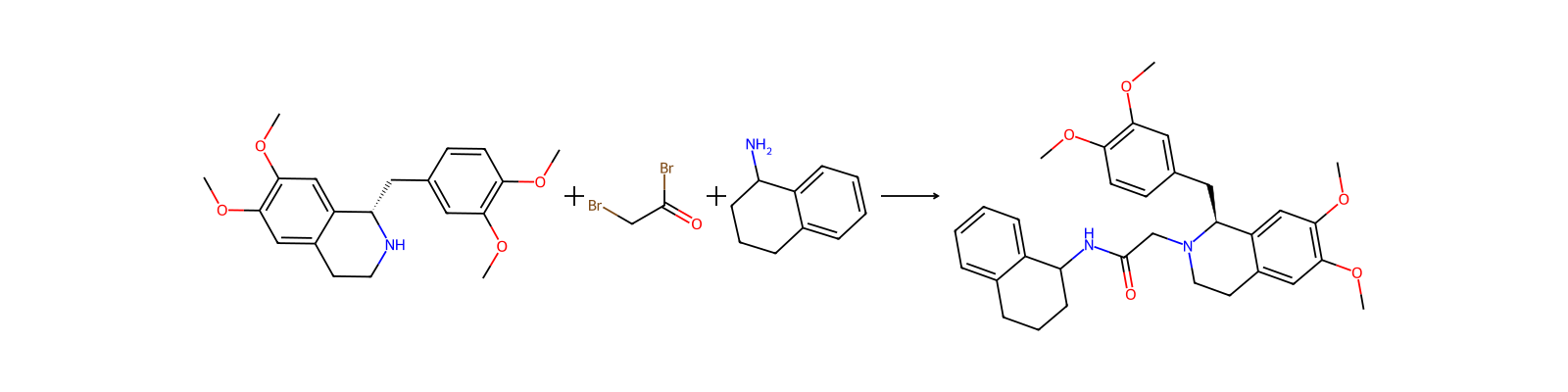
Zugehörige Reaktionen
194



Verknüpfte Notizen
Wird geladen…