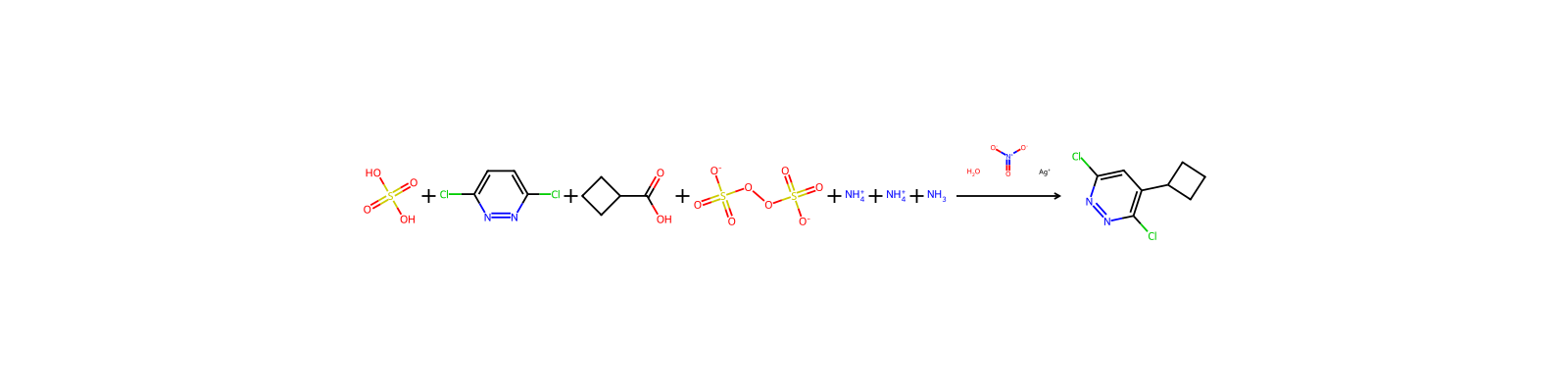
Cyclobutancarbonsure
Cyclobutanecarboxylic acid
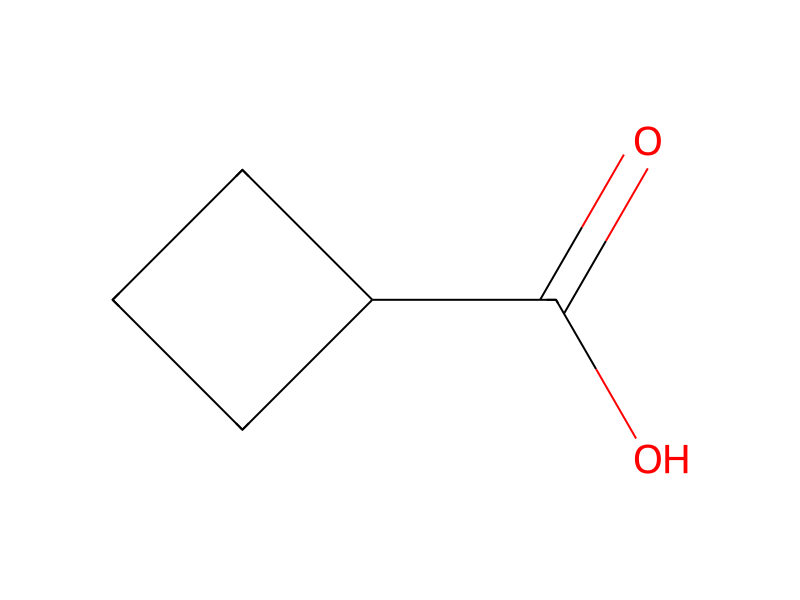
Grundinformationen
- CAS
3721-95-7- Standard-SMILES
O=C(O)C1CCC1- InChIKey
TXWOGHSRPAYOML-UHFFFAOYSA-N- Summenformel
- C5H8O2
- Durchschnittliche Molmasse
- 100,12 g/mol
- Monoisotopische Masse
- 100,0524295
Namen und Bezeichner
- Bevorzugter Name
- Cyclobutanecarboxylic acid
- IUPAC
- cyclobutanecarboxylic acid
- Lokaler Name
- Cyclobutancarbonsure
- Englischer Name
- Cyclobutanecarboxylic acid
- Summenformel
- C5H8O2
- Molmasse
- 100.12
Namen und Synonyme
CYCLOBUTANECARBOXYLIC ACID3721-95-7Cyclobutylcarboxylic acidDTXSID3057725NSC 4535EINECS 223-072-7cyclobutane-1-carboxylic acidBRN 18167770RDJ7C51O0NSC-4535DTXCID40315144-09-00-00006 (Beilstein Handbook Reference)
Weitere Namen anzeigen
cyclobutanecarboxylateobutanecarboxyLRing butyl forMateRARECHEM AL BO 0291Cyclo-butyl formic aCyclobutancarbonsureCYCLO-BUTYL FORMIC ACIDCyclobutanecarbonyl acid
RefChem:580233223-072-7MFCD00001323cyclobutane carboxylic acidCarboplatin Impurity 6UNII-0RDJ7C51O0Cyclobutanecarboxylic Acid; Cyclobutane-1-carboxylic acid; Cyclobutylcarboxylic Acid; NSC 4535Carboplatin Impurity 21
Datenbank-Bezeichner
- CAS
3721-95-7- PubChem CID
- 19494
- DTXSID
DTXSID3057725- ChEMBL
CHEMBL3560137- UNII
- 0RDJ7C51O0
- EC Number
- 223-072-7
- Nikkaji
- J67.761B
Eigenschaften
Berechnete Struktureigenschaften
- XLogP
- 0,8
- Polarare Oberfläche (TPSA)
- 37,3 Ų
- H-Brücken-Donoren
- 1
- H-Brücken-Akzeptoren
- 2
- Frei drehbare Bindungen
- 1
- Schwere Atome
- 7
- Formalladung
- 0
- Komplexität
- 84,1
Experimentelle und physikochemische Eigenschaften
Chemical ClassesOther Classes -> Organic Acids
SpringerMaterials PropertiesDiamagnetic susceptibility
Physical DescriptionColorless liquid with a stench; [Alfa Aesar MSDS]
Collision Cross Section121.73 Ų [M+Na]+ [CCS Type: TW; Method: calibrated with polyalanine and drug standards]
Physikochemische Eigenschaften
- Schmelzpunkt
- 7.5 °C · −7.5 °C(lit.)
- Siedepunkt
- 195 °C · 195 °C(lit.)
- Dichte
- 1.047 g/mL · 1.047 g/mL at 25 °C(lit.)
- Brechungsindex
- 20 · n20/D 1.444(lit.)
- Flammpunkt
- 183 °F · 183 °F
- storage temp.
- Sealed in dry,Room Temperature
- Löslichkeit
- soluble in Chloroform, Methanol
Sicherheit und Regulatorisches
Sicherheitsangaben dienen nur zur Orientierung und ersetzen weder das Sicherheitsdatenblatt (SDB) des Lieferanten noch geltende Vorschriften oder eine fachliche Bewertung.
GHS-Klassifizierung
GHS Classification
Danger
H302 (37.5%): Harmful if swallowed [Warning Acute toxicity, oral]
P260, P261, P264, P264+P265, P270, P271, P280, P301+P317, P301+P330+P331, P302+P352, P302+P361+P354, P304+P340, P305+P354+P338, P316, P317, P321, P330, P362+P364, P363, P405, and P501 (click each P-code to see the statement)
Aggregated GHS information provided per 104 reports by companies from 8 notifications to the ECHA C&L Inventory. Each notification may be associated with multiple companies.
Gefahrenhinweise
Regulatory Information
Chemical: Cyclobutanecarboxylic acid
Status: Active Update: 28-05-2018 https://echa.europa.eu/registration-dossier/-/registered-dossier/24735
Cyclobutanecarboxylic acid: Does not have an individual approval but may be used under an appropriate group standard
Hazards SummaryIntraperitoneal LD50 (mouse) = 1,270 mg/kg; [RTECS] Causes burns; Inhalation may cause corrosive injuries to upper respiratory tract; [Alfa Aesar MSDS]
Hazard Classes and CategoriesAcute Tox. 4 (37.5%)
Toxikologische Informationen
Adverse EffectsDermatotoxin - Skin burns.
Sicherheitsdaten
- F
- 13
- wgk
- 3
- tsca
- TSCA listed
- ridadr
Chemie und Industrie
Verwendung und Herstellung
General Manufacturing InformationCyclobutanecarboxylic acid: INACTIVE
Anwendungen
VerwendenCyclobutanecarboxylic acid is used in water treatment, row materials for sodium fluosilicate potassium fluosilicateammonium fluosilicatecopper fluosilicatebarium fluosilicate and other fluosilicates and silicic tetrafluoride. It is also used in refining lead of electrolysis, as mordant and in the treatment of metal surface.
Darstellung
synthetischeCyclobutanecarboxylic acid synthesis: Put 1,1-Cyclobutanedicarboxylic acid into a distillation device for heating, decarboxylate at about 160°C to release carbon dioxide, then heat for distillation, collect 189-195°C fractions as crude product, and re-distill to obtain the finished product cyclobutanecarboxylic acid. Yield 86%-91%.
Vor- und nachgelagerte Produkte
Vorgelagerte Rohstoffe
Nachgelagerte Produkte
Zugehörige Reaktionen
161


Notizen zur Verbindung
Wird geladen…