
Grundinformationen
- Standard-SMILES
CS(=O)(=O)CCNCc1ccc(-c2ccc3ncnc(Nc4ccc(OCc5cccc(F)c5)c(Cl)c4)c3c2)o1- InChIKey
BCFGMOOMADDAQU-UHFFFAOYSA-N- Summenformel
- C29H26ClFN4O4S
- Durchschnittliche Molmasse
- 581,1 g/mol
- Monoisotopische Masse
- 580,13473221
Überblick
Lapatinib is a member of furans, an organochlorine compound, an organofluorine compound and a member of quinazolines. It has a role as an antineoplastic agent and a tyrosine kinase inhibitor. It is functionally related to a monofluorobenzene.
Namen und Bezeichner
- Bevorzugter Name
- Lapatinib
- IUPAC
- N-[3-chloro-4-[(3-fluorophenyl)methoxy]phenyl]-6-[5-[(2-methylsulfonylethylamino)methyl]furan-2-yl]quinazolin-4-amine
- Englischer Name
- Lapatinib
- Summenformel
- C29H26ClFN4O4S
- Molmasse
- 581.06
Namen und Synonyme
Lapatinib231277-92-2GW572016GW 572016GSK 572016GW-572016DTXSID7046675n-[3-chloro-4-[(3-fluorophenyl)methoxy]phenyl]-6-[5-[[[2-(methylsulfonyl)ethyl]amino]methyl]-2-furanyl]-4-quinazolinamineGSK572016GSK-5720160VUA21238FN-{3-chloro-4-[(3-fluorophenyl)methoxy]phenyl}-6-(5-{[(2-methanesulfonylethyl)amino]methyl}furan-2-yl)quinazolin-4-amine
Weitere Namen anzeigen
TykerbTyverbCS-220GW-2016CS-1860GW 57201Rapatini
GW-572016XDTXCID5026675CHEBI:49603GW2016N-(3-chloro-4-((3-fluorophenyl)methoxy)phenyl)-6-(5-(((2-(methylsulfonyl)ethyl)amino)methyl)-2-furanyl)-4-quinazolinamine4-Quinazolinamine, N-(3-chloro-4-((3-fluorophenyl)methoxy)phenyl)-6-(5-(((2-(methylsulfonyl)ethyl)amino)methyl)-2-furanyl)-4-Quinazolinamine, N-[3-chloro-4-[(3-fluorophenyl)methoxy]phenyl]-6-[5-[[[2-(methylsulfonyl)ethyl]amino]methyl]-2-furanyl]-lapatinibum
Datenbank-Bezeichner
- CAS
231277-92-2、388082-78-8、913989-15-8- PubChem CID
- 208908
- DTXSID
DTXSID7046675- ChEMBL
CHEMBL554- ChEBI
CHEBI:49603- UNII
- 0VUA21238F
- EC Number
- 878-720-7
- Nikkaji
- J1.859.987B
Eigenschaften
Berechnete Struktureigenschaften
- XLogP
- 5,1
- Polarare Oberfläche (TPSA)
- 115 Ų
- H-Brücken-Donoren
- 2
- H-Brücken-Akzeptoren
- 9
- Frei drehbare Bindungen
- 11
- Schwere Atome
- 40
- Formalladung
- 0
- Komplexität
- 898
Experimentelle und physikochemische Eigenschaften
Drugs
Pharmaceuticals
Pharmaceuticals -> Listed in ZINC15
Pharmaceuticals -> Antineoplastic and immunomodulating agents -> Antineoplastic agents
LogP5.4
Solubility
Yellow solid. Solubility at 25 eg C (mg/mL): 0.007 in water; 0.001 in 0.1 N HCl /Lapatinib ditoluenesulfonate monohydrate/
2.23e-02 g/L
Human Drugs
Breast Feeding; Lactation; Antineoplastic Agents; Enzyme Inhibitors; Protein Kinase Inhibitors; Signal Transduction Inhibitors; Tyrosine Kinase Inhibitors;
EMA approved medicines: Human medicine
DecompositionThermal decomposition may produce toxic gases such as carbon monoxide, carbon dioxide, and nitrogen oxides.
Physical DescriptionSolid
Stability/Shelf LifeStable if stored as directed; avoid strong oxidizing agents.
Dissociation ConstantspKa1 = 3.80 (amine); pKa2 = 7.20 (amine)
Physikochemische Eigenschaften
- Schmelzpunkt
- 144 · 144-146oC
- Siedepunkt
- 750.7 · 750.7±60.0 °C(Predicted)
- Dichte
- 1.381 · 1.381±0.06 g/cm3(Predicted)
- storage temp.
- 2 · 2-8°C(protect from light)
- Löslichkeit
- Soluble in DMSO (up to 200 mg/ml)
- pka
- 6.34 · 6.34±0.19(Predicted)
- Aggregatzustand
- solid
- Farbe
- Yellow
- Stabilität
- 2 years · Stable for 2 years from date of purchase as supplied. Solutions in DMSO may be stored at -20°C for up to 1 month.
- InChIKey
- BCFGMOOMADDAQU-UHFFFAOYSA-N
- SMILES
- N1=C2C(C=C(C3=CC=C(CNCCS(C)(=O)=O)O3)C=C2)=C(NC2=CC=C(OCC3=CC=CC(F)=C3)C(Cl)=C2)N=C1
- CAS Datenbank
- 231277 · 231277-92-2(CAS DataBase Reference)
Sicherheit und Regulatorisches
GHS-Klassifizierung
GHS Classification
Warning
H319 (50%): Causes serious eye irritation [Warning Serious eye damage/eye irritation]
P203, P260, P263, P264, P264+P265, P270, P273, P280, P305+P351+P338, P318, P337+P317, and P501 (click each P-code to see the statement)
Aggregated GHS information provided per 2 reports by companies from 2 notifications to the ECHA C&L Inventory. Each notification may be associated with multiple companies.
Gefahrenhinweise
FDA Requirements
The Approved Drug Products with Therapeutic Equivalence Evaluations identifies currently marketed prescription drug products, including lapatinib ditosylate, approved on the basis of safety and effectiveness by FDA under sections 505 of the Federal Food, Drug, and Cosmetic Act. /Lapatinib ditosylate/
Toxic Combustion ProductsEmits toxic fumes such as carbon monoxide, etc.
Hazard Classes and CategoriesEye Irrit. 2 (50%)
Sicherheit und Schutzausrüstung
Fire Fighting ProceduresSuitable extinguishing agents: water spray, carbon dioxide, dry chemical powder or foam. Protective equipment: wear self-contained breathing apparatus and protective clothing to prevent contact with skin and eyes.
Storage ConditionsStore at 25 °C (77 °F); excursions permitted to 15 deg to 30 °C (59 deg to 86 °F).
Cleanup Methods
Accidental release measures: After Inhalation: cordon off area of spill; wear self-contained breathing apparatus, protective clothing and heavy rubber gloves Measures for cleaning/collecting absorb solutions with finely-powdered liquid-binding material (diatomite, universal binders); decontaminate surfaces and equipment by scrubbing with alcohol; dispose of contaminated material /in accordance with prevailing country, fedreal, state and local regulations/.
Disposal Methods
SRP: Expired or waste pharmaceuticals shall carefully take into consideration applicable DEA, EPA, and FDA regulations. It is not appropriate to dispose by flushing the pharmaceutical down the toilet or discarding to trash. If possible return the pharmaceutical to the manufacturer for proper disposal being careful to properly label and securely package the material. Alternatively, the waste pharmaceutical shall be labeled, securely packaged and transported by a state licensed medical waste contractor to dispose by burial in a licensed hazardous or toxic waste landfill or incinerator.
Preventive Measures
Handling should only be performed by personnel trained and familiar with handling of potent active pharmaceutical ingredients.
Information for safe handling: avoid inhalation and contact with skin, eyes and clothing ... .
Personal Protective Equipment (PPE)Personal protective equipment as follows: Breathing equipment: NIOSH/MSHA-approved respirator. Protection of hands: chemical-resistant rubber gloves. Eye protection: chemical safety goggles.
Toxikologische Informationen
Interactions
Grapefruit products should be avoided because of the potential for increased plasma lapatinib concentrations.
In patients receiving lapatinib and paclitaxel (a CYP2C8 and P-gp substrate) concomitantly, systemic exposure (AUC over 24 hours) of paclitaxel was increased by 23%. However, the manufacturer states that because of limitations of the study design, these data may underestimate the potential increase in paclitaxel exposure during concomitant use.
Concomitant administration of lapatinib and oral digoxin (a P-gp substrate) increased systemic exposure (AUC) of digoxin by approximately 2.8-fold. In patients receiving digoxin, serum digoxin concentrations should be measured prior to initiation of lapatinib therapy and monitored throughout concomitant therapy. If serum digoxin concentrations exceed 1.2 ng/mL, digoxin dosage should be reduced by 50%.
Because lapatinib may cause prolongation of the QT interval, lapatinib should be used with caution in patients receiving concomitant therapy with other drugs (e.g., antiarrhythmic agents) known to prolong the QT interval.
For more Interactions (Complete) data for Lapatinib (10 total), please visit the HSDB record page.
Hepatotoxicity
Elevations in serum aminotransferase levels are common during lapatinib therapy, occurring in up to half of patients. Values greater than 5 times the upper limit of normal (ULN) occur in 2% to 6% of patients but are usually transient and asymptomatic. Dose adjustments or temporary discontinuations are rarely required for liver test abnormalities.
Toxicity Summary
IDENTIFICATION AND USE: Lapatinib is a yellow solid formulated into film-coated tablets. Lapatinib, an inhibitor of human epidermal growth factor receptor type 2 (HER2/ERBB2) and epidermal growth factor receptor (HER1/EGFR/ERBB1) tyrosine kinases, is an antineoplastic agent. It is used in combination with capecitabine for the treatment of patients with advanced or metastatic breast cancer whose tumors overexpress HER2 and who have received prior therapy including an anthracycline, a taxane, and trastuzumab. It is also used in combination with letrozole for the treatment of postmenopausal women with hormone receptor-positive metastatic breast cancer that overexpresses the HER2 receptor, and for whom hormonal therapy is indicated. HUMAN EXPOSURE AND TOXICITY: Asymptomatic and symptomatic cases of overdose have been reported. The doses ranged from 2,500 to 9,000 mg daily, the duration varied between 1 and 17 days. Symptoms observed include lapatinib-associated events and in some cases sore scalp, sinus tachycardia (with otherwise normal ECG), and/or mucosal inflammation. At therapeutic doses, hepatotoxicity, manifested as increases in serum concentrations of aminotransferases and bilirubin, has been observed in clinical trials and post-marketing experience with lapatnib. The hepatotoxicity may be severe and deaths have been reported. Causality of the deaths is uncertain. The hepatotoxicity may occur within days to several months after initiation of treatment. Women should avoid the use of lapatinib during pregnancy. While there are not adequate and well-controlled studies in pregnant women, lapatinib has been associated with adverse reproductive effects in animals. If used during pregnancy, the patient should be apprised of the potential fetal hazard. ANIMAL STUDIES: While there was no evidence of carcinogenicity in a two year mouse study, increased mortality which was related to skin toxicities was observed in males at 150 and 300 mg/kg/day and in females at 300 mg/kg/day. In a two-year rat carcinogenicity study, increased mortality was observed in males at 500 mg/kg/day and females at 300 mg/kg/day, and was related to skin toxicities. Renal infarcts and papillary necrosis were observed in females from 60 mg/kg/day and 180 mg/kg/day, respectively. An increased incidence of benign hemangioma of the mesenteric lymph nodes was noted in males from 120 mg/kg/day and in females at 180 mg/kg/day but was within background range. The clinical significance of these findings to humans is not known. Lapatinib did not affect male or female rat gonadal function, mating, or fertility at doses up to 120 mg/kg/day in females and up to 180 mg/kg/day in males. Studies in pregnant rats and rabbits revealed no teratogenic effects. However, in rats, minor anomalies (left-sided umbilical artery, cervical rib and precocious ossification) occurred at the maternally toxic dose of 120 mg/kg/day. In rabbits, lapatinib was associated with maternal toxicity at 60 and 120 mg/kg/day and abortions at 120 mg/kg/day. At maternally toxic doses, decreased fetal body weights, decreased number of live fetuses and minor skeletal variations were noted. Lapatinib was not clastogenic or mutagenic in a battery of assays including the Chinese hamster chromosome aberration assay, the Ames assay, human lymphocyte chromosome aberration assay and an in vivo rat bone marrow chromosome aberration assay.
Human Toxicity Excerpts
/SIGNS AND SYMPTOMS/ Hepatotoxicity (ALT or AST >3 times the upper limit of normal and total bilirubin >2 times the upper limit of normal) has been observed in clinical trials (<1% of patients) and postmarketing experience. The hepatotoxicity may be severe and deaths have been reported. Causality of the deaths is uncertain. The hepatotoxicity may occur days to several months after initiation of treatment. Liver function tests (transaminases, bilirubin, and alkaline phosphatase) should be monitored before initiation of treatment, every 4 to 6 weeks during treatment, and as clinically indicated. If changes in liver function are severe, therapy with Tykerb should be discontinued and patients should not be retreated with Tykerb.
/SIGNS AND SYMPTOMS/ Asymptomatic and symptomatic cases of overdose have been reported. The doses ranged from 2,500 to 9,000 mg daily and where reported, the duration varied between 1 and 17 days. Symptoms observed include lapatinib-associated events and in some cases sore scalp, sinus tachycardia (with otherwise normal ECG), and/or mucosal inflammation.
/GENOTOXICITY/ Lapatinib was not clastogenic or mutagenic in a battery of assays including the ... human lymphocyte chromosome aberration assay ... .
/ALTERNATIVE and IN VITRO TESTS/ Lapatinib, an oral tyrosine kinase inhibitor used for breast cancer, has been reported to cause idiosyncratic hepatotoxicity. Recently, it has been found that lapatinib forms a metabolite-inhibitor complex (MIC) with CYP3A4 via the formation of an alkylnitroso intermediate. Because CYP3A5 is highly polymorphic compared with CYP3A4 and also oxidizes lapatinib, we investigated the interactions of lapatinib with CYP3A5. Lapatinib inactivated CYP3A5 in a time-, concentration-, and NADPH-dependent manner using testosterone as a probe substrate with K(I) and k(inact) values of 0.0376 mM and 0.0226 min(-1), respectively. However, similar results were not obtained when midazolam was used as the probe substrate, suggesting that inactivation of CYP3A5 by lapatinib is site-specific. Poor recovery of CYP3A5 activity postdialysis and the lack of a Soret peak confirmed that lapatinib does not form a MIC with CYP3A5. The reduced CO difference spectrum further suggested that a large fraction of the reactive metabolite of lapatinib is covalently adducted to the apoprotein of CYP3A5. GSH trapping of a reactive metabolite of lapatinib formed by CYP3A5 confirmed the formation of a quinoneimine-GSH adduct derived from the O-dealkylated metabolite of lapatinib. In silico docking studies supported the preferential formation of an O-dealkylated metabolite of lapatinib by CYP3A5 compared with an N-hydroxylation reaction that is predominantly catalyzed by CYP3A4. In conclusion, lapatinib appears to be a mechanism-based inactivator of CYP3A5 via adduction of a quinoneimine metabolite.
For more Human Toxicity Excerpts (Complete) data for Lapatinib (9 total), please visit the HSDB record page.
Drug Induced Liver Injury
Benchmark Dataset for the Liver Toxicity Knowledge Base (LTKB)
lapatinib
Tykerb®
Antineoplastic agents
8
most-DILI-concern
Non-Human Toxicity Excerpts
/LABORATORY ANIMALS: Acute Exposure/ In conscious, telemetered rats and dogs, no treatment-related effects were noted on clinical observations, body temperature, body weights, heart rate, systemic blood pressure or tracheal inflation pressure following single oral doses of lapatinib at up to 500 mg/kg or 50 mg/kg, respectively. In addition, there were no treatment-related effects on electrocardiograms (ECG) at doses up to 500 mg/kg in rats or dogs (approximately 2-fold the human Cmax). Very slight increases in mean systolic, mean diastolic and mean arterial pressure were noted in dogs at doses > or = 150 mg/kg 6 to 14 hours after dosing while values for control and 50 mg/kg groups declined. All values remained within the historical control range for these parameters. Although these changes are considered very slight, their relationship to treatment cannot be ruled out. Maximum plasma concentrations at the 500 mg/kg and 50 mg/kg doses represent 2-fold and approximately 0.5-fold the expected human Cmax of 2430 ng/mL. No significant blood pressure changes have occurred in patients receiving lapatinib.
/LABORATORY ANIMALS: Acute Exposure/ The approximate non-lethal oral dose of lapatinib in mice and rats is > 2000 mg/kg (maximum dose tested). This dose is approximately 8 and 16 times the recommended adult human dose of 1250 mg/day in mice and rats, respectively.
/LABORATORY ANIMALS: Chronic Exposure or Carcinogenicity/ A two-year rat carcinogenicity study was conducted wherein males were administered lapatinib at 60, 120, 240 and 500 mg/kg/day and females were administered lapatinib 20, 60, 180 and 300 mg/kg/day. Increased mortality was observed in males at 500 mg/kg/day and females at 300 mg/kg/day, and was related to skin toxicities. Renal infarcts and papillary necrosis was observed in females from 60 mg/kg/day (7 times the expected clinical exposure) and 180 mg/kg/day (10 times the expected clinical exposure), respectively. An increased incidence of benign hemangioma of the mesenteric lymph nodes was noted in males from 120 mg/kg/day (1 times the expected clinical exposure) and in females at 180 mg/kg/day (10 times the expected clinical exposure) but was within background range. The clinical significance of these findings to humans is not known.
/LABORATORY ANIMALS: Chronic Exposure or Carcinogenicity/ A two-year mouse carcinogenicity study was conducted wherein males and females were administered lapatinib at doses of 75, 150 and 300 mg/kg/day. Increased mortality was observed in males at 150 and 300 mg/kg/day and in females at 300 mg/kg/day, and was related to skin toxicities. Due to early sacrifice of males dosed at 300 mg/kg/day, assessment of carcinogenic potential in this group was not performed. There was no evidence of carcinogenicity in males and females at doses up to 150 and 300 mg/kg/day, respectively (2 times the expected human clinical exposure).
For more Non-Human Toxicity Excerpts (Complete) data for Lapatinib (12 total), please visit the HSDB record page.
Populations at Special Risk
Lapatinib may cause fetal harm; fetal anomalies, abortion, and death of offspring within days after birth have been demonstrated in animals. Pregnancy should be avoided during therapy. If lapatinib is used during pregnancy or if the patient becomes pregnant while receiving the drug, the patient should be apprised of the potential hazard to the fetus.
Lapatinib should be used with caution in patients with severe hepatic impairment (Child-Pugh class C); systemic exposure to the drug may be increased. Dosage reduction should be considered in patients with severe hepatic impairment.
Antidote and Emergency Treatment
/SRP:/ Immediate first aid: Ensure that adequate decontamination has been carried out. If patient is not breathing, start artificial respiration, preferably with a demand valve resuscitator, bag-valve-mask device, or pocket mask, as trained. Perform CPR if necessary. Immediately flush contaminated eyes with gently flowing water. Do not induce vomiting. If vomiting occurs, lean patient forward or place on the left side (head-down position, if possible) to maintain an open airway and prevent aspiration. Keep patient quiet and maintain normal body temperature. Obtain medical attention. /Poisons A and B/
/SRP:/ Basic treatment: Establish a patent airway (oropharyngeal or nasopharyngeal airway, if needed). Suction if necessary. Watch for signs of respiratory insufficiency and assist ventilations if needed. Administer oxygen by nonrebreather mask at 10 to 15 L/min. Monitor for pulmonary edema and treat if necessary ... . Monitor for shock and treat if necessary ... . Anticipate seizures and treat if necessary ... . For eye contamination, flush eyes immediately with water. Irrigate each eye continuously with 0.9% saline (NS) during transport ... . Do not use emetics. For ingestion, rinse mouth and administer 5 mL/kg up to 200 mL of water for dilution if the patient can swallow, has a strong gag reflex, and does not drool ... . Cover skin burns with dry sterile dressings after decontamination ... . /Poisons A and B/
/SRP:/ Advanced treatment: Consider orotracheal or nasotracheal intubation for airway control in the patient who is unconscious, has severe pulmonary edema, or is in severe respiratory distress. Positive-pressure ventilation techniques with a bag valve mask device may be beneficial. Consider drug therapy for pulmonary edema ... . Consider administering a beta agonist such as albuterol for severe bronchospasm ... . Monitor cardiac rhythm and treat arrhythmias as necessary ... . Start IV administration of D5W TKO /SRP: "To keep open", minimal flow rate/. Use 0.9% saline (NS) or lactated Ringer's (LR) if signs of hypovolemia are present. For hypotension with signs of hypovolemia, administer fluid cautiously. Watch for signs of fluid overload ... . Treat seizures with diazepam or lorazepam ... . Use proparacaine hydrochloride to assist eye irrigation ... . /Poisons A and B/
There is no known antidote for overdoses of Tykerb. ... Because lapatinib is not significantly renally excreted and is highly bound to plasma proteins, hemodialysis would not be expected to be an effective method to enhance the elimination of lapatinib. Treatment of overdose with Tykerb should consist of general supportive measures.
For more Antidote and Emergency Treatment (Complete) data for Lapatinib (7 total), please visit the HSDB record page.
Effects During Pregnancy and Lactation◉ Summary of Use during Lactation
Regulatorische Informationen
FDA Requirements
The Approved Drug Products with Therapeutic Equivalence Evaluations identifies currently marketed prescription drug products, including lapatinib ditosylate, approved on the basis of safety and effectiveness by FDA under sections 505 of the Federal Food, Drug, and Cosmetic Act. /Lapatinib ditosylate/
Sicherheitsdaten
- wgk
- WGK 3
- hs_code
- 29349990
- Speicherklasse
- 11 - Combustible Solids
- Giftige Stoffe Daten
- 231277-92-2(Hazardous Substances Data)
- Hazard Classifications
- Aquatic Chronic 4Eye Irrit. 2Lact.
Chemie und Industrie
Pharmakologische Informationen
ATC Code
L01XE07
L - Antineoplastic and immunomodulating agents
QL - Antineoplastic and immunomodulating agents
Protein BindingHighly bound (>99%) to albumin and alpha-1 acid glycoprotein
Pharmacodynamics
Lapatinib is a small molecule and a member of the 4-anilinoquinazoline class of kinase inhibitors. An anti-cancer drug, lapatinib was developed by GlaxoSmithKline (GSK) as a treatment for solid tumours such as breast and lung cancer. It was approved by the FDA on March 13, 2007, for use in patients with advanced metastatic breast cancer in conjunction with the chemotherapy drug capecitabine.
Mechanism of Action
Lapatinib is a 4-anilinoquinazoline kinase inhibitor of the intracellular tyrosine kinase domains of both epidermal growth factor receptor (HER1/EGFR/ERBB1) and human epidermal growth factor receptor type 2 (HER2/ERBB2)with a dissociation half-life of ≥300 minutes. Lapatinib inhibits ERBB-driven tumor cell growth in vitro and in various animal models. An additive effect was demonstrated in an in vitro study when lapatinib and 5-florouracil (the active metabolite of capecitabine) were used in combination in the 4 tumor cell lines tested. The growth inhibitory effects of lapatinib were evaluated in trastuzumab-conditioned cell lines. Lapatinib retained significant activity against breast cancer cell lines selected for long-term growth in trastuzumab-containing medium in vitro. These in vitro findings suggest non-cross-resistance between these two agents.
Lapatinib (GW572016) is a small-molecule dual inhibitor of epidermal growth factor receptor (ErbB1) and ErbB2 receptor kinase activities currently in phase III clinical trials. ... Phosphoprotein and microarray analyses /were used/ to carry out targeted pathway studies of phosphorylation and gene expression changes in human breast cancer cell lines in the presence or absence of lapatinib. Studies were done in four breast cancer cell lines, two of which were responsive and two of which were nonresponsive to lapatinib. Responsive cell lines, BT474 and SKBr3, constitutively overexpress ErbB2 and show an IC(50) of 25 or 32 nmol/L for lapatinib, respectively. In contrast, nonresponsive MDA-MB-468 and T47D cells expressed a low basal level of ErbB2 and showed IC(50) values in the micromolar range. Cells responsive to lapatinib exhibited strong differential effects on multiple genes in the AKT pathway. After 12 hr of exposure to 1.0 umol/L of lapatinib, AKT1, MAPK9, HSPCA, IRAK1, and CCND1 transcripts were down-regulated 7- to 25-fold in responsive BT474 and SKBr3 cells. In contrast, lapatinib weakly down-regulated the AKT pathway in nonresponsive breast cancer cell lines (<5-fold down-regulation of most genes in the pathway). Furthermore, the proapoptotic gene FOXO3A, which is negatively regulated by AKT, was up-regulated 7- and 25-fold in lapatinib-responsive SKBr3 and BT474 cells, respectively. Phosphorylated Akt and Akt-mediated phosphorylation of FOXO3A also decreased in responsive breast cancer cell lines exposed to lapatinib. Gene expression profiling also revealed that lapatinib stimulated the expression of estrogen and progesterone receptors and modulated the expression of genes involved in cell cycle control, glycolysis, and fatty acid metabolism. In BT474 and T47D cells, which expressed moderate basal levels of the estrogen and progesterone receptors, 1.0 micromol/L of lapatinib induced expression by 7- to 11-fold. These data provide insight into the mechanism of action of lapatinib in breast cancer cells.
Lapatinib is a tyrosine kinase inhibitor which dually inhibits the growth factor receptors ErbB1 (epidermal growth factor receptor, EGFR) and ErbB2 (HER2). Lapatinib is a member of the 4-anilinoquinazoline class of kinase inhibitors. Members of this class of molecules have been shown to bind to the ATP binding site of protein kinases and compete with the ATP substrate. This blocks receptor phosphorylation and activation, preventing subsequent downstream signalling events. ErbB2 is one of four members of a family of genes encoding transmembrane receptors for growth factors, the other three being ErbB1 (EGFR or HER1), ErbB3 (HER3) and ErbB4 (HER4). There is evidence ... that induced overexpression of ErbB1 or ErbB2 receptors in cells in vitro produces phenotypes associated with oncogenic transformation, such as the ability to grow in soft agar and formation of tumors in nude mice. In vivo, overexpression of ErbB1 or ErbB2 has been reported in a variety of human tumors and has been associated with poor prognosis and reduced overall survival in patients with cancer. Several therapeutic strategies have been employed to block the ErbB2 signalling pathways as a means to improve the therapeutic efficacy of hormonal and chemotherapy regimens. The rationale for lapatinib use as an anticancer entity is that the blockade of the tyrosine kinase activity of ErbB1 or ErbB2 is expected to block the transforming activity that results from overexpression of these receptors.
Endometrial cancers have been recently molecularly characterized; amplifications of human epidermal growth factor receptor 2 (HER2) were seen in 25% of the serous-like tumors, and mutations in the PI(3)K/AKT pathways were seen in 93% of endometrioid tumors. These new findings about endometrial cancer suggest a potential for targeted therapy with lapatinib, a dual inhibitor of epidermal growth factor receptor and HER2 tyrosine kinases. However, the clinical efficacy of lapatinib in phase II clinical trials for the treatment of endometrial cancers was only minimal. In this study, we investigated the signaling changes induced by lapatinib in endometrial cancer, which may improve its therapeutic efficacy in molecularly selected patient groups. ... One of the final molecular targets of lapatinib to be interstitial collagenase, matrix metallopeptidase 1 (MMP1) /was identified/. Lapatinib suppresses MMP1 through EGFR and HER2, and their downstream ERK and AKT signaling pathways. /It was/ also found that the activating protein-1 binding site of MMP1 promoter is required for its transcriptional activation, which may be unique for endometrial cancers. ... Results also showed that forced expression of active ERK or active AKT mutants rescued MMP1 expression from lapatinib suppression, further suggesting the importance of molecular selection to find appropriate patients with endometrial cancer for future clinical trials with any targeted therapies.
Biological Half-Life
Single-dose terminal half life: 14.2 hours Effective multiple-dose half life: 24 hours
At clinical doses, the terminal phase half-life following a single dose was 14.2 hours; accumulation with repeated dosing indicates an effective half-life of 24 hours.
In a mass-balance study, single 250 mg doses of (14)C-labelled lapatinib administered to 6 healthy volunteers produced serum concentrations of radio-labelled material representing parent drug and metabolites that peaked 4 hr after the dose and declined with a median half-life of 6 hr. Plasma concentrations of lapatinib declined with a half-life of 14 hours.
Metabolism/Metabolites
Lapatinib undergoes extensive metabolism, primarily by CYP3A4 and CYP3A5, with minor contributions from CYP2C19 and CYP2C8 to a variety of oxidated metabolites, none of which accounts for more than 14% of the dose recovered in the feces or 10% of lapatinib concentration in plasma.
Lapatinib, an oral breast cancer drug, has recently been reported to be a mechanism-based inactivator of cytochrome P450 (P450) 3A4 and also an idiosyncratic hepatotoxicant. It was suggested that formation of a reactive quinoneimine metabolite was involved in mechanism-based inactivation (MBI) and/or hepatotoxicity. We investigated the mechanism of MBI of P450 3A4 by lapatinib. Liquid chromatography-mass spectrometry analysis of P450 3A4 after incubation with lapatinib did not show any peak corresponding to irreversible modifications. The enzymatic activity inactivated by lapatinib was completely restored by the addition of potassium ferricyanide. These results indicate that the mechanism of MBI by lapatinib is quasi-irreversible and mediated via metabolic intermediate complex (MI complex) formation. This finding was verified by the increase in a signature Soret absorbance at approximately 455 nm. Two amine oxidation products of the metabolism of lapatinib by P450 3A4 were characterized: N-hydroxy lapatinib (M3) and the oxime form of N-dealkylated lapatinib (M2), suggesting that a nitroso or another related intermediate generated from M3 is involved in MI complex formation. In contrast, P450 3A5 was much less susceptible to MBI by lapatinib via MI complex formation than P450 3A4. In addition, P450 3A5 had a significantly lower ability than 3A4 to generate M3, consistent with N-hydroxylation as the initial step in the pathway to MI complex formation. In conclusion, our results demonstrate that the primary mechanism for MBI of P450 3A4 by lapatinib is not irreversible modification by the quinoneimine metabolite, but quasi-irreversible MI complex formation mediated via oxidation of the secondary amine group of lapatinib.
Lapatinib undergoes extensive metabolism in humans to numerous oxidated and N- and O-dealkylated products. In vitro studies using human hepatocytes and microsomes indicated that lapatinib is primarily metabolised by CYP3A4 and CYP3A5, with smaller contributions from CYP2C8. Additional studies indicated that CYP1A2, 2D6, 2C9 and 2C19 may also be involved, but to a lesser extent. The most prominent metabolites are the carboxylic acid GW42393 and the O-dealkylated phenol GW690006. N-oxidation of the secondary aliphatic amine produced a cascade of about 8 minor metabolites. Relative to parent drug, GW690006 produced approximately equipotent inhibition of ErbB1-dependent tumour cell growth in vitro, but was approximately 100-fold less potent in ErbB2- dependent tumour cells. GW342393 was found to be approximately 40-fold less potent than parent drug in both ErbB1- and ErbB2-dependent tumour cells. They are unlikely to contribute to the biological activity of lapatinib.
Lapatinib, an oral tyrosine kinase inhibitor used for breast cancer, has been reported to cause idiosyncratic hepatotoxicity. Recently, it has been found that lapatinib forms a metabolite-inhibitor complex (MIC) with CYP3A4 via the formation of an alkylnitroso intermediate. Because CYP3A5 is highly polymorphic compared with CYP3A4 and also oxidizes lapatinib, we investigated the interactions of lapatinib with CYP3A5. Lapatinib inactivated CYP3A5 in a time-, concentration-, and NADPH-dependent manner using testosterone as a probe substrate with K(I) and k(inact) values of 0.0376 mM and 0.0226 min(-1), respectively. However, similar results were not obtained when midazolam was used as the probe substrate, suggesting that inactivation of CYP3A5 by lapatinib is site-specific. Poor recovery of CYP3A5 activity postdialysis and the lack of a Soret peak confirmed that lapatinib does not form a MIC with CYP3A5. The reduced CO difference spectrum further suggested that a large fraction of the reactive metabolite of lapatinib is covalently adducted to the apoprotein of CYP3A5. GSH trapping of a reactive metabolite of lapatinib formed by CYP3A5 confirmed the formation of a quinoneimine-GSH adduct derived from the O-dealkylated metabolite of lapatinib. In silico docking studies supported the preferential formation of an O-dealkylated metabolite of lapatinib by CYP3A5 compared with an N-hydroxylation reaction that is predominantly catalyzed by CYP3A4. In conclusion, lapatinib appears to be a mechanism-based inactivator of CYP3A5 via adduction of a quinoneimine metabolite.
Metabolism of lapatinib was assessed both quantitatively and qualitatively in the plasma and excreta of rats (10 mg/kg), dogs (10 mg/kg), mice (30 mg/kg) and humans (250 mg) following a single oral administration of (14)C-lapatinib. In general, (14)C-lapatinib was primarily metabolized, secreted in the bile and eliminated in the feces. In the nonclinical and clinical metabolism studies, urine samples were not analyzed due to the low percentage of the dose excreted by this route. In plasma, (14)C-lapatinib represented the largest single component in all species. Lapatinib was more extensively metabolised in male rats than in female rats, however the metabolic profiles were similar. In dogs and humans, 14C-lapatinib was the only quantifiable peak present. In humans, lapatinib accounted for only approximately half of the radioactivity in the plasma. The remaining radioactivity was attributed to at least 8 metabolites detected by LC-MS but below the limit of radiochemical quantification (approximately 5% of the total radioactivity in pooled plasma). These metabolites were attributed to the N-oxidation cascade that was also observed in vitro as well as in rats and mice. In both mice and rats, only a few of these metabolites were quantifiable in plasma by radiochemical detection, but all were characterized by mass spectrometry. Thus, no unique circulating metabolites were observed in humans
FDA Pharmacological Classification
0VUA21238F
LAPATINIB
Established Pharmacologic Class [EPC] - Kinase Inhibitor
Mechanisms of Action [MoA] - Protein Kinase Inhibitors
Lapatinib is a Kinase Inhibitor. The mechanism of action of lapatinib is as a Protein Kinase Inhibitor.
LAPATINIB
MeSH Pharmacological Classification
Substances that inhibit or prevent the proliferation of NEOPLASMS.
Protein kinase inhibitors that inhibit TYROSINE PROTEIN KINASES.
Absorption, Distribution and Excretion
Absorption following oral administration of lapatinib is incomplete and variable.
Lapatinib undergoes extensive metabolism, primarily by CYP3A4 and CYP3A5, with minor contributions from CYP2C19 and CYP2C8 to a variety of oxidated metabolites, none of which accounts for more than 14% of the dose recovered in the feces or 10% of lapatinib concentration in plasma.
After administration of a single oral dose of (14)C-lapatinib, the predominant route of elimination of drug-related material in the mouse, rat and dog was in the feces, with very little urinary excretion. Most of the dose was eliminated within 48 hours post-dose.
Elimination of lapatinib is predominantly through metabolism by CYP3A4/5 with negligible (<2%) renal excretion. Recovery of parent lapatinib in feces accounts for a median of 27% (range 3% to 67%) of an oral dose.
Systemic exposure to lapatinib is increased when administered with food. Lapatinib AUC values were approximately 3- and 4-fold higher (Cmax approximately 2.5- and 3-fold higher) when administered with a low-fat (5% fat-500 calories) or with a high-fat (50% fat-1,000 calories) meal, respectively.
Lapatinib is highly bound (>99%) to albumin and alpha-1 acid glycoprotein. In vitro studies indicate that lapatinib is a substrate for the transporters breast cancer-resistance protein (BCRP, ABCG2) and P-glycoprotein (P-gp, ABCB1). Lapatinib has also been shown to inhibit P-gp, BCRP, and the hepatic uptake transporter OATP 1B1, in vitro at clinically relevant concentrations.
Cellular LocationsExtracellular
Verwendung und Herstellung
Uses
MEDICATION
Antineoplastic Agents; Protein Kinase Inhibitors
Use (kg; approx.) in Germany (2009): >250
Methods of Manufacturing
The synthesis route for /lapatinib/ ... involves a Suzuki coupling of 5-formyl-2-furanboronic acid with the iodo-substituted quinazoline derivative.
Preparation: M. C. Carter et al., World Intellectual Property Organization patent 9935146 (1999 to Glaxo); eidem, United States of America patent 6727256 (2004 to SmithKline Beecham).
Formulations/PreparationsOral: Tablets, film-coated: 250 mg (of lapatinib), Tykerb (GlaxoSmithKline).
Anwendungen
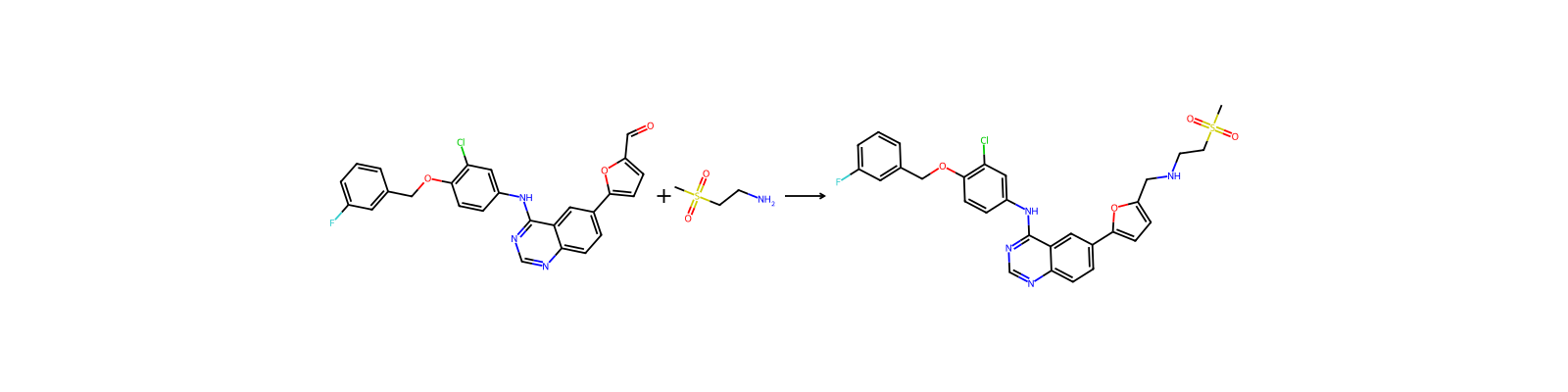
BeschreibungLapatinib, a new member of the 4-anilinoquinazoline class of RTK inhibitors (RTKIs), was launched as an oral treatment for breast cancer. Lapatinib has dual affinity for EGFR and HER2 tyrosine kinases. It is indicated in combination with capecitabine for treating patients with advanced or metastatic breast cancer whose tumors overexpress HER2 and who have received prior therapy including an anthracycline, a taxane, and trastuzumab. Previously marketed drugs from the 4-anilinoquinazoline class include erlotinib (Tarceva) and gefitinib (IressaTM), both of which are indicated for treating non-small-cell lung cancer (NSCLC). As with erlotinib and gefitinib, To Market, To Market 2007 475 lapatinib is an ATP-competitive kinase inhibitor. It inhibits the tyrosine kinase activity EGFR and HER-2 with apparent Ki values of 3 and 13 nM, respectively, and has slow off-rate kinetics (t1/2X300 min). In addition, dividing the daily dose of lapatinib results in approximately 2-fold higher exposure at steady state compared to the same total dose administered once daily.The chemical synthesis of lapatinib entails the condensation of 4-chloro-6-iodoquinazoline and 3-chloro-4-(3-fluorobenzyloxy)aniline to produce a diaryl amine intermediate followed by Stille coupling of the iodo group with 5-dioxolanyl-2-(tributylstannyl)furan and subsequent acid hydrolysis of the cyclic ketal to the corresponding aldehyde. Finally, reductive amination of the aldehyde intermediate with 2-(methanesulfonyl) ethylamine in the presence of sodium triacetoxyborohydride produces lapatinib. .
Vor- und nachgelagerte Produkte
Vorgelagerte Rohstoffe
Anbieter50 Anbieter
北京华美互利生物化工010-56205725 · [email protected]
上海阿拉丁生化科技股份有限公司400-6206333 13167063860 · [email protected]
T&W GROUP021-61551611 13296011611 · [email protected]
南京兰亚化工贸易有限公司+86-25-8331-5620 · [email protected]
LGM Pharma1-(800)-881-8210 · [email protected]
上海波以尔化工有限公司[email protected]
大连美仑生物技术有限公司0411-62910999 13889544652 · [email protected]
安耐吉化学&3A(安徽泽升科技股份有限公司)400-0056266 · [email protected]
北京亿思研科技开发中心010-56645598 13366904824 · [email protected]
广州市亿邦医药科技有限公司+86 (20) 28996708,29078958,28139708,29076128,28133708,28139728,28139738,28133718,021-31663278,021-31663578,021-60538387
上海瀚鸿科技股份有限公司021-54306202 13764082696 · [email protected]
China Kouting Group Limited+86 (21) 5811-6473 5811-6475 · [email protected]
上海景颜化工科技有限公司13817811078 · [email protected]
嘉兴市艾森化工有限公司0573-85285100 18627885956 · [email protected]
上海泰坦科技股份有限公司400-6009262 15618770481 · [email protected]
上海隆盛化工有限公司58099637 13585536065 · [email protected]
MedChemexpress LLC021-58955995 · [email protected]
医恩医疗系统研发(上海)有限公司021-58958002 18930822973 · [email protected]
上海瀚香生物科技有限公司177-54423994 17754423994 · [email protected]
上海攀鸿化工科技有限公司021-56491756 13512199871 · [email protected]
杭州东帆化学有限公司86-0571-85151182
孝感深远化工有限公司15527621225; 15527621225 · [email protected]
济南精合医药科技有限公司0531-88811783 · [email protected]
云南西力生物技术股份有限公司0871-65217109 · [email protected]
武汉华邦化学新材料有限公司027-83229541 13971313286 · [email protected]
上海源叶生物科技有限公司13636370518 · [email protected]
深圳菲斯生物科技有限公司0755-83725681-603
苏州思变化学技术有限公司0512-65617459 18915409046 · [email protected]
AdooQ BioScience, LLC+1 (866) 930-6790 · [email protected]
北京清露源科技有限公司+86 (10) 6333-0989 · [email protected]
Wuhan NCE Biomedical Co.,Ltd.4000-027-021 |24 +86-13986109188 | +86-15623472865 | +81-08033611988
上海遐瑞医药科技有限公司+86 21 61551611
南京诺利斯医药科技有限公司13901585132 · [email protected]
信实生物医药(上海)有限公司+86-021-50720296 · [email protected]
TOKYO CHEMICAL INDUSTRY CO., LTD.03-36680489 · [email protected]
TCI Europe320-37350700 · [email protected]
卡迪亚医药科技有限公司0371-86615086 18203638366 0371-86159066 13526786601
上海偕腾生物科技有限公司+86-021-58975553 · [email protected]
上海诺宝化工有限公司+86(0)21 60484900
上海睿升化工科技有限公司+86-021-50935922
广州爱纯医药科技有限公司020-39119399 18927568969 · [email protected]
南京生利德生物科技有限公司025-57798810 18652991625 · [email protected]
济南铭雅医药科技有限公司0531-85828981 · [email protected]
上海将来实业股份有限公司400-0066400 13621662912 · [email protected]
上海将来实业股份有限公司021-61552785 · [email protected]
上海笛柏生物科技有限公司400-008-9730,021-54359730 400-008-9730 · [email protected]
郑州阿尔法化工有限公司0371-53732842 15981811963 · [email protected]
南京弗思特医药科技有限公司025-83172655 13585105703 · [email protected]
武汉开诺医药科技有限公司18040571231/1402788087
雷丁试剂0510-85629785 18013409632 · [email protected]
Zugehörige Reaktionen
24


Verknüpfte Notizen
Wird geladen…