

Grundinformationen
- Standard-SMILES
Clc1ccc(C(Cl)(Cl)Cl)cc1- InChIKey
LVZPKYYPPLUECL-UHFFFAOYSA-N- Summenformel
- C7H4Cl4
- Durchschnittliche Molmasse
- 229,9 g/mol
- Monoisotopische Masse
- 227,90671085
Überblick
p-a,a,a-Tetrachlorotoluene can cause cancer according to The Environmental Protection Agency (EPA).
Namen und Bezeichner
- Bevorzugter Name
- 4-Chlorobenzotrichloride
- IUPAC
- 1-chloro-4-(trichloromethyl)benzene
- Lokaler Name
- p-Chlorbenzotrichlorid
- Englischer Name
- 4-Chlorobenzotrichloride
- Summenformel
- C7H4Cl4
- Molmasse
- 229.92
Namen und Synonyme
4-CHLOROBENZOTRICHLORIDE5216-25-11-Chloro-4-(trichloromethyl)benzeneBenzene, 1-chloro-4-(trichloromethyl)-p-ChlorophenyltrichloromethaneDTXSID2027593alpha,alpha,alpha-Trichloro-4-chlorotoluene1UP9GJU33Sp,alpha,alpha,alpha-TetrachlorotolueneToluene, p,alpha,alpha,alpha-tetrachloro-DTXCID607593AAATCT
Weitere Namen anzeigen
α,α,α,4-tetrachlorotoluenePCTCorobenzotrichLTetrachlorotoluene4-Chlorobenzotrichlo4-Chlorbenzotrichloridp-Chlorbenzotrichlorid4-chlorobenzotrichloridClotrimazole Impurity 5
4,alpha,alpha,alpha-TetrachlorotolueneRefChem:98556P-CHLORO-ALPHA,ALPHA,ALPHA-TRICHLOROTOLUENE226-009-1p-Chlorobenzotrichloridealpha,alpha,alpha,4-Tetrachlorotoluenep-TrichloromethylchlorobenzeneFluoxetine Impurity 12
Datenbank-Bezeichner
- CAS
5216-25-1- PubChem CID
- 21277
- DTXSID
DTXSID2027593- ChEMBL
CHEMBL2137820- UNII
- 1UP9GJU33S
- EC Number
- 226-009-1
- Nikkaji
- J38.180B
Eigenschaften
Berechnete Struktureigenschaften
- XLogP
- 4,6
- Polarare Oberfläche (TPSA)
- 0 Ų
- H-Brücken-Donoren
- 0
- H-Brücken-Akzeptoren
- 0
- Frei drehbare Bindungen
- 0
- Schwere Atome
- 11
- Formalladung
- 0
- Komplexität
- 121
Experimentelle und physikochemische Eigenschaften
Chemical ClassesOther Classes -> Halogenated Monoaromatics
SpringerMaterials PropertiesDensity
Boiling Point473 °F at 760 mmHg (NTP, 1992)
Vapor Pressure0.03 [mmHg]
Physical Description
Alpha, alpha, alpha, para-tetrachlorotoluene is a clear colorless liquid.
Colorless to yellow liquid; [MSDSonline]
Physikochemische Eigenschaften
- Schmelzpunkt
- 5.8 °C · 5.8 °C
- Siedepunkt
- 245 °C · 245 °C(lit.)
- Dichte
- 1.495 g/mL · 1.495 g/mL at 25 °C(lit.)
- Brechungsindex
- 20 · n20/D 1.572(lit.)
- Flammpunkt
- 230 °F · >230 °F
- storage temp.
- 2 · Storage temp. 2-8°C
- Löslichkeit
- Chloroform (Sparingly), DMSO (Sparingly)
- Aggregatzustand
- clear liquid
- Farbe
- Colorless to Light yellow
- Wasserlöslichkeit
- decomposes
- BRN
- 1866549 · 1866549
- Henry's Law Constant
- 5.1 · 5.1×10-2 mol/(m3Pa) at 25℃, Zhang et al. (2010)
- Stabilität
- Stable. Combustible. Incompatible with strong oxidizing agents.
- CAS Datenbank
- 5216 · 5216-25-1(CAS DataBase Reference)
- NIST chemische Informationen
- 1 · Benzene, 1-chloro-4-(trichloromethyl)-(5216-25-1)
- EPA chemische Informationen
- 4 · 4-Chlorobenzotrichloride (5216-25-1)
Sicherheit und Regulatorisches
GHS-Klassifizierung
GHS Classification
Danger
H302: Harmful if swallowed [Warning Acute toxicity, oral]
P203, P260, P261, P264, P270, P271, P280, P301+P317, P302+P352, P304+P340, P317, P318, P319, P321, P330, P332+P317, P362+P364, P403+P233, P405, and P501 (click each P-code to see the statement)
Danger
H302+H312 (44.7%): Harmful if swallowed or in contact with skin [Warning Acute toxicity, oral; acute toxicity, dermal]
P203, P260, P261, P264, P264+P265, P270, P271, P272, P273, P280, P301+P317, P302+P352, P304+P340, P305+P351+P338, P317, P318, P319, P321, P330, P332+P317, P333+P317, P337+P317, P362+P364, P403+P233, P405, and P501 (click each P-code to see the statement)
Gefahrenhinweise
Regulatory Information
Chemical: Benzene, 1-chloro-4-(trichloromethyl)-
Hazard Traits - Carcinogenicity
Status: Active Update: 26-02-2021 https://echa.europa.eu/registration-dossier/-/registered-dossier/2193
Other Safety InformationIMAP assessments - Benzene, 1-chloro-4-(trichloromethyl)-: Human health tier II assessment
DOT LabelCorrosive
Fire HazardsFlash point data for this compound are not available, however, it is probably combustible. (NTP, 1992)
Health HazardsACUTE/CHRONIC HAZARDS: Corrosive; Lachrymator. (NTP, 1992)
Hazards Summary
Lachrymator; [CAMEO] A skin and respiratory tract irritant; [ESIS] An irritant; Harmful if skin contact or ingested; May cause chemical pneumonitis after inhalation of high concentrations; May cause cancer based on animal evidence; [MSDSonline]
Reactive GroupHalogenated Organic Compounds
Reactivity Profile
Simple aromatic halogenated organic compounds, such as ALPHA, ALPHA, ALPHA, PARA-TETRACHLOROTOLUENE, are very unreactive. Halogenated organics generally become less reactive as more of their hydrogen atoms are replaced with halogen atoms. Materials in this group may be incompatible with strong oxidizing and reducing agents. Also, they may be incompatible with many amines, nitrides, azo/diazo compounds, alkali metals, and epoxides.
Air and Water ReactionsInsoluble in water.
Hazard Classes and Categories
Acute Tox. 4 (100%)
Acute toxicity - category 4
Acute toxicity (Oral) - Category 4
Acute toxicity (Oral) - Category 4
Carc. 1B
Sicherheit und Schutzausrüstung
Fire FightingTo extinguish a fire involving this chemical you may use a dry chemical, carbon dioxide, foam or halon extinguisher; a water spray may also be used. (NTP, 1992)
First Aid
EYES: First check the victim for contact lenses and remove if present. Flush victim's eyes with water or normal saline solution for 20 to 30 minutes while simultaneously calling a hospital or poison control center. Do not put any ointments, oils, or medication in the victim's eyes without specific instructions from a physician. IMMEDIATELY transport the victim after flushing eyes to a hospital even if no symptoms (such as redness or irritation) develop.
Nonfire Spill Response
SMALL SPILLS AND LEAKAGE: If you should spill this chemical, use absorbent paper to pick up all liquid spill material. Your contaminated clothing and absorbent paper should be sealed in a vapor-tight plastic bag for eventual disposal. Solvent wash all contaminated surfaces with acetone followed by washing with a strong soap and water solution. Do not reenter the contaminated area until the Safety Officer (or other responsible person) has verified that the area has been properly cleaned.
Isolation and EvacuationExcerpt from ERG Guide 154 [Substances - Toxic and/or Corrosive (Non-Combustible)]:
Personal Protective Equipment (PPE)MINIMUM PROTECTIVE CLOTHING: If Tyvek-type disposable protective clothing is not worn during handling of this chemical, wear disposable Tyvek-type sleeves taped to your gloves.
Toxikologische Informationen
Adverse EffectsLacrimator (Lachrymator) - A substance that irritates the eyes and induces the flow of tears.
Toxicity DataLC50 (rat) = 125 mg/m3
RAIS Toxicity Values
5e-05
SCREEN Current
6e-05
SCREEN Current
0.0006
PPRTV Current
EPA Provisional Peer-Reviewed Toxicity Values
p-α,α,α-Tetrachlorotoluene
6 x 10^-5 mg/kg-day
6 x 10^-4 mg/kg-day
5 x 10^-5 mg/m^3
PDF Document
Likely to be carcinogenic to humans
Hazard Quotient Level 0.1 or Cancer Risk Level 1E-06
4.30e-02
2.00e-01
1.70e-03
5.00e+00
5.7e-06
1.60e+01
Hazard Quotient Level 3 or Cancer Risk Level 1E-04
4.30e+00
2.00e+01
1.70e-01
5.00e+00
1.60e+01
6e-05
Sicherheitsdaten
- wgk
- 3
- tsca
- TSCA listed
- ridadr
- UN 1760 8/PG 2
- hs_code
- 29039990
- RTECS-Nr.
- XT8580000
- risk_code
- 45-21/22-37/38-48/23-62
- Toxizität
- LD50 orl-rat: 820 mg/kg EPASR* 8EHQ-0281-0360
- hazard_code
- T
- safety_code
- 53-45
- hazard_class
- 8
- packing_group
- II
Chemie und Industrie
Verwendung und Herstellung
UsesIntermediate for pharmaceuticals, dyes, and other organic chemicals; [Hawley]
General Manufacturing InformationBenzene, 1-chloro-4-(trichloromethyl)-: ACTIVE
Anwendungen
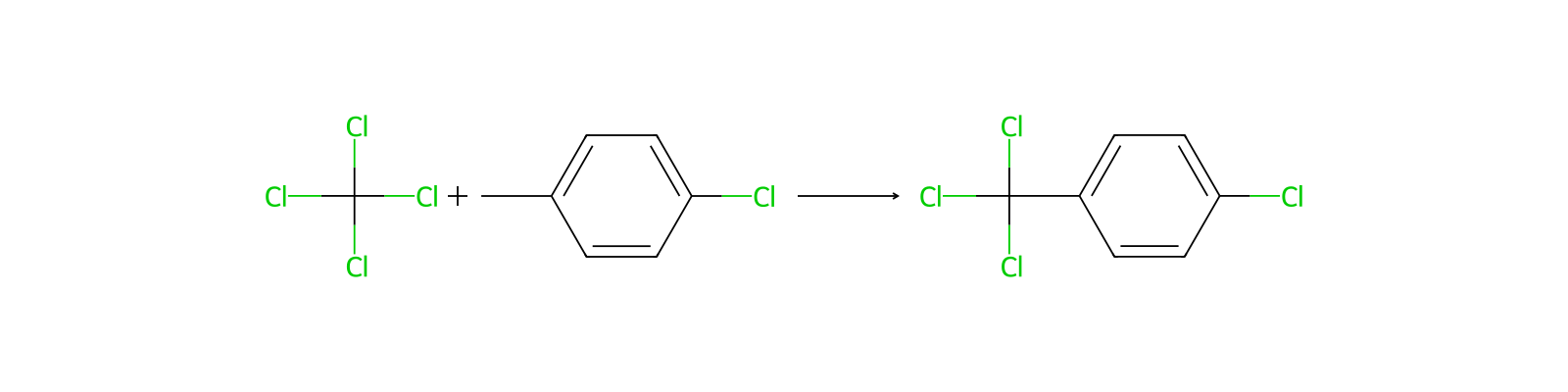
Verwenden4-Chlorobenzotrichloride is a useful reactant in organic synthesis.
Vor- und nachgelagerte Produkte
Vorgelagerte Rohstoffe
Nachgelagerte Produkte
Anbieter50 Anbieter
国药集团化学试剂有限公司86-21-63210123 · [email protected]
梯希爱(上海)化成工业发展有限公司021-67121386 · [email protected]
毕佳索(上海毕得医药科技股份有限公司)400-6005915 · [email protected]
上海麦克林生化科技股份有限公司021-50706066 15221275939 · [email protected]
湖北成丰化工有限公司13125175253 · [email protected]
合肥翰刚医药科技有限公司+8618062405514 · [email protected]
普善实业(陕西)有限公司029-81310890 18165209495 · [email protected]
Baoji Guokang Healthchem co.,ltd+8615604608665 15604608665 · [email protected]
Dayang Chem (Hangzhou) Co.,Ltd.+86-0571-88938639 17705817739 · [email protected]
郑州鸿晟医药科技有限公司0371-55695890 15637198702 · [email protected]
科瑞迪化学400-821-5857 021-64326257 · [email protected]
衢州明锋化工有限公司0570-3062502 13819002126;13819008176 · [email protected]
淮安嘉目生物科技有限公司0517-83187139 18205232085 · [email protected]
Syntechem Co.,Ltd[email protected]
上海迈瑞尔生化科技有限公司4006356688 18621169109 · [email protected]
江苏普乐司生物科技有限公司0513-66017706 18551496367 · [email protected]
上海颖心实验室设备有限公司021-59178156 17002132182 · [email protected]
阿法埃莎(中国)化学有限公司400-6106006 · [email protected]
安耐吉化学&3A(安徽泽升科技股份有限公司)400-0056266 · [email protected]
上海瀚鸿科技股份有限公司021-54306202 13764082696 · [email protected]
上海柯维化学技术有限公司021-64609169 18901607656 · [email protected]
南京欣丰康生物科技有限公司025-84683399 13952017251 · [email protected]
孝感深远化工有限公司15527621225; 15527621225 · [email protected]
山东西亚化学有限公司13355009207 13355009207 · [email protected]
玛雅试剂+86 (573) 82222445 (0)18006601000 452520369 · [email protected]
上海耐士化工科技有限公司400-188-0725 +86 21 34310725 13611771617
天津希恩思生化科技有限公司400 638 7771 · [email protected]
武汉吉业升化工有限公司027-13545242311 13545242311 · [email protected]
赛默飞世尔科技(中国)有限公司800-810-5118 · [email protected]
北京伊诺凯科技有限公司400-810-7969 010-59572699 · [email protected]
上海贤鼎生物科技有限公司4009209199 · [email protected]
深圳振强药物研发有限公司0755-66853366 13670046396 · [email protected]
深圳菲斯生物科技有限公司0755-83725350 13380397412 · [email protected]
日照力德士化工有限公司010-51268198 · [email protected]
郑州鸿晟医药科技有限公司0371-0371-13526885213 15637198702 · [email protected]
美岚实业(上海)有限公司021-58958189 · [email protected]
上海爱蝶实业有限公司021-58957966 18930537195 · [email protected]
广拓化学(上海)有限公司021-60899189-8001 18918189673 · [email protected]
上海御略医药科技有限公司021-60345187 13671753212 · [email protected]
上海永叶生物科技有限公司86-021-61559134 15921386130 · [email protected]
江苏艾康生物医药研发有限公司025-66028182 17714375163 · [email protected]
陕西缔都医药化工有限公司029-81024372 17792795018 · [email protected]
康迪斯化工(湖北)有限公司13343438265 · [email protected]
成都瑞欧克科技有限公司028-64353063 · [email protected]
箴德化工科技(上海)有限公司15601952568 · [email protected]
成都润泽本土化工有限公司028-88469284 18000562381 · [email protected]
天津凯夫特科技有限公司022-58659859 13820733852 · [email protected]
南京艾比克斯生化科技有限公司025-87193546 18652950785 · [email protected]
上海思言生物科技有限公司021-50908862,442785678,326799392 18721037013 · [email protected]
北京华威锐科化工科技有限公司89508211 18501085097 · [email protected]
Zugehörige Reaktionen
9




Verknüpfte Notizen
Wird geladen…