StartseiteMCPWorkbenchSkills
StartseiteWorkbenchBenachrichtigungenMein Bereich
llms.txt · MCP-AnleitungDatenschutz · Nutzungsbedingungen · Supportv1.8.0
  1. Startseite
  2. /Verbindung

Triisopropylborat

Triisopropyl borate
HCID 21531
Neue NotizNeue ReaktionAnfrage stellen
Druckvorschau
GrundinformationenÜberblickNamen und BezeichnerEigenschaftenSicherheit und RegulatorischesChemie und IndustrieZugehörige ReaktionenNotizen zur Verbindung
TeilstruktursucheÄhnliche Strukturen suchen

Grundinformationen

CAS
5419-55-6
Standard-SMILES
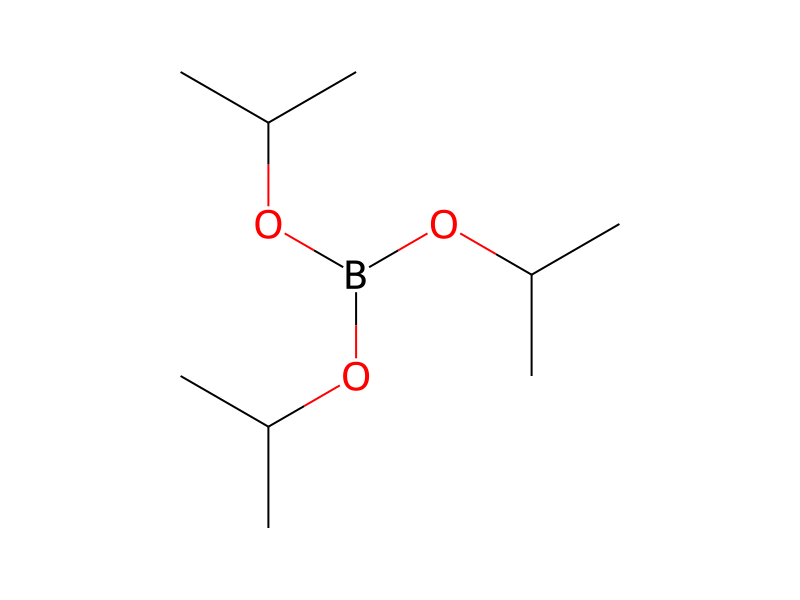
CC(C)OB(OC(C)C)OC(C)C
InChIKey
NHDIQVFFNDKAQU-UHFFFAOYSA-N
Summenformel
C9H21BO3
Durchschnittliche Molmasse
188,07 g/mol
Monoisotopische Masse
188,1583747

Überblick

Triisopropyl borate appears as a colorless liquid. Less dense than water and insoluble in water. Vapors heavier than air. Used to make other chemicals.

Namen und Bezeichner

Bevorzugter Name
Triisopropyl borate
IUPAC
tripropan-2-yl borate
Lokaler Name
Triisopropylborat
Englischer Name
Triisopropyl borate
Summenformel
C9H21BO3
Molmasse
188.07

Namen und Synonyme

TRIISOPROPYL BORATE5419-55-6Isopropyl borateTriisopropyl orthoboratetri-i-PropylborateBoric acid (H3BO3), tris(1-methylethyl) esterBoric acid, tris(1-methylethyl) esterTris(1-methylethyl) borateDTXSID7027598EINECS 226-529-9YWV817MXF3UN2616
Weitere Namen anzeigen
TIPBB(OiPr)3Triisopropyl boratTriisoproyl borateBORON ISOPROPOXIDETRIISOPROPOXYBORANEtripropan-2-yl borateTRIISOPROPYL BORATE, 98+%BORIC ACID TRIISOPROPYL ESTER
BRN 1701469Boric acid, (H3BO3), triisopropyl esterAI3-61082NSC-9779UNII-YWV817MXF34-01-00-01488 (Beilstein Handbook Reference)ISOPROPYL BORATE ((C3H7O)3B)UN 2616

Datenbank-Bezeichner

CAS
5419-55-6
PubChem CID
21531

Eigenschaften

Berechnete Struktureigenschaften

Polarare Oberfläche (TPSA)
27,7 Ų
H-Brücken-Donoren
0
H-Brücken-Akzeptoren
3
Frei drehbare Bindungen
6
Schwere Atome
13
Formalladung
0
Komplexität
102

Experimentelle und physikochemische Eigenschaften

Chemical Classes · 2 Einträge

Metals -> Metalloid Compounds (Boron)

Flammable agents - 3rd degree

Flash Point82 °F (NFPA, 2010)
Vapor Pressure8.6 [mmHg]
Physical Description · 3 Einträge

Triisopropyl borate appears as a colorless liquid. Less dense than water and insoluble in water. Vapors heavier than air. Used to make other chemicals.

Liquid

Colorless liquid; [CAMEO] Colorless liquid with an alcohol-like odor; [Alfa Aesar MSDS]

Physikochemische Eigenschaften

Schmelzpunkt
-59 °C · -59 °C
Siedepunkt
139 · 139-141 °C (lit.)
Dichte
0.815 g/mL · 0.815 g/mL at 25 °C (lit.)
Dampfdruck
76 mm · 76 mm Hg ( 75 °C)
Brechungsindex
20 · n20/D 1.376(lit.)
Flammpunkt
62.6 °F · 62.6 °F

Sicherheit und Regulatorisches

Sicherheitsangaben dienen nur zur Orientierung und ersetzen weder das Sicherheitsdatenblatt (SDB) des Lieferanten noch geltende Vorschriften oder eine fachliche Bewertung.

GHS-Klassifizierung

GHS Classification · 4 Einträge

Danger

H225 (93.5%): Highly Flammable liquid and vapor [Danger Flammable liquids]

P210, P233, P240, P241, P242, P243, P264+P265, P280, P303+P361+P353, P305+P351+P338, P337+P317, P370+P378, P403+P235, and P501 (click each P-code to see the statement)

Aggregated GHS information provided per 154 reports by companies from 13 notifications to the ECHA C&L Inventory. Each notification may be associated with multiple companies.

Gefahrenhinweise

Regulatory Information · 4 Einträge

Boric acid (H3BO3), tris(1-methylethyl) ester is listed on the EPA's Chemical Data Reporting (CDR) system. Manufacturers and importers of Boric acid (H3BO3), tris(1-methylethyl) ester are required to report information about their production and use of this chemical to the EPA under the Toxic Substances Control Act (TSCA). (40 eCFR Part 711)

REACH registered substance: Triisopropyl borate (EC: 226-529-9)

Boric acid, tris(1-methylethyl) ester: Does not have an individual approval but may be used under an appropriate group standard

The New Jersey Worker and Community Right to Know Act requires public and private employers to provide information about hazardous substances at their workplaces. (N.J.S.A. 34:5A-1 et. seq.)

DOT LabelFlammable Liquid
Fire Hazards · 2 Einträge

Excerpt from ERG Guide 129 [Flammable Liquids (Water-Miscible / Noxious)]:

· HIGHLY FLAMMABLE: Will be easily ignited by heat, sparks or flames.

Health Hazards · 2 Einträge

Excerpt from ERG Guide 129 [Flammable Liquids (Water-Miscible / Noxious)]:

· May cause toxic effects if inhaled or absorbed through skin.

Chemie und Industrie

Verwendung und Herstellung

UsesUsed to make other chemicals; [CAMEO] Used to make pharmaceuticals and as a lubricant additive; [Reference #1]
U.S. Production2023: <75,000 lb
Industry UsesIntermediate
General Manufacturing Information · 2 Einträge

Pharmaceutical and Medicine Manufacturing

Boric acid (H3BO3), tris(1-methylethyl) ester: ACTIVE

Anwendungen · 1 Eintrag

VerwendenTriisopropyl borate is used as reagent in Pd-catalyzed coupling reaction with aryl halides such as Suzuki reaction. It is used as a reagent for the preparation of the boronic acids and esters; as a Lewis acid catalyst and involved in the ortho-borylation of 1-substituted naphthalenes. Furthermore, it plays an important role as a catalyst for the production of resins, waxes, paints and varnishes.

Vor- und nachgelagerte Produkte

Nachgelagerte Produkte

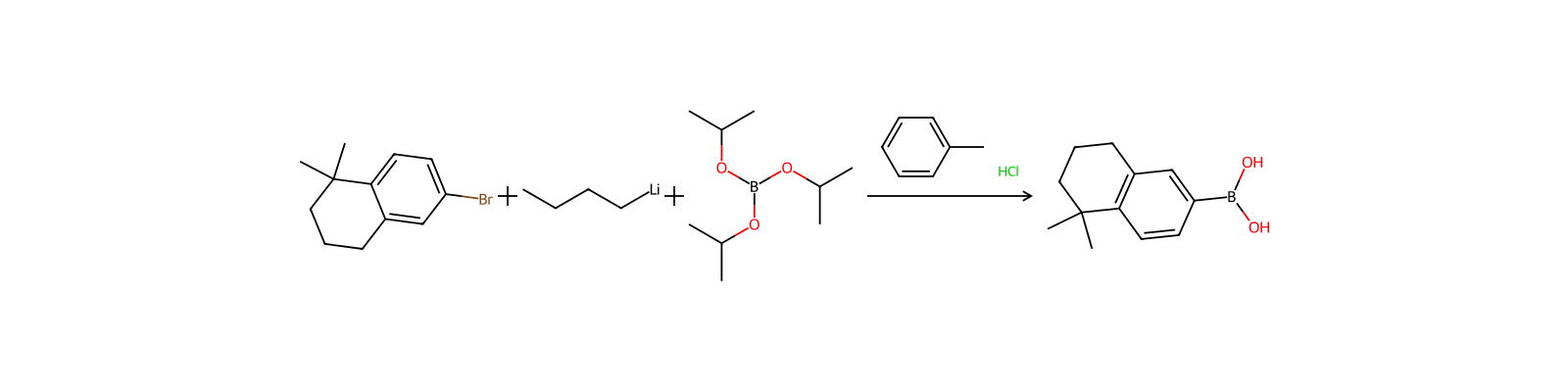
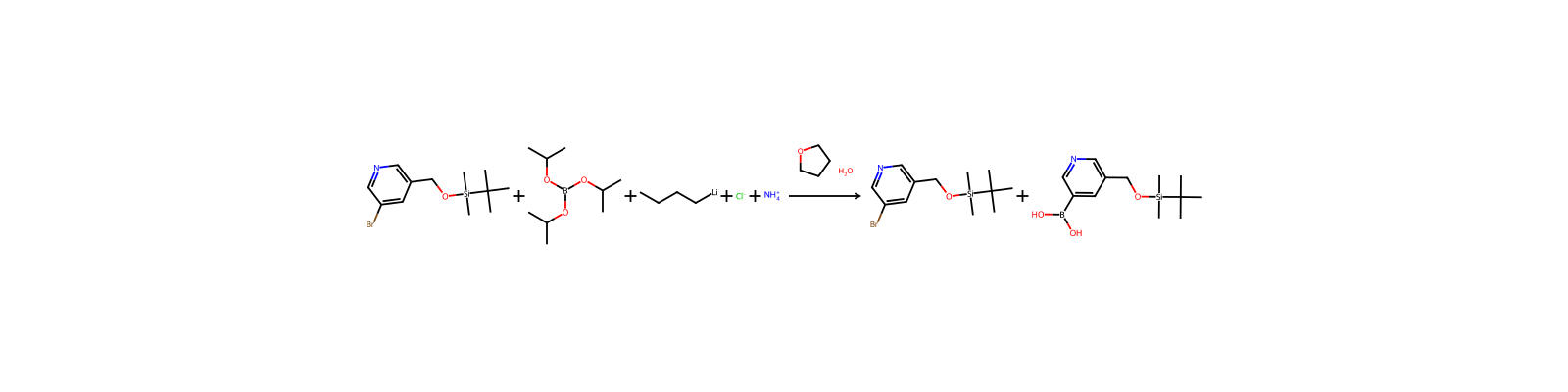
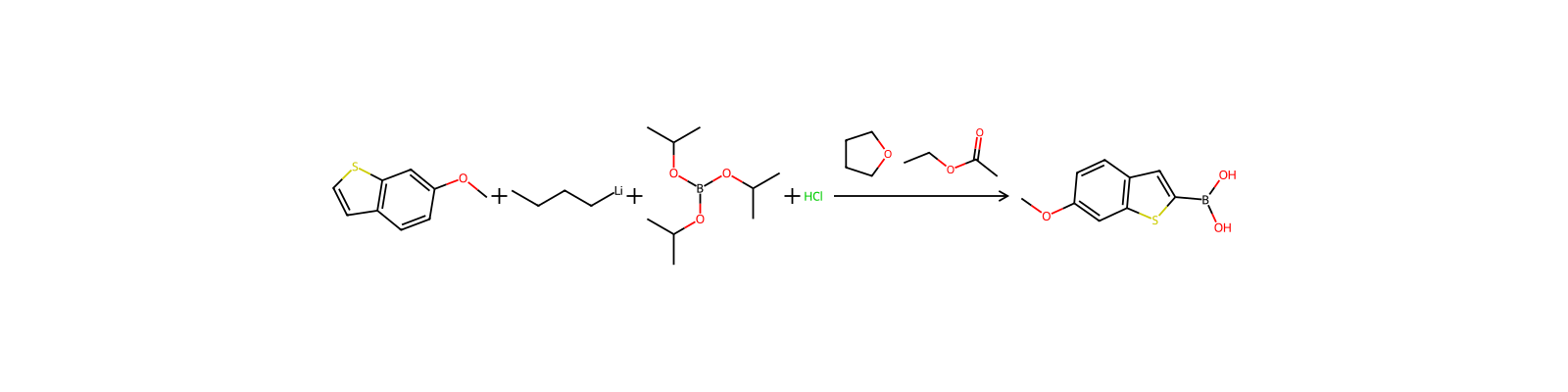
2-Fluoro-4-methylphenylboronic acid4-Chloro-2-methylphenylboronic acid2-Phenoxyphenylboronic acid5-Fluoro-2-methoxyphenylboronic acid2-Chloropyridine-5-boronic acid3-Isopropylphenylboronic acid

Zugehörige Reaktionen

1.375
Reaktionsaufzeichnung erstellen
Reaktionsgleichung von HRID 993
HRID 993als Eduktuspto-grants-1998_03
Reaktionsgleichung von HRID 1380
HRID 1380als Eduktuspto-grants-1998_03
Reaktionsgleichung von HRID 3064
HRID 3064als Eduktuspto-grants-1998_03
Reaktionsgleichung von HRID 6591
HRID 6591als Eduktuspto-grants-2006_08
Reaktionsgleichung von HRID 6597
HRID 6597als Eduktuspto-grants-2006_08
Reaktionsgleichung von HRID 7012
HRID 7012als Eduktuspto-grants-2006_08
Reaktionsgleichung von HRID 7364
HRID 7364als Eduktuspto-grants-2006_08
Reaktionsgleichung von HRID 9376
HRID 9376als Eduktuspto-grants-2006_08
Seite 1 von 172

Notizen zur Verbindung

Wird geladen…

Auf dieser SeiteGrundinformationenÜberblickNamen und BezeichnerEigenschaftenSicherheit und RegulatorischesChemie und IndustrieZugehörige ReaktionenNotizen zur Verbindung
Weitere Aktionen
Neue NotizNeue ReaktionAnfrage stellen
DTXSID
DTXSID7027598
ChEMBL
CHEMBL1902909
UNII
YWV817MXF3
EC Number
226-529-9
Nikkaji
J35.126A
storage temp.
30 °C · Store below +30°C.
Löslichkeit
Miscible with ether, ethanol, isopropanol and benzene.
Aggregatzustand
Liquid
Wichte
0.815 · 0.815
Farbe
Clear colorless
Wasserlöslichkeit
decomposes
BRN
1701469 · 1701469
InChI
1S/C9H21BO3/c1-7(2)11-10(12-8(3)4)13-9(5)6/h7-9H,1-6H3
InChIKey
NHDIQVFFNDKAQU-UHFFFAOYSA-N
SMILES
CC(C)OB(OC(C)C)OC(C)C
CAS Datenbank
5419 · 5419-55-6(CAS DataBase Reference)
NIST chemische Informationen
Boric acid (h3bo3), tris(1-methylethyl) ester(5419-55-6)
EPA chemische Informationen
Triisopropyl orthoborate (5419-55-6)
Hazards Summary · 1 Eintrag

A mild eye irritant; Causes somnolence, respiratory depression, and diarrhea in oral lethal-dose studies of rats; Oral LD50 (mouse) = 2,500 mg/kg; [RTECS] May cause irritation; [Alfa Aesar MSDS] See Isopropyl alcohol and Boric acid. See Triethyl borate.

DOT ID and Guide2616 129
Reactive GroupEsters, Sulfate Esters, Phosphate Esters, Thiophosphate Esters, and Borate Esters
Reactivity AlertsHighly Flammable
Reactivity Profile · 1 Eintrag

Borates, such as TRIISOPROPYL BORATE, behave similarly to esters in that they react with acids to liberate heat along with alcohols and acids. Strong oxidizing acids may cause a vigorous reaction that is sufficiently exothermic to ignite the reaction products. Heat is also generated by the interaction of esters with caustic solutions. Flammable hydrogen is generated by mixing esters/borates with alkali metals and hydrides.

DOT Hazard Classification · 4 Einträge

Triisopropyl borate

UN2616

Class 3 Flammable and combustible liquid (49 eCFR § 173.120)

PG II: the degree of danger presented by the material is medium

Air and Water ReactionsHighly flammable. Insoluble in water.
Hazard Classes and Categories · 2 Einträge

Flam. Liq. 2 (93.5%)

Flammable agents - 3rd degree, Reactive agents - 1st degree

Sicherheit und Schutzausrüstung

Fire FightingExcerpt from ERG Guide 129 [Flammable Liquids (Water-Miscible / Noxious)]:
Accidental Release Measures · 2 Einträge

· CALL 911. Then call emergency response telephone number on shipping paper. If shipping paper not available or no answer, refer to appropriate telephone number listed on the inside back cover.

· ELIMINATE all ignition sources (no smoking, flares, sparks or flames) from immediate area.

First Aid · 2 Einträge

Excerpt from ERG Guide 129 [Flammable Liquids (Water-Miscible / Noxious)]:

General First Aid:

Exposure Control and Personal Protection· Wear positive pressure self-contained breathing apparatus (SCBA).
Nonfire Spill ResponseExcerpt from ERG Guide 129 [Flammable Liquids (Water-Miscible / Noxious)]:
Isolation and Evacuation · 2 Einträge

Excerpt from ERG Guide 129 [Flammable Liquids (Water-Miscible / Noxious)]:

Immediate precautionary measure

Personal Protective Equipment (PPE)Excerpt from ERG Guide 129 [Flammable Liquids (Water-Miscible / Noxious)]:
Emergency Response Planning GuidelinesCAUTION: The majority of these products have a very low flash point. Use of water spray when fighting fire may be inefficient.

Sicherheitsdaten

F
10-21
wgk
2
tsca
TSCA listed
ridadr
UN 2616 3/PG II/III (TRIISOPROPYL BORATE)
hs_code
29209085
RTECS-Nr.
ED5950000
risk_code
11
hazard_code
F,Xi
safety_code
7-16-23-24/25-33-9
hazard_class
3
packing_group
II
Speicherklasse
3 - Flammable liquids
Hazard Classifications
Flam. Liq. 2
2-Methoxy-5-pyridineboronic acid
2-Methoxyphenylboronic acid
4-Carboxylphenylboronic acid pinacol ester
(6-Ethoxypyridin-3-yl)boronic acid
5-Methylthiophene-2-boronic acid
3-Thiopheneboronic acid
5-Chloropyridine-2-boronic acid
3-Cyanopyridin-4-ylboronic acid
3-Methoxyphenylboronic acid
5-Methylpyridine-3-boronic acid
2-Cyanopyridin-3-ylboronic acid
2-Bromopyridine-5-boronic acid
2-Cyanophenylboronic acid
2,6-Difluorophenylboronic acid
(4-Methoxyphenyl)-borane
4-Hydroxyphenylboronic acid
3-Methoxycarbonylphenylboronic acid
2-(Trifluormethoxy)phenylboronic acid
3-Chloro-5-fluorophenylboronic acid
2-Bromopyridin-3-ylboronic acid
5-Bromopyridine-3-boronic acid
4-Cyanopyridin-3-ylboronic acid
2-Methoxycarbonylphenylboronic acid
3-Cyanophenylboronic acid
3-Chloro-4-pyridineboronic acid hydrate
5-Methoxypyridine-3-boronic acid
Isoquinoline-4-boronic acid 2,2-dimethylpropanediol-1,3 cyclic ester
5-Pyrimidinylboronic acid
2,3-Difluorophenylboronic acid
1-Naphthylboronic acid
2-Formylfuran-5-boronic acid
2-Isopropylphenylboronic acid
6-Methylpyridine-3-boronic Acid
5-Methyl-2-pyridineboronic acid