
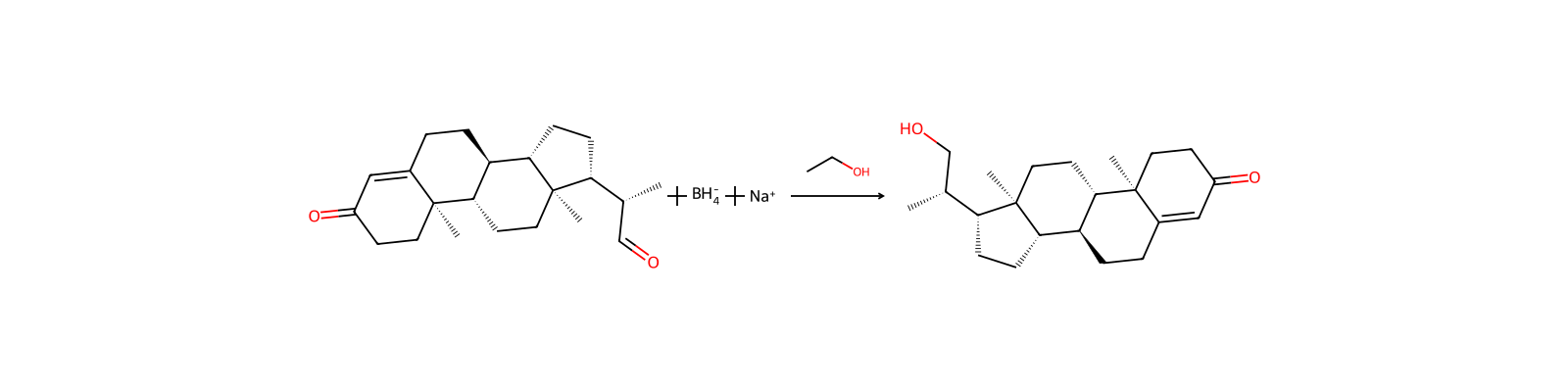
(2S)-2-((8S,9S,10R,13S,14S,17R)-10,13-dimethyl-3-oxo-1,2,6,7,8,9,11,12,14,15,16,17-dodecahydrocyclopenta(a)phenanthren-17-yl)propanal

Grundinformationen
- CAS
3986-89-8- Standard-SMILES
C[C@H](C=O)[C@H]1CC[C@H]2[C@@H]3CCC4=CC(=O)CC[C@]4(C)[C@H]3CC[C@]12C- InChIKey
XVPJEGGIGJLDQK-HOFZUOGSSA-N- Summenformel
- C22H32O2
- Durchschnittliche Molmasse
- 328,5 g/mol
- Monoisotopische Masse
- 328,24023026
Namen und Bezeichner
- Bevorzugter Name
- (2S)-2-((8S,9S,10R,13S,14S,17R)-10,13-dimethyl-3-oxo-1,2,6,7,8,9,11,12,14,15,16,17-dodecahydrocyclopenta(a)phenanthren-17-yl)propanal
- IUPAC
- (2S)-2-[(8S,9S,10R,13S,14S,17R)-10,13-dimethyl-3-oxo-1,2,6,7,8,9,11,12,14,15,16,17-dodecahydrocyclopenta[a]phenanthren-17-yl]propanal
- Englischer Name
- BISNORCHOLENALDEHYDE
- Summenformel
- C22H32O2
- Molmasse
- 328.49
Namen und Synonyme
(2S)-2-[(8S,9S,10R,13S,14S,17R)-10,13-dimethyl-3-oxo-1,2,6,7,8,9,11,12,14,15,16,17-dodecahydrocyclopenta[a]phenanthren-17-yl]propanal(2S)-2-((8S,9S,10R,13S,14S,17R)-10,13-dimethyl-3-oxo-1,2,6,7,8,9,11,12,14,15,16,17-dodecahydrocyclopenta(a)phenanthren-17-yl)propanalRefChem:398070861-038-9bisnorcholenaldehyde3986-89-8PROGESTERONE IMPURITY 24(S)-2-((8S,9S,10R,13S,14S,17R)-10,13-dimethyl-3-oxo-2,3,6,7,8,9,10,11,12,13,14,15,16,17-tetradecahydro-1H-cyclopenta[a]phenanthren-17-yl)propanal(20S)-3-oxopregn-4-ene-20-carboxaldehydeMFCD18429079Progesterone EP Impurity I (S-Isomer)(S)-2-[(8S,9S,10R,13S,14S,17R)-10,13-Dimethyl-3-oxo-2,3,6,7,8,9,10,11,12,13,14,15,16,17-tetradecahydro-1H-cyclopenta[a]phenanthren-17-yl]propanal
Weitere Namen anzeigen
BNKY018-PG01BisnorcholeldehydeKETOBISNORALDEHYDEProgesterone Impurity 7Progesterone EP Impurity IDidroprogesterone impurity 2
Eigenschaften
Berechnete Struktureigenschaften
- XLogP
- 4,6
- Polarare Oberfläche (TPSA)
- 34,1 Ų
- H-Brücken-Donoren
- 0
- H-Brücken-Akzeptoren
- 2
- Frei drehbare Bindungen
- 2
- Schwere Atome
- 24
- Formalladung
- 0
- Komplexität
- 591
Physikochemische Eigenschaften
- Schmelzpunkt
- 159 · 159-160 °C
- Siedepunkt
- 459.4 · 459.4±14.0 °C(Predicted)
- Dichte
- 1.07 · 1.07±0.1 g/cm3(Predicted)
- Löslichkeit
- Chloroform (Slightly), Dichloromethane (Slightly), Methanol (Slightly)
- Aggregatzustand
- Solid
- Farbe
- White to Off-White
- InChI
- InChI=1S/C22H32O2/c1-14(13-23)18-6-7-19-17-5-4-15-12-16(24)8-10-21(15,2)20(17)9-11-22(18,19)3/h12-14,17-20H,4-11H2,1-3H3/t14-,17+,18-,19+,20+,21+,22-/m1/s1
- InChIKey
- XVPJEGGIGJLDQK-HOFZUOGSSA-N
- SMILES
- C1(=O)C=C2[C@](C)(CC1)[C@]1([H])[C@]([H])([C@@]3([H])[C@@](CC1)(C)[C@@H]([C@@H](C=O)C)CC3)CC2
Sicherheit und Regulatorisches
Sicherheitsangaben dienen nur zur Orientierung und ersetzen weder das Sicherheitsdatenblatt (SDB) des Lieferanten noch geltende Vorschriften oder eine fachliche Bewertung.
GHS-Klassifizierung
GHS Classification
Danger
H351 (100%): Suspected of causing cancer [Warning Carcinogenicity];H360 (100%): May damage fertility or the unborn child [Danger Reproductive toxicity];H362 (100%): May cause harm to breast-fed children [Reproductive toxicity, effects on or via lactation]
P203, P260, P263, P264, P270, P280, P318, P405, and P501 (click each P-code to see the statement)
Aggregated GHS information provided per 2 reports by companies from 1 notifications to the ECHA C&L Inventory. Each notification may be associated with multiple companies.;Information may vary between notifications depending on impurities, additives, and other factors. The percentage value in parenthesis indicates the notified classification ratio from companies that provide hazard codes. Only hazard codes with percentage values above 10% are shown. For more detailed information, please visit ECHA C&L website.
Gefahrenhinweise
Regulatory InformationStatus: Active Update: 02-12-2020 https://echa.europa.eu/registration-dossier/-/registered-dossier/32089
Hazard Classes and CategoriesCarc. 2 (100%);Repr. 1A (100%);Lact. (100%)
Regulatorische Informationen
Regulatory InformationStatus: Active Update: 02-12-2020 https://echa.europa.eu/registration-dossier/-/registered-dossier/32089
Sicherheitsdaten
- Alarmwort
- Achtung
- Gefahrenhinweise
- Code Gefahrenhinweise Gefahrenklasse Abteilung Alarmwort Symbol P-Code H351
Chemie und Industrie
Anwendungen
BeschreibungAndrostenedione is the main product after phytosterol fermentation by Mycobacteria. Bisnorcholenaldehyde (BA; 3-Oxopregn-4-ene-20-carboxaldehyde) is one of the by-products produced during fermentation. Bisnorcholenaldehyde is an essential intermediate in the production of progesterone, which is used to treat threatened abortion or habitual abortion disease caused by luteal insufficiency. It is a precursor of androgen, estrogen, glucocorticoid and intermediates of steroid hormone synthesis[1]. In addition, BA is used in magnetic-based graphene composites with steroidal diamine dimer as a potential drug in hyperthermia cancer therapy.
VerwendenBisnorcholenaldehyde is hydrocarbon derivatives and can be used as reference materials for medical impurities.
Vor- und nachgelagerte Produkte
Nachgelagerte Produkte
Anbieter33 Anbieter
广州佳途科技股份有限公司81960175-877 18933936954 · [email protected]
湖北瑞玛标物科技有限公司15787879035 15787875101 · [email protected]
上海科骊科生物技术有限公司021-34975789 18721102763
Sinco Pharmachem (ShenZhen) R&D Co., Ltd.+86-18603013401 · [email protected]
济南启源生物科技有限公司18766124282; 18766124282 · [email protected]
孟成科技(上海)有限公司400-820-6829 · [email protected]
Zugehörige Reaktionen
3

Notizen zur Verbindung
Wird geladen…