StartseiteMCPWorkbenchSkills
StartseiteWorkbenchBenachrichtigungenMein Bereich
llms.txt · MCP-AnleitungDatenschutz · Nutzungsbedingungen · Supportv1.8.3
  1. Startseite
  2. /Verbindung

3-Hydroxyoestra-1,3,5(10),7-tetraen-17-on

Equilin

HCID 223368
Neue Reaktion
Drucken
GrundinformationenÜberblickNamen und BezeichnerEigenschaftenSicherheit und RegulatorischesChemie und IndustrieZugehörige ReaktionenNotizen zur Verbindung
TeilstruktursucheÄhnliche Strukturen suchen

Grundinformationen

CAS
474-86-2
Standard-SMILES
C[C@]12CC[C@H]3C(=CCc4cc(O)ccc43)[C@@H]1CCC2=O
InChIKey
WKRLQDKEXYKHJB-HFTRVMKXSA-N
Summenformel
C18H20O2
Durchschnittliche Molmasse
268,3 g/mol
Monoisotopische Masse
268,14632988

Überblick

Equilin is a 17-oxo steroid and a 3-hydroxy steroid. It derives from a hydride of an estrane.

Namen und Bezeichner

Bevorzugter Name
Equilin
IUPAC
(9S,13S,14S)-3-hydroxy-13-methyl-9,11,12,14,15,16-hexahydro-6H-cyclopenta[a]phenanthren-17-one
Lokaler Name
3-Hydroxyoestra-1,3,5(10),7-tetraen-17-on
Englischer Name
EQUILIN
Summenformel
C18H20O2
Molmasse
268.35

Namen und Synonyme

equilin474-86-27-DehydroestroneDihydroequilenin3-HYDROXYESTRA-1,3,5(10),7-TETRAEN-17-ONE1,3,5,7-Estratetraen-3-ol-17-oneDTXSID7047433Estra-1,3,5(10),7-tetraen-17-one, 3-hydroxy-NSC-10971Equilin (USP)Equilin [USP]08O86EX0J4
Weitere Namen anzeigen
EQUILINENSC 10971Equilin CRSEquilin (25 mg)EQUILIN USP/EP/BPEquilin (1238002)Equilin solution
DTXCID5027433CHEBI:42309NSC10971DTXSID90859387RefChem:591016DTXCID90210237(1S,11S,15S)-5-hydroxy-15-methyltetracyclo(8.7.0.02,7.011,15)heptadeca-2(7),3,5,9-tetraen-14-one207-488-6

Datenbank-Bezeichner

CAS
474-86-2
PubChem CID
223368
DTXSID
DTXSID7047433
ChEMBL
CHEMBL323533

Eigenschaften

Berechnete Struktureigenschaften

XLogP
2,9
Polarare Oberfläche (TPSA)
37,3 Ų
H-Brücken-Donoren
1
H-Brücken-Akzeptoren
2
Frei drehbare Bindungen
0
Schwere Atome
20
Formalladung
0
Komplexität
466

Experimentelle und physikochemische Eigenschaften

Chemical ClassesHormone
DrugsPharmaceuticals -> Listed in ZINC15
LipidsLipids -> Sterol Lipids [ST] -> Steroids [ST02] -> C18 steroids (estrogens) and derivatives [ST0201]
SpringerMaterials PropertiesCrystal structure
Endocrine DisruptorsPotential endocrine disrupting compound
Collision Cross Section · 2 Einträge

172.2 Ų [M-H]- [CCS Type: DT; Buffer gas: N2; Ionization: ESI-; Dataset: TOXCAST; Source Identifier: DTXSID7047433]

153.17 Ų [M+H-H2O]+ [CCS Type: TW; Method: calibrated with polyalanine and drug standards]

Physikochemische Eigenschaften

Schmelzpunkt
238 · 238-240 °C(lit.)
Siedepunkt
351.51 °C · 351.51°C (rough estimate)
Dichte
1.1096 · 1.1096 (rough estimate)

Sicherheit und Regulatorisches

Sicherheitsangaben dienen nur zur Orientierung und ersetzen weder das Sicherheitsdatenblatt (SDB) des Lieferanten noch geltende Vorschriften oder eine fachliche Bewertung.

GHS-Klassifizierung

GHS Classification · 4 Einträge

Danger

H302 (20.5%): Harmful if swallowed [Warning Acute toxicity, oral]

P203, P260, P261, P263, P264, P270, P271, P280, P301+P317, P302+P352, P304+P340, P317, P318, P321, P330, P362+P364, P405, and P501 (click each P-code to see the statement)

Aggregated GHS information provided per 83 reports by companies from 6 notifications to the ECHA C&L Inventory. Each notification may be associated with multiple companies.

Gefahrenhinweise

Hazard Classes and CategoriesAcute Tox. 4 (20.5%)

Toxikologische Informationen

Exposure RoutesWell absorbed.
Toxicity Summary · 1 Eintrag

Estrogens enter the cells of responsive tissues (e.g., female organs, breasts, hypothalamus, pituitary) where they interact with a protein receptor, subsequently increasing the rate of synthesis of DNA, RNA, and some proteins. Estrogens decrease the secretion of gonadotropin-releasing hormone by the hypothalamus, reducing the secretion of follicle-stimulating hormone (FSH) and luteinizing hormone (LH) from the pituitary.

Carcinogen ClassificationNo indication of carcinogenicity to humans (not listed by IARC).
USGS Health-Based Screening Levels for Evaluating Water-Quality · 3 Einträge

Equilin

Hormone

Smith, C.D. and Nowell, L.H., 2024. Health-Based Screening Levels for evaluating water-quality data (3rd ed.). DOI:10.5066/F71C1TWP

Chemie und Industrie

Pharmakologische Informationen

Protein Binding90% bound to plasma proteins
Pharmacodynamics · 1 Eintrag

Equilin is a component of Premarin (conjugated estrogens), a mixture of the water soluble salts of sulfate esters from estrone, equilin, 17 alpha-dihydroequilin, and other related steroids, may be derived from pregnant equine urine or yam and soy plants. Estrogens are important in the development and maintenance of the female reproductive system and secondary sex characteristics. They promote growth and development of the vagina, uterus, and fallopian tubes, and enlargement of the breasts. Indirectly, they contribute to the shaping of the skeleton, maintenance of tone and elasticity of urogenital structures, changes in the epiphyses of the long bones that allow for the pubertal growth spurt and its termination, growth of axillary and pubic hair, and pigmentation of the nipples and genitals. Decline of estrogenic activity at the end of the menstrual cycle can bring on menstruation, although the cessation of progesterone secretion is the most important factor in the mature ovulatory cycle. However, in the preovulatory or nonovulatory cycle, estrogen is the primary determinant in the onset of menstruation. Estrogens also affect the release of pituitary gonadotropins. The pharmacologic effects of conjugated estrogens are similar to those of endogenous estrogens.

Mechanism of Action · 1 Eintrag

Estrogens enter the cells of responsive tissues (e.g., female organs, breasts, hypothalamus, pituitary) where they interact with a protein receptor, subsequently increasing the rate of synthesis of DNA, RNA, and some proteins. Estrogens decrease the secretion of gonadotropin-releasing hormone by the hypothalamus, reducing the secretion of follicle-stimulating hormone (FSH) and luteinizing hormone (LH) from the pituitary.

Metabolism/Metabolites · 2 Einträge

Hepatic

Hepatic.

Absorption, Distribution and ExcretionWell absorbed.

Verwendung und Herstellung

Zugehörige Reaktionen

27
Reaktionsaufzeichnung erstellen
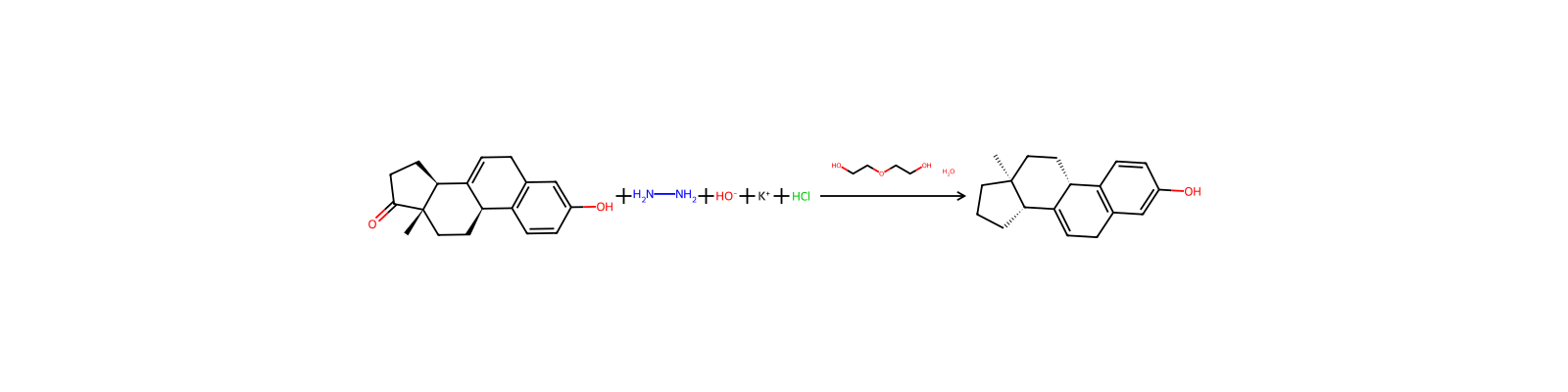
Reaktionsgleichung von HRID 275671
HRID 275671als Edukt
Reaktionsgleichung von HRID 275678
HRID 275678als Edukt
Reaktionsgleichung von HRID 275687
HRID 275687als Edukt
Reaktionsgleichung von HRID 369047
HRID 369047als Edukt
Reaktionsgleichung von HRID 369697
HRID 369697als Edukt
Reaktionsgleichung von HRID 582854
HRID 582854als Edukt
Reaktionsgleichung von HRID 850831
HRID 850831als Edukt
Reaktionsgleichung von HRID 1107196
HRID 1107196als Edukt
ZurückSeite 1 von 4

Notizen zur Verbindung

Auf dieser SeiteGrundinformationenÜberblickNamen und BezeichnerEigenschaftenSicherheit und RegulatorischesChemie und IndustrieZugehörige ReaktionenNotizen zur Verbindung
ChEBI
CHEBI:42309
UNII
08O86EX0J4
EC Number
207-488-6
Nikkaji
J5.967F
Brechungsindex
1.48 · 1.4800 (estimate)
Flammpunkt
9 ℃ · 9℃
storage temp.
Refrigerator
Löslichkeit
Chloroform (Slightly), Dioxane (Slightly, Heated, Sonicated), DMSO (Slightly, Sonicated)
Aggregatzustand
Solid
pka
10.26 · pKa 10.26±0.04(H2O t=23±2) (Uncertain)
Farbe
White to off-white
Wasserlöslichkeit
1.4 mg/L · 1.4mg/L(25 ºC)
Merck
13 · 13,3672
BRN
2624302 · 2624302
Major Application
pharmaceutical (small molecule)
InChI
1S/C18H20O2/c1-18-9-8-14-13-5-3-12(19)10-11(13)2-4-15(14)16(18)6-7-17(18)20/h3-5,10,14,16,19H,2,6-9H2,1H3/t14-,16+,18+/m1/s1
InChIKey
WKRLQDKEXYKHJB-HFTRVMKXSA-N
SMILES
C[C@]12CC[C@H]3C(=CCc4cc(O)ccc34)[C@@H]1CCC2=O
EPA chemische Informationen
Equilin (474-86-2)

Sicherheitsdaten

wgk
3
ridadr
UN1230 - class 3 - PG 2 - Methanol, solution
hs_code
2937230000
RTECS-Nr.
KG6650000
risk_code
40-62-63-39/23/24/25-23/24/25-11
hazard_code
Xn,T,F
safety_code
36/37-45-16-7
Speicherklasse
11 - Combustible Solids
Hazard Classifications
Carc. 2Lact.Repr. 2
Uses · 1 Eintrag

For the treatment of moderate to severe vasomotor symptoms associated with the menopause, atrophic vaginitis, osteoporosis, hypoestrogenism due to hypogonadism, castration, primary ovarian failure, breast cancer (for palliation only), and Advanced androgen-dependent carcinoma of the prostate (for palliation only)

Anwendungen

VerwendenEquilin is an estrogen found in Premarin, which is a mixture of conjugated estrogens widely used in hormone replacement therapy.