
Grundinformationen
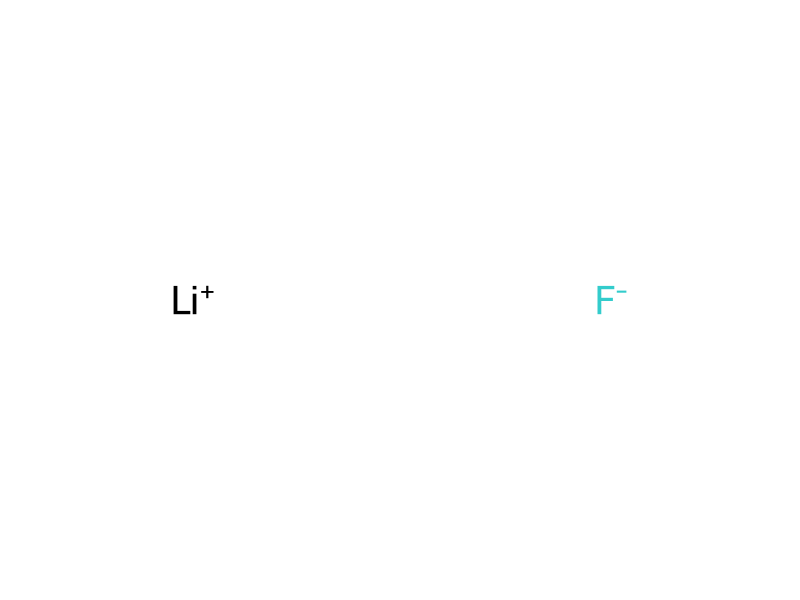
- Standard-SMILES
[F-].[Li+]- InChIKey
PQXKHYXIUOZZFA-UHFFFAOYSA-M- Summenformel
- FLi
- Durchschnittliche Molmasse
- 26 g/mol
- Monoisotopische Masse
- 26,01440777
Überblick
RN given refers to cpd with MF of Li-F; GR200-A is LiF activated by Mg, Cu, and P
Namen und Bezeichner
- Bevorzugter Name
- Lithium fluoride
- IUPAC
- lithium fluoride
- Englischer Name
- Lithium fluoride
- Summenformel
- FLi
- Molmasse
- 25.9394032
Namen und Synonyme
LITHIUM FLUORIDE7789-24-4FluorolithiumLithium monofluorideLithium fluoride (LiF)Lithium fluorureTLD 100NTL 50TLD 7001485XST65BNSC-12957DTXSID10894119
Weitere Namen anzeigen
Lithium FluoratumRefChem:57999GR200-ADTXCID701324159GR-200-A232-152-0lithium;fluorideTrilithium trifluoride
Datenbank-Bezeichner
- CAS
12159-92-1、14885-65-5、17409-87-9、7789-24-4- PubChem CID
- 224478
- DTXSID
DTXSID10894119- UNII
- 1485XST65B
- EC Number
- 232-152-0、235-292-0、241-438-4
- Nikkaji
- J43.855C
Eigenschaften
Berechnete Struktureigenschaften
- Polarare Oberfläche (TPSA)
- 0 Ų
- H-Brücken-Donoren
- 0
- H-Brücken-Akzeptoren
- 1
- Frei drehbare Bindungen
- 0
- Schwere Atome
- 2
- Formalladung
- 0
- Komplexität
- 2
Experimentelle und physikochemische Eigenschaften
Chemical ClassesMetals -> Metals, Inorganic Compounds
SpringerMaterials Propertiesnuclear quadrupole moment
Density
2.640 g/cu cm
2.635 @25 °C
Color/Form
Cubic crystals (NaCl lattice) or white fluffy powder
Fine white powder
Solubility
0.134 g/100 g water at 25 °C; soluble in acid
0.27 G SOL IN 100 ML WATER @ 18 °C; INSOL IN ALCOHOL; SOL IN HYDROGEN FLUORIDE
Boiling Point
1673 °C
1676 °C @760 [mm Hg]
DecompositionWhen heated to decomposition it emits toxic fumes of /fluoride/.
Melting Point
848.2 °C
848 °C
Vapor Pressure
1 mm Hg at 1047 °C
1 [mm Hg] @1047 °C
Refractive IndexINDEX OF REFRACTION: 1.3915
Physical Description
Dry Powder
White solid; [Hawley] White odorless powder; [MSDSonline]
Other Experimental Properties
Volatilizes at 1100-1200 °C; with hydrofluoric acid it forms lithium bifluoride, LiHF2; with lithium hydroxide it forms a double salt LiF.LiOH
Does not react with water at red heat
Standard molar enthalpy of formation at 298.15 K: -616.0 kJ/mol; molar heat capacity at constant pressure and 298.15 K: 41.6 J/mol K
Enthalpy of fusion: 27.09 kJ/mol
Physikochemische Eigenschaften
- Schmelzpunkt
- 848 °C · 848 °C
- Siedepunkt
- 1681 °C · 1681 °C
- Dichte
- 2.64 g/cm3 · 2.640 g/cm3
Sicherheit und Regulatorisches
GHS-Klassifizierung
GHS Classification
This chemical does not meet GHS hazard criteria for 0.2% (1 of 415) of reports.
Danger
H301 (57.3%): Toxic if swallowed [Danger Acute toxicity, oral]
P261, P264, P264+P265, P270, P271, P280, P301+P316, P301+P317, P302+P352, P304+P340, P305+P351+P338, P319, P321, P330, P332+P317, P337+P317, P362+P364, P403+P233, P405, and P501 (click each P-code to see the statement)
Aggregated GHS information provided per 415 reports by companies from 20 notifications to the ECHA C&L Inventory. Each notification may be associated with multiple companies.
Danger
Gefahrenhinweise
Regulatory Information
Chemical: Lithium fluoride (LiF)
Lithium fluoride (LiF) is listed on the EPA's Chemical Data Reporting (CDR) system. Manufacturers and importers of Lithium fluoride (LiF) are required to report information about their production and use of this chemical to the EPA under the Toxic Substances Control Act (TSCA). (40 eCFR Part 711)
Status: Active Update: 07-07-2022 https://echa.europa.eu/registration-dossier/-/registered-dossier/21604
Lithium fluoride: Does not have an individual approval but may be used under an appropriate group standard
Hazards Summary
A strong skin and eye irritant; [Hawley] Most toxic of lithium salts; Highly irritating to skin and eyes; [HSDB] A skin and eye irritant; [eChemPortal: ERMA] An irritant; Can be absorbed through skin; [MSDSonline] See FLUORIDES. See Lithium.
Hazard Classes and Categories
Acute Tox. 3 (100%)
Acute Tox. 3 (57.3%)
Skin, Eye, and Respiratory IrritationsStrong irritant to eyes and skin.
Sicherheit und Schutzausrüstung
Exposure Control and Personal Protection
Biological Exposure Indices (BEI) [ACGIH] - Fluorides in urine = 2 mg/L prior to shift or 3 mg/L at end of shift; (Repeated measurements recommended.)
1.0 [mg/m3], inhalable fraction, as F (0.2 mg/m3, inhalable fraction, as Li)[German Research Foundation (DFG)]
Disposal Methods
SRP: The most favorable course of action is to use an alternative chemical product with less inherent propensity for occupational exposure or environmental contamination. Recycle any unused portion of the material for its approved use or return it to the manufacturer or supplier. Ultimate disposal of the chemical must consider: the material's impact on air quality; potential migration in soil or water; effects on animal, aquatic, and plant life; and conformance with environmental and public health regulations.
Preventive Measures
SRP: Contaminated protective clothing should be segregated in such a manner so that there is no direct personal contact by personnel who handle, dispose, or clean the clothing. Quality assurance to ascertain the completeness of the cleaning procedures should be implemented before the decontaminated protective clothing is returned for reuse by the workers. Contaminated clothing should not be taken home at end of shift, but should remain at employee's place of work for cleaning.
SRP: The scientific literature for the use of contact lenses in industry is conflicting. The benefit or detrimental effects of wearing contact lenses depend not only upon the substance, but also on factors including the form of the substance, characteristics and duration of the exposure, the uses of other eye protection equipment, and the hygiene of the lenses. However, there may be individual substances whose irritating or corrosive properties are such that the wearing of contact lenses would be harmful to the eye. In those specific cases, contact lenses should not be worn. In any event, the usual eye protection equipment should be worn even when contact lenses are in place.
SRP: Local exhaust ventilation should be applied wherever there is an incidence of point source emissions or dispersion of regulated contaminants in the work area. Ventilation control of the contaminant as close to its point of generation is both the most economical and safest method to minimize personnel exposure to airborne contaminants.
Ventilation control: processes in which there is potential exposure hazard should be equipped with local exhaust ventilation and should, where possible, be mechanized. /Fluorine and compounds/
Threshold Limit Values (TLV)2.5 [mg/m3], as F
Permissible Exposure Limit (PEL)2.5 [mg/m3], as F
Protective Action Criteria (PAC)
10 [mg/m3]
23 [mg/m3]
140 [mg/m3]
Personal Protective Equipment (PPE)
To prevent lesions of respiratory system, concentrations...should not exceed recommended max permissible levels. ... Workers...should be supplied with eye and face protection, respiratory protective equipment, protective clothing... Foot and leg protection. ...lanolin /may be used/ as barrier cream. /Fluorine and compounds/
Toxikologische Informationen
Adverse EffectsNeurotoxin - Other CNS neurotoxin
Natural Pollution Sources/LITHIUM SALTS/...SILICATE, PHOSPHATE, FLUORIDE & CHLORIDE ARE FOUND IN SMALL AMT IN SEVERAL MINERALS, ESPECIALLY SILICATES SUCH AS PETALITE & SPODUMENE, & IN SMALL CONCENTRATIONS IN SEA WATER & MANY MINERAL WELLS.
Human Toxicity Excerpts
/OTHER TOXICITY INFORMATION/ Inorganic fluorides are generally highly irritant and toxic. /Fluorides/
/OTHER TOXICITY INFORMATION/ With some lithium salts, the anion probably determines the major toxicity such as... lithium fluoride.
/OTHER TOXICITY INFORMATION/ ...Lithium fluoride is the most toxic of the lithium salts studied.
/SIGNS AND SYMPTOMS/ Acute intoxication can occur in the initial phase in a course of therapy, but also at any point of time during long-lasting treatment or after an acute overdose. At plasma levels between 1.5 and 2.5 mmol/L, signs of toxicity include anorexia, dry mouth, nausea, vomiting, diarrhea, tremor of the hands, faintness of musculature, thirst, leucocytosis, and concentration and memory disturbances (especially with older people). These phenomena are often seen in the initial phase of a course of treatment and usually disappear when treatment continues, except with the tremor of the hands. In elderly people, reversible delirious conditions can occur with confusion, restlessness, and ataxia. At plasma levels above 2.5 mmol/L, serious toxic symptoms occur; fasciculations, muscle contractions, hyperreflexia and hypertonia, drowsiness, confusion, sometimes epileptiform insults, hypotension, coma, collapse. Independent of the plasma level, changes can occur in the ECG and in the EEC, with symptoms such as polyuria and polydipsia, seldom nephrogenic diabetes insipidus, ulcers of the leg, enhancement of acne and psoriasis, transient hyperglycemia, pruritus, and a metal taste. In about 5% of the cases, a (usually reversible) hypothyroidia develops. /Li+/
For more Human Toxicity Excerpts (Complete) data for LITHIUM FLUORIDE (6 total), please visit the HSDB record page.
Non-Human Toxicity Excerpts
/LABORATORY ANIMALS: Acute Exposure/ THE MOST PROMINENT SYMPTOMS OF ACUTE LITHIUM POISONING IN ANIMALS, WHEN GIVEN LITHIUM EITHER BY MOUTH OR IV.../ARE/ ANOREXIA, NAUSEA, VOMITING, DIARRHEA & SALIVATION WITH LOSS OF WT, DEHYDRATION & FALL OF BODY TEMP. EFFECTS ON CNS ARE MANIFESTED BY MUSCULAR WEAKNESS, HYPERIRRITABILITY, STUPOR & CONVULSIONS; ON THE HEART BY EKG CHANGES...WITH AURICULAR STANDSTILL OR FIBRILLATION; ON THE KIDNEYS BY OLIGURIA, A RISE IN THE BLOOD PROTEIN NITROGEN AND DEGENERATIVE CHANGES IN THE TUBULAR EPITHELIUM. /LITHIUM NOS/
/LABORATORY ANIMALS: Subchronic or Prechronic Exposure/ CHRONIC EFFECTS FOLLOWED THE ADMIN TO ADULT RATS OF DRINKING WATER CONTAINING LITHIUM IN JUST SUB-TOXIC DOSES; AFTER 3-5 DAYS THE RATS SHOWED DROWSINESS, TREMOR, APATHY, DEHYDRATION & EMACIATION; DEATH OCCURRED WITHIN 2-3 WK.. /LITHIUM NOS/
/LABORATORY ANIMALS: Subchronic or Prechronic Exposure/ ... the usefulness of urine N-acetyl-beta-D-glucosaminidase (NAG) for the early diagnosis of lithium-induced renal insufficiency /was examined in a rat model/. Lithium was administered by repeated intraperitoneal injection (1, 2 and 4 mEq/kg/day for 10 days). ... Lithium pretreatment elevated the plasma creatinine level and decreased paraaminohippuric acid (PAH) clearance in a dose-dependent manner. The NAG level in the lithium 4 mEq/kg group was very high. The levels in the lithium 1 mEq/kg and 2 mEq/kg groups were almost the same and were higher than the control group. A histological examination of the kidney revealed glomerular congestion and/or atrophy and tubular expansion in all of the groups except the control group. These histological changes were dose-dependent. ...
/LABORATORY ANIMALS: Subchronic or Prechronic Exposure/ Chronic renal failure was induced by administering lithium orally to 14 newborn rats. Seven rats were treated for 8 weeks followed by 8 weeks without lithium (group Li/C) and seven for 16 weeks (group Li/Li). Plasma urea and renal concentrating ability were measured, and one kidney fixed by vascular perfusion. Mean glomerular volume as well as volumes of individual glomeruli were estimated. In addition, the structural integrity between the glomerulus and the proximal tubule was investigated on serial sections. No sclerotic glomeruli were present. Only 37.6 and 27.9% of the glomeruli in the Li/C and Li/Li groups, respectively, were connected to a normal proximal tubule, and most remaining glomeruli were atubular. The mean glomerular volume was unchanged in the Li/C group and reduced by 40% in the Li/Li group. The intraindividual variation in glomerular volume was about 10-fold larger in the lithium-treated groups than in controls. The glomeruli connected to normal proximal tubules had the largest volumes, and hypertrophied glomeruli were encountered more frequently in the Li/C group than in the Li/Li group. There was a significant positive correlation between the plasma urea and the fraction of glomeruli that were not connected to normal proximal tubules.
For more Non-Human Toxicity Excerpts (Complete) data for LITHIUM FLUORIDE (8 total), please visit the HSDB record page.
Antidote and Emergency Treatment
Basic treatment: Establish a patent airway (oropharyngeal or nasopharyngeal airway, if needed). Suction if necessary. Watch for signs of respiratory insufficiency and assist ventilations if necessary. Administer oxygen by nonrebreather mask at 10 to 15 L/min. Monitor for pulmonary edema and treat if necessary ... . Monitor for shock and treat if necessary ... . Anticipate seizures and treat if necessary ... . For eye contamination, flush eyes immediately with water. Irrigate each eye continuously with 0.9% saline (NS) during treatment ... . Do not use emetics. For ingestion, rinse mouth and administer 5 ml/kg up to 200 ml of water for dilution if the patient can swallow, has a strong gag reflex, and does not drool ... . Cover skin burns with dry sterile dressings after decontamination ... . /Lithium and related compounds/
Advanced treatment: Consider orotracheal or nasotracheal intubation for airway control in the patient who is unconscious, has severe pulmonary edema, or is in severe respiratory distress. Positive-pressure ventilation techniques with a bag-valve-mask device may be beneficial. Consider drug therapy for pulmonary edema ... . Monitor cardiac rhythm and treat arrhythmias if necessary ... . Start IV administration of D5W /SRP: "To keep open", minimal flow rate/. Use 0.9% saline (NS) or lactated Ringer's (LR) if signs of hypovolemia are present. For hypotension with signs of hypovolemia, administer fluid cautiously. Consider vasopressors if patient is hypotensive with a normal fluid volume. Watch for signs of fluid overload ... . Treat seizures with diazepam or lorazepam ... . Use proparacaine hydrochloride to assist eye irrigation ... . /Lithium and related compounds/
Basic treatment: Establish a patent airway (oropharyngeal or nasopharyngeal airway, if needed). Suction if necessary. Watch for signs of respiratory insufficiency and assist ventilations if necessary. Administer oxygen by nonrebreather mask at 10 to 15 L/min. Monitor for pulmonary edema and treat if necessary ... . Monitor for shock and treat if necessary ... . Anticipate seizures adn treat if necessary ... . For eye contamination, flush eyes immediately with water. Irrigate each eye continuously with 0.9% saline (NS) during transport ... . Do not use emetics. For ingestion, rinse mouth and administer 5 ml/kg up to 200 ml of water for dilution if the patent can swallow, has a strong gag reflex, and does not drool. ... . Cover skin burns with dry sterile dressings after decontamination ... . /Fluorine and related compounds/
Advanced treatment: Consider orotracheal or nasotracheal intubation for airway control in the patient who is unconscious, has severe pulmonary edema, or is in severe respiratory distress. Positive-pressure ventilation techniques with a bag valve mask device may be beneficial. Consider drug therapy for pulmonary edema ... . Monitor cardiac rhythm and treat arrhythmias if necessary ... . Start IV administration of D5W /SRP: "To keep open", minimal flow rate/. Use 0.9% saline (NS) or lactated Ringer's (LR) if signs of hypovolemia are present. For hypotension with signs of hypovolemia, administer fluid cautiously. Consider vasopressors if patient is hypotensive with a normal fluid volume. Watch for signs of fluid overload ... . Treat seizures with diazepam or lorazepam ... . Use proparacaine hydrochloride to assist eye irrigation ... . /Fluorine and related compounds/
Sicherheitsdaten
- Alarmwort
- Achtung
- Gefahrenhinweise
- Code Gefahrenhinweise Gefahrenklasse Abteilung Alarmwort Symbol P-Code H301
Chemie und Industrie
Pharmakologische Informationen
Biological Half-Life
The plasma half-life (in healthy volunteers) shows a considerable variability: from 5 to 40 hr, with most values between 15 and 30 hr, it depends on the duration of treatment as well as on kidney function and age. /Li+/
...AFTER ORAL DOSES TO HUMAN SUBJECTS...THE TERMINAL ELIMINATION T/2 IS ABOUT 22 HR. /LITHIUM/
... The clinical features and pharmacokinetics of 22 lithium overdoses are described. Effectiveness of different treatment regimens regarding elimination of lithium is discussed. Origin of overdose was due to deliberate poisoning or precipitated by concomitant diseases, coadministration of drugs, or combination of both. Treatment included supportive care, diuretics (15/22), hemodialysis (HD; 9/22), and mechanical ventilation (3/22). Severity of lithium intoxication was classified in 50% as I degrees, in 41% as II degrees, and in 9% as III degrees according to Hansen and Amdisen. Renal impairment on admission was diagnosed in 82% of the patients. Half-life of lithium in serum was 3.5 +/- 0.8 hr during the first HD, and 29 +/- 14 and 29 +/- 6 hr during therapy with diuretics or supportive treatment, respectively. Lithium clearance during HD was 160 +/- 15 mL/min, and renal clearance during HD or treatment with diuretics was approximately 20 and 15 +/- 9 mL/min, respectively. Renal lithium clearance was not influenced by HD therapy. There was no difference regarding half-life and clearance between the group that had an unspecific treatment or the group treated with diuretics. ... /Lithium NOS/
The usual elimination half-life is 12 to 27 hr, but it may rise to nearly 60 hr if renal excretion is compromised. /Li+/
Absorption, Distribution and Excretion
All sol lithium cmpd are readily absorbed from GI tract as well as from sc, im, and ip depots, appearing in tissue fluids and organs within a few min of admin. /Sol lithium cmpd/
Li+ is absorbed readily and almost completely from the GI tract. Complete absorption occurs in about 8 hr, with peak concn in plasma occurring 2 to 4 hr after an oral dose. Slow-release preparations of lithium carbonate provide a slower rate of absorption and thereby minimize early peaks in plasma concn of the ion. However, absorption can be variable, and the incidence of lower intestinal tract symptoms may be incr. Li+ initially is distributed in the extracellular fluid and then gradually accumulates in various tissues. The concentration gradient across plasma membranes is much smaller than those for Na+ and K+. The final volume of distribution (0.7 to 0.9 L/kg) approaches that of total body water and is much lower than that of most other psychotropic agents, which are lipophilic and protein-bound. Passage through the blood-brain barrier is slow, and when a steady state is achieved, the concn of Li+ in the cerebrospinal fluid is about 40% to 50% of the concn in plasma. The ion does not bind appreciably to plasma proteins. /Li+/
LI+ OBEYS TWO-COMPARTMENT MODEL KINETICS AFTER ORAL DOSES TO HUMAN SUBJECTS. ITS DISTRIBUTION & ELIMINATION KINETICS ARE INDEPENDENT OF THE ACCOMPANYING ANION & THE TERMINAL ELIMINATION T/2 IS ABOUT 22 HR. /Li+/
Approximately 95% of a single dose of Li+ is eliminated in the urine. From one- to two-thirds of an acute dose is excreted during a 6- to 12-hr initial phase of excretion, followed by slow excretion over the next 10 to 14 days. The elimination half-life averages 20 to 24 hr. With repeated admin, Li+ excretion incr during the first 5 to 6 days until a steady state is reached between ingestion and excretion. When therapy with Li+ is stopped, there is a rapid phase of renal excretion followed by a slow 10- to 14-day phase. Since 80% of the filtered Li+ is reabsorbed by the proximal renal tubules, clearance of Li+ by the kidney is about 20% of that for creatinine, ranging between 15 and 30 mL/min. This is somewhat lower in elderly patients (10 to 15 mL/min). /Li+/
For more Absorption, Distribution and Excretion (Complete) data for LITHIUM FLUORIDE (11 total), please visit the HSDB record page.
Verwendung und Herstellung
Uses
Used in optical systems for ultraviolet, visible, or infrared light; in X-ray spectroscopy; in welding rod coatings; as a flux for aluminum, glasses, enamels, and glazes; to make vitreous enamels and glazes; as a heat exchange medium; as a rocket fuel component; for radiation dosimetry; in fuel for molten salt reactors; in aluminum reduction cells; and for thermoluminescent detectors; [HSDB]
Aluminum Producing [Category: Industry]
Large, pure crystals of lithium fluoride are employed in optical systems for ultraviolet, visible, or infrared light and in X-ray monochromators.
X-ray Spectroscopy: Typically lithium fluoride is used for 0.03-0.38 nm ... wavelengths.
Lithium fluoride is used in brazing or soldering fluxes and in welding rod coatings.
It is a strong flux for glasses, enamels, and glazes and imparts a lower coefficient of expansion to glasses. It is also an important component of fluoride glasses in infrared optical applications.
U.S. Production2023: 100,000 - <250,000 lb
Consumer UsesNot Known or Reasonably Ascertainable
Industry UsesFlux agent
Methods of Manufacturing
Prepared from lithium hydroxide and hydrogen fluoride or by dissolving lithium carbonate in excess hydrogen fluoride, evaporating to dryness, and heating to red heat.
Reaction of hydrofluoric acid with lithium carbonate.
Reaction of lithium carbonate or hydroxide and hydrofluoric acid
Formulations/PreparationsGrade: Guaranteed 98% (min) lithium fluoride; CP; single pure crystals.
General Manufacturing Information
Computer and Electronic Product Manufacturing
Lithium fluoride (LiF): ACTIVE
Lithium fluoride (Li(HF2)): INACTIVE
Lithium fluoride (7LiF): INACTIVE
Anbieter1 Anbieter
DAYANG CHEM (HANGZHOU) CO.,LTD+86-88938639 +86-17705817739 · [email protected]
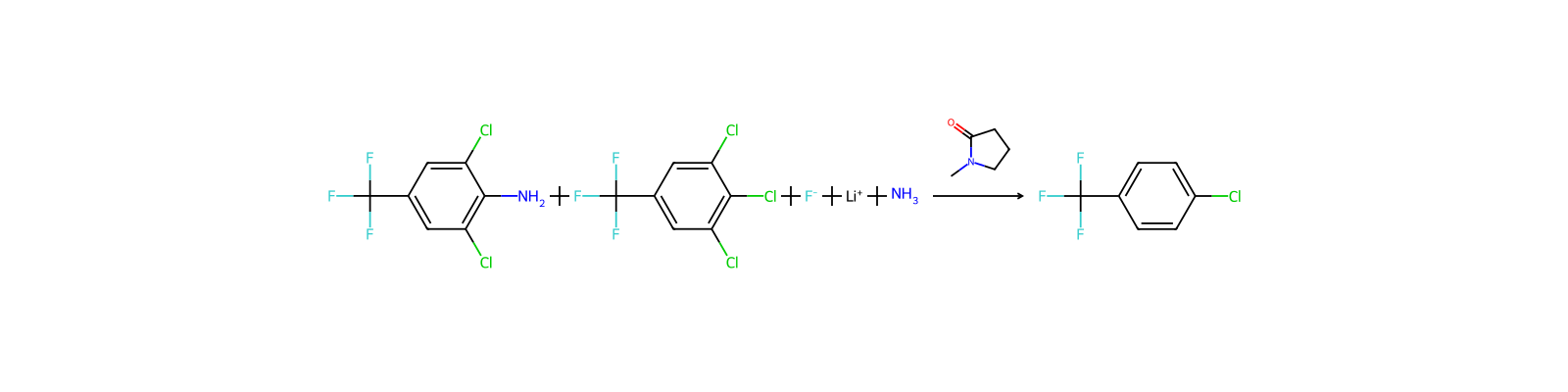
Zugehörige Reaktionen
7





Verknüpfte Notizen
Wird geladen…