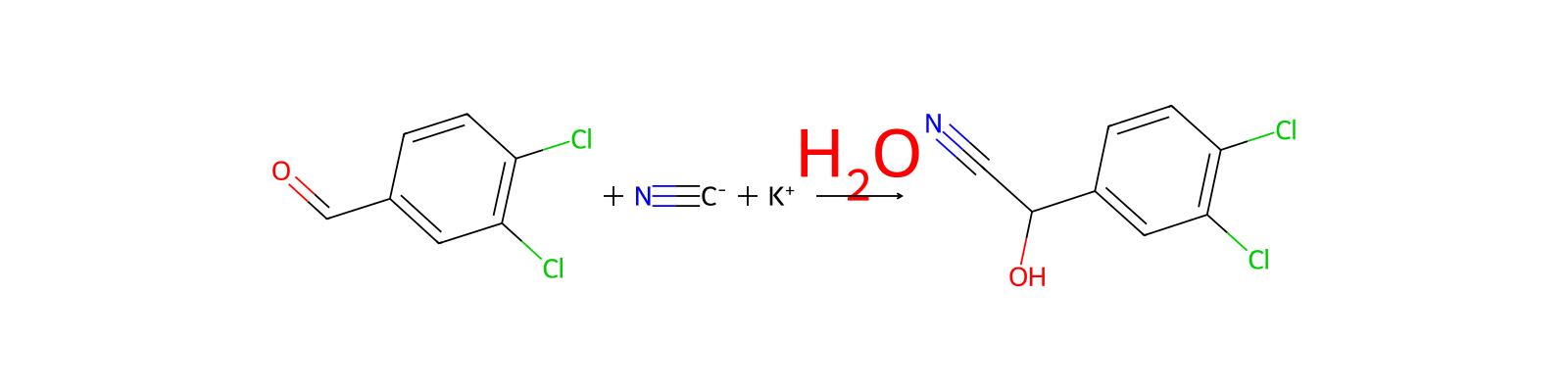
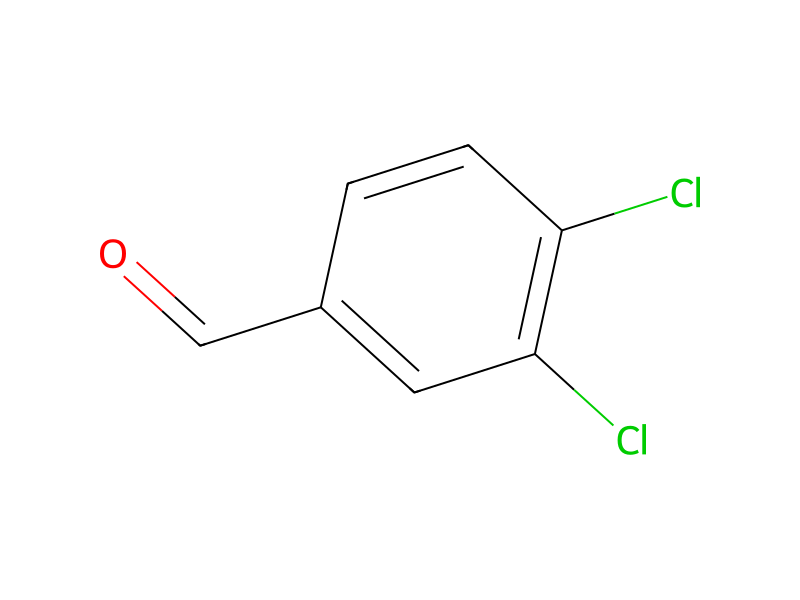
Grundinformationen
- Standard-SMILES
O=Cc1ccc(Cl)c(Cl)c1- InChIKey
ZWUSBSHBFFPRNE-UHFFFAOYSA-N- Summenformel
- C7H4Cl2O
- Durchschnittliche Molmasse
- 175,01 g/mol
- Monoisotopische Masse
- 173,9639201
Namen und Bezeichner
- Bevorzugter Name
- 3,4-Dichlorobenzaldehyde
- IUPAC
- 3,4-dichlorobenzaldehyde
- Lokaler Name
- 3,4-Dichlorbenzaldehyd
- Englischer Name
- 3,4-Dichlorobenzaldehyde
- Summenformel
- C7H4Cl2O
- Molmasse
- 175.01
Namen und Synonyme
3,4-DICHLOROBENZALDEHYDE6287-38-3Benzaldehyde, 3,4-dichloro-CCRIS 6015DTXSID0024971NSC 8763EINECS 228-520-5UNII-I6Z632WSJ5I6Z632WSJ5NSC-8763DTXCID704971M,P-DICHLOROBENZALDEHYDE
Weitere Namen anzeigen
3,4-dichloro-benzaldehyd3,4-DCADAKOS BBS-00000836Ixazomib Impurity 14OTAVA-BB BB7018801961LABOTEST-BB LT009323843,4-Dichlorobenzaldehyde,95%
DICHLOROBENZALDEHYDE, 3,4-3,4-DICHLOROBENZENECARBOXALDEHYDERefChem:91020228-520-5InChI=1/C7H4Cl2O/c8-6-2-1-5(4-10)3-7(6)9/h1-4ZWUSBSHBFFPRNE-UHFFFAOYSA-NMFCD00003351CHEMBL1528012
Datenbank-Bezeichner
- CAS
6287-38-3- PubChem CID
- 22710
- DTXSID
DTXSID0024971- ChEMBL
CHEMBL1528012- UNII
- I6Z632WSJ5
- EC Number
- 228-520-5
- Nikkaji
- J30.721A
Eigenschaften
Berechnete Struktureigenschaften
- XLogP
- 2,9
- Polarare Oberfläche (TPSA)
- 17,1 Ų
- H-Brücken-Donoren
- 0
- H-Brücken-Akzeptoren
- 1
- Frei drehbare Bindungen
- 1
- Schwere Atome
- 10
- Formalladung
- 0
- Komplexität
- 127
Experimentelle und physikochemische Eigenschaften
Solubilityless than 1 mg/mL at 72.5 °F (NTP, 1992)
Flash Pointgreater than 235 °F (NTP, 1992)
Boiling Point477 to 478 °F at 760 mmHg (NTP, 1992)
Melting Point106 to 111 °F (NTP, 1992)
Physical Description3,4-dichlorobenzaldehyde appears as white crystalline solid or chunky powder. (NTP, 1992)
Physikochemische Eigenschaften
- Schmelzpunkt
- 39 · 39-42 °C (lit.)
- Siedepunkt
- 247 · 247-248 °C (lit.)
- Dichte
- 1.3456 · 1.3456 (rough estimate)
- Brechungsindex
- 1.5756 · 1.5756 (estimate)
- Flammpunkt
- 230 °F · >230 °F
- storage temp.
- 2 · 2-8°C
- Löslichkeit
- soluble in Methanol
- Aggregatzustand
- Low Melting Solid
- Farbe
- White to slightly yellow
- Wasserlöslichkeit
- INSOLUBLE
- BRN
- 636379 · 636379
- InChI
- 1S/C7H4Cl2O/c8-6-2-1-5(4-10)3-7(6)9/h1-4H
- InChIKey
- ZWUSBSHBFFPRNE-UHFFFAOYSA-N
- SMILES
- [H]C(=O)c1ccc(Cl)c(Cl)c1
- CAS Datenbank
- 6287 · 6287-38-3(CAS DataBase Reference)
- NIST chemische Informationen
- 3 · Benzaldehyde, 3,4-dichloro-(6287-38-3)
- EPA chemische Informationen
- 3 · Benzaldehyde, 3,4-dichloro- (6287-38-3)
Sicherheit und Regulatorisches
GHS-Klassifizierung
GHS Classification
Danger
H314 (94.3%): Causes severe skin burns and eye damage [Danger Skin corrosion/irritation];H318 (75.5%): Causes serious eye damage [Danger Serious eye damage/eye irritation]
P260, P264, P264+P265, P280, P301+P330+P331, P302+P361+P354, P304+P340, P305+P354+P338, P316, P317, P321, P363, P405, and P501 (click each P-code to see the statement)
Aggregated GHS information provided per 53 reports by companies from 5 notifications to the ECHA C&L Inventory. Each notification may be associated with multiple companies.;Information may vary between notifications depending on impurities, additives, and other factors. The percentage value in parenthesis indicates the notified classification ratio from companies that provide hazard codes. Only hazard codes with percentage values above 10% are shown. For more detailed information, please visit ECHA C&L website.
Gefahrenhinweise
Regulatory Information
Chemical: Benzaldehyde, 3,4-dichloro-
Benzaldehyde, 3,4-dichloro-: Does not have an individual approval but may be used under an appropriate group standard
DOT LabelCorrosive
Fire HazardsThis chemical is probably combustible. (NTP, 1992)
Health Hazards
SYMPTOMS: Symptoms of exposure to this compound may include a burning sensation, coughing, wheezing, laryngitis, shortness of breath, headache, nausea, vomiting, and corrosion of the mucous membranes, upper respiratory tract, eyes and skin. Inhalation may be fatal as a result of spasm, inflammation and edema of the larynx and bronchi, chemical pneumonitis and pulmonary edema.;ACUTE/CHRONIC HAZARDS: This material is corrosive to the mucous membranes, upper respiratory tract, eyes and skin. It is harmful if ingested, inhaled or absorbed through the skin. When heated to decomposition this chemical produces toxic fumes of carbon monoxide, carbon dioxide and hydrogen chloride. (NTP, 1992)
Reactive GroupAldehydes;Hydrocarbons, Aromatic;Aryl Halides
Reactivity Profile3,4-DICHLOROBENZALDEHYDE is incompatible with strong oxidizers and strong bases. It may also be incompatible with iron. (NTP, 1992)
Air and Water ReactionsThis material may be sensitive to prolonged exposure to air, light and moisture. Insoluble in water.
Hazard Classes and CategoriesSkin Corr. 1C (94.3%);Eye Dam. 1 (75.5%)
Sicherheit und Schutzausrüstung
Fire FightingFires involving this material can be controlled with a dry chemical, carbon dioxide or Halon extinguisher. (NTP, 1992)
First Aid
EYES: First check the victim for contact lenses and remove if present. Flush victim's eyes with water or normal saline solution for 20 to 30 minutes while simultaneously calling a hospital or poison control center. Do not put any ointments, oils, or medication in the victim's eyes without specific instructions from a physician. IMMEDIATELY transport the victim after flushing eyes to a hospital even if no symptoms (such as redness or irritation) develop.;SKIN: IMMEDIATELY flood affected skin with water while removing and isolating all contaminated clothing. Gently wash all affected skin areas thoroughly with soap and water. IMMEDIATELY call a hospital or poison control center even if no symptoms (such as redness or irritation) develop. IMMEDIATELY transport the victim to a hospital for treatment after washing the affected areas.;INHALATION: IMMEDIATELY leave the contaminated area; take deep breaths of fresh air. If symptoms (such as wheezing, coughing, shortness of breath, or burning in the mouth, throat, or chest) develop, call a physician and be prepared to transport the victim to a hospital. Provide proper respiratory protection to rescuers entering an unknown atmosphere. Whenever possible, Self-Contained Breathing Apparatus (SCBA) should be used; if not available, use a level of protection greater than or equal to that advised under Protective Clothing.;INGESTION: DO NOT INDUCE VOMITING. Corrosive chemicals will destroy the membranes of the mouth, throat, and esophagus and, in addition, have a high risk of being aspirated into the victim's lungs during vomiting which increases the medical problems. If the victim is conscious and not convulsing, give 1 or 2 glasses of water to dilute the chemical and IMMEDIATELY call a hospital or poison control center. IMMEDIATELY transport the victim to a hospital. If the victim is convulsing or unconscious, do not give anything by mouth, ensure that the victim's airway is open and lay the victim on his/her side with the head lower than the body. DO NOT INDUCE VOMITING. Transport the victim IMMEDIATELY to a hospital. (NTP, 1992)
Nonfire Spill Response
SMALL SPILLS AND LEAKAGE: Should a spill occur while you are handling this chemical, FIRST REMOVE ALL SOURCES OF IGNITION, then you should dampen the solid spill material with 60-70% ethanol and transfer the dampened material to a suitable container. Use absorbent paper dampened with 60-70% ethanol to pick up any remaining material. Seal the absorbent paper, and any of your clothes, which may be contaminated, in a vapor-tight plastic bag for eventual disposal. Solvent wash all contaminated surfaces with 60-70% ethanol followed by washing with a soap and water solution. Do not reenter the contaminated area until the Safety Officer (or other responsible person) has verified that the area has been properly cleaned.;STORAGE PRECAUTIONS: You should protect this chemical from exposure to light. Keep the container tightly closed under an inert atmosphere, and store under refrigerated temperatures. (NTP, 1992)
Isolation and Evacuation
Excerpt from ERG Guide 154 [Substances - Toxic and/or Corrosive (Non-Combustible)]:;IMMEDIATE PRECAUTIONARY MEASURE: Isolate spill or leak area in all directions for at least 50 meters (150 feet) for liquids and at least 25 meters (75 feet) for solids.;SPILL: Increase the immediate precautionary measure distance, in the downwind direction, as necessary.;FIRE: If tank, rail tank car or highway tank is involved in a fire, ISOLATE for 800 meters (1/2 mile) in all directions; also, consider initial evacuation for 800 meters (1/2 mile) in all directions. (ERG, 2024)
Personal Protective Equipment (PPE)
MINIMUM PROTECTIVE CLOTHING: If Tyvek-type disposable protective clothing is not worn during handling of this chemical, wear disposable Tyvek-type sleeves taped to your gloves.;RECOMMENDED RESPIRATOR: Where the neat test chemical is weighed and diluted, wear a NIOSH-approved half face respirator equipped with an organic vapor/acid gas cartridge (specific for organic vapors, HCl, acid gas and SO2) with a dust/mist filter. Splash proof safety goggles should be worn while handling this chemical. Alternatively, a full face respirator, equipped as above, may be used to provide simultaneous eye and respiratory protection. (NTP, 1992)
Regulatorische Informationen
Regulatory Information
Chemical: Benzaldehyde, 3,4-dichloro-
Benzaldehyde, 3,4-dichloro-: Does not have an individual approval but may be used under an appropriate group standard
Sicherheitsdaten
- F
- 9-23
- wgk
- 3
- tsca
- TSCA listed
- ridadr
- UN 1759 8/PG 2
- hs_code
- 29130000
- risk_code
- 34-36/37/38
- hazard_code
- C,Xi
- hazard_note
- Irritant/Air Sensitive
- safety_code
- 26-27-28-36/37/39-45
- hazard_class
- 8
- packing_group
- III
- Speicherklasse
- 8A - Combustible corrosive hazardous materials
- Hazard Classifications
- Eye Dam. 1Skin Corr. 1B
Chemie und Industrie
Verwendung und Herstellung
General Manufacturing InformationBenzaldehyde, 3,4-dichloro-: ACTIVE
Vor- und nachgelagerte Produkte
Vorgelagerte Rohstoffe
Nachgelagerte Produkte
Anbieter50 Anbieter
梯希爱(上海)化成工业发展有限公司021-67121386 · [email protected]
郑州阿尔法化工有限公司+86-18530059196 · [email protected]
衢州润东化工有限公司0570-8789886 18892685668 · [email protected]
上海阿拉丁生化科技股份有限公司400-6206333 13167063860 · [email protected]
河北创海生物科技有限公司+86-86-13131129325 · [email protected]
爱斯特(成都)生物制药股份有限公司+86-28-85122536 85324413 · [email protected]
科瑞迪化学400-821-5857 021-64326257 · [email protected]
上海迈瑞尔生化科技有限公司4006356688 18621169109 · [email protected]
北京华威锐科化工有限公司0757-86329057 18934348241 · [email protected]
阿法埃莎(中国)化学有限公司400-6106006 · [email protected]
安耐吉化学&3A(安徽泽升科技股份有限公司)400-0056266 · [email protected]
上海瀚鸿科技股份有限公司021-54306202 13764082696 · [email protected]
上海相辉医药科技有限公司13761987713 · [email protected]
上海景颜化工科技有限公司13817811078 · [email protected]
孝感深远化工有限公司15527621225; 15527621225 · [email protected]
山东西亚化学有限公司13355009207 13355009207 · [email protected]
玛雅试剂+86 (573) 82222445 (0)18006601000 452520369 · [email protected]
四川库利南科技有限公司400-1166-196 18981987031 · [email protected]
上海耐士化工科技有限公司400-188-0725 +86 21 34310725 13611771617
天津希恩思生化科技有限公司400 638 7771 · [email protected]
艾科试剂4008-755-333 18080918076 · [email protected]
上海思域化工科技有限公司86-21-34053660 · [email protected]
赛默飞世尔科技(中国)有限公司800-810-5118 · [email protected]
北京伊诺凯科技有限公司400-810-7969 010-59572699 · [email protected]
TCI AMERICA800-4238616 · [email protected]
TOKYO CHEMICAL INDUSTRY CO., LTD.03-36680489 · [email protected]
TCI Europe320-37350700 · [email protected]
上海贤鼎生物科技有限公司4009209199 · [email protected]
北京环宇世纪化学科技有限公司hysj_bj.com
上海将来实业股份有限公司400-0066400 13621662912 · [email protected]
上海将来实业股份有限公司021-61552785 · [email protected]
安徽科迪达化工有限公司0554-2106669 · [email protected]
HBCChem, Inc.+1-510-219-6317 · [email protected]
上海毕得医药科技股份有限公司400-164-7117 18317119277 · [email protected]
日照力德士化工有限公司010-51268198 · [email protected]
郑州鸿晟医药科技有限公司0371-0371-13526885213 15637198702 · [email protected]
美岚实业(上海)有限公司021-58958189 · [email protected]
上海爱蝶实业有限公司021-58957966 18930537195 · [email protected]
广拓化学(上海)有限公司021-60899189-8001 18918189673 · [email protected]
雷丁试剂0510-85629785 18013409632 · [email protected]
上海麦克林生化科技股份有限公司15221275939 15221275939 · [email protected]
上海纳谦化学科技有限公司13598610367 13598610367 · [email protected]
上海有朋化工有限公司021-69005955 13701776567 · [email protected]
北京海力扬化学科技有限公司13718199399 · [email protected]
北京欣赛维化学科技有限公司010-56218822 13717722232 · [email protected]
四川海诺威科技有限公司13708085536 13708085536 · [email protected]
江苏艾康生物医药研发有限公司025-66028182 17714375163 · [email protected]
上海凯赛化工有限公司021-33516722 13701817765 · [email protected]
上海彤源化工有限公司021-021-69182866 13701855675 · [email protected]
上海孚一生物科技有限公司+86 (21) 61124340
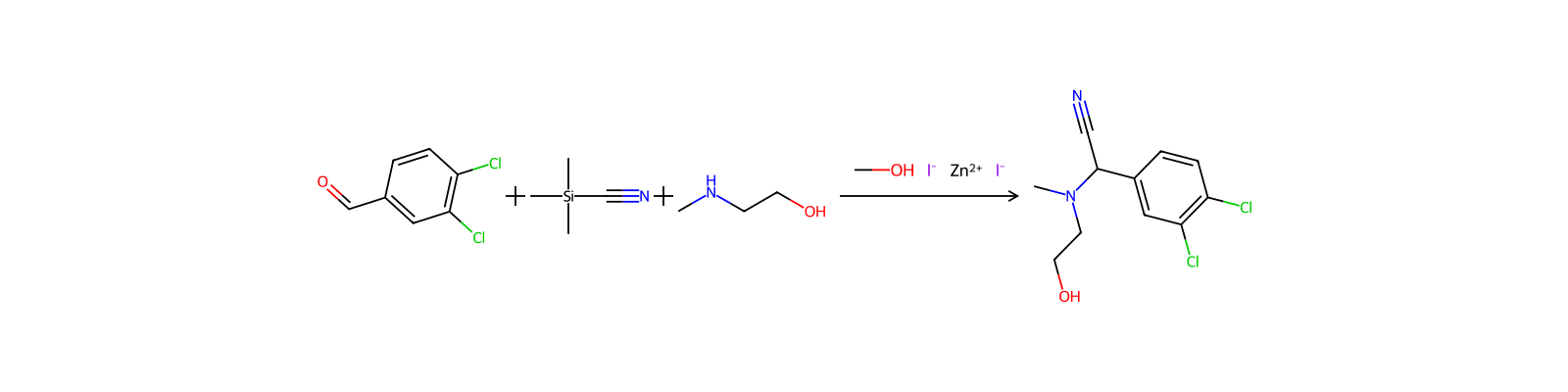
Zugehörige Reaktionen
236





Verknüpfte Notizen
Wird geladen…