

Grundinformationen
- Standard-SMILES
BrC(c1ccccc1)c1ccccc1- InChIKey
OQROAIRCEOBYJA-UHFFFAOYSA-N- Summenformel
- C13H11Br
- Durchschnittliche Molmasse
- 247,13 g/mol
- Monoisotopische Masse
- 246,00441245
Überblick
Diphenylmethyl bromide is a white crystalline solid. A lachrymator. In the presence of moisture corrosive to tissue and most metals.
Namen und Bezeichner
- Bevorzugter Name
- Bromodiphenylmethane
- IUPAC
- [bromo(phenyl)methyl]benzene
- Lokaler Name
- Brom(diphenyl)methan
- Englischer Name
- Bromodiphenylmethane
- Summenformel
- C13H11Br
- Molmasse
- 247.13
Namen und Synonyme
Bromodiphenylmethane776-74-9Diphenylmethyl bromideBenzene, 1,1'-(bromomethylene)bis-LS6ZRZ2QNNNSC-39226DTXSID90870774UN 17701,1'-(BROMOMETHYLENE)BIS(BENZENE)1,1'-(bromomethylene)bis[benzene]DIPHENYL METHYL BROMIDE, (SOLID)DIPHENYL METHYL BROMIDE, [SOLID]
Weitere Namen anzeigen
(bromomethylene)DibenzeneBENZHYDRYL BROMIDE1-Benzyl-2-broMobenzeneDIPHENYLBROMOMETHANECL048Bromodiphenylpha-BromodiphenyLBromodiphenylmethan
Methane, bromodiphenylalphaBromodiphenylmethanealphaPhenylbenzyl bromideRefChem:121585Methane, bromodiphenyl (8CI)DTXCID80818468Methane, bromodiphenyl (solution)Benzene, 1,1'(bromomethylene)bis
Datenbank-Bezeichner
- CAS
776-74-9- PubChem CID
- 236603
- DTXSID
DTXSID90870774- UNII
- LS6ZRZ2QNN
- EC Number
- 212-279-8
- Nikkaji
- J7.091B
Eigenschaften
Berechnete Struktureigenschaften
- XLogP
- 4,1
- Polarare Oberfläche (TPSA)
- 0 Ų
- H-Brücken-Donoren
- 0
- H-Brücken-Akzeptoren
- 0
- Frei drehbare Bindungen
- 2
- Schwere Atome
- 14
- Formalladung
- 0
- Komplexität
- 137
Experimentelle und physikochemische Eigenschaften
Chemical ClassesCorrosives
PolymersOther Classes -> Halogenated Polyaromatics
Physical Description
Diphenylmethyl bromide is a white crystalline solid. A lachrymator. In the presence of moisture corrosive to tissue and most metals.
White solid; [CAMEO] Light brown solid with a pungent odor; [Alfa Aesar MSDS]
Physikochemische Eigenschaften
- Schmelzpunkt
- 35 · 35-39 °C(lit.)
- Siedepunkt
- 184 °C20 · 184 °C20 mm Hg(lit.)
- Dichte
- 0 · 0,9 g/cm3
- Brechungsindex
- 1.629 · 1.6290 (estimate)
- Flammpunkt
- 230 °F · >230 °F
- storage temp.
- 30 °C · Store below +30°C.
- Löslichkeit
- 0.45 g/l · 0.45g/l
- Aggregatzustand
- powder to lump to clear liquid
- Farbe
- White to cream to yellow to orange to brown crystals or fused solid
- PH
- 2 · 2 (H2O, 20℃)(saturated aqueous solution)
- Wasserlöslichkeit
- Insoluble
- BRN
- 638544 · 638544
- CAS Datenbank
- 776 · 776-74-9(CAS DataBase Reference)
- NIST chemische Informationen
- 1 · Benzene, 1,1'-(bromomethylene)bis-(776-74-9)
- EPA chemische Informationen
- 1 · Benzene, 1,1'-(bromomethylene)bis- (776-74-9)
Sicherheit und Regulatorisches
GHS-Klassifizierung
GHS Classification
Danger
H290 (16.7%): May be corrosive to metals [Warning Corrosive to Metals]
P234, P260, P261, P264, P271, P280, P301+P330+P331, P302+P361+P354, P304+P340, P305+P354+P338, P316, P319, P321, P363, P390, P403+P233, P405, P406, and P501 (click each P-code to see the statement)
Aggregated GHS information provided per 66 reports by companies from 8 notifications to the ECHA C&L Inventory. Each notification may be associated with multiple companies.
Gefahrenhinweise
Regulatory Information
Status: Active Update: 20-09-2018 https://echa.europa.eu/registration-dossier/-/registered-dossier/18890
Bromodiphenylmethane: Does not have an individual approval but may be used under an appropriate group standard
The New Jersey Worker and Community Right to Know Act requires public and private employers to provide information about hazardous substances at their workplaces. (N.J.S.A. 34:5A-1 et. seq.)
DOT LabelCorrosive
Fire Hazards
Excerpt from ERG Guide 153 [Substances - Toxic and/or Corrosive (Combustible)]:
· Combustible material: may burn but does not ignite readily.
Health Hazards
Excerpt from ERG Guide 153 [Substances - Toxic and/or Corrosive (Combustible)]:
· TOXIC and/or CORROSIVE; inhalation, ingestion or skin contact with material may cause severe injury or death.
Hazards Summary
Decomposed by hot water evolving hydrobromic acid; Causes burns (in the presence of moisture) and lachrymation; [CAMEO] Causes burns and lachrymation; Inhalation may cause corrosive injuries to upper respiratory tract and lungs; [Alfa Aesar MSDS] See Chlorodiphenylmethane and Diphenylmethane.
DOT ID and Guide1770 153
Reactive GroupHalogenated Organic Compounds
Reactivity AlertsWater-Reactive
Reactivity Profile
Halogenated aliphatic compounds are moderately or very reactive. Halogenated organics generally become less reactive as more of their hydrogen atoms are replaced with halogen atoms. Materials in this group are incompatible with strong oxidizing and reducing agents. Also, they are incompatible with many amines, nitrides, azo/diazo compounds, alkali metals, and epoxides.
DOT Hazard Classification
Diphenylmethyl bromide
UN1770
Class 8 Corrosive material (49 eCFR § 173.136)
PG II: the degree of danger presented by the material is medium
Air and Water ReactionsInsoluble in cold water. Decomposed by hot water to give corrosive hydrobromic acid.
Hazard Classes and Categories
Met. Corr. 1 (16.7%)
Corrosives
Sicherheit und Schutzausrüstung
Fire FightingExcerpt from ERG Guide 153 [Substances - Toxic and/or Corrosive (Combustible)]:
Accidental Release Measures
· CALL 911. Then call emergency response telephone number on shipping paper. If shipping paper not available or no answer, refer to appropriate telephone number listed on the inside back cover.
· ELIMINATE all ignition sources (no smoking, flares, sparks or flames) from immediate area.
First Aid
Excerpt from ERG Guide 153 [Substances - Toxic and/or Corrosive (Combustible)]:
General First Aid:
Exposure Control and Personal Protection· Wear positive pressure self-contained breathing apparatus (SCBA).
Nonfire Spill ResponseExcerpt from ERG Guide 153 [Substances - Toxic and/or Corrosive (Combustible)]:
Isolation and Evacuation
Excerpt from ERG Guide 153 [Substances - Toxic and/or Corrosive (Combustible)]:
Immediate precautionary measure
Personal Protective Equipment (PPE)Excerpt from ERG Guide 153 [Substances - Toxic and/or Corrosive (Combustible)]:
Emergency Response Planning GuidelinesSmall Fire
Toxikologische Informationen
Adverse EffectsDermatotoxin - Skin burns.
Sicherheitsdaten
- F
- 19-21
- wgk
- 3
- tsca
- TSCA listed
- ridadr
- UN 1770
- hs_code
- 29036990
- RTECS-Nr.
- PA5350000
- risk_code
- 34-37
- hazard_code
- C
- safety_code
- 26-36/37/39-45
- hazard_class
- 8
- packing_group
- II
Chemie und Industrie
Verwendung und Herstellung
General Manufacturing InformationBenzene, 1,1'-(bromomethylene)bis-: ACTIVE
Anwendungen
VerwendenBenzhydryl bromide is a halogenated building block. Benzhydryl group was preferred to the commoner benzyl to protect 2-nitrophenol in the Bartoli (vinyl Grignard) synthesis of 7-hydroxyindole. Protection was by reaction with the phenol in the presence of potassium carbonate in acetone; deprotection of the indole was by hydrogenolysis.
Vor- und nachgelagerte Produkte
Vorgelagerte Rohstoffe
Nachgelagerte Produkte
Anbieter50 Anbieter
国药集团化学试剂有限公司86-21-63210123 · [email protected]
梯希爱(上海)化成工业发展有限公司021-67121386 · [email protected]
上海阿拉丁生化科技股份有限公司400-6206333 13167063860 · [email protected]
南京凯美西化工有限公司02558748998 18951874644 · [email protected]
爱斯特(成都)生物制药股份有限公司+86-28-85122536 85324413 · [email protected]
Dayang Chem (Hangzhou) Co.,Ltd.+86-0571-88938639 17705817739 · [email protected]
科瑞迪化学400-821-5857 021-64326257 · [email protected]
衢州明锋化工有限公司0570-3062502 13819002126;13819008176 · [email protected]
淮安嘉目生物科技有限公司0517-83187139 18205232085 · [email protected]
Syntechem Co.,Ltd[email protected]
上海迈瑞尔生化科技有限公司4006356688 18621169109 · [email protected]
zhangjiagang vinsce bio-pharm. limited.86-512-58389969 · [email protected]
阿法埃莎(中国)化学有限公司400-6106006 · [email protected]
太原市瑞和丰科贸有限公司+86 351 7031519 · [email protected]
安耐吉化学&3A(安徽泽升科技股份有限公司)400-0056266 · [email protected]
武汉卡诺斯科技有限公司027-83238443 15327105076 · [email protected]
上海瀚鸿科技股份有限公司021-54306202 13764082696 · [email protected]
上海景颜化工科技有限公司13817811078 · [email protected]
嘉兴市艾森化工有限公司0573-85285100 18627885956 · [email protected]
Pure Chemistry Scientific Inc.001-857-928-2050 or 1-888-588-9418 · [email protected]
上海忝晴化工有限公司+8613816254020 · [email protected]
南京佳诺霖光电科技有限公司13813880104 · [email protected]
上海忝晴化工有限公司+86-13816254020 +86-18601759286 · [email protected]
上海忆嵘生物科技有限公司18049974220 · [email protected]
山东西亚化学有限公司13355009207 13355009207 · [email protected]
玛雅试剂+86 (573) 82222445 (0)18006601000 452520369 · [email protected]
四川库利南科技有限公司400-1166-196 18981987031 · [email protected]
天津希恩思生化科技有限公司400 638 7771 · [email protected]
赛默飞世尔科技(中国)有限公司800-810-5118 · [email protected]
北京伊诺凯科技有限公司400-810-7969 010-59572699 · [email protected]
TCI AMERICA800-4238616 · [email protected]
TOKYO CHEMICAL INDUSTRY CO., LTD.03-36680489 · [email protected]
TCI Europe320-37350700 · [email protected]
上海贤鼎生物科技有限公司4009209199 · [email protected]
深圳康特腾科技有限公司86-0755-86635001 · [email protected]
上海灏云化工科技有限公司021-68367562 · [email protected]
北京环宇世纪化学科技有限公司hysj_bj.com
HBCChem, Inc.+1-510-219-6317 · [email protected]
成都零六生物科技有限公司400-1166-196 13458535857 · [email protected]
上海麦克林生化科技股份有限公司15221275939 15221275939 · [email protected]
杭州杰恒化工有限公司0571-87396432 · [email protected]
上海有朋化工有限公司021-69005955 13701776567 · [email protected]
上海凯赛化工有限公司021-33516722 13701817765 · [email protected]
上海彤源化工有限公司021-021-69182866 13701855675 · [email protected]
上海兴鲁化工科技有限公司02120970332 · [email protected]
上海蓝润化学有限公司021-69515658 ; 69515628 13701998368 · [email protected]
上海容立化学科技有限公司021-69992220 13701886816 · [email protected]
上海康拓化工有限公司021-69185552 13701777608 · [email protected]
池州凯隆进出口贸易有限公司[email protected]
深圳振强药物研发有限公司+86-0755-66853366 +86-13670046396 · [email protected]
Zugehörige Reaktionen
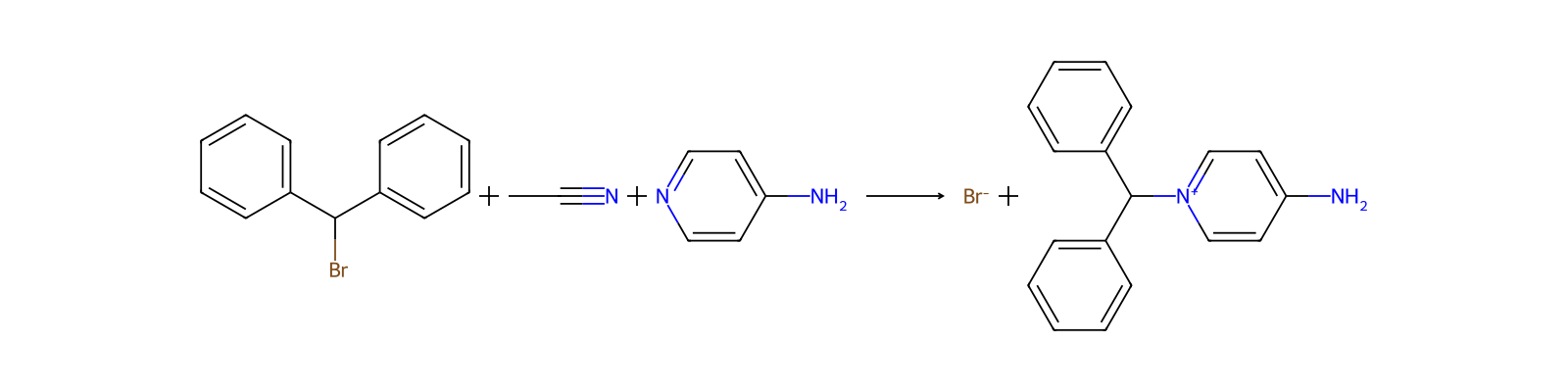
264


Verknüpfte Notizen
Wird geladen…