
HRID 27004als Produkt
Sodium Diacetate

126-96-5CC(=O)O.CC(=O)[O-].[Na+]BHZOKUMUHVTPBX-UHFFFAOYSA-M*acetates
126-96-5DTXSID3034909White powder
CRYSTALLINE SOLID
SOLUBILITY IN WATER: 1 G/ML
Slightly soluble in alcohol; insoluble in ether
Liquid; CBI
White, hygroscopic crystalline solid with an acetic odour
White solid; [Merck Index] White powder with an odor of vinegar; [MSDSonline]
Sicherheitsangaben dienen nur zur Orientierung und ersetzen weder das Sicherheitsdatenblatt (SDB) des Lieferanten noch geltende Vorschriften oder eine fachliche Bewertung.
This chemical does not meet GHS hazard criteria for 1.8% (28 of 1589) of reports.
Danger
H318 (91.1%): Causes serious eye damage [Danger Serious eye damage/eye irritation]
P264+P265, P280, P305+P354+P338, and P317 (click each P-code to see the statement)
Aggregated GHS information provided per 1589 reports by companies from 8 notifications to the ECHA C&L Inventory.
Chemical: Acetic acid, sodium salt (2:1)
Commission Regulation (EC) No 1565/2000 (Repealed by Com. Implementing Reg. (EU) No 872/2012)
Acetic acid, sodium salt (2:1) is listed on the EPA's Chemical Data Reporting (CDR) system. Manufacturers and importers of Acetic acid, sodium salt (2:1) are required to report information about their production and use of this chemical to the EPA under the Toxic Substances Control Act (TSCA). (40 eCFR Part 711)
REACH registered substance: Sodium hydrogen di(acetate) (EC: 204-814-9)
Sodium diacetate: Does not have an individual approval but may be used under an appropriate group standard
Substance added directly to human food affirmed as generally recognized as safe (GRAS).
Sodium diacetate used as a sequestrant in animal drugs, feeds, and related products is generally recognized as safe when used in accordance with good manufacturing or feeding practice.
Acetic acid is absorbed readily from the gastrointestinal tract and from the lungs. ... Acetate is completely utilized in oxidative metabolism or in anabolic syntheses. Isotope experiments have shown acetate to be utilized in the formation of glycogen, carbohydrate intermediates, phospholipids, and fatty acids, as well as in cholesterol and steroid synthesis. In addition, it participates in the acetylation of amines and may be converted to alanine by transamination and /from there/ incorporated into proteins of plasma, liver, kidney, gut mucosa, muscle, and brain. /Acetic acid/
Used as a buffer, souring agent, food preservative, animal feed sequestrant, and agricultural fungicide and bactericide; Also used in mordants, varnish hardeners, and anti-tarnishing agents; [HSDB] Used as a fungicide and bactericide in stored grains, to apply to hay during the baling process, and to apply to silage as a fermentation aid; [Reference #1]
Painting (Pigments, Binders, and Biocides) [Category: Paint]
For Sodium diacetate (USEPA/OPP Pesticide Code: 044008) ACTIVE products with label matches. /SRP: Registered for use in the U.S. but approved pesticide uses may change periodically and so federal, state and local authorities must be consulted for currently approved uses./
Acetic acid in solid form; as an inhibitor of molds and rope-forming bacteria in bread: as sequestrant.
Buffer; souring agent; intermediate for acid salts; in mordants, varnish hardeners, antitarnishing agents; preservative in foods.
A sequestrant food additive.
2023: 400,000 - <550,000 lb
(2002) >500 thousand-1 million pounds
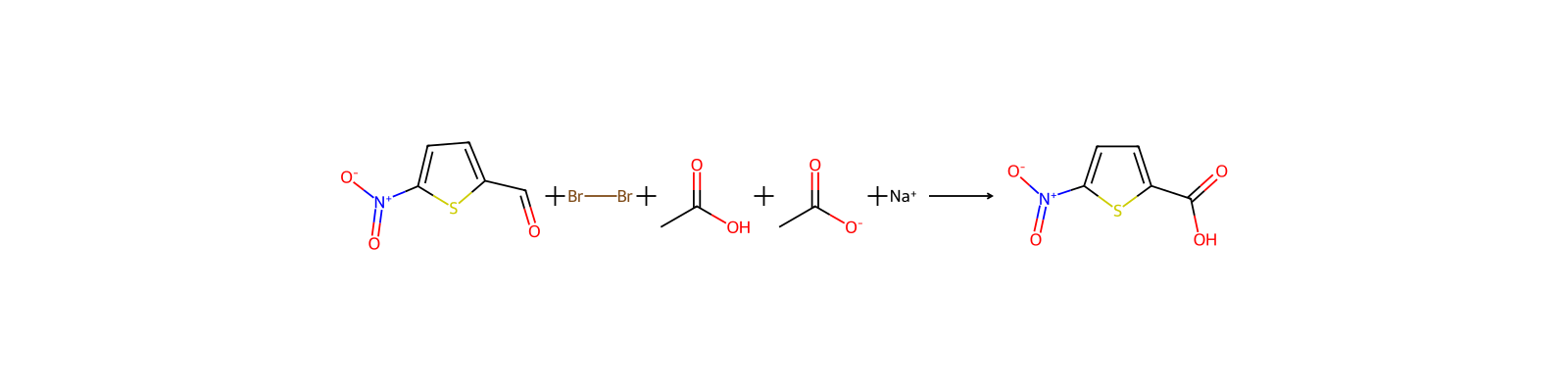


In water, liberates 42.25% available acetic acid; it is bound compound of sodium acetate and acetic acid.
Acid component is, in a sense, acetic acid of crystallization and is known to be undissociated; hygroscopic.
Decomposition above 150 °C.
Drug products containing certain active ingredients offered over-the-counter (OTC) for certain uses. A number of active ingredients have been present in OTC drug products for various uses, as described below. However, based on evidence currently available, there are inadequate data to establish general recognition of the safety and effectiveness of these ingredients for the specified uses: sodium diacetate is included in astringent drug products.
USEPA/Office of Pesticide Programs; Reregistration Eligibility Decision Document - Sodium Diacetate (September 1991). The RED summarizes the risk assessment conclusions and outlines any risk reduction measures necessary for the pesticide to continue to be registered in the U.S.[Available from, as of June 26, 2006: http://www.epa.gov/pesticides/reregistration/status.htm]
Sodium diacetate, when used post-harvest as a fungicide, is exempt from the requirement of a tolerance for residues in or on alfalfa hay, Bermuda grass hay, blue grass hay, brome grass hay, clover hay, corn grain, oat grain, orchard grass hay, sorghum grain, sudan grass hay, rye grass hay, and timothy hay.
Section 4(g)(2)(A) of FIFRA requires EPA to determine, after submission of relevant data concerning an active ingredient, whether products containing the active ingredient are eligible for reregistration. As no products are currently registered with acetic acid as an active ingredient and the chemical is not supported for reregistration, the Agency will require submission of a complete study data base for registration applications which include acetic acid as an active ingredient prior to the issuance of the registration or amendment. For products containing sodium diacetate as an active ingredient, the EPA has waived the requirement of the submission of the generic (i.e., active ingredient specific) data except for product chemistry to support reregistration. Rather, it has consulted and relied upon published literature as a source for technical information. The Agency has completed its review of these generic data, and has determined that the data are sufficient to support reregistration of products containing sodium diacetate.
As the federal pesticide law FIFRA directs, EPA is conducting a comprehensive review of older pesticides to consider their health and environmental effects and make decisions about their future use. Under this pesticide reregistration program, EPA examines health and safety data for pesticide active ingredients initially registered before November 1, 1984, and determines whether they are eligible for reregistration. In addition, all pesticides must meet the new safety standard of the Food Quality Protection Act of 1996. Pesticides for which EPA had not issued Registration Standards prior to the effective date of FIFRA, as amended in 1988, were divided into three lists based upon their potential for human exposure and other factors, with List B containing pesticides of greater concern and List D pesticides of less concern. Sodium diacetate is found on List D. Case No: 4001; Pesticide type: Fungicide and antimicrobial; Case Status: RED Approved 09/91; OPP has made a decision that some/all uses of the pesticide are eligible for reregistration, as reflected in a Reregistration Eligibility Decision (RED) document .; Active ingredient (AI): sodium diacetate; AI Status: OPP has completed a Reregistration Eligibility Decision (RED) document for the case/AI.
SRP: The most favorable course of action is to use an alternative chemical product with less inherent propensity for occupational exposure or environmental contamination. Recycle any unused portion of the material for its approved use or return it to the manufacturer or supplier. Ultimate disposal of the chemical must consider: the material's impact on air quality; potential migration in soil or water; effects on animal, aquatic, and plant life; and conformance with environmental and public health regulations.
SRP: The scientific literature for the use of contact lenses in industry is conflicting. The benefit or detrimental effects of wearing contact lenses depend not only upon the substance, but also on factors including the form of the substance, characteristics and duration of the exposure, the uses of other eye protection equipment, and the hygiene of the lenses. However, there may be individual substances whose irritating or corrosive properties are such that the wearing of contact lenses would be harmful to the eye. In those specific cases, contact lenses should not be worn. In any event, the usual eye protection equipment should be worn even when contact lenses are in place.
Sodium diacetate, when used post-harvest as a fungicide, is exempt from the requirement of a tolerance for residues in or on alfalfa hay, Bermuda grass hay, blue grass hay, brome grass hay, clover hay, corn grain, oat grain, orchard grass hay, sorghum grain, sudan grass hay, rye grass hay, and timothy hay.
/LABORATORY ANIMALS: Acute Exposure/ A primary dermal irritation study in rabbits found no irritation with a 50% solution... .
/LABORATORY ANIMALS: Acute Exposure/ An eye irritation study in rabbits found chemosis and redness which, in some animals, persisted through the seventh day. Another eye irritation study in rabbits found severe corneal necrosis with a 15% solution but only trace injuries with a 5% solution.
/LABORATORY ANIMALS: Subchronic or Prechronic Exposure/ ...Groups of three to four rats survived for 14 days when given 1800 mg/kg body weight per day of free acid intragastrically or 4200 - 4800 mg/kg body weight of sodium acetate, but survived only three to five days on daily intra-gastric doses of 2400 mg/kg body weight of free acid. Animals lost weight and showed blistered paws and reddened noses before death at fourteen days.
/LABORATORY ANIMALS: Subchronic or Prechronic Exposure/ An 8 week feeding study with rats fed 2% sodium diacetate in the diet found no effects and concluded that the NOEL was >1,000 mg/kg body weight.
/LABORATORY ANIMALS: Chronic Exposure or Carcinogenicity/ Male rats given oral doses of 350 mg/kg body weight of sodium acetate three times weekly for 63 days, then 140 mg/kg body weight three times weekly for 72 days showed no signs of tumors after 135 days.
Basic treatment: Establish a patent airway (oropharyngeal or nasopharyngeal airway, if needed). Suction if necessary. Watch for signs of respiratory insufficiency and assist respirations if necessary. Administer oxygen by nonrebreather mask at 10 to 15 L/min. Monitor for pulmonary edema and treat if necessary ... . Monitor for shock and treat if necessary ... . For eye contamination, flush eyes immediately with water. Irrigate each eye continuously with 0.9% saline (NS) during transport ... . Do not use emetics. For ingestion, rinse mouth and administer 5 ml/kg up to 200 ml of water for dilution if the patient can swallow, has a strong gag reflex, and does not drool. Activated charcoal is not effective ... . Do not attempt to neutralize because of exothermic reaction. Cover skin burns with dry, sterile dressings after decontamination ... . /Organic acids and related compounds/
Advanced treatment: Consider orotracheal or nasotracheal intubation for airway control in the patient who is unconscious, has severe pulmonary edema, or is in severe respiratory distress. Early intubation, at the first sign of upper airway obstruction, may be necessary. Positive-pressure ventilation techniques with a bag valve mask device may be beneficial. Consider drug therapy for pulmonary edema ... . Consider administering a beta agonist such as albuterol for severe bronchospasm ... . Monitor cardiac rhythm and treat arrhythmias as necessary ... . Start IV administration of D5W /SRP: "To keep open", minimal flow rate/. Use 0.9% saline (NS) or lactated Ringer's (LR) if signs of hypovolemia are present. For hypotension with signs of hypovolemia, administer fluid cautiously. Consider vasopressors if patient is hypotensive with a normal fluid volume. Watch for signs of fluid overload ... . Use proparacaine hydrochloride to assist eye irrigation ... . /Organic acids and related compounds/
LD50 Rat dermal >2,000 mg/kg
LD50 Rats oral 5,600 mg/kg
Substance added directly to human food affirmed as generally recognized as safe (GRAS).
Sodium diacetate used as a sequestrant in animal drugs, feeds, and related products is generally recognized as safe when used in accordance with good manufacturing or feeding practice.
Drug products containing certain active ingredients offered over-the-counter (OTC) for certain uses. A number of active ingredients have been present in OTC drug products for various uses, as described below. However, based on evidence currently available, there are inadequate data to establish general recognition of the safety and effectiveness of these ingredients for the specified uses: sodium diacetate is included in astringent drug products.
Sodium diacetate, when used post-harvest as a fungicide, is exempt from the requirement of a tolerance for residues in or on alfalfa hay, Bermuda grass hay, blue grass hay, brome grass hay, clover hay, corn grain, oat grain, orchard grass hay, sorghum grain, sudan grass hay, rye grass hay, and timothy hay.
Section 4(g)(2)(A) of FIFRA requires EPA to determine, after submission of relevant data concerning an active ingredient, whether products containing the active ingredient are eligible for reregistration. As no products are currently registered with acetic acid as an active ingredient and the chemical is not supported for reregistration, the Agency will require submission of a complete study data base for registration applications which include acetic acid as an active ingredient prior to the issuance of the registration or amendment. For products containing sodium diacetate as an active ingredient, the EPA has waived the requirement of the submission of the generic (i.e., active ingredient specific) data except for product chemistry to support reregistration. Rather, it has consulted and relied upon published literature as a source for technical information. The Agency has completed its review of these generic data, and has determined that the data are sufficient to support reregistration of products containing sodium diacetate.
As the federal pesticide law FIFRA directs, EPA is conducting a comprehensive review of older pesticides to consider their health and environmental effects and make decisions about their future use. Under this pesticide reregistration program, EPA examines health and safety data for pesticide active ingredients initially registered before November 1, 1984, and determines whether they are eligible for reregistration. In addition, all pesticides must meet the new safety standard of the Food Quality Protection Act of 1996. Pesticides for which EPA had not issued Registration Standards prior to the effective date of FIFRA, as amended in 1988, were divided into three lists based upon their potential for human exposure and other factors, with List B containing pesticides of greater concern and List D pesticides of less concern. Sodium diacetate is found on List D. Case No: 4001; Pesticide type: Fungicide and antimicrobial; Case Status: RED Approved 09/91; OPP has made a decision that some/all uses of the pesticide are eligible for reregistration, as reflected in a Reregistration Eligibility Decision (RED) document .; Active ingredient (AI): sodium diacetate; AI Status: OPP has completed a Reregistration Eligibility Decision (RED) document for the case/AI.
Grade: "Food Chemical Codex"
/Available as/ anhydrous powder; granular USP, FCC and Technical grades
Dykon
Food additives
Food Additives -> PRESERVATIVE; SEQUESTRANT -> JECFA Functional Classes
Oil and Gas Drilling, Extraction, and Support activities
Acetic acid, sodium salt (2:1): ACTIVE
Commercial development by Union Carbide
OccurrenceAcetic acid or acetates are present in most plant and animal tissues in small, but detectable amounts.
VerwendenSodium Diacetate is a preservative, sequestrant, acidulant, and fla- voring agent that is a molecular compound of sodium acetate and acetic acid which yields acetic acid. it is a white crystalline powder which is hygroscopic. it functions against mold and bacteria and is used in bread. it is also termed sodium hydrogen diacetate.