
HRID 86641als Edukt
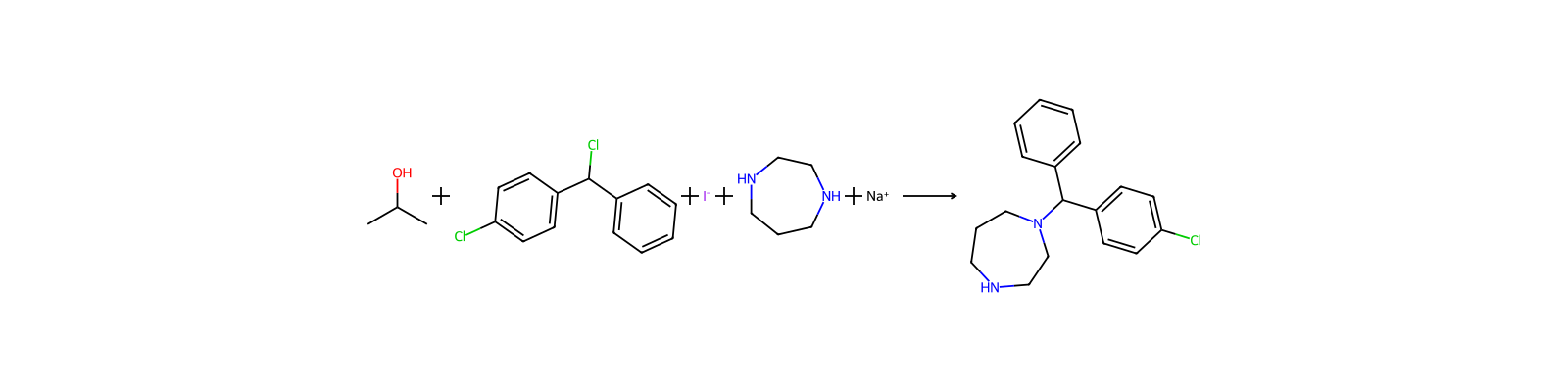
4-Chlorobenzhydryl chloride

134-83-8Clc1ccc(C(Cl)c2ccccc2)cc1ALKWTKGPKKAZMN-UHFFFAOYSA-Ncauses contact dermititis; structure in first source
134-83-8Sicherheitsangaben dienen nur zur Orientierung und ersetzen weder das Sicherheitsdatenblatt (SDB) des Lieferanten noch geltende Vorschriften oder eine fachliche Bewertung.
Danger
H314 (98%): Causes severe skin burns and eye damage [Danger Skin corrosion/irritation]
P260, P261, P264, P264+P265, P271, P272, P273, P280, P301+P330+P331, P302+P352, P302+P361+P354, P304+P340, P305+P354+P338, P316, P317, P319, P321, P333+P317, P362+P364, P363, P391, P403+P233, P405, and P501 (click each P-code to see the statement)
Aggregated GHS information provided per 50 reports by companies from 9 notifications to the ECHA C&L Inventory. Each notification may be associated with multiple companies.
Status: Active Update: 11-12-2017 https://echa.europa.eu/registration-dossier/-/registered-dossier/21497
4-Chlorobenzhydryl chloride: Does not have an individual approval but may be used under an appropriate group standard
synthetischePreparation of 4-Chlorobenzhydryl Chloride (4-CBC): The 4-chlorobenzhydrol (4-CB) in 15 mL of toluene, obtained from the previous step, was mixed with 10 mL of conc. HCl at 60oC maintained at the same temperature for 2.5 h. The reaction mixture was cooled to 20oC to separate into organic and aqueous layers. The toluene layer was washed with 10 % aq. sodium carbonate to pH 7, dried over anhydrous sodium sulphate and taken to next step without isolation.




DTXSID80874382