StartseiteMCPWorkbenchSkills
StartseiteWorkbenchBenachrichtigungenMein Bereich
llms.txt · MCP-AnleitungDatenschutz · Nutzungsbedingungen · Supportv1.8.0
  1. Startseite
  2. /Verbindung

Calcium Sulfate

HCID 24497
Neue NotizNeue ReaktionAnfrage stellen
Druckvorschau

Daten werden ergänzt – lade die Seite später neu, um den aktuellen Stand zu sehen

GrundinformationenÜberblickNamen und BezeichnerEigenschaftenSicherheit und RegulatorischesChemie und IndustrieZugehörige ReaktionenNotizen zur Verbindung
TeilstruktursucheÄhnliche Strukturen suchen

Grundinformationen

CAS
14798-04-0
Standard-SMILES
O=S(=O)([O-])[O-].[Ca+2]
InChIKey
OSGAYBCDTDRGGQ-UHFFFAOYSA-L
Summenformel
CaSO4
Durchschnittliche Molmasse
136,14 g/mol
Monoisotopische Masse
135,91432046

Überblick

Calcium sulfate appears as odorless, white powder or colorless, crystalline solid. Crystals sometimes have a blue, gray or reddish tinge or can be brick red. Density: 2.96 g cm-3.

Namen und Bezeichner

Bevorzugter Name
Calcium Sulfate
IUPAC
calcium sulfate

Namen und Synonyme

CALCIUM SULFATE7778-18-9Anhydrous gypsumDrieriteKarsteniteMuriaciteBasic calcium sulfateCalcium sulfate, anhydrouscalcium sulphateCalcium sulfate anhydrousCrysalbaOsteoset
Weitere Namen anzeigen
ThioliteAnhydrous sulfate of limeNatural anhydriteSulfuric acid, calcium salt (1:1)Anhydrous calcium sulfateOparex 10GIBSFranklin Fiber H 45

Datenbank-Bezeichner

CAS
14798-04-0、7778-18-9
PubChem CID
24497
DTXSID
DTXSID9029699
ChEMBL
CHEMBL2106140
ChEBI
CHEBI:31346
UNII
E934B3V59H
EC Number
231-900-3、604-615-0
Nikkaji
J43.738G

Eigenschaften

Berechnete StruktureigenschaftenWird ergänzt

Polarare Oberfläche (TPSA)
88,6 Ų
H-Brücken-Donoren
0
H-Brücken-Akzeptoren
4
Frei drehbare Bindungen
0
Schwere Atome
6
Formalladung
0
Komplexität
62,2

Experimentelle und physikochemische Eigenschaften

Chemical ClassesMineral Dusts -> Other Mineral Dusts
Polymers · 2 Einträge

Plastics -> Pigments agents

Plastics -> N.a.

CosmeticsBulking; Pearlescent; Opacifying; Abrasive; Cosmetic colorant
Odor · 2 Einträge

PURE ANHYDROUS CALCIUM SULFATE IS ODORLESS

Odorless.

Food Additives · 1 Eintrag

ANTICAKING AGENT OR FREE-FLOW AGENT, DRYING AGENT, FORMULATION AID, LEAVENING AGENT, LUBRICANT OR RELEASE AGENT, MALTING OR FERMENTING AID, NUTRIENT SUPPLEMENT, PH CONTROL AGENT, PROCESSING AID, STABILIZER OR THICKENER -> FDA Substance added to food

Density · 5 Einträge

2.96 (NIOSH, 2024) - Denser than water; will sink

2.960

2.9 g/cm³

2.96

2.96

Color/Form · 5 Einträge

NATURAL ANHYDRITE CRYSTALS ARE COLORLESS, RHOMBIC OR MONOCLINIC

NATURAL ANHYDRITE CRYSTALS ARE ORTHORHOMBIC, COLOR VARIES (WHITE WITH BLUE, GRAY OR REDDISH TINGE, OR BRICK RED)

Sicherheit und Regulatorisches

Sicherheitsangaben dienen nur zur Orientierung und ersetzen weder das Sicherheitsdatenblatt (SDB) des Lieferanten noch geltende Vorschriften oder eine fachliche Bewertung.

GHS-Klassifizierung

GHS Classification · 6 Einträge

This chemical does not meet GHS hazard criteria for 93.5% (1291 of 1381) of all reports.

Not Classified

Aggregated GHS information provided per 1381 reports by companies from 10 notifications to the ECHA C&L Inventory.

Not Classified

Warning

H335: May cause respiratory irritation [Warning Specific target organ toxicity, single exposure; Respiratory tract irritation]

Gefahrenhinweise

Regulatory Information · 5 Einträge

Chemical: Sulfuric acid, calcium salt (1:1)

Regulation (EC) No 1333/2008 (amended)

Sulfuric acid, calcium salt (1:1) is listed on the EPA's Chemical Data Reporting (CDR) system. Manufacturers and importers of Sulfuric acid, calcium salt (1:1) are required to report information about their production and use of this chemical to the EPA under the Toxic Substances Control Act (TSCA). (40 eCFR Part 711)

Status: Active Update: 21-04-2023 https://echa.europa.eu/registration-dossier/-/registered-dossier/15878

Calcium sulfate: Does not have an individual approval but may be used under an appropriate group standard

Other Safety InformationIMAP assessments - Sulfuric acid, calcium salt (1:1): Human health tier I assessment
Fire HazardsNot combustible. Gives off irritating or toxic fumes (or gases) in a fire.
Health HazardsExcerpt from NIOSH Pocket Guide for Calcium sulfate:
Hazards SummaryTLV based on nasal symptoms. Calcium sulfate is a relatively non-toxic substance. Human epidemiologic studies were lacking in exposure information or were confounded by quartz exposure. [ACGIH] See Calcium sulfate dihydrate.

Chemie und Industrie

Pharmakologische Informationen

FDA Pharmacological Classification · 6 Einträge

CALCAREA SULFURICA

Increased Coagulation Factor Activity [PE]; Phosphate Binder [EPC]; Blood Coagulation Factor [EPC]; Calcium [CS]; Phosphate Chelating Activity [MoA]; Cations, Divalent [CS]

CALCAREA SULPHURICA

Phosphate Binder [EPC]; Blood Coagulation Factor [EPC]; Increased Coagulation Factor Activity [PE]; Calcium [CS]; Phosphate Chelating Activity [MoA]; Cations, Divalent [CS]

CALCIUM SULFATE

Blood Coagulation Factor [EPC]; Increased Coagulation Factor Activity [PE]; Cations, Divalent [CS]; Calcium [CS]

MeSH Pharmacological ClassificationMaterials used in the production of dental bases, restorations, impressions, prostheses, etc.

Verwendung und Herstellung

Uses · 6 Einträge

Gypsum is the dihydrate form and Plaster of Paris is the hemihydrate form. [NIOSH] Used in cement and paper filler (insoluble anhydrite), in a drying agent (soluble anhydrite), in wall plaster and wallboard (hemihydrate), and in soil treatment, Plaster of Paris, Portland cement, water clarification, animal feed, and calcium supplements in food (dihydrate gypsum); The natural forms are the mineral anhydrite (CaSO4) and the dihydrate, gypsum (CaSO4 . 2H2O). [ACGIH]

Mining [Category: Industry]

The active ingredient is no longer contained in any registered pesticide products ... "cancelled."

HEAVY CLAY SOIL CONDITIONER, CARRIER /DIHYDRATE/

PLASTER CASTS

USED FOR WALL PLASTERS; WALL BOARD; TILES & BLOCKS FOR BUILDING INDUSTRY; MOLDINGS; STATUARY; IN PAPER INDUSTRY /HEMIHYDRATE/

U.S. Imports9,304 thousand short tons (1989) /Crude gypsum/
U.S. Production · 2 Einträge

2023: 2,500,000,000 - <4,000,000,000 lb

17,624 thousand short tons (1989), 16,390 thousand short tons (1988), 15,612 thousand short tons (1987) /Gypsum: crude/

Zugehörige Reaktionen

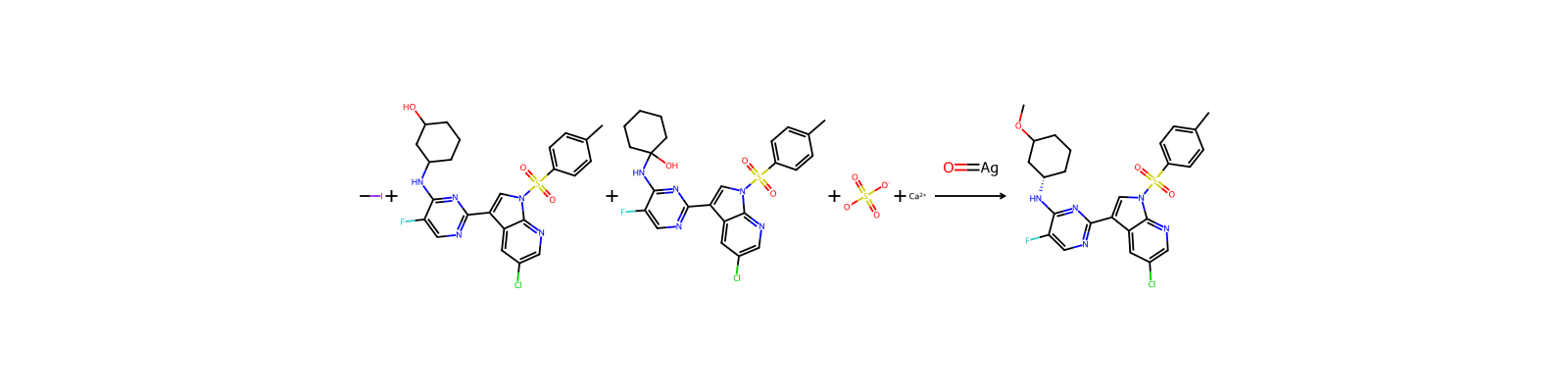
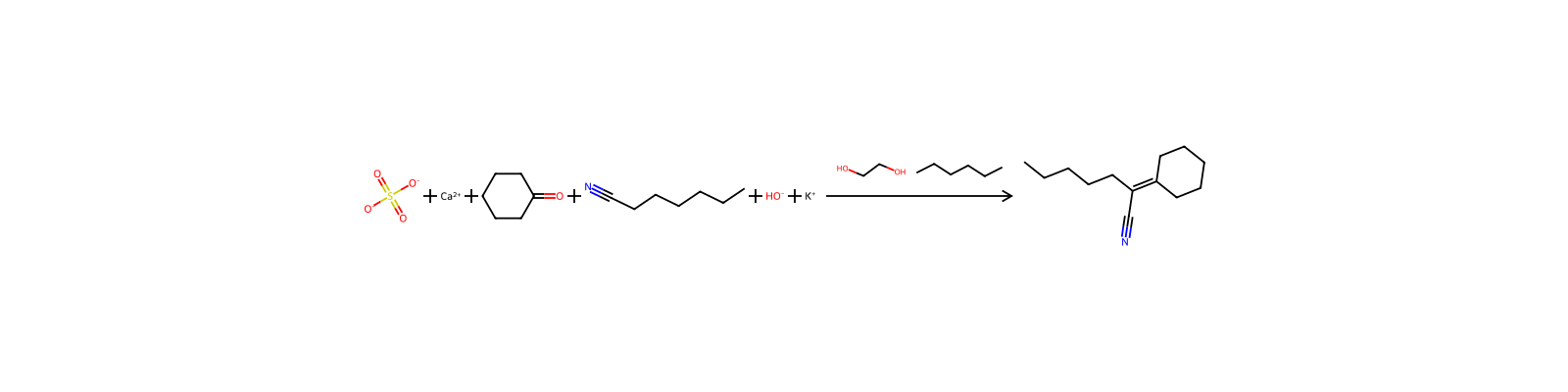
127
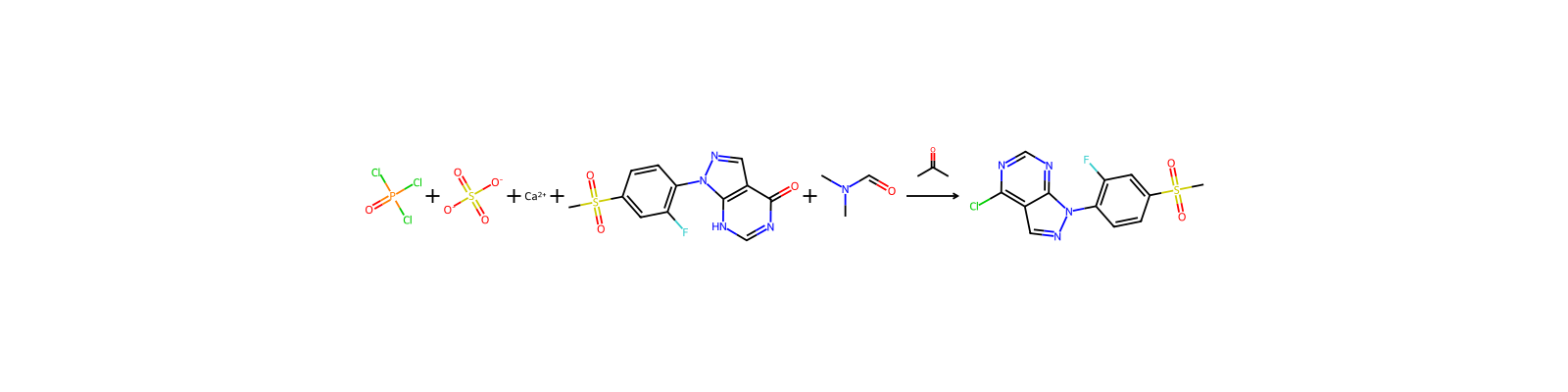
Reaktionsaufzeichnung erstellen
Reaktionsgleichung von HRID 27676
HRID 27676als Produktuspto-grants-1980_09
Reaktionsgleichung von HRID 31381
HRID 31381als Eduktuspto-grants-2008_09
Reaktionsgleichung von HRID 74935
HRID 74935als Eduktuspto-grants-2014_09
Reaktionsgleichung von HRID 80401
HRID 80401als Eduktuspto-grants-2014_09
Reaktionsgleichung von HRID 80402
HRID 80402als Eduktuspto-grants-2014_09
Reaktionsgleichung von HRID 246891
HRID 246891als Eduktuspto-grants-1987_11
Reaktionsgleichung von HRID 263161
HRID 263161als Eduktuspto-grants-1979_05
Reaktionsgleichung von HRID 263162
HRID 263162als Eduktuspto-grants-1979_05
Seite 1 von 16

Notizen zur Verbindung

Wird geladen…

Auf dieser SeiteGrundinformationenÜberblickNamen und BezeichnerEigenschaftenSicherheit und RegulatorischesChemie und IndustrieZugehörige ReaktionenNotizen zur Verbindung
Weitere Aktionen
Neue NotizNeue ReaktionAnfrage stellen

INSOL ANHYDRITE HAS SAME CRYSTAL STRUCTURE AS MINERAL ANHYDRITE

SOL ANHYDRITE IS OBTAINED IN GRANULAR OR POWDER FORM

For more Color/Form (Complete) data for CALCIUM SULFATE (7 total), please visit the HSDB record page.

Solubility · 6 Einträge

0.3 % (NIOSH, 2024)

Slightly soluble in water, insoluble in ethanol

For more Solubility (Complete) data for CALCIUM SULFATE (6 total), please visit the HSDB record page.

For more Solubility (Complete) data for CALCIUM SULFATE (6 total), please visit the HSDB record page.

For more Solubility (Complete) data for CALCIUM SULFATE (6 total), please visit the HSDB record page.

For more Solubility (Complete) data for CALCIUM SULFATE (6 total), please visit the HSDB record page.

Boiling Point · 3 Einträge

Decomposes (NIOSH, 2024)

decomposes

Decomposes

Decomposition1450 °C
Melting Point · 4 Einträge

2840 °F (Decomposes) (NIOSH, 2024)

1450 °C

2840 °F (decomposes)

2840 °F (Decomposes)

Vapor Pressure · 3 Einträge

0 mmHg (approx) (NIOSH, 2024)

0 mmHg (approx)

0 mmHg (approx)

FDA Requirements · 2 Einträge

Substance added directly to human food affirmed as generally recognized as safe (GRAS).

Calcium sulfate used as a nutrient and/or dietary supplement in animal drugs, feeds, and related products is generally recognized as safe when used in accordance with good manufacturing or feeding practice.

Reactive GroupSalts, Basic
FIFRA Requirements · 2 Einträge

As the federal pesticide law FIFRA directs, EPA is conducting a comprehensive review of older pesticides to consider their health and environmental effects and make decisions about their future use. Under this pesticide reregistration program, EPA examines health and safety data for pesticide active ingredients initially registered before November 1, 1984, and determines whether they are eligible for reregistration. In addition, all pesticides must meet the new safety standard of the Food Quality Protection Act of 1996. Pesticides for which EPA had not issued Registration Standards prior to the effective date of FIFRA, as amended in 1988, were divided into three lists based upon their potential for human exposure and other factors, with List B containing pesticides of greater concern and List D pesticides of less concern. Calcium sulfate is found on List D. Case No: 4055; Pesticide type: Insecticide, Herbicide; Case Status: No products containing the pesticide are actively registered ... The case /is characterized/ as "cancelled." Under FIFRA, pesticide producers may voluntarily cancel their registered products. EPA also may cancel pesticide registrations if registrants fail to pay required fees or make/meet certain reregistration commitments, or if EPA reaches findings of unreasonable adverse effects.; Active ingredient (AI): Calcium sulfate; AI Status: The active ingredient is no longer contained in any registered pesticide products ... "cancelled."

Calcium sulfate is exempted from the requirement of a tolerance when used as a solid diluent or carrier in accordance with good agricultural practice as inert (or occasionally active) ingredients in pesticide formulations applied to animals.

OSHA Standards · 2 Einträge

Permissible Exposure Limit: Table Z-1 8-hr Time Weighted Avg: 15 mg/cu m. /Total dust/

Permissible Exposure Limit: Table Z-1 8-hr Time Weighted Avg: 5 mg/cu m. /Respirable fraction/

Reactivity Profile · 1 Eintrag

CALCIUM SULFATE is non-combustible. Decomposes to give toxic oxides of sulfur, but only at very high temperature (>1500 °C). Generally of low reactivity but may act as an oxidizing agent: incompatible with diazomethane, aluminum, and phosphorus. Certain forms of calcium sulfate react with water; others do not. INSOLUBLE ANHYDRITE or dead-burned gypsum is made by the dehydration of calcium sulfate dihydrate (gypsum) at high (> 600 °C) temperature. At room temperature, insoluble anhydrite dissolves very slowly to the extent of 0.24 g per 100 g of water and does not absorb moisture from the air. SOLUBLE ANHYDRITE, which is obtained by heating calcium sulfate dihydrate at a temperature below 300 °C, has a high affinity for water and is used as a desiccant. Soluble anhydrite absorbs water to form calcium sulfate hemihydrate (Plaster of Paris).

Flammable LimitsNoncombustible Solid
Air and Water ReactionsNo rapid reaction with air. No rapid reaction with water.

Sicherheit und Schutzausrüstung

Fire FightingIn case of fire in the surroundings, use appropriate extinguishing media.
First Aid Measures · 4 Einträge

Fresh air, rest.

Rinse and then wash skin with water and soap.

First rinse with plenty of water for several minutes (remove contact lenses if easily possible), then refer for medical attention.

Rinse mouth. Give one or two glasses of water to drink.

First Aid · 2 Einträge

Excerpt from NIOSH Pocket Guide for Calcium sulfate:

(General first aid procedures)

Safe StorageDry.
Exposure Control and Personal Protection4.0 [mg/m3](inhalable fraction), 1.5 mg/m3(respirable fraction)[German Research Foundation (DFG)]
Storage Conditions · 2 Einträge

KEEP WELL CLOSED. /HEMIHYDRATE/

KEEP DRY. /DIHYDRATE/

Disposal Methods · 1 Eintrag

SRP: At the time of review, criteria for land treatment or burial (sanitary landfill) disposal practices are subject to significant revision. Prior to implementing land disposal of waste residue (including waste sludge), consult with environmental regulatory agencies for guidance on acceptable disposal practices.

Spillage DisposalPersonal protection: particulate filter respirator adapted to the airborne concentration of the substance. Sweep spilled substance into covered containers. If appropriate, moisten first to prevent dusting.
Preventive Measures · 2 Einträge

DUST FORMATION IN GYPSUM PROCESSING SHOULD BE CONTROLLED BY MECHANIZATION OF DUSTY OPERATIONS ... ADDITION OF UP TO 2% BY VOL OF WATER TO GYPSUM PRIOR TO CRUSHING, USE OF PNEUMATIC CONVEYORS WITH COVERS & DUST TRAPS, ENCLOSURE OF DUST SOURCES & PROVISION OF EXHAUST SYSTEMS ... . /GYPSUM/

GOOD HOUSEKEEPING & MAINTENANCE ARE ESSENTIAL IN PREVENTING ACCUMULATION OF DEPOSITED DUST, & IT IS ADVISABLE IN WORKSHOPS CONTAINING THE CALCINING KILNS, TO FACE WALLS & FLOORS WITH SMOOTH MATERIALS TO FACILITATE CLEANING. /GYPSUM/

Eye PreventionWear safety goggles.
Inhalation RiskA nuisance-causing concentration of airborne particles can be reached quickly when dispersed.
Skin PreventionProtective gloves.

Toxikologische Informationen

Target OrgansEyes, skin, respiratory system
Exposure Routesinhalation, skin and/or eye contact
Signs and Symptoms · 4 Einträge

Cough.

Redness.

Abdominal pain.

irritation eyes, skin, upper respiratory system; conjunctivitis; rhinitis, epistaxis (nosebleed)

Medical SurveillanceIT IS ADVISABLE FOR GYPSUM & GYPSUM-PRODUCTS WORKERS TO RECEIVE A PRE-EMPLOYMENT EXAMINATION FOLLOWED BY PERIODIC EXAMINATIONS EACH YR. /GYPSUM/
Natural Pollution Sources · 4 Einträge

NATURAL FORM OF ANHYDROUS CALCIUM SULFATE IS KNOWN AS MINERAL ANHYDRITE; ALSO AS KARSTENITE, MURIACITE, ANHYDROUS SULFATE OF LIME, ANHYDROUS GYPSUM.

MINERAL WITH CHEM COMPOSITION CASO4.2H2O. ... IT IS RARELY FOUND PURE & GYPSUM DEPOSITS MAY CONTAIN QUARTZ, PYRITES, CARBONATES & CLAYEY & BITUMINOUS MATERIALS. IT OCCURS IN NATURE IN 5 VARIETIES: GYPSUM ROCK; GYPSITE ... ALABASTER ... SATIN SPAR ... & SELENITE. /GYPSUM/

Calcium sulfate is the commonest of the natural sulfates.

Domestic resources are adequate but are unevenly distributed. There are no gypsum deposits on the eastern seaboard of the United States. Large deposits occur in the Great Lakes region, mid-continent region, California, and other States. /Gypsum/

Human Toxicity Excerpts · 3 Einträge

GYPSUM DUST HAS AN IRRITANT ACTION ON MUCOUS MEMBRANES OF THE RESPIRATORY TRACT & EYES, & THERE HAVE BEEN REPORTS OF CONJUNCTIVITIS, CHRONIC RHINITIS, LARYNGITIS, PHARYNGITIS, IMPAIRED SENSE OF SMELL & TASTE, BLEEDING FROM THE NOSE, & REACTIONS OF TRACHEAL & BRONCHIAL MEMBRANES IN EXPOSED WORKERS. /GYPSUM/

Because it hardens quickly after absorbing moisture, its ingestion may result in obstruction, particularly at the pylorus. ... To delay "setting," drink glycerin or gelatin solutions, or large volumes of water. Surgical relief may be necessary. /Plaster of Paris/

... Calcium sulfate caused no lung disease in calcium sulfate miners.

Non-Human Toxicity Excerpts · 4 Einträge

EXPTL ANIMALS EXPOSED TO GYPSUM DUST DEVELOPED PNEUMONIA & INTERSTITIAL PNEUMOSCLEROSIS, & BLOOD & LYMPH CIRCULATION DISORDERS OCCURRED IN THE LUNGS. /GYPSUM/

Applied experimentally to rabbit eyes it has been found innocuous.

Six types of man-made fibers were administered intratracheally 12.0 mg/animal each a week for 5 weeks; total 10 mg/animal) to female Syrian hamsters that were observed histologically for 2 years after administration. The fibers were rock wool [average diameter (D) = 6.1 microns, average length (L) = 296 microns], fiberglass (D = 0.65 microns, L = 16.8 microns), potassium titanate fiber ID = 0.36 microns, L = 7.17 microns), calcium sulfate fiber (D = 1.0 microns, L = 17.8 microns), basic magnesium sulfate fiber ID = 0.45 microns, L = 22.4 microns), and metaphosphate fiber (D = 2.38 microns, L = 64.1 microns). Tumors were observed in hamsters that had received basic magnesium sulfate fiber (9/20), metaphosphate fiber (6/20), calcium sulfate fiber (3/20), and fiberglass (2/20) but not in the control, rock wool, or potassium titanate fiber groups. The primary sites of the tumors were not only in the pleural cavity but also in the intracelial organs, kidney, adrenal gland, bladder, and uterus. Only a few of the tumors were identified as mesotheliomas by histological examination. In addition to neoplastic lesions, fibrosis, pleural thickening, and chronic inflamatory changes in the lungs were observed in the hamsters, but these changes appeared too mild to foster a pneumoconiosis such as asbestos.

The genotoxicity of selenite was investigated in two diploid yeast strains Saccharomyces cerevisiae BZ34 and D7. The effect of reduced glutathione (GSH) on the genotoxicity of selenite in the BZ34 strain was also examined. Selenite induced gene conversion and toxicity in the BZ34 strain. A variety of genetic events occurred including back mutation gene conversion mitotic crossing over aberrant colony formation and toxicity in another strain D7. The genetic activity of selenite peaked at one hour and subsequently declined when the two higher concentrations, (1O(-3) and 10(-2) molar), of selenite were used. When treatment was continued beyond 1 hr the percent of survival decreased marginally. Yeast cells may cause metabolic deactivation of selenite during 5 hr of treatment as the genetic and toxic effects of selenite beyond 1 hr begin to decline. When glutathione was present during the selenite treatment the convertogenic and toxic effects of selenite were significantly enhanced.

Probable Routes of Human Exposure · 1 Eintrag

WORKERS EMPLOYED IN PROCESSING OF GYPSUM ROCK MAY BE EXPOSED TO HIGH ATMOSPHERIC CONCN OF GYPSUM DUST ... FURNACE GASES & SMOKE. IN GYPSUM CALCINATING, WORKERS ARE EXPOSED TO HIGH ENVIRONMENTAL TEMP, & THERE IS ALSO THE HAZARD OF BURNS. /GYPSUM/

Regulatorische Informationen

FDA Requirements · 2 Einträge

Substance added directly to human food affirmed as generally recognized as safe (GRAS).

Calcium sulfate used as a nutrient and/or dietary supplement in animal drugs, feeds, and related products is generally recognized as safe when used in accordance with good manufacturing or feeding practice.

FIFRA Requirements · 2 Einträge

As the federal pesticide law FIFRA directs, EPA is conducting a comprehensive review of older pesticides to consider their health and environmental effects and make decisions about their future use. Under this pesticide reregistration program, EPA examines health and safety data for pesticide active ingredients initially registered before November 1, 1984, and determines whether they are eligible for reregistration. In addition, all pesticides must meet the new safety standard of the Food Quality Protection Act of 1996. Pesticides for which EPA had not issued Registration Standards prior to the effective date of FIFRA, as amended in 1988, were divided into three lists based upon their potential for human exposure and other factors, with List B containing pesticides of greater concern and List D pesticides of less concern. Calcium sulfate is found on List D. Case No: 4055; Pesticide type: Insecticide, Herbicide; Case Status: No products containing the pesticide are actively registered ... The case /is characterized/ as "cancelled." Under FIFRA, pesticide producers may voluntarily cancel their registered products. EPA also may cancel pesticide registrations if registrants fail to pay required fees or make/meet certain reregistration commitments, or if EPA reaches findings of unreasonable adverse effects.; Active ingredient (AI): Calcium sulfate; AI Status: The active ingredient is no longer contained in any registered pesticide products ... "cancelled."

Calcium sulfate is exempted from the requirement of a tolerance when used as a solid diluent or carrier in accordance with good agricultural practice as inert (or occasionally active) ingredients in pesticide formulations applied to animals.

Consumption Patterns · 2 Einträge

Of the total supply of crude gypsum, 24.5 million tons, including 800,000 tons of byproduct gypsum, 19.1 million tons was calcined for gypsum products, and 5.4 million tons was used mainly as a cement retarder or as agricultural land plaster. The calcined gypsum was sold as prefabricated products or as industrial or building plaster. Sales of gypsum for use in cement were 4.1 million tons; for agriculture, 1.3 million tons; and for industrial and building plaster, 770,000 tons (1985). /Gypsum/

In 1989, 62% of the uncalcined gypsum products (which comprise about 20% of all gypsum products) were used in portland cement, and the remainder was used mainly for agricultural purposes /Gypsum/

Consumer UsesFlame retardant
Industry UsesCleaning agent
Methods of Manufacturing · 5 Einträge

RECOVERY OF MINERAL, ANHYDRITE; DEHYDRATION OF PURE GYPSUM (CALCIUM SULFATE DIHYDRATE) BY HEATING (TO FORM INSOL ANHYDRITE)

INSOLUBLE ANHYDRITE OR DEAD-BURNED GYPSUM ... IS OBTAINED UPON COMPLETE DEHYDRATION OF GYPSUM ABOVE 650 °C. /INSOL ANHYDRITE/

SOL ANHYDRITE IS OBTAINED...BY COMPLETE DEHYDRATION OF GYPSUM BELOW 300 °C IN ELECTRIC OVEN. ESTIMATED PORE SIZE IS 38% BY VOLUME. /SOL ANHYDRITE/

GYPSUM ROCK MAY BE CRUSHED & GROUND FOR USE IN THE DIHYDRATE FORM, CALCINED AT 190-200 °C...TO PRODUCE CALCIUM SULFATE HEMIHYDRATE OR PLASTER OF PARIS, OR COMPLETELY DEHYDRATED BY CALCINING...OVER...600 °C TO PRODUCE ANHYDROUS OR DEAD-BURNED GYPSUM. /GYPSUM/

For more Methods of Manufacturing (Complete) data for CALCIUM SULFATE (6 total), please visit the HSDB record page.

Formulations/Preparations · 4 Einträge

GRADES: TECHINCAL; PURE PRECIPITATED (AS DIHYDRATE); FCC.

Chemical gypsum requires control of residual chloride, fluoride, and phosphate to less than 0.5%

/Gypsum/ Crude, By-product, & Calcined

Gypsum, CaSO4.2H2O, contains 27% water; anhydrite is the anhydrous form

Household ProductsInformation on 75 consumer products that contain Calcium sulfate in the following categories is provided:
Use Classification · 5 Einträge

Food additives

Food Additives -> FIRMING_AGENT; FLOUR_TREATMENT_AGENT; SEQUESTRANT; YEAST_FOOD -> JECFA Functional Classes

Plastics -> Polymer Type -> N.a.

Plastics -> Pigments agents

Cosmetics -> Bulking; Pearlescent; Opacifying; Abrasive; Cosmetic colorant

General Manufacturing Information · 6 Einträge

Construction

Sulfuric acid, calcium salt (1:1): ACTIVE

APPLICATIONS (VET): PRIMARILY WITH OR AS INTERGRAL PART OF BANDAGE TO IMMOBILIZE FRACTURES AFTER WETTED PASTE HARDENS. ... HAS BEEN USED ORALLY IN POULTRY AS DIETARY SOURCE OF CALCIUM ... IN SHEEP IT IS VALUABLE ORALLY AS SOURCE OF INORG SULFATE SULFUR WITH SODIUM MOLYBDATE IN COPPER POISONING.

TRADE NAMES: DRIED CALCIUM SULFATE; DRIED GYPSUM; PLASTER OF PARIS; ANNALIN. /HEMIHYDRATE/

TRADE NAMES: NATIVE CALCIUM SULFATE; PRECIPITATED CALCIUM SULFATE; GYPSUM; ALABASTER; SELENITE; TERRA ALBA; SATINITE; MINERAL WHITE; SATIN SPAR; LIGHT SPAR. /DIHYDRATE/

/DRIERITE/...CAN BE REGENERATED REPEATEDLY & REUSED WITHOUT NOTICEABLE DECREASE IN ITS DESICCATING EFFICIENCY. /SOL ANHYDRITE/