StartseiteMCPWorkbenchSkills
StartseiteWorkbenchBenachrichtigungenMein Bereich
llms.txt · MCP-AnleitungDatenschutz · Nutzungsbedingungen · Supportv1.8.0
  1. Startseite
  2. /Verbindung

Schwefeltetrafluorid

Sulfur tetrafluoride

HCID 24555
Neue NotizNeue ReaktionAnfrage stellen
Druckvorschau

Daten werden ergänzt – lade die Seite später neu, um den aktuellen Stand zu sehen

GrundinformationenÜberblickNamen und BezeichnerEigenschaftenSicherheit und RegulatorischesChemie und IndustrieZugehörige ReaktionenNotizen zur Verbindung
TeilstruktursucheÄhnliche Strukturen suchen

Grundinformationen

CAS
7783-60-0
Standard-SMILES
FS(F)(F)F
InChIKey
QHMQWEPBXSHHLH-UHFFFAOYSA-N
Summenformel
F4S
Durchschnittliche Molmasse
108,06 g/mol
Monoisotopische Masse
107,96568388

Überblick

Sulfur tetrafluoride is a colorless gas with a distinct sulfur odor. It is highly toxic by inhalation and a strong irritant to skin, eyes and mucous membranes. It reacts vigorously with water and acids to yield toxic fluoride and sulfur oxide fumes and an acidic solution. Sulfur tetrafluoride is heavier than air. Under prolonged exposure to fire or intense heat the containers may violently rupture or rocket. It is used as a fluoridizing agent and as an oil repellent.

Namen und Bezeichner

Bevorzugter Name
Sulfur tetrafluoride
IUPAC
tetrafluoro-λ4-sulfane
Lokaler Name
Schwefeltetrafluorid
Englischer Name
Sulfur tetrafluoride
Summenformel
F4S
Molmasse
108.06

Namen und Synonyme

SULFUR TETRAFLUORIDE7783-60-0TetrafluorosulfuraneSulphur tetrafluorideSulfur fluoride (SF4), (T-4)-Sulfur fluoride (SF4)UN2418F4P8J39GOFSulfur fluoride (SF4), (beta-4)-CHEBI:30495DTXSID40893074UN-2418
Weitere Namen anzeigen
SF4sulfur fluorideSulfur(iv) fluorideSulfur(4+) fluorideTetrafluoridosulfurSchwefeltetrafluorid
RefChem:186629DTXCID301323028232-013-4tetrafluoro-lambda4-sulfaneMFCD00040327SulphurtetrafluorideHSDB 6339EINECS 232-013-4

Datenbank-Bezeichner

CAS
7783-60-0
PubChem CID
24555
DTXSID
DTXSID40893074
ChEBI
CHEBI:30495
UNII
F4P8J39GOF
EC Number
232-013-4

Eigenschaften

Berechnete StruktureigenschaftenWird ergänzt

XLogP
3,1
Polarare Oberfläche (TPSA)
1 Ų
H-Brücken-Donoren
0
H-Brücken-Akzeptoren
5
Frei drehbare Bindungen
0
Schwere Atome
5
Formalladung
0
Komplexität
19,1

Experimentelle und physikochemische Eigenschaften

Chemical Classes · 2 Einträge

Toxic Gases & Vapors -> Corrosive Gases

Corrosives

SpringerMaterials PropertiesGibbs energy
Odor · 2 Einträge

Irritating odor that resembles sulfur dioxide

Distinct sulfur odor

Density · 5 Einträge

1.95 at -108 °F (EPA, 1998) - Denser than water; will sink

Liquid at -78 °C: 1.95 g/mL; solid at -183 °C: 2.349 g/mL

1.95 at -108 °F

1.95 @ -78°C

3.78(relative gas density)

Color/FormColorless gas
Solubility · 4 Einträge

Reacts with water (NIOSH, 2024)

Freely sol in benzene

Solubility in water: reaction

Reacts

Corrosivity · 3 Einträge

Attacks glass, but not quartz or mercury

.. its corrosive action on metals can result in formation of hydrogen in containers & piping to create fire hazard

Sicherheit und Regulatorisches

Sicherheitsangaben dienen nur zur Orientierung und ersetzen weder das Sicherheitsdatenblatt (SDB) des Lieferanten noch geltende Vorschriften oder eine fachliche Bewertung.

GHS-Klassifizierung

GHS Classification · 6 Einträge

Danger

H280 (100%): Contains gas under pressure; may explode if heated [Warning Gases under pressure]

P260, P261, P264, P271, P280, P284, P301+P330+P331, P302+P361+P354, P304+P340, P305+P354+P338, P316, P319, P320, P321, P363, P403+P233, P405, P410+P403, and P501 (click each P-code to see the statement)

Aggregated GHS information provided per 111 reports by companies from 4 notifications to the ECHA C&L Inventory. Each notification may be associated with multiple companies.

Danger

H280: Contains gas under pressure; may explode if heated [Warning Gases under pressure]

Gefahrenhinweise

Hazards IdentificationToxic/poison by inhalation (TIH/PIH)
Regulatory Information · 2 Einträge

Chemical: Sulfur fluoride (SF4), (T-4)-

The New Jersey Worker and Community Right to Know Act requires public and private employers to provide information about hazardous substances at their workplaces. (N.J.S.A. 34:5A-1 et. seq.)

DOT LabelPoison Gas Corrosive
Fire Hazards · 3 Einträge

Container may explode in heat of fire. When heated to decomposition, it emits very toxic fumes of fluorides and sulfur oxides. Reacts violently with water. It is decomposed by concentrated sulfuric acid. Thermostable to 1112F. (EPA, 1998)

· Some may burn but none ignite readily.

Gives off irritating or toxic fumes (or gases) in a fire. Not combustible.

Health Hazards · 2 Einträge

This material is highly toxic by inhalation; it is a strong irritant to eyes and mucous membranes. Poisonous; may be fatal if inhaled. Contact may cause burns to skin and eyes. Contact with liquid may cause frostbite. (EPA, 1998)

Chemie und Industrie

Pharmakologische Informationen

Metabolism/MetabolitesIn view of the violent reaction of the compound with water to hydrogen fluoride and thionyl fluoride, exposure to the compound itself will have a local character only. Thionyl fluoride hydrolyzes more slowly than its parent.
Absorption, Distribution and Excretion · 1 Eintrag

A study /was conducted/ to determine the absorption of inhaled hydrofluoric acid. Two human subjects were exposed for an 8 hour period in an industrial environment to fluorides consisting primarily of hydrogen fluoride and silicon tetrafluoride at an average airborne concentration of 3.8 mg F/cu m. Urine specimens were collected at 2 hour intervals during exposure and or approximately 2 days afterwards. There was a rapid rise in urinary fluoride excretion during exposure, and a peak output was reached in 2-4 hours after cessation of exposure. Within 24 hours, the urinary fluoride levels returned practically to base levels, although a slight elevation persisted into the following day. The total amounts of fluoride excreted daily by the two subjects were as follows: day of exposure, 9.64 and 8.56 mg fluoride; first day after exposure, 1.67 and 2.49; second day, 0.99 and 1.31; and third day, 0.89 and 1.34. The baseline daily urinary fluoride excretions before exposure were 0.9 and 1.2 mg fluoride, respectively. /Hydrofluoric acid/

Verwendung und Herstellung

Uses · 6 Einträge

Used as a fluorine donor in chemical reactions to produce water-repellant materials, pesticides, and other organic and inorganic compounds; [ACGIH]

Sulfur tetrafluoride ... can be used for the controlled introduction of fluorine into organic compounds.

Selective fluorinating agent.

Fluorinating agent for making water and oil repellants and lubricity improvers.

Sulfur tetrafluoride is also quite useful for converting metal oxides into fluorides.

For more Uses (Complete) data for SULFUR TETRAFLUORIDE (8 total), please visit the HSDB record page.

Methods of Manufacturing · 3 Einträge

Zugehörige Reaktionen

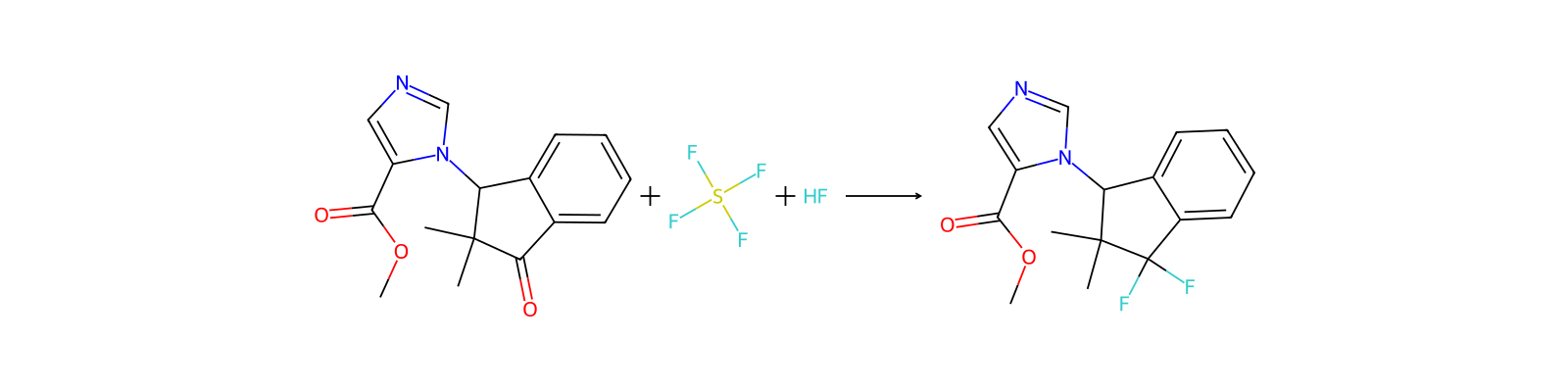
25
Reaktionsaufzeichnung erstellen
Reaktionsgleichung von HRID 5776
HRID 5776als Eduktuspto-grants-1993_09
Reaktionsgleichung von HRID 178344
HRID 178344als EduktTraining data from https://doi.org/10.1039/C8SC04228D (6/10)
Reaktionsgleichung von HRID 194643
HRID 194643als EduktTraining data from https://doi.org/10.1039/C8SC04228D (6/10)
Reaktionsgleichung von HRID 198087
HRID 198087als EduktTraining data from https://doi.org/10.1039/C8SC04228D (6/10)
Reaktionsgleichung von HRID 434762
HRID 434762als Eduktuspto-grants-1983_08
Reaktionsgleichung von HRID 484782
HRID 484782als Eduktuspto-grants-1985_08
Reaktionsgleichung von HRID 616884
HRID 616884als Eduktuspto-grants-1978_02
Reaktionsgleichung von HRID 637765
HRID 637765als Eduktuspto-grants-1985_12
Seite 1 von 4

Notizen zur Verbindung

Wird geladen…

Auf dieser SeiteGrundinformationenÜberblickNamen und BezeichnerEigenschaftenSicherheit und RegulatorischesChemie und IndustrieZugehörige ReaktionenNotizen zur Verbindung
Weitere Aktionen
Neue NotizNeue ReaktionAnfrage stellen
Nikkaji
J95.217F

Attacks glass and metal

Boiling Point · 6 Einträge

-40 °F at 760 mmHg (EPA, 1998)

-38 °C

-40 °C

-41 °F

-38 °C @760 [mm Hg]

-41 °F

DecompositionWhen heated it emits very toxic fumes of /hydrogen fluoride and sulfur oxides/.
Melting Point · 6 Einträge

-191 °F (EPA, 1998)

-121.0 °C

-124 °C

-185 °F

-121 °C

-185 °F

Vapor Density · 4 Einträge

3.78 (NIOSH, 2024) - Heavier than air; will sink (Relative to Air)

3.78 (Air = 1)

Relative vapor density (air = 1): 3.78

3.78

Odor ThresholdLow threshold= 0.033 mg/cu m High threshold= 0.13 mg/cu m. Irritating concn= 4.17 mg/cu m. /Hydrofluoric acid/

Physikochemische Eigenschaften

Schmelzpunkt
121.5 · −121.5-−120.5 °C(lit.)
Siedepunkt
40.4 °C · −40.4 °C(lit.)
Dichte
1.941 · 1.941
Dampfdruck
140 psi · 140 psi ( 21 °C)
Löslichkeit
2 O · reacts with H2O
Aggregatzustand
colorless gas
Farbe
colorless
Wasserlöslichkeit
2 O · decomposes in H2O [HAW93]
Spezifische Wärmekapazität
0.72 J/ · Cp(gas): 0.72 J/(g·K), at 25℃
Merck
13 · 13,9068
InChI
InChI=1S/F4S/c1-5(2,3)4
InChIKey
QHMQWEPBXSHHLH-UHFFFAOYSA-N
SMILES
FS(F)(F)F
CAS Datenbank
7783 · 7783-60-0(CAS DataBase Reference)
NIST chemische Informationen
Sulfur tetrafluoride(7783-60-0)
EPA chemische Informationen
Sulfur tetrafluoride (7783-60-0)

· TOXIC and/or CORROSIVE; may be fatal if inhaled, ingested or absorbed through skin.

Hazards Summary · 1 Eintrag

May cause skin burns (from SF4 releasing hydrofluoric acid on exposure to moisture); [NIOSH] After an industrial accident, six exposed workers developed cough, dyspnea, and chest tightness. Symptoms resolved within one to four weeks. [ACGIH] Possible frostbite from contact with liquid; [NIOSH] A corrosive substance that can cause pulmonary edema; Evaporating liquid can cause frostbite; May cause fluorosis; [ICSC] See FLUORIDES.

DOT ID and Guide · 2 Einträge

2418 125

2418 125

Reactive GroupFluoride Salts, Soluble
UN ClassificationUN Hazard Class: 2.3; UN Subsidiary Risks: 8
Reactivity AlertsWater-Reactive
Reactivity Profile · 1 Eintrag

SULFUR TETRAFLUORIDE is a highly toxic and corrosive gas. On contact with water, steam, or mineral acids it decomposes and produces toxic and highly irritating fumes. When heated to decomposition it emits very toxic fluoride and sulfur oxides fumes [Lewis, 3rd ed., 1993, p. 1197]. Explosively violent reactions with 2-(hydroxymethyl)furan or 2-methyl-3-butyn-2-ol even below -50 °C have been recorded [Bretherick, 5th ed., 1995, p. 1432]. Ignition or explosion may occur on contact with dioxygen difluoride even below -100 °C [Streng, A. G., Chem. Rev., 1963, 63, p. 615].

Chemical DangersReacts violently with water and acids. This produces toxic and corrosive fumes. Attacks glass and metal.

Sicherheit und Schutzausrüstung

Fire Fighting · 2 Einträge

Keep unnecessary people away; isolate hazard area and deny entry. Stay upwind; keep out of low areas. Ventilate closed spaces before entering them. Wear positive pressure breathing apparatus and full protective clothing. Evacuate area endangered by gas.

NO water. In case of fire in the surroundings, use appropriate extinguishing media. In case of fire: keep cylinder cool by spraying with water. NO direct contact with water.

First Aid Measures · 3 Einträge

Fresh air, rest. Half-upright position. Artificial respiration may be needed. Refer for medical attention.

ON FROSTBITE: rinse with plenty of water, do NOT remove clothes. Rinse skin with plenty of water or shower. Refer for medical attention .

First rinse with plenty of water for several minutes (remove contact lenses if easily possible), then refer for medical attention.

Accidental Release Measures · 2 Einträge

· CALL 911. Then call emergency response telephone number on shipping paper. If shipping paper not available or no answer, refer to appropriate telephone number listed on the inside back cover.

· Do not touch or walk through spilled material.

First Aid · 3 Einträge

Warning: Sulfur tetrafluoride is a highly irritating and corrosive gas.

General First Aid:

(General first aid procedures)

Safe StorageKeep in a well-ventilated room. Fireproof if in building. Cool. Dry.
Firefighting HazardsSulphur oxides, Hydrogen fluoride
Exposure Control and Personal Protection · 2 Einträge

· Wear positive pressure self-contained breathing apparatus (SCBA).

TIH (Toxic Inhalation Hazard) - Term used to describe gases and volatile liquids that are toxic when inhaled. Some are TIH materials themselves, e.g., chlorine, and some release TIH gases when spilled in water, e.g., chlorosilanes. [ERG 2016].

Fire Fighting Procedures · 3 Einträge

Wear self-contained breathing apparatus for firefighting if necessary.

Dry powder

If material involved in fire: Extinguish fire using agent suitable for type of surrounding fire. (Material itself does not burn or burns with difficulty). Do not use water. Cool all affected containers with flooding quantities of water. Apply water from as far a distance as possible. Use "alcohol" foam, dry chemical or carbon dioxide. Do not apply water to point of leak in tank car or container.

Storage Conditions · 2 Einträge

Hydrogen fluoride should be stored in cool, dry, well ventilated areas out of the direct rays of the sun. /Hydrofluoric acid/

Keep container tightly closed in a dry and well-ventilated place. Never allow product to get in contact with water during storage. Contents under pressure. Storage class (TRGS 510): Gases

Cleanup Methods · 1 Eintrag

/ACCIDENTAL RELEASE MEASURES/ Personal precautions, protective equipment and emergency procedures: Wear respiratory protection. Avoid breathing vapours, mist or gas. Ensure adequate ventilation. Evacuate personnel to safe areas. Environmental precautions: Prevent further leakage or spillage if safe to do so. Do not let product enter drains. Methods and materials for containment and cleaning up: Do not flush with water.

Nonfire Spill ResponseExcerpt from ERG Guide 125 [Gases - Toxic and/or Corrosive]:
Disposal Methods · 2 Einträge

SRP: Recycle any unused portion of the material for its approved use or return it to the manufacturer or supplier. Ultimate disposal of the chemical must consider: the material's impact on air quality; potential migration in air, soil or water; effects on animal, aquatic and plant life; and conformance with environmental and public health regulations. If it is possible or reasonable use an alternative chemical product with less inherent propensity for occupational harm/injury/toxicity or environmental contamination.

Product: Offer surplus and non-recyclable solutions to a licensed disposal company. Contact a licensed professional waste disposal service to dispose of this material. Contaminated packaging: Dispose of as unused product.

Toxikologische Informationen

Target OrgansEyes, skin, respiratory system
Environmental Fate · 3 Einträge

TERRESTRIAL FATE: Based on a classification scheme(1), an estimated Koc value of 27(SRC), determined from a structure estimation method(2), indicates that sulfur tetrafluoride is expected to have very high mobility in soil(SRC). Volatilization of sulfur tetrafluoride from moist soil surfaces would be expected to be an important fate process(SRC) given the compound is a gas with a vapor pressure of 1.52X10+4 mm Hg at 25 °C(3). However, sulfur tetrafluoride reacts rapidly with water(3); therefore, rapid hydrolysis will attenuate the importance of volatilization from moist soil and leaching(SRC). Sulfur tetrafluoride is expected to volatilize from dry soil surfaces based upon its vapor pressure(SRC). Biodegradation data were not available(SRC, 2015).

AQUATIC FATE: Based on a classification scheme(1), an estimated Koc value of 27(SRC), determined from a structure estimation method(2), indicates that sulfur tetrafluoride is not expected to adsorb to suspended solids and sediment(SRC). Sulfur tetrafluoride reacts rapidly with water to yield hydrofluoric acid and thionyl fluoride(3). Therefore, volatilization from water and biocentration are not expected to be an important fate processes(SRC). Biodegradation data were not available(SRC, 2015).

ATMOSPHERIC FATE: According to a model of gas/particle partitioning of semivolatile organic compounds in the atmosphere(1), sulfur tetrafluoride, which has a vapor pressure of 1.52X10+4 mm Hg at 25 °C(2), is expected to exist solely as a gas in the ambient atmosphere. Sulfur tetrafluoride is a relatively heavy gas with a vapor density 3.78 times that of air(3). Therefore, if released in the atmosphere, it may tend to remain close to the ground and be transported to earth by wet deposition(SRC). Sulfur tetrafluoride reacts rapidly with water to yield hydrofluoric acid and thionyl fluoride(2). It also reacts and fumes in moist air(2). Therefore, hydrolysis is expected to be an important fate process in the ambient atmosphere(SRC).

Adverse EffectsDermatotoxin - Skin burns.
Exposure Routes · 2 Einträge

The substance can be absorbed into the body by inhalation.

inhalation, skin and/or eye contact

Toxicity Summary · 1 Eintrag

IDENTIFICATION AND USE: Sulfur tetrafluoride (SF4) is a colorless gas. It is used as a selective fluorinating agent, capable of replacing oxygen in many organic, inorganic, and organometallic compounds with fluorine. It is also used in the production of water- and oil-repellant materials and lubricity improvers. HUMAN EXPOSURE AND TOXICITY: SF4 exerts severe local effects upon inhalation at rather low exposure levels, most probably due to respiratory tract irritation. Eye-irritating properties are suggested by a case study, in which workers were exposed to the breakdown products of sulphur hexafluoride. ANIMAL STUDIES: Local effects in the respiratory tract were found in a rat study at 4 ppm (18 mg/cu m).

Signs and Symptoms · 4 Einträge

Burning sensation. Cough. Sore throat. Headache. Nausea. Vomiting. Shortness of breath. Laboured breathing. Symptoms may be delayed.

Pain. Redness. Skin burns. ON CONTACT WITH LIQUID: FROSTBITE.

Redness. Pain. Blurred vision. Severe deep burns. ON CONTACT WITH LIQUID: FROSTBITE.

irritation eyes, skin, mucous membrane; eye, skin burns (from SF4 releasing hydrofluoric acid on exposure to moisture); liquid: frostbite; In Animals: dyspnea (breathing difficulty), lassitude (weakness, exhaustion), rhinorrhea (discharge of thin nasal mucus)

Soil Adsorption/Mobility · 1 Eintrag

Using a structure estimation method based on molecular connectivity indices(1), the Koc of sulfur tetrafluoride can be estimated to be 27(SRC). According to a classification scheme(2), this estimated Koc value suggests that sulfur tetrafluoride is expected to have very high mobility in soil. Sulfur tetrafluoride reacts rapidly with water(3), therefore, leaching in moist soils will be attenuated by hydrolysis(SRC).

Human Toxicity Excerpts · 3 Einträge

/SIGNS AND SYMPTOMS/ ...the compound exerts severe local effects upon inhalation at rather low exposure levels, most probably due to respiratory tract irritation. Moreover, eye-irritating properties are suggested by a case study, in which workers were exposed to the breakdown products of sulphur hexafluoride.

/CASE REPORTS/ Six electrical workers accidentally exposed to degradation products of sulfur hexafluoride (SF6) during electrical repair work were followed up for one year. One degradation product, sulfur tetrafluoride (SF4), was identified from worksite measurements. Unprotected exposure in an underground enclosed space occurred for six hours over a 12 hour period. Initial symptoms included shortness of breath, chest tightness, productive cough, nose and eye irritation, headache, fatigue, nausea, and vomiting. Symptoms subsided when exposure was interrupted during attempts to identify the cause of the problem. Although exposure ended after several hours, four workers remained symptomatic for between one week and one month. Pulmonary radiographic abnormalities included several discrete areas of transitory platelike atelectasis in one worker, and a slight diffuse infiltrate in the left lower lobe of another. One worker showed transient obstructive changes in tests of pulmonary function. Examination at follow up after one year showed no persistent abnormalities.

/OTHER TOXICITY INFORMATION/ In view of the violent reaction of sulphur tetrafluoride with water, systemic exposure to this compound itself may be deemed negligible. Systemic exposure to hydrogen fluoride, sulphur dioxide, and thionyl dioxide - hydrolysis products - will, however, occur.

Artificial Pollution Sources · 1 Eintrag

Sulfur tetrafluoride's production and use as a selective fluorinating agent(1), as a treatment to increase the water repellency of polymeric materials, in the preparation of high-lubricity elastomers, and for treatment of carbon blacks to prepare improved rubber vulcanizates(2) may result in its release to the environment through various waste streams(SRC). Sulfur tetrafluoride can be formed as a degradation product of high temperature decomposition of sulfur hexafluoride(3).

Environmental BioconcentrationSulfur tetrafluoride reacts rapidly with water to yield hydrofluoric acid and thionyl fluoride(1). Therefore, bioconcentration in aquatic organisms weill not occur(SRC).
Volatilization from Water/Soil · 1 Eintrag

Sulfur tetrafluoride reacts rapidly with water to yield hydrofluoric acid and thionyl fluoride(1). Therefore, volatilization from water is not expected to be an important fate process(SRC). Sulfur tetrafluoride is a gas with vapor pressure of 1.52X10+4 mm Hg at 25 °C(1). Therefore, volatilization from moist soil surfaces would be expected to occur; however, rapid hydrolysis will attenuate the importance of volatilization from moist soil(SRC). Sulfur tetrafluoride is expected to volatilize from dry soil surfaces based upon its vapor pressure(SRC).

Non-Human Toxicity Excerpts · 2 Einträge

/LABORATORY ANIMALS: Acute Exposure/ ... Four hours of respiratory exposure to 19 ppm ( 86 mg/cu m ) caused death in one of 2 exposed rats, while all 2 rats survived a 1-hour exposure to 40 ppm ( 180 mg/cu m ). Further, rats repeatedly exposed to 4 ppm ( 18 mg/cu m ; 4 hours/day for 10 days over a 12-day period) showed signs of 'respiratory embarrassment'. Two rats sacrificed immediately after the 10th exposure, showed pulmonary damage, while rats allowed to recover for 14 days showed no clinical and anatomical lesion.

/ALTERNATIVE and IN VITRO TESTS/ Using quadrupole mass spectrometric analysis of sparked sulfur hexafluoride over energy and pressure ranges of 4-94 kj and 40-233 kPa, respectively, the by-products include sulfur tetrafluoride. The cytotoxic activity of certain of the more abundant decomposition products (prepared as mixtures of the specified by- product SF6) toward the Chinese hamster lung cells using a colony formation assay were investigated. Sulfur fluoride exhibited no sigificant cytotoxic activity at 0.5% concentration, although concentrations of 1 and 2% showed definite cytotoxicity, particularly after 4 hr of exposure.

Regulatorische Informationen

CERCLA Reportable Quantities · 1 Eintrag

Releases of CERCLA hazardous substances are subject to the release reporting requirement of CERCLA section 103, codified at 40 CFR part 302, in addition to the requirements of 40 CFR part 355. Sulfur tetrafluoride is an extremely hazardous substance (EHS) subject to reporting requirements when stored in amounts in excess of its threshold planning quantity (TPQ) of 100 lbs.

DHS Chemicals of Interest (COI) · 6 Einträge

Sulfur tetrafluoride

1

2500

1.33

15

Toxic chemical that can be released at a facility.

Sicherheitsdaten

OEL
Ceiling: 0.1 ppm (0.4 mg/m3)
wgk
3
tsca
TSCA listed
ridadr
UN 2418
RTECS-Nr.
WT4800000
risk_code
14-26-34-37
hazard_code
T+,C,T
hazard_note
Highly Toxic/Corrosive
safety_code
26-36/37/39-38-45
hazard_class
2.3
Giftige Stoffe Daten
7783-60-0(Hazardous Substances Data)

/Commercial production:/ Direct combination of sulfur with elemental fluorine.

First prepared from cobalt trifluoride and elemental sulfur.

In the laboratory, sulfur tetrafluoride is made by combining SCl2 and NaF suspended in acetonitrile at ca 77 °C.

Formulations/PreparationsGrade: Available in cylinders at 90-94% purity
General Manufacturing Information · 2 Einträge

Sulfur fluoride (SF4), (T-4)-: ACTIVE

... Degradation products /of sulfur hexafluoride/ ... are produced when electrical arcing occurs. The specific compounds produced depend on the arcing conditions. In anaerobic and anhydrous circumstances, sulfur tetrafluoride (SF4) is produced ... .

Anwendungen · 1 Eintrag

VerwendenCompounds of interest in this group include sulfur hexafluoride (SF6) used as an electrical insulating material in circuit breakers, cables, capacitors, and transformers, and its degradation products, which are produced when electrical arcing occurs. The specific compounds produced depend on the arcing conditions. In anaerobic and anhydrous circumstances, sulfur tetrafluoride (SF4) is produced; if moisture is present, the tetrafluoride may hydrolyze to form thionyl fluoride (SOF2) and HF. Sulfuryl fluoride (SO2F2), disulfur decafluoride (S2F10), sulfur pentafluoride (SF5), and sulfur dioxide are also formed from sulfur hexafluoride. Some of these compounds are also produced as contaminants in the commercial production of sulfur hexafluoride by burning sulfur in fluorine gas, for example, sulfur tetrafluoride and disulfur decafluoride, as well as sulfur monofluoride (S2F2).

Vor- und nachgelagerte Produkte

Vorgelagerte Rohstoffe

Dischwefeldecafluorid

Nachgelagerte Produkte

(Diethylamino)schwefeltrifluorid5-(trifluoromethyl)thiazol-2-amineKohlenstofftetrafluoridSulfur tetrachloride