
Silicon tetrachloride
Daten werden ergänzt – lade die Seite später neu, um den aktuellen Stand zu sehen

Grundinformationen
- CAS
10026-04-7- Standard-SMILES
Cl[Si](Cl)(Cl)Cl- InChIKey
FDNAPBUWERUEDA-UHFFFAOYSA-N- Summenformel
- Cl4Si
- Durchschnittliche Molmasse
- 169,9 g/mol
- Monoisotopische Masse
- 167,852337
Überblick
Silicon tetrachloride is a colorless, fuming liquid with a pungent odor. It is decomposed by water to hydrochloric acid with evolution of heat. It is corrosive to metals and tissue in the presence of moisture. It is used in smoke screens, to make various silicon containing chemicals, and in chemical analysis.
Namen und Bezeichner
- Bevorzugter Name
- Silicon tetrachloride
- IUPAC
- tetrachlorosilane
- Englischer Name
- Silicon tetrachloride
- Summenformel
- CL4Si
- Molmasse
- 169.8975
Namen und Synonyme
TetrachlorosilaneSILICON TETRACHLORIDE10026-04-7Silane, tetrachloro-Silicon chlorideTetrachlorosiliconChlorid kremicitySiliciumtetrachloridSilicio(tetracloruro di)SiliciumtetrachlorideSilicon chloride (SiCl4)Tetrachlorure de silicium
Weitere Namen anzeigen
Silicium(tetrachlorure de)96L75U0BM3DTXSID0029711Silicium MuriaticumRefChem:6221DTXCID009711233-054-0Silicon(IV) chloride
Datenbank-Bezeichner
- CAS
10026-04-7- PubChem CID
- 24816
- DTXSID
DTXSID0029711- UNII
- 96L75U0BM3
- EC Number
- 233-054-0
- Nikkaji
- J95.221D
Eigenschaften
Berechnete StruktureigenschaftenWird ergänzt
- Polarare Oberfläche (TPSA)
- 0 Ų
- H-Brücken-Donoren
- 0
- H-Brücken-Akzeptoren
- 0
- Frei drehbare Bindungen
- 0
- Schwere Atome
- 5
- Formalladung
- 0
- Komplexität
- 19,1
Experimentelle und physikochemische Eigenschaften
Chemical Classes
Toxic Gases & Vapors -> Chlorosilanes
Corrosives
SpringerMaterials Properties29Si nuclear magnetic resonance spectrum
OdorSuffocating odor
Density
1.48 at 68 °F (USCG, 1999) - Denser than water; will sink
1.52 @ 0 °C/4 °C
Density: 1.90 @ -97 °C; Liq: 1.483 @ 20 °C; Decomp in alcohol
Relative density (water = 1): 1.48
1.482 @25 °C
Color/FormColorless, clear, mobile, fuming liquid
Solubility
Miscible with benzene, ether, chloroform, petroleum ether
Miscible in all proportions with carbon tetrachloride, tin tetrachloride, titanium chloride, sulfur mono- & dichlorides
Solubility in water: reaction
CorrosivityCorrosive to most metals when water is present
Boiling Point
Sicherheit und Regulatorisches
Sicherheitsangaben dienen nur zur Orientierung und ersetzen weder das Sicherheitsdatenblatt (SDB) des Lieferanten noch geltende Vorschriften oder eine fachliche Bewertung.
GHS-Klassifizierung
GHS Classification
Warning
H315: Causes skin irritation [Warning Skin corrosion/irritation]
P261, P264, P264+P265, P271, P280, P302+P352, P304+P340, P305+P351+P338, P319, P321, P332+P317, P337+P317, P362+P364, P403+P233, P405, and P501 (click each P-code to see the statement)
This chemical does not meet GHS hazard criteria for 0.2% (1 of 440) of reports.
Danger
H301+H331 (32.3%): Toxic if swallowed or if inhaled [Danger Acute toxicity, oral; acute toxicity, inhalation]
Gefahrenhinweise
Hazards IdentificationWater-reactive material (WR)
Regulatory Information
Chemical: Silane, tetrachloro-
Silane, tetrachloro- is listed on the EPA's Chemical Data Reporting (CDR) system. Manufacturers and importers of Silane, tetrachloro- are required to report information about their production and use of this chemical to the EPA under the Toxic Substances Control Act (TSCA). (40 eCFR Part 711)
REACH registered substance: Silicon tetrachloride (EC: 233-054-0)
Silane, tetrachloro-: Does not have an individual approval but may be used under an appropriate group standard
The New Jersey Worker and Community Right to Know Act requires public and private employers to provide information about hazardous substances at their workplaces. (N.J.S.A. 34:5A-1 et. seq.)
DOT LabelCorrosive
Fire Hazards
Behavior in Fire: Contact with water in foam applied to adjacent fires will produce irritating fumes of hydrogen chloride. (USCG, 1999)
· Non-combustible, substance itself does not burn but may decompose upon heating to produce corrosive and/or toxic fumes.
Not combustible. Gives off irritating or toxic fumes (or gases) in a fire.
Chemie und Industrie
Verwendung und Herstellung
Uses
Used to produce military smokescreens; Used to manufacture silicones, fused silica glass, fumed silica, silica fiber optic waveguides, transistors, and other chemical products; [HSDB]
Semiconductor Manufacturing [Category: Industry]
PRODUCING SMOKESCREENS IN WARFARE
IN MFR OF TRANSISTORS
MFR OF ETHYL SILICATE & SIMILAR COMPD; PRODUCTION OF SILICONES, MFR OF HIGH-PURITY SILICA & FUSED SILICA GLASS; SOURCE OF SILICA & HYDROGEN CHLORIDE; LABORATORY REAGENT
The overwhelming use for tetrachlorosilane is in the production of fumed silica. Also utilized in the production of tetraalkoxysilanes and silica fiber optic waveguides.
Impurities
Grades: Technical; 99.5%; CP (99.8%); semiconductor
Low purity tetrachlorosilane used as a raw material in the production of fumed silica contains some trichlorosilane as well as methyltrichlorosilane.
U.S. Production2023: 1,000,000,000 - <5,000,000,000 lb
Industry UsesHardener
Methods of Manufacturing
PREPARED FROM THE ELEMENTS.
HEATING SILICON DIOXIDE AND COKE IN A STREAM OF CHLORINE.
Can be manufactured directly by the reaction of chlorine on silicon metal or ferrosilicon at 500 °C or silicon carbide.
Industrial tetrachlorosilane derives from two processes associated with trichlorosilane, the direct reaction of hydrogen chloride on silicon primarily produced as an intermediate for fumed silica production, and as a byproduct in the disproportionation reaction of trichlorosilane to silane utilized in microelectronics.
Byproduct in the production of zirconium tetrachloride.
General Manufacturing Information
All Other Basic Inorganic Chemical Manufacturing
Silane, tetrachloro-: ACTIVE
The production of tetrachlorosilane directly by the reaction of chlorine on silicon was abandoned worldwide in the early 1980s.
The production of tetrachlorosilane as a byproduct of zirconium tetrachloride has decreased in the 1990s owing to reduction in demand for zirconium in nuclear facilities. Previously substantial quantites were produced by this route.
Zugehörige Reaktionen
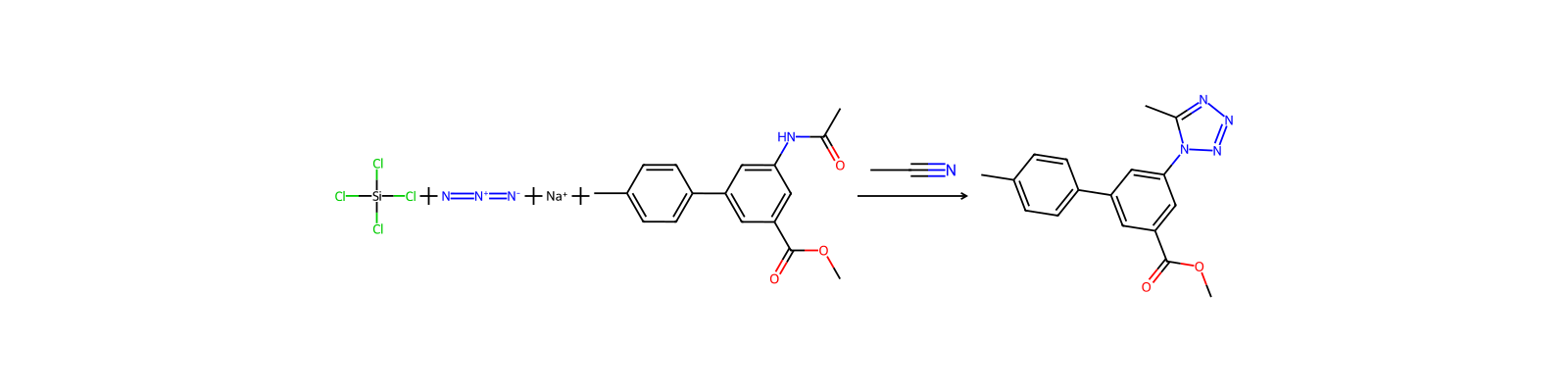
162



Notizen zur Verbindung
Wird geladen…