StartseiteMCPWorkbenchSkills
StartseiteWorkbenchBenachrichtigungenMein Bereich
llms.txt · MCP-AnleitungDatenschutz · Nutzungsbedingungen · Supportv1.8.0
  1. Startseite
  2. /Verbindung

Pentachlorphosphoran

Phosphorus pentachloride

HCID 24819
Neue NotizNeue ReaktionAnfrage stellen
Druckvorschau

Daten werden ergänzt – lade die Seite später neu, um den aktuellen Stand zu sehen

GrundinformationenÜberblickNamen und BezeichnerEigenschaftenSicherheit und RegulatorischesChemie und IndustrieZugehörige ReaktionenNotizen zur Verbindung
TeilstruktursucheÄhnliche Strukturen suchen

Grundinformationen

CAS
10026-13-8
Standard-SMILES
ClP(Cl)(Cl)(Cl)Cl
InChIKey
UHZYTMXLRWXGPK-UHFFFAOYSA-N
Summenformel
Cl5P
Durchschnittliche Molmasse
208,2 g/mol
Monoisotopische Masse
205,81802503

Überblick

Phosphorus pentachloride is a greenish-yellow crystalline solid with an irritating odor. It is decomposed by water to form hydrochloric and phosphoric acid and heat. This heat may be sufficient to ignite surrounding combustible material. It is corrosive to metals and tissue. Long term exposure to low concentrations or short term exposure to high concentrations can result in adverse health effects from inhalation.

Namen und Bezeichner

Bevorzugter Name
Phosphorus pentachloride
IUPAC
pentachloro-λ5-phosphane
Lokaler Name
Pentachlorphosphoran
Englischer Name
Phosphorus pentachloride
Summenformel
Cl5P
Molmasse
208.24

Namen und Synonyme

PHOSPHORUS PENTACHLORIDE10026-13-8Phosphorus(V) chloridePentachlorophosphoranePhosphorane, pentachloro-PCl5Phosphoric chloridePhosphorus perchloridePhosphorous pentachloridePhosphorpentachloridPhosphoric perchlorideFosforpentachloride
Weitere Namen anzeigen
PHOSPHORUS CHLORIDEphosphoricchloridePhosphorus pentachLpieciochlorekfosforu
Pieciochlorek fosforuPhosphorus chloride (PCl5)DTXSID9033896Fosforo(pentacloruro di)HSDB 1205UNII-0EX753TYDUPhosphore(pentachlorure de)EINECS 233-060-3

Datenbank-Bezeichner

CAS
10026-13-8
PubChem CID
24819
DTXSID
DTXSID9033896
ChEMBL
CHEMBL1465793
ChEBI
CHEBI:30335

Eigenschaften

Berechnete StruktureigenschaftenWird ergänzt

XLogP
3,9
Polarare Oberfläche (TPSA)
0 Ų
H-Brücken-Donoren
0
H-Brücken-Akzeptoren
0
Frei drehbare Bindungen
0
Schwere Atome
6
Formalladung
0
Komplexität
37,1

Experimentelle und physikochemische Eigenschaften

Chemical Classes · 2 Einträge

Toxic Gases & Vapors -> Other Toxic Gases & Vapors

Corrosives

OdorPungent, unpleasant odor
Density · 5 Einträge

3.6 (NIOSH, 2024) - Denser than water; will sink

2.114 g/cu cm at 25.15 °C

Relative density (water = 1): 1.6

2.1 @25 °C

3.60

Color/Form · 3 Einträge

White to pale yellow crystalline mass

Tetragonal crystals

White to pale-yellow, crystalline solid.

Solubility · 6 Einträge

Reacts with water (NIOSH, 2024)

Hygroscopic

Sol in carbon disulfide, carbon tetrachloride

Reacts with water; soluble in carbon disulfide, carbon tetrachloride

Solubility in water: reaction

Reacts

CorrosivityCorrosive
Boiling Point · 3 Einträge

320 °F at 760 mmHg (EPA, 1998)

Sicherheit und Regulatorisches

Sicherheitsangaben dienen nur zur Orientierung und ersetzen weder das Sicherheitsdatenblatt (SDB) des Lieferanten noch geltende Vorschriften oder eine fachliche Bewertung.

GHS-Klassifizierung

GHS Classification · 6 Einträge

Danger

H302: Harmful if swallowed [Warning Acute toxicity, oral]

P260, P264, P270, P271, P280, P284, P301+P317, P301+P330+P331, P302+P361+P354, P304+P340, P305+P354+P338, P316, P319, P320, P321, P330, P363, P403+P233, P405, and P501 (click each P-code to see the statement)

This chemical does not meet GHS hazard criteria for 7.1% (11 of 156) of reports.

Danger

H300 (33.3%): Fatal if swallowed [Danger Acute toxicity, oral]

Gefahrenhinweise

Hazards IdentificationWater-reactive material (WR)
Regulatory Information · 4 Einträge

Chemical: Phosphorane, pentachloro-

Status: Active Update: 30-05-2018 https://echa.europa.eu/registration-dossier/-/registered-dossier/13760

Phosphorus pentachloride: Does not have an individual approval but may be used under an appropriate group standard

The New Jersey Worker and Community Right to Know Act requires public and private employers to provide information about hazardous substances at their workplaces. (N.J.S.A. 34:5A-1 et. seq.)

Other Safety InformationIMAP assessments - Phosphorane, pentachloro-: Human health tier I assessment
DOT LabelCorrosive
Fire Hazards · 3 Einträge

When heated to decomposition, it emits highly toxic fumes of chlorides and chlorine. Will react with water or steam to produce heat and toxic and corrosive fumes. Reacts violently with moisture, chlorine trioxide, fluorine hydroxylamine, magnesium oxides, diphosphorus trioxide, sodium and potassium. Decomposed by water to form hydrogen chloride, phosphoric acids, corrosive materials, and heat. This heat may be sufficient to ignite surrounding combustible materials. Incompatible with water, magnesium oxide, chemically active metals: sodium, potassium; alkalis; aluminum; chlorine dioxide; chlorine; diphosphorus trioxide; fluorine; hydroxylamine; magnesium oxide; 3'-methyl-2-nitrobenzanilide; nitrobenzene; sodium; urea; water. (EPA, 1998)

Chemie und Industrie

Verwendung und Herstellung

Uses · 6 Einträge

Used as a catalyst, chlorinating agent in chemical synthesis, dehydrating agent, and in aluminum metallurgy; [ACGIH]

Aluminum Producing [Category: Industry]

Precursor to Mustard gas, O-Mustard, DF, and DC.

CHEM INT (CHLORINATING AGENT) FOR ALKYL CHLORIDES, ACYL CHLORIDES, SULFONYL CHLORIDES, & GEM-DIHALO CMPD (FROM KETONES); CATALYST IN MFR OF ACETYLCELLULOSE & BENZOTRICHLORIDE FROM BENZAL CHLORIDE; DEHYDRATING AGENT

As catalyst in manufacture of acetylcellulose; for replacing hydroxyl groups by Cl, particularly for converting acids into acid chlorides.

Used in the pharmaceutical industry in the manufacture of penicillin and cephalosporin antibiotics.

U.S. ProductionProduction volumes for non-confidential chemicals reported under the Inventory Update Rule. [Table#2994]
Methods of Manufacturing · 3 Einträge

Phosphorus pentachloride is manufactured by either batch or continuous processing. In the former, the phosphorus trichloride usually dissolves in carbon tetrachloride before being treated with chlorine. A mixture of about one part of phosphorus trichloride to one part of carbon tetrachloride is introduced to a water-jacketed vessel that contains an efficient stirrer and a tight cover with a reflux condenser. The chlorine is passed into the vessel below the liquid level, and crystals of phosphorus pentachloride form in the liquid. When the reaction is completed, the suspension of crystals of phosphorus pentachloride in the carbon tetrachloride is drawn out of the vessel and the crystals are filtered and then dried by circulating hot water through the jacket of the filter. The clarified carbon tetrachloride is returned to the reaction vessel.

Phosphorus pentachloride can be prepared by reaction of excess chlorine with phosphorus trichloride.

Synthesis: Phosphorus trichloride, chloroform, and chlorine.

Formulations/PreparationsGRADES: TECHNICAL; REAGENT.
General Manufacturing Information · 2 Einträge

Phosphorane, pentachloro-: ACTIVE

/The Chemical Weapons Convention (CWC) is an international treaty which bans the development, production, stockpiling, and transfer or use of chemical weapons. The Convention mandates the destruction and prohibition of chemical weapons and related facilities and provides for restrictions on international trade in toxic chemicals and precursors./ The Convention's monitoring and verification measures involve submission of declarations regarding ... /Schedule 1, 2, and 3 chemicals/ and inspections by the Organization for the Prohibition of Chemical Weapons of the facilities where these chemicals are produced. ... Schedule 3 chemicals ... /may/ have been stockpiled or used as weapons, but ... are produced /and used/ in large quantities for purposes not prohibited by the Convention (2). Phosphorus pentachloride is listed in the CWC Annex on Chemicals under Schedule 3 (1).

Zugehörige Reaktionen

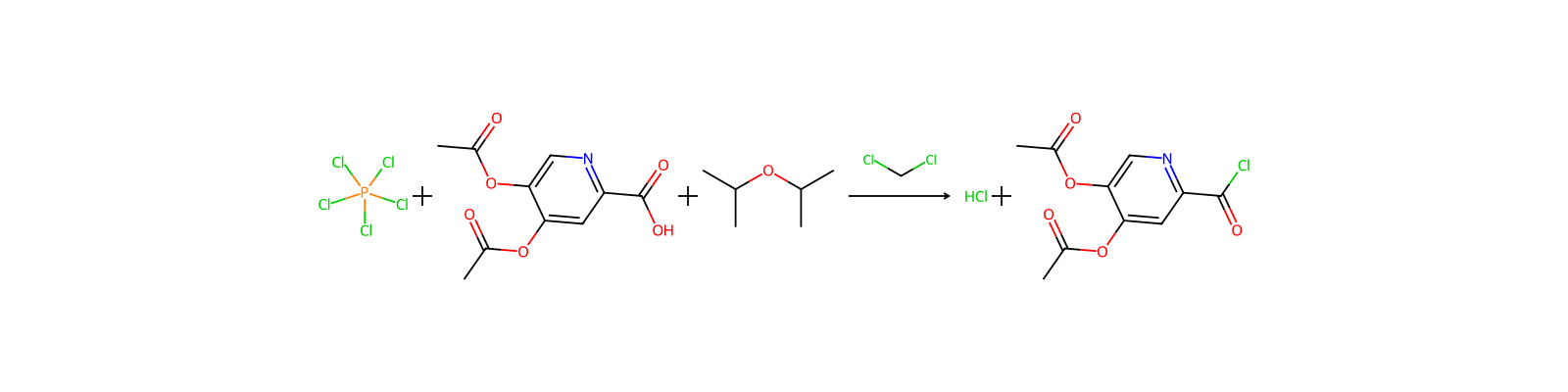
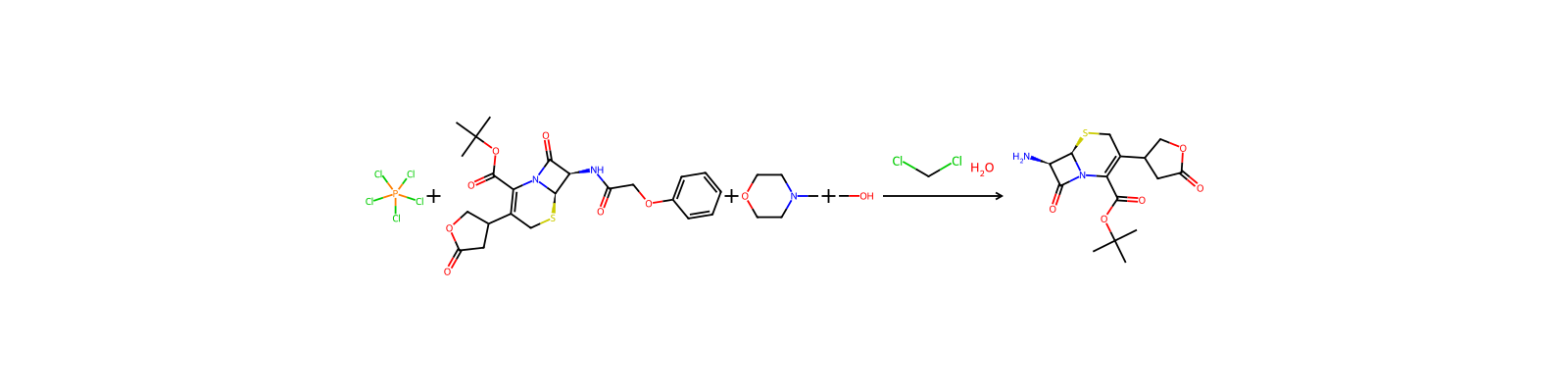
2.554
Reaktionsaufzeichnung erstellen
Reaktionsgleichung von HRID 2990
HRID 2990als Eduktuspto-grants-1998_03
Reaktionsgleichung von HRID 4508
HRID 4508als Eduktuspto-grants-1988_02
Reaktionsgleichung von HRID 4517
HRID 4517als Eduktuspto-grants-1988_02
Reaktionsgleichung von HRID 4724
HRID 4724als Eduktuspto-grants-1988_02
Reaktionsgleichung von HRID 5391
HRID 5391als Eduktuspto-grants-1993_09
Reaktionsgleichung von HRID 5520
HRID 5520als Eduktuspto-grants-1993_09
Reaktionsgleichung von HRID 6290
HRID 6290als Eduktuspto-grants-1993_09
Reaktionsgleichung von HRID 6294
HRID 6294als Eduktuspto-grants-1993_09
Seite 1 von 320

Notizen zur Verbindung

Wird geladen…

Auf dieser SeiteGrundinformationenÜberblickNamen und BezeichnerEigenschaftenSicherheit und RegulatorischesChemie und IndustrieZugehörige ReaktionenNotizen zur Verbindung
Weitere Aktionen
Neue NotizNeue ReaktionAnfrage stellen
UNII
0EX753TYDU
EC Number
233-060-3
Nikkaji
J95.140D

159 °C (sublimes)

Sublimes

Decomposition · 2 Einträge

PRODUCES PHOSPHORUS TRICHLORIDE & CHLORINE WHEN HEATED; PRODUCES PHOSPHORUS OXYCHLORIDE, PHOSPHORIC ACID, & HYDROCHLORIC ACID WHEN DECOMPOSED IN WATER

When heated to decomp ... emits highly toxic fumes of /hydrogen chloride/.

Melting Point · 4 Einträge

(decomposes) 298 °F (under pressure) sublimes at about 212 °F without melting (EPA, 1998)

160.5 °C /freezing point/

Melting point = 148 °C (under pressure); sublimes near 100 °C without melting

324 °F (Sublimes)

Vapor Density · 2 Einträge

7.2 (Air = 1)

Relative vapor density (air = 1): 7.2

Vapor Pressure · 6 Einträge

1 mmHg at 131.9 °F (EPA, 1998)

0.01 [mmHg]

VP: 1 mm Hg at 55.5 °C (132 °F)

1.6 Pa (0.012 mm Hg) at 20 °C

Vapor pressure, Pa at 55.5 °C: 133

0.012 [mm Hg] @20 °C

Heat of Vaporization64.9 kJ/mol

Physikochemische Eigenschaften

Schmelzpunkt
179 · 179-181°C (subl.)
Siedepunkt
160 °C · 160 °C
Dichte
1.6 · 1.6
Dampfdruck
0.016 hPa · 0.016 hPa (20 °C)
storage temp.
2 · 2-8°C
Löslichkeit
Soluble in carbon disulfide and carbon tetrachloride.
Aggregatzustand
macroporous
Wichte
1.6 · 1.6
Farbe
Yellow
Geruch (Odor)
Pungent odour
PH
1 · 1 (5g/l, H2O)acidic
Wasserlöslichkeit
decomposes
Spezifische Wärmekapazität
0.54 J/ · Cp(gas): 0.54 J/(g·K), at 25℃
Merck
14 · 14,7351
Dielectric constant
2.8 · 2.8(160℃)
Stabilität
Hygroscopic, Moisture Sensitive
InChI
1S/Cl5P/c1-6(2,3,4)5
InChIKey
UHZYTMXLRWXGPK-UHFFFAOYSA-N
SMILES
[P](Cl)(Cl)(Cl)(Cl)Cl
CAS Datenbank
10026 · 10026-13-8(CAS DataBase Reference)
NIST chemische Informationen
Phosphorus pentachloride(10026-13-8)
EPA chemische Informationen
Phosphorus pentachloride (10026-13-8)

· EXCEPT FOR ACETIC ANHYDRIDE (UN1715), THAT IS FLAMMABLE, some of these materials may burn, but none ignite readily.

Not combustible. Gives off irritating or toxic fumes (or gases) in a fire.

Fire PotentialMODERATE, BY CHEMICAL REACTION. REACTS VIOLENTLY WITH MOISTURE.
Health Hazards · 2 Einträge

It can cause death due to pulmonary edemaor by circulatory shock. (EPA, 1998)

· CORROSIVE and/or TOXIC; inhalation, ingestion or contact (skin, eyes) with vapors, dusts or substance may cause severe injury, burns or death.

Hazards Summary · 1 Eintrag

Eye irritation and acute bronchitis have been reported after occupational exposures. Hydrogen chloride is released upon contact with water. [ACGIH] Toxic to the liver in chronic animal studies; [Desai, H. Phosphorus and Phosphorus Compounds. In: Sullivan J, Krieger G (eds).Hazardous Materials Toxicology.Baltimore:Williams & Wilkins,1992;939] A corrosive substance that can cause pulmonary edema; [ICSC]

DOT ID and Guide · 2 Einträge

1806 137

1806 137

Reactive GroupAcids, Strong Non-oxidizing
EC ClassificationSymbol: T+; R: 14-22-26-34-48/20; S: (1/2)-7/8-26-36/37/39-45
UN ClassificationUN Hazard Class: 8; UN Pack Group: II

Sicherheit und Schutzausrüstung

Fire Fighting · 2 Einträge

Avoid breathing vapors; keep upwind. Wear self-contained breathing apparatus. Avoid bodily contact with the material; wear boots, protective gloves, and goggles.

NO water. In case of fire in the surroundings, use appropriate extinguishing media. In case of fire: keep drums, etc., cool by spraying with water. NO direct contact with water.

First Aid Measures · 4 Einträge

Fresh air, rest. Half-upright position. Artificial respiration may be needed. Refer for medical attention.

Remove contaminated clothes. Rinse skin with plenty of water or shower. Refer for medical attention .

First rinse with plenty of water for several minutes (remove contact lenses if easily possible), then refer for medical attention.

Rinse mouth. Do NOT induce vomiting. Give one or two glasses of water to drink. Refer for medical attention .

Accidental Release Measures · 2 Einträge

· CALL 911. Then call emergency response telephone number on shipping paper. If shipping paper not available or no answer, refer to appropriate telephone number listed on the inside back cover.

· Do not touch damaged containers or spilled material unless wearing appropriate protective clothing.

First Aid · 3 Einträge

Warning: Phosphorus pentachloride is a corrosive agent. Contact with eyes may result in severe damage to the cornea, conjunctiva, and blood vessels. Caution is advised.

General First Aid:

(General first aid procedures)

Safe StorageSeparated from food and feedstuffs and incompatible materials. See Chemical Dangers. Dry. Well closed.
Exposure Control and Personal Protection · 3 Einträge

· Wear positive pressure self-contained breathing apparatus (SCBA).

TIH (Toxic Inhalation Hazard) - Term used to describe gases and volatile liquids that are toxic when inhaled. Some are TIH materials themselves, e.g., chlorine, and some release TIH gases when spilled in water, e.g., chlorosilanes. [ERG 2016].

1.0 [mg/m3], inhalable fraction[German Research Foundation (DFG)]

Fire Fighting Procedures · 2 Einträge

If material involved in fire: Use dry chemical, dry sand, or carbon dioxide. Do not use water on material itself. If large quantities of combustibles are involved, use water in flooding quantities as spray and fog. Use water spray to knock-down vapors. /Phosphorus pentachloride, solid/

Use appropriate extinguishing agents on nearby combustible fires. Dry chemical or carbon dioxide preferred. Use water spray to knock down acid vapors.

Storage Conditions · 3 Einträge

Store in a glass bottle with a ground glass stopper and keep the bottle tightly closed. Protect against physical damage.

Store in a cool, dry, well-ventilated location. Separate from acids, alkalies, alkali metals, organic compounds. Store under nitrogen.

Store in tightly closed containers in a cool, well ventilated area away from all other combustible and oxidizable materials, and moisture. Where possible, automatically transfer material .from/ storage containers to process containers. Sources of ignition such as smoking and open flames are prohibited where this chemical is handled, used, or stored. Metal containers involving the transfer of this chemical should be grounded and bonded. Use only non-sparking tools and equipment, especially when opening and closing containers of this chemical. Wherever this chemical is used, handled, manufactured, or stored, use explosion-proof electrical equipment and fittings.

Cleanup Methods · 2 Einträge

1. VENTILATE AREA OF SPILL. 2. COLLECT SPILLED MATERIAL IN MOST CONVENIENT & SAFE MANNER & DEPOSIT IN SEALED CONTAINERS FOR RECLAMATION OR FOR DISPOSAL IN SECURED SANITARY LANDFILL, OR 3. COVER WITH SODIUM BICARBONATE OR EQUAL MIXT OF SODA ASH & SLAKED LIME.

Use water spray to cool & disperse vapors & protect personnel.

Nonfire Spill ResponseExcerpt from ERG Guide 137 [Substances - Water-Reactive - Corrosive]:
Disposal Methods · 1 Eintrag

Principles and methods for destruction of chemical weapons: ... "Destruction of chemical weapons" means a process by which chemicals are converted in an essentially irreversible way to a form unsuitable for production of chemical weapons, and which in an irreversible manner renders munitions and other devices unusable as such. ... Each ... /nation/ shall determine how it shall destroy chemical weapons, except that the following processes may not be used: dumping in any body of water, land burial or open-pit burning. It shall destroy chemical weapons only at specifically designated and appropriately designed and equipped facilities. ... Each ... /nation/ shall ensure that its chemical weapons destruction facilities are constructed and operated in a manner to ensure the destruction of the chemical weapons; and that the destruction process can be verified under the provisions of this Convention.

Spillage Disposal · 1 Eintrag

Evacuate danger area! Personal protection: complete protective clothing including self-contained breathing apparatus. Do NOT wash away into sewer. Sweep spilled substance into covered sealable containers. Carefully collect remainder. Then store and dispose of according to local regulations.

Toxikologische Informationen

Target OrgansEyes, skin, respiratory system
Adverse EffectsOccupational hepatotoxin - Secondary hepatotoxins: the potential for toxic effect in the occupational setting is based on cases of poisoning by human ingestion or animal experimentation.
Exposure Routes · 2 Einträge

The substance can be absorbed into the body by inhalation of its vapour and by ingestion.

inhalation, ingestion, skin and/or eye contact

Signs and Symptoms · 5 Einträge

Sore throat. Cough. Burning sensation. Shortness of breath. Laboured breathing. Symptoms may be delayed.

Pain. Redness. Blisters. Skin burns.

Pain. Redness. Severe deep burns. Loss of vision.

Burning sensation. Shock or collapse. Abdominal pain.

irritation eyes, skin, respiratory system; bronchitis; dermatitis

Medical Surveillance · 1 Eintrag

All workers who will come in contact with phosphorus and its cmpds should have a comprehensive preplacement examination including a careful examination of the oral cavity. Preexisting conditions, particularly of respiratory and GI tract (liver), should be noted. /Unspecified phosphorus cmpds/

Human Toxicity Excerpts · 5 Einträge

/SIGNS AND SYMPTOMS/ ...The fumes of phosphorus pentachloride cause irritation of eyes and respiratory passages and that cases of bronchitis have resulted from exposure.

/SIGNS AND SYMPTOMS/ Symptomatology (...ingestion or skin contact): 1. Corrosion of mucous membranes of mouth, throat and esophagus, with immediate pain and dysphagia. Necrotic areas...grayish white but soon acquire a blackish discoloration (yellow in case of nitric acid) and sometimes shrunken or wrinkled texture... 2. Epigastric pain...may be associated with nausea and vomiting... At times, gastric hemorrhage may be intense, and vomitus then contains fresh blood. Profound thirst. 3. Ulceration of all membranes and tissues with which the acid comes in contact. After the ingestion of concentrated mineral acid, this corrosion may lead within a few hr or a few days to gastric perforation and peritonitis. 4. Circulatory collapse with clammy skin, weak and rapid pulse, shallow respiration, and scanty urine. Circulatory shock is often immediate cause of death. /Acids/

/SIGNS AND SYMPTOMS/ Symptomatology.../ingestion/: 6. Late esophageal, gastric and pyloric strictures and stenoses, which may require major surgical repair, should be anticipated. Signs of obstruction commonly appear within a few weeks but may be delayed for months and even years. Permanent scars may also appear in the cornea, skin and oropharynx. 7. Uncorrected circulatory collapse of several hr...may lead to renal failure and ischemic lesions in liver and heart. /Acids/

/SIGNS AND SYMPTOMS/ Although it has not been reported, delayed onset of pulmonary edema may occur.

For more Human Toxicity Excerpts (Complete) data for PHOSPHORUS PENTACHLORIDE (10 total), please visit the HSDB record page.

Non-Human Toxicity Excerpts · 4 Einträge

/LABORATORY ANIMALS: Acute Exposure/ Exposure at 120 to 130 ppm of phosphorus pentachloride was fatal to mice in 10 min.

/LABORATORY ANIMALS: Acute Exposure/ Acute toxicity of phosphoryl-chloride (PC), phosphorus-trichloride (PTC), and phosphorus-pentachloride (PPC) was investigated in rats, mice, guinea-pigs, and rabbits. Rats received various doses of the compounds via stomach intubation or were exposed by inhalation. Rats were observed, weighed, and grossly examined for abnormalities. Mice, rats, and guinea-pigs inhaled various concentrations of the compounds and were observed for sex related susceptibility and adverse symptoms. Threshold concentrations for single exposures were also determined The local effects of PC, PTC, and PPC were tested on shaved skin and conjunctival sac of rabbit eye. The oral median lethal doses for PC, PTC, and PPC for rats were 380, 550, and 660 mg/kg, respectively. Clinical signs included suppression and disruption of motor coordination, drowsiness, adynamia, and occasional secretions from the eyes. Respiration rate was decreased to 50 to 80 per minute. Cyanosis and tremors occurred after 20 to 40 minutes post treatment. Lungs were bright red, liver dark brown and plethoric, and stomach distended and hemorrhagic. The median lethal concentrations for inhaled PC, PTC, and PPC for rats were 0.071, 0.22, and 0.205 mg/L, respectively. Rats displayed restlessness during the first 5 to 15 minutes, then showed depressed motor coordination, fibrillary jerking and twitching, tremor, retarded respiration, and labored breathing. Rats and guinea-pigs also showed lacrymation and clouding of cornea. Weight loss and appetite loss were observed several days post exposure. Exposure to PTC induced skin and mouth ulcers. All three species and males and females were similarly sensitive to the compounds via inhalation. PC and PTC caused thickening of skin folds and bleeding in rabbits and irreversible necrosis in the eye causing loss of vision. The threshold concentrations for a single exposure to PC, PTC, and PPC were 0.001, 0.005, and 0.008 mg/L, respectively, and according to acute action, 0.006, 0.01, and 0.4 mg/L, respectively.

/LABORATORY ANIMALS: Chronic Exposure or Carcinogenicity/ In an animal study of chronic exposure to the oxychloride, trichloride and pentachloride of phosphorus, morphologic changes were demonstrated in the liver, bone, kidneys and lungs. Pathology in the respiratory passages consisted of desquamative rhinitis, tracheitis and bronchitis. After cessation of exposure for a number of months most changes reverted except those of the respiratory tract ... .

/OTHER TOXICITY INFORMATION/ ...Vapor and fumes are irritating to eyes and respiratory tract.

Probable Routes of Human Exposure · 1 Eintrag

NIOSH has statistically estimated that 2,244 workers (187 of these were female) were potentially exposed to phosphorus pentachloride in the US(1). Occupational exposure to phosphorus pentachloride may occur through dermal contact with this compound at workplaces where phosphorus pentachloride is produced or used(SRC).

Antidote and Emergency Treatment · 5 Einträge

Treatment for exposure to the chloro cmpds consists of removal from the source, removal of any clothing contaminated with the cmpds, and observation and treatment of any respiratory complication such as bronchospasm and pulmonary edema that may arise. Ocular splash or injury requires copious irrigation and examination with slit lamp to assess degree of injury, and ophthalmologic consultation if indicated. /Unspecified phosphorus cmpds/

Treatment of acute phosphorus exposure should consist of initial stabilization with attention to airway/respiratory distress and shock, if present. Personnel involved in treatment of poisoned victims must adhere to adequate precautions to protect themselves as well. Protective respiratory gear should be worn in circumstances where continued exposure to gas, vapors, or fumes may occur. Gown and gloves need to be worn, as rescuers or health personnel may come in contact with particles causing burns and toxicity. Treatment of burns involves application of a 2-3% soln of copper sulfate, which will cause formation of an insoluble salt, thereby preventing further absorption and damage. This treatment, however, has been questioned by some authors, due to potential toxicity with copper. Alternatively, a 2-3% silver nitrate soln has been used on the theory that silver granules precipitating on the skin will prevent absorption of the phosphorus cmpd ... /Unspecified phosphorus cmpds/

Oral exposure should be treated with gastric decontamination. Use of oils will promote absorption of phosphorus from the GI tract and should be avoided. Hypovolemia secondary to nausea, vomiting, and diarrhea should be aggressively treated with crystalloid until normovolemia is restored. Close attention should be paid to hepatic and renal function. Adequate urine output should be maintained, and sequelae of liver failure such as coagulopathies and nutritional deficiency should be treated as the need arises with the appropriate measures. /Unspecified phosphorus cmpds/

/SRP:/ Immediate first aid: Ensure that adequate decontamination has been carried out. If patient is not breathing, start artificial respiration, preferably with a demand-valve resuscitator, bag-valve-mask device, or pocket mask, as trained. Perform CPR as necessary. Immediately flush contaminated eyes with gently flowing water. Do not induce vomiting. If vomiting occurs, lean patient forward or place on left side (head-down position, if possible) to maintain an open airway and prevent aspiration. Keep patient quiet and maintain normal body temperature. Obtain medical attention. /Inorganic acids and related compounds/

For more Antidote and Emergency Treatment (Complete) data for PHOSPHORUS PENTACHLORIDE (12 total), please visit the HSDB record page.

Toxicity DataLC50 (rat) = 205 mg/m3
Non-Human Toxicity ValuesLD50 Rabbit Dermal 660 mg/kg

Regulatorische Informationen

CERCLA Reportable Quantities · 1 Eintrag

Releases of CERCLA hazardous substances are subject to the release reporting requirement of CERCLA section 103, codified at 40 CFR part 302, in addition to the requirements of 40 CFR part 355. Phosphorus pentachloride is an extremely hazardous substance (EHS) subject to reporting requirements when stored in amounts in excess of its threshold planning quantity (TPQ) of 500 lbs.

DHS Chemicals of Interest (COI) · 4 Einträge

Phosphorus pentachloride

A Commercial Grade

A Placarded Amount

Chemical or material that can be mixed with readily available materials.

Sicherheitsdaten

F
3-10
OEB
C
OEL
TWA: 1 mg/m3
wgk
3
IDLA
70 mg/m3
tsca
TSCA listed
ridadr
UN 1806
hs_code
28121045
RTECS-Nr.
TB6125000
risk_code
14-22-26-34-48/20
Toxizität
LD50 orally in Rabbit: 660 mg/kg
hazard_code
T+
safety_code
26-36/37/39-45-7/8
hazard_class
8
packing_group
II
Speicherklasse
6.1B - Non-combustible, acute toxic Cat. 1 and 2very toxic hazardous materials
Giftige Stoffe Daten
10026-13-8(Hazardous Substances Data)
Hazard Classifications
Acute Tox. 2 InhalationAcute Tox. 4 OralEye Dam. 1Skin Corr. 1BSTOT RE 2 Inhalation

Anwendungen

VerwendenPhosphorus pentachloride is used as a chlorinating agent to convert acids into acid chlorides, as a dehydrating agent, and as a catalyst.

Vor- und nachgelagerte Produkte

Vorgelagerte Rohstoffe

ChlorPhosphorige Säure-trichloridPhosphor

Nachgelagerte Produkte

2-Chloro-3-nitrothiophene(-)-α-(Chlorformyl)benzylammoniumchloridOxydiacetyldichlorid3-Methyl-2-nitrobenzylalkoholIsopropyl(4-chlorophenyl)acetyl chloride2-Chloro-6-methylpyridine-4-carboxylic acidCilostazolDimethyl 4-chloropyridine-2,6-dicarboxylateCefuzonam1-methyl-4-[3,3,3-tris(4-chlorophenyl)propionyl]piperazine5-Chloro-4-nitrothiophene-2-sulfonyl chloride2-IodhippursureMethyl 2-chloro-6-methylpyrimidine-4-carboxylate2-Chloro-pyrimidine-5-sulfonyl chloridedimethyl 4-chloropyridine-2,6-dicarboxylate3-(2-Chlorphenyl)-5-methylisoxazol-4-carbonylchlorid5-Chlorothiophene-2-sulfonyl chloride5-Methyl-3-phenylisoxazol-4-carbonylchloridRopivacaineHexylamin1-Chlor-2-methylpropen1-Methyl-4-nitro-1H-imidazole-5-carbonitrile2,4-Mesitylenedisulfonyl dichloride3-Benzoylphenylessigsure4,5-Dibromothiophene-2-sulphonyl chloride3-methyl-2-nitrobenzoyl chlorideIsophthaloyldichloridDichlormethoxymethan2-Chlor-3,5-dinitropyridin2,4,5,6-Tetramethylbenzenedisulfonyl dichlorideAminoacridinDiphenyl N-cyanocarbonimidate5-Acetamidonaphthalene-1-sulfonyl chloridePropylphosphonic anhydrideSodium cloxacillin monohydrate5-Bromo-2-chloro-3-nitropyridine4-(1H-Pyrazol-1-yl)benzenesulfonyl chloridePyrrolidine-1-sulfonyl chlorideDibenzylphthalat2-Chlorbenzothiazol

Ergänzende Hinweise

DefinitionChEBI: Phosphorus pentachloride is a phosphorus halide.