StartseiteMCPWorkbenchSkills
StartseiteWorkbenchBenachrichtigungenMein Bereich
llms.txt · MCP-AnleitungDatenschutz · Nutzungsbedingungen · Supportv1.8.0
  1. Startseite
  2. /Verbindung

Butyl-4-aminobenzoat

Butyl 4-aminobenzoate

HCID 2482
Neue NotizNeue ReaktionAnfrage stellen
Druckvorschau

Daten werden ergänzt – lade die Seite später neu, um den aktuellen Stand zu sehen

GrundinformationenÜberblickNamen und BezeichnerEigenschaftenSicherheit und RegulatorischesChemie und IndustrieZugehörige ReaktionenNotizen zur Verbindung
TeilstruktursucheÄhnliche Strukturen suchen

Grundinformationen

CAS
94-25-7
Standard-SMILES
CCCCOC(=O)c1ccc(N)cc1
InChIKey
IUWVALYLNVXWKX-UHFFFAOYSA-N
Summenformel
C11H15NO2
Durchschnittliche Molmasse
193,24 g/mol
Monoisotopische Masse
193,11027872

Überblick

N-butyl-p-aminobenzoate is a yellow powder. Insoluble in water. (NTP, 1992)

Namen und Bezeichner

Bevorzugter Name
Butyl 4-aminobenzoate
IUPAC
butyl 4-aminobenzoate
Lokaler Name
Butyl-4-aminobenzoat
Englischer Name
Butyl 4-aminobenzoate
Summenformel
C11H15NO2
Molmasse
193.24

Namen und Synonyme

Butyl 4-aminobenzoatebutamben94-25-7ButesineButoformButyl aminobenzoateButylcainePlanoformScuroformScuroforme4-(Butoxycarbonyl)anilineButyl keloform
Weitere Namen anzeigen
butylaminobenzoateButesinButseinBUTOFORMEBUTAMBERO
Benzoic acid, 4-amino-, butyl esterN-Butyl p-aminobenzoatep-Aminobenzoic acid butyl ester4-Aminobenzoic acid butyl esterButyl PABADTXSID7022417NSC-128464EFW857872Q

Datenbank-Bezeichner

CAS
94-25-7
PubChem CID
2482
DTXSID
DTXSID7022417
ChEMBL
CHEMBL127516
ChEBI
CHEBI:3231
UNII
EFW857872Q
EC Number
202-317-1
Nikkaji
J4.698A

Eigenschaften

Berechnete StruktureigenschaftenWird ergänzt

XLogP
2,9
Polarare Oberfläche (TPSA)
52,3 Ų
H-Brücken-Donoren
1
H-Brücken-Akzeptoren
3
Frei drehbare Bindungen
5
Schwere Atome
14
Formalladung
0
Komplexität
174

Experimentelle und physikochemische Eigenschaften

Chemical ClassesOther Uses -> Sunscreens
DrugsPharmaceuticals -> Listed in ZINC15
SpringerMaterials PropertiesFusion temperature
LogP · 2 Einträge

log Kow= 2.87

3.05

OdorOdorless
TasteTasteless
Color/Form · 3 Einträge

Crystals from alc

White powder

White, amorphous powder

Solubility · 5 Einträge

Insoluble (NTP, 1992)

1 g dissolves in about 7 liters water

Sol in dil acids, alc, chloroform, ether, and fatty oils.

Soluble in dilute acids, alcohol, chloroform, ether, and fatty oils.

Soluble in thanol, ethyl ether, and benzene.

Endocrine DisruptorsPotential endocrine disrupting compound

Sicherheit und Regulatorisches

Sicherheitsangaben dienen nur zur Orientierung und ersetzen weder das Sicherheitsdatenblatt (SDB) des Lieferanten noch geltende Vorschriften oder eine fachliche Bewertung.

GHS-Klassifizierung

GHS Classification · 4 Einträge

Warning

H315 (100%): Causes skin irritation [Warning Skin corrosion/irritation]

P261, P264, P264+P265, P271, P272, P280, P302+P352, P304+P340, P305+P351+P338, P319, P321, P332+P317, P333+P317, P337+P317, P362+P364, P403+P233, P405, and P501 (click each P-code to see the statement)

Aggregated GHS information provided per 43 reports by companies from 6 notifications to the ECHA C&L Inventory. Each notification may be associated with multiple companies.

Gefahrenhinweise

Regulatory InformationBenzoic acid, 4-amino-, butyl ester: Does not have an individual approval but may be used as a component in a product covered by a group standard. It is not approved for use as a chemical in its own right.
Other Safety InformationIMAP assessments - Benzoic acid, 4-amino-, butyl ester: Human health tier I assessment
Fire HazardsFlash point data for this chemical are not available. It is probably combustible. (NTP, 1992)
Fire PotentialCombustible when exposed to heat or flame.
Health HazardsSYMPTOMS: Symptoms of exposure to this compound may include sensitivity dermatitis, nausea, vomiting and methemoglobinemia.
Hazards SummaryMay cause tissue necrosis after injection, possible due to precipitation of crystals; [HSDB] May cause methemoglobinemia and skin sensitization; [CAMEO] An irritant; May cause skin sensitization; [MSDSonline]
FDA Requirements · 1 Eintrag

Chemie und Industrie

Pharmakologische Informationen

Protein BindingAs all other local anesthetics, it is thought that butamben will be highly bound to plasma proteins, mainly to alpha-1-acid glycoprotein.
Pharmacodynamics · 1 Eintrag

Butamben has been shown to selectively inhibit dorsal root pain signal transmission for periods of months when administered as epidural suspensions. The effect of butamben is not related to any significant loss of motor function which indicates that it targets specifically the pain-sensing C fibers of the dorsal root. When administered topically, butamben produced anesthesia by accumulating in the nerve cell membrane causing it to expand and lose its ability to depolarize and blocking the impulse transmission.

Mechanism of Action · 2 Einträge

Butamben acts by inhibiting the voltage-gated calcium channels in dorsal root ganglion neurons. The modification in this channels is thought to cause a disturbance of the channel kinetics acceleration. It is reported as well that butamben is an inhibitor of the sodium channels and a delayed rectifier of potassium currents. All the effects of butamben are performed in the root ganglion neurons which suggests that the related anesthetic effect may be caused by the reduced electrical excitability.

...ACTION IS TO INTERFERE WITH INITIATION & TRANSMISSION OF NERVE IMPULSE. PRESENT THEORY HOLDS THAT LOCAL ANESTHETICS PREVENT DEPOLARIZATION OF NERVE MEMBRANE &, HENCE, PROPAGATION OF IMPULSE. ...THOUGHT TO BE DUE TO INTERFERENCE WITH MUTUAL EXCHANGE OF SODIUM & POTASSIUM IONS ACROSS MEMBRANE. /LOCAL ANESTHETICS/

Biological Half-LifeThe effective half-life of unencapsulated butamben is registered to be of 90 minutes. Some efforts were made to prepare D, L-lactic acid capsules which increased the half-life of butamben to even 400 hours.
Metabolism/MetabolitesThe metabolic pathway of butamben follows the same pattern of other local anesthetics and it is driven mainly by the hydrolysis via cholinesterase for the formation of inert metabolites.
MeSH Pharmacological Classification · 1 Eintrag

Zugehörige Reaktionen

11
Reaktionsaufzeichnung erstellen
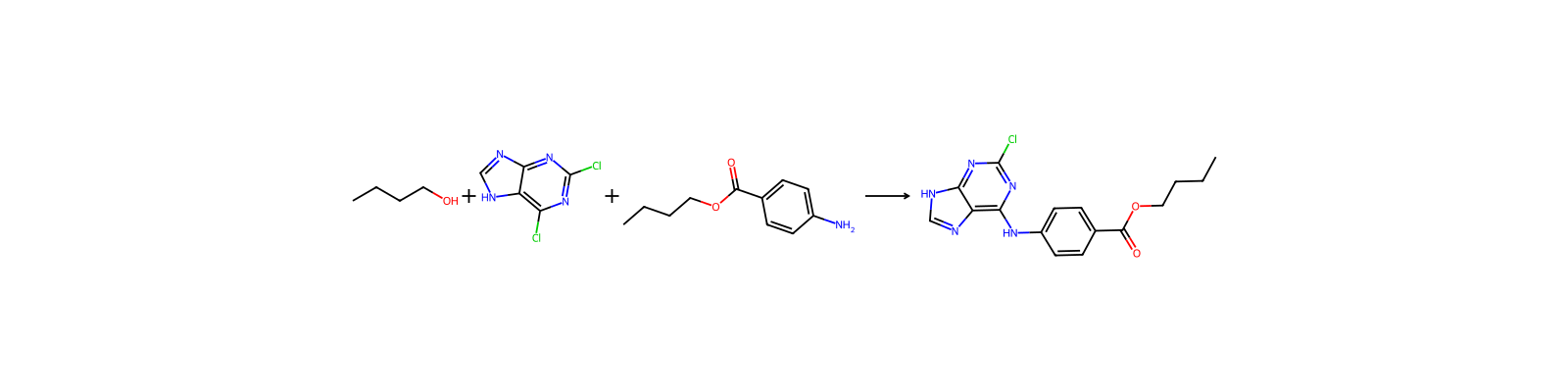
Reaktionsgleichung von HRID 10480
HRID 10480als Eduktuspto-grants-2006_08
Reaktionsgleichung von HRID 116647
HRID 116647als EduktTraining data from https://doi.org/10.1039/C8SC04228D (2/10)
Reaktionsgleichung von HRID 499748
HRID 499748als Eduktuspto-grants-2010_08
Reaktionsgleichung von HRID 678111
HRID 678111als EduktTraining data from https://doi.org/10.1039/C8SC04228D (3/10)
Reaktionsgleichung von HRID 828363
HRID 828363als EduktTest data from https://doi.org/10.1039/C8SC04228D
Reaktionsgleichung von HRID 901887
HRID 901887als Eduktuspto-grants-2008_04
Reaktionsgleichung von HRID 979121
HRID 979121als Eduktuspto-grants-1987_05
Reaktionsgleichung von HRID 1453817
HRID 1453817als Eduktuspto-grants-2009_01
Seite 1 von 2

Notizen zur Verbindung

Wird geladen…

Auf dieser SeiteGrundinformationenÜberblickNamen und BezeichnerEigenschaftenSicherheit und RegulatorischesChemie und IndustrieZugehörige ReaktionenNotizen zur Verbindung
Weitere Aktionen
Neue NotizNeue ReaktionAnfrage stellen
Boiling Point · 2 Einträge

343 to 345 °F at 8 mmHg (NTP, 1992)

173-174 °C @ 8 mm Hg

DecompositionWhen heated to decomposition it emits toxic fumes such as niroxides.
Melting Point · 2 Einträge

136 °F (NTP, 1992)

58 °C

Physikochemische Eigenschaften

Schmelzpunkt
57 · 57-58 °C(lit.)
Siedepunkt
174 °C8 · 174 °C8 mm Hg(lit.)
Dichte
1.0945 · 1.0945 (rough estimate)
Brechungsindex
1.548 · 1.5480 (estimate)
storage temp.
Keep in dark place,Inert atmosphere,Room temperature
Löslichkeit
Chloroform (Slightly), Methanol (Slightly)
Aggregatzustand
Solid
pka
5.38 · pKa 5.38 (Uncertain)
Farbe
White
Wasserlöslichkeit
Very slightly soluble in water.
Merck
14 · 14,1512
BRN
1211465 · 1211465
Major Application
pharmaceutical (small molecule)
Kosmetik-Inhaltsstoffe Funktionen
UV ABSORBER
InChI
1S/C11H15NO2/c1-2-3-8-14-11(13)9-4-6-10(12)7-5-9/h4-7H,2-3,8,12H2,1H3
InChIKey
IUWVALYLNVXWKX-UHFFFAOYSA-N
SMILES
CCCCOC(=O)c1ccc(N)cc1
LogP
2.87 · 2.870
CAS Datenbank
94 · 94-25-7(CAS DataBase Reference)
NIST chemische Informationen
Butamben(94-25-7)
EPA chemische Informationen
Butyl p-aminobenzoate (94-25-7)

Manufacturers, packers, and distributors of drug and drug products for human use are responsible for complying with the labeling, certification, and usage requirements as prescribed by the Federal Food, Drug, and Cosmetic Act, as amended (secs 201-902, 52 Stat. 1040 et seq., as amended; 21 U.S.C. 321-392).

Reactive GroupEsters, Sulfate Esters, Phosphate Esters, Thiophosphate Esters, and Borate Esters
Reactivity Profile · 1 Eintrag

N-BUTYL-P-AMINOBENZOATE is an aminophenyl ester derivative. Amines are chemical bases. They neutralize acids to form salts plus water. These acid-base reactions are exothermic. The amount of heat that is evolved per mole of amine in a neutralization is largely independent of the strength of the amine as a base. Amines may be incompatible with isocyanates, halogenated organics, peroxides, phenols (acidic), epoxides, anhydrides, and acid halides. Flammable gaseous hydrogen is generated by amines in combination with strong reducing agents, such as hydrides. Esters react with acids to liberate heat along with alcohols and acids. Strong oxidizing acids may cause a vigorous reaction that is sufficiently exothermic to ignite the reaction products. Heat is also generated by the interaction of esters with caustic solutions. Flammable hydrogen is generated by mixing esters with alkali metals and hydrides.

Air and Water ReactionsMay be sensitive to light and air. Insoluble in water. Slowly hydrolyzed when boiled in water. Also will hydrolyze under high and low pH conditions (NTP, 1992).
Hazard Classes and CategoriesSkin Irrit. 2 (100%)

Sicherheit und Schutzausrüstung

Fire FightingA fire in your laboratory involving this chemical should be extinguished with a dry chemical, carbon dioxide or halon extinguisher. (NTP, 1992)
First Aid · 1 Eintrag

EYES: First check the victim for contact lenses and remove if present. Flush victim's eyes with water or normal saline solution for 20 to 30 minutes while simultaneously calling a hospital or poison control center. Do not put any ointments, oils, or medication in the victim's eyes without specific instructions from a physician. IMMEDIATELY transport the victim after flushing eyes to a hospital even if no symptoms (such as redness or irritation) develop.

Nonfire Spill Response · 1 Eintrag

SMALL SPILLS AND LEAKAGE: Should a spill occur while you are handling this chemical, you should dampen the solid spill material with alcohol, then transfer the dampened material to a suitable container. Use absorbent paper dampened with alcohol to pick up any remaining material. Seal the absorbent paper, and any of your clothes, which may be contaminated, in a vapor-tight plastic bag for eventual disposal. Solvent wash all contaminated surfaces with alcohol followed by washing with a strong soap and water solution. Do not reenter the contaminate area until the Safety Officer (or other responsible person) has verified that the area has been properly cleaned.

Disposal Methods · 1 Eintrag

SRP: At the time of review, criteria for land treatment or burial (sanitary landfill) disposal practices are subject to significant revision. Prior to implementing land disposal of waste residue (including waste sludge), consult with environmental regulatory agencies for guidance on acceptable disposal practices.

Personal Protective Equipment (PPE) · 1 Eintrag

RECOMMENDED RESPIRATOR: Where the neat test chemical is weighed and diluted, wear a NIOSH-approved half face respirator equipped with an organic vapor/acid gas cartridge (specific for organic vapors, HCl, acid gas and SO2) with a dust/mist filter. (NTP, 1992)

Toxikologische Informationen

Interactions · 2 Einträge

These agents /cholinesterase inhibitors such as antimyasthenics; cyclophosphamide; demecarium; echothiophate; neurotoxic insecticides, possibly including large quantities of topical malathion; isoflurophate; thiotepa/ may inhibit metabolism of ester derivatives; absorption of significant quantities of ester derivatives in patients receiving a cholinesterase inhibitor may lead to increased risk of toxicity. /Topical anesthetics/

Metabolites of PABA-derivative topical anesthetics may antagonize antibacterial activity of sulfonamides, especially if the anesthetics are absorbed in significant quantities over prolonged periods of time. /Topical anesthetics/

Adverse EffectsMethemoglobinemia - The presence of increased methemoglobin in the blood; the compound is classified as secondary toxic effect
Non-Human Toxicity Excerpts...IN EPIDURAL MIXT...BEEN INCRIMINATED AS POTENTIAL CAUSE OF TISSUE NECROSIS & NEURITIS, POSSIBLY DUE TO CRYSTAL PRECIPITATION (DEPOT EFFECT).
Non-Human Toxicity ValuesLD50 Mouse ip 67 mg/kg

Regulatorische Informationen

FDA Requirements · 1 Eintrag

Manufacturers, packers, and distributors of drug and drug products for human use are responsible for complying with the labeling, certification, and usage requirements as prescribed by the Federal Food, Drug, and Cosmetic Act, as amended (secs 201-902, 52 Stat. 1040 et seq., as amended; 21 U.S.C. 321-392).

Sicherheitsdaten

wgk
3
tsca
TSCA listed
hs_code
29224995
RTECS-Nr.
DG1530000
risk_code
36/37/38-43
hazard_code
Xi
safety_code
26-36/37-36
Speicherklasse
11 - Combustible Solids
Giftige Stoffe Daten
94-25-7(Hazardous Substances Data)
Hazard Classifications
Eye Irrit. 2Skin Irrit. 2Skin Sens. 1STOT SE 3

Drugs that block nerve conduction when applied locally to nerve tissue in appropriate concentrations. They act on any part of the nervous system and on every type of nerve fiber. In contact with a nerve trunk, these anesthetics can cause both sensory and motor paralysis in the innervated area. Their action is completely reversible. (From Gilman AG, et. al., Goodman and Gilman's The Pharmacological Basis of Therapeutics, 8th ed) Nearly all local anesthetics act by reducing the tendency of voltage-dependent sodium channels to activate.

Absorption, Distribution and Excretion · 4 Einträge

When butamben is administered epidurally in a suspension form, the physical characteristics of butamben allow a very slow release. When administered topically, butamben is also reported to have a very low systemic absorption which allows for a longer duration of action.

The metabolites found in plasma after cholinesterase processing are disposed of in the urine.

This pharmacokinetic property has not been determined.

Clearance is flow-limited and it highly depends on the state of protein-bound form.

Verwendung und Herstellung

Uses · 3 Einträge

Used as a local anesthetic and in burn treatment ointments and suntan preparations; [Hawley] Used essentially 100% as a local anesthetic; [HSDB]

MEDICATION

MEDICATION (VET)

U.S. Exports · 2 Einträge

(1977) No Data

(1979) No Data

U.S. Imports · 2 Einträge

(1977) No Data

(1979) No Data

U.S. Production · 2 Einträge

(1978) GREATER THAN 1.36X10+6 G (INCL PICRATE)

(1979) GREATER THAN 1.36X10+6 G (INCL PICRATE)

Consumption PatternsESSENTIALLY 100% AS AN ANESTHETIC
Methods of Manufacturing · 4 Einträge

ESTERIFICATION OF P-NITROBENZOIC ACID WITH N-BUTYL ALCOHOL FOLLOWED BY REDUCTION WITH IRON FILINGS AND HYDROCHLORIC ACID

PREPARED BY ESTERIFYING P-NITROBENZOIC ACID WITH N-BUTYL ALCOHOL & REDUCING NITRO GROUP TO AMINO GROUP WITH IRON FILINGS & HCL.

Prepn: Brill, J. Am. Chem. Soic. 43, 1322 (1921); Adams, Volwiler, U.S. pat 1,440,652 (1923 to Abbott); Brit. pat. 252,870; C.A. 17, 1243 (1923); C.A. 21, 2478 (1927).

Produced by the esterification of 4-nitrobenzoyl chloride with n-butanol and reduction of the resulting nitroester.

Formulations/Preparations · 2 Einträge

... MAY BE APPLIED AS DUSTING POWDERS, UNDIL OR DIL WITH STERILE TALC. THEY ARE SOL IN OIL & MAY BE INC IN OILY SOLN, OINTMENTS, & SUPPOSITORIES. /ANESTHETICS OF LOW SOLUBILITY/

Grade: NF

General Manufacturing Information · 2 Einträge

Benzoic acid, 4-amino-, butyl ester: ACTIVE

Available in the United States as a surface anesthetic in the form of a picrate.

Anwendungen

Verwendenn-Butyl 4-aminobenzoate is used as pharmaceutical intermediate.

Vor- und nachgelagerte Produkte

Vorgelagerte Rohstoffe

4-Aminobenzoesure1-Butanol4-IodanilinHexacarbonylmolybdaenNatriumhydrogencarbonat
Ergänzende Hinweise · 1 Eintrag

DefinitionChEBI: An amino acid ester resulting from the formal condensation of the carboxy group of 4-aminobenzoic acid with the hydroxy group of butan-1-ol. Its local anaesthetic properties have been used for surface anaesthesia of the skin and mucous membranes, and for r lief of pain and itching associated with some anorectal disorders.