StartseiteMCPWorkbenchSkills
StartseiteWorkbenchBenachrichtigungenMein Bereich
Huagongshe Open Project:[email protected]KI-Anbindung: llms.txt · MCP-AnleitungDatenschutz · Nutzungsbedingungen · Supportv1.7.8
Zurück
HuagongsheHuagongshe Chemie-Druckbericht · Nur für Forschungszwecke
HCID 25134Erstellt: 27. Oktober 2026

Bortribromid

BBr3 · tribromoborane · BORON BROMIDE · tribromuredebore · SILVER TRIFLUOROMETHANE · Boron tribroMide, 1.0 M solution in CH2Cl2 · Tronite · Bortribromid
https://huagongshe.com/de/chemical/25134

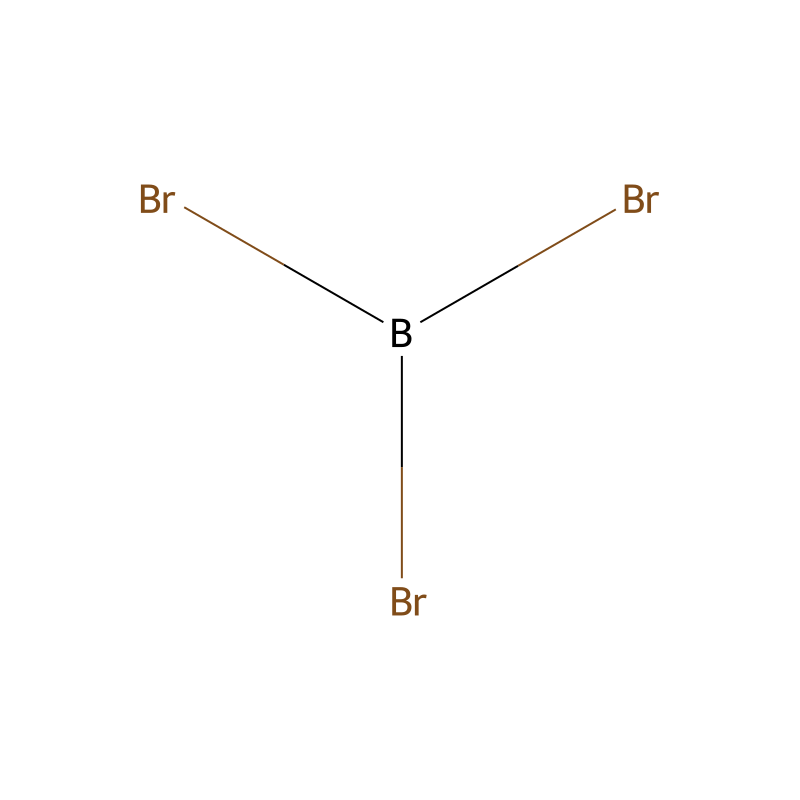
Molekülstruktur von Bortribromid

Identifikatoren & physikalische Daten

CAS No.10294-33-4
SummenformelBBr3
Durchschnittliche Molmasse250,53 g/mol
Monoisotopische Masse247,7643167 g/mol
SMILESBrB(Br)Br
InChIKeyILAHWRKJUDSMFH-UHFFFAOYSA-N
PubChem CID25134
EC No.233-657-9
DTXSIDDTXSID4065028
Lokaler NameBortribromid

Chemische & physikalische Eigenschaften

Polarare Oberfläche (TPSA)0
H-Brücken-Donoren0
H-Brücken-Akzeptoren0
Frei drehbare Bindungen0
Schwere Atome4
Formalladung0
Komplexität8
StoffklassenToxic Gases & Vapors -> Other Toxic Gases & VaporsCorrosives
SpringerMaterials Propertiesdielectric constant
GeruchSharp, irritating odorPungent
Dichte2.645 at 68 °F (USCG, 1999) - Denser than waterwill sink2.6 g/cu cmRelative density (water = 1): 2.72.64 at 68 °F2.650 @ 0°C(65 °F): 2.642.60 g/mL at 20 °C(lit.)
Viscosity0.731 cP at 75 °F (liquid)
Color/FormColorless, fuming liquid
LöslichkeitDecomposes (NIOSH, 2024)Soluble in carbon tetrachloride, sulfur dioxide (liquid), sulfur dichloridemoderately soluble in methylcyclohexaneSolubility in water: reactionMiscible with ethanol and carbon tetrachloride.Reacts with water.
CorrosivityStrongly attacks metals and woodCorrosive to rubber and bakeliteCorrosive to tissue
Siedepunkt196 °F at 760 mmHg (USCG, 1999)91.3 °C91 °C194 °F91.3 °C @760 [mm Hg]~90 °C
DecompositionOn decomposition, /one mole of/ boron tribromide would be expected to produce three moles of hydrogen bromide.When heated to decomposition, emits toxic fumes of /bromides/.The toxic action of the halogenated borons is considerably influenced by their decomposition products (hydrofluoric acid-, fluoboric acid-, hydrochloric acid-). /Halogenated borons/
Schmelzpunkt-51 °F (USCG, 1999)-46 °C−46 °C(lit.)
DampfdichteRelative vapor density (air = 1): 8.68.6 (vs air)
Dampfdruck40 mm Hg ( 14 °C)
Flammpunkt30 °F
Brechungsindex1.4340
LagerbedingungenPoison room
AggregatzustandSolution
Wichte2.65
Farbecolorless
Spezifische WärmekapazitätCp(gas): 0.27 J/(g·K), at 25℃
Merck14,1347
Dielektrizitätskonstante2.6(0℃)
StabilitätStable, but reacts violently with water.
InChI1S/BBr3/c2-1(3)4
InChIKeyILAHWRKJUDSMFH-UHFFFAOYSA-N
SMILESBrB(Br)Br
CAS Datenbank10294-33-4(CAS DataBase Reference)
EPA chemische InformationenBoron tribromide (10294-33-4)

Sicherheit & Vorschriften

GHS-EinstufungDangerH300: Fatal if swallowed [Danger Acute toxicity, oral]P260, P264, P270, P271, P280, P284, P301+P316, P301+P330+P331, P302+P361+P354, P304+P340, P305+P354+P338, P316, P320, P321, P330, P363, P403+P233, P405, and P501 (click each P-code to see the statement)H300 (100%): Fatal if swallowed [Danger Acute toxicity, oral]
Hazards IdentificationToxic/poison by inhalation (TIH/PIH)
Regulatorische InformationenChemical: Borane, tribromo-Status: Active Update: 18-09-2020 https://echa.europa.eu/registration-dossier/-/registered-dossier/31639Boron tribromide: HSNO Approval: HSR002916 Approved with controlsThe New Jersey Worker and Community Right to Know Act requires public and private employers to provide information about hazardous substances at their workplaces. (N.J.S.A. 34:5A-1 et. seq.)
Weitere SicherheitsinformationenIMAP assessments - Borane, tribromo-: Human health tier I assessment
DOT-KennzeichnungCorrosive Poison Inhalation Hazard
BrandgefahrenSpecial Hazards of Combustion Products: Toxic fumes of the chemical or hydrogen bromide may form in fires. (USCG, 1999)· Non-combustible, substance itself does not burn but may decompose upon heating to produce corrosive and/or toxic fumes.Not combustible. Heating will cause rise in pressure with risk of bursting. Risk of fire and explosion on contact with water. Risk of fire and explosion as a result of decomposition when heated.
BrandpotenzialNot flammable
GesundheitsgefahrenInhalation causes severe irritation of mucous membranes. Ingestion causes burns of mouth and stomach. Contact with eyes or skin causes severe burns. (USCG, 1999)· TOXIC and/or CORROSIVEinhalation, ingestion or contact (skin, eyes) with vapors, dusts or substance may cause severe injury, burns or death.
GefahrenübersichtLiquid will burn skin[CHRIS] Toxic effects are similar to those of hydrogen bromide (which is released when BBr3 reacts violently with water). [ACGIH] A corrosive that can cause pulmonary edema

Anwendungen & Verwendung

Verwenden

Boron Tribromide is used as a reagent in the synthesis of 8-hydroxyquinolato compounds used as electron transport materials in EL devices. It is also used in the demethylation of aryl methyl ethers by boron tribromide.

[ICSC]
DOT-Nummer und Handbuch2692 157
Reaktive GruppeHalogenating Agents
EG-EinstufungSymbol: T+, CR: 14-26/28-35S: (1/2)-9-26-28-36/37/39-45
UN-EinstufungUN Hazard Class: 8UN Pack Group: I
BrandbekämpfungExcerpt from ERG Guide 157 [Substances - Toxic and/or Corrosive (Non-Combustible / Water-Sensitive)]:In case of fire in the surroundings, use appropriate extinguishing media. NO water. In case of fire: keep drums, etc., cool by spraying with water. NO direct contact with water.
Erste-Hilfe-MaßnahmenFresh air, rest. Half-upright position. Artificial respiration may be needed. Refer for medical attention.First rinse with plenty of water for at least 15 minutes, then remove contaminated clothes and rinse again. Refer for medical attention .First rinse with plenty of water for several minutes (remove contact lenses if easily possible), then refer for medical attention.Rinse mouth. Do NOT induce vomiting. Refer for medical attention .
Freisetungsmaßnahmen· CALL 911. Then call emergency response telephone number on shipping paper. If shipping paper not available or no answer, refer to appropriate telephone number listed on the inside back cover.· ELIMINATE all ignition sources (no smoking, flares, sparks or flames) from immediate area.
Erste HilfeExcerpt from NIOSH Pocket Guide for Boron tribromide:General First Aid:(General first aid procedures)
Sichere LagerungSeparated from incompatible materials. See Chemical Dangers. Cool. Dry. Ventilation along the floor.
Expositionsschutz und Persönliche Schutzausrüstung· Wear positive pressure self-contained breathing apparatus (SCBA).TIH (Toxic Inhalation Hazard) - Term used to describe gases and volatile liquids that are toxic when inhaled. Some are TIH materials themselves, e.g., chlorine, and some release TIH gases when spilled in water, e.g., chlorosilanes. [ERG 2016].
BrandbekämpfungsverfahrenExtinguish fire using agent suitable for surrounding fire. Use dry chemical, or carbon dioxide. DO NOT use water. Violent reaction may result.If material involved in fire: Use dry chemical, dry sand, or carbon dioxide. Do not use water on material itself. If large quantities of combustibles are involved, use water in flooding quantities as spray and fog. Use water spray to knock-down vapors. Cool all affected containers with flooding quantities of water. Apply water from as far a distance as possible.
LagerbedingungenSeparate from alkalies, oxidizing materials, alcohols, ethers, alkali metals, phosphorus, wood. Store in a cool, dry, well-ventilated location.Separated from incompatible materials. ...Cool. Dry. Ventilation along the floor.Keep container in a well ventilated place.Usual shipping containers: Glass bottle or metal can inside wooden boxsteel or nickel cylinders, tanks. Packaged under nitrogen gas.Store under dry inert aatmosphere. Reacts violently with water, alcohols.
ReinigungsverfahrenReleases may require isolation or evacuation. Keep water away from release. Stop or control the leak, if this can be done without undue risk. Approach release from upwind. Absorb in noncombustible material for proper disposal.If material not involed in fire: Neutralize spilled material with crushed limestone, soda ash, or lime.Small quantities of boron tribromide may be destroyed by cautious addition to a large volume of ... water containing ice.It is ... highly dangerous to wash glass ampoules of boron tribromide with water under any circumstances.For more Cleanup Methods (Complete) data for BORON TRIBROMIDE (6 total), please visit the HSDB record page.
Freisetung ohne BrandExcerpt from ERG Guide 157 [Substances - Toxic and/or Corrosive (Non-Combustible / Water-Sensitive)]:
EntsorgungsverfahrenSRP: The most favorable course of action is to use an alternative chemical product with less inherent propensity for occupational harm/injury/toxicity or environmental contamination. Recycle any unused portion of the material for its approved use or return it to the manufacturer or supplier. Ultimate disposal of the chemical must consider: the material's impact on air qualitypotential migration in soil or watereffects on animal and plant lifeand conformance with environmental and public health regulations.SRP: Wastewater from contaminant suppression, cleaning of protective clothing/equipment, or contaminated sites should be contained and evaluated for subject chemical or decomposition product concentrations. Concentrations shall be lower than applicable environmental discharge or disposal criteria. Alternatively, pretreatment and/or discharge to a permitted wastewater treatment facility is acceptable only after review by the governing authority and assurance that "pass through" violations will not occur. Due consideration shall be given to remediation worker exposure (inhalation, dermal and ingestion) as well as fate during treatment, transfer and disposal. If it is not practicable to manage the chemical in this fashion, it must be evaluated in accordance with EPA 40 CFR Part 261, specifically Subpart B, in order to determine the appropriate local, state and federal requirements for disposal.
Verschüttetes entsorgenEvacuate danger area! Consult an expert! Personal protection: chemical protection suit including self-contained breathing apparatus. Ventilation. NEVER direct water jet on liquid. Collect leaking liquid in sealable containers. Absorb remaining liquid in sand or inert absorbent. Then store and dispose of according to local regulations.
TreatmentEYES: irrigate opened eyes for several minutes under running water. INGESTION: do not induce vomiting. Rinse mouth with water (never give anything by mouth to an unconscious person). Seek immediate medical advice. SKIN: should be treated immediately by rinsing the affected parts in cold running water for at least 15 minutes, followed by thorough washing with soap and water. If necessary, the person should shower and change contaminated clothing and shoes, and then must seek medical attention. INHALATION: supply fresh air. If required provide artificial respiration.
ZielorganeEyes, skin, respiratory system
Gesundheitliche AuswirkungenBromine vapour causes irritation and direct damage to the mucous membranes. Elemental bromine also burns the skin. The bromide ion is a central nervous system depressant and chronic exposure produces neuronal effects. This is called bromism and can result in central reactions reaching from somnolence to coma, cachexia, exicosis, loss of reflexes or pathologic reflexes, clonic seizures, tremor, ataxia, loss of neural sensitivity, paresis, papillar edema of the eyes, abnormal speech, cerebral edema, delirium, aggressiveness, and psychoses. (L625, L626, L627)
Unerwünschte WirkungenDermatotoxin - Skin burns.
ExpositionspfadeThe substance can be absorbed into the body by inhalation and by ingestion.inhalation, ingestion, skin and/or eye contactOral (L626)inhalation (L626)dermal (L626)
ToxizitätsübersichtBromine is a powerful oxidizing agent and is able to release oxygen free radicals from the water in mucous membranes. These free radicals are also potent oxidizers and produce tissue damage. In additon, the formation of hydrobromic and bromic acids will result in secondary irritation. The bromide ion is also known to affect the central nervous system, causing bromism. This is believed to be a result of bromide ions substituting for chloride ions in the in actions of neurotransmitters and transport systems, thus affecting numerous synaptic processes. (L626, L627, A543)
Signs and SymptomsCough. Shortness of breath. Sore throat. Burning sensation. Laboured breathing. Symptoms may be delayed.Redness. Skin burns. Pain. Blisters.Redness. Pain. Severe deep burns.Abdominal cramps. Burning sensation. Weakness. Diarrhoea. Vomiting. Abdominal pain. Shock or collapse.irritation eyes, skin, respiratory systemeye, skin burnsdyspnea (breathing difficulty), pulmonary edemaBromine vapour causes irritation and direct damage to the mucous membranes. Symptoms include lacrimation, rhinorrhoea, eye irritation with mucous secretions from the oropharyngeal and upper airways, coughing, dyspnoea, choking, wheezing, epistaxis, and headache. The bromide ion is a central nervous system depressant producing ataxia, slurred speech, tremor, nausea, vomiting, lethargy, dizziness, visual disturbances, unsteadiness, headaches, impaired memory and concentration, disorientation and hallucinations. This is called bromism. (L626, L627)
Medical SurveillanceNo specific considerations are needed for boric acid or borates except for general health and liver and kidney function. /Boric acid and borates/
Human Toxicity Excerpts/SIGNS AND SYMPTOMS/ Boron tribromide ... is severely corrosive to the eye. In one instance it has caused severe localized scarring of cornea and conjunctiva./SIGNS AND SYMPTOMS/ Very toxic by inhalation and if swallowed. Causes severe burns./SIGNS AND SYMPTOMS/ Potential symptoms of overexposure are ... dyspnea, pulmonary edema./SIGNS AND SYMPTOMS/ EFFECTS OF SHORT-TERM EXPOSURE: The substance is corrosive to the eyes, the skin and the respiratory tract. Corrosive on ingestion. Inhalation may cause lung edema.For more Human Toxicity Excerpts (Complete) data for BORON TRIBROMIDE (7 total), please visit the HSDB record page.
Carcinogen ClassificationNo indication of carcinogenicity to humans (not listed by IARC).
Probable Routes of Human ExposureNIOSH (NOES Survey 1981-1983) has statistically estimated that 1,554 workers (878 of these are female) are potentially exposed to boron tribromide(1). Occupational exposure to boron tribromide may occur through inhalation and dermal contact with this compound at workplaces where boron tribromide is produced or used(SRC).Industrial exposures ... occur from release ... into the worker atmosphere as well as from production & handling ... /Boron halides/
Environmental Fate/Exposure SummaryThe chemistry of boron is dominated by its tendency to form stable bonds with electronegative atoms, especially oxygen. Reduced boron compounds (halides, hydrides, alkyls and aryls) tend to oxidize and hydrolyze readily, and would be expected to be converted into various boron-oxide compounds in the environment. Inorganic boron compounds are nonvolatile and would not be expected to volatilize from moist or dry soil surfaces. (SRC)
DHS Chemicals of Interest (COI)Boron tribromide12.6745A Commercial GradeA Placarded AmountWeapons of Mass Effect chemical material that, if stolen or diverted, can be converted into weapons using simple chemistry, equipment, or techniques.
Landesrichtlinien für Trinkwasser(CA) CALIFORNIA 1000 ug/L /Boron/(NH) NEW HAMPSHIRE 630 ug/L /Boron/(ME) MAINE 1,400 ug/L /Boron/(MN) MINNESOTA 1,000 ug/L /Boron/(WI) WISCONSIN 960 ug/L /Boron/
Bundesrichtlinien für TrinkwasserEPA 600 ug/L /Boron/
F10-21
Arbeitsplatzgrenzwert (OEL)Ceiling: 1 ppm (10 mg/m3)
Wassergefährdungsklasse (WGK)3
TSCA-Inventar-StatusTSCA listed
UN-TransportnummerUN 2692
Zollcode28129090
RTECS-Nr.ED7400000
R-Sätze (R)14-26/28-35-40-62-11-67-65-50/53-37-51/53-48/20
GefahrensymboleT+,C,F,N
Sicherheitshinweise (S)9-26-28-36/37/39-45-23-33-16-62-61-60
Gefahrenklasse8Acute Tox. 2 InhalationAcute Tox. 2 OralCarc. 2Eye Dam. 1Skin Corr. 1ASTOT SE 3
VerpackungsgruppeI
Lagerklasse6.1A - Combustible acute toxic Cat. 1 and 2very toxic hazardous materials
Gefahrstoffdaten10294-33-4(Hazardous Substances Data)