StartseiteMCPWorkbenchSkills
StartseiteWorkbenchBenachrichtigungenMein Bereich
llms.txt · MCP-AnleitungDatenschutz · Nutzungsbedingungen · Supportv1.8.3
  1. Startseite
  2. /Verbindung

Nickeldiiodid

Nickel(II) iodide

HCID 26038
Neue Reaktion
Drucken
GrundinformationenÜberblickNamen und BezeichnerEigenschaftenSicherheit und RegulatorischesChemie und IndustrieZugehörige ReaktionenNotizen zur Verbindung
TeilstruktursucheÄhnliche Strukturen suchen

Grundinformationen

CAS
13462-90-3
Standard-SMILES
[I][Ni][I]
InChIKey
BFSQJYRFLQUZKX-UHFFFAOYSA-L
Summenformel
I2Ni
Durchschnittliche Molmasse
312,502 g/mol
Monoisotopische Masse
311,74429

Überblick

Nickel iodide is an iodide of nickel. It is used as a catalyst and reagent in organic synthesis. Nickel is a chemical compound with the atomic number 28. It is found abundantly in nature in laterite ore minerals, such as limonite, garnierite, and pentlandite. Nickel has a biological role and is found in certain enzymes, including urease, hydrogenase, methylcoenzyme M reductase, and carbon monoxide dehydrogenase. (L40, L41, L45)

Namen und Bezeichner

Bevorzugter Name
Nickel(II) iodide
IUPAC
diiodonickel
Lokaler Name
Nickeldiiodid
Englischer Name
NICKEL IODIDE
Summenformel
I2Ni
Molmasse
312.5

Namen und Synonyme

Nickel(II) iodide13462-90-3Diiodonickelnickel(2+);diiodidenickel(II)iodideNickeliodide(NiI2)Nickel (II) iodideUltra Dry Nickel IodideNickel(II) iodide, powderNichel(II)idide hexahydrateNickel(II) iodide, anhydrousSCHEMBL119980
Weitere Namen anzeigen
NICKEL IODIDE (OUS)NICKEL IODIDENickel lodideNickel(II) iodnickeldiiodidenickelousiodidenickel(2+)iodide
AKOS015833439CS-W00114412640-78-7BP-12498Q421443Nickel(II) iodide, anhydrous, powder, 99.99% trace metals basis

Datenbank-Bezeichner

CAS
13462-90-3
PubChem CID
26038
EC Number
236-666-6

Eigenschaften

Berechnete Struktureigenschaften

Polarare Oberfläche (TPSA)
0 Ų
H-Brücken-Donoren
0
H-Brücken-Akzeptoren
0
Frei drehbare Bindungen
0
Schwere Atome
3
Formalladung
0
Komplexität
2,8

Experimentelle und physikochemische Eigenschaften

Chemical ClassesMetals -> Nickel Compounds, Inorganic
Physical DescriptionBlack solid; Hexahydrate: bluish-green crystals that are very deliquescent; [Merck Index]

Physikochemische Eigenschaften

Schmelzpunkt
797 °C · 797 °C(lit.)
Siedepunkt
94 · sublimes [LID94]
Dichte
5.83 g/mL · 5.83 g/mL at 25 °C(lit.)
storage temp.
Keep in dark place,Inert atmosphere,Room temperature
Löslichkeit
2 O: · H2O: slightly soluble(lit.)
Aggregatzustand
Powder
Farbe
black
Wichte
5.834 · 5.834
Wasserlöslichkeit
Soluble in water and alcohols.
Merck
13 · 13,6535
Stabilität
hygroscopic

Sicherheit und Regulatorisches

Sicherheitsangaben dienen nur zur Orientierung und ersetzen weder das Sicherheitsdatenblatt (SDB) des Lieferanten noch geltende Vorschriften oder eine fachliche Bewertung.

GHS-Klassifizierung

GHS Classification · 6 Einträge

Danger

H317: May cause an allergic skin reaction [Warning Sensitization, Skin]

P203, P233, P260, P261, P264, P270, P271, P272, P273, P280, P284, P302+P352, P304+P340, P318, P319, P321, P333+P317, P342+P316, P362+P364, P391, P403, P405, and P501 (click each P-code to see the statement)

Danger

H317 (100%): May cause an allergic skin reaction [Warning Sensitization, Skin]

P203, P233, P260, P261, P264, P270, P271, P272, P273, P280, P284, P302+P352, P304+P340, P318, P319, P321, P333+P317, P342+P316, P362+P364, P391, P403, P405, and P501 (click each P-code to see the statement)

Gefahrenhinweise

Regulatory Information · 2 Einträge

Hazard Traits - Carcinogenicity; Reproductive Toxicity; Respiratory Toxicity

Restricted substance: Nickel diiodide

Hazards SummarySee Nickel and linked occupational diseases. See Iodine for the TLV of Iodides.
Hazard Classes and Categories · 2 Einträge

Skin Sens. 1 (100%)

Carc. 1A

Sicherheit und Schutzausrüstung

Minimum Risk LevelIntermediate Inhalation: 0.0002 mg/m3 (L134) Chronic Inhalation: 0.00009 mg/m3 (L134)
Threshold Limit Values (TLV)0.1 [mg/m3], as Ni, inhalable fraction (0.01 ppm, inhalable fraction and vapor (iodides))

Chemie und Industrie

Pharmakologische Informationen

Metabolism/Metabolites · 1 Eintrag

Nickel is absorbed mainly through the lungs and gastrointestinal tract. Once in the body it enters the bloodstream, where it binds to albumin, L-histidine, and _2-macroglobulin. Nickel tends to accumulate in the lungs, thyroid, kidney, heart, and liver. Absorbed nickel is excreted in the urine, wherease unabsorbed nickel is excreted in the faeces. (L41)

Verwendung und Herstellung

Uses · 2 Einträge

Used as a catalyst in the addition of carbon monoxide to organic compounds; [HSDB]

Nickel iodide is used as a catalyst and reagent in organic synthesis. (L45)

General Manufacturing InformationNickel iodide (NiI2): ACTIVE

Anwendungen

VerwendenStrongly accelerates Sml2 mediated homocoupling of imines into vicinal diamines and heterocoupling reactions between imines and ketones.1

Darstellung · 1 Eintrag

synthetischeNickel iodide can be prepared by dehydration of the hexahydrate or by the metathetic reaction between sodium iodide and nickel(II) chloride or nitrate in ethanol. It has the CdCl2 type lattice and is paramagnetic down to 75°K. Only one hydrate is well characterized—the blue-green NiI26H20 ; unlike the other halide hexahydrates, this contains [Ni(H2O)6]2+ cations.

Vor- und nachgelagerte Produkte

Vorgelagerte Rohstoffe

Hydrogeniodid

Zugehörige Reaktionen

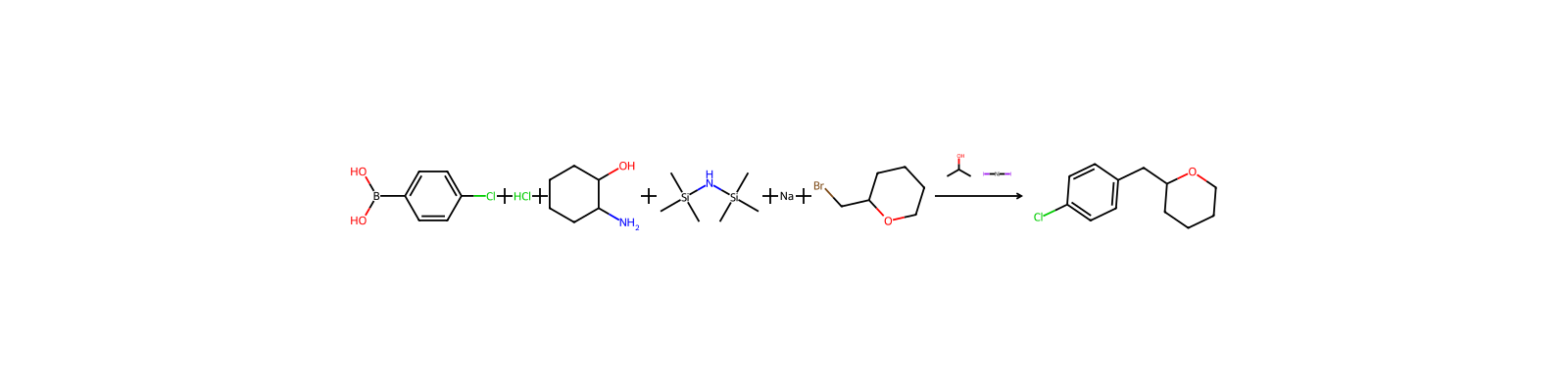
412
Reaktionsaufzeichnung erstellen
Reaktionsgleichung von HRID 57969
HRID 57969als Katalysator
Reaktionsgleichung von HRID 72961
HRID 72961als Katalysator
Reaktionsgleichung von HRID 338486
HRID 338486als Katalysator
Reaktionsgleichung von HRID 449123
HRID 449123als Katalysator
Reaktionsgleichung von HRID 449129
HRID 449129als Katalysator
Reaktionsgleichung von HRID 511664
HRID 511664als Katalysator
Reaktionsgleichung von HRID 705213
HRID 705213als Katalysator
Reaktionsgleichung von HRID 708283
HRID 708283als Katalysator
ZurückSeite 1 von 52

Notizen zur Verbindung

Auf dieser SeiteGrundinformationenÜberblickNamen und BezeichnerEigenschaftenSicherheit und RegulatorischesChemie und IndustrieZugehörige ReaktionenNotizen zur Verbindung
Major Application
battery manufacturing
InChI
1S/2HI.Ni/h2*1H;/q;;+2/p-2
InChIKey
BFSQJYRFLQUZKX-UHFFFAOYSA-L
SMILES
I[Ni]I
CAS Datenbank
13462 · 13462-90-3(CAS DataBase Reference)
EPA chemische Informationen
Nickel iodide (NiI2) (13462-90-3)
Permissible Exposure Limit (PEL)
1.0 [mg/m3], as Ni
Immediately Dangerous to Life or Health (IDLH)10.0 [mg/m3], as Ni

Toxikologische Informationen

TreatmentExcess exposure to nickel is usually handled by preventing further exposure and symptomatic treatment. Nickel poisoning may also be treated using chelation therapy with sodium diethyldithiocarbamate. (L42)
Health Effects · 1 Eintrag

The most common harmful health effect of nickel in humans is an allergic reaction. This usually manifests as a skin rash, although some people experience asthma attacks. Long term inhahation of nickel causes chronic bronchitis and reduced lung function, as well as damage to the naval cavity. Ingestion of excess nickel results in damage to the stomach, blood, liver, kidneys, and immune system, as well as having adverse effects on reproduction and development. (L41)

Adverse EffectsSkin Sensitizer - An agent that can induce an allergic reaction in the skin.
Exposure RoutesInhalation (L41) ; oral (L41) ; dermal (L41)
Toxicity Summary · 1 Eintrag

Nickel is known to substitute for other essential elements in certain enzmes, such as calcineurin. It is genotoxic, and some nickel compounds have been shown to promote cell proliferation. Nickel has a high affinity for chromatin proteins, particularly histones and protamines. The complexing of nickel ions with heterochromatin results in a number of alterations including condensation, DNA hypermethylation, gene silencing, and inhibition of histone acetylation, which have been shown to disturb gene expression. Nickel has also been shown to alter several transcription factors, including hypoxia-inducible transcription factor, activating transcription factor, and NF-KB transcription factor. There is also evidence that nickel ions inhibit DNA repair, either by directly inhibiting DNA repair enzymes or competing with zinc ions for binding to zinc-finger DNA binding proteins, resulting in structural changes in DNA that prevent repair enzymes from binding. Nickel ions can also complex with a number of cellular ligands including amino acids, peptides, and proteins resulting in the generation of oxygen radicals, which induce base damage, DNA strand breaks, and DNA protein crosslinks. (L41, A40)

Signs and SymptomsSymptoms of nickel poisoning include headache, nausea, vomiting, dizziness, irritability, and difficulty sleeping, followed by chest pains, sweating, rapid heart beat, and a dry cough. (L42)
Carcinogen Classification1, carcinogenic to humans. (L135)

Sicherheitsdaten

wgk
3
tsca
TSCA listed
ridadr
UN 3260 8/PG 2
hs_code
2827600090
risk_code
45-61-42/43
hazard_code
T
safety_code
53-22-26-36/37/39-45
hazard_class
6.1(b)
packing_group
III
Speicherklasse
6.1C - Combustible acute toxic Cat.3toxic compounds or compounds which causing chronic effects
Giftige Stoffe Daten
13462-90-3(Hazardous Substances Data)
Hazard Classifications
Aquatic Acute 1Aquatic Chronic 1Carc. 1A InhalationMuta. 2Repr. 1BResp. Sens. 1Skin Sens. 1STOT RE 1 Inhalation
Nickel
iodine
Nickeldihydroxid