StartseiteMCPWorkbenchSkills
StartseiteWorkbenchBenachrichtigungenMein Bereich
llms.txt · MCP-AnleitungDatenschutz · Nutzungsbedingungen · Supportv1.8.0
  1. Startseite
  2. /Verbindung

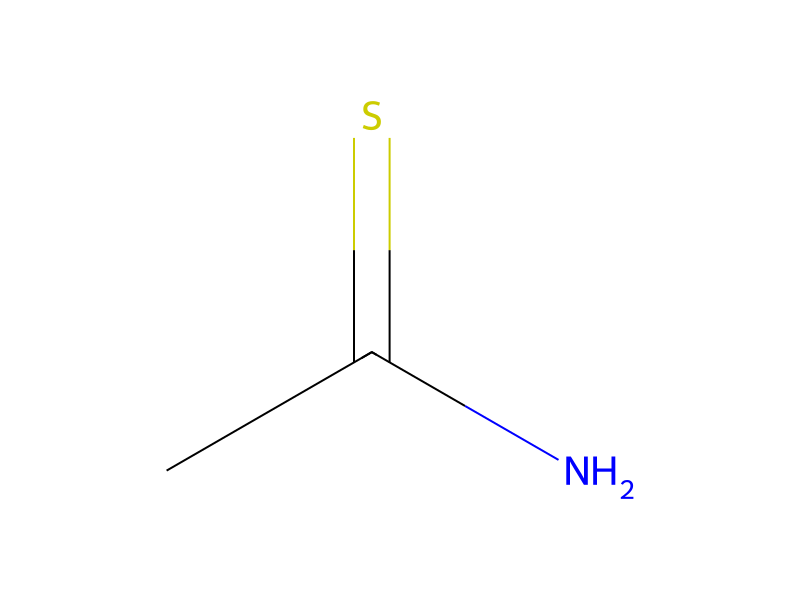
Thioacetamid

Thioacetamide

HCID 2723949
Neue NotizNeue ReaktionAnfrage stellen
Druckvorschau

Daten werden ergänzt – lade die Seite später neu, um den aktuellen Stand zu sehen
GrundinformationenÜberblickNamen und BezeichnerEigenschaftenSicherheit und RegulatorischesChemie und IndustrieZugehörige ReaktionenNotizen zur Verbindung
TeilstruktursucheÄhnliche Strukturen suchen

Grundinformationen

CAS
62-55-5
Standard-SMILES
CC(N)=S
InChIKey
YUKQRDCYNOVPGJ-UHFFFAOYSA-N
Summenformel
C2H5NS
Durchschnittliche Molmasse
75,14 g/mol
Monoisotopische Masse
75,01427016

Überblick

Thioacetamide can cause cancer according to an independent committee of scientific and health experts.

Namen und Bezeichner

Bevorzugter Name
Thioacetamide
IUPAC
ethanethioamide
Lokaler Name
Thioacetamid
Englischer Name
Thioacetamide
Summenformel
C2H5NS
Molmasse
75.13

Namen und Synonyme

THIOACETAMIDEEthanethioamide62-55-5AcetothioamideThiacetamideAcetamide, thio-Thioacetimidic acidAcetimidic acid, thio-USAF CB-21USAF EK-1719ThiacetamidAcetic acid, thiono-, amide
Weitere Namen anzeigen
TAACH3CSNH2THIOACETAMIDE ACS REAGENTusafcb-21usafek-1719hioacetamideThioactamide
DTXSID9021340NSC-2120075T165X8MDTXCID901340CHEBI:32497NSC2120ThioacetamidSulfo-amine

Datenbank-Bezeichner

CAS
62-55-5、65680-21-9
PubChem CID
2723949
DTXSID
DTXSID9021340
ChEMBL
CHEMBL38737
ChEBI
CHEBI:32497
UNII
075T165X8M
EC Number
200-541-4
Nikkaji
J2.350G

Eigenschaften

Berechnete StruktureigenschaftenWird ergänzt

XLogP
-0,3
Polarare Oberfläche (TPSA)
58,1 Ų
H-Brücken-Donoren
1
H-Brücken-Akzeptoren
1
Frei drehbare Bindungen
0
Schwere Atome
4
Formalladung
0
Komplexität
33

Experimentelle und physikochemische Eigenschaften

Chemical Classes · 2 Einträge

Other Classes -> Sulfur Compounds

Carcinogens

SpringerMaterials Properties15N nuclear magnetic resonance spectrum
LogP · 2 Einträge

log Kow = -0.26

-0.46/-0.36

OdorSlight odor of mercaptans
Color/Form · 4 Einträge

Crystals from benzene

Colorless leaflets

Yellow tablets

CRYSTALS FROM ALC, PLATES FROM ETHER

Solubility · 6 Einträge

5 to 10 mg/mL at 68 °F (NTP, 1992)

In ethanol 26.4 g/100 g; sparingly sol in ether

Miscible in benzene

MISCIBLE IN PETROLEUM ETHER

In water, 1.63X10+5 mg/l @ 25 °C.

Solubility in water: good

DecompositionWhen heated to decomposition, it emits very toxic fumes of /nitrogen oxides and sulfur oxides/.
Melting Point

Sicherheit und Regulatorisches

Sicherheitsangaben dienen nur zur Orientierung und ersetzen weder das Sicherheitsdatenblatt (SDB) des Lieferanten noch geltende Vorschriften oder eine fachliche Bewertung.

GHS-Klassifizierung

GHS Classification · 6 Einträge

Danger

H302: Harmful if swallowed [Warning Acute toxicity, oral]

P203, P264, P264+P265, P270, P273, P280, P301+P317, P302+P352, P305+P351+P338, P318, P321, P330, P332+P317, P337+P317, P362+P364, P405, and P501 (click each P-code to see the statement)

Danger

H302 (100%): Harmful if swallowed [Warning Acute toxicity, oral]

P203, P264, P264+P265, P270, P273, P280, P301+P317, P302+P352, P305+P351+P338, P318, P321, P330, P332+P317, P337+P317, P362+P364, P405, and P501 (click each P-code to see the statement)

Gefahrenhinweise

Regulatory Information · 5 Einträge

Chemical: Ethanethioamide

Hazard Traits - Carcinogenicity

Status: Active Update: 30-09-2010 https://echa.europa.eu/registration-dossier/-/registered-dossier/1779

Thioacetamide: Does not have an individual approval but may be used under an appropriate group standard

The New Jersey Worker and Community Right to Know Act requires public and private employers to provide information about hazardous substances at their workplaces. (N.J.S.A. 34:5A-1 et. seq.)

Other Safety InformationIMAP assessments - Ethanethioamide: Human health tier II assessment
Fire Hazards · 2 Einträge

Flash point data on this compound are not available; it is probably combustible. (NTP, 1992)

Combustible.

Health Hazards · 1 Eintrag

SYMPTOMS: The symptoms following exposure to this compound may include skin and eye irritation, liver damage, fatigue, nausea, eczema, central nervous system depression, acidosis, vomiting, respiratory depression, hypotension, unconsciousness, tremors, convulsions, anorexia and conjunctivitis.

Chemie und Industrie

Pharmakologische Informationen

Mechanism of Action · 3 Einträge

Multiple injections of thioacetamide ... decrease the synthesis of cytochrome p450b and the amounts of its translatable mRNA.

A factor was isolated from /thioacetamide-induced/ fibrogenic rat liver which stimulates collagen synthesis in cultured fibrolblasts without affecting their rate of proliferation.

Altered transport of nuclear RNA sequences is an early response to carcinogens. Nuclear envelopes were isolated and assayed for nucleoside triphosphatase (NTPase) activity, on the premise that this enzymatic activity participates in RNA transport. A common feature of the action of ... thioacetamide ... at low doses without significant toxicity, was to increase nuclear envelopes NTPase activity and to increase RNA transport, as assessed by the appearance of rapiidly labeled RNA in the cytoplasm and by in vitro assay. The increases in NTPase were specific for the nuclear envelope fraction, and early toxic effects of higher doses initially masked the increases. The induced increases in nuclear envelope NTPase were long-lived. In contrast, increases in nuclear envelope NTPase were observed only during the regenerative phase of carbon tetrachloride intoxication; the CCl4-induced increase was short-lived and returned promptly to control levels. These changes in NTPase activity were not associated with parallel changes in phosphorylation/dephosphorylation of nuclear envelope proteins. Increases in nuclear envelope NTPase and alterations in RNA transport, without attendant nuclear replication, may relate to altered nuclear RNA restriction. This change in a regulatory phenomenon may make these cells more susceptible to further modification, potentially playing a role in the initiation phase of carcinogenesis.

Metabolism/Metabolites · 5 Einträge

...THIOACETAMIDE IS METABOLIZED IN VIVO TO ACETAMIDE WHICH IS ITSELF CARCINOGENIC...ACETAMIDE IS THEN HYDROLYZED TO ACETATE...

THIOACETAMIDE, A PRE- OR PROCARCINOGEN, MUST UNDERGO BIOCHEMICAL METABOLIC ACTIVATION BY HOST. /FROM TABLE/

HEPATOTOXICITY OF THIOACETAMIDE MAY BE MEDIATED BY ITS METAB TO THIOACETAMIDE SULFINE WHICH IN TURN, IS METABOLIZED TO AN ULTIMATE TOXIC METABOLITE.

THIOACETAMIDE IS OXIDIZED TO THIOACETAMIDE S-OXIDE BY RAT LIVER MICROSOMES & BY A MIXED-FUNCTION OXIDASE SYSTEM.

For more Metabolism/Metabolites (Complete) data for THIOACETAMIDE (9 total), please visit the HSDB record page.

Zugehörige Reaktionen

451
Reaktionsaufzeichnung erstellen
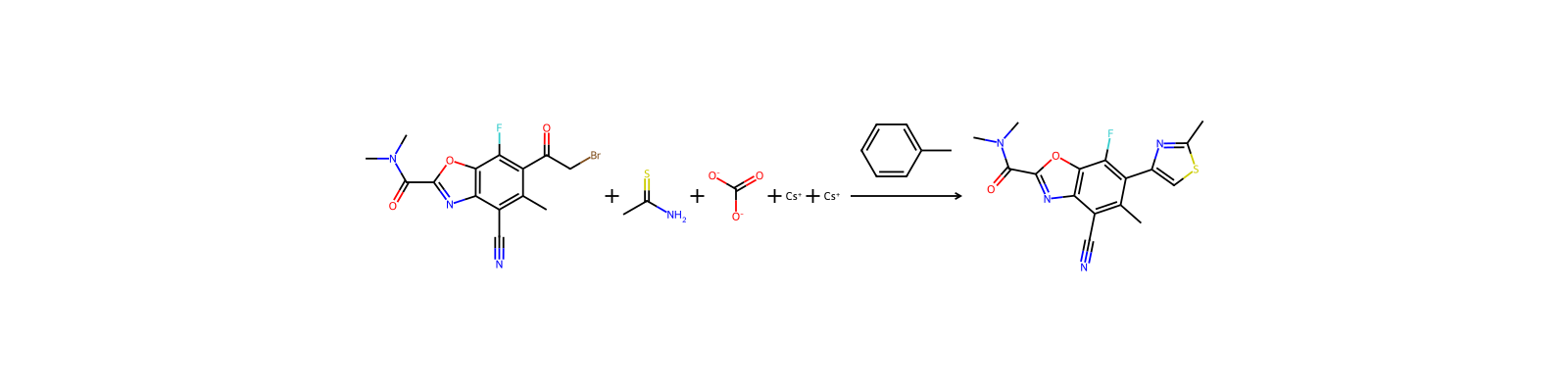
Reaktionsgleichung von HRID 8928
HRID 8928als Eduktuspto-grants-2006_08
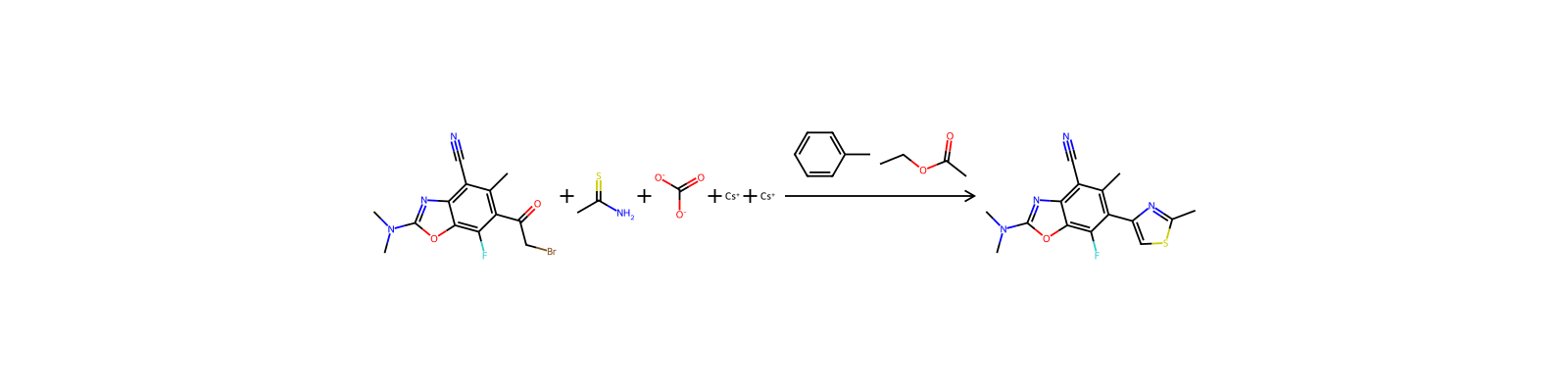
Reaktionsgleichung von HRID 10689
HRID 10689als Eduktuspto-grants-2006_08
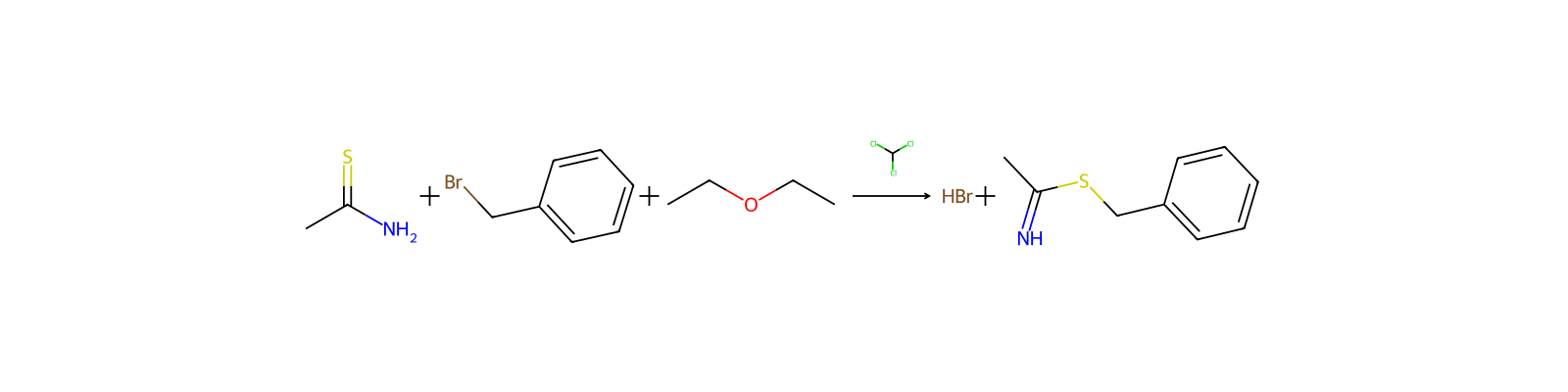
Reaktionsgleichung von HRID 17169
HRID 17169als Eduktuspto-grants-2010_06
Reaktionsgleichung von HRID 17338
HRID 17338als Eduktuspto-grants-2010_06
Reaktionsgleichung von HRID 17396
HRID 17396als Eduktuspto-grants-2010_06
Reaktionsgleichung von HRID 17441
HRID 17441als Eduktuspto-grants-2010_06
Reaktionsgleichung von HRID 19711
HRID 19711als Eduktuspto-grants-2010_06
Reaktionsgleichung von HRID 28938
HRID 28938als Eduktuspto-grants-2008_09
Seite 1 von 57

Notizen zur Verbindung

Wird geladen…

Auf dieser SeiteGrundinformationenÜberblickNamen und BezeichnerEigenschaftenSicherheit und RegulatorischesChemie und IndustrieZugehörige ReaktionenNotizen zur Verbindung
Weitere Aktionen
Neue NotizNeue ReaktionAnfrage stellen
· 4 Einträge

234 to 237 °F (NTP, 1992)

113-114 °C

113-116 °C

115.5 °C

Odor ThresholdMedium odor threshold level: 94.7 ppm in 50% aqueous ethylene glycol.
Vapor Pressure15.2 [mmHg]
Physical Description · 3 Einträge

Thioacetamide appears as white crystals with a mercaptan odor.

Colorless solid; [ICSC] Colorless or yellow solid with a mild odor of mercaptans; [HSDB] White solid; [CAMEO] Colorless crystalline solid with an odor of rotten eggs; [Alfa Aesar MSDS]

COLOURLESS CRYSTALS WITH CHARACTERISTIC ODOUR.

Stability/Shelf LifeRELATIVELY STABLE COMPD IN NEUTRAL AQ SOLN

Physikochemische Eigenschaften

Schmelzpunkt
108 · 108-112 °C (lit.)
Siedepunkt
111.7 · 111.7±23.0 °C(Predicted)
Dichte
1.37 · 1.37
Brechungsindex
1.53 · 1.5300 (estimate)
storage temp.
Inert atmosphere,Room Temperature
Löslichkeit
2 % · passes test 2%
Aggregatzustand
solid
pka
13.25 · 13.25±0.29(Predicted)
Farbe
Off-white to slightly beige
PH
5.2 · 5.2 (100g/l, H2O, 20℃)
Wasserlöslichkeit
16.3 g/100 · 16.3 g/100 mL (25 ºC)
Merck
14 · 14,9319
BRN
506006 · 506006
Henry's Law Constant
1.5 · 1.5×100 mol/(m3Pa) at 25℃, HSDB (2015)
Stabilität
Stability Incompatible with water, mineral acids.
InChI
1S/C2H5NS/c1-2(3)4/h1H3,(H2,3,4)
InChIKey
YUKQRDCYNOVPGJ-UHFFFAOYSA-N
SMILES
CC(N)=S
CAS Datenbank
62 · 62-55-5(CAS DataBase Reference)
NIST chemische Informationen
Ethanethioamide(62-55-5)
EPA chemische Informationen
Thioacetamide (62-55-5)
Hazards Summary · 1 Eintrag

Reports of degenerative liver changes following ingestion of the juice of oranges dipped for 2-5 seconds in 5% solution; Cirrhosis and other adverse changes (including tumors) of the liver observed in rats, mice, and dogs in feeding studies; [HSDB] May cause liver injury; A possible human carcinogen; [ICSC] A skin and eye irritant; [eChemPortal: ESIS] A skin and strong eye irritant; [Alfa Aesar MSDS]

Reactive GroupAmides and Imides
EC ClassificationSymbol: T; R: 45-22-36/38-52/53; S: 53-45-61; Note: E
Special Reports · 2 Einträge

REVIEW:[NEAL RA, HALPERT J; TOXICOLOGY OF THIONO-SULFUR COMPOUNDS; ANNU REV PHARMACOL TOXICOL 22: 321 (1982)]

National Toxicology Program. Eleventh Report on Carcinogens (2005). The Report on Carcinogens is an informational scientific and public health document that identifies and discusses substances (including agents, mixtures, or exposure circumstances) that may pose a carcinogenic hazard to human health. Thioacetamide (62-55-5) is listed as reasonably anticipated to be a human carcinogen.[Available from, as of July 31, 2009: http://ntp.niehs.nih.gov/ntp/roc/eleventh/profiles/s172thio.pdf]

RCRA Requirements · 1 Eintrag

U218; As stipulated in 40 CFR 261.33, when thioacetamide, as a commercial chemical product or manufacturing chemical intermediate or an off-specification commercial chemical product or a manufacturing chemical intermediate, becomes a waste, it must be managed according to Federal and/or State hazardous waste regulations. Also defined as a hazardous waste is any residue, contaminated soil, water, or other debris resulting from the cleanup of a spill, into water or on dry land, of this waste. Generators of small quantities of this waste may qualify for partial exclusion from hazardous waste regulations (40 CFR 261.5).

Reactivity ProfileTHIOACETAMIDE reacts with aqueous acid to generate hydrogen sulfide. Forms addition compounds and sulfides with salts of heavy metals. Hydrolyzed by acids or bases (NTP, 1992).
Chemical DangersDecomposes on burning. This produces toxic fumes of nitrogen oxides and sulfur oxides.
Packaging and LabellingDo not transport with food and feedstuffs.

Sicherheit und Schutzausrüstung

Fire Fighting · 2 Einträge

Fires involving this chemical should be controlled with a dry chemical, carbon dioxide, or Halon extinguisher. (NTP, 1992)

Use water spray, powder, alcohol-resistant foam, carbon dioxide.

First Aid Measures · 4 Einträge

Fresh air, rest.

Remove contaminated clothes. Rinse skin with plenty of water or shower.

First rinse with plenty of water for several minutes (remove contact lenses if easily possible), then refer for medical attention.

Rinse mouth.

First Aid · 1 Eintrag

EYES: First check the victim for contact lenses and remove if present. Flush victim's eyes with water or normal saline solution for 20 to 30 minutes while simultaneously calling a hospital or poison control center. Do not put any ointments, oils, or medication in the victim's eyes without specific instructions from a physician. IMMEDIATELY transport the victim after flushing eyes to a hospital even if no symptoms (such as redness or irritation) develop.

Safe StorageSeparated from food and feedstuffs.
Storage Conditions · 1 Eintrag

PRECAUTIONS FOR "CARCINOGENS": Storage site should be as close as practical to lab in which carcinogens are to be used, so that only small quantities required for ... expt need to be carried. Carcinogens should be kept in only one section of cupboard, an explosion-proof refrigerator or freezer (depending on chemicophysical properties ...) that bears appropriate label. An inventory ... should be kept, showing quantity of carcinogen & date it was acquired ... Facilities for dispensing ... should be contiguous to storage area. /Chemical Carcinogens/

Cleanup Methods · 1 Eintrag

PRECAUTIONS FOR "CARCINOGENS": A high-efficiency particulate arrestor (HEPA) or charcoal filters can be used to minimize amt of carcinogen in exhausted air ventilated safety cabinets, lab hoods, glove boxes or animal rooms ... Filter housing that is designed so that used filters can be transferred into plastic bag without contaminating maintenance staff is avail commercially. Filters should be placed in plastic bags immediately after removal ... The plastic bag should be sealed immediately ... The sealed bag should be labelled properly ... Waste liquids ... should be placed or collected in proper containers for disposal. The lid should be secured & the bottles properly labelled. Once filled, bottles should be placed in plastic bag, so that outer surface ... is not contaminated ... The plastic bag should also be sealed & labelled. ... Broken glassware ... should be decontaminated by solvent extraction, by chemical destruction, or in specially designed incinerators. /Chemical Carcinogens/

Nonfire Spill Response · 1 Eintrag

SMALL SPILLS AND LEAKAGE: If a spill of this chemical occurs, FIRST REMOVE ALL SOURCES OF IGNITION, then you should dampen the solid spill material with acetone and transfer the dampened material to a suitable container. Use absorbent paper dampened with acetone to pick up any remaining material. Seal your contaminated clothing and the absorbent paper in a vapor-tight plastic bag for eventual disposal. Solvent wash all contaminated surfaces with acetone followed by washing with a soap and water solution. Do not reenter the contaminated area until the Safety Officer (or other responsible person) has verified that the area has been properly cleaned.

Disposal Methods · 5 Einträge

At the time of review, criteria for land treatment or burial (sanitary landfill) disposal practices are subject to significant revision. Prior to implementing land disposal of waste residue (including waste sludge), consult with environmental regulatory agencies for guidance on acceptable disposal practices.

Thioacetamide is a potential candidate for incineration. Recommended incineration types: Rotary kiln with a temperature range 820 to 1600 °C and a residence time of hours; Fluidized bed with a temperature range 840 to 1800 °C and a residence time of several seconds or longer.

PRECAUTIONS FOR "CARCINOGENS": There is no universal method of disposal that has been proved satisfactory for all carcinogenic compounds & specific methods of chem destruction ... published have not been tested on all kinds of carcinogen-containing waste. ... summary of avail methods & recommendations ... /given/ must be treated as guide only. /Chemical Carcinogens/

PRECAUTIONS FOR "CARCINOGENS": ... Incineration may be only feasible method for disposal of contaminated laboratory waste from biological expt. However, not all incinerators are suitable for this purpose. The most efficient type ... is probably the gas-fired type, in which a first-stage combustion with a less than stoichiometric air:fuel ratio is followed by a second stage with excess air. Some ... are designed to accept ... aqueous & organic-solvent solutions, otherwise it is necessary ... to absorb soln onto suitable combustible material, such as sawdust. Alternatively, chem destruction may be used, esp when small quantities ... are to be destroyed in laboratory. /Chemical Carcinogens/

For more Disposal Methods (Complete) data for THIOACETAMIDE (7 total), please visit the HSDB record page.

Spillage Disposal · 1 Eintrag

Personal protection: complete protective clothing including self-contained breathing apparatus. Sweep spilled substance into covered containers. If appropriate, moisten first to prevent dusting. Carefully collect remainder. Then store and dispose of according to local regulations.

Preventive Measures · 5 Einträge

VENTILATION CONTROL: BASIC VENTILATION METHODS ARE LOCAL EXHAUST VENTILATION & DILUTION OR GENERAL VENTILATION.

PRECAUTIONS FOR "CARCINOGENS": Smoking, drinking, eating, storage of food or of food & beverage containers or utensils, & the application of cosmetics should be prohibited in any laboratory. All personnel should remove gloves, if worn, after completion of procedures in which carcinogens have been used. They should ... wash ... hands, preferably using dispensers of liq detergent, & rinse ... thoroughly. Consideration should be given to appropriate methods for cleaning the skin, depending on nature of the contaminant. No standard procedure can be recommended, but the use of organic solvents should be avoided. Safety pipettes should be used for all pipetting. /Chemical Carcinogens/

PRECAUTIONS FOR "CARCINOGENS": In animal laboratory, personnel should remove their outdoor clothes & wear protective suits (preferably disposable, one-piece & close-fitting at ankles & wrists), gloves, hair covering & overshoes. ... Clothing should be changed daily but ... discarded immediately if obvious contamination occurs ... /also,/ workers should shower immediately. In chemical laboratory, gloves & gowns should always be worn ... however, gloves should not be assumed to provide full protection. Carefully fitted masks or respirators may be necessary when working with particulates or gases, & disposable plastic aprons might provide addnl protection. If gowns are of distinctive color, this is a reminder that they should not be worn outside of lab. /Chemical Carcinogens/

PRECAUTIONS FOR "CARCINOGENS": ... Operations connected with synth & purification ... should be carried out under well-ventilated hood. Analytical procedures ... should be carried out with care & vapors evolved during ... procedures should be removed. ... Expert advice should be obtained before existing fume cupboards are used ... & when new fume cupboards are installed. It is desirable that there be means for decreasing the rate of air extraction, so that carcinogenic powders can be handled without ... powder being blown around the hood. Glove boxes should be kept under negative air pressure. Air changes should be adequate, so that concn of vapors of volatile carcinogens will not occur. /Chemical Carcinogens/

For more Preventive Measures (Complete) data for THIOACETAMIDE (10 total), please visit the HSDB record page.

Eye PreventionWear safety spectacles.
Fire PreventionNO open flames.

Toxikologische Informationen

Interactions · 5 Einträge

DISTRIBUTION OF PU /SRP: plutonium/ IN RATS WAS INFLUENCED BY ORAL ADMIN OF THIOACETAMIDE (300 MG/KG). RATS INJECTED IP WITH PLUTONIUM CITRATE RETAINED 71.5 & 23.6% OF RECOVERED ACTIVITY IN THE CARCASS & LIVER, RESPECTIVELY, WHEREAS RATS WHICH HAD BEEN TREATED WITH THIOACETAMIDE 24 HR PREVIOUSLY CONTAINED 35.8 & 59.5% OF THE PU IN THE CARCASS & LIVER RESPECTIVELY.

PHENOBARBITAL PRETREATMENT POTENTIATED HEPATIC NECROSIS PRODUCED BY THIOACETAMIDE.

ADRENALECTOMY PROTECTED RATS AGAINST THE HEPATOTOXIC ACTION OF THIOACETAMIDE INJECTED IP AT 200 MG/KG BW. THIS PROTECTIVE EFFECT COULD BE REVERSED BY HYDROCORTISONE GIVEN TWICE DAILY INTRAPERITONEALLY AT 0.5 TO 2.5 MG/RAT.

STROPHANTHIN-G PROTECTED RATS AGAINST LIVER NECROSIS CAUSED BY THIOACETAMIDE.

For more Interactions (Complete) data for THIOACETAMIDE (10 total), please visit the HSDB record page.

Environmental Fate · 3 Einträge

TERRESTRIAL FATE: Based on a classification scheme(1), an estimated Koc value of 17(SRC), determined from an log Kow of -0.26(2) and a regression-derived equation(3), indicates that thioacetamide is expected to have very high mobility in soil(SRC). Volatilization of thioacetamide from moist soil surfaces is expected to be an important fate process(SRC) given an estimated Henry's Law constant of 6.4X10⁻⁶ atm-cu m/mole(SRC), using a fragment constant estimation method(4). The potential for volatilization of thioacetamide from dry soil surfaces may exist(SRC) based upon an estimated vapor pressure of 15 mm Hg(SRC), determined from a fragment constant method(5). Thioacetamide was not biodegraded by activated sludge after 5 days(6), and therefore may be resistant to biodegradation in soil(SRC).

AQUATIC FATE: Based on a classification scheme(1), an estimated Koc value of 17(SRC), determined from an log Kow of -0.26(2) and a regression-derived equation(3), indicates that thioacetamide is not expected to adsorb to suspended solids and sediment(SRC). Volatilization from water surfaces is expected(3) based upon an estimated Henry's Law constant of 6.4X10⁻⁴ atm-cu m/mole(SRC), developed using a fragment constant estimation method(4). Using this Henry's Law constant and an estimation method(3), volatilization half-lives for a model river and model lake are 3 days and 39 days, respectively(SRC). According to a classification scheme(5), an estimated BCF of 3(SRC), from its log Kow(2) and a regression-derived equation(6), suggests the potential for bioconcentration in aquatic organisms is low(SRC). Thioacetamide was not biodegraded by activated sludge after 5 days(7), and therefore may be resistant to biodegradation in aqueous systems(SRC).

ATMOSPHERIC FATE: According to a model of gas/particle partitioning of semivolatile organic compounds in the atmosphere(1), thioacetamide, which has an estimated vapor pressure of 15 mm Hg at 25 °C(SRC), determined from a fragment constant method(2), is expected to exist solely as a vapor in the ambient atmosphere(SRC). Vapor-phase thioacetamide is degraded in the atmosphere by reaction with photochemically-produced hydroxyl radicals(SRC); the half-life for this reaction in air is estimated to be 18 hours(SRC), calculated from its rate constant of 21X10-12 cu cm/molecule-sec at 25 °C(SRC) determined using a structure estimation method(3).

Adverse EffectsOccupational hepatotoxin - Secondary hepatotoxins: the potential for toxic effect in the occupational setting is based on cases of poisoning by human ingestion or animal experimentation.
Exposure RoutesThe substance can be absorbed into the body by inhalation of its aerosol and by ingestion.
Medical Surveillance · 1 Eintrag

PRECAUTIONS FOR "CARCINOGENS": Whenever medical surveillance is indicated, in particular when exposure to a carcinogen has occurred, ad hoc decisions should be taken concerning ... /cytogenetic and/or other/ tests that might become useful or mandatory. /Chemical Carcinogens/

Soil Adsorption/Mobility · 1 Eintrag

The Koc of thioacetamide is estimated as 17(SRC), using a log Kow of -0.26(1) and a regression-derived equation(2). According to a classification scheme(3), this estimated Koc value suggests that thioacetamide is expected to have very high mobility in soil(SRC).

Natural Pollution SourcesThioacetamide has not been reported to occur in nature.
Human Toxicity Excerpts...SEVERAL PEOPLE DEVELOPED DEGENERATIVE CHANGES IN LIVER FROM DRINKING JUICE OF ORANGES WHICH HAD BEEN IMMERSED FOR 2-5 SEC IN 5% SOLN OF THIOACETAMIDE TO PREVENT GROWTH OF BLUE & GREEN MOLDS.
Artificial Pollution SourcesThioacetamide's production and use as a substitute for hydrogen sulfide in the laboratory(1) may result in its release to the environment through various waste streams(SRC).
Environmental BiodegradationAEROBIC: Thioacetamide was not biodegraded by activated sludge after 5 days(1), and therefore may be resistant to biodegradation in the environment(SRC).
Carcinogen Classification · 5 Einträge

Thioacetamide

Group 2B: Possibly carcinogenic to humans

Volume 7: (1974) Some Anti-thyroid and Related Substances, Nitrofurans and Industrial Chemicals

1987

1987

Environmental Bioconcentration · 1 Eintrag

An estimated BCF of 3 was calculated for thioacetamide(SRC), using a log Kow of -0.26(1) and a regression-derived equation(2). According to a classification scheme(3), this BCF suggests the potential for bioconcentration in aquatic organisms is low(SRC).

Regulatorische Informationen

RCRA Requirements · 1 Eintrag

U218; As stipulated in 40 CFR 261.33, when thioacetamide, as a commercial chemical product or manufacturing chemical intermediate or an off-specification commercial chemical product or a manufacturing chemical intermediate, becomes a waste, it must be managed according to Federal and/or State hazardous waste regulations. Also defined as a hazardous waste is any residue, contaminated soil, water, or other debris resulting from the cleanup of a spill, into water or on dry land, of this waste. Generators of small quantities of this waste may qualify for partial exclusion from hazardous waste regulations (40 CFR 261.5).

CERCLA Reportable Quantities · 1 Eintrag

Persons in charge of vessels or facilities are required to notify the National Response Center (NRC) immediately, when there is a release of this designated hazardous substance, in an amount equal to or greater than its reportable quantity of 10 lb or 4.54 kg. The toll free number of the NRC is (800) 424-8802; In the Washington D.C. metropolitan area (202) 426-2675. The rule for determining when notification is required is stated in 40 CFR 302.4 (section IV. D.3.b).

Sicherheitsdaten

F
10
wgk
3
tsca
TSCA listed
ridadr
2811
hs_code
29309070
RTECS-Nr.
AC8925000
risk_code
45-22-36/38-52/53
Toxizität
MLD orally in rats: 200 mg/kg (Ambrose)
hazard_code
T
safety_code
53-45-61-99
hazard_class
9
Speicherklasse
6.1C - Combustible acute toxic Cat.3toxic compounds or compounds which causing chronic effects
Giftige Stoffe Daten
62-55-5(Hazardous Substances Data)
Hazard Classifications
Acute Tox. 4 OralAquatic Chronic 3Carc. 1BEye Irrit. 2Skin Irrit. 2
Absorption, Distribution and Excretion · 3 Einträge

WHEN 5 MG (3)H-THIOACETAMIDE WERE ADMIN ORALLY IN DIET TO MALE ALBINO RATS... RADIOACTIVITY WAS FOUND IN ALL ORGANS EXAMINED (LIVER, KIDNEY & ADRENAL GLAND) & WAS HIGHEST IN LIVER.

WHOLE-BODY AUTORADIOGRAPHY SHOWED THAT AN IV DOSE OF ANTITHYROID AGENT, (35)S-THIOACETAMIDE, WAS TAKEN UP IN LIVER, KIDNEYS (MEDULLA), HEART MUSCLE, HARDERIAN GLANDS, SPLEEN, LYMPH NODES, & GI TRACT OF RATS. ABOUT 80% WAS EXCRETED IN 24-HR URINE.

THE DISTRIBUTION OF LABELED THIOACETAMIDE WAS STUDIED AS A FUNCTION OF TIME IN LIVER, KIDNEYS, PLASMA, AND MUSCLE OF RATS. THE DEVELOPMENT OF CENTRILOBULAR HEPATIC NECROSIS WAS FIRST OBSERVED 6 HOURS AFTER PEAK PLASMA LEVELS OF THIOACETAMIDE-S-OXIDE WERE OBTAINED (9 HOURS AFTER ADMINISTRATION OF THIOACETAMIDE).

Verwendung und Herstellung

Uses · 5 Einträge

Used as a replacement for gaseous hydrogen sulfide in qualitative analysis; Used formerly as a stabilizer of motor fuel containing tetraethyl lead and mordant of seed grain (combined with mercury); [HSDB]

Petroleum Production and Refining [Category: Industry]

As replacement for gaseous hydrogen sulfide in qualitative analysis.

The addition of thioacetamide to 1,4-benzoquinone produces modest yields of 2-substituted 3a-Hydroxy-1,3-benzothiazol-6(3aH)-ones.

Stabilizer of motor fuel containing tetraethyl lead ... mordant of seed grain in combination with mercury /Former use/

U.S. Imports(1977) AT LEAST 4.54X10+5 G
U.S. Production · 2 Einträge

(1977) AT LEAST 4.54X10+5 G

(1982) NO EVIDENCE OF COMMERCIAL PRODN IN U.S.

Methods of ManufacturingPrepn: prepd by heating ammonium acetate and aluminum sulfide: Kindler, Finndorf, Ber 54, 1080 (1921); from acetonitrile + H2S: Kindler, Ann 431, 203 (1923); from acetamide + K3PS4: Schultz, Ranke, Arch Pharm 294, 82 (1961).
General Manufacturing InformationEthanethioamide: ACTIVE
Anwendungen · 2 Einträge

BeschreibungThioacetamide (TAA) is not known to occur in nature. It is prepared by heating ammonium acetate and aluminum sulfide.

VerwendenThioacetamide is a carcinogen, a hepatotoxicant. Thioacetamide induces acute chronic liver injury through the activation of protein synthesis of RNA, DNA, and gamma-glutamyl transpeptitase. Thioacetamide has been used in the synthesis of [emailprotected] nano-array core-shell structure.

Vor- und nachgelagerte Produkte

Vorgelagerte Rohstoffe

AcetamidDiphosphorpentasulfid

Nachgelagerte Produkte

2,4-Dimethylthiazole-5-carboxylic acidAspoxicillinEthyl 2-methylthiazole-4-carboxylate2-(2,5-Dimethyl-1,3-thiazol-4-yl)acetic acid2-Methyl-1,3-thiazole-4-carboxylic acidMethyl 2-(2,5-dimethyl-1,3-thiazol-4-yl)acetate3-(2-Methyl-1,3-thiazol-4-yl)benzoic acid4-Butyl-2-methylthiazole2-Methyl-4-phenyl-thiazoleThioacetanilid4-Chloromethyl-2-methylthiazole hydrochloride6-Bromo-2-methyl-1,3-benzothiazole2,4,5-Trimethylthiazol1-(2,4-Dimethylthiazol-5-yl)ethan-1-on4-(2-Chlorophenyl)-2-Methylthiazole

Ergänzende Hinweise

DefinitionChEBI: Thioacetamide is a thiocarboxamide consiting of acetamide having the oxygen replaced by sulfur. It has a role as a hepatotoxic agent. It is functionally related to an acetamide.