

Grundinformationen
- Standard-SMILES
NNC(=S)NN- InChIKey
LJTFFORYSFGNCT-UHFFFAOYSA-N- Summenformel
- CH6N4S
- Durchschnittliche Molmasse
- 106,15 g/mol
- Monoisotopische Masse
- 106,03131738
Namen und Bezeichner
- Bevorzugter Name
- Thiocarbohydrazide
- IUPAC
- 1,3-diaminothiourea
- Lokaler Name
- Thiocarbonohydrazid
- Englischer Name
- Thiocarbohydrazide
- Summenformel
- CH6N4S
- Molmasse
- 106.15
Namen und Synonyme
Thiocarbohydrazide2231-57-4ThiocarbazideCarbonothioic dihydrazide1,3-diaminothioureaCarbohydrazide, thio-1,3-DIAMINO-2-THIOUREAThiocarbonic dihydrazideHydrazinecarbohydrazonothioic acidUSAF EK-7372DTXSID70274611IZ2H82NWU
Weitere Namen anzeigen
usafek-7372AURORA 1561thiocarbazide1thio-carbohydrazid
NSC-689DTXCID707461RefChem:189436218-769-8ThiocarbonohydrazideCH6N4SNSC 689TCH
Datenbank-Bezeichner
- CAS
2231-57-4- PubChem CID
- 2724189
- DTXSID
DTXSID7027461- ChEMBL
CHEMBL3181818- ChEBI
CHEBI:9549- UNII
- 1IZ2H82NWU
- EC Number
- 218-769-8
- Nikkaji
- J48.453I
Eigenschaften
Berechnete Struktureigenschaften
- XLogP
- -1
- Polarare Oberfläche (TPSA)
- 108 Ų
- H-Brücken-Donoren
- 4
- H-Brücken-Akzeptoren
- 3
- Frei drehbare Bindungen
- 0
- Schwere Atome
- 6
- Formalladung
- 0
- Komplexität
- 45
Experimentelle und physikochemische Eigenschaften
Melting Point
338 °F Decomposes (EPA, 1998)
164 °C
Physical Description
Thiocarbazide appears as crystalline needles and plates. Used in electron microscopy to produce electron-opaque deposits for ultra structural analysis. (EPA, 1998)
Solid; [CAMEO] White powder; [Alfa Aesar MSDS]
Physikochemische Eigenschaften
- Schmelzpunkt
- 171 · 171-174 °C (dec.)(lit.)
- Siedepunkt
- 230.1 · 230.1±23.0 °C(Predicted)
- Dichte
- 1.273 · 1.273 (estimate)
- Brechungsindex
- 1.5605 · 1.5605 (estimate)
- storage temp.
- Keep in dark place,Sealed in dry,Room Temperature
- Löslichkeit
- Very slightly soluble (0.5g/100g, 25°C). Insoluble in ether.
- Aggregatzustand
- Crystalline Powder
- pka
- 10.58 · 10.58±0.70(Predicted)
- Farbe
- White to gray-beige
- BRN
- 506657 · 506657
- InChI
- InChI=1S/CH6N4S/c2-4-1(6)5-3/h2-3H2,(H2,4,5,6)
- InChIKey
- LJTFFORYSFGNCT-UHFFFAOYSA-N
- SMILES
- C(=S)(NN)NN
- CAS Datenbank
- 2231 · 2231-57-4(CAS DataBase Reference)
- NIST chemische Informationen
- Carbonothioic dihydrazide(2231-57-4)
- EPA chemische Informationen
- Thiocarbazide (2231-57-4)
Sicherheit und Regulatorisches
GHS-Klassifizierung
GHS Classification
Danger
H300 (97.9%): Fatal if swallowed [Danger Acute toxicity, oral];H311 (95.7%): Toxic in contact with skin [Danger Acute toxicity, dermal];H330 (89.4%): Fatal if inhaled [Danger Acute toxicity, inhalation]
P260, P262, P264, P270, P271, P280, P284, P301+P316, P302+P352, P304+P340, P316, P320, P321, P330, P361+P364, P403+P233, P405, and P501 (click each P-code to see the statement)
Aggregated GHS information provided per 47 reports by companies from 5 notifications to the ECHA C&L Inventory. Each notification may be associated with multiple companies.;Information may vary between notifications depending on impurities, additives, and other factors. The percentage value in parenthesis indicates the notified classification ratio from companies that provide hazard codes. Only hazard codes with percentage values above 10% are shown. For more detailed information, please visit ECHA C&L website.
Gefahrenhinweise
Regulatory Information
Chemical: Carbonothioic dihydrazide
The New Jersey Worker and Community Right to Know Act requires public and private employers to provide information about hazardous substances at their workplaces. (N.J.S.A. 34:5A-1 et. seq.)
DOT LabelPoison
Fire HazardsWhen heated to decomposition it emits very toxic fumes of nitrogen oxides and sulfur oxides. (EPA, 1998)
Health HazardsHigh oral toxicity. (EPA, 1998)
Hazards Summary
Emergency treatment: Thiocarbazide; Causes seizures in animal experiments; No reports of human poisoning cases; [HSDB] Not irritating to rabbit skin or eyes; Muscle spasms observed in lethal-dose studies of rats (oral and inhalation); Causes gene mutations in bacteria and unscheduled DNA synthesis in vitro; [EPA ChAMP] A mild eye irritant; Causes convulsions, somnolence, and dyspnea in oral lethal-dose studies of rats, guinea pigs, and mice; [RTECS] An irritant; [Alfa Aesar MSDS]
Reactive GroupAmides and Imides;Amines, Phosphines, and Pyridines
Reactivity Profile
THIOCARBAZIDE is a thioamide, which may behave as a weak base and therefore will react with acids forming salts with production of heat. It may react with acids and reducing agents to form toxic hydrogen sulfide gas. This may be vigorous depending on the nature of the reducing agent. Organic amides/imides react with azo and diazo compounds to generate toxic gases. The combustion of these compounds generates mixed oxides of nitrogen (NOx).
Air and Water ReactionsNo rapid reaction with air. No rapid reaction with water.
Hazard Classes and Categories
Acute Tox. 2 (97.9%);Acute Tox. 3 (95.7%);Acute Tox. 1 (89.4%)
Acute toxicity (Oral) - Category 2;Acute toxicity (Inhalation: Dusts and mists) - Category 1
Sicherheit und Schutzausrüstung
Fire Fighting
(Non-Specific -- Poisonous Solid, n.o.s.) Wear self-contained (positive pressure if available) breathing apparatus and full protective clothing. Stay upwind, keep out of low areas. Move container from fire area if you can do so without risk.;(Non-Specific -- Poisonous Solid, n.o.s.) Extinguish with dry chemical, carbon dioxide, water spray, fog, or foam. (EPA, 1998)
First Aid
Note: No information on specific clinical effects of exposure was available.;Signs and Symptoms of Thiocarbazide Exposure: Signs and symptoms of acute exposure to thiocarbazide may include headache, dizziness, weakness, and nausea. May cause irritation of the eyes, skin, and respiratory tract. Esophageal or gastrointestinal tract irritation or burns may also be noted.;Emergency Life-Support Procedures: Acute exposure to thiocarbazide may require decontamination and life support for the victims. Emergency personnel should wear protective clothing appropriate to the type and degree of contamination. Air-purifying or supplied-air respiratory equipment should also be worn, as necessary. Rescue vehicles should carry supplies such as plastic sheeting and disposable plastic bags to assist in preventing spread of contamination.;Inhalation Exposure:;1. Move victims to fresh air. Emergency personnel should avoid self-exposure to thiocarbazide.;2. Evaluate vital signs including pulse and respiratory rate, and note any trauma. If no pulse is detected, provide CPR. If not breathing, provide artificial respiration. If breathing is labored, administer 100% humidified oxygen or other respiratory support.;3. Obtain authorization and/or further instructions from the local hospital for performance of other invasive procedures.;4. Transport to a health care facility.;Dermal/Eye Exposure:;1. Remove victims from exposure. Emergency personnel should avoid self-exposure to thiocarbazide.;2. Evaluate vital signs including pulse and respiratory rate, and note any trauma. If no pulse is detected, provide CPR. If not breathing, provide artificial respiration. If breathing is labored, administer 100% humidified oxygen or other respiratory support.;3. Remove contaminated clothing as soon as possible.;4. If eye exposure has occurred, eyes must be flushed with lukewarm water for at least 15 minutes.;5. Wash exposed skin areas thoroughly with soap and water.;6. Obtain authorization and/or further instructions from the local hospital for performance of other invasive procedures.;7. Transport to a health care facility.;Ingestion Exposure:;1. Evaluate vital signs including pulse and respiratory rate, and note any trauma. If no pulse is detected, provide CPR. If not breathing, provide artificial respiration. If breathing is labored, administer 100% humidified oxygen or other respiratory support.;2. Obtain authorization and/or further instructions from the local hospital for administration of an antidote or performance of other invasive procedures.;3. DO NOT induce vomiting.
Nonfire Spill Response
(Non-Specific -- Poisonous Solid, n.o.s.) Do not touch spilled material.;Small spills: absorb with sand or other noncombustible absorbent material and place into containers for later disposal.;Small dry spills: with clean shovel, place material into clean, dry container and cover. Move containers from spill area.;Large spills: dike far ahead of spill for later disposal. (EPA, 1998)
Isolation and Evacuation
Excerpt from ERG Guide 154 [Substances - Toxic and/or Corrosive (Non-Combustible)]:;IMMEDIATE PRECAUTIONARY MEASURE: Isolate spill or leak area in all directions for at least 50 meters (150 feet) for liquids and at least 25 meters (75 feet) for solids.;SPILL: Increase the immediate precautionary measure distance, in the downwind direction, as necessary.;FIRE: If tank, rail tank car or highway tank is involved in a fire, ISOLATE for 800 meters (1/2 mile) in all directions; also, consider initial evacuation for 800 meters (1/2 mile) in all directions. (ERG, 2024)
Protective Action Criteria (PAC)
0.033 [mg/m3]
0.37 [mg/m3]
2.2 [mg/m3]
Personal Protective Equipment (PPE)
For emergency situations, wear a positive pressure, pressure-demand, full facepiece self-contained breathing apparatus (SCBA) or pressure- demand supplied air respirator with escape SCBA and a fully-encapsulating, chemical resistant suit. (EPA, 1998)
Toxikologische Informationen
InteractionsPRETREATMENT OF MICE WITH PYRIDOXAL PHOSPHATE (0.25 MMOL/KG) PROTECTED THEM AGAINST CONVULSIONS & DEATH PRODUCED BY LOW DOSES OF THIOCARBOHYDRAZIDE.
Adverse EffectsNeurotoxin - Other CNS neurotoxin
Human Toxicity Excerpts
In the manufacture of rubber, irritant contact dermatitis may occur from a variety of acids, alkalies, detergents, and solvents used in the process. Allergic contact dermatitis occurs not infrequently and is almost always due to an organic accelerator or antioxidant. While the list of potential sensitizing accelerators and antioxidants is enormous, common allergens include ... thioureas. /Thioureas/
Non-Human Toxicity Excerpts
THE CONVULSANT ACTION OF THIOCARBOHYDRAZIDE (TCH) WAS STUDIED IN MICE. GLUTAMIDE DECARBOXYLASE ACTIVITY IN WHOLE BRAIN HOMOGENATES FROM MICE KILLED AT ONSET OF SEIZURES, WAS SIGNIFICANTLY REDUCED.
WHEN AN AQ SOLN OF THE CONVULSIVE HYDRAZIDE, THIOCARBOHYDRAZIDE (TCH) WAS INJECTED INTO HOUSEFLIES SENSITIVE TO DDT & HOUSEFLIES RESISTANT TO DDT, THE LD50 VALUE AFTER 24 HR WAS 0.3-0.6 GAMMA/FLY. WHEN TCH WAS DISSOLVED IN 20 GAMMA DIMETHYLSULFOXIDE PLUS 80 GAMMA BENZENE & APPLIED TOPICALLY, THE LD50 WAS 0.8-1.0 GAMMA/FLY. IN VIVO TRACER STUDIES WITH (14)C FORMATE REVEALED THAT BOTH DDT & TCH INCR LABELING OF PURINES, WHILE REDUCING THE CONTENT OF LABELED PROLINE.
Toxicity DataLC50 (rat) = 50 mg/m3/4h
Regulatorische Informationen
Regulatory Information
Chemical: Carbonothioic dihydrazide
The New Jersey Worker and Community Right to Know Act requires public and private employers to provide information about hazardous substances at their workplaces. (N.J.S.A. 34:5A-1 et. seq.)
Sicherheitsdaten
- F
- 4.4-8
- wgk
- 3
- tsca
- TSCA listed
- ridadr
- UN 2811 6.1/PG 1
- hs_code
- 29309090
- RTECS-Nr.
- FF2975000
- risk_code
- 5-26/28-36/38-21
- hazard_code
- T+
- safety_code
- 28-36/37/39-45-38-36/37-28A-1
- hazard_class
- 6.1
- packing_group
- I
- Speicherklasse
- 6.1A - Combustible acute toxic Cat. 1 and 2very toxic hazardous materials
- Giftige Stoffe Daten
- 2231-57-4(Hazardous Substances Data)
- Hazard Classifications
- Acute Tox. 2 Oral
Chemie und Industrie
Pharmakologische Informationen
MeSH Pharmacological Classification
Substances used for the detection, identification, analysis, etc. of chemical, biological, or pathologic processes or conditions. Indicators are substances that change in physical appearance, e.g., color, at or approaching the endpoint of a chemical titration, e.g., on the passage between acidity and alkalinity. Reagents are substances used for the detection or determination of another substance by chemical or microscopical means, especially analysis. Types of reagents are precipitants, solvents, oxidizers, reducers, fluxes, and colorimetric reagents. (From Grant & Hackh's Chemical Dictionary, 5th ed, p301, p499)
Verwendung und Herstellung
Uses
Used in electron microscopy to deposit electron-opaque material for ultrastructural analysis and as a veterinary medication; [HSDB] Used to make pesticides and other agricultural chemicals; [EPA]
THIOCARBOHYDRAZIDE IS USED IN ELECTRON MICROSCOPY TO PRODUCE ELECTRON-OPAQUE DEPOSITS FOR ULTRASTRUCTURAL ANALYSIS.
MEDICATION (VET)
General Manufacturing InformationCarbonothioic dihydrazide: ACTIVE
Anwendungen
VerwendenThiocarbohydrazide is used in electron microscopy to produce electron-opaque deposits for ultra structural analysis. It is used in the synthesis of oxazine grass ketones.
Vor- und nachgelagerte Produkte
Vorgelagerte Rohstoffe
Nachgelagerte Produkte
Anbieter50 Anbieter
梯希爱(上海)化成工业发展有限公司021-67121386 · [email protected]
衢州润东化工有限公司0570-8789886 18892685668 · [email protected]
湖北永阔科技有限公司027-59223108 15972152991 · [email protected]
Shandong chuangyingchemical Co., Ltd.18853181302 · [email protected]
上海伟聂化工科技有限公司13046668259 · [email protected]
湖北万得化工有限公司15377098680 15377098680 · [email protected]
武汉欣扬瑞和化学科技有限公司13720274133 · [email protected]
合肥翰刚医药科技有限公司+8618062405514 · [email protected]
河北创海生物科技有限公司+86-86-13131129325 · [email protected]
爱斯特(成都)生物制药股份有限公司+86-28-85122536 85324413 · [email protected]
上海仲因实业有限公司2537653158 16621191650 · [email protected]
Dayang Chem (Hangzhou) Co.,Ltd.+86-0571-88938639 17705817739 · [email protected]
Hebei Yanxi Chemical Co., Ltd.+86-17531190177 · [email protected]
衢州明锋化工有限公司0570-3062502 13819002126;13819008176 · [email protected]
上海迈瑞尔生化科技有限公司4006356688 18621169109 · [email protected]
阿法埃莎(中国)化学有限公司400-6106006 · [email protected]
上海德默医药科技有限公司400-021-7337 2355568890 · [email protected]
安耐吉化学&3A(安徽泽升科技股份有限公司)400-0056266 · [email protected]
上海瀚鸿科技股份有限公司021-54306202 13764082696 · [email protected]
湖北广奥生物科技有限公司027-02702759223056 18162699093 · [email protected]
玛雅试剂+86 (573) 82222445 (0)18006601000 452520369 · [email protected]
四川库利南科技有限公司400-1166-196 18981987031 · [email protected]
天津希恩思生化科技有限公司400 638 7771 · [email protected]
斯百全化学(上海)有限公司021-021-021-67601398-809-809-809 15221380277 · [email protected]
赛默飞世尔科技(中国)有限公司800-810-5118 · [email protected]
江苏艾康生物医药研发有限公司025-66113011 13913916777 · [email protected]
TOKYO CHEMICAL INDUSTRY CO., LTD.03-36680489 · [email protected]
苏州亚科科技股份有限公司0512-87182055 13451648594 · [email protected]
安徽科迪达化工有限公司0554-2106669 · [email protected]
美岚实业(上海)有限公司021-58958189 · [email protected]
上海爱蝶实业有限公司021-58957966 18930537195 · [email protected]
成都零六生物科技有限公司400-1166-196 13458535857 · [email protected]
广拓化学(上海)有限公司021-60899189-8001 18918189673 · [email protected]
上海馨远医药科技有限公司021-24206007 13764915196 · [email protected]
上海麦克林生化科技股份有限公司15221275939 15221275939 · [email protected]
上海纳谦化学科技有限公司13598610367 13598610367 · [email protected]
北京欣赛维化学科技有限公司010-56218822 13717722232 · [email protected]
上海凯赛化工有限公司021-33516722 13701817765 · [email protected]
武汉弘德悦欣医药科技有限公司027-83855396 15271852016
北京华扬致成科技有限公司13716033033 · [email protected]
上海容立化学科技有限公司021-69992220 13701886816 · [email protected]
池州凯隆进出口贸易有限公司[email protected]
Sigma-Aldrich西格玛奥德里奇(上海)贸易有限公司021-61415566 800-8193336 · [email protected]
成都瑞欧克科技有限公司028-64353063 · [email protected]
泰安嘉岳生物化工有限公司15318151873 · [email protected]
上海珈得尔化学技术有限公司021-4007787-550 400-7787-550 · [email protected]
武汉裕清嘉衡药业有限公司027-83850122 13343472658 · [email protected]
成都润泽本土化工有限公司028-88469284 18000562381 · [email protected]
上海堃泽医药科技有限公司021-68712331 3286104197
上海思言生物科技有限公司021-50908862,442785678,326799392 18721037013 · [email protected]
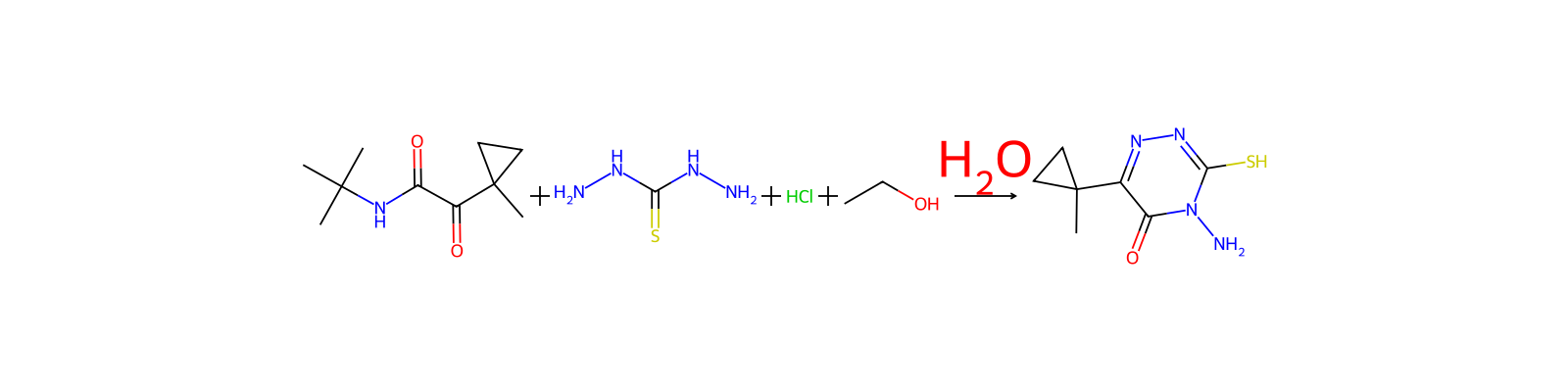
Zugehörige Reaktionen
42




Verknüpfte Notizen
Wird geladen…