

Grundinformationen
- Standard-SMILES
CCCCB(CCCC)OS(=O)(=O)C(F)(F)F- InChIKey
FAVAVMFXAKZTMV-UHFFFAOYSA-N- Summenformel
- C9H18BF3O3S
- Durchschnittliche Molmasse
- 274,11 g/mol
- Monoisotopische Masse
- 274,1021803
Namen und Bezeichner
- Bevorzugter Name
- Methanesulfonic acid, 1,1,1-trifluoro-, anhydride with B,B-dibutylborinic acid
- IUPAC
- dibutylboranyl trifluoromethanesulfonate
- Englischer Name
- Dibutylboron trifluoromethanesulfonate
- Summenformel
- C9H18BF3O3S
- Molmasse
- 274.11
Namen und Synonyme
60669-69-4RefChem:811498Methanesulfonic acid, 1,1,1-trifluoro-, anhydride with B,B-dibutylborinic acid612-008-7dibutylboranyl trifluoromethanesulfonateDibutylboron trifluoromethanesulfonateDIBUTYLBORYL TRIFLUOROMETHANESULFONATEDibutylboron triflateC9H18BF3O3SDibutylboron triflate; Dibutylboron trifluoromethanesulfonate; Dibutylboryl triflateDibutylboryl trifluoromethanesulfonate - 1M dichloromethane solutionnBu2BOTf
Weitere Namen anzeigen
dibutylboryl triflateDibutylboryl trifluoromethanesulfonate solutiondibutylboron triflate solutionDi-Butyl Boron Triflate (1.0M in Toluene)Dibutylboron trifluoromethanesulfonate,98%
Bu2BOTf(n-Bu)2BOTfDibutyl(((trifluoromethyl)sulfonyl)oxy)boraneSCHEMBL408053DTXSID20369121BP-20540AMFCD00009669AKOS015915614
Datenbank-Bezeichner
- CAS
60669-69-4- PubChem CID
- 2724243
- DTXSID
DTXSID20369121- EC Number
- 612-008-7
- Nikkaji
- J274.160A
Eigenschaften
Berechnete Struktureigenschaften
- Polarare Oberfläche (TPSA)
- 51,8 Ų
- H-Brücken-Donoren
- 0
- H-Brücken-Akzeptoren
- 6
- Frei drehbare Bindungen
- 8
- Schwere Atome
- 17
- Formalladung
- 0
- Komplexität
- 290
Experimentelle und physikochemische Eigenschaften
Density0.815 @25 °C
Physikochemische Eigenschaften
- Siedepunkt
- 37 ℃ · 37℃ (0.12 Torr)
- Dichte
- 1.271 g/mL · 1.271 g/mL at 25 °C
- Flammpunkt
- 80 °F · 80 °F
- storage temp.
- 2 · 2-8°C
- Aggregatzustand
- Solution
- Farbe
- Clear light yellow to orange
- BRN
- 1968660 · 1968660
- InChI
- InChI=1S/C9H18BF3O3S/c1-3-5-7-10(8-6-4-2)16-17(14,15)9(11,12)13/h3-8H2,1-2H3
- InChIKey
- FAVAVMFXAKZTMV-UHFFFAOYSA-N
- SMILES
- B(CCCC)(CCCC)OS(=O)(=O)C(F)(F)F
Sicherheit und Regulatorisches
GHS-Klassifizierung
GHS Classification
Danger
H314 (100%): Causes severe skin burns and eye damage [Danger Skin corrosion/irritation];H318 (73.6%): Causes serious eye damage [Danger Serious eye damage/eye irritation]
P260, P264, P264+P265, P280, P301+P330+P331, P302+P361+P354, P304+P340, P305+P354+P338, P316, P317, P321, P363, P405, and P501 (click each P-code to see the statement)
Aggregated GHS information provided per 144 reports by companies from 3 notifications to the ECHA C&L Inventory. Each notification may be associated with multiple companies.;Information may vary between notifications depending on impurities, additives, and other factors. The percentage value in parenthesis indicates the notified classification ratio from companies that provide hazard codes. Only hazard codes with percentage values above 10% are shown. For more detailed information, please visit ECHA C&L website.
Gefahrenhinweise
Hazard Classes and CategoriesSkin Corr. 1B (100%);Eye Dam. 1 (73.6%)
Sicherheit und Schutzausrüstung
Protective Action Criteria (PAC)
36 [mg/m3]
400 [mg/m3]
2400 [mg/m3]
Sicherheitsdaten
- F
- 1-10
- wgk
- 3
- ridadr
- UN 2924 3/PG 1
- hs_code
- 29310099
- risk_code
- 12-22-34-66-67-40-10-37-65-48/20-11-63-19
- hazard_code
- C,F+,F
- safety_code
- 9-16-26-33-36/37/39-45-62
- hazard_class
- 3.2
- packing_group
- III
- Speicherklasse
- 3 - Flammable liquids
- Hazard Classifications
- Carc. 2Eye Dam. 1Flam. Liq. 3Skin Corr. 1BSTOT SE 3
Chemie und Industrie
Anwendungen
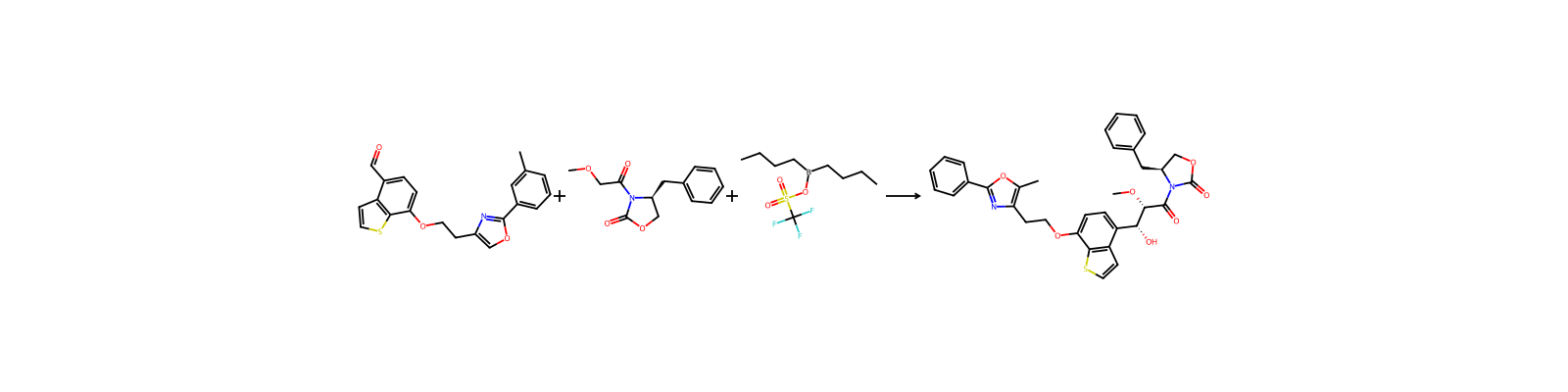
VerwendenDibutylboryl trifluoromethanesulfonate may be used in the following studies:Stereo- and regio-selective synthesis of erythro aldols. As a promoter for the solution and polymer-supported trichloroacetimidate-based glycosylations.Synthesis of β-alkoxy carbonyl compounds via one-step Mukaiyama aldol-type reaction.Aldol-type cyclization for the stereoselective synthesis of cyclic ethers.As a reagent for the formation of boron enolates. As a complexation aid for the isolation of 1-acyldipyrromethanes.As a promoter in [1,2]-Wittig reaction between aldehydes and O-benzyl or O-allyl glycolate esters, creating two contiguous stereocenters (1,2-diol) in good yield without the need for strong base.
Vor- und nachgelagerte Produkte
Vorgelagerte Rohstoffe
Anbieter50 Anbieter
陕西缔都医药有限责任公司029-81124775 17791530730 · [email protected]
湖北永阔科技有限公司027-59223108 15972152991 · [email protected]
上海阿拉丁生化科技股份有限公司400-6206333 13167063860 · [email protected]
湖北万得化工有限公司15377098680 15377098680 · [email protected]
邹平创新药业有限公司13561560789 · [email protected]
咸宁深蓝生物医药研发有限公司18171815831 · [email protected]
杭州品高化工有限公司0571-87658025 · [email protected]
环生美森医药技术(山东)有限公司0531-88762217 18301471076 · [email protected]
江苏星科元信息科技有限公司400-605-7200 15335295587
湖北云镁科技有限公司027-59206672 18995657604 · [email protected]
Syntechem Co.,Ltd[email protected]
上海迈瑞尔生化科技有限公司4006356688 18621169109 · [email protected]
安耐吉化学&3A(安徽泽升科技股份有限公司)400-0056266 · [email protected]
上海瀚鸿科技股份有限公司021-54306202 13764082696 · [email protected]
泰州凯美迪生物医药技术有限公司0523-86200218 18994667082 · [email protected]
武汉丰泰威远科技有限公司027-87465837 19945049750 · [email protected]
天津希恩思生化科技有限公司400 638 7771 · [email protected]
赛默飞世尔科技(中国)有限公司800-810-5118 · [email protected]
上海昶衍化工科技有限公司021-20242659 18930833303 · [email protected]
上海丽康新材料有限公司+86-16631818819 +86-17736933208 · [email protected]
雷丁试剂0510-85629785 18013409632 · [email protected]
上海馨远医药科技有限公司021-24206007 13764915196 · [email protected]
上海麦克林生化科技股份有限公司15221275939 15221275939 · [email protected]
Sigma-Aldrich西格玛奥德里奇(上海)贸易有限公司021-61415566 800-8193336 · [email protected]
盘锦研峰科技有限公司400-106-2016 17800804092 · [email protected]
盘锦研峰科技有限公司400-1062016 18612996721 · [email protected]
潍坊市前进精细化工有限公司18753684562 · [email protected]
九鼎化学(上海)科技有限公司4009209199 · [email protected]
上海博熠生物医药科技有限公司021-021-54331997 18321536537 · [email protected]
上海超岚化工科技中心(原宁波市超明生物科技有限公司)13301662590 · [email protected]
康幸生物科技(上海)有限公司021-61556450 15800904410
上海思言生物科技有限公司021-50908862,442785678,326799392 18721037013 · [email protected]
上海颖心实验室设备有限公司021-021-59178156 15300768757 · [email protected]
上海康曼生物科技有限公司18800375331 · [email protected]
上海炎泽化工有限公司19901447308 19962611955 · [email protected]
邹平创新药业有限公司13561560789 · [email protected]
上海泰坦科技股份有限公司18616708014 · [email protected]
江苏艾康生物医药研发有限公司025-66113011 19370895928 · [email protected]
艾览(上海)化工科技有限公司400-668-9898 · [email protected]
ATK CHEMICAL COMPANY LIMITED+undefined-21-51877795 · [email protected]
上海弗霓生物科技有限公司021-54252912-8903 · [email protected]
career henan chemical co+86-0371-86658258 · [email protected]
河南阿尔法化工有限公司0371-55055611 18137792234 · [email protected]
Aladdin Scientific[email protected]
湖北达豪化工有限公司027-027-59106191 13986034860 · [email protected]
上海允复纳米科技有限公司18964169089 · [email protected]
雷丁科技0510-85629785 18013409632 · [email protected]
苏州启航生物科技有限公司18662190603 · [email protected]
Wuxi Rejoys chemical Technology Co., Ltd.0510-86103381 · [email protected]
南京一览生物科技有限公司13851808754 · [email protected]
Zugehörige Reaktionen
14




Verknüpfte Notizen
Wird geladen…