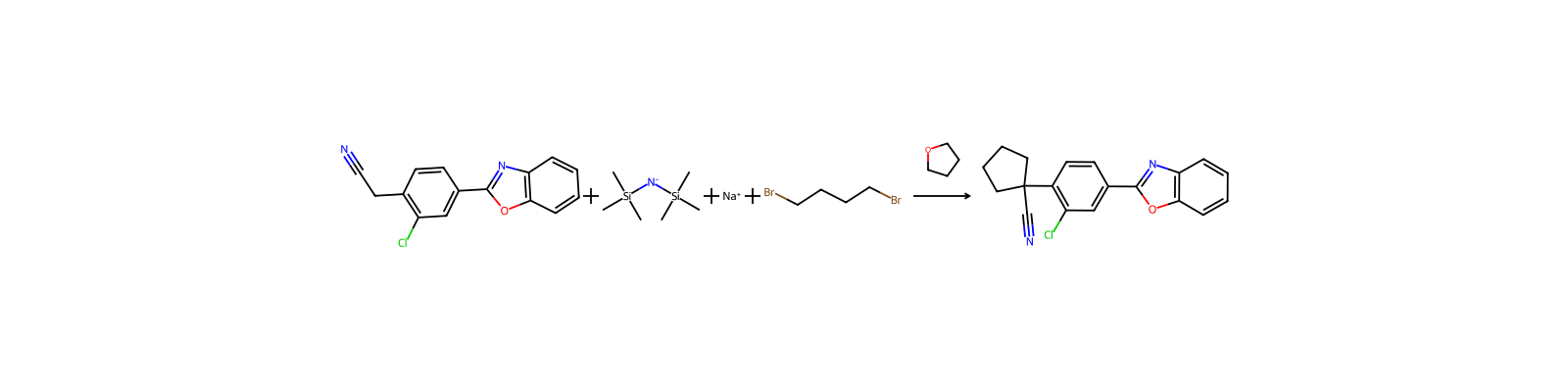
HRID 5562als Edukt
Sodium bis(trimethylsilyl)amide
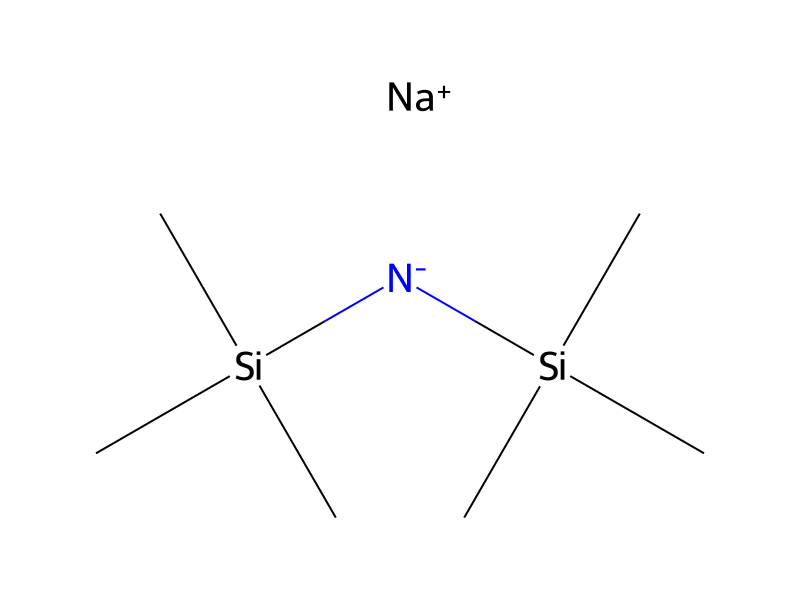
1070-89-9C[Si](C)(C)[N-][Si](C)(C)C.[Na+]WRIKHQLVHPKCJU-UHFFFAOYSA-N1070-89-9DTXSID5061451Sicherheitsangaben dienen nur zur Orientierung und ersetzen weder das Sicherheitsdatenblatt (SDB) des Lieferanten noch geltende Vorschriften oder eine fachliche Bewertung.
Danger
H302 (63.4%): Harmful if swallowed [Warning Acute toxicity, oral]
P260, P261, P264, P264+P265, P270, P271, P273, P280, P301+P317, P301+P330+P331, P302+P352, P302+P361+P354, P304+P340, P305+P354+P338, P316, P317, P321, P330, P362+P364, P363, P405, and P501 (click each P-code to see the statement)
Aggregated GHS information provided per 235 reports by companies from 11 notifications to the ECHA C&L Inventory. Each notification may be associated with multiple companies.
REACH registered substance: N-sodiohexamethyldisilazane (EC: 213-983-8)
Silanamine, 1,1,1-trimethyl-N-(trimethylsilyl)-, sodium salt: Does not have an individual approval but may be used under an appropriate group standard
260 [mg/m3]
430 [mg/m3]
520 [mg/m3]
VerwendenSodium bis(trimethylsilyl)amide is a synthetically useful reagent in that it combines both high basicity and nucleophilicity, each of which may be exploited for useful organic transformations such as selective formation of enolates, preparation of Wittig reagents, formation of acyl anion equivalents, and the generation of carbenoid species. As a nucleophile, it has been used as a nitrogen source for the preparation of primary amines.It is useful as a sterically hindered base and as a nucleophile.