
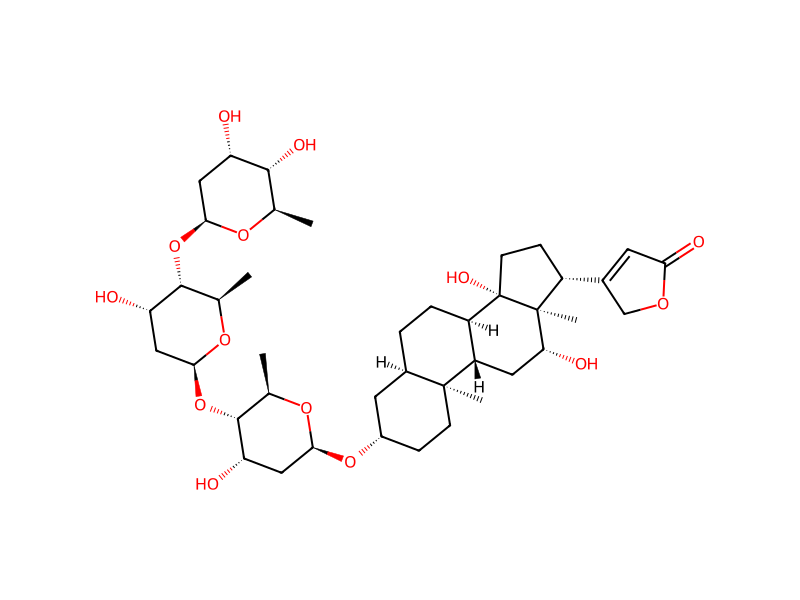
Grundinformationen
- Standard-SMILES
C[C@H]1O[C@@H](O[C@H]2[C@@H](O)C[C@H](O[C@H]3[C@@H](O)C[C@H](O[C@H]4CC[C@@]5(C)[C@H](CC[C@@H]6[C@@H]5C[C@@H](O)[C@]5(C)[C@@H](C7=CC(=O)OC7)CC[C@]65O)C4)O[C@@H]3C)O[C@@H]2C)C[C@H](O)[C@@H]1O- InChIKey
LTMHDMANZUZIPE-PUGKRICDSA-N- Summenformel
- C41H64O14
- Durchschnittliche Molmasse
- 780,9 g/mol
- Monoisotopische Masse
- 780,42960673
Überblick
Digoxin appears as clear to white crystals or white crystalline powder. Odorless. Used as a cardiotonic drug. (EPA, 1998)
Namen und Bezeichner
- Bevorzugter Name
- Digoxin
- IUPAC
- 3-[(3S,5R,8R,9S,10S,12R,13S,14S,17R)-3-[(2R,4S,5S,6R)-5-[(2S,4S,5S,6R)-5-[(2S,4S,5S,6R)-4,5-dihydroxy-6-methyloxan-2-yl]oxy-4-hydroxy-6-methyloxan-2-yl]oxy-4-hydroxy-6-methyloxan-2-yl]oxy-12,14-dihydroxy-10,13-dimethyl-1,2,3,4,5,6,7,8,9,11,12,15,16,17-tetradecahydrocyclopenta[a]phenanthren-17-yl]-2H-furan-5-one
Namen und Synonyme
digoxin20830-75-5LanoxinDilanacinRougoxinDigacinDigosinDynamosVanoxin12beta-HydroxydigitoxinDigoxineFargoxin
Weitere Namen anzeigen
LanoxicapsMapluxinNatigoxinDavoxinCardiogoxinCordioxilDigoxinaDigoxinum
Datenbank-Bezeichner
- CAS
20830-75-5- PubChem CID
- 2724385
- DTXSID
DTXSID5022934- ChEMBL
CHEMBL1751- ChEBI
CHEBI:4551- UNII
- 73K4184T59
- EC Number
- 244-068-1
- Nikkaji
- J4.082G
Eigenschaften
Berechnete Struktureigenschaften
- XLogP
- 1,3
- Polarare Oberfläche (TPSA)
- 203 Ų
- H-Brücken-Donoren
- 6
- H-Brücken-Akzeptoren
- 14
- Frei drehbare Bindungen
- 7
- Schwere Atome
- 55
- Formalladung
- 0
- Komplexität
- 1.450
Experimentelle und physikochemische Eigenschaften
DrugsPharmaceuticals -> Listed in ZINC15
LipidsLipids -> Sterol Lipids [ST] -> Sterols [ST01] -> Cardanolides and derivatives [ST0112]
LogP
log Kow = 1.26
1.26
1.26
OdorOdorless
TasteBitter
Density1.36 g/cu cm at 20 °C
Color/Form
Colorless to white crystals, or white crystalline powder
Triclinic prisms from dilute alcohol, pyridine
Radially arranged four- and five-sided triclinic plates from dilute alcohol or pyridine.
Solubility
Cardiac glycosides have a characteristic ring structure known as an aglycone (orgenin) coupled with one or more types of sugars. The aglycone portion of the glycoside consists of a steroid nucleus (cyclopentanoperhydrophenanthrene nucleus) and an alpha,beta-unsaturated 5- or 6-membered lactone ring at the C17 position of the steroid nucleus. A beta-oriented hydroxyl substitution is usually present at the C3 and C14 positions. Increasing the number of hydroxyl groups on the aglycone increases polarity and decreases lipid solubility; additional sugars may also increase polarity. The sugar portion of the glycoside is attached to the steroid nucleus, usually through a hydroxyl group at the C3 position. The sugar moiety affects in part the activity of the cardiac glycosides by influencing solubility, absorption, distribution, and toxicity. In general, the cardiac glycosides are sparingly soluble to insoluble in water and freely soluble to slightly soluble in alcohol or diluted alcohol. /Cardiac glycosides/
In water, 64.8 mg/L at 25 °C
Practically insoluble in water
Very soluble in ethanol
Freely soluble in pyridine; soluble in mixture of chloroform and alcohol. More soluble in hot 80% alcohol than gitoxin. Slightly soluble in dilute alcohol, chloroform. Practically insoluble in ether, acetone, ethyl acetate, chloroform
Human Drugs
Breast Feeding; Lactation; Milk, Human; Antiarrhythmics; Cardiac Glycosides
FDA approved drugs -> Active ingredient
FDA approved drugs -> Active ingredient
Pharmaceuticals
Antiarrhythmic medicines
Melting Point
446 to 509 °F Decomposes. (EPA, 1998)
230-265
249 °C (decomposes)
MP: Approximately 235 °C (decomposes)
MP: 230-265 °C
Crystals. MP: 227-231 °C /beta-Methyldigoxin/
Optical Rotation
Prisms from methanol + chloroform. Decomposes at 225 °C. Specific optical rotation: +18.9 °C at 20 °C/D (pyridine). Very sparingly soluble in ethyl acetate /alpha-Acetyldigoxin/
Needles from alcohol + chloroform. Decomposes at 240 °C. Specific optical rotation: +30.4 °C at 20 °C/D (c = 1 in alcohol). More soluble in ethyl acetate than the alpha-form /beta-Acetyldigoxin/
Specific optical rotation: +13.4 to 13.8 deg at 25 °C/Hg (c = 10 in pyridine)
Specific optical rotation: +13.6 and +14.2 deg at 25 °C; 546.1 nm in anhydrous pyridine solution
Physical Description
Digoxin appears as clear to white crystals or white crystalline powder. Odorless. Used as a cardiotonic drug. (EPA, 1998)
Solid
Sicherheit und Regulatorisches
GHS-Klassifizierung
GHS Classification
Danger
H300+H330 (31.1%): Fatal if swallowed or if inhaled [Danger Acute toxicity, oral; acute toxicity, inhalation]
P260, P261, P264, P264+P265, P270, P271, P273, P280, P284, P301+P316, P304+P340, P305+P351+P338, P316, P319, P320, P321, P330, P337+P317, P391, P403+P233, P405, and P501 (click each P-code to see the statement)
Aggregated GHS information provided per 122 reports by companies from 17 notifications to the ECHA C&L Inventory. Each notification may be associated with multiple companies.
Danger
H300: Fatal if swallowed [Danger Acute toxicity, oral]
Gefahrenhinweise
Regulatory Information
Hazard Traits - Carcinogenicity
Digoxin: Does not have an individual approval but may be used under an appropriate group standard
Other Safety Information
IMAP assessments - Card-20(22)-enolide, 3-[(O-2,6-dideoxy-.beta.-D-ribo-hexopyranosyl-(1.fwdarw.4)-O-2,6-dideoxy-.beta.-D-ribo-hexopyranosyl-(1.fwdarw.4)-2,6-dideoxy-.beta.-D-ribo-hexopyranosyl)oxy]-12,14-dihydroxy-, (3.beta.,5.beta.,12.beta.)-: Environment tier I assessment
DOT LabelPoison
Fire HazardsAvoid light. (EPA, 1998)
Health Hazards
Material is a digitalis glycoside. Ingestion can cause death. Material is considered super toxic; probable human oral lethal dose is less than 5 mg/kg, a taste (less than 7 drops) for a 70 kg (150 lb.) person. Persons at risk include those taking drugs for thyroid and renal diseases. Quinidine and diuretics taken concurrently with digoxin can be hazardous. It should be used with extreme care during pregnancy and in nursing mothers. (EPA, 1998)
FDA Requirements
The Approved Drug Products with Therapeutic Equivalence Evaluations identifies currently marketed prescription drug products, including digoxin, approved on the basis of safety and effectiveness by FDA under sections 505 of the Federal Food, Drug, and Cosmetic Act.
Reactive GroupAlcohols and Polyols
Special Reports
Aronson JK, Hardman M; Digoxin; Digoxin. Br Med J 305: 1149-52 (1992). The relationship between digoxin plasma concentration and its therapeutic and toxic effects is described, various factors that may affect the pharmacokinetics of digoxin and interindividual sensitivity to the drug are summarized, and the use of plasma concentrations in determining dosage levels is discussed.
Kelly RA, Smith TW; Recognition and Management of Digitalis Toxicity. Recognition and Management of Digitalis Toxicity; Am J Cardiol 69 (18): 108G-118G (1992).
Wells TG et al; Age-related differences in digoxin toxicity and its treatment.; Age-Related Differences in Digoxin Toxicity and Its Treatment; Drug Saf 7 (2): 135-51 (1992). This article reviews the developmental basis for digoxin disposition and its pharmacological and toxic effects. Additionally, the treatment of acute digoxin toxicity in children is reviewed, especially as pertains to the therapeutic use of digoxin-specific Fab fragments.
Passmore AP, Johnston GD; Digoxin toxicity in the aged. Characterising and avoiding the problem.; Digoxin Toxicity in the Aged. Characterising and Avoiding the Problem; Drugs Aging 1 (5): 364-79 (1991).
Air and Water ReactionsNo rapid reaction with air. No rapid reaction with water.
Toxic Combustion ProductsSpecial hazards arising from the substance or mixture: Carbon oxides.
CERCLA Reportable Quantities
Releases of CERCLA hazardous substances are subject to the release reporting requirement of CERCLA section 103, codified at 40 CFR part 302, in addition to the requirements of 40 CFR part 355. Digoxin is an extremely hazardous substance (EHS) subject to reporting requirements when stored in amounts in excess of its threshold planning quantity (TPQ) of 10 or 10,000 lbs. Extremely hazardous substances that are solids are subject to either of two threshold planning quantities ... The lower quantity applies only if the solid exists in powdered form and has a particle size less than 100 microns; or is handled in solution or in molten form; or meets the criteria for a National Fire Protection Association (NFPA) rating of 2, 3 or 4 for reactivity. If the solid does not meet any of these criteria, it is subject to the upper ... threshold planning quantity ... .
Hazard Classes and CategoriesAcute Tox. 2 (86.1%)
Sicherheit und Schutzausrüstung
Fire Fighting
(Non-Specific -- Medicines, Solid, Poison B) Extinguish fire using agent suitable for type of surrounding fire; material burns with difficulty. Use water in flooding quantities as fog. Use alcohol foam, carbon dioxide, or dry chemical. (EPA, 1998)
First AidWarning: Digoxin may cause death or permanent injury after a very sort exposure. Effects may be delayed up to 12 hours. Caution is advised. Vital signs should be monitored closely.
Fire Fighting Procedures
Suitable extinguishing media: Use water spray, alcohol-resistant foam, dry chemical or carbon dioxide.
Advice for firefighters: Wear self-contained breathing apparatus for firefighting if necessary.
Extinguish fire using agent suitable for type of surrounding fire; material burns with difficulty. Use water in flooding quantities as fog. Use alcohol foam, carbon dioxide, or dry chemical.
Storage Conditions
Keep container tightly closed in a dry and well-ventilated place. Keep in a dry place.
Store at 20 °C to 25 °C (68 °F to 77 °F). Keep out of reach of children.
Cleanup Methods
ACCIDENT RELEASE MEASURES: Personal precautions, protective equipment and emergency procedures: Wear respiratory protection. Avoid dust formation. Avoid breathing vapors, mist or gas. Ensure adequate ventilation. Evacuate personnel to safe areas. Avoid breathing dust. Environmental precautions: Prevent further leakage or spillage if safe to do so. Do not let product enter drains. Methods and materials for containment and cleaning up: Pick up and arrange disposal without creating dust. Sweep up and shovel. Keep in suitable, closed containers for disposal.
Nonfire Spill Response
(Non-Specific -- Medicines, Solid, Poison B) Avoid breathing dusts, and fumes from burning materials. Keep upwind. Avoid bodily contact with the material. Wash away any material which may have contacted the body with copious amounts of water or soap and water. (EPA, 1998)
Disposal Methods
SRP: Expired or waste pharmaceuticals shall carefully take into consideration applicable DEA, EPA, and FDA regulations. It is not appropriate to dispose by flushing the pharmaceutical down the toilet or discarding to trash. If possible return the pharmaceutical to the manufacturer for proper disposal being careful to properly label and securely package the material. Alternatively, the waste pharmaceutical shall be labeled, securely packaged and transported by a state licensed medical waste contractor to dispose by burial in a licensed hazardous or toxic waste landfill or incinerator.
Product: Offer surplus and non-recyclable solutions to a licensed disposal company. Contact a licensed professional waste disposal service to dispose of this material. Dissolve or mix the material with a combustible solvent and burn in a chemical incinerator equipped with an afterburner and scrubber; Contaminated packaging: Dispose of as unused product.
Preventive Measures
ACCIDENT RELEASE MEASURES: Personal precautions, protective equipment and emergency procedures: Wear respiratory protection. Avoid dust formation. Avoid breathing vapors, mist or gas. Ensure adequate ventilation. Evacuate personnel to safe areas. Avoid breathing dust. Environmental precautions: Prevent further leakage or spillage if safe to do so. Do not let product enter drains.
Precautions for safe handling: Avoid contact with skin and eyes. Avoid formation of dust and aerosols. Provide appropriate exhaust ventilation at places where dust is formed.
Appropriate engineering controls: Avoid contact with skin, eyes and clothing. Wash hands before breaks and immediately after handling the product.
Gloves must be inspected prior to use. Use proper glove removal technique (without touching glove's outer surface) to avoid skin contact with this product. Dispose of contaminated gloves after use in accordance with applicable laws and good laboratory practices. Wash and dry hands.
For more Preventive Measures (Complete) data for Digoxin (6 total), please visit the HSDB record page.
Isolation and EvacuationExcerpt from ERG Guide 154 [Substances - Toxic and/or Corrosive (Non-Combustible)]:
Protective Action Criteria (PAC)
0.018 [mg/m3]
0.20 [mg/m3]
5.6 [mg/m3]
Personal Protective Equipment (PPE)
For emergency situations, wear a positive pressure, pressure-demand, full facepiece self-contained breathing apparatus (SCBA) or pressure- demand supplied air respirator with escape SCBA and a fully-encapsulating, chemical resistant suit. (EPA, 1998)
Eye/face protection: Face shield and safety glasses. Use equipment for eye protection tested and approved under appropriate government standards such as NIOSH (US) or EN 166(EU).
Skin protection: Handle with gloves.
Body Protection: Complete suit protecting against chemicals. The type of protective equipment must be selected according to the concentration and amount of the dangerous substance at the specific workplace.
Respiratory protection: Where risk assessment shows air-purifying respirators are appropriate use a full-face respirator with multipurpose combination (US) or type ABEK (EN 14387) respirator cartridges as a backup to engineering controls. If the respirator is the sole means of protection, use a full-face supplied air respirator. Use respirators and components tested and approved under appropriate government standards such as NIOSH (US) or CEN (EU).
For emergency situations, wear a positive pressure, pressure-demand, full facepiece self-contained breathing apparatus (SCBA) or pressure- demand supplied air respirator with escape SCBA and a fully-encapsulating, chemical resistant suit.
Toxikologische Informationen
TreatmentTreatment of dioxin overdose includes supportive measure and administration of the antidote, antidigoxin (DIGIBIND). Toxicity can also be treated with higher than normal doses of potassium. (L1247)
Interactions
The effects of concomitant drug therapy on the absorption, distribution, and elimination of digoxin and digitoxin are reviewed. A number of agents can increase or decrease the absorption of digoxin and digitoxin from the gastrointestinal tract by altering GI motility, binding the drugs through physical adsorption, altering the properties of the intestinal wall, or altering the bacterial flora of the intestine. The steady-state serum concentrations of digoxin and digitoxin can be affected if the changes in absorption are of sufficient magnitude, and adjustments in digoxin or digitoxin dosage may be required. A reduction in digoxin and digitoxin protein binding has occurred during concomitant administration of heparin and cardiac glycosides. Since digitoxin is more highly protein bound than digoxin, interactions that involve changes in protein binding are of much greater clinical importance with digitoxin. A number of drugs increase or decrease the elimination of digoxin and digitoxin, and subtherapeutic or toxic concentrations of the cardiac glycosides often result. Drugs that induce hepatic microsomal enzymes can increase the elimination of digitoxin, which is eliminated mainly by hepatic biotransformation. Digoxin is eliminated mainly by renal excretion; renal clearance of digoxin may be increased by vasodilators and thyroid hormones and decreased by quinidine, verapamil, amiodarone, and potassium-sparing diuretics. The clinical importance of changes in serum concentrations of the cardiac glycosides that result from alterations in glycoside elimination requires further study, as does the importance of preliminary reports of interactions between cardiac glycosides and diazepam, captopril, and combination therapy with quinidine-pentobarbital or quinidine-rifampin. Because the cardiac glycosides have a narrow therapeutic range, patients receiving concomitant therapy with agents that might affect the absorption, distribution, or elimination of the cardiac glycosides should be monitored carefully for symptoms of digitalis toxicity or undertreatment.
Dronedarone is a relatively new antiarrhythmic drug approved for paroxysmal or persistent atrial fibrillation. Dronedarone can inhibit P-glycoprotein-mediated digoxin clearance and increase steady-state digoxin level 2.5 times. It is important to closely monitor plasma digoxin levels or administer a lower loading dose of digoxin in patients taking dronedarone concomitantly. We report a case of digoxin toxicity in a patient taking concomitant dronedarone as a result of interaction between digoxin and dronedarone.
Drug-drug interactions with corticosteroids, causing Cushing's syndrome with secondary adrenal suppression, are well known in HIV patients. Corticosteroids are widely prescribed in the HIV-positive population. However, digoxin is rarely used in HIV patients; hence, digoxin toxicity due to drug-drug interaction is not widely recognised. Nevertheless, this practice might change in the future as HIV cohorts of patients are ageing, due to the successful treatment of HIV infection with combination antiretroviral therapy. We report a case of digoxin toxicity in an HIV-positive 51-year-old man, due to a combination of drug-drug interaction and renal impairment. The first case report of digoxin toxicity due to drug-drug interaction with ritonavir in an HIV-positive woman was published in 2003. To the best of our knowledge, no similar case report has since been published in the literature. This case alerts the profession to the importance of drug-drug interaction and highlights the clinical features of digoxin toxicity.
Single-dose studies indicate that aluminum hydroxide, magnesium hydroxide, magnesium trisilicate, kaolin-pectin, aminosalicylic acid, metoclopramide, and sulfasalazine reduce GI absorption of digoxin (resulting in low plasma digoxin concentrations), especially when these drugs are administered at the same time as digoxin; therefore, doses of these drugs should be spaced as far apart as possible from doses of digoxin.
For more Interactions (Complete) data for Digoxin (53 total), please visit the HSDB record page.
Health EffectsDigoxin mainly affects the heart. (L1247)
Ecotoxicity Values
LC50; Species: Artemia salina (Brine shrimp) 2-3 instar, larvae; Conditions: saltwater, static; Concentration: >9996.17024 mg/L for 24 hr
LC50; Species: Streptocephalus proboscideus (Fairy shrimp); Conditions: freshwater, static; Concentration: >99.9617024 mg/L for 24 hr
LC50; Species: Artemia salina (Brine shrimp) 2-3 instar, larvae; Conditions: freshwater, static; Concentration: >9996.17024 mg/L for 24 hr
EC50; Species: Daphnia magna (Water flea) age <24 hr neonate; Conditions: freshwater, static; Concentration: 24.2094748 mg/L for 24 hr; Effect: intoxication, immobilization
LC50; Species: Daphnia magna (Water flea) age <24 hr neonate; Conditions: freshwater, static; Concentration: 192.1138968 mg/L for 24 hr
Environmental Fate
TERRESTRIAL FATE: Based on a classification scheme(1), an estimated Koc value of 1.0X10+5(SRC), determined from a structure estimation method(2), indicates that digoxin is expected to be immobile in soil(SRC). Volatilization of digoxin from moist soil surfaces is not expected to be an important fate process(SRC) given an estimated Henry's Law constant of 4.7X10⁻²⁷ atm-cu m/mole(SRC), developed using a fragment constant estimation method(2). Digoxin is not expected to volatilize from dry soil surfaces(SRC) based upon an estimated vapor pressure of 6.2X10⁻²³ mm Hg at 25 °C(SRC), determined from a fragment constant method(2). Biodegradation data in soil were not available(SRC, 2018).
AQUATIC FATE: Based on a classification scheme(1), an estimated Koc value of 1.0X10+5(SRC), determined from a structure estimation method(2), indicates that digoxin is expected to adsorb to suspended solids and sediment(SRC). Volatilization from water surfaces is not expected(3) based upon an estimated Henry's Law constant of 4.7X10⁻²⁷ atm-cu m/mole(SRC), developed using a fragment constant estimation method(2). According to a classification scheme(4), an estimated BCF of 3(SRC), from its log Kow of 1.26(5) and a regression-derived equation(2), suggests the potential for bioconcentration in aquatic organisms is low(SRC). Acid hydrolysis of digoxin yields digoxigenin and digitoxose, suggesting that hydrolysis may occur under environmental conditions (pH 5 to 9)(6). Biodegradation data in water were not available(SRC, 2018).
ATMOSPHERIC FATE: According to a model of gas/particle partitioning of semivolatile organic compounds in the atmosphere(1), digoxin, which has an estimated vapor pressure of 6.2X10⁻²³ mm Hg at 25 °C(SRC), determined from a fragment constant method(2), is expected to exist solely in the particulate phase in the ambient atmosphere. Particulate-phase digoxin may be removed from the air by wet and dry deposition(SRC). Digoxin absorbs UV light at wavelengths of 220 nm(3) and, therefore, is not expected to be susceptible to direct photolysis by sunlight(SRC).
Adverse Effects
Digoxin toxicity is clinically significant, as it can lead to fatal cardiac arrhythmias. The estimated incidence is around 0.8% to 4% of patients on steady digoxin therapy. The risk of toxicity increases when serum digoxin concentrations exceed 2.0 ng/mL. However, toxicity can also occur at lower levels, particularly in the presence of other risk factors such as low body weight, advanced age, impaired renal function, and hypokalemia.
Exposure RoutesInjestion or dermal contact. (L1817)
Absorption of digoxin from the elixir pediatric formulation has been demonstrated to be 70% to 85% complete (90% to 100% from the capsules, and 60% to 80% for tablets).
Toxicity Summary
IDENTIFICATION AND USE: Digoxin is colorless bitter solid. It is a cardiac glycoside that occurs widely in nature and/or can be prepared synthetically. The chief therapeutic use for digoxin is in the treatment of low output congestive heart failure. HUMAN STUDIES: Signs of digoxin toxicity include anorexia, nausea, vomiting, visual changes and cardiac arrhythmias, or third-degree heart block, atrial tachycardia with block, AV dissociation, accelerated junctional rhythm, unifocal or multiform ventricular premature contractions, ventricular tachycardia, and ventricular fibrillation. The earliest and most frequent manifestation of digoxin toxicity in infants and children is the appearance of cardiac arrhythmias, including sinus bradycardia. Increased age is most likely associated with enhanced susceptibility to digoxin toxicity, possibly due to unknown pharmacodynamic changes. ANIMAL STUDIES: Digoxin exposure to rat fetuses at the 15th, 17th and 19th day of pregnancy by treating the mother (with 9 ug digoxin total) caused alterations in the sexual behavior of adult rats. The number of active males was significantly higher in the treated group and ejaculation as well as multiple ejaculation occurred only here. Females also were more receptable after fetal digoxin treatment. Digoxin showed no genotoxic potential in in vitro studies (Ames test and mouse lymphoma). In dogs the acute toxic dose after IV administration has been reported to be 0.177 mg/kg. Cardiac glycosides inhibit the activity of sodium-potassium-activated adenosine triphosphatase (Na+-K+-ATPase), an enzyme required for active transport of sodium across myocardial cell membranes. Inhibition of this enzyme in cardiac cells results in an increase in the contractile state of the heart.
Signs and Symptoms of Overdose
Digoxin binds to a site on the extracellular aspect of the alpha-subunit of the Na+/K+ ATPase pump in the membranes of heart cells (myocytes) and decreases its function. This causes an increase in the level of sodium ions in the myocytes. This effect causes an increase in the length the cardiac action potential, which when combined with the effects of digoxin on the parasympathetic nervous system, lead to a decrease in heart rate. Increased amounts of calcium are then stored in the sarcoplasmic reticulum and released by each action potential, which is unchanged by digoxin. This leads to increased contractility of the heart. Digoxin also increases vagal activity via its action on the central nervous system, thus decreasing the conduction of electrical impulses through the AV node. (L1247)
Plant Concentrations
Digoxin was reported present at a concentration range of 50 to 200 ppm in the leaf of Grecian foxglove (Digitalis lanata; Scrophulariaceae)(1). It has also been obtained from D. orientalis /yellow foxglove/(2) and D. purpurea (purple foxglove)(3).
Signs and Symptoms
Adverse affects of digoxin include loss of appetite, nausea, vomiting, diarrhea, blurred vision, visual disturbances (yellow-green halos), confusion, drowsiness, dizziness, nightmares, agitation, and/or depression, as well as a higher acute sense of sensual activities. (L1247)
Ongoing Test Status
EPA has released the Interactive Chemical Safety for Sustainability (iCSS) Dashboard. The iCSS Dashboard provides an interactive tool to explore rapid, automated (or in vitro high-throughput) chemical screening data generated by the Toxicity Forecaster (ToxCast) project and the federal Toxicity Testing in the 21st century (Tox21) collaboration. /The title compound was tested by ToxCast and/or Tox21 assays/[USEPA; ICSS Dashboard Application; Available from, as of February 4, 2019: http://actor.epa.gov/dashboard/]
Soil Adsorption/Mobility
Using a structure estimation method based on molecular connectivity indices(1), the Koc of digoxin can be estimated to be 1.0X10+5(SRC). According to a classification scheme(2), this estimated Koc value suggests that digoxin is expected to be immobile in soil(SRC). In a 23-day soil column study using secondarily treated municipal waste water treatment effluent containing digoxin, the compound was not detected in the column outflow; reporting limit = 0.26 ug/L(3).
Regulatorische Informationen
FDA Requirements
The Approved Drug Products with Therapeutic Equivalence Evaluations identifies currently marketed prescription drug products, including digoxin, approved on the basis of safety and effectiveness by FDA under sections 505 of the Federal Food, Drug, and Cosmetic Act.
CERCLA Reportable Quantities
Releases of CERCLA hazardous substances are subject to the release reporting requirement of CERCLA section 103, codified at 40 CFR part 302, in addition to the requirements of 40 CFR part 355. Digoxin is an extremely hazardous substance (EHS) subject to reporting requirements when stored in amounts in excess of its threshold planning quantity (TPQ) of 10 or 10,000 lbs. Extremely hazardous substances that are solids are subject to either of two threshold planning quantities ... The lower quantity applies only if the solid exists in powdered form and has a particle size less than 100 microns; or is handled in solution or in molten form; or meets the criteria for a National Fire Protection Association (NFPA) rating of 2, 3 or 4 for reactivity. If the solid does not meet any of these criteria, it is subject to the upper ... threshold planning quantity ... .
Chemie und Industrie
Pharmakologische Informationen
ATC Code
C01AA05
C - Cardiovascular system
QC - Cardiovascular system
C01AA05
Protein BindingDigoxin protein binding is approximately 25%. It is mainly bound to albumin.
Pharmacodynamics
Digoxin is a positive inotropic and negative chronotropic drug, meaning that it increases the force of the heartbeat and decreases the heart rate. The decrease in heart rate is particularly useful in cases of atrial fibrillation, a condition characterized by a fast and irregular heartbeat. The relief of heart failure symptoms during digoxin therapy has been demonstrated in clinical studies by increased exercise capacity and reduced hospitalization due to heart failure and reduced heart failure-related emergency medical visits. Digoxin has a narrow therapeutic window. **A note on cardiovascular risk** Digoxin poses a risk of rapid ventricular response that can cause ventricular fibrillation in patients with an accessory atrioventricular (AV) pathway. Cardiac arrest as a result of ventricular fibrillation is fatal. An increased risk of fatal severe or complete heart block is present in individuals with pre-existing sinus node disease and AV block who take digoxin.
Mechanism of Action
Digoxin exerts hemodynamic, electrophysiologic, and neurohormonal effects on the cardiovascular system. It reversibly inhibits the Na-K ATPase enzyme, leading to various beneficial effects. The Na-K ATPase enzyme functions to maintain the intracellular environment by regulating the entry and exit of sodium, potassium, and calcium (indirectly). Na-K ATPase is also known as the _sodium pump_. The inhibition of the sodium pump by digoxin increases intracellular sodium and increases the calcium level in the myocardial cells, causing an increased contractile force of the heart. This improves the left ventricular ejection fraction (EF), an important measure of cardiac function. Digoxin also stimulates the parasympathetic nervous system via the vagus nerve leading to sinoatrial (SA) and atrioventricular (AV) node effects, decreasing the heart rate. Part of the pathophysiology of heart failure includes neurohormonal activation, leading to an increase in norepinephrine. Digoxin helps to decrease norepinephrine levels through activation of the parasympathetic nervous system.
Cardiac glycosides have been used in the treatment of arrhythmias for more than 200 years. Two-pore-domain (K2P) potassium channels regulate cardiac action potential repolarization. Recently, K2P3.1 [tandem of P domains in a weak inward rectifying K+ channel (TWIK)-related acid-sensitive K+ channel (TASK)-1] has been implicated in atrial fibrillation pathophysiology and was suggested as an atrial-selective antiarrhythmic drug target. We hypothesized that blockade of cardiac K2P channels contributes to the mechanism of action of digitoxin and digoxin. All functional human K2P channels were screened for interactions with cardiac glycosides. Human K2P channel subunits were expressed in Xenopus laevis oocytes, and voltage clamp electrophysiology was used to record K+ currents. Digitoxin significantly inhibited K2P3.1 and K2P16.1 channels. By contrast, digoxin displayed isolated inhibitory effects on K2P3.1. K2P3.1 outward currents were reduced by 80% (digitoxin, 1 Hz) and 78% (digoxin, 1 Hz). Digitoxin inhibited K2P3.1 currents with an IC50 value of 7.4 uM. Outward rectification properties of the channel were not affected. Mutagenesis studies revealed that amino acid residues located at the cytoplasmic site of the K2P3.1 channel pore form parts of a molecular binding site for cardiac glycosides. In conclusion, cardiac glycosides target human K2P channels. The antiarrhythmic significance of repolarizing atrial K2P3.1 current block by digoxin and digitoxin requires validation in translational and clinical studies.
Low concentrations of cardiac glycosides including ouabain, digoxin, and digitoxin block cancer cell growth without affecting Na+,K+-ATPase activity, but the mechanism underlying this anti-cancer effect is not fully understood. Volume-regulated anion channel (VRAC) plays an important role in cell death signaling pathway in addition to its fundamental role in the cell volume maintenance. Here, we report cardiac glycosides-induced signaling pathway mediated by the crosstalk between Na+,K+-ATPase and VRAC in human cancer cells. Submicromolar concentrations of ouabain enhanced VRAC currents concomitantly with a deceleration of cancer cell proliferation. The effects of ouabain were abrogated by a specific inhibitor of VRAC (DCPIB) and knockdown of an essential component of VRAC (LRRC8A), and they were also attenuated by the disruption of membrane microdomains or the inhibition of NADPH oxidase. Digoxin and digitoxin also showed anti-proliferative effects in cancer cells at their therapeutic concentration ranges, and these effects were blocked by DCPIB. In membrane microdomains of cancer cells, LRRC8A was found to be co-immunoprecipitated with Na+,K+-ATPase a1-isoform. These ouabain-induced effects were not observed in non-cancer cells. Therefore, cardiac glycosides were considered to interact with Na+,K+-ATPase to stimulate the production of reactive oxygen species, and they also apparently activated VRAC within membrane microdomains, thus producing anti-proliferative effects.
Cardiac glycosides inhibit the activity of sodium-potassium-activated adenosine triphosphatase (Na+-K+-ATPase), an enzyme required for active transport of sodium across myocardial cell membranes. Inhibition of this enzyme in cardiac cells results in an increase in the contractile state of the heart and it was believed that benefits of cardiac glycosides in heart failure were mainly associated with inotropic action. However, it has been suggested that benefits of cardiac glycosides may be in part related to enzyme inhibition in noncardiac tissues. Inhibition of Na+-K+-ATPase in vagal afferents acts to sensitize cardiac baroreceptors which may in turn decrease sympathetic outflow from the CNS. In addition, by inhibiting Na+-K+-ATPase in the kidney, cardiac glycosides decrease the renal tubular reabsorption of sodium; the resulting increase in the delivery of sodium to the distal tubules leads to the suppression of renin secretion from the kidneys. These observations led to the hypothesis that cardiac glycosides act in heart failure principally by attenuating the activation of the neurohormonal system, rather than by a positive inotropic action. Toxic doses of cardiac glycosides cause efflux of potassium from the myocardium and concurrent influx of sodium. Toxicity results in part from loss of intracellular potassium associated with inhibition of Na+-K+-ATPase. With therapeutic doses, augmentation of calcium influx to the contractile proteins with resultant enhancement of excitation-contraction coupling is involved in the positive inotropic action of cardiac glycosides; the role of Na+-K+-ATPase in this effect is controversial. /Cardiac glycosides/
Biological Half-Life
Digoxin has a half-life of 1.5-2 days in healthy subjects. The half-life in patients who do not pass urine, usually due to renal failure, is prolonged to 3.5-5 days. Since most of the drug is distributed extravascularly, dialysis and exchange transfusion are not optimal methods for the removal of digoxin.
Eleven mothers given digoxin throughout pregnancy because of rheumatic heart disease were studied. Digoxin was identified in the placenta and, for the first time, in milk. ... The half-life of digoxin in the newborn was 36.2 +/- 5.43 hours (Mean +/- SEM); thus all the digoxin present at birth would be excreted within 10 to 11 days.
Healthy volunteers received 0.4 mg IV/day for 14 days. Half-life 1.54 days. Distribution volume 807 L. Renal clearance 191 mL/min, indicating tubular secretion of digoxin. 1.8 fold accumulation once a day.
Values reported for the elimination half life of digoxin in dogs and cats have been highly variable, with vales reported from 14.4-56 hours for dogs; 30-173 hours for cats. Approximate elimination half-lives reported in other special include: sheep 7 hours; horses 17-29 hours; cattle 8 hours.
The initial (distribution) half-life of digoxin is about 30 minutes after IV administration in both anephric patients and patients with normal renal function. In patients with normal renal function, digoxin has an elimination half-life of 34-44 hours. The elimination half-life of digoxin is prolonged in patients with renal failure; in anephric patients the elimination half-life is about 4.5 days or longer. The elimination half-life is decreased in patients with acute digoxin overdosage. Elimination half-life of digoxin is prolonged in hypothyroid patients and decreased in hyperthyroid patients. In patients with biliary fistulas, plasma half-life is unchanged. In undigitalized patients, institution of fixed daily digoxin maintenance therapy without an initial loading dose results in steady-state plasma concentrations after 4-5 elimination half-life (about 7 days in patients with normal renal function).
Median serum half-life 35 hr in mature newborns and 57 hr in premature newborns.
Metabolism/Metabolites
About 13% of a digoxin dose is found to be metabolized in healthy subjects. Several urinary metabolites of digoxin exist, including _dihydrodigoxin_ and _digoxigenin bisdigitoxoside_. Their glucuronidated and sulfated conjugates are thought to be produced through the process of hydrolysis, oxidation, and additionally, conjugation. The cytochrome P-450 system does not play a major role in digoxin metabolism, nor does this drug induce or inhibit the enzymes in this system.
In most patients, only small amounts of digoxin are metabolized, but the extent of metabolism is variable and may be substantial in some patients. Some metabolism presumably occurs in the liver, but digoxin is also apparently metabolized by bacteria within the lumen of the large intestine following oral administration and possibly after biliary elimination following parenteral administration. The extent of metabolism by bacteria in the large intestine following oral administration appears to vary inversely with the bioavailability of the preparation. Digoxin undergoes stepwise cleavage of the sugar moieties to form digoxigenin-bisdigitoxoside, digoxigenin-monodigitoxoside, and digoxigenin; these metabolites have progressively decreasing cardioactivity. Digoxigenin is subsequently epimerized and/or conjugated to form cardioinactive compounds. Digoxin also undergoes reduction of the lactone ring to form dihydrodigoxin, which also undergoes stepwise cleavage of the sugar moieties to form dihydrodigoxigenin-bisdigitoxoside, dihydrodigoxigenin-monodigitoxoside, and dihydrodigoxigenin; the reduced metabolites are essentially cardioinactive. Some patients may form substantial amounts of the reduced metabolites; data suggest that, in about 10% of patients receiving digoxin, about 40% or more of the drug excreted in urine will consist of reduced metabolites. Because of the rapid and enhanced absorption, use of liquid-filled capsules may minimize the formation of reduced metabolites in such patients. In patients who form substantial amounts of reduced metabolites, alteration of enteric bacterial flora by some anti-infective agents (e.g., erythromycin) may result in a substantial change in digitalization.
Hepatic (but not dependent upon the cytochrome P-450 system). The end metabolites, which include 3 b-digoxigenin, 3-keto-digoxigenin, and their glucuronide and sulfate conjugates, are polar in nature and are postulated to be formed via hydrolysis, oxidation, and conjugation. Route of Elimination: Following intravenous administration to healthy volunteers, 50% to 70% of a digoxin dose is excreted unchanged in the urine. Half Life: 3.5 to 5 days
FDA Pharmacological Classification
73K4184T59
DIGOXIN
Established Pharmacologic Class [EPC] - Cardiac Glycoside
Chemical Structure [CS] - Cardiac Glycosides
Digoxin is a Cardiac Glycoside.
DIGOXIN
MeSH Pharmacological Classification
Agents used for the treatment or prevention of cardiac arrhythmias. They may affect the polarization-repolarization phase of the action potential, its excitability or refractoriness, or impulse conduction or membrane responsiveness within cardiac fibers. Anti-arrhythmia agents are often classed into four main groups according to their mechanism of action: sodium channel blockade, beta-adrenergic blockade, repolarization prolongation, or calcium channel blockade.
Agents that have a strengthening effect on the heart or that can increase cardiac output. They may be CARDIAC GLYCOSIDES; SYMPATHOMIMETICS; or other drugs. They are used after MYOCARDIAL INFARCT; CARDIAC SURGICAL PROCEDURES; in SHOCK; or in congestive heart failure (HEART FAILURE).
Compounds or agents that combine with an enzyme in such a manner as to prevent the normal substrate-enzyme combination and the catalytic reaction.
Absorption, Distribution and Excretion
Digoxin is approximately 70-80% absorbed in the first part of the small bowel. The bioavailability of an oral dose varies from 50-90%, however, oral gelatinized capsules of digoxin are reported to have a bioavailability of 100%. Tmax, or the time to reach the maximum concentration of digoxin was measured to be 1.0 h in one clinical study of healthy patients taking 0.25 mg of digoxin with a placebo. Cmax, or maximum concentration, was 1.32 ± 0.18 ng/ml−1 in the same study, and AUC (area under the curve) was 12.5 ± 2.38 ng/ml−1. If digoxin is ingested after a meal, absorption is slowed but this does not change the total amount of absorbed drug. If digoxin is taken with meals that are in fiber, absorption may be decreased. **A note on gut bacteria** An oral dose of digoxin may be transformed into pharmacologically inactive products by bacteria in the colon. Studies have indicated that 10% of patients receiving digoxin tablets will experience the degradation of at least 40% of an ingested dose of digoxin by gut bacteria. Several antibiotics may increase the absorption of digoxin in these patients, due to the elimination of gut bacteria, which normally cause digoxin degradation. **A note on malabsorption** Patients with malabsorption due to a variety of causes may have a decreased ability to absorb digoxin. P-glycoprotein, located on cells in the intestine, may interfere with digoxin pharmacokinetics, as it is a substrate of this efflux transporter. P-glycoprotein can be induced by other drugs, therefore reducing the effects of digoxin by increasing its efflux in the intestine.
The elimination of digoxin is proportional to the total dose, following first order kinetics. After intravenous (IV) administration to healthy subjects, 50-70% of the dose is measured excreted as unchanged digoxin in the urine. Approximately 25 to 28% of digoxin is eliminated outside of the kidney. Biliary excretion appears to be of much less importance than renal excretion. Digoxin is not effectively removed from the body by dialysis, exchange transfusion, or during cardiopulmonary bypass because most of the drug is bound to extravascular tissues.
This drug is widely distributed in the body, and is known to cross the blood-brain barrier and the placenta. The apparent volume of distribution of digoxin is 475-500 L. A large portion of digoxin is distributed in the skeletal muscle followed by the heart and kidneys. It is important to note that the elderly population, generally having a decreased muscle mass, may show a lower volume of digoxin distribution.
The clearance of digoxin closely correlates to creatinine clearance, and does not depend on urinary flow. Individuals with renal impairment or failure may exhibit extensively prolonged half-lives. It is therefore important to titrate the dose accordingly and regularly monitor serum digoxin levels. One pharmacokinetic study measured the mean body clearance of intravenous digoxin to be 88 ± 44ml/min/l.73 m². Another study provided mean clearance values of 53 ml/min/1.73 m² in men aged 73-81 and 83 ml/min/1.73 m² in men aged 20-33 years old after an intravenous digoxin dose.
/MILK/ Maximum milk concentrations of 0.96 and 0.61 ng/mL observed at 4-6 hrs after administering single dose of 0.25 mg to 2 women. Maternal plasma concentration slightly higher than concentration in milk.
/MILK/ Digoxin is excreted into breast milk. ... Digoxin milk/plasma ratios have varied from 0.6 to 0.9. Although these amounts seem high, they represent very small amounts of digoxin due to significant maternal protein binding.
Tissue LocationsBrain
Cellular LocationsExtracellular
Verwendung und Herstellung
Uses
MEDICATION
MEDICATION (VET)
Anti-Arrhythmia Agents; Cardiotonic Agents; Enzyme Inhibitors
For the treatment and management of congestive cardiac insufficiency, arrhythmias and heart failure. Digoxin is a plant toxin found in the foxglove plant (Digitalis lanata). It is used as a drug to treat various heart conditions, namely atrial fibrillation, atrial flutter and sometimes heart failure. (L1247)
U.S. Exports
(1972) 2.7X10+7 G (GLYCOSIDES, DERIVATIVES)
(1984) 5.10X10+7 g /Glycosides, natural or reproduced by synthesis, bulk/
U.S. Imports(1984) 4.54x10+3 g /Digitalis or purpurea/
Consumption PatternsThe chief therapeutic use for /digoxin/ is in the treatment of low output congestive heart failure (1985).
Methods of ManufacturingFrom the leaves of Digitalis lanata.
Formulations/Preparations
Grade: USP.
Table: Digoxin Preparations [Table#829]
Use ClassificationPharmaceuticals
General Manufacturing Information
Card-20(22)-enolide, 3-[(O-2,6-dideoxy-.beta.-D-ribo-hexopyranosyl-(1.fwdarw.4)-O-2,6-dideoxy-.beta.-D-ribo-hexopyranosyl-(1.fwdarw.4)-2,6-dideoxy-.beta.-D-ribo-hexopyranosyl)oxy]-12,14-dihydroxy-, (3.beta.,5.beta.,12.beta.)-: ACTIVE
Glycosides having positive inotropic actions on the diseased heart occur widely in nature and/or can be prepared synthetically. Cardiac glycosides of medicinal importance are obtained from Digitalis purpurea Linne (Fam. Scrophulariaceae) (digitoxin, digitalis, gitalin), Digitalis lanata Ehrhart (Fam. Scrophulariaceae) (digoxin, digitoxin, lanatoside C, deslanoside, acetyldigitoxin), Strophanthus gratus (ouabain), and Acokanthera schimperi (ouabain). The term "digitalis" is sometimes used to designate the entire class of cardiac glycosides. Currently, digoxin is the only cardiac glycoside commercially available in the USA. /Cardiac glycosides/
All commercially available glycosides obtained from the Digitalis species contain the same basic aglycone but differ in the substitution at the C12 position of the aglycone and in the sugar substituent. /Cardiac glycosides/
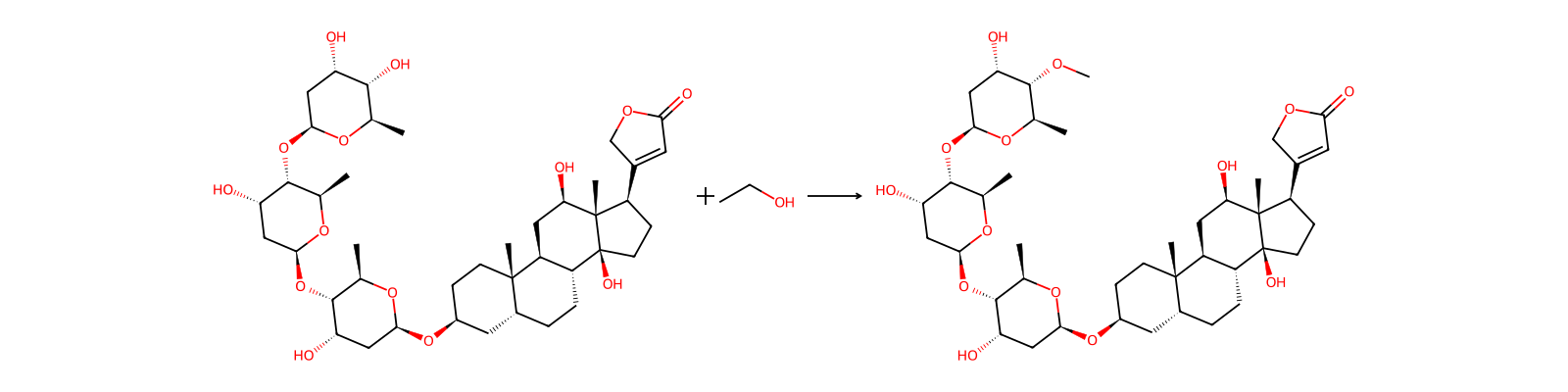
Zugehörige Reaktionen
11




Verknüpfte Notizen
Wird geladen…