StartseiteMCPWorkbenchSkills
StartseiteWorkbenchBenachrichtigungenMein Bereich
llms.txt · MCP-AnleitungDatenschutz · Nutzungsbedingungen · Supportv1.8.3
  1. Startseite
  2. /Verbindung

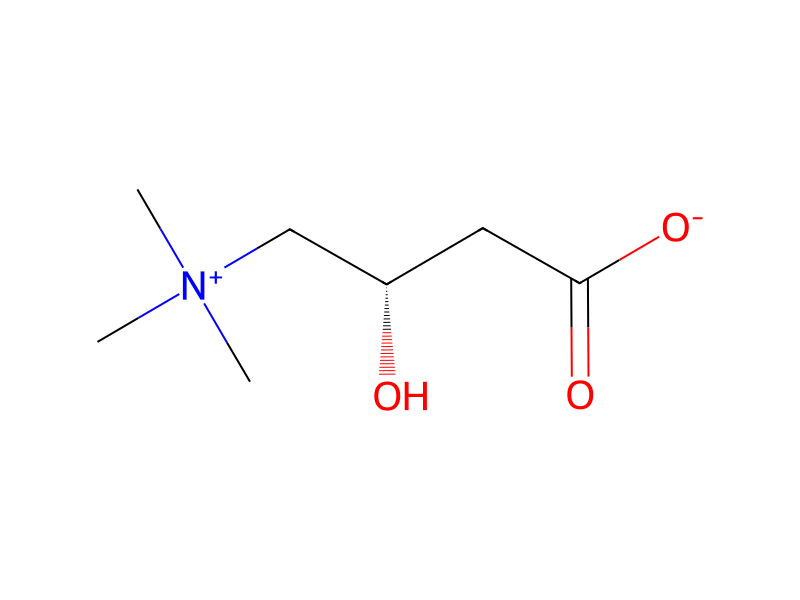
D-Carnitine

HCID 2724480
Neue Reaktion
Drucken
GrundinformationenÜberblickNamen und BezeichnerEigenschaftenSicherheit und RegulatorischesChemie und IndustrieZugehörige ReaktionenNotizen zur Verbindung
TeilstruktursucheÄhnliche Strukturen suchen

Grundinformationen

CAS
541-14-0
Standard-SMILES
C[N+](C)(C)C[C@@H](O)CC(=O)[O-]
InChIKey
PHIQHXFUZVPYII-LURJTMIESA-N
Summenformel
C7H15NO3
Durchschnittliche Molmasse
161,2 g/mol
Monoisotopische Masse
161,10519334

Überblick

(S)-carnitine is the (S)-enantiomer of carnitine. It is a conjugate base of a (S)-carnitinium. It is an enantiomer of a (R)-carnitine.

Namen und Bezeichner

Bevorzugter Name
D-Carnitine
IUPAC
(3S)-3-hydroxy-4-(trimethylazaniumyl)butanoate
Englischer Name
D(+)-Carnitine
Summenformel
C7H15NO3
Molmasse
161.2

Namen und Synonyme

D-carnitine541-14-0D-(+)-carnitine(+)-Carnitine(S)-carnitine(3S)-3-hydroxy-4-(trimethylazaniumyl)butanoateCarnitine, (+)-UNII-U9VY0ZOK7AU9VY0ZOK7ACARNITINE, D-(3S)-3-hydroxy-4-(trimethylammonio)butanoate(+)-D-CARNITINE
Weitere Namen anzeigen
D-Vitamin BTD-CARNITINEHCLCarnitine D-formD(+)-Carnitine,98%L-carnitine Impurity 1D(+)-Carnitine USP/EP/BPD-CARNITINE HYDROCHLORIDEDL-CARNITINE BENZYL ESTER CHLORIDE
CHEBI:11060S-(+)-3-hydroxy-4-trimethylaminobutyrate1-Propanaminium, 3-carboxy-2-hydroxy-N,N,N-trimethyl-, hydroxide, inner salt, (S)-1-PROPANAMINIUM, 3-CARBOXY-2-HYDROXY-N,N,N-TRIMETHYL-, INNER SALT, (2S)-RefChem:130511L-I3-Trimethyl-I2-hydroxybutyrobetaine1-Propanaminium, 3-carboxy-2-hydroxy-N,N,N-trimethyl-, hydroxide, inner salt, (S)-(9CI)625-884-0

Datenbank-Bezeichner

CAS
541-14-0
PubChem CID
2724480
ChEMBL
CHEMBL503189
ChEBI

Eigenschaften

Berechnete Struktureigenschaften

XLogP
-0,2
Polarare Oberfläche (TPSA)
60,4 Ų
H-Brücken-Donoren
1
H-Brücken-Akzeptoren
3
Frei drehbare Bindungen
3
Schwere Atome
11
Formalladung
0
Komplexität
134

Physikochemische Eigenschaften

Schmelzpunkt
197 °C · 197 °C
Siedepunkt
287.5 °C · 287.5°C (rough estimate)
Dichte
1.1587 · 1.1587 (rough estimate)
Brechungsindex
1.45 · 1.4500 (estimate)
storage temp.
2 · Inert atmosphere,2-8°C
Löslichkeit
Methanol (Slightly), Water (Slightly)
Aggregatzustand
Solid
Farbe
White to Off-White
Merck
13 · 13,1862
Stabilität
Hygroscopic
InChI
InChI=1/C7H15NO3/c1-8(2,3)5-6(9)4-7(10)11/h6,9H,4-5H2,1-3H3/t6-/s3
InChIKey
PHIQHXFUZVPYII-ISZMHOAENA-N
SMILES
C([C@@H](O)CC(=O)[O-])[N+](C)(C)C |&1:1,r|

Sicherheit und Regulatorisches

Sicherheitsangaben dienen nur zur Orientierung und ersetzen weder das Sicherheitsdatenblatt (SDB) des Lieferanten noch geltende Vorschriften oder eine fachliche Bewertung.

GHS-Klassifizierung

GHS Classification · 4 Einträge

Warning

H315 (100%): Causes skin irritation [Warning Skin corrosion/irritation]

P261, P264, P264+P265, P271, P280, P302+P352, P304+P340, P305+P351+P338, P319, P321, P332+P317, P337+P317, P362+P364, P403+P233, P405, and P501 (click each P-code to see the statement)

Aggregated GHS information provided per 39 reports by companies from 2 notifications to the ECHA C&L Inventory. Each notification may be associated with multiple companies.

Gefahrenhinweise

Hazard Classes and CategoriesSkin Irrit. 2 (100%)

Toxikologische Informationen

Exposure RoutesIntravenous, Oral. Absolute bioavailability is 15% (tablets or solution). Time to maximum plasma concentration was found to be 3.3 hours.
Toxicity Summary · 1 Eintrag

Levocarnitine can be synthesised within the body from the amino acids lysine or methionine. Vitamin C (ascorbic acid) is essential to the synthesis of carnitine. Levocarnitine is a carrier molecule in the transport of long chain fatty acids across the inner mitochondrial membrane. It also exports acyl groups from subcellular organelles and from cells to urine before they accumulate to toxic concentrations. Only the L isomer of carnitine (sometimes called vitamin BT) affects lipid metabolism. Levocarnitine is handled by several proteins in different pathways including carnitine transporters, carnitine translocases, carnitine acetyltransferases and carnitine palmitoyltransferases.

Signs and SymptomsAdverse effects include hypertension, fever, tachycardia and seizures.

Chemie und Industrie

Pharmakologische Informationen

Metabolism/Metabolites · 1 Eintrag

After oral administration L-carnitine which is unabsorbed is metabolized in the gastrointestinal tract by bacterial microflora. Major metabolites include trimethylamine N-oxide and [3H]-gamma-butyrobetaine. Route of Elimination: Following a single intravenous dose, 73.1 +/- 16% of the dose was excreted in the urine during the 0-24 hour interval. Post administration of oral carnitine supplements, in addition to a high carnitine diet, 58-65% of the administered radioactive dose was recovered from urine and feces in 5-11 days. Half Life: 17.4 hours (elimination) following a single intravenous dose.

Verwendung und Herstellung

Uses · 1 Eintrag

For treatment of primary systemic carnitine deficiency, a genetic impairment of normal biosynthesis or utilization of levocarnitine from dietary sources, or for the treatment of secondary carnitine deficiency resulting from an inborn error of metabolism such as glutaric aciduria II, methyl malonic aciduria, propionic acidemia, and medium chain fatty acylCoA dehydrogenase deficiency. Used therapeutically to stimulate gastric and pancreatic secretions and in the treatment of hyperlipoproteinemias. Parenteral levocarnitine is indicated for the prevention and treatment of carnitine deficiency in patients with end-stage renal disease.

Anwendungen · 1 Eintrag

VerwendenEssential cofactor of fatty acid metabolism; required for the transport of fatty acids through the inner mitochondrial membrane. Synthetized primarily in the liver and kidney; highest concentrations found in heart and skeletal muscle. Dietary sources include red meat, dairy products, beans, avocado.

Vor- und nachgelagerte Produkte

Nachgelagerte Produkte

(R)-(3-Carboxy-2-hydroxypropyl)trimethylammoniumhydroxid

Zugehörige Reaktionen

5
Reaktionsaufzeichnung erstellen
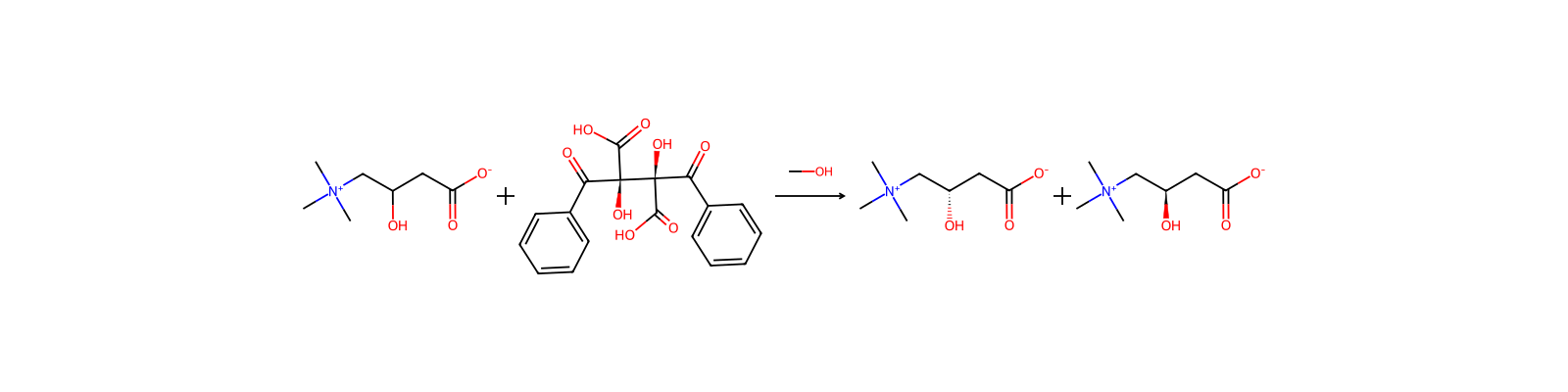
Reaktionsgleichung von HRID 64789
HRID 64789als Produkt
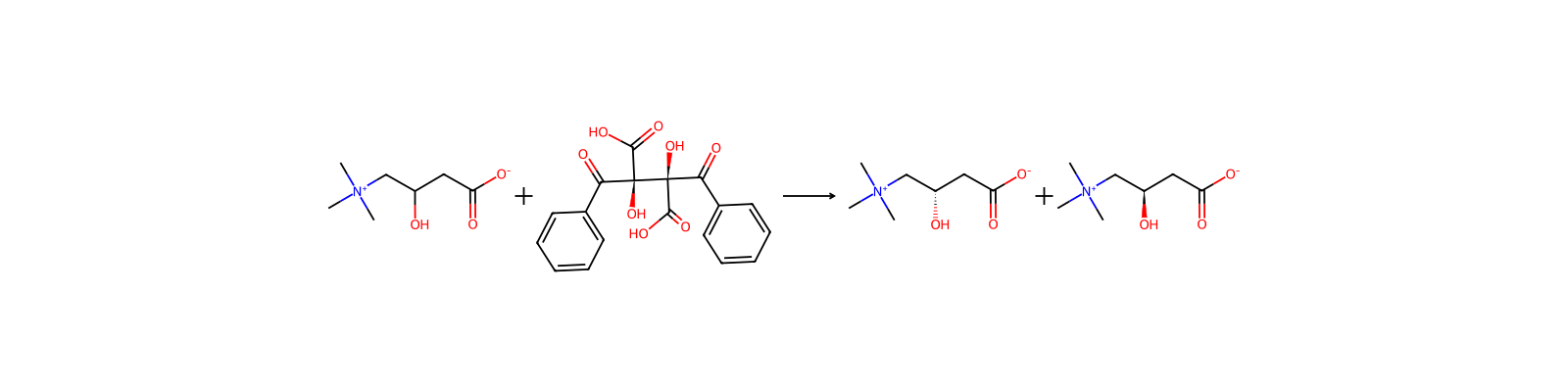
Reaktionsgleichung von HRID 64791
HRID 64791als Produkt
Reaktionsgleichung von HRID 64793
HRID 64793als Produkt
Reaktionsgleichung von HRID 1266631
HRID 1266631als Edukt
Reaktionsgleichung von HRID 1937765
HRID 1937765als Edukt

Notizen zur Verbindung

Auf dieser SeiteGrundinformationenÜberblickNamen und BezeichnerEigenschaftenSicherheit und RegulatorischesChemie und IndustrieZugehörige ReaktionenNotizen zur Verbindung
CHEBI:11060
UNII
U9VY0ZOK7A
EC Number
625-884-0
Nikkaji
J94.155G
Carcinogen ClassificationNo indication of carcinogenicity to humans (not listed by IARC).
Toxicity DataLD<sub>50</sub> > 8g/kg (mouse, oral).

Sicherheitsdaten

wgk
3
hs_code
29391900
RTECS-Nr.
BP2979850
risk_code
36/37/38
hazard_code
Xi
safety_code
26-36-37/39
hazard_class
IRRITANT

Ergänzende Hinweise

DefinitionChEBI: The (S)-enantiomer of carnitine.