
HRID 354229als Edukt
Daten werden ergänzt – lade die Seite später neu, um den aktuellen Stand zu sehen
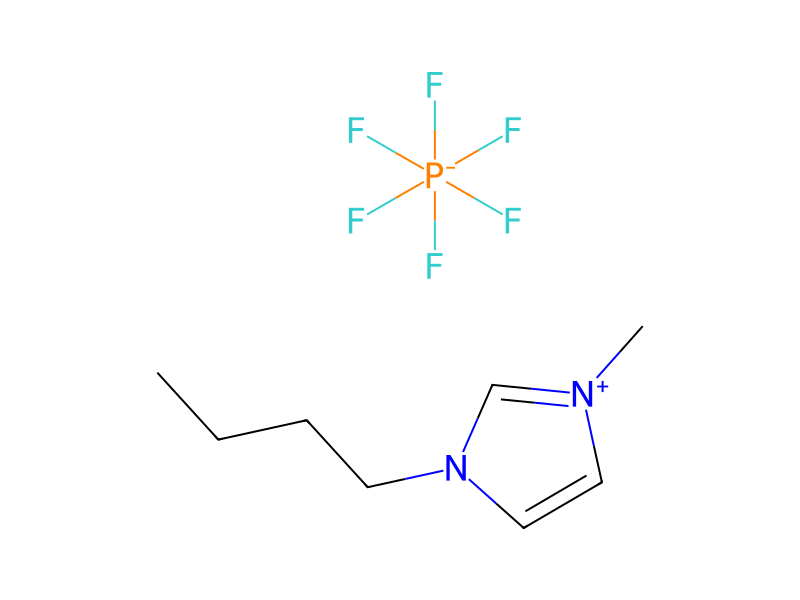
174501-64-5CCCCn1cc[n+](C)c1.F[P-](F)(F)(F)(F)FIXQYBUDWDLYNMA-UHFFFAOYSA-Nstructure in first source
Sicherheitsangaben dienen nur zur Orientierung und ersetzen weder das Sicherheitsdatenblatt (SDB) des Lieferanten noch geltende Vorschriften oder eine fachliche Bewertung.
Warning
H315 (100%): Causes skin irritation [Warning Skin corrosion/irritation]
P261, P264, P264+P265, P271, P280, P302+P352, P304+P340, P305+P351+P338, P319, P321, P332+P317, P337+P317, P362+P364, P403+P233, P405, and P501 (click each P-code to see the statement)
Aggregated GHS information provided per 53 reports by companies from 10 notifications to the ECHA C&L Inventory. Each notification may be associated with multiple companies.
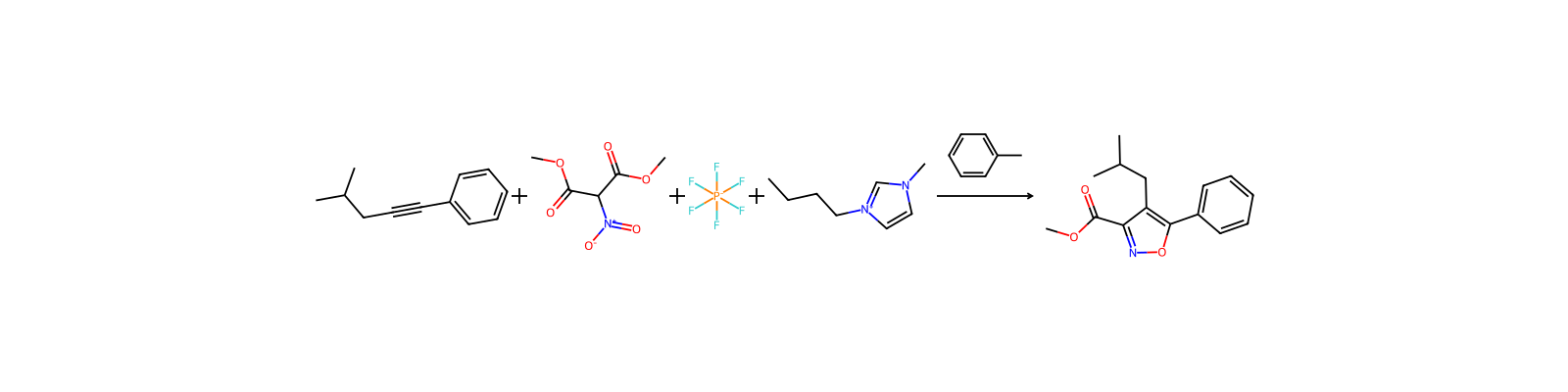
Verwendenthose consisting of tetrafluoroborate, alkylsulfate, alkylsulfonate, carboxylate, or phosphate anions are hydrophilic and are completely dissolved in water. Dupont and coworkers first reported stable hydrophobic imidazolium salt, 1-butyl-3-methylimidazolium hexafluorophosphate ([C4mim][PF6]) in 1996. Since then, this salt has been used as a typical hydrophobic IL in many chemical reactions because its mixture with water forms a biphasic layer. Furthermore, this IL shows poor solubility in hexane or ether, which allows realization of an easy work-up process. However, [C4mim][PF6] was reported to be sensitive to the moisture at high temperature and produced hazardous hydrogen fluoride as it decomposed. Therefore, bis(trifluoromethanesulfonyl)amide (NTf2) salts are now recommended as the anion for preparing hydrophobic ILs.



174501-64-5DTXSID4047911CHEMBL3184676